Cystic fibrosis
Par Julie-Annie Fortier
What is Cystic Fibrosis?
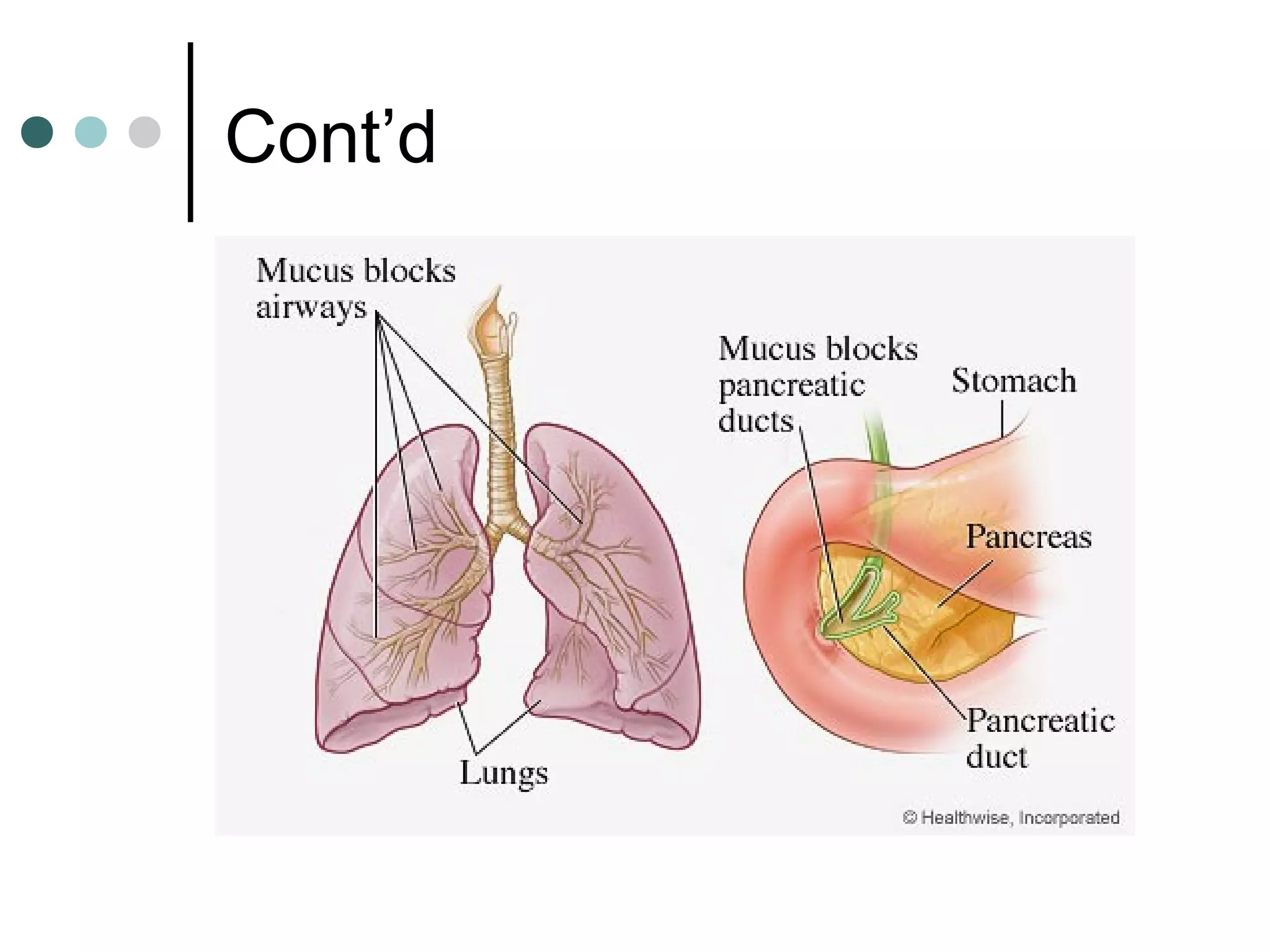
 Cystic fibrosis is a genetic disease that
causes mucus in the body to become thick
and sticky. This glue-like mucus builds up
and causes problems in many of the body's
organs, especially the
lungs and the pancreas . People who have
cystic fibrosis can have serious
breathing problems and lung disease. They
can also have problems with nutrition,
digestion, and growth. The disease
generally gets worse over time.
Cont’d
What cause CF?
 Cystic fibrosis is a genetic disease that occurs when a
child inherits two abnormal genes, one from each
parent. Approximately, one in 25 Canadians carry an
abnormal version of the gene responsible for cystic
fibrosis. Carriers do not have cystic fibrosis, nor do
they exhibit any of the symptoms of the disease.
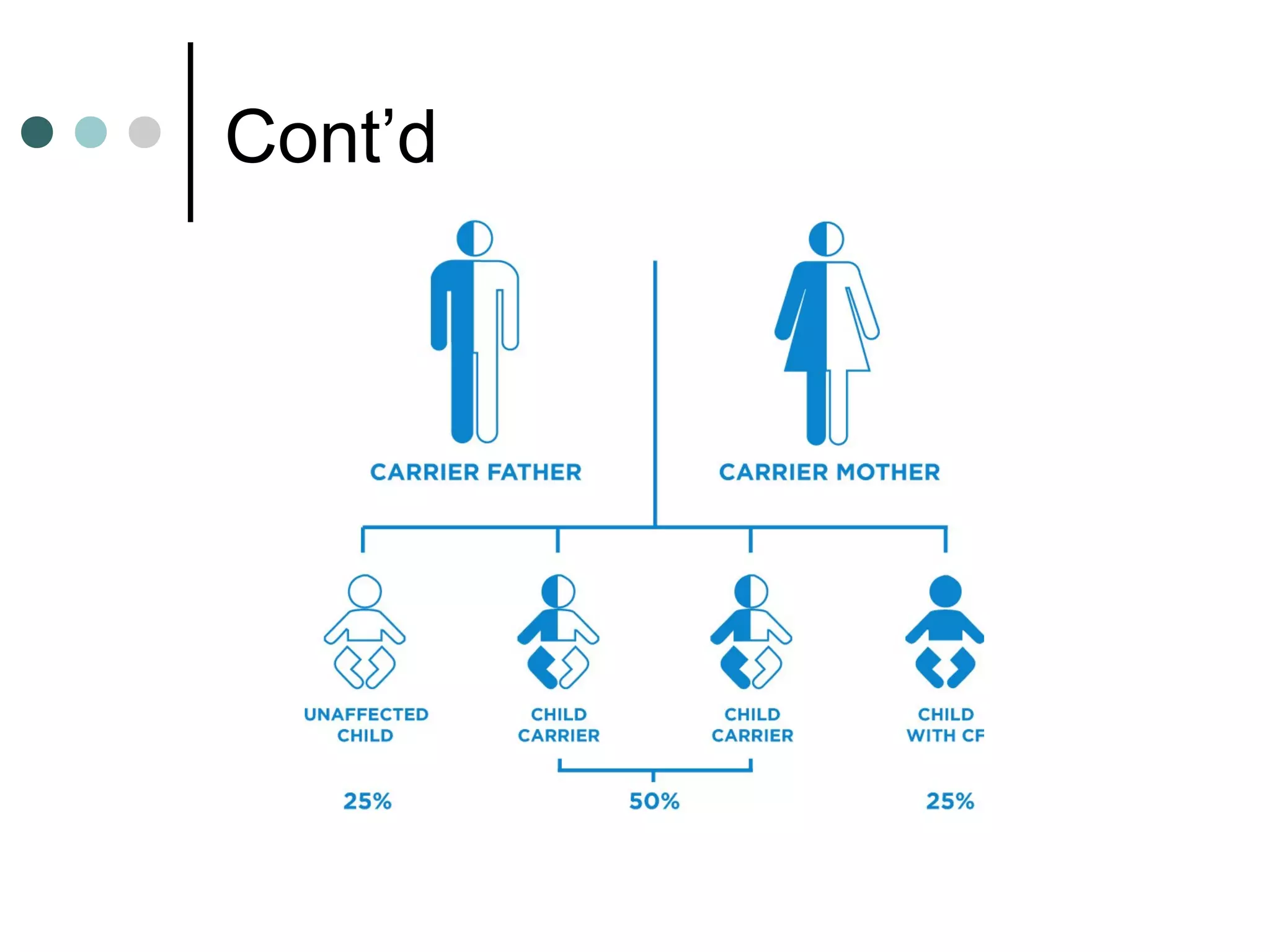
 When two parents who are carriers have a child, there
is a 25 percent chance that the child will be born with
cystic fibrosis; there is also a 50 percent chance that
the child will be a carrier; and a 25 percent chance that
the child will neither be a carrier nor have cystic
fibrosis..
Cont’d
Symptoms
Cystic fibrosis is usually diagnosed at an early age. The
symptoms aren't the same for everyone. But some common
symptoms in a baby who has cystic fibrosis include:
 A blocked small intestine at birth. This prevents the baby from
passing his or her first stool.
 Very salty sweat or skin.
 Diarrhea.
 Not growing or gaining weight the way that other children do.
 Breathing problems, lung infections, a cough that does not go away,
and wheezing.
Other symptoms may also develop in childhood, such as:
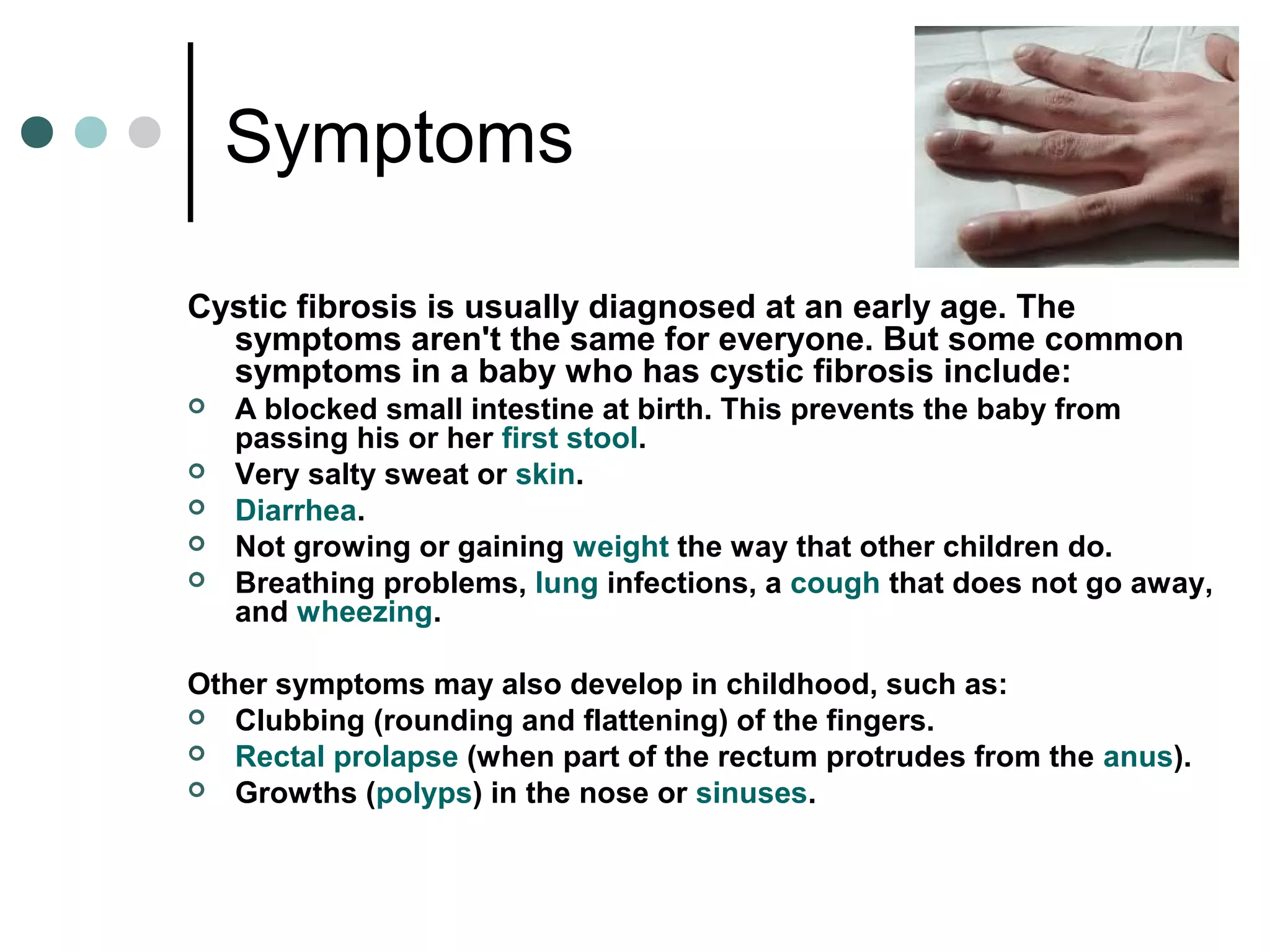
 Clubbing (rounding and flattening) of the fingers.
 Rectal prolapse (when part of the rectum protrudes from the anus).
 Growths (polyps) in the nose or sinuses.
Complications
 Lungs and respiratory system. People with cystic
fibrosis have thick and sticky mucus that traps
bacteria. This causes lots of lung infections and
often causes permanent lung damage.
 Bronchiectasis, which is caused by long-lasting
airway inflammation, is common.
 Pancreas and digestive system. Mucus can
interfere with how the pancreas works. This can
make it hard for the child to absorb nutrients from
food.
Cont’d
 Sweat glands. You may notice that your child has unusually
salty skin. Cystic fibrosis can cause a person to become easily
dehydrated or to have very low salt levels.
 Reproductive organs. Almost all men who have cystic fibrosis
are unable to father a child. Women who have cystic fibrosis
may have more difficulty getting pregnant than other women.
 Skeletal system. People who have cystic fibrosis may have
weaker bones than other people. This is because their bones
contain lower levels of minerals. Weakened bones can lead to
bone fractures, osteopenia, or osteoporosis. Cystic fibrosis
can also cause swollen or painful joints (arthropathy or
arthritis). These problems are more common in adults than in
children.
Life expectancy
 The life expectancy for people with cystic fibrosis
has been steadily increasing. On average, people
who have cystic fibrosis live into their mid-to-late
30s. But new treatments are helping some people
to live into their 40s and longer. People who have a
mild form may have a normal life expectancy.
 Even though cystic fibrosis can't be cured, the
treatments continue to get better. And there are
new treatments that target the cystic fibrosis gene
defect.
Treatments
Exercise
 The positive benefits of exercise with cystic
fibrosis have been well recognized and are
now an important part of the care plan for
people with cystic fibrosis. Regular physical
activity and exercises can slow the rate of
decline of pulmonary function, improve
physical fitness, and enhance quality of life.
Greater exercise capacity, regardless of
lung function, is associated with a lower rate
of mortality in individuals with cystic fibrosis.
Cont’d
Doctor visits and immunizations
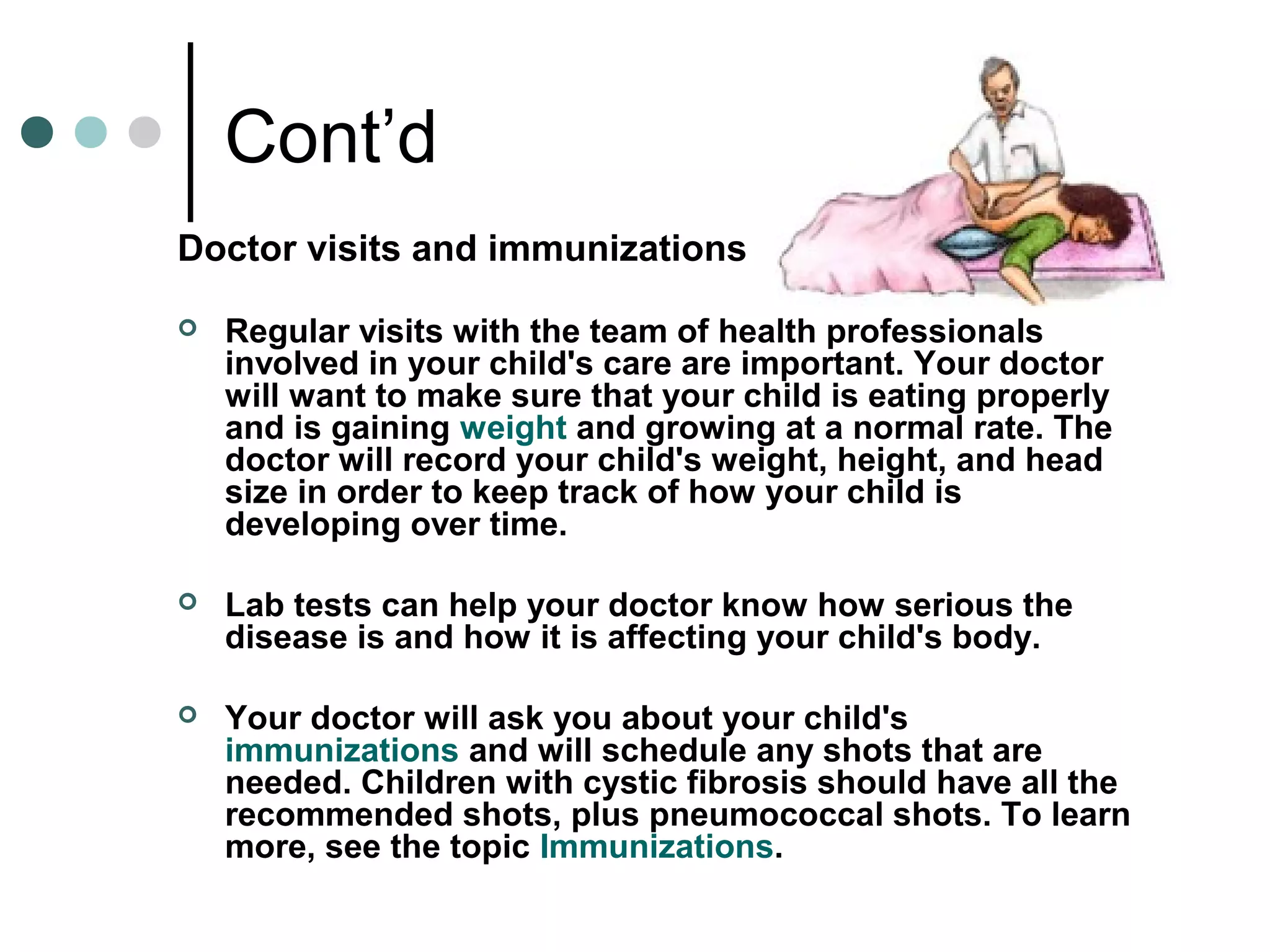
 Regular visits with the team of health professionals
involved in your child's care are important. Your doctor
will want to make sure that your child is eating properly
and is gaining weight and growing at a normal rate. The
doctor will record your child's weight, height, and head
size in order to keep track of how your child is
developing over time.
 Lab tests can help your doctor know how serious the
disease is and how it is affecting your child's body.
 Your doctor will ask you about your child's
immunizations and will schedule any shots that are
needed. Children with cystic fibrosis should have all the
recommended shots, plus pneumococcal shots. To learn
more, see the topic Immunizations.
Cont’d
Respiratory therapy
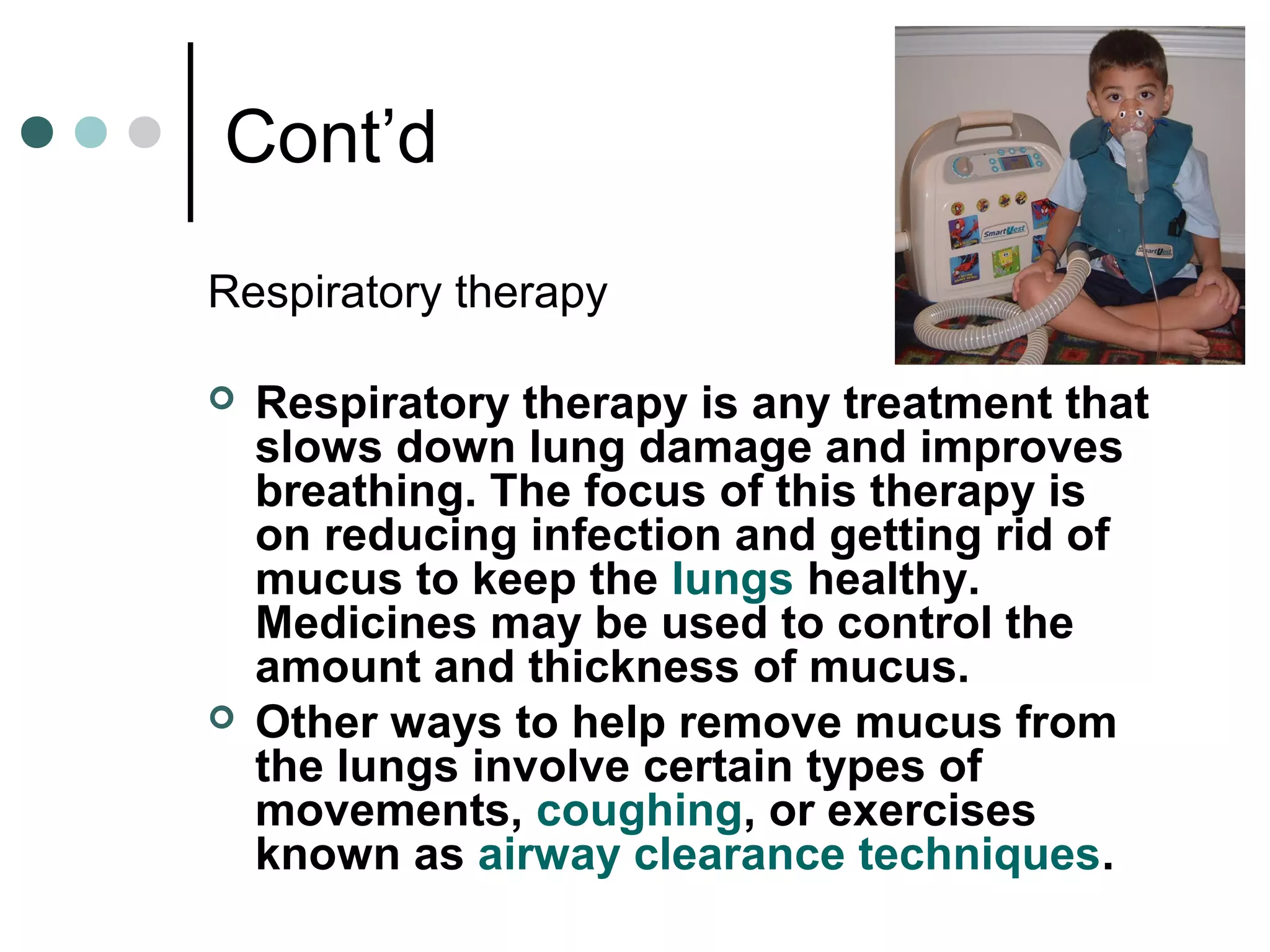
 Respiratory therapy is any treatment that
slows down lung damage and improves
breathing. The focus of this therapy is
on reducing infection and getting rid of
mucus to keep the lungs healthy.
Medicines may be used to control the
amount and thickness of mucus.
 Other ways to help remove mucus from
the lungs involve certain types of
movements, coughing, or exercises
known as airway clearance techniques.
Cont’d
Digestive therapy
This treatment works to replace certain digestive enzymes, to
make sure the body absorbs all the vitamins and minerals
it needs, and to prevent or treat intestinal blockages.
Digestive therapy involves:
 Digestive enzyme replacement therapy (such as with
Creon or Pancreaze), to help the intestines absorb
nutrients from food.
 Nutritional therapy to help replace lost nutrients. This may
include taking vitamins; eating high-calorie, high-fat
foods; drinking nutritional drinks; getting fed through a
tube in the stomach; and, in some cases, receiving
intravenous nutrient supplementation.
 Preventing intestinal blockages with stool softeners (to
avoid constipation) and enemas.
Cont’d
Other treatments for complications from cystic
fibrosis may include:
 Blood transfusions and medicines to treat the
bleeding (embolization therapy), if your child is
coughing up large amounts of blood. Coughing up
small amounts of blood is normal for people who
have cystic fibrosis. But coughing up large
amounts of blood can be life-threatening.
 Placement of a semipermanent intravenous (IV)
tube to give your child antibiotics frequently
without having to place a line in the vein each
time.

Cf

  • 1.
  • 2.
    What is CysticFibrosis?  Cystic fibrosis is a genetic disease that causes mucus in the body to become thick and sticky. This glue-like mucus builds up and causes problems in many of the body's organs, especially the lungs and the pancreas . People who have cystic fibrosis can have serious breathing problems and lung disease. They can also have problems with nutrition, digestion, and growth. The disease generally gets worse over time.
  • 3.
  • 4.
    What cause CF? Cystic fibrosis is a genetic disease that occurs when a child inherits two abnormal genes, one from each parent. Approximately, one in 25 Canadians carry an abnormal version of the gene responsible for cystic fibrosis. Carriers do not have cystic fibrosis, nor do they exhibit any of the symptoms of the disease.  When two parents who are carriers have a child, there is a 25 percent chance that the child will be born with cystic fibrosis; there is also a 50 percent chance that the child will be a carrier; and a 25 percent chance that the child will neither be a carrier nor have cystic fibrosis..
  • 5.
  • 6.
    Symptoms Cystic fibrosis isusually diagnosed at an early age. The symptoms aren't the same for everyone. But some common symptoms in a baby who has cystic fibrosis include:  A blocked small intestine at birth. This prevents the baby from passing his or her first stool.  Very salty sweat or skin.  Diarrhea.  Not growing or gaining weight the way that other children do.  Breathing problems, lung infections, a cough that does not go away, and wheezing. Other symptoms may also develop in childhood, such as:  Clubbing (rounding and flattening) of the fingers.  Rectal prolapse (when part of the rectum protrudes from the anus).  Growths (polyps) in the nose or sinuses.
  • 7.
    Complications  Lungs andrespiratory system. People with cystic fibrosis have thick and sticky mucus that traps bacteria. This causes lots of lung infections and often causes permanent lung damage.  Bronchiectasis, which is caused by long-lasting airway inflammation, is common.  Pancreas and digestive system. Mucus can interfere with how the pancreas works. This can make it hard for the child to absorb nutrients from food.
  • 8.
    Cont’d  Sweat glands.You may notice that your child has unusually salty skin. Cystic fibrosis can cause a person to become easily dehydrated or to have very low salt levels.  Reproductive organs. Almost all men who have cystic fibrosis are unable to father a child. Women who have cystic fibrosis may have more difficulty getting pregnant than other women.  Skeletal system. People who have cystic fibrosis may have weaker bones than other people. This is because their bones contain lower levels of minerals. Weakened bones can lead to bone fractures, osteopenia, or osteoporosis. Cystic fibrosis can also cause swollen or painful joints (arthropathy or arthritis). These problems are more common in adults than in children.
  • 9.
    Life expectancy  Thelife expectancy for people with cystic fibrosis has been steadily increasing. On average, people who have cystic fibrosis live into their mid-to-late 30s. But new treatments are helping some people to live into their 40s and longer. People who have a mild form may have a normal life expectancy.  Even though cystic fibrosis can't be cured, the treatments continue to get better. And there are new treatments that target the cystic fibrosis gene defect.
  • 10.
    Treatments Exercise  The positivebenefits of exercise with cystic fibrosis have been well recognized and are now an important part of the care plan for people with cystic fibrosis. Regular physical activity and exercises can slow the rate of decline of pulmonary function, improve physical fitness, and enhance quality of life. Greater exercise capacity, regardless of lung function, is associated with a lower rate of mortality in individuals with cystic fibrosis.
  • 11.
    Cont’d Doctor visits andimmunizations  Regular visits with the team of health professionals involved in your child's care are important. Your doctor will want to make sure that your child is eating properly and is gaining weight and growing at a normal rate. The doctor will record your child's weight, height, and head size in order to keep track of how your child is developing over time.  Lab tests can help your doctor know how serious the disease is and how it is affecting your child's body.  Your doctor will ask you about your child's immunizations and will schedule any shots that are needed. Children with cystic fibrosis should have all the recommended shots, plus pneumococcal shots. To learn more, see the topic Immunizations.
  • 12.
    Cont’d Respiratory therapy  Respiratorytherapy is any treatment that slows down lung damage and improves breathing. The focus of this therapy is on reducing infection and getting rid of mucus to keep the lungs healthy. Medicines may be used to control the amount and thickness of mucus.  Other ways to help remove mucus from the lungs involve certain types of movements, coughing, or exercises known as airway clearance techniques.
  • 13.
    Cont’d Digestive therapy This treatmentworks to replace certain digestive enzymes, to make sure the body absorbs all the vitamins and minerals it needs, and to prevent or treat intestinal blockages. Digestive therapy involves:  Digestive enzyme replacement therapy (such as with Creon or Pancreaze), to help the intestines absorb nutrients from food.  Nutritional therapy to help replace lost nutrients. This may include taking vitamins; eating high-calorie, high-fat foods; drinking nutritional drinks; getting fed through a tube in the stomach; and, in some cases, receiving intravenous nutrient supplementation.  Preventing intestinal blockages with stool softeners (to avoid constipation) and enemas.
  • 14.
    Cont’d Other treatments forcomplications from cystic fibrosis may include:  Blood transfusions and medicines to treat the bleeding (embolization therapy), if your child is coughing up large amounts of blood. Coughing up small amounts of blood is normal for people who have cystic fibrosis. But coughing up large amounts of blood can be life-threatening.  Placement of a semipermanent intravenous (IV) tube to give your child antibiotics frequently without having to place a line in the vein each time.