What are Cyber Physical Systems?
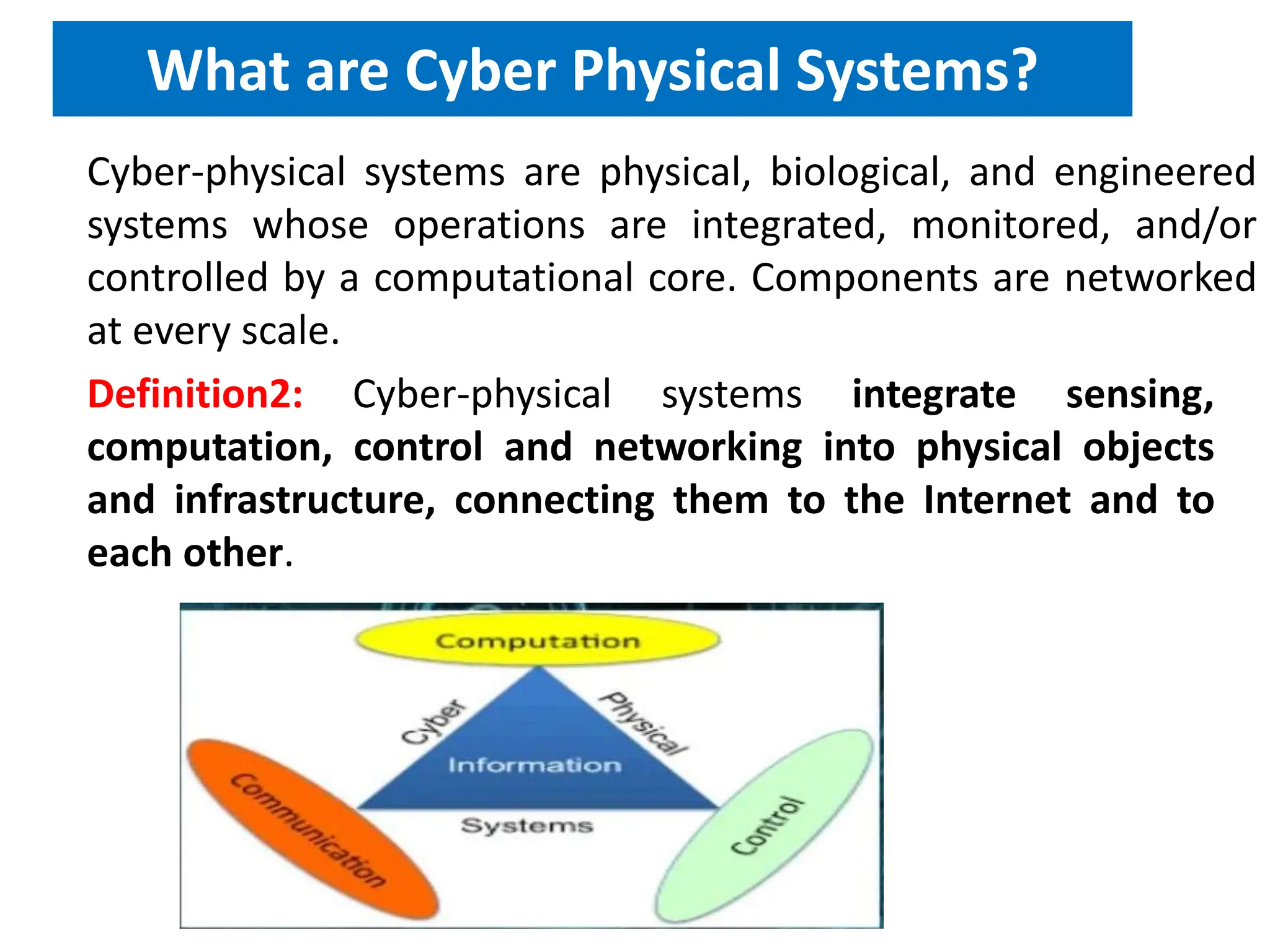
Cyber-physical systems are physical, biological, and engineered
systems whose operations are integrated, monitored, and/or
controlled by a computational core. Components are networked
at every scale.
Definition2: Cyber-physical systems integrate sensing,
computation, control and networking into physical objects
and infrastructure, connecting them to the Internet and to
each other.
•Cyber– computation, communication, and control that are
discrete, logical, and switched
• Physical – natural and human-made systems governed by the
laws of physics and operating in continuous time
• Cyber-Physical Systems – systems in which the cyber and
physical systems are tightly integrated at all scales and levels
Change from cyber merely appliquéd on physical
• Change from physical with off-the-shelf commodity “computing
as parts” mindset
• Change from ad hoc to grounded, assured development
What are Cyber Physical Systems?
Cyber-physical systems (CPSs) are physical and
engineered systems whose operations are monitored,
coordinated, controlled and integrated by a computing
and communication core.
By merging computing and communication with
physical processes, CPS brings many benefits:
– Safer and more efficient systems
– Reduce the cost of building and operating systems
– Build complex systems that provide new capabilities
What are Cyber Physical Systems?
What are Cyber Physical Systems? (cont’d)
Technological and Economic Drivers
– The decreasing cost of computation, networking,
and sensing
– Computers and communication are ubiquitous,
enables national or global scale CPSs
– Social and economic forces require more efficient
use of national infrastructure.
What are Cyber Physical Systems? (cont’d)
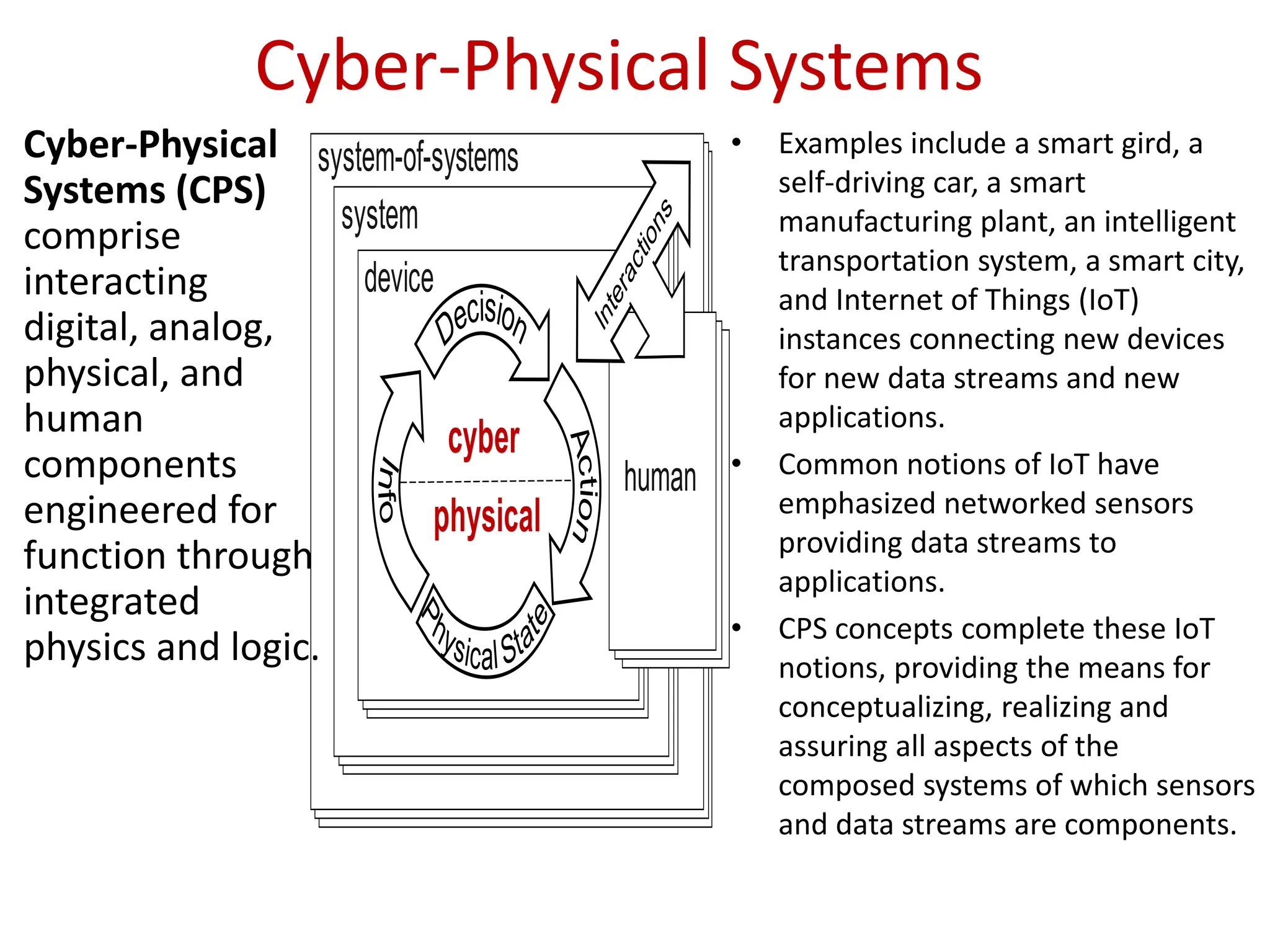
system-of-systems
system
device
human
cyber
physical
Cyber-Physical
Systems (CPS)
comprise
interacting
digital, analog,
physical, and
human
components
engineered for
function through
integrated
physics and logic.
Cyber-Physical Systems
• Examples include a smart gird, a
self-driving car, a smart
manufacturing plant, an intelligent
transportation system, a smart city,
and Internet of Things (IoT)
instances connecting new devices
for new data streams and new
applications.
• Common notions of IoT have
emphasized networked sensors
providing data streams to
applications.
• CPS concepts complete these IoT
notions, providing the means for
conceptualizing, realizing and
assuring all aspects of the
composed systems of which sensors
and data streams are components.
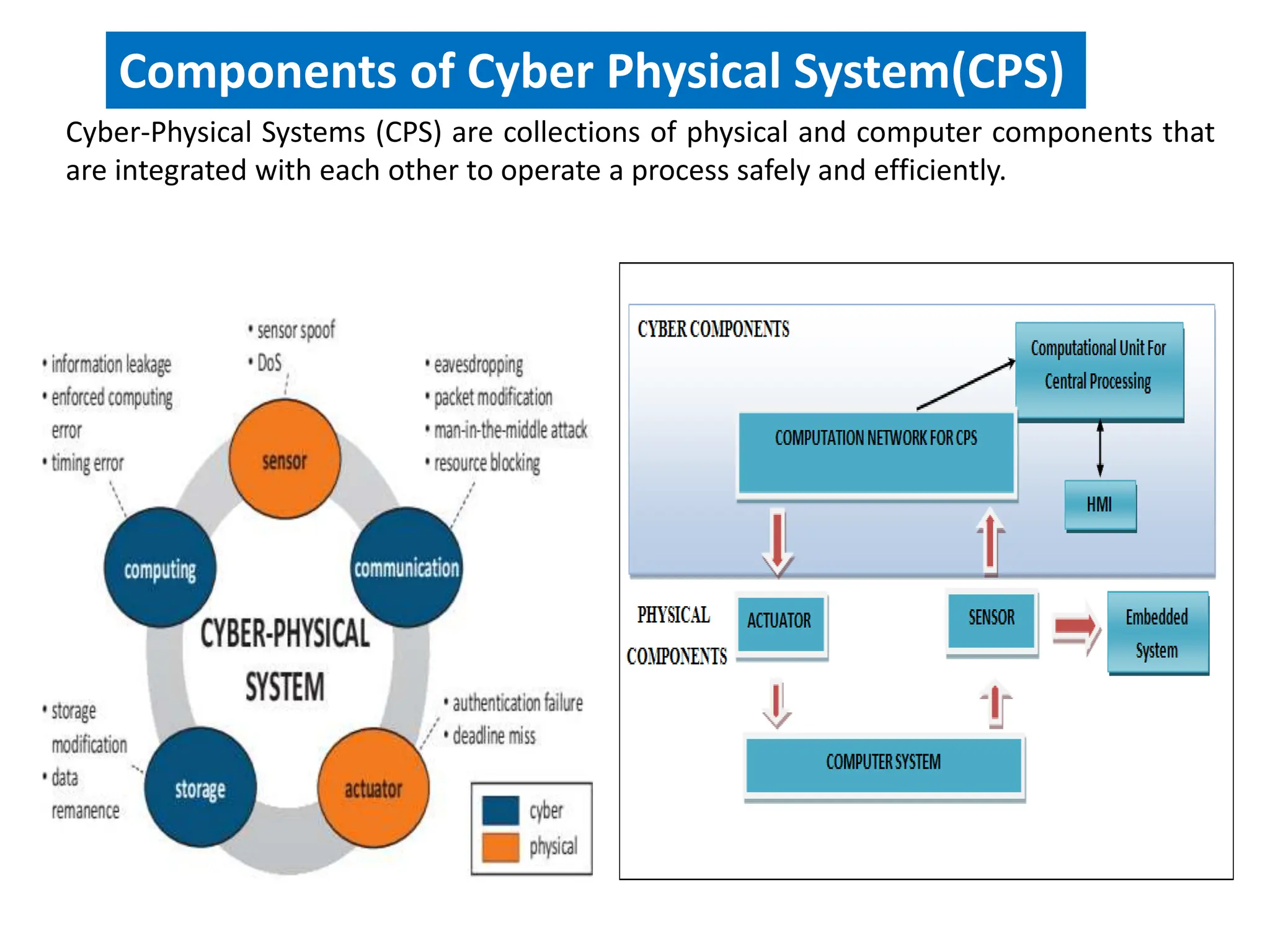
Components of Cyber Physical System(CPS)
Cyber-Physical Systems (CPS) are collections of physical and computer components that
are integrated with each other to operate a process safely and efficiently.
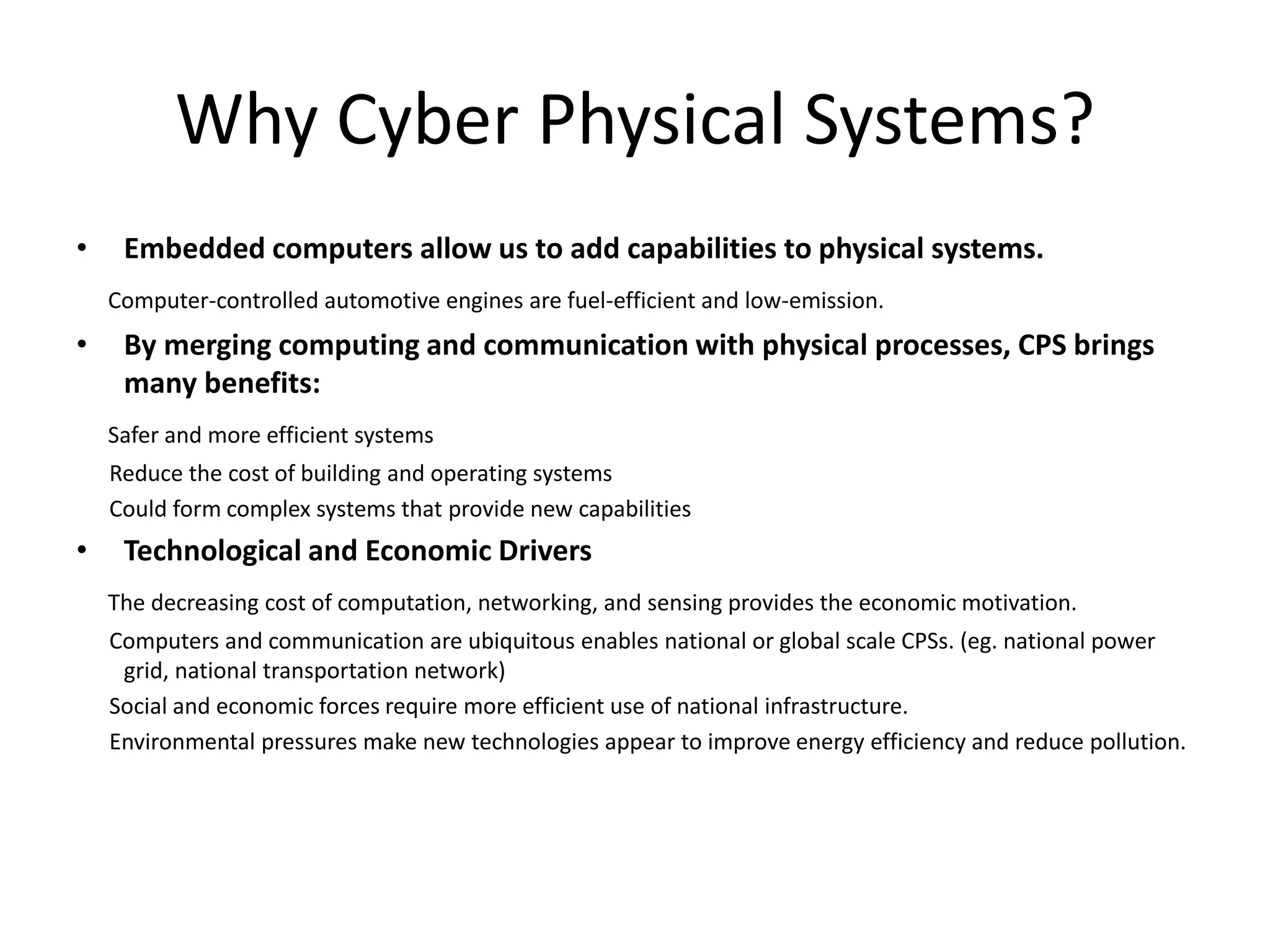
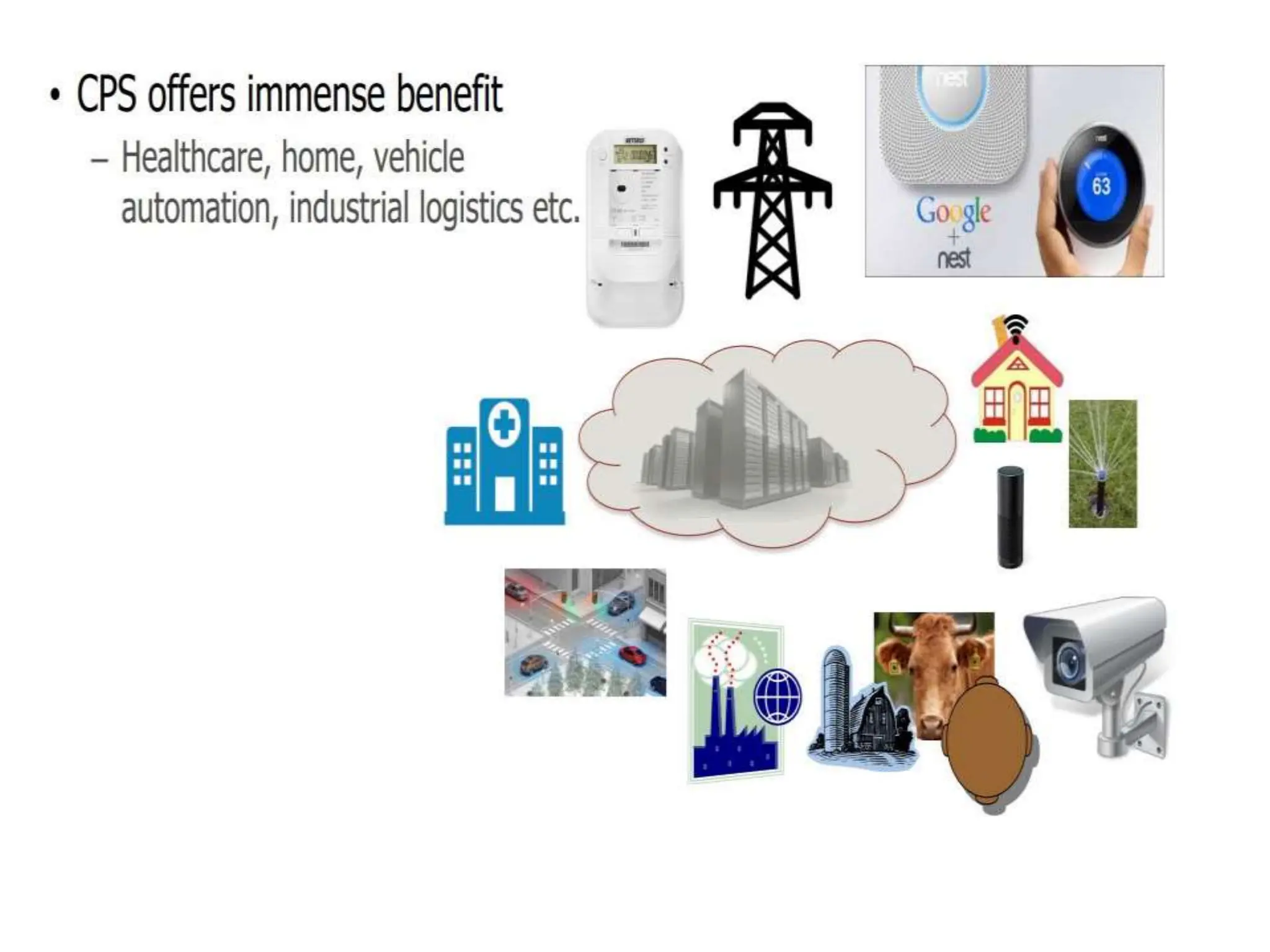
Why Cyber Physical Systems?
• Embedded computers allow us to add capabilities to physical systems.
Computer-controlled automotive engines are fuel-efficient and low-emission.
• By merging computing and communication with physical processes, CPS brings
many benefits:
Safer and more efficient systems
Reduce the cost of building and operating systems
Could form complex systems that provide new capabilities
• Technological and Economic Drivers
The decreasing cost of computation, networking, and sensing provides the economic motivation.
Computers and communication are ubiquitous enables national or global scale CPSs. (eg. national power
grid, national transportation network)
Social and economic forces require more efficient use of national infrastructure.
Environmental pressures make new technologies appear to improve energy efficiency and reduce pollution.
7) Health care or healthcare is the improvement of health via the
prevention, diagnosis, treatment, amelioration, or cure of disease, illness,
injury, and other physical and mental impairments in people. Health care
is delivered by health professionals and allied health fields. Medicine,
dentistry, pharmacy, midwifery, nursing, optometry, audiology,
psychology, occupational therapy, physical therapy, athletic training, and
other health professions are all part of health care. It includes work done
in providing primary care, secondary care, and tertiary care, as well as in
public health.
ARCHITECTURE of CPS
CHARACTERSTICS of CPS
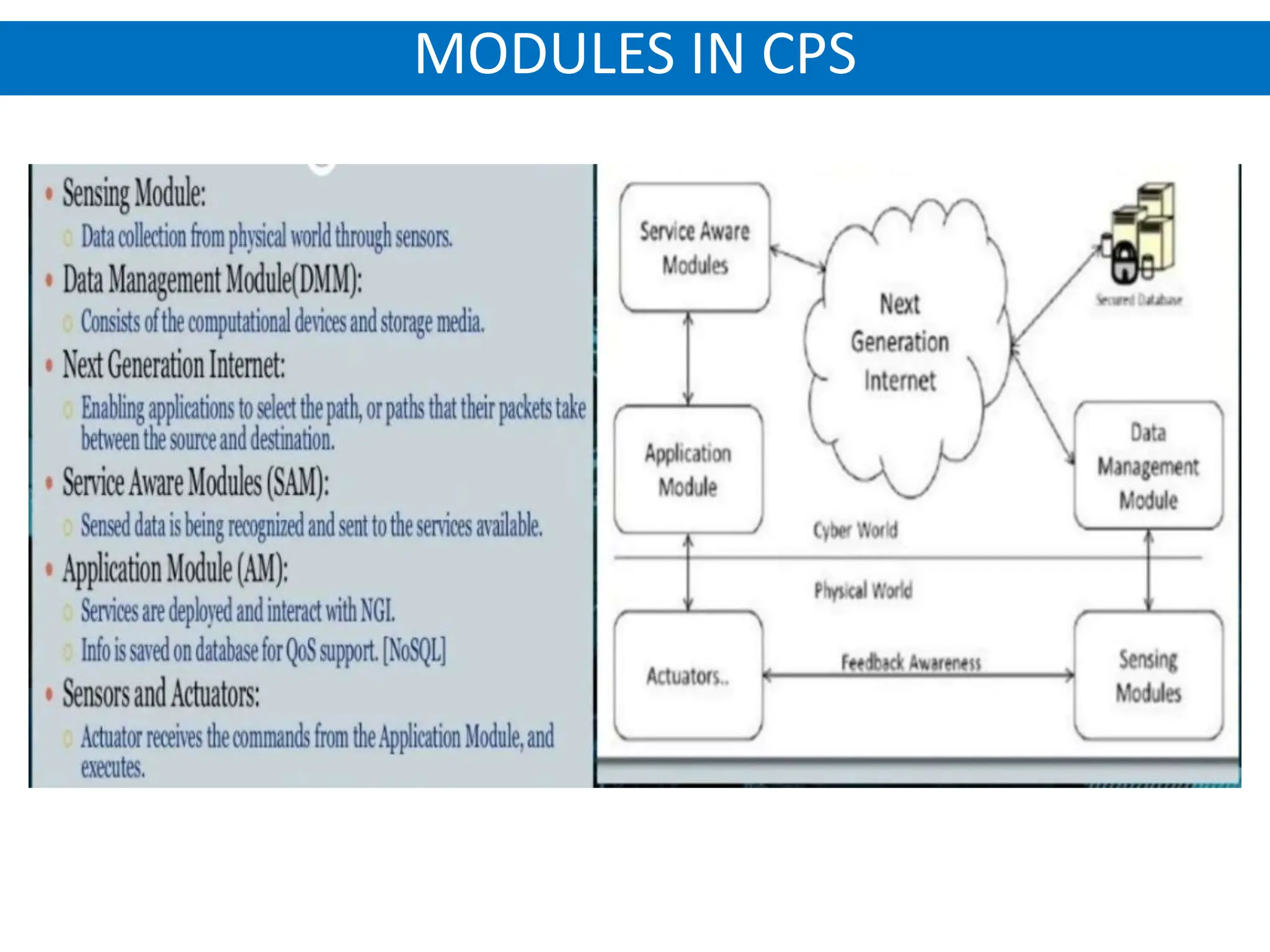
MODULES IN CPS
CPS Created
Opportunities
Examples of CPS
Smart grid, autonomous automobile system,
medical monitoring, industrial control
system, Robots, intelligent buildings,
implantable medical devices, cars that drive
themselves or planes that automatically fly in
a controlled airspace—these are all examples
of CPS.
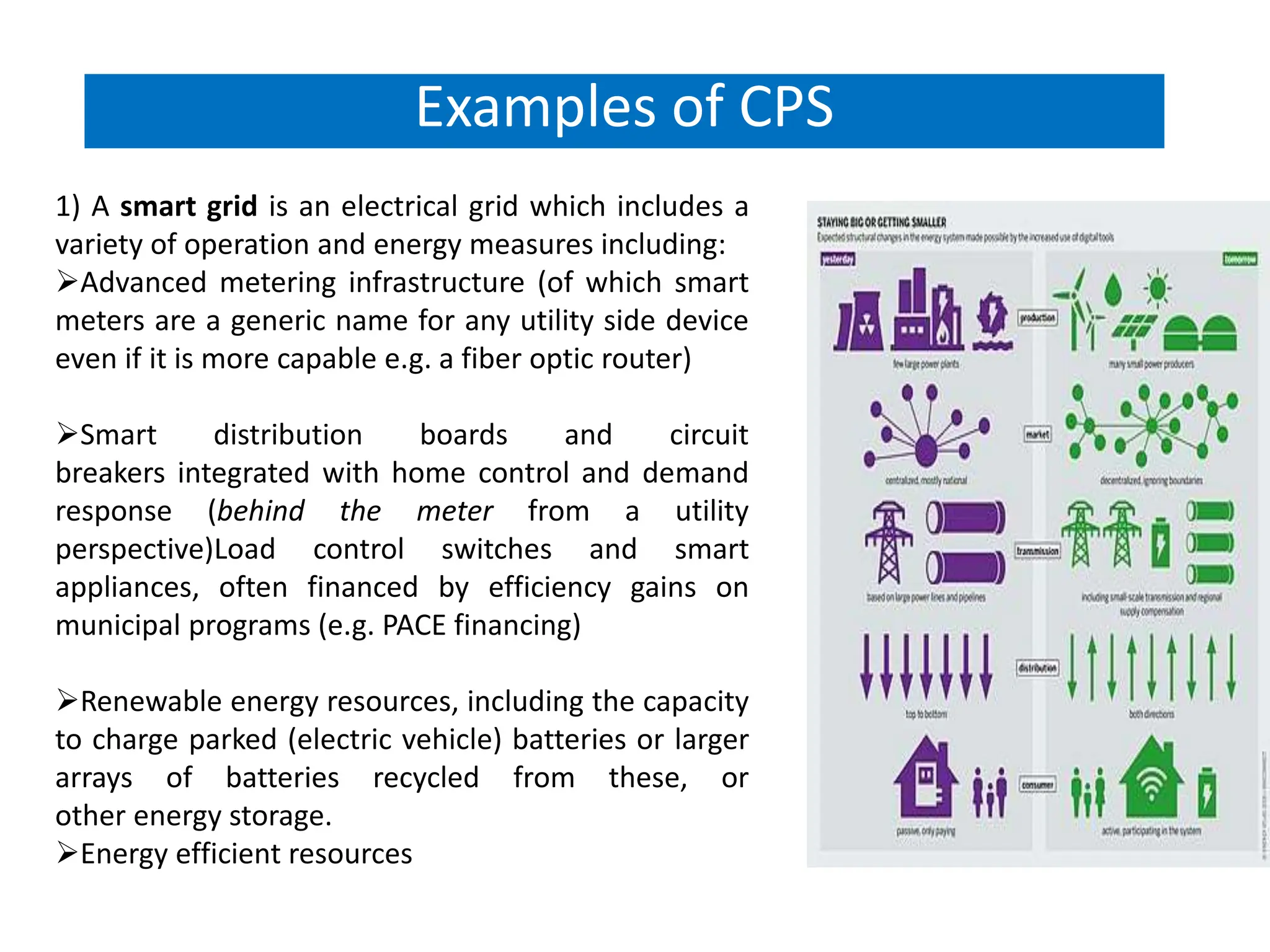
1) A smart grid is an electrical grid which includes a
variety of operation and energy measures including:
Advanced metering infrastructure (of which smart
meters are a generic name for any utility side device
even if it is more capable e.g. a fiber optic router)
Smart distribution boards and circuit
breakers integrated with home control and demand
response (behind the meter from a utility
perspective)Load control switches and smart
appliances, often financed by efficiency gains on
municipal programs (e.g. PACE financing)
Renewable energy resources, including the capacity
to charge parked (electric vehicle) batteries or larger
arrays of batteries recycled from these, or
other energy storage.
Energy efficient resources
Examples of CPS
2) A self-driving car, also known as an autonomous car, driver-less car, or robotic
car (robo-car), is a car incorporating vehicular automation, that is, a ground vehicle
that is capable of sensing its environment and moving safely with little or no human
input.
3) In medicine, monitoring is the observation of a disease, condition or one or
several medical parameters over time.
4) An industrial control system (ICS) is an electronic control system and associated
instrumentation used for industrial process control. Control systems can range in size
from a few modular panel-mounted controllers to large interconnected and interactive
distributed control systems (DCSs) with many thousands of field connections. Control
systems receive data from remote sensors measuring process variables (PVs), compare
the collected data with desired setpoints (SPs), and derive command functions that are
used to control a process through the final control elements (FCEs), such as control
valves.
5) Robotics is an interdisciplinary branch of computer science and
engineering. Robotics involves design, construction, operation, and
use of robots. The goal of robotics is to design machines that can help
and assist humans. Robotics integrates fields of mechanical
engineering, electrical engineering, information engineering,
mechatronics, electronics, bioengineering, computer engineering,
control engineering, software engineering, mathematics, etc.
6) In a scientific sense, a chemical process is a method or means of
somehow changing one or more chemicals or chemical compounds.
Such a chemical process can occur by itself or be caused by an outside
force, and involves a chemical reaction of some sort. In an
"engineering" sense, a chemical process is a method intended to be
used in manufacturing or on an industrial scale to change the
composition of chemical(s) or material(s), usually using technology
similar or related to that used in chemical plants or the chemical
industry.
7) Health care or healthcare is the improvement of health via the
prevention, diagnosis, treatment, amelioration, or cure of disease, illness,
injury, and other physical and mental impairments in people. Health care
is delivered by health professionals and allied health fields. Medicine,
dentistry, pharmacy, midwifery, nursing, optometry, audiology,
psychology, occupational therapy, physical therapy, athletic training, and
other health professions are all part of health care. It includes work done
in providing primary care, secondary care, and tertiary care, as well as in
public health.
Example: Automotive Telematics
• In 2005, 30 – 90 processors per car
Engine control, Break system, Airbag deployment system
Windshield wiper, Door locks, Entertainment system
• Cars are sensors and actuators in V2V networks
Active networked safety alerts
Autonomous navigation
• Future Transportation Systems
Incorporate both single person and mass transportation vehicles, air and ground
transportations.
Achieve efficiency, safety, stability using real-time control and optimization.
Example: Health Care and Medicine
• National Health Information Network,
Electronic Patient Record
• Home care: monitoring and control
Pulse oximeters, blood glucose monitors, infusion pumps,
accelerometers, …
• Operating Room of the Future
Closed loop monitoring and control; multiple treatment
stations, plug and play devices; robotic microsurgery
System coordination challenge
• Progress in bioinformatics: gene, protein
expression, systems biology, disease dynamics,
control mechanisms
Example: Electric Power Grid
• Current picture:
Equipment protection devices trip locally, reactively
Cascading failure
• Better future?
Real-time cooperative control of protection devices
Self-healing, aggregate islands of stable bulk power
Coordinate distributed and dynamically interacting partcipants
Issue: standard operational control concerns exhibit wide-area characteristics (bulk
power stability and quality, flow control, fault isolation)
Transportation and energy
In the future, we'll travel in driverless cars that
communicate securely with each other on smart
roads and in planes that coordinate to reduce delays.
Drones will check infrastructure for damage and deliver
Wi-Fi access to disaster zones. Homes and offices will be
powered by a smart grid that is user-aware and will
use sensors to analyze the environment and optimize
lighting, heating and cooling.
Health care and medicine
Cyber-physical systems are poised to transform
the delivery of health care enabling smart
medical treatments and services. Sensors in
the home will detect changing health
conditions; new operating systems will make
personalized medical devices interoperable;
and robotic surgery and bionic limbs will help
heal and restore movement to the injured and
disabled and one day even augment human
abilities.
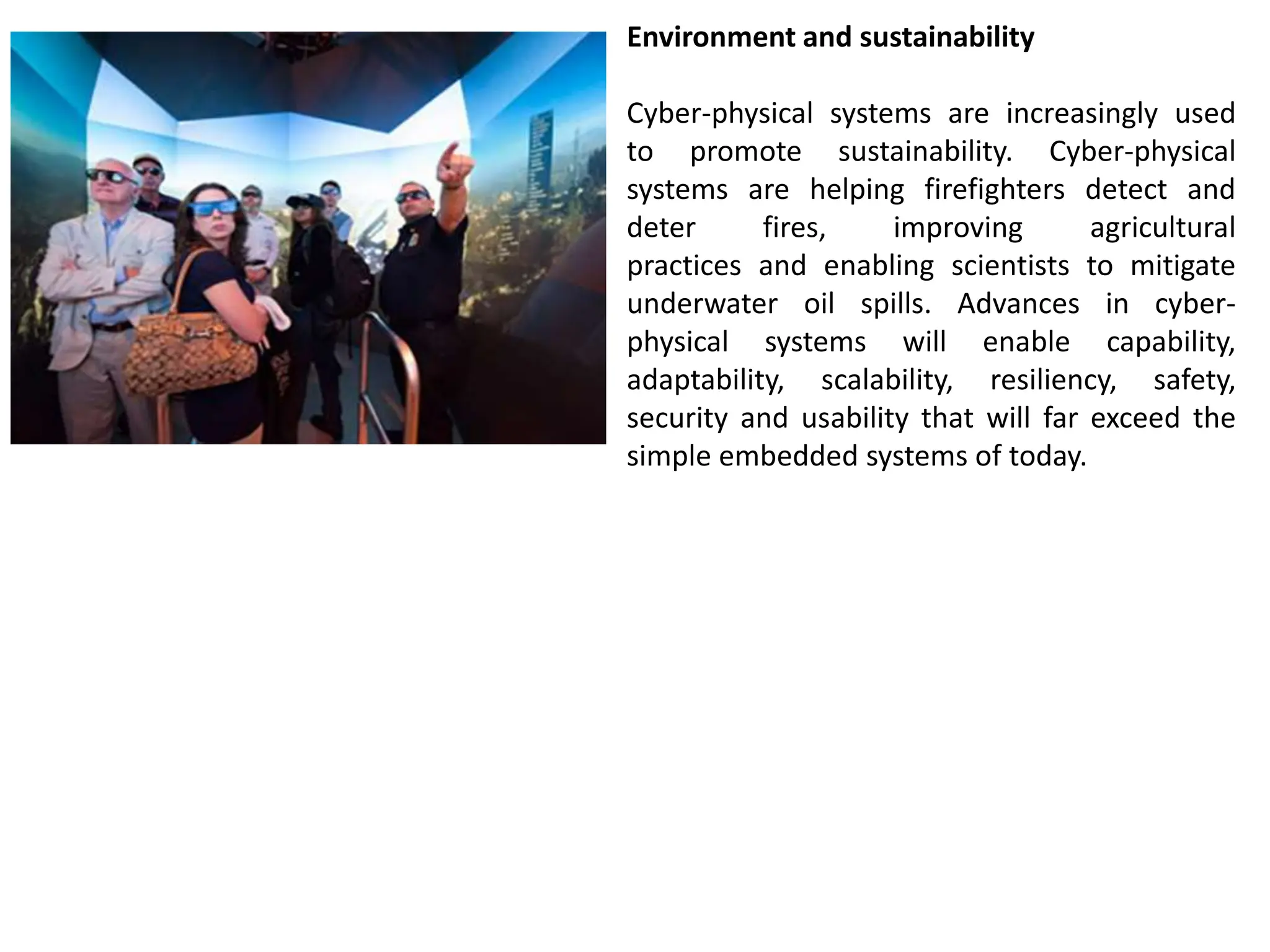
Environment and sustainability
Cyber-physical systems are increasingly used
to promote sustainability. Cyber-physical
systems are helping firefighters detect and
deter fires, improving agricultural
practices and enabling scientists to mitigate
underwater oil spills. Advances in cyber-
physical systems will enable capability,
adaptability, scalability, resiliency, safety,
security and usability that will far exceed the
simple embedded systems of today.
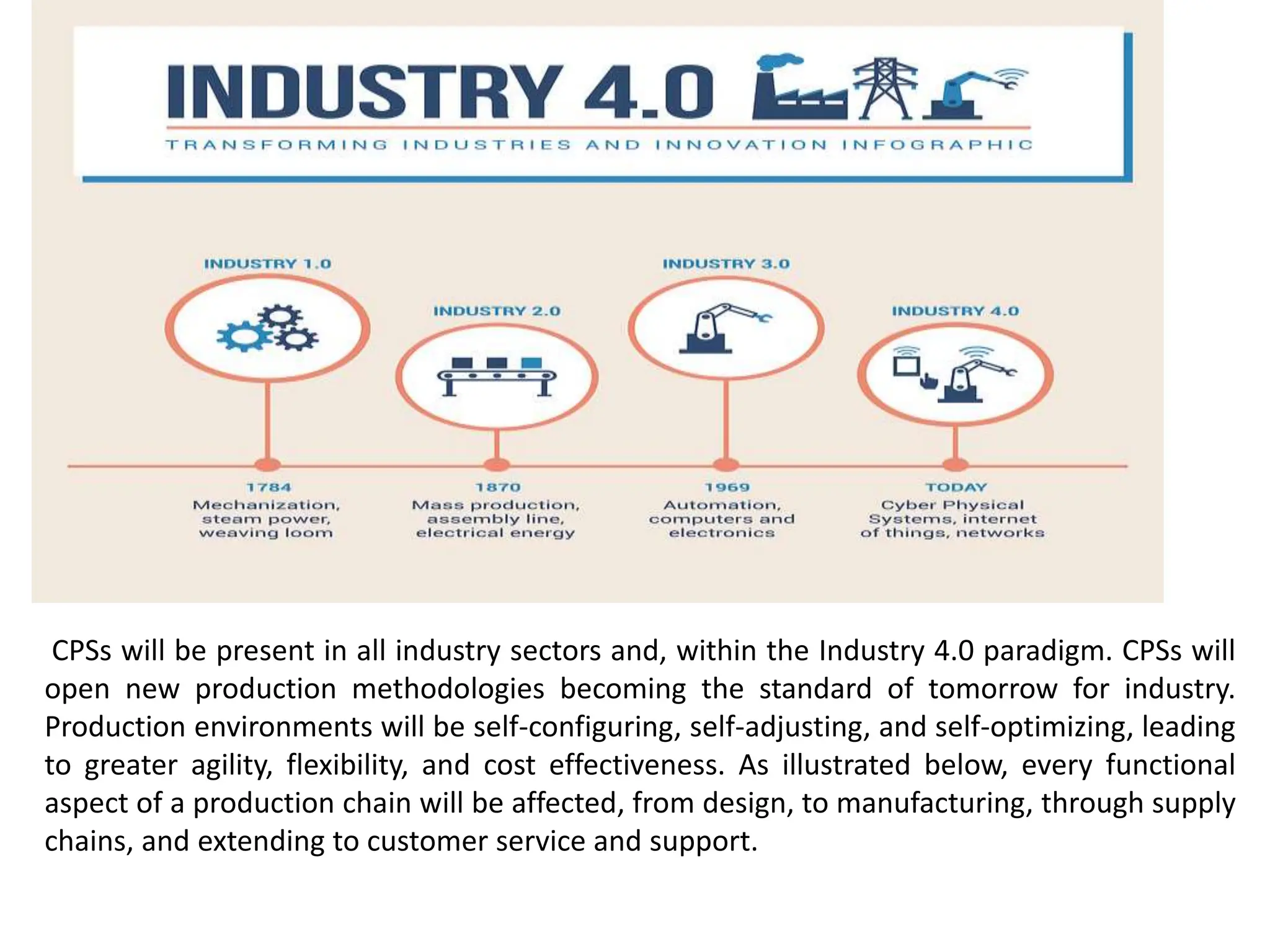
CPSs will be present in all industry sectors and, within the Industry 4.0 paradigm. CPSs will
open new production methodologies becoming the standard of tomorrow for industry.
Production environments will be self-configuring, self-adjusting, and self-optimizing, leading
to greater agility, flexibility, and cost effectiveness. As illustrated below, every functional
aspect of a production chain will be affected, from design, to manufacturing, through supply
chains, and extending to customer service and support.
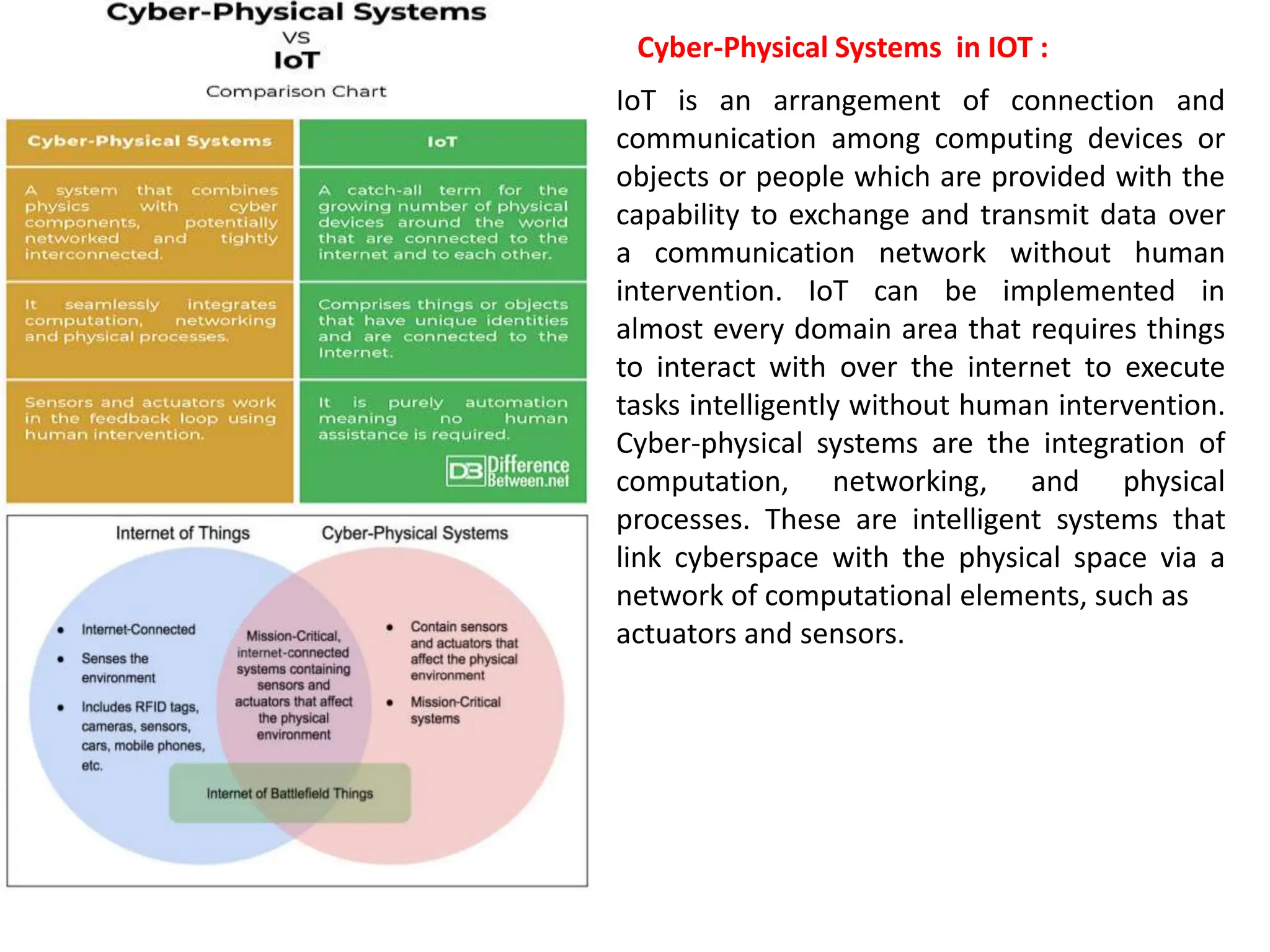
IoT is an arrangement of connection and
communication among computing devices or
objects or people which are provided with the
capability to exchange and transmit data over
a communication network without human
intervention. IoT can be implemented in
almost every domain area that requires things
to interact with over the internet to execute
tasks intelligently without human intervention.
Cyber-physical systems are the integration of
computation, networking, and physical
processes. These are intelligent systems that
link cyberspace with the physical space via a
network of computational elements, such as
actuators and sensors.
Cyber-Physical Systems in IOT :
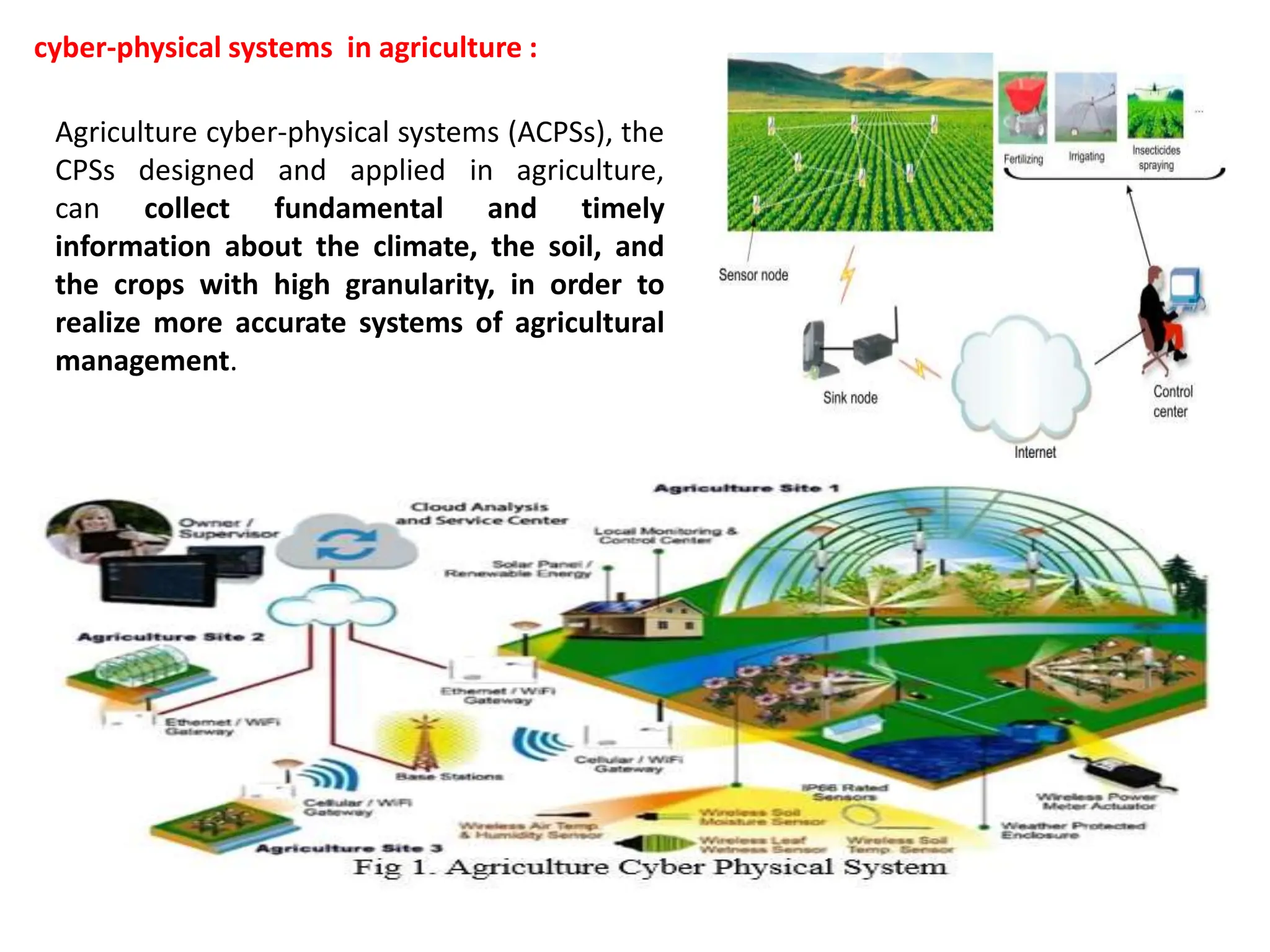
Agriculture cyber-physical systems (ACPSs), the
CPSs designed and applied in agriculture,
can collect fundamental and timely
information about the climate, the soil, and
the crops with high granularity, in order to
realize more accurate systems of agricultural
management.
cyber-physical systems in agriculture :
Traditional versus CPS security
30
Traditional
31
Confidentiality: Ability to maintain secrecy from
unauthorized users.
Integrity: Trustworthiness of data received; lack of this leads
to deception.
Availability: Ability of the system being accessible
CPS
32
Timeliness: responsiveness, freshness of data
Ref: A Taxonomy of Cyber Attacks on SCADA Systems, Zhu et al., UC Berkeley.
Availability: unexpected outages
Integrity: genuine data displayed and received by the controller
Confidentiality: Information regarding SCADA not available to
any unauthorized individual
Graceful degradation
Cyber Physical Systems Security
The Cyber Physical Systems Security (CPSSEC) project addresses security concerns for cyber
physical systems (CPS) and internet of things (IoT) devices. CPS and IoT play an increasingly
important role in critical infrastructure, government and everyday life. Automobiles,
medical devices, building controls and the smart grid are examples of CPS
Each includes smart networked systems with embedded sensors, processors and actuators
that sense and interact with the physical world and support real-time, guaranteed
performance in safety-critical applications.
The closely related area of IoT continues to emerge and expand as costs drop and the
confluence of sensors, platforms and networks increases. Whether referencing the
forward-collision prevention capability of a car, a medical device’s ability to adapt to
circumstances in real-time or the latest IoT innovation, these systems are a source of
competitive advantage in today’s innovation economy and provide vast opportunities for
DHS and Homeland Security Enterprise missions.
At the same time, CPS and IoT also increase cyber security risks and attack surfaces. The
consequences of unintentional faults or malicious attacks could have severe impact on
human lives and the environment.
Proactive and coordinated efforts are needed to strengthen security and reliance for CPS
and IoT.
Domains:
The domains of CPS are the areas of deployment of CPS in which stakeholders may have
domain-specific and cross-domain concerns. Table 1 provides the initial listing
Table 1: Domains of CPS
Challenges A CPS presents some challenges that are not always
found in a classical business information system or embedded
system. Some of the hard technical challenges include (Cyber-
physical system, 2017):
(1) Data heterogeneity: Systems need to be able to support a
great number of different applications and devices. Digital
devices use different communication protocols such as
Bluetooth, Zigbee, RF, and infrared.
(2)Reliability: Reliability and safety are basic requirements
because of how actuators affect the environment. Any failure
of the CPS components can lead to degradation of the system,
which may cause major harm to life and property.
Challenges:
(3)Data management: It is necessary to store and analyze big
data from different connected devices, process them, and
show real-time results.
(4)Privacy: Since CPSs manage large amounts of data, including
sensitive information like health, gender, religion, and many
others, significant issues about data privacy are raised
(5)Security: CPSs are based on heterogeneous applications and
wireless communications, which often raise critical security
issues. Security has become a global issue.
(6)Real-time: CPSs must ensure that they have the bandwidth or
system capacity needed to meet time-critical functions
because failures on time of actions can cause permanent
damages.

CYBER-PHYSICAL-SYSTEM.pptx

  • 1.
    What are CyberPhysical Systems? Cyber-physical systems are physical, biological, and engineered systems whose operations are integrated, monitored, and/or controlled by a computational core. Components are networked at every scale. Definition2: Cyber-physical systems integrate sensing, computation, control and networking into physical objects and infrastructure, connecting them to the Internet and to each other.
  • 2.
    •Cyber– computation, communication,and control that are discrete, logical, and switched • Physical – natural and human-made systems governed by the laws of physics and operating in continuous time • Cyber-Physical Systems – systems in which the cyber and physical systems are tightly integrated at all scales and levels Change from cyber merely appliquéd on physical • Change from physical with off-the-shelf commodity “computing as parts” mindset • Change from ad hoc to grounded, assured development What are Cyber Physical Systems?
  • 3.
    Cyber-physical systems (CPSs)are physical and engineered systems whose operations are monitored, coordinated, controlled and integrated by a computing and communication core. By merging computing and communication with physical processes, CPS brings many benefits: – Safer and more efficient systems – Reduce the cost of building and operating systems – Build complex systems that provide new capabilities What are Cyber Physical Systems? What are Cyber Physical Systems? (cont’d)
  • 4.
    Technological and EconomicDrivers – The decreasing cost of computation, networking, and sensing – Computers and communication are ubiquitous, enables national or global scale CPSs – Social and economic forces require more efficient use of national infrastructure. What are Cyber Physical Systems? (cont’d)
  • 5.
    system-of-systems system device human cyber physical Cyber-Physical Systems (CPS) comprise interacting digital, analog, physical,and human components engineered for function through integrated physics and logic. Cyber-Physical Systems • Examples include a smart gird, a self-driving car, a smart manufacturing plant, an intelligent transportation system, a smart city, and Internet of Things (IoT) instances connecting new devices for new data streams and new applications. • Common notions of IoT have emphasized networked sensors providing data streams to applications. • CPS concepts complete these IoT notions, providing the means for conceptualizing, realizing and assuring all aspects of the composed systems of which sensors and data streams are components.
  • 6.
    Components of CyberPhysical System(CPS) Cyber-Physical Systems (CPS) are collections of physical and computer components that are integrated with each other to operate a process safely and efficiently.
  • 7.
    Why Cyber PhysicalSystems? • Embedded computers allow us to add capabilities to physical systems. Computer-controlled automotive engines are fuel-efficient and low-emission. • By merging computing and communication with physical processes, CPS brings many benefits: Safer and more efficient systems Reduce the cost of building and operating systems Could form complex systems that provide new capabilities • Technological and Economic Drivers The decreasing cost of computation, networking, and sensing provides the economic motivation. Computers and communication are ubiquitous enables national or global scale CPSs. (eg. national power grid, national transportation network) Social and economic forces require more efficient use of national infrastructure. Environmental pressures make new technologies appear to improve energy efficiency and reduce pollution.
  • 8.
    7) Health careor healthcare is the improvement of health via the prevention, diagnosis, treatment, amelioration, or cure of disease, illness, injury, and other physical and mental impairments in people. Health care is delivered by health professionals and allied health fields. Medicine, dentistry, pharmacy, midwifery, nursing, optometry, audiology, psychology, occupational therapy, physical therapy, athletic training, and other health professions are all part of health care. It includes work done in providing primary care, secondary care, and tertiary care, as well as in public health.
  • 9.
  • 10.
  • 11.
  • 12.
  • 13.
    Examples of CPS Smartgrid, autonomous automobile system, medical monitoring, industrial control system, Robots, intelligent buildings, implantable medical devices, cars that drive themselves or planes that automatically fly in a controlled airspace—these are all examples of CPS.
  • 14.
    1) A smartgrid is an electrical grid which includes a variety of operation and energy measures including: Advanced metering infrastructure (of which smart meters are a generic name for any utility side device even if it is more capable e.g. a fiber optic router) Smart distribution boards and circuit breakers integrated with home control and demand response (behind the meter from a utility perspective)Load control switches and smart appliances, often financed by efficiency gains on municipal programs (e.g. PACE financing) Renewable energy resources, including the capacity to charge parked (electric vehicle) batteries or larger arrays of batteries recycled from these, or other energy storage. Energy efficient resources Examples of CPS
  • 15.
    2) A self-drivingcar, also known as an autonomous car, driver-less car, or robotic car (robo-car), is a car incorporating vehicular automation, that is, a ground vehicle that is capable of sensing its environment and moving safely with little or no human input. 3) In medicine, monitoring is the observation of a disease, condition or one or several medical parameters over time. 4) An industrial control system (ICS) is an electronic control system and associated instrumentation used for industrial process control. Control systems can range in size from a few modular panel-mounted controllers to large interconnected and interactive distributed control systems (DCSs) with many thousands of field connections. Control systems receive data from remote sensors measuring process variables (PVs), compare the collected data with desired setpoints (SPs), and derive command functions that are used to control a process through the final control elements (FCEs), such as control valves.
  • 16.
    5) Robotics isan interdisciplinary branch of computer science and engineering. Robotics involves design, construction, operation, and use of robots. The goal of robotics is to design machines that can help and assist humans. Robotics integrates fields of mechanical engineering, electrical engineering, information engineering, mechatronics, electronics, bioengineering, computer engineering, control engineering, software engineering, mathematics, etc. 6) In a scientific sense, a chemical process is a method or means of somehow changing one or more chemicals or chemical compounds. Such a chemical process can occur by itself or be caused by an outside force, and involves a chemical reaction of some sort. In an "engineering" sense, a chemical process is a method intended to be used in manufacturing or on an industrial scale to change the composition of chemical(s) or material(s), usually using technology similar or related to that used in chemical plants or the chemical industry.
  • 17.
    7) Health careor healthcare is the improvement of health via the prevention, diagnosis, treatment, amelioration, or cure of disease, illness, injury, and other physical and mental impairments in people. Health care is delivered by health professionals and allied health fields. Medicine, dentistry, pharmacy, midwifery, nursing, optometry, audiology, psychology, occupational therapy, physical therapy, athletic training, and other health professions are all part of health care. It includes work done in providing primary care, secondary care, and tertiary care, as well as in public health.
  • 18.
    Example: Automotive Telematics •In 2005, 30 – 90 processors per car Engine control, Break system, Airbag deployment system Windshield wiper, Door locks, Entertainment system • Cars are sensors and actuators in V2V networks Active networked safety alerts Autonomous navigation • Future Transportation Systems Incorporate both single person and mass transportation vehicles, air and ground transportations. Achieve efficiency, safety, stability using real-time control and optimization.
  • 19.
    Example: Health Careand Medicine • National Health Information Network, Electronic Patient Record • Home care: monitoring and control Pulse oximeters, blood glucose monitors, infusion pumps, accelerometers, … • Operating Room of the Future Closed loop monitoring and control; multiple treatment stations, plug and play devices; robotic microsurgery System coordination challenge • Progress in bioinformatics: gene, protein expression, systems biology, disease dynamics, control mechanisms
  • 20.
    Example: Electric PowerGrid • Current picture: Equipment protection devices trip locally, reactively Cascading failure • Better future? Real-time cooperative control of protection devices Self-healing, aggregate islands of stable bulk power Coordinate distributed and dynamically interacting partcipants Issue: standard operational control concerns exhibit wide-area characteristics (bulk power stability and quality, flow control, fault isolation)
  • 23.
    Transportation and energy Inthe future, we'll travel in driverless cars that communicate securely with each other on smart roads and in planes that coordinate to reduce delays. Drones will check infrastructure for damage and deliver Wi-Fi access to disaster zones. Homes and offices will be powered by a smart grid that is user-aware and will use sensors to analyze the environment and optimize lighting, heating and cooling. Health care and medicine Cyber-physical systems are poised to transform the delivery of health care enabling smart medical treatments and services. Sensors in the home will detect changing health conditions; new operating systems will make personalized medical devices interoperable; and robotic surgery and bionic limbs will help heal and restore movement to the injured and disabled and one day even augment human abilities.
  • 24.
    Environment and sustainability Cyber-physicalsystems are increasingly used to promote sustainability. Cyber-physical systems are helping firefighters detect and deter fires, improving agricultural practices and enabling scientists to mitigate underwater oil spills. Advances in cyber- physical systems will enable capability, adaptability, scalability, resiliency, safety, security and usability that will far exceed the simple embedded systems of today.
  • 27.
    CPSs will bepresent in all industry sectors and, within the Industry 4.0 paradigm. CPSs will open new production methodologies becoming the standard of tomorrow for industry. Production environments will be self-configuring, self-adjusting, and self-optimizing, leading to greater agility, flexibility, and cost effectiveness. As illustrated below, every functional aspect of a production chain will be affected, from design, to manufacturing, through supply chains, and extending to customer service and support.
  • 28.
    IoT is anarrangement of connection and communication among computing devices or objects or people which are provided with the capability to exchange and transmit data over a communication network without human intervention. IoT can be implemented in almost every domain area that requires things to interact with over the internet to execute tasks intelligently without human intervention. Cyber-physical systems are the integration of computation, networking, and physical processes. These are intelligent systems that link cyberspace with the physical space via a network of computational elements, such as actuators and sensors. Cyber-Physical Systems in IOT :
  • 29.
    Agriculture cyber-physical systems(ACPSs), the CPSs designed and applied in agriculture, can collect fundamental and timely information about the climate, the soil, and the crops with high granularity, in order to realize more accurate systems of agricultural management. cyber-physical systems in agriculture :
  • 30.
  • 31.
    Traditional 31 Confidentiality: Ability tomaintain secrecy from unauthorized users. Integrity: Trustworthiness of data received; lack of this leads to deception. Availability: Ability of the system being accessible
  • 32.
    CPS 32 Timeliness: responsiveness, freshnessof data Ref: A Taxonomy of Cyber Attacks on SCADA Systems, Zhu et al., UC Berkeley. Availability: unexpected outages Integrity: genuine data displayed and received by the controller Confidentiality: Information regarding SCADA not available to any unauthorized individual Graceful degradation
  • 33.
    Cyber Physical SystemsSecurity The Cyber Physical Systems Security (CPSSEC) project addresses security concerns for cyber physical systems (CPS) and internet of things (IoT) devices. CPS and IoT play an increasingly important role in critical infrastructure, government and everyday life. Automobiles, medical devices, building controls and the smart grid are examples of CPS Each includes smart networked systems with embedded sensors, processors and actuators that sense and interact with the physical world and support real-time, guaranteed performance in safety-critical applications. The closely related area of IoT continues to emerge and expand as costs drop and the confluence of sensors, platforms and networks increases. Whether referencing the forward-collision prevention capability of a car, a medical device’s ability to adapt to circumstances in real-time or the latest IoT innovation, these systems are a source of competitive advantage in today’s innovation economy and provide vast opportunities for DHS and Homeland Security Enterprise missions. At the same time, CPS and IoT also increase cyber security risks and attack surfaces. The consequences of unintentional faults or malicious attacks could have severe impact on human lives and the environment. Proactive and coordinated efforts are needed to strengthen security and reliance for CPS and IoT.
  • 34.
    Domains: The domains ofCPS are the areas of deployment of CPS in which stakeholders may have domain-specific and cross-domain concerns. Table 1 provides the initial listing Table 1: Domains of CPS
  • 35.
    Challenges A CPSpresents some challenges that are not always found in a classical business information system or embedded system. Some of the hard technical challenges include (Cyber- physical system, 2017): (1) Data heterogeneity: Systems need to be able to support a great number of different applications and devices. Digital devices use different communication protocols such as Bluetooth, Zigbee, RF, and infrared. (2)Reliability: Reliability and safety are basic requirements because of how actuators affect the environment. Any failure of the CPS components can lead to degradation of the system, which may cause major harm to life and property. Challenges:
  • 36.
    (3)Data management: Itis necessary to store and analyze big data from different connected devices, process them, and show real-time results. (4)Privacy: Since CPSs manage large amounts of data, including sensitive information like health, gender, religion, and many others, significant issues about data privacy are raised (5)Security: CPSs are based on heterogeneous applications and wireless communications, which often raise critical security issues. Security has become a global issue. (6)Real-time: CPSs must ensure that they have the bandwidth or system capacity needed to meet time-critical functions because failures on time of actions can cause permanent damages.