TQ – Team Intelligence In Action
Today


 1.   Review TQ Model
 2.   Explore 6 Attributes of Smart Teams
 3.   Introduce Team Skill
 4.   Assess Your Team
“The leaders who work most effectively never say ‘I.’
They don’t think ‘I.’ They think ‘we.’ They think ‘team.’
They understand their job to be to make the team
function. They accept responsibility and don’t sidestep it,
but ‘we’ gets the credit. This is what creates trust, what
enables you to be the task done.”

Peter Drucker


                                                 Insert footer text here   3
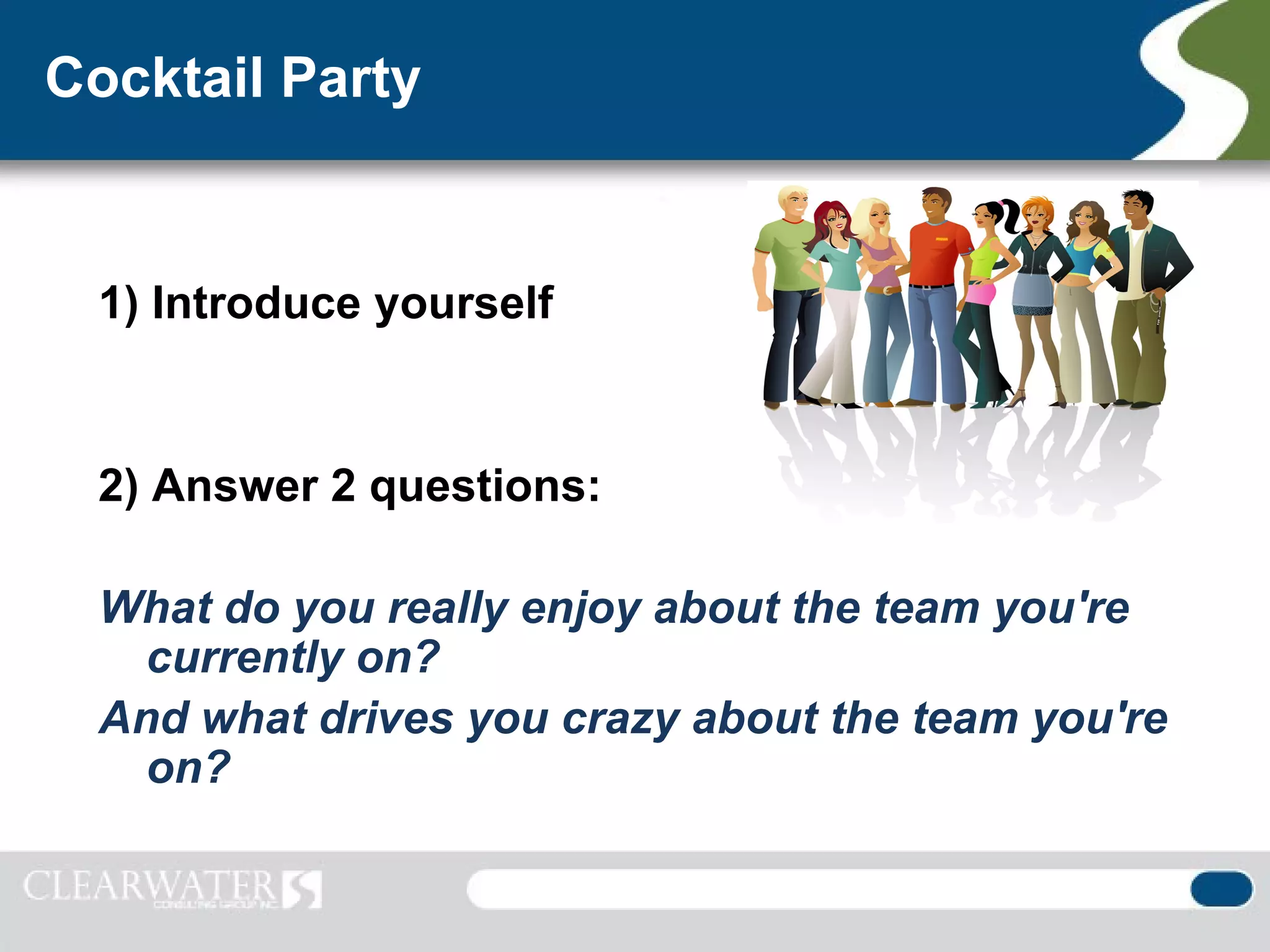
Cocktail Party


 1) Introduce yourself


 2) Answer 2 questions:

 What do you really enjoy about the team you're
   currently on?
 And what drives you crazy about the team you're
   on?
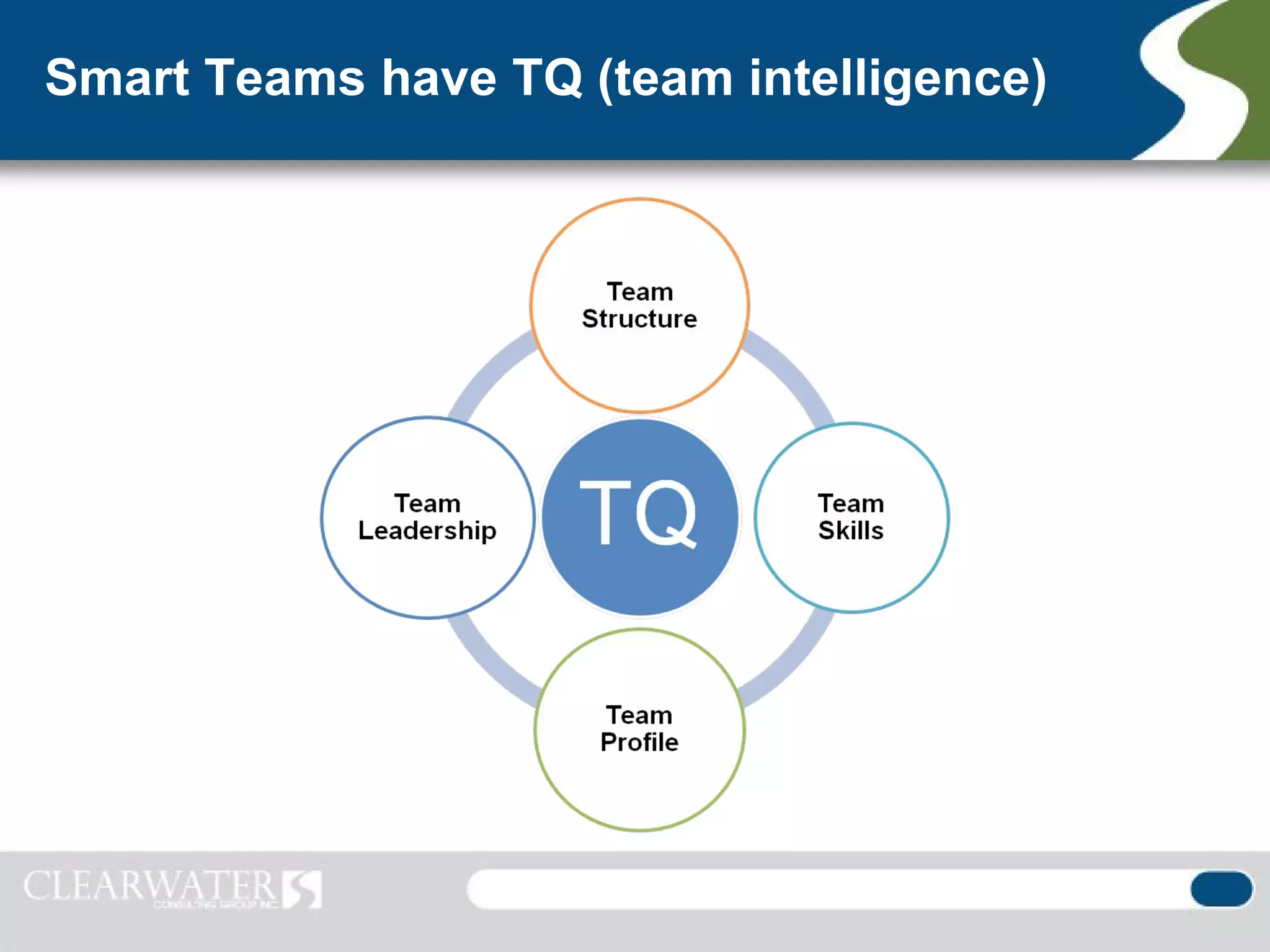
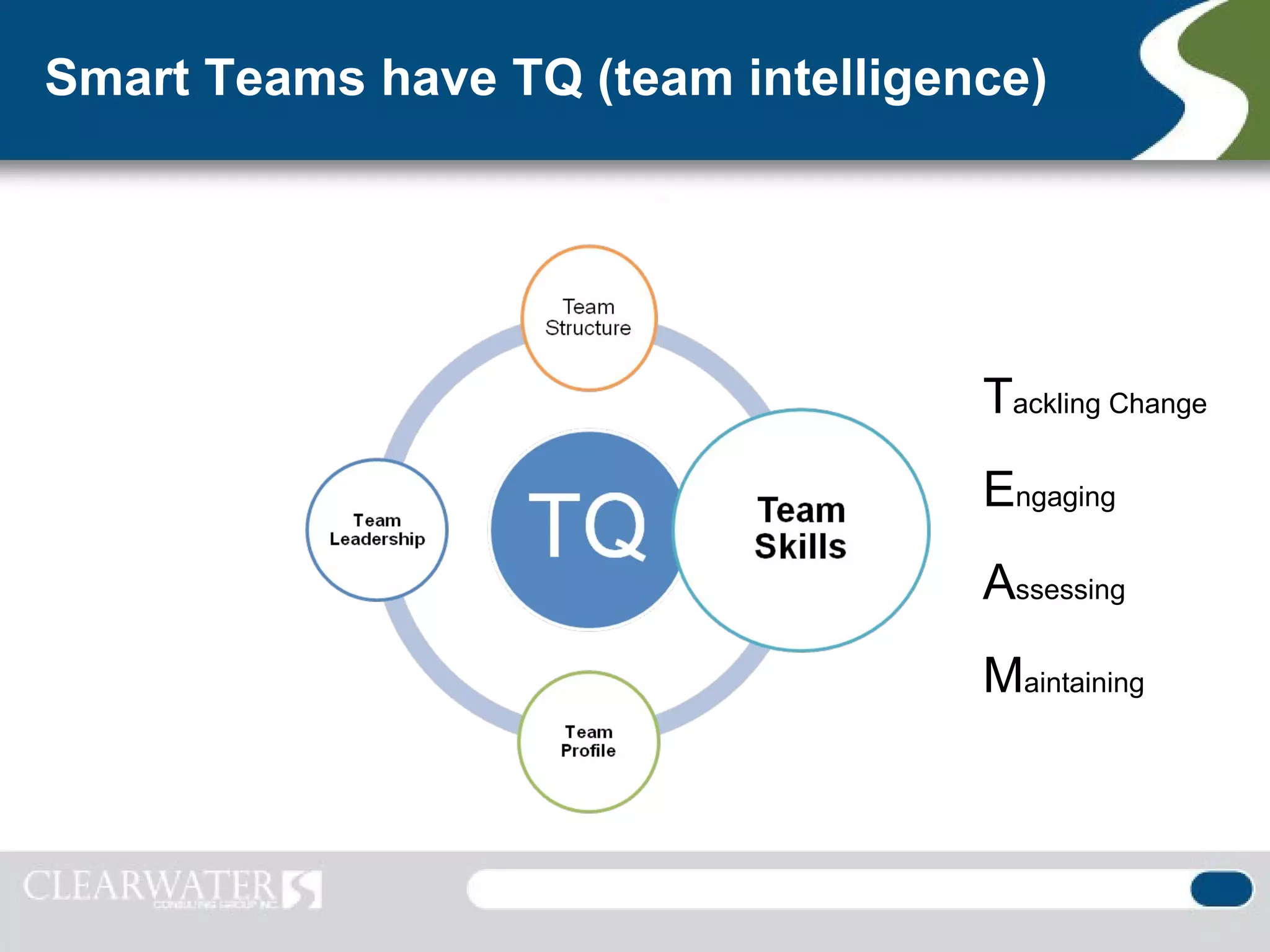
Smart Teams have TQ (team intelligence)

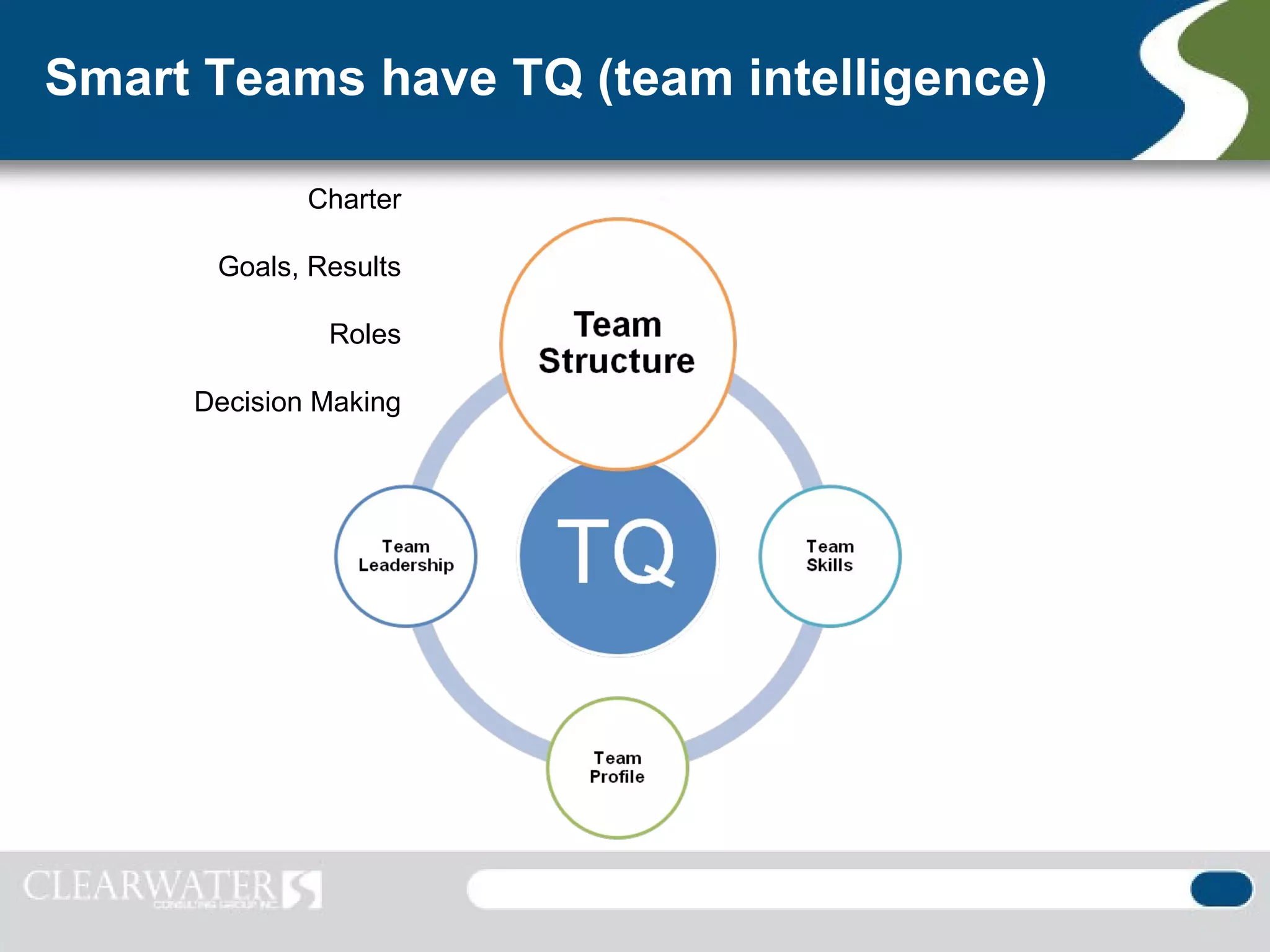
             Charter

      Goals, Results

              Roles

     Decision Making
Smart Teams have TQ (team intelligence)


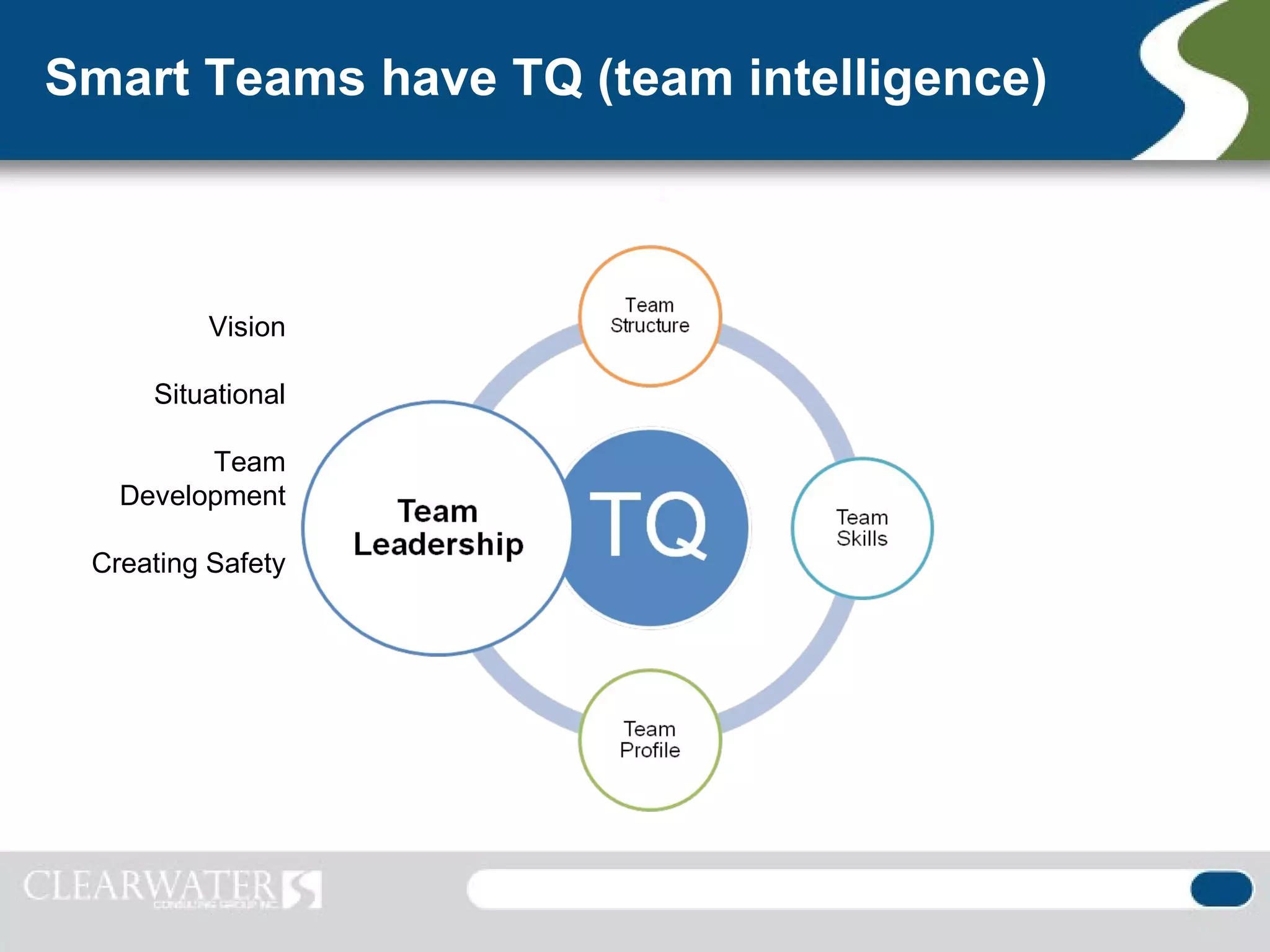
          Vision

     Situational

         Team
   Development

 Creating Safety
Smart Teams have TQ (team intelligence)


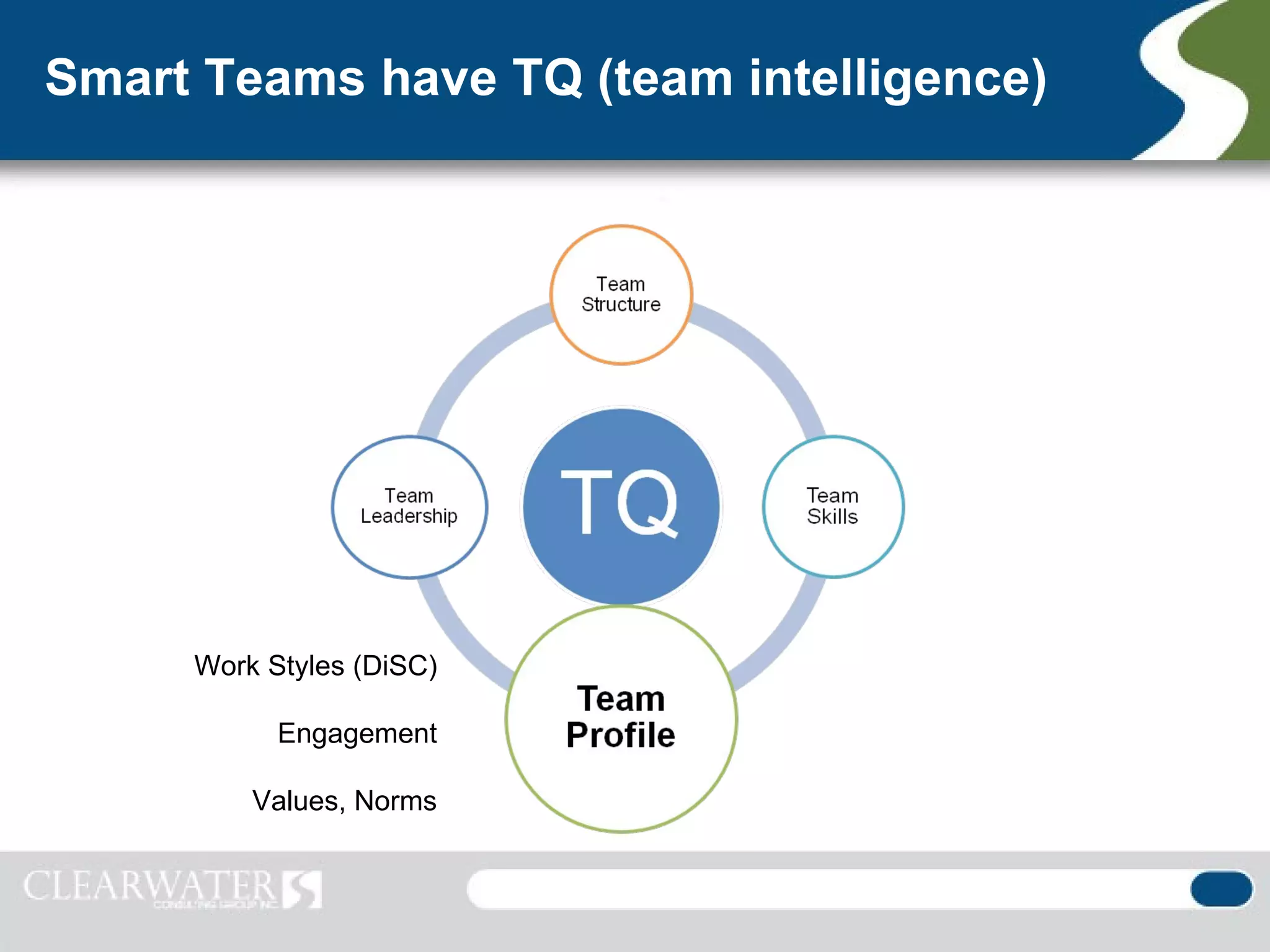
     Work Styles (DiSC)

           Engagement

         Values, Norms
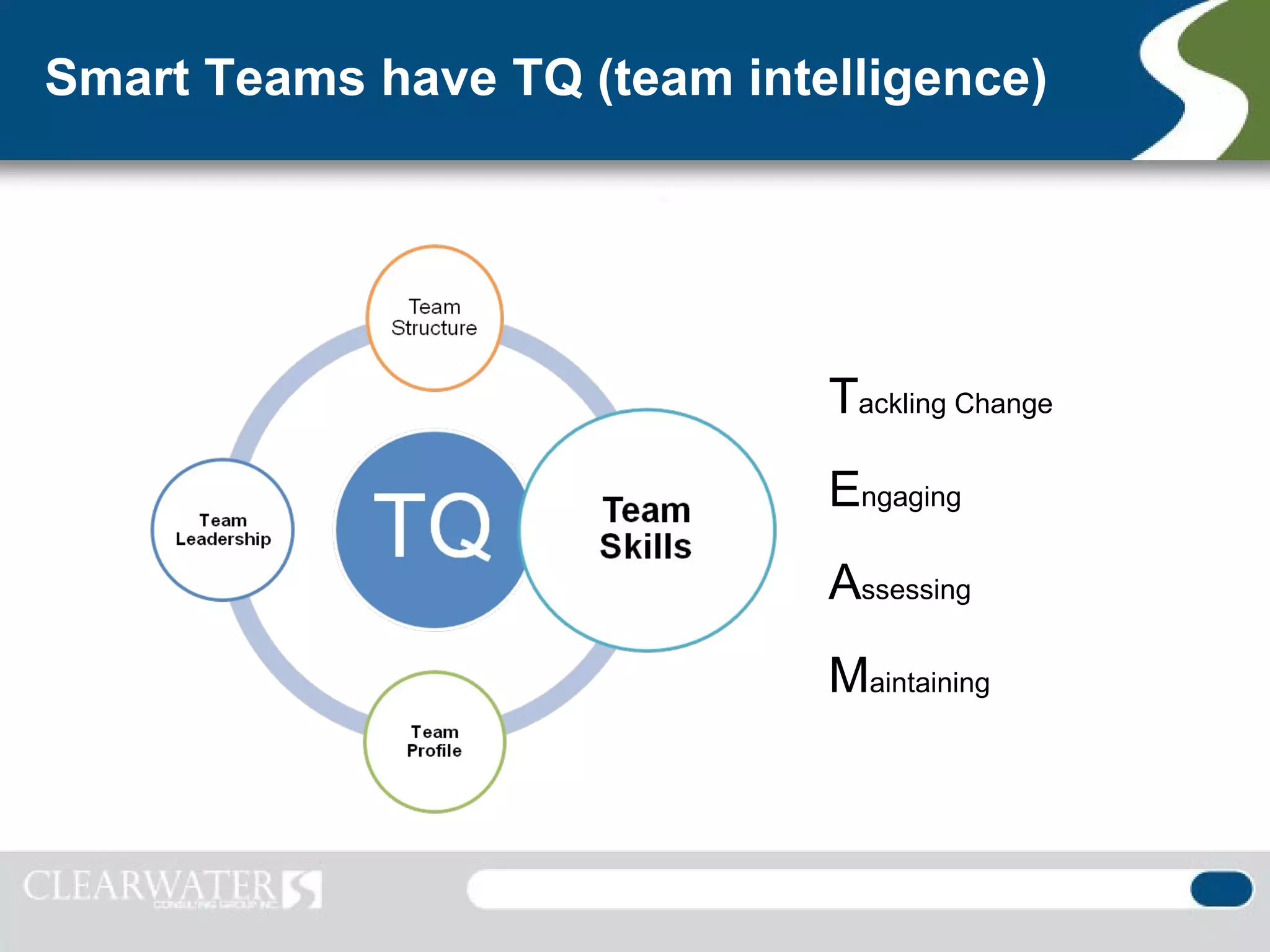
Smart Teams have TQ (team intelligence)


                                    Tackling Change
                                    Engaging
                                    Assessing
                                    Maintaining
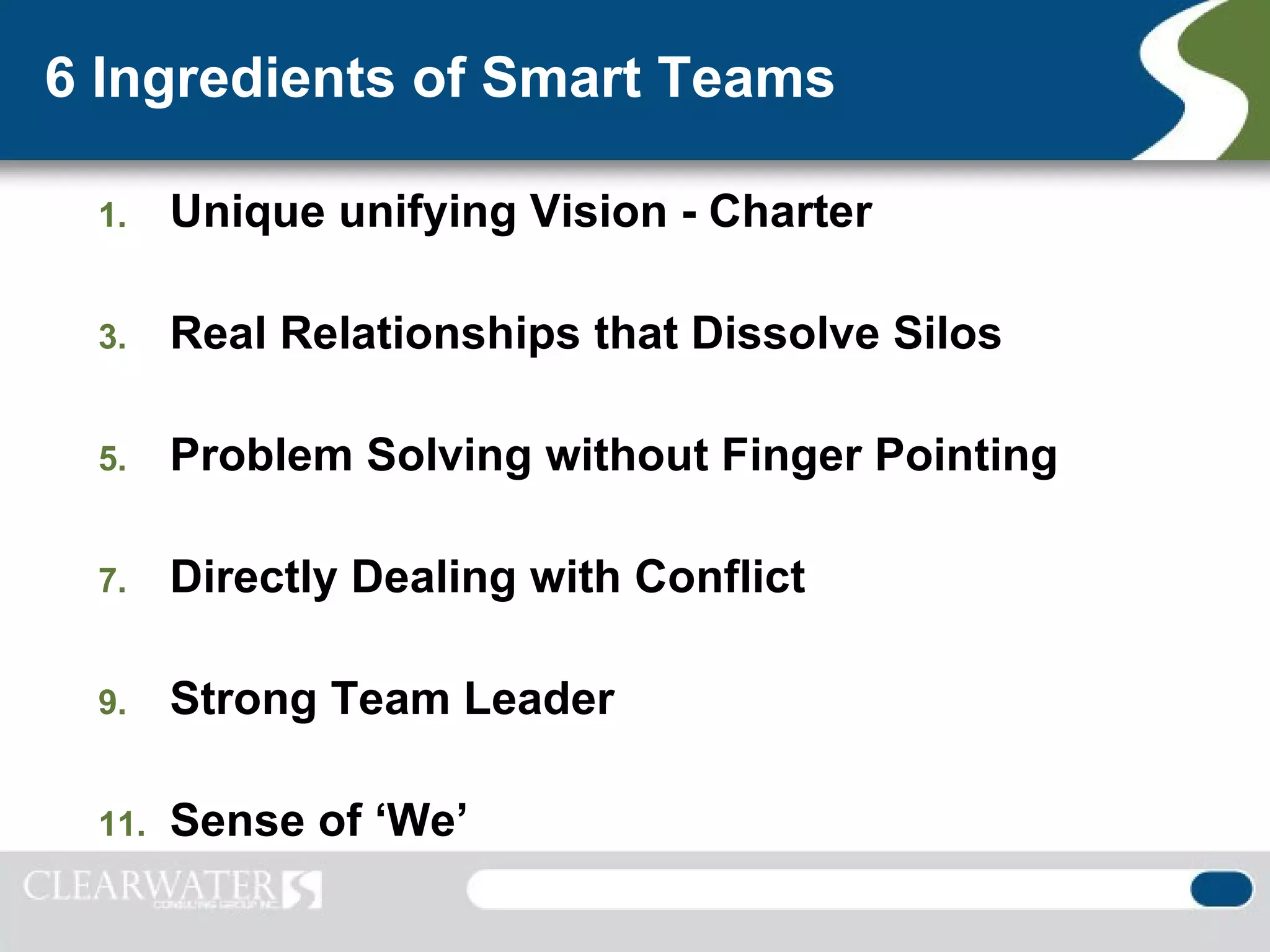
6 Ingredients of Smart Teams

 1.    Unique unifying Vision - Charter

 3.    Real Relationships that Dissolve Silos

 5.    Problem Solving without Finger Pointing

 7.    Directly Dealing with Conflict

 9.    Strong Team Leader

 11.   Sense of ‘We’
“The ratio of We’s to I’s is the best indicator of the
development of a team.”

Lewis B. Ergen


                                                   Insert footer text here   11
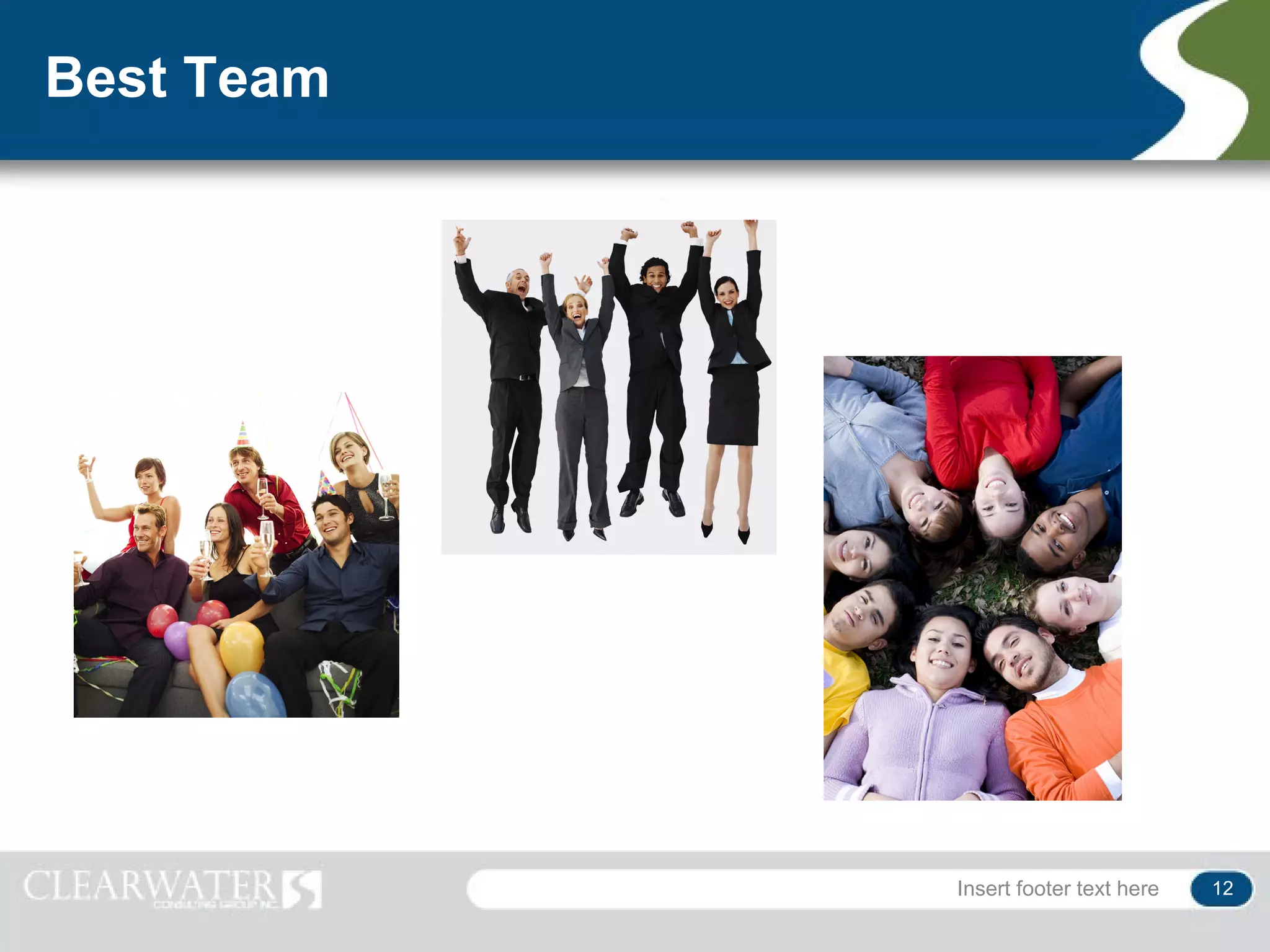
Best Team


            Insert footer text here   12
Worst Team


             Insert footer text here   13
Smart Teams have TQ (team intelligence)


                              Tackling Change
                              Engaging
                              Assessing
                              Maintaining
T.E.A.M. Skills: Tackling Change
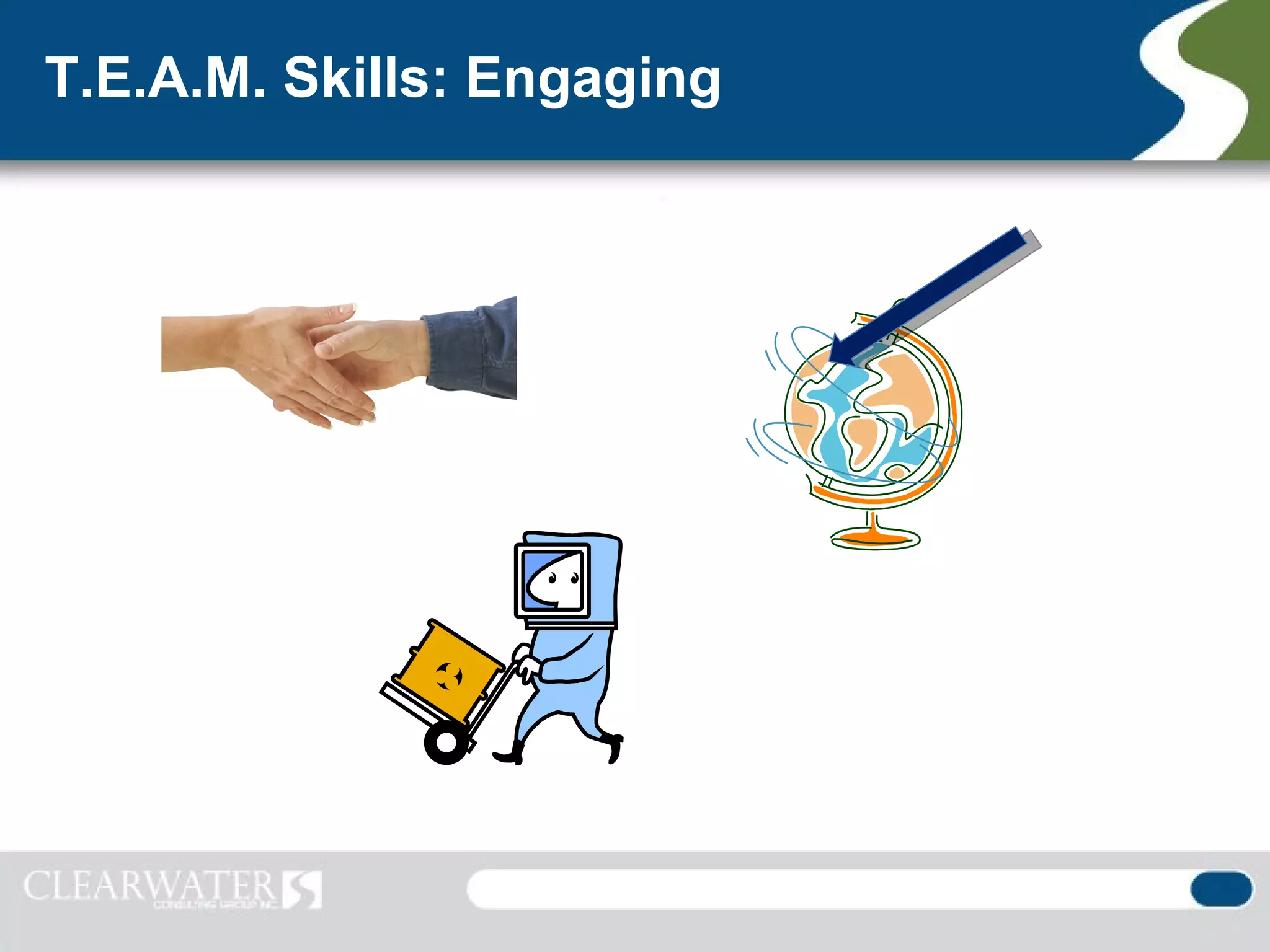
T.E.A.M. Skills: Engaging
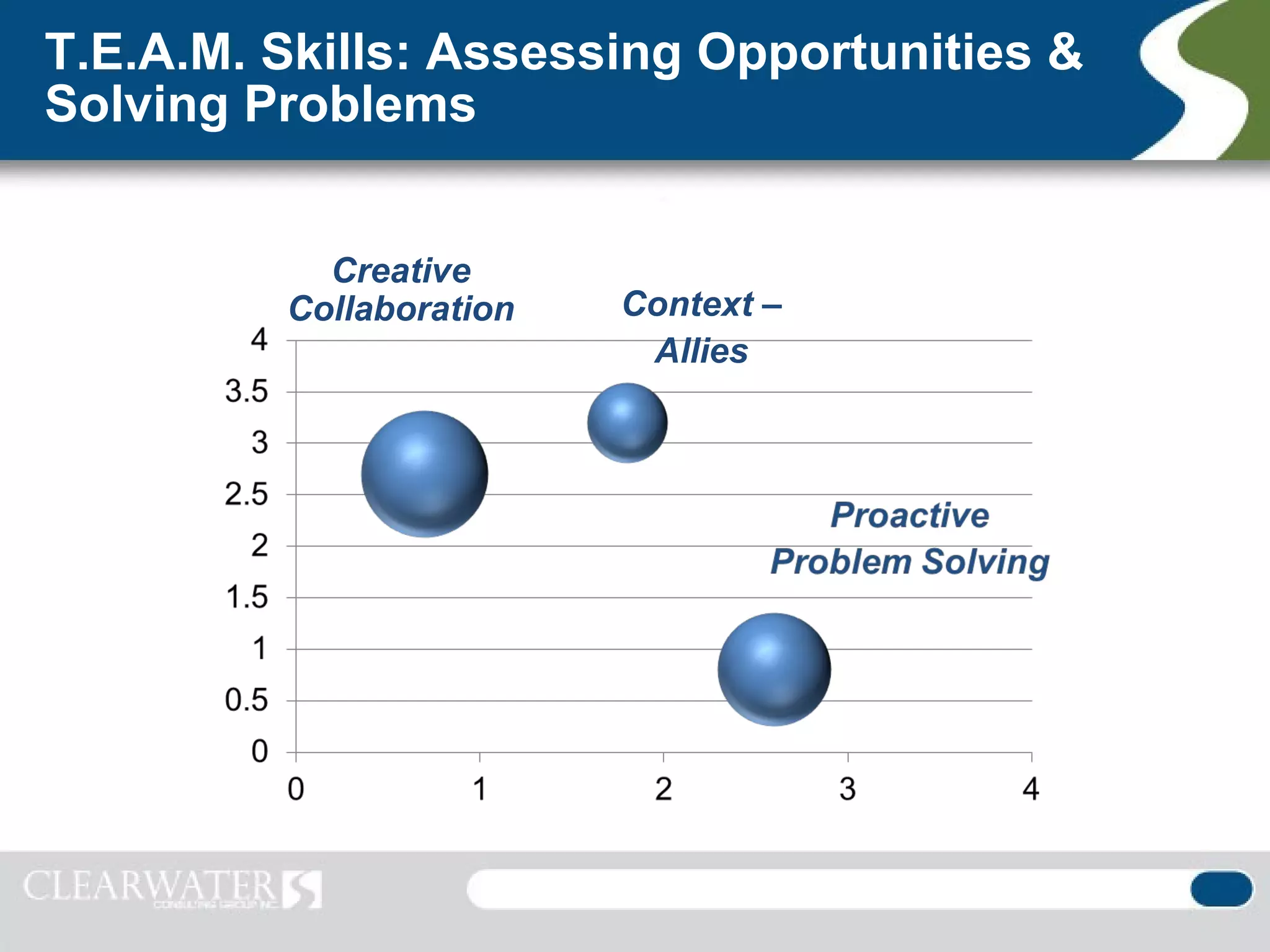
T.E.A.M. Skills: Assessing Opportunities &
Solving Problems


           Creative
         Collaboration   Context –
                          Allies
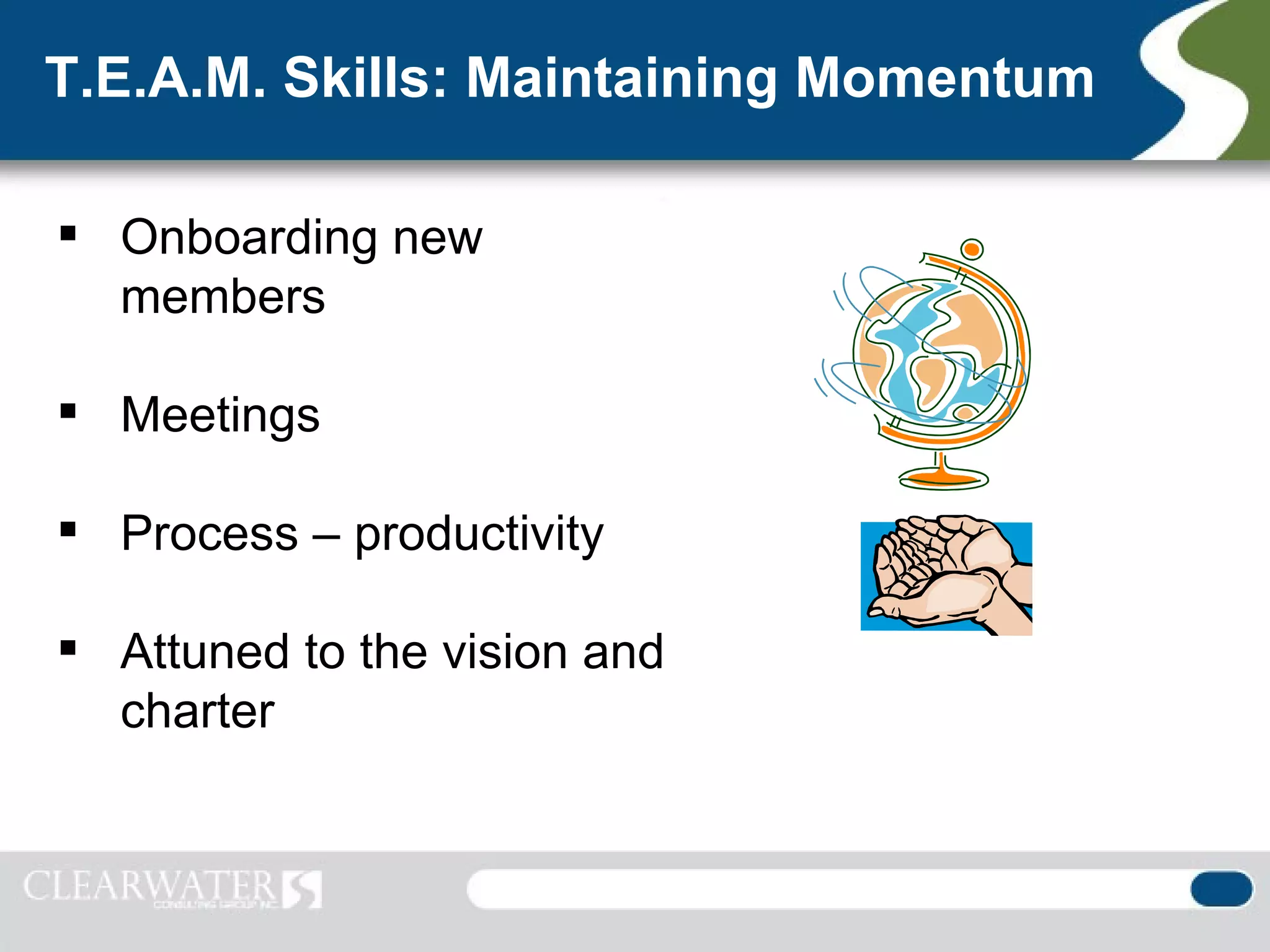
T.E.A.M. Skills: Maintaining Momentum

 Onboarding new
  members

 Meetings

 Process – productivity

 Attuned to the vision and
  charter
Getting Skilled at Engagement


     So, who’s on your team?
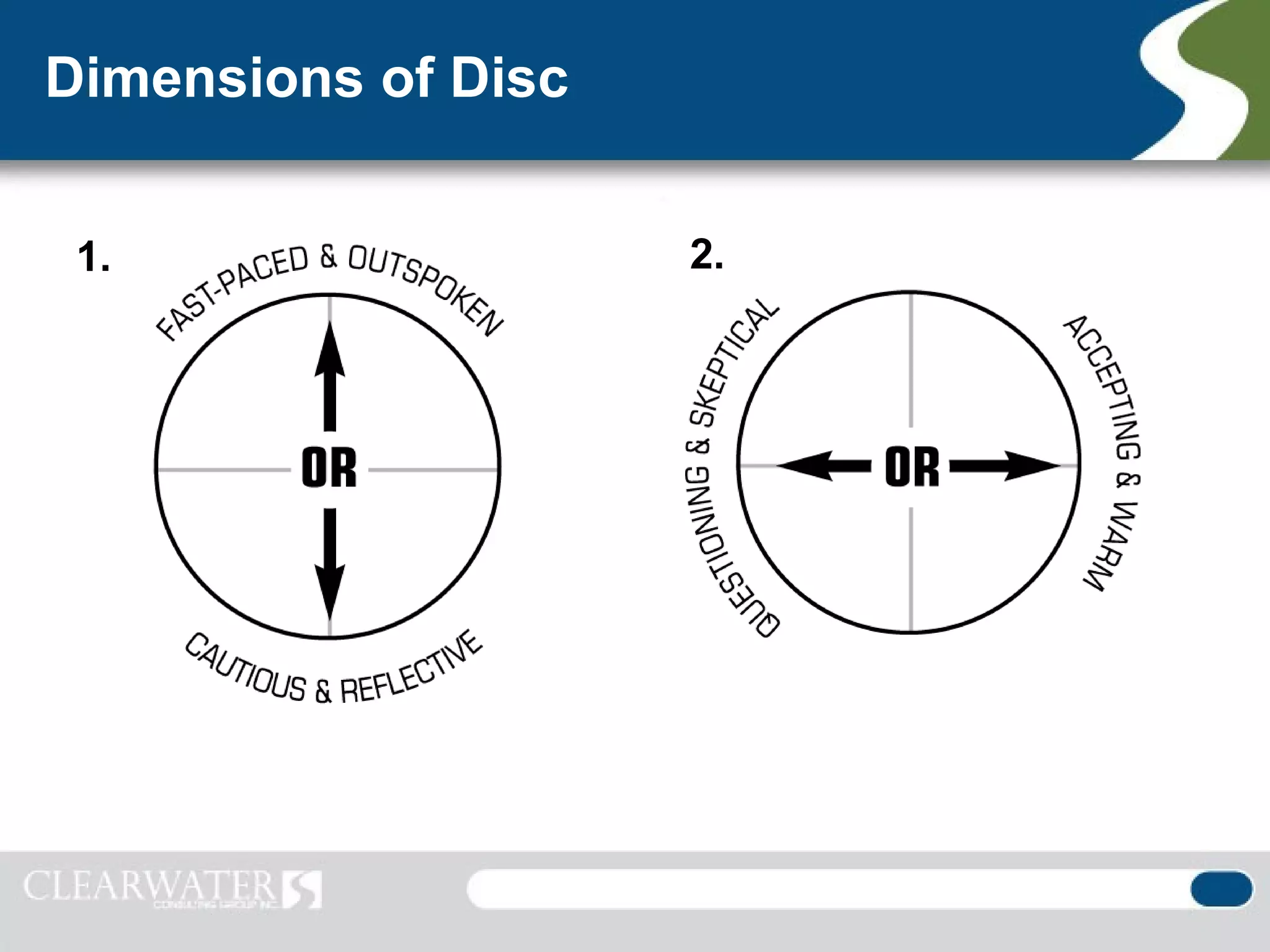
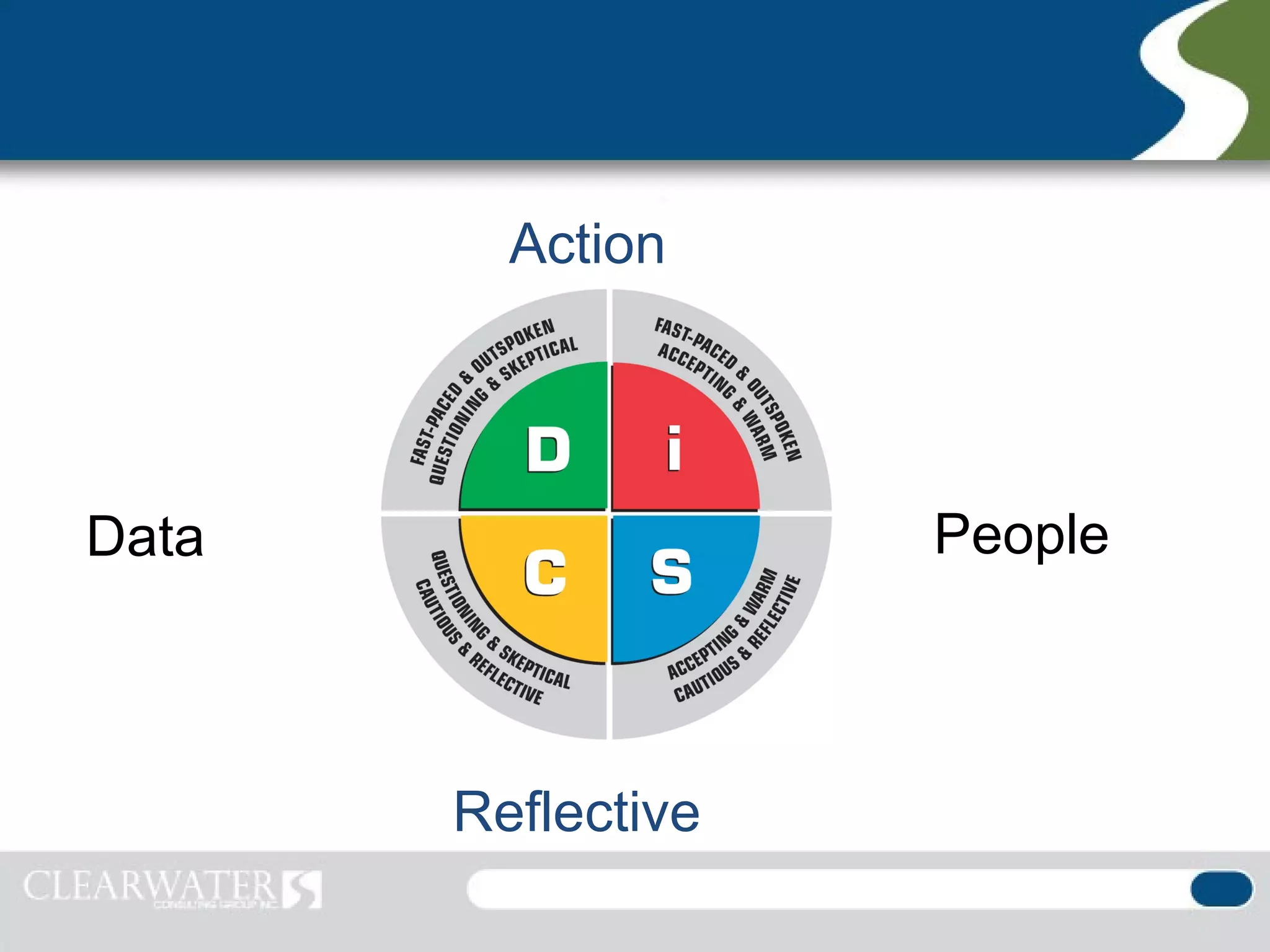
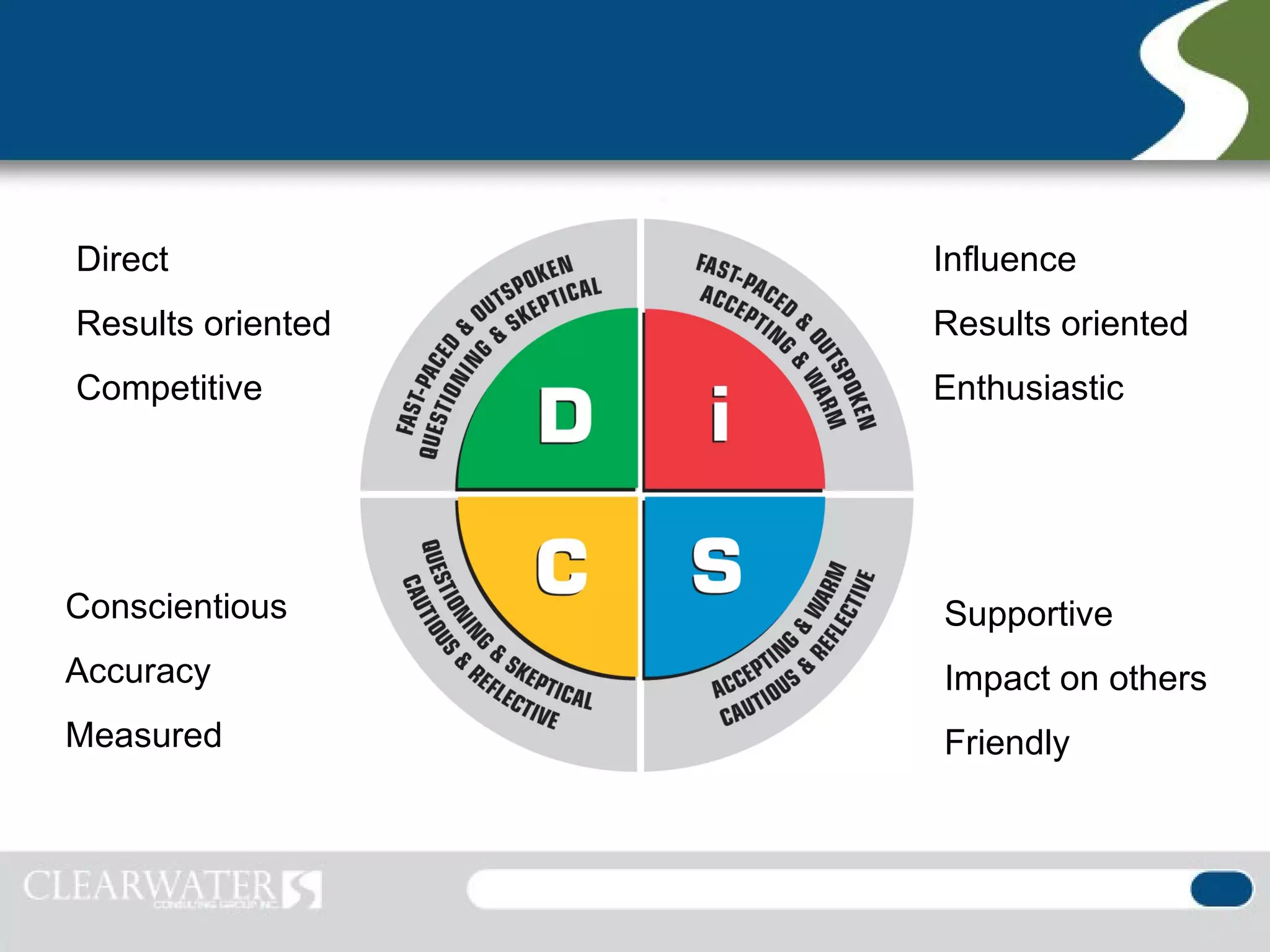
Dimensions of Disc


 1.                  2.
Action


Data                People


       Reflective
Direct             Influence
Results oriented   Results oriented
Competitive        Enthusiastic


Conscientious      Supportive
Accuracy           Impact on others
Measured           Friendly
“Lots of people want to ride with you in the limo, but what
you want is someone who will take the bus with you
when the limo breaks down.”

Oprah Winfrey


                                                Insert footer text here   23
Clearwater Consulting Group

    Women-owned firm founded in 2005
     headquartered in Atlanta, GA
    Company focus is senior team development for
     greater organizational clarity and success
    Find us www.clearwater-consulting.com
    Call us 404-842-0987


                                       Insert footer text here   24

Cw tq smart teams in action

  • 1.
    TQ – TeamIntelligence In Action
  • 2.
    Today 1. Review TQ Model 2. Explore 6 Attributes of Smart Teams 3. Introduce Team Skill 4. Assess Your Team
  • 3.
    “The leaders whowork most effectively never say ‘I.’ They don’t think ‘I.’ They think ‘we.’ They think ‘team.’ They understand their job to be to make the team function. They accept responsibility and don’t sidestep it, but ‘we’ gets the credit. This is what creates trust, what enables you to be the task done.” Peter Drucker Insert footer text here 3
  • 4.
    Cocktail Party 1)Introduce yourself 2) Answer 2 questions: What do you really enjoy about the team you're currently on? And what drives you crazy about the team you're on?
  • 5.
    Smart Teams haveTQ (team intelligence)
  • 6.
    Smart Teams haveTQ (team intelligence) Charter Goals, Results Roles Decision Making
  • 7.
    Smart Teams haveTQ (team intelligence) Vision Situational Team Development Creating Safety
  • 8.
    Smart Teams haveTQ (team intelligence) Work Styles (DiSC) Engagement Values, Norms
  • 9.
    Smart Teams haveTQ (team intelligence) Tackling Change Engaging Assessing Maintaining
  • 10.
    6 Ingredients ofSmart Teams 1. Unique unifying Vision - Charter 3. Real Relationships that Dissolve Silos 5. Problem Solving without Finger Pointing 7. Directly Dealing with Conflict 9. Strong Team Leader 11. Sense of ‘We’
  • 11.
    “The ratio ofWe’s to I’s is the best indicator of the development of a team.” Lewis B. Ergen Insert footer text here 11
  • 12.
    Best Team Insert footer text here 12
  • 13.
    Worst Team Insert footer text here 13
  • 14.
    Smart Teams haveTQ (team intelligence) Tackling Change Engaging Assessing Maintaining
  • 15.
  • 16.
  • 17.
    T.E.A.M. Skills: AssessingOpportunities & Solving Problems Creative Collaboration Context – Allies
  • 18.
    T.E.A.M. Skills: MaintainingMomentum  Onboarding new members  Meetings  Process – productivity  Attuned to the vision and charter
  • 19.
    Getting Skilled atEngagement So, who’s on your team?
  • 20.
  • 21.
    Action Data People Reflective
  • 22.
    Direct Influence Results oriented Results oriented Competitive Enthusiastic Conscientious Supportive Accuracy Impact on others Measured Friendly
  • 23.
    “Lots of peoplewant to ride with you in the limo, but what you want is someone who will take the bus with you when the limo breaks down.” Oprah Winfrey Insert footer text here 23
  • 24.
    Clearwater Consulting Group  Women-owned firm founded in 2005 headquartered in Atlanta, GA  Company focus is senior team development for greater organizational clarity and success  Find us www.clearwater-consulting.com  Call us 404-842-0987 Insert footer text here 24

Editor's Notes

  • #2 Introductions – Andrea Exercise get up, find one person – ask each other – What’s One thing I need to know about you? Then intro one of them … Agreements : Be Open to this – we always compare to what we already know (UNC study) Confidentiality Participation Cells off The practice of Noticing – what intrigues you take a note of, what doesn’t, leave behind Get curious – listen for one thing you can use today, a key takeaway, be surprised
  • #6 Structure: Roles/responsibilities Charter/purpose Goals Decision making processes Incentives Resources Metrics – measure what matters Team Leadership: Situational leadership – directive, coaching, problem solving, delegating Internal and external focus Vision Team development Creating safety Team Profile: Disc Engagement Values - norms Team Skills: Contracts/Agreements Problem Solving/Decision Making Constructive Feedback Dealing with Dynamics of Change Effective Meetings ALL OF IT OCCURING IN CONTEXT: Organizational environment = Cultue, incentives, goals, norms
  • #7 Structure: Roles/responsibilities Charter/purpose Goals Decision making processes Incentives Resources Metrics – measure what matters Team Leadership: Situational leadership – directive, coaching, problem solving, delegating Internal and external focus Vision Team development Creating safety Team Profile: Disc Engagement Values - norms Team Skills: Contracts/Agreements Problem Solving/Decision Making Constructive Feedback Dealing with Dynamics of Change Effective Meetings ALL OF IT OCCURING IN CONTEXT: Organizational environment = Culture, incentives, goals, norms
  • #8 Structure: Roles/responsibilities Charter/purpose Goals Decision making processes Incentives Resources Metrics – measure what matters Team Leadership: Situational leadership – directive, coaching, problem solving, delegating Internal and external focus Vision Team development Creating safety Team Profile: Disc Engagement Values - norms Team Skills: Contracts/Agreements Problem Solving/Decision Making Constructive Feedback Dealing with Dynamics of Change Effective Meetings ALL OF IT OCCURING IN CONTEXT: Organizational environment = Culture, incentives, goals, norms
  • #9 Structure: Roles/responsibilities Charter/purpose Goals Decision making processes Incentives Resources Metrics – measure what matters Team Leadership: Situational leadership – directive, coaching, problem solving, delegating Internal and external focus Vision Team development Creating safety Team Profile: Disc Engagement Values - norms Team Skills: Contracts/Agreements Problem Solving/Decision Making Constructive Feedback Dealing with Dynamics of Change Effective Meetings ALL OF IT OCCURING IN CONTEXT: Organizational environment = Culture, incentives, goals, norms
  • #10 Structure: Roles/responsibilities Charter/purpose Goals Decision making processes Incentives Resources Metrics – measure what matters Team Leadership: Situational leadership – directive, coaching, problem solving, delegating Internal and external focus Vision Team development Creating safety Team Profile: Disc Engagement Values - norms Team Skills: Contracts/Agreements Problem Solving/Decision Making Constructive Feedback Dealing with Dynamics of Change Effective Meetings ALL OF IT OCCURING IN CONTEXT: Organizational environment = Culture, incentives, goals, norms
  • #15 Structure: Roles/responsibilities Charter/purpose Goals Decision making processes Incentives Resources Metrics – measure what matters Team Leadership: Situational leadership – directive, coaching, problem solving, delegating Internal and external focus Vision Team development Creating safety Team Profile: Disc Engagement Values - norms Team Skills: Contracts/Agreements Problem Solving/Decision Making Constructive Feedback Dealing with Dynamics of Change Effective Meetings ALL OF IT OCCURING IN CONTEXT: Organizational environment = Culture, incentives, goals, norms
  • #16 Team Profile - Roles & Responsibilities – (morning workshop) Changes processes & Frameworks – Relate/Repeat/Reframe, Kotter Stress What creates stress – Feeling out of control Not knowing what’s going on Not knowing how to contribute Not being able to count on your team mates
  • #17 Accountability – Agreements Getting to know each other Getting Buy In - Sharing the Vision – where do ‘I’ fit, ‘we’ fit? Constructive Feedback - Dealing with Toxins + Arc of Engagement?
  • #19 You’re always developing these skills
  • #20 Innovative teams have the skills to create what needs to happen no matter the context
  • #23 FAQs – where Dot Falls, sharing profiles (primary, secondary), accessing ALL quadrants as needed