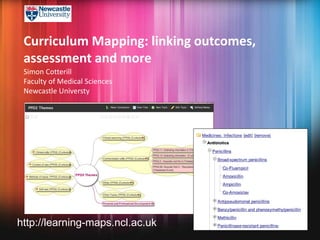
Curriculum Mapping: linking outcomes, 
assessment and more 
Simon Cotterill 
Faculty of Medical Sciences 
Newcastle Universty 
http://learning-maps.ncl.ac.uk
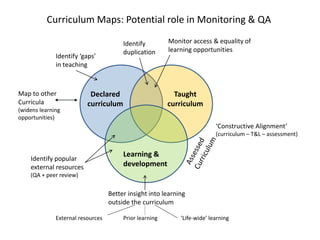
Curriculum Maps: Potential role in Monitoring & QA 
Identify ‘gaps’ 
in teaching 
Declared 
curriculum 
Monitor access & equality of 
learning opportunities 
Taught 
curriculum 
Identify 
duplication 
Learning & 
development 
‘Constructive Alignment’ 
(curriculum – T&L – assessment) 
Better insight into learning 
outside the curriculum 
Map to other 
Curricula 
(widens learning 
opportunities) 
Identify popular 
external resources 
(QA + peer review) 
External resources Prior learning ‘Life-wide’ learning
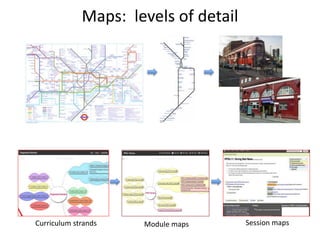
Maps: levels of detail 
Curriculum strands Module maps Session maps
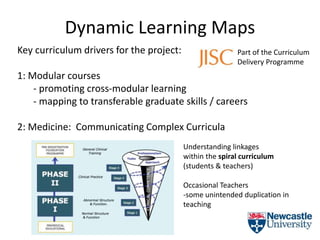
Dynamic Learning Maps 
Key curriculum drivers for the project: 
1: Modular courses 
Part of the Curriculum 
Delivery Programme 
- promoting cross-modular learning 
- mapping to transferable graduate skills / careers 
2: Medicine: Communicating Complex Curricula 
Understanding linkages 
within the spiral curriculum 
(students & teachers) 
Occasional Teachers 
-some unintended duplication in 
teaching
Choice of views 
Text-based 
interface 
Mind-map style 
interface 
I Prefer: 
n=193 (student response system) 
Diversity and strong polarisation of 
personal preferences for visual, text or other views 
Further evaluation results: 
https://learning-maps.ncl.ac.uk/
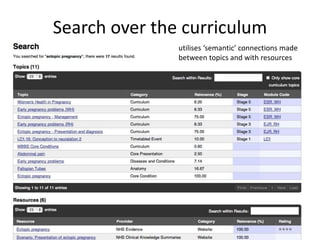
Search over the curriculum 
utilises ‘semantic’ connections made 
between topics and with resources
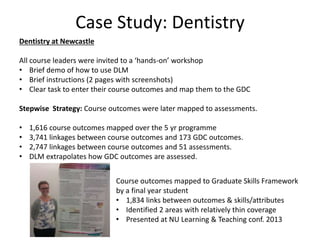
Case Study: Dentistry 
Dentistry at Newcastle 
All course leaders were invited to a ‘hands-on’ workshop 
• Brief demo of how to use DLM 
• Brief instructions (2 pages with screenshots) 
• Clear task to enter their course outcomes and map them to the GDC 
Stepwise Strategy: Course outcomes were later mapped to assessments. 
• 1,616 course outcomes mapped over the 5 yr programme 
• 3,741 linkages between course outcomes and 173 GDC outcomes. 
• 2,747 linkages between course outcomes and 51 assessments. 
• DLM extrapolates how GDC outcomes are assessed. 
Course outcomes mapped to Graduate Skills Framework 
by a final year student 
• 1,834 links between outcomes & skills/attributes 
• Identified 2 areas with relatively thin coverage 
• Presented at NU Learning & Teaching conf. 2013
Knowing how a teaching session relates to the 
rest of the curriculum is important to me 
 “Will increase relevance of Phase I lectures 
to clinical presentations/experience” 
n=193 (student response system) 
 From a students point of view, one could be 
much clearer on ‘the big picture’, as you have a 
curriculum map laid out in front of you...” 
77% Agreed 
Stage 4 Medical Students 
- Focus groups
Having the map will be useful for revision 
 “Excellent revision tool” 
? “Any way of ticking off lectures revised?” 
n=193 (student response system) 
Stage 4 Medical Students 
 “Helpful revision tool” 
Clinical Teacher 
91% Agreed
It would be useful to add notes and reflections to 
teaching sessions and other parts of the map 
“[liked] linking the portfolio (which may 
appear otherwise abstract) with the rest of 
a student’s education”. 
“link to portfolio may 
increase its usage!” 
Stage 4 
Medical Students 
(Focus Group) 
73% of students agree 
But clinical teaching staff skeptical: 
n=193 (student response system) 
“Can this really be used for 
portfolio (if voluntary) ?“ 
“How to engage student with e-portfolios 
– won’t work without their engagement”
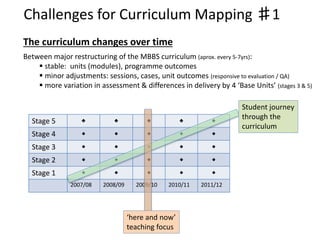
Challenges for Curriculum Mapping ♯1 
The curriculum changes over time 
Between major restructuring of the MBBS curriculum (aprox. every 5-7yrs): 
 stable: units (modules), programme outcomes 
 minor adjustments: sessions, cases, unit outcomes (responsive to evaluation / QA) 
 more variation in assessment & differences in delivery by 4 ‘Base Units’ (stages 3 & 5) 
Stage 5      
Stage 4      
Stage 3      
Stage 2      
Stage 1      
2007/08 2008/09 2009/10 2010/11 2011/12 
Student journey 
through the 
curriculum 
‘here and now’ 
teaching focus
Challenges for Curriculum Mapping ♯2 
• Staff time / Staff engagement 
• Level of Granularity 
• Consistency 
Developing a Mapping Strategy 
• Stepwise mapping 
Course Outcomes 
Professional Outcomes 
Assessment 
• Involve Staff early (including Admin team) 
• Roll out to students later?
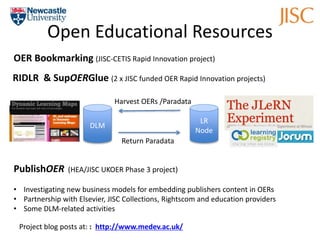
Open Educational Resources 
OER Bookmarking (JISC-CETIS Rapid Innovation project) 
RIDLR & SupOERGlue (2 x JISC funded OER Rapid Innovation projects) 
Return Paradata 
LR 
Node 
DLM 
Harvest OERs /Paradata 
PublishOER (HEA/JISC UKOER Phase 3 project) 
• Investigating new business models for embedding publishers content in OERs 
• Partnership with Elsevier, JISC Collections, Rightscom and education providers 
• Some DLM-related activities 
Project blog posts at: : http://www.medev.ac.uk/
Co-Curate 
DLM ‘lite’ with visual resource system
Project funded by 
Thank You 
Further information & Public Demonstrator: 
http://learning-maps.ncl.ac.uk

Curriculum Mapping

  • 1.
    Curriculum Mapping: linkingoutcomes, assessment and more Simon Cotterill Faculty of Medical Sciences Newcastle Universty http://learning-maps.ncl.ac.uk
  • 2.
    Curriculum Maps: Potentialrole in Monitoring & QA Identify ‘gaps’ in teaching Declared curriculum Monitor access & equality of learning opportunities Taught curriculum Identify duplication Learning & development ‘Constructive Alignment’ (curriculum – T&L – assessment) Better insight into learning outside the curriculum Map to other Curricula (widens learning opportunities) Identify popular external resources (QA + peer review) External resources Prior learning ‘Life-wide’ learning
  • 3.
    Maps: levels ofdetail Curriculum strands Module maps Session maps
  • 4.
    Dynamic Learning Maps Key curriculum drivers for the project: 1: Modular courses Part of the Curriculum Delivery Programme - promoting cross-modular learning - mapping to transferable graduate skills / careers 2: Medicine: Communicating Complex Curricula Understanding linkages within the spiral curriculum (students & teachers) Occasional Teachers -some unintended duplication in teaching
  • 5.
    Choice of views Text-based interface Mind-map style interface I Prefer: n=193 (student response system) Diversity and strong polarisation of personal preferences for visual, text or other views Further evaluation results: https://learning-maps.ncl.ac.uk/
  • 6.
    Search over thecurriculum utilises ‘semantic’ connections made between topics and with resources
  • 7.
    Case Study: Dentistry Dentistry at Newcastle All course leaders were invited to a ‘hands-on’ workshop • Brief demo of how to use DLM • Brief instructions (2 pages with screenshots) • Clear task to enter their course outcomes and map them to the GDC Stepwise Strategy: Course outcomes were later mapped to assessments. • 1,616 course outcomes mapped over the 5 yr programme • 3,741 linkages between course outcomes and 173 GDC outcomes. • 2,747 linkages between course outcomes and 51 assessments. • DLM extrapolates how GDC outcomes are assessed. Course outcomes mapped to Graduate Skills Framework by a final year student • 1,834 links between outcomes & skills/attributes • Identified 2 areas with relatively thin coverage • Presented at NU Learning & Teaching conf. 2013
  • 8.
    Knowing how ateaching session relates to the rest of the curriculum is important to me  “Will increase relevance of Phase I lectures to clinical presentations/experience” n=193 (student response system)  From a students point of view, one could be much clearer on ‘the big picture’, as you have a curriculum map laid out in front of you...” 77% Agreed Stage 4 Medical Students - Focus groups
  • 9.
    Having the mapwill be useful for revision  “Excellent revision tool” ? “Any way of ticking off lectures revised?” n=193 (student response system) Stage 4 Medical Students  “Helpful revision tool” Clinical Teacher 91% Agreed
  • 10.
    It would beuseful to add notes and reflections to teaching sessions and other parts of the map “[liked] linking the portfolio (which may appear otherwise abstract) with the rest of a student’s education”. “link to portfolio may increase its usage!” Stage 4 Medical Students (Focus Group) 73% of students agree But clinical teaching staff skeptical: n=193 (student response system) “Can this really be used for portfolio (if voluntary) ?“ “How to engage student with e-portfolios – won’t work without their engagement”
  • 11.
    Challenges for CurriculumMapping ♯1 The curriculum changes over time Between major restructuring of the MBBS curriculum (aprox. every 5-7yrs):  stable: units (modules), programme outcomes  minor adjustments: sessions, cases, unit outcomes (responsive to evaluation / QA)  more variation in assessment & differences in delivery by 4 ‘Base Units’ (stages 3 & 5) Stage 5      Stage 4      Stage 3      Stage 2      Stage 1      2007/08 2008/09 2009/10 2010/11 2011/12 Student journey through the curriculum ‘here and now’ teaching focus
  • 12.
    Challenges for CurriculumMapping ♯2 • Staff time / Staff engagement • Level of Granularity • Consistency Developing a Mapping Strategy • Stepwise mapping Course Outcomes Professional Outcomes Assessment • Involve Staff early (including Admin team) • Roll out to students later?
  • 13.
    Open Educational Resources OER Bookmarking (JISC-CETIS Rapid Innovation project) RIDLR & SupOERGlue (2 x JISC funded OER Rapid Innovation projects) Return Paradata LR Node DLM Harvest OERs /Paradata PublishOER (HEA/JISC UKOER Phase 3 project) • Investigating new business models for embedding publishers content in OERs • Partnership with Elsevier, JISC Collections, Rightscom and education providers • Some DLM-related activities Project blog posts at: : http://www.medev.ac.uk/
  • 14.
    Co-Curate DLM ‘lite’with visual resource system
  • 15.
    Project funded by Thank You Further information & Public Demonstrator: http://learning-maps.ncl.ac.uk