• SYSTEM ANALYSIS
• DEMONSTRATION
What is a system?
A system is a collection of
elements, interacting with each
other to achieve a common goal.
Crunkilton and Finch (1999)
SYSTEM ANALYSIS
 System can be either closed or open, living or non-
living. The living system are open system.
 Ludwing von Bertalanffy,(1952) is said to be the
father of general system theory said,
“ the principle of wholeness, of organization & of a
dynamic conception of reality becomes apparent
in all field of science”.
 The largest system is the universe itself & the
smallest system is atom.
Kesha & million
system approach is one of
the technique which aims at fining the most
efficient and economically intelligent method for
solving the problems of education scientifically.
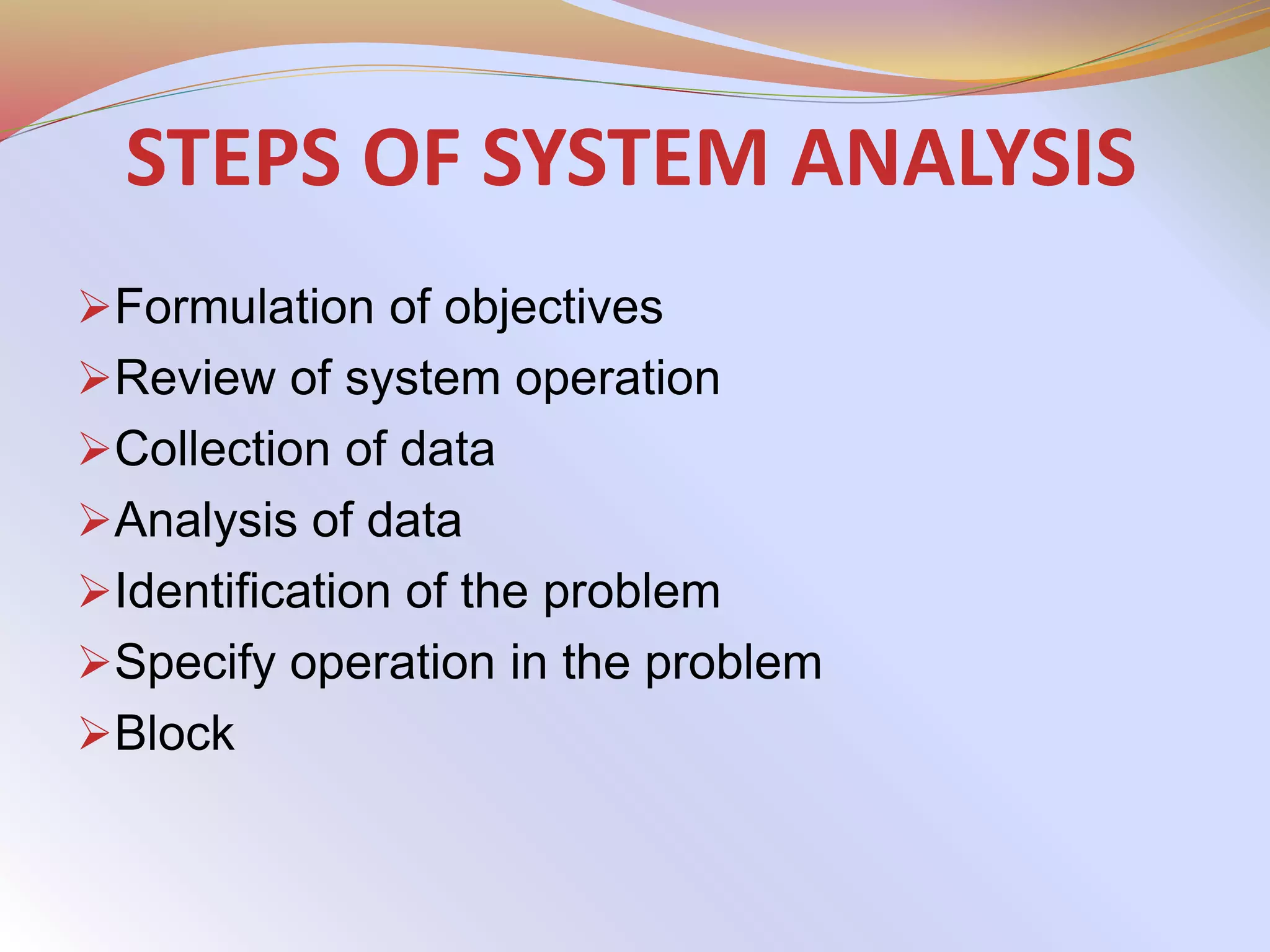
STEPS OF SYSTEM ANALYSIS
Formulation of objectives
Review of system operation
Collection of data
Analysis of data
Identification of the problem
Specify operation in the problem
Block
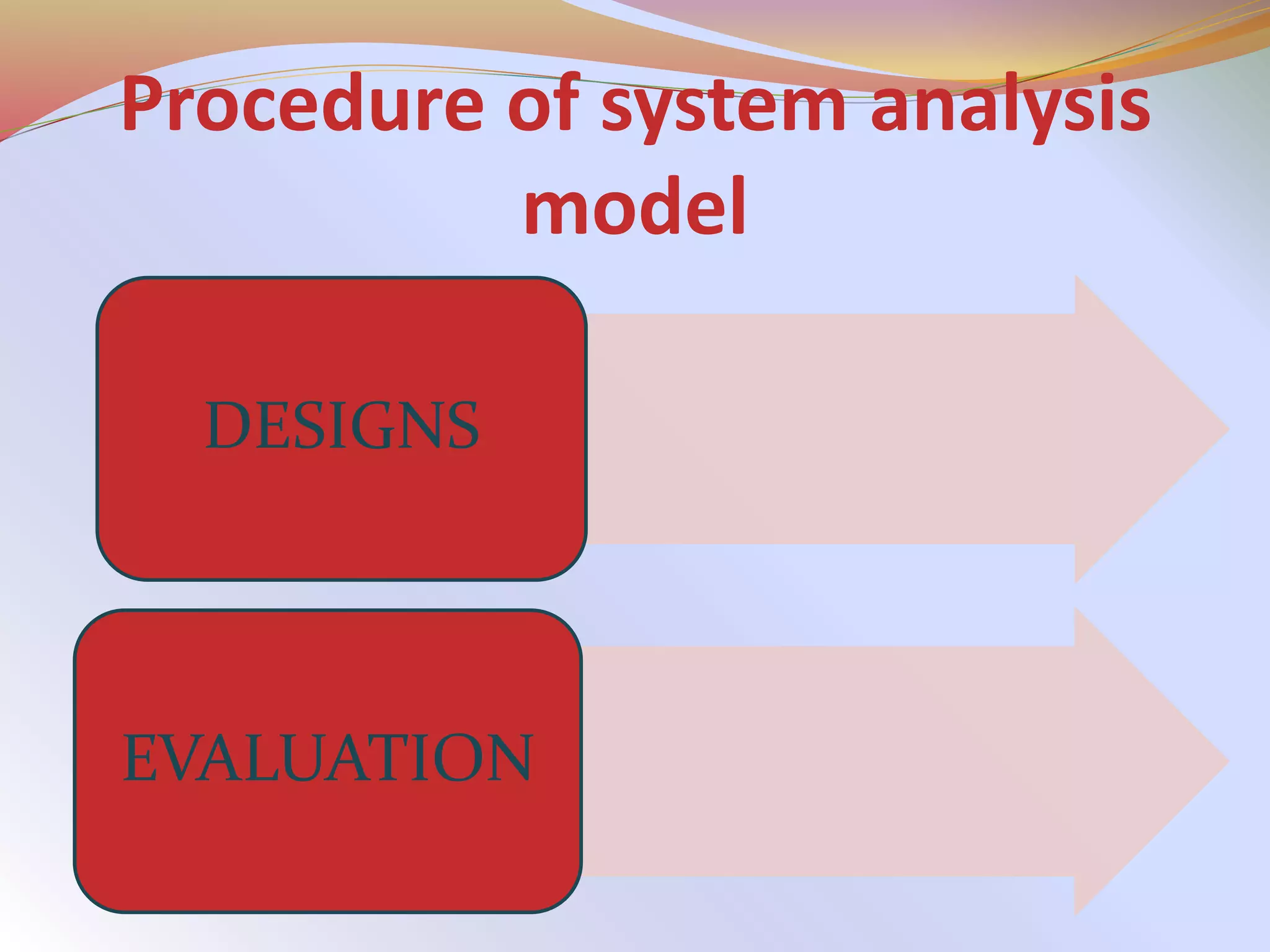
Procedure of system analysis
model
DESIGNS
EVALUATION
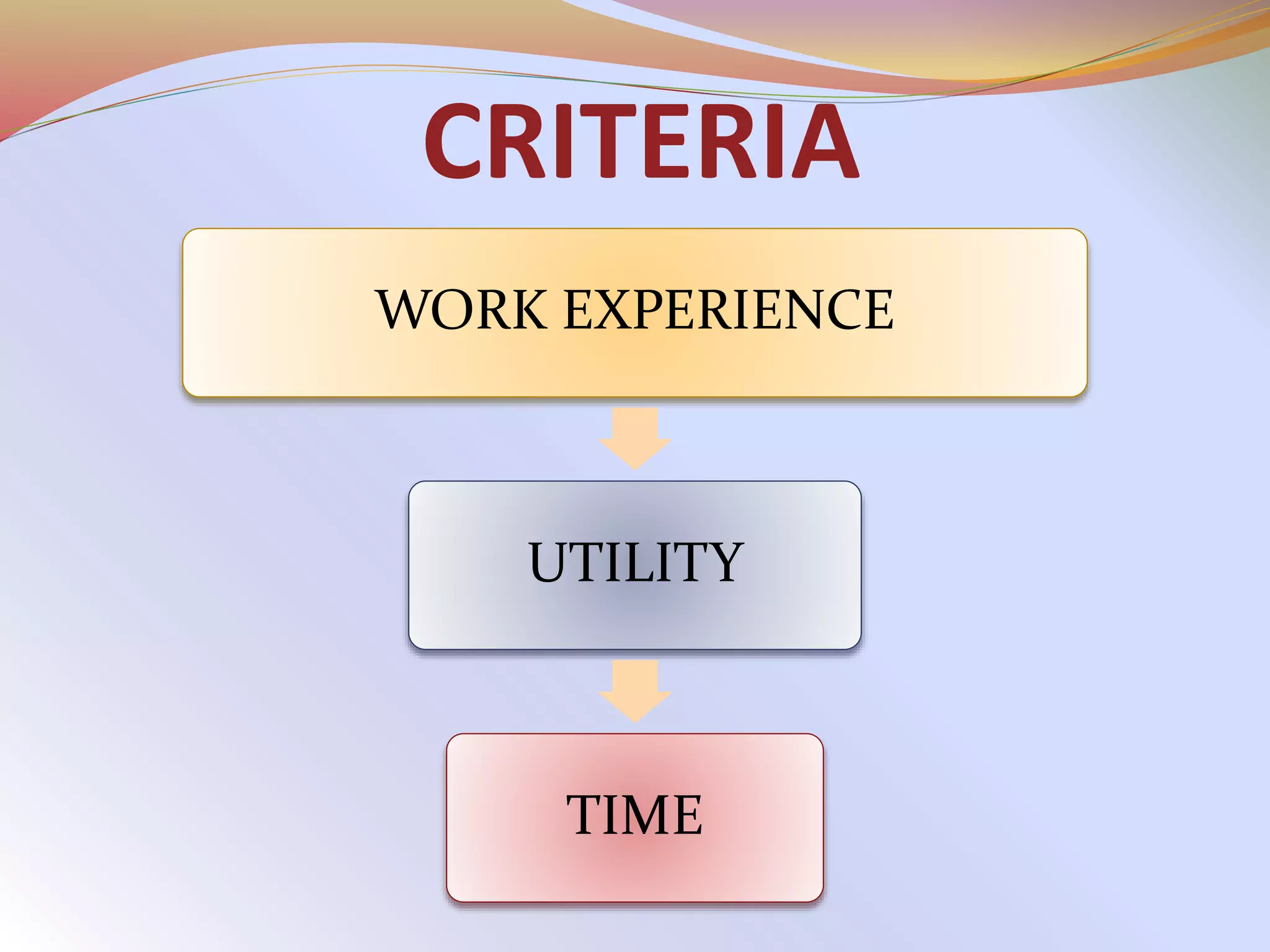
CRITERIA
WORK EXPERIENCE
UTILITY
TIME
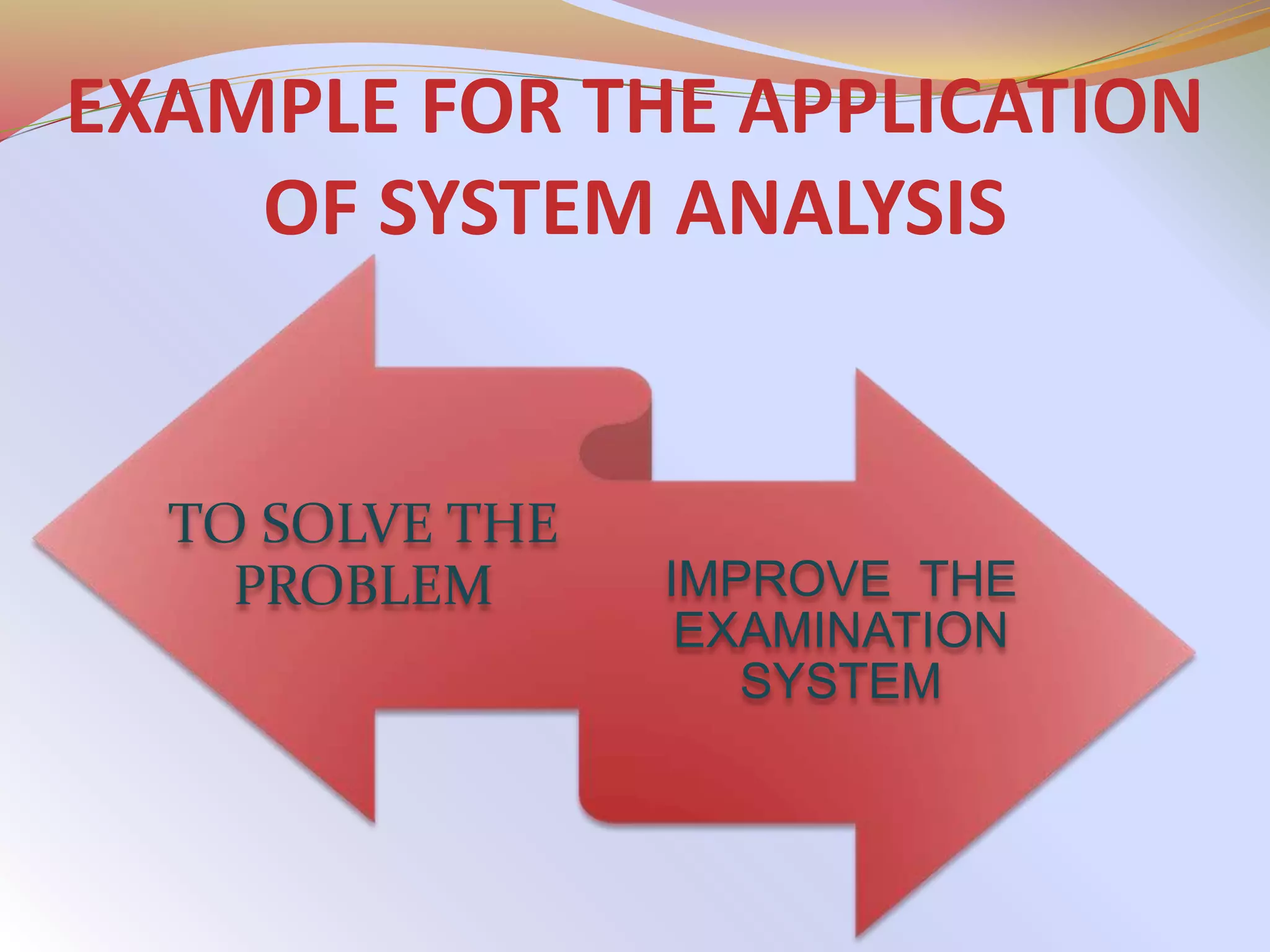
EXAMPLE FOR THE APPLICATION
OF SYSTEM ANALYSIS
TO SOLVE THE
PROBLEM IMPROVE THE
EXAMINATION
SYSTEM
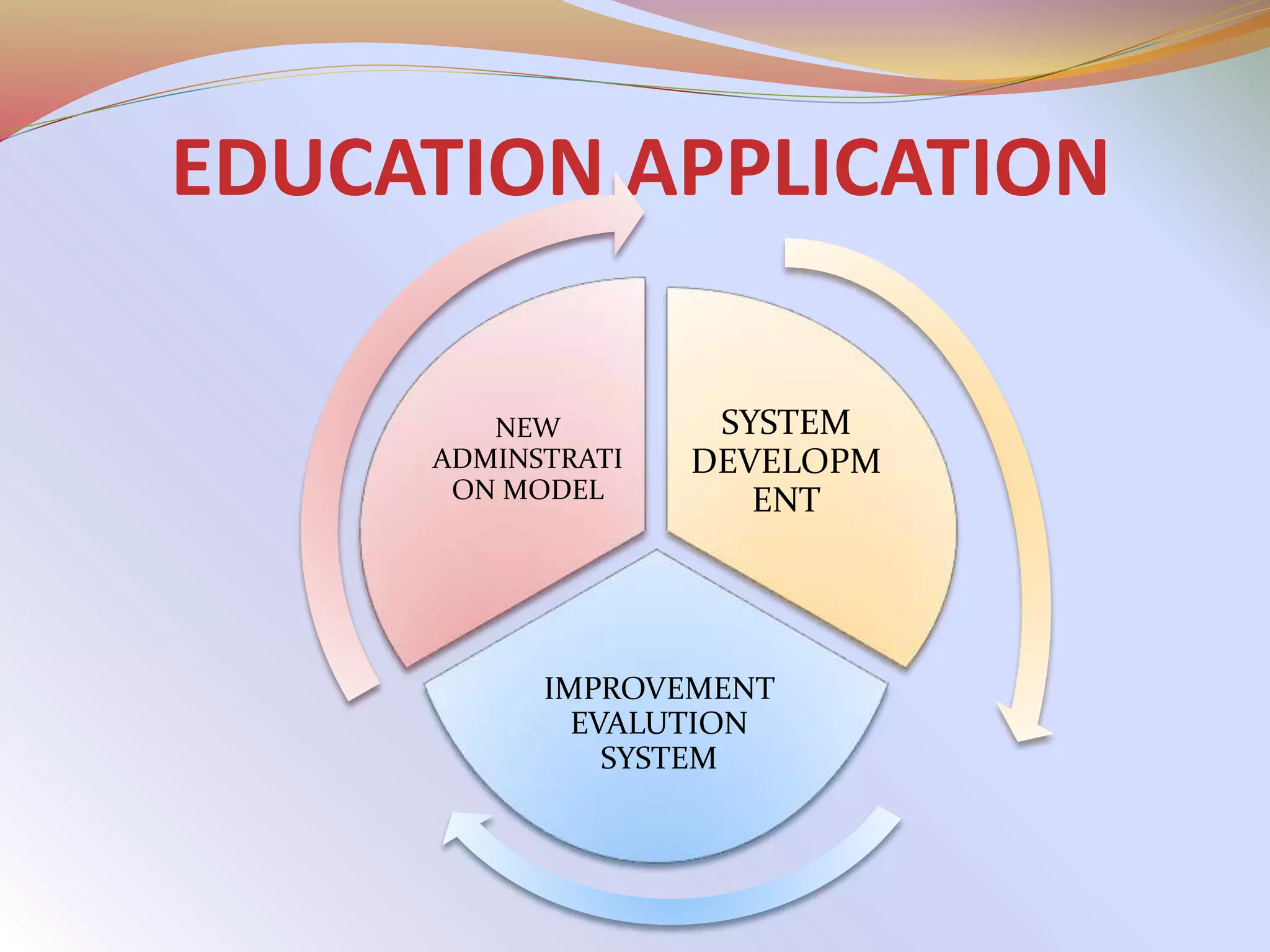
EDUCATION APPLICATION
SYSTEM
DEVELOPM
ENT
IMPROVEMENT
EVALUTION
SYSTEM
NEW
ADMINSTRATI
ON MODEL
DEMONSTRATION
 : It’s a visualized explanation of facts, concepts and
procedure.
 Purpose:
1. Designed to show the learner how to perform
certain psychomotor skill.
2. Designed to show learner why certain things
occur.
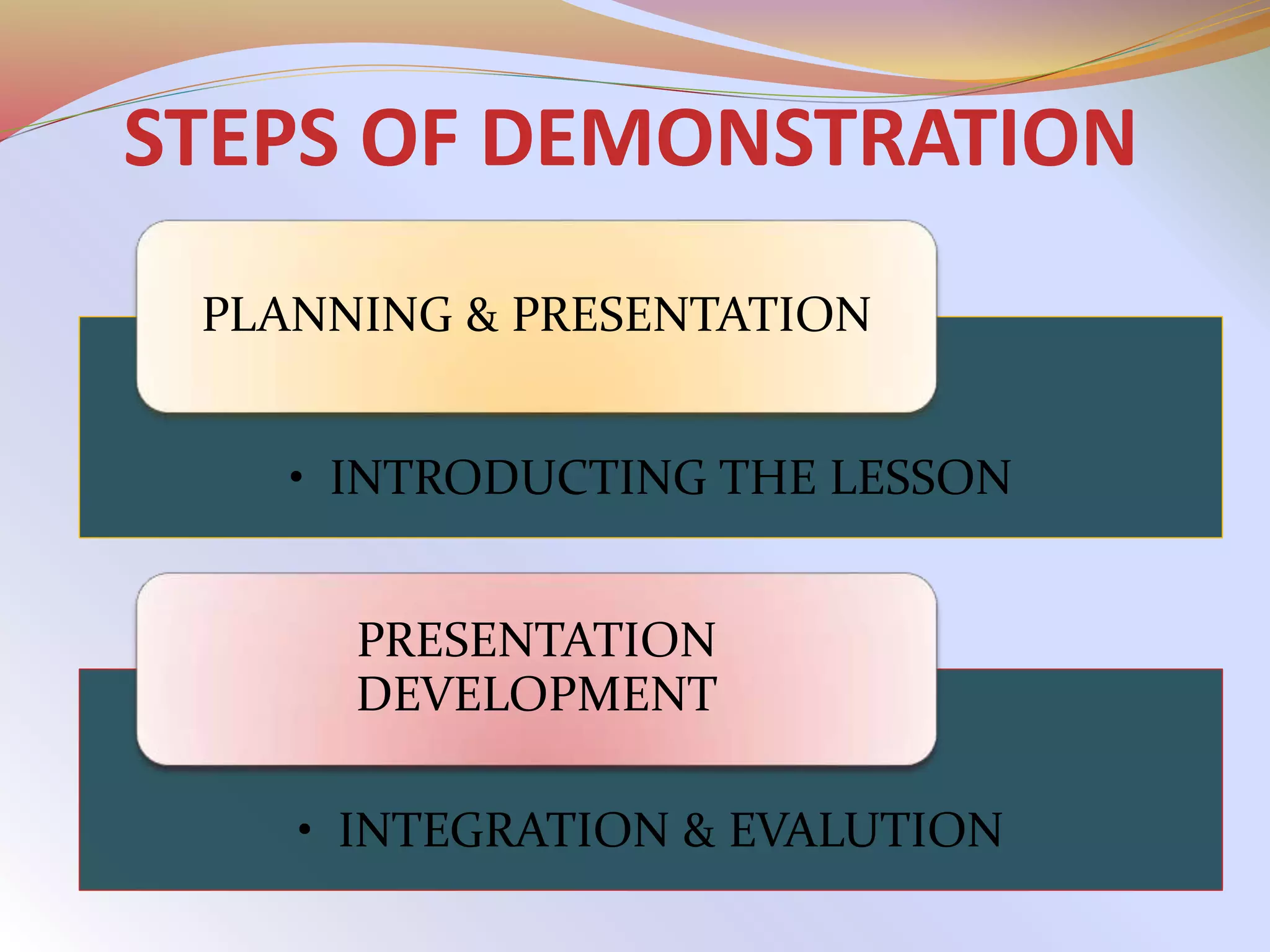
STEPS OF DEMONSTRATION
• INTRODUCTING THE LESSON
PLANNING & PRESENTATION
• INTEGRATION & EVALUTION
PRESENTATION
DEVELOPMENT
Advantage and Disadvantage of
Demonstration
Advantage
 Show learner the skill step by step.
 Each learner sees what is going on.
 Provide immediate practice by the learner himself.
 Can be used with individual or group.
Disadvantage
 Costly if much equipment is involved.
 Need careful preparation.
 Need careful attention.
By:- Aastha Bhatia
Creative glory

curriculum development

  • 1.
  • 2.
    What is asystem? A system is a collection of elements, interacting with each other to achieve a common goal. Crunkilton and Finch (1999)
  • 3.
    SYSTEM ANALYSIS  Systemcan be either closed or open, living or non- living. The living system are open system.  Ludwing von Bertalanffy,(1952) is said to be the father of general system theory said, “ the principle of wholeness, of organization & of a dynamic conception of reality becomes apparent in all field of science”.  The largest system is the universe itself & the smallest system is atom.
  • 4.
    Kesha & million systemapproach is one of the technique which aims at fining the most efficient and economically intelligent method for solving the problems of education scientifically.
  • 5.
    STEPS OF SYSTEMANALYSIS Formulation of objectives Review of system operation Collection of data Analysis of data Identification of the problem Specify operation in the problem Block
  • 6.
    Procedure of systemanalysis model DESIGNS EVALUATION
  • 7.
  • 8.
    EXAMPLE FOR THEAPPLICATION OF SYSTEM ANALYSIS TO SOLVE THE PROBLEM IMPROVE THE EXAMINATION SYSTEM
  • 9.
  • 10.
    DEMONSTRATION  : It’sa visualized explanation of facts, concepts and procedure.  Purpose: 1. Designed to show the learner how to perform certain psychomotor skill. 2. Designed to show learner why certain things occur.
  • 11.
    STEPS OF DEMONSTRATION •INTRODUCTING THE LESSON PLANNING & PRESENTATION • INTEGRATION & EVALUTION PRESENTATION DEVELOPMENT
  • 12.
    Advantage and Disadvantageof Demonstration Advantage  Show learner the skill step by step.  Each learner sees what is going on.  Provide immediate practice by the learner himself.  Can be used with individual or group. Disadvantage  Costly if much equipment is involved.  Need careful preparation.  Need careful attention.
  • 13.