Cultural
Awareness
Multidisciplinary Flipped Learning with ICT
Erasmus+ KA2 Project
FLwICT
(2015 – 2017)
4th Project Meeting in Daugavpils Saskanas school
4th – 8th April
Plan:
 What is Culture?
 Understanding cultural differences
 Dealing with cultural differences
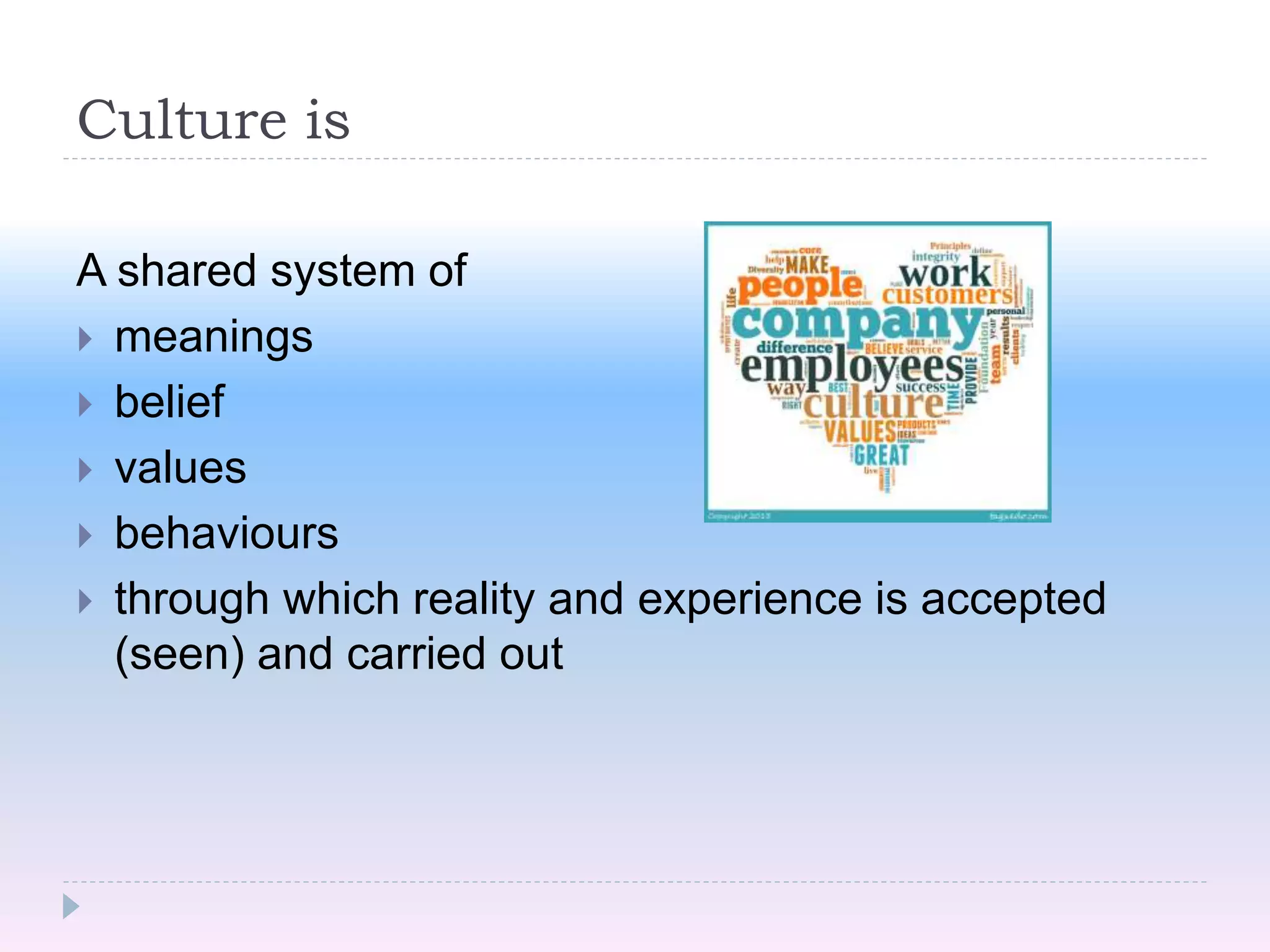
Culture is
A shared system of
 meanings
 belief
 values
 behaviours
 through which reality and experience is accepted
(seen) and carried out
And here are our traditions
Portugal Lithuania Turkey
Italy France
Latvia
Dangers!
 Stereotypes
 Prejudice
Stereotypes - beliefs based on faulty or partial
information
Prejudice - attitudes and values arising from such
beliefs
Understanding cultural differences
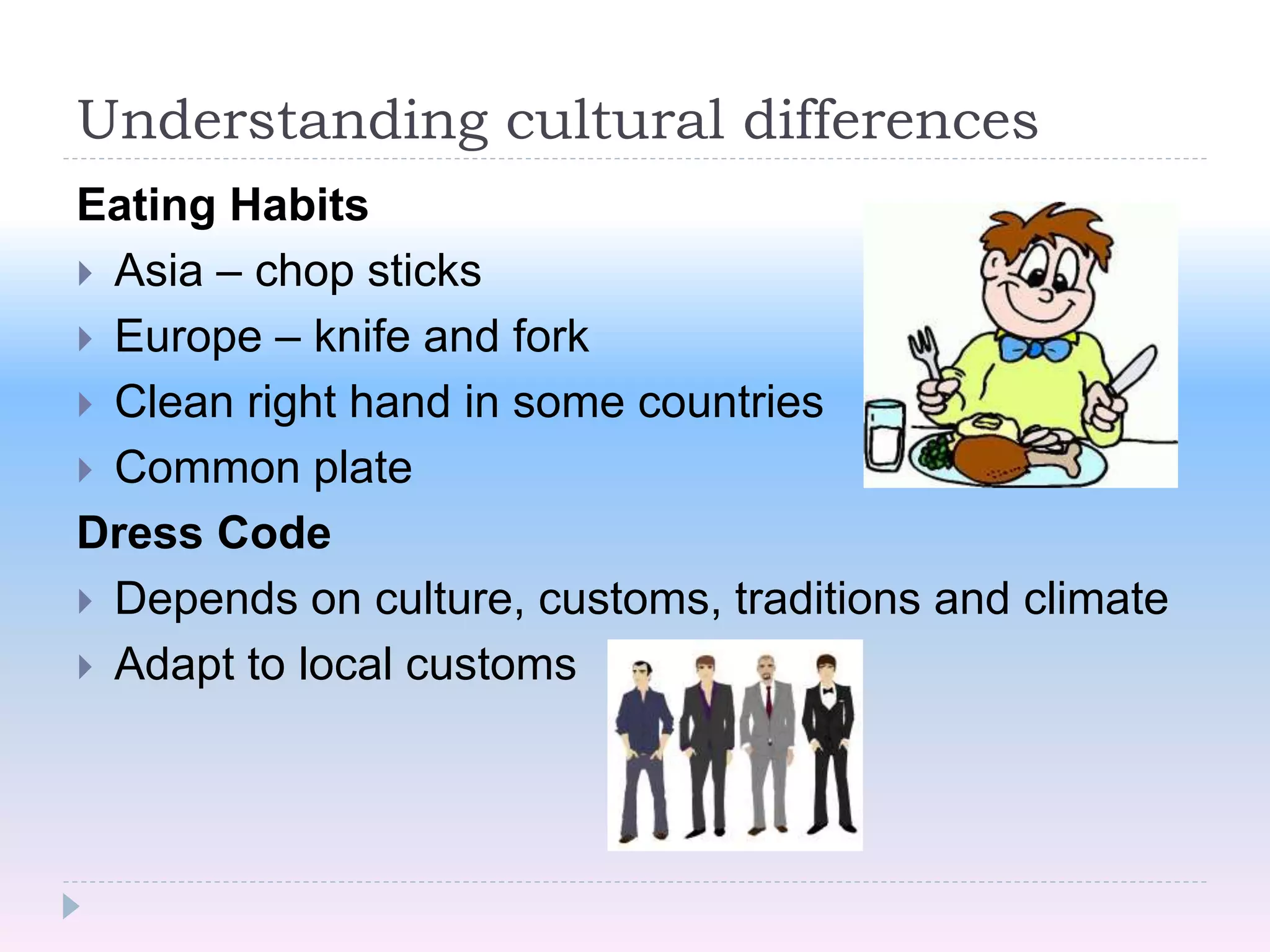
Eating Habits
 Asia – chop sticks
 Europe – knife and fork
 Clean right hand in some countries
 Common plate
Dress Code
 Depends on culture, customs, traditions and climate
 Adapt to local customs
Body Language
 Gestures/body language have different meanings
 Smile will never be misunderstood
 Polite handshake is accepted in most cultures
Some other aspects
A bit of advice ...
 Respect local traffic laws
 Language is culture specific, avoid use of idiomatic
expressions
 Elders are highly respected in many cultures
 Respect religious beliefs
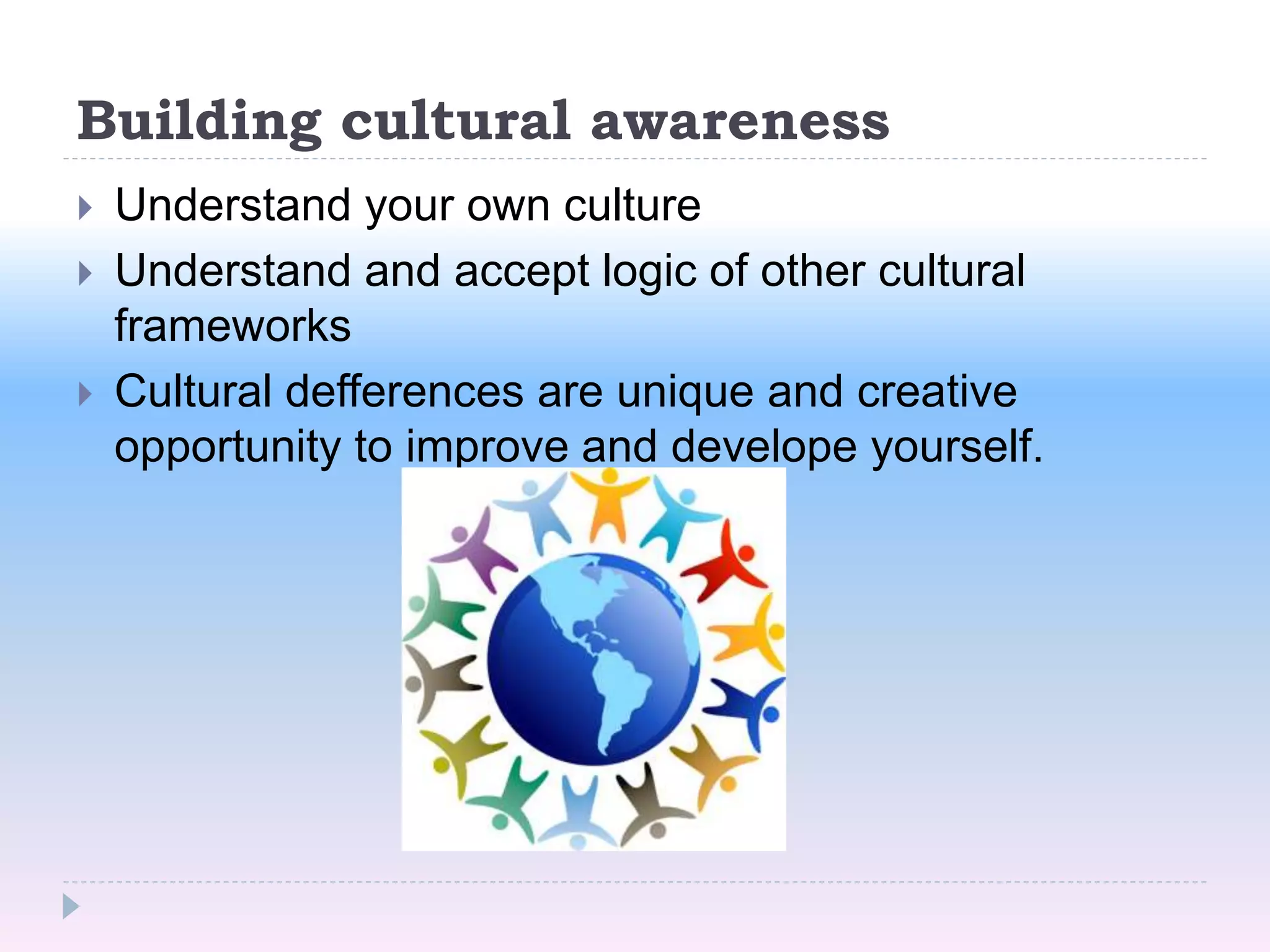
Building cultural awareness
 Understand your own culture
 Understand and accept logic of other cultural
frameworks
 Cultural defferences are unique and creative
opportunity to improve and develope yourself.
The Golden Rule
 Treat others as we would like to be treated
The Platinum Rule
 Treat others as they would like to be treated
Cultural awareness
If you are
 Modest
 Respectful
 Friendly
you will always be fine
Sources
http://www.bing.com/images/search?q=cultural+awareness&view=detailv2&&id=35
ABA1BCFE49B0D85C7602CB7242298742092EEA&selectedIndex=14&ccid=Zp4u
Vz05&simid=608008808446299295&thid=OIP.M669e2e573d399f441094e423a1e1
3875o0&ajaxhist=0
Prepared by
Diana Rodrigues
Enrika Stundzyte
Aylin Bozyel
Sara Variati
Khadija Benomar
Ineta Dukshinska
Cultural awareness..

Cultural awareness..