What is Culture?

                     FH-Prof. Dr. Jim Miller
STITCH MODULE: Intercultural Communication
                      Powerpoint Lecture 1
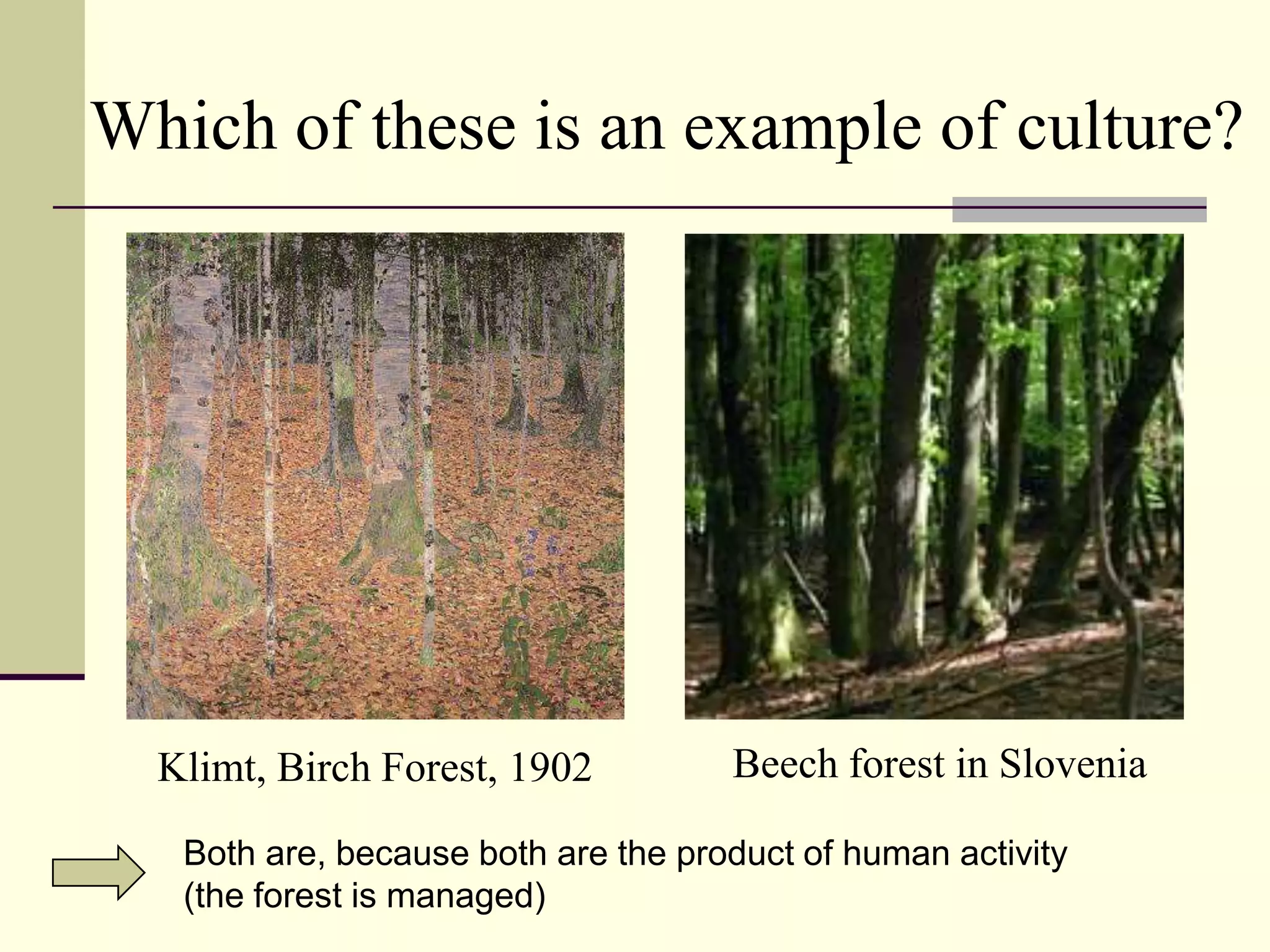
Which of these is an example of culture?


  Klimt, Birch Forest, 1902          Beech forest in Slovenia

   Both are, because both are the product of human activity
   (the forest is managed)
Basic Aspects of Culture
 Culture is much more than the Louve in Paris
  or the Musikverein in Vienna
 Culture covers everything—houses, clothes,
  food, language, morals, values, ideas—even
  the natural environment if altered by human
  activity
Definitions of Culture
  Culture is…
       an historically-transmitted, socially constructed system of
        beliefs, premises, symbols and their meanings that pertain to
        a group of people.
  Culture is…
       . . . in your head . . . in the way you talk
       . . . in your behavior       . . . deeply felt
  Culture is a system of resources for understanding
   the world around you.
  Culture is the set of “tools” that our families and
   societies instill in us to get through life.
• Clothing
            • Food
            • what houses
              look like
            • how a
              language
              sounds
            • etc., etc. etc.


• how clothing communicates
  status
• what foods are tabu
• how different tones of voice
  communicate different meanings
• how different types of
  architecture are used
• etc., etc., etc
The Cultural Iceburg
 In any society, most cultural meanings are to
  be found “below the water line”
 It takes intercultural skill to figure out what
  things mean
 Only when you begin to figure out what the
  things “below the line” mean, can you begin
  to act in a culturally appropriate manner
 A foreigner almost never can figure out what
  EVERYTHING below the line means
Effective Intercultural
Communication
 Requires a profound knowledge of yourself
  and your own culture
 Requires an appreciation for cultural
  difference and a willingness to accept other
  cultures as just as valid as your own
 Requires a knowledge of other cultural
  systems
 Requires a set of communication skills that
  are often just as useful if applied WITHIN
  your own culture as they are when applied in
  an intercultural setting
Welcome to the
Intercultural Adventure!


 Acquiring these
  skills can be an
  exciting voyage of
  discovery

Stitch1 what is_culture

  • 1.
    What is Culture? FH-Prof. Dr. Jim Miller STITCH MODULE: Intercultural Communication Powerpoint Lecture 1
  • 2.
    Which of theseis an example of culture? Klimt, Birch Forest, 1902 Beech forest in Slovenia Both are, because both are the product of human activity (the forest is managed)
  • 3.
    Basic Aspects ofCulture  Culture is much more than the Louve in Paris or the Musikverein in Vienna  Culture covers everything—houses, clothes, food, language, morals, values, ideas—even the natural environment if altered by human activity
  • 4.
    Definitions of Culture  Culture is…  an historically-transmitted, socially constructed system of beliefs, premises, symbols and their meanings that pertain to a group of people.  Culture is…  . . . in your head . . . in the way you talk  . . . in your behavior . . . deeply felt  Culture is a system of resources for understanding the world around you.  Culture is the set of “tools” that our families and societies instill in us to get through life.
  • 5.
    • Clothing • Food • what houses look like • how a language sounds • etc., etc. etc. • how clothing communicates status • what foods are tabu • how different tones of voice communicate different meanings • how different types of architecture are used • etc., etc., etc
  • 6.
    The Cultural Iceburg In any society, most cultural meanings are to be found “below the water line”  It takes intercultural skill to figure out what things mean  Only when you begin to figure out what the things “below the line” mean, can you begin to act in a culturally appropriate manner  A foreigner almost never can figure out what EVERYTHING below the line means
  • 7.
    Effective Intercultural Communication  Requiresa profound knowledge of yourself and your own culture  Requires an appreciation for cultural difference and a willingness to accept other cultures as just as valid as your own  Requires a knowledge of other cultural systems  Requires a set of communication skills that are often just as useful if applied WITHIN your own culture as they are when applied in an intercultural setting
  • 8.
    Welcome to the InterculturalAdventure!  Acquiring these skills can be an exciting voyage of discovery