1
Climate Smart Villages
Concept, Experiences and Way Forward
Pramod Aggarwal
CGIAR Research Program on Climate Change, Agriculture and Food
Security
2
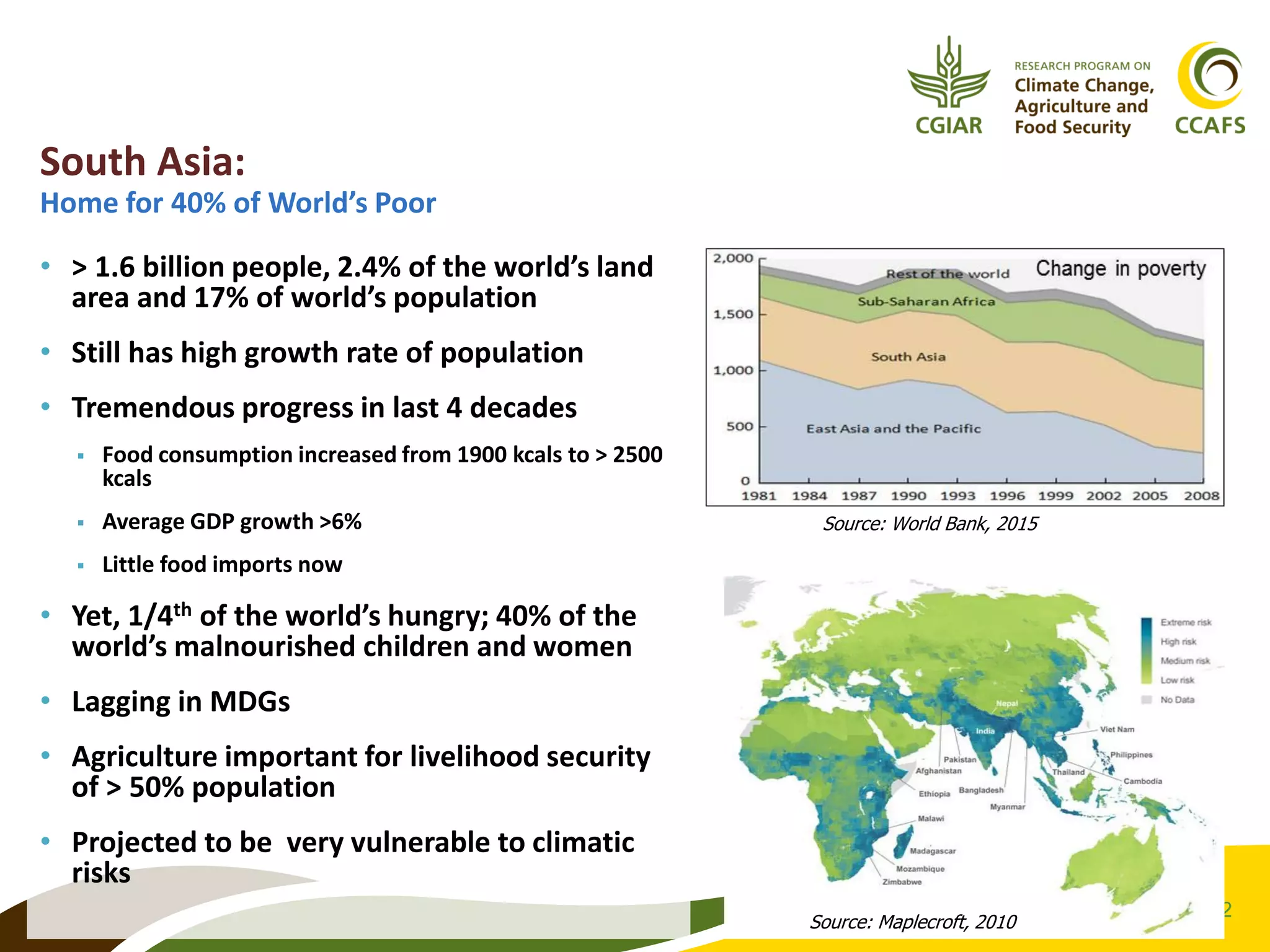
South Asia:
Home for 40% of World’s Poor
Source: World Bank, 2015
• > 1.6 billion people, 2.4% of the world’s land
area and 17% of world’s population
• Still has high growth rate of population
• Tremendous progress in last 4 decades
 Food consumption increased from 1900 kcals to > 2500
kcals
 Average GDP growth >6%
 Little food imports now
• Yet, 1/4th of the world’s hungry; 40% of the
world’s malnourished children and women
• Lagging in MDGs
• Agriculture important for livelihood security
of > 50% population
• Projected to be very vulnerable to climatic
risks
Source: Maplecroft, 2010
3
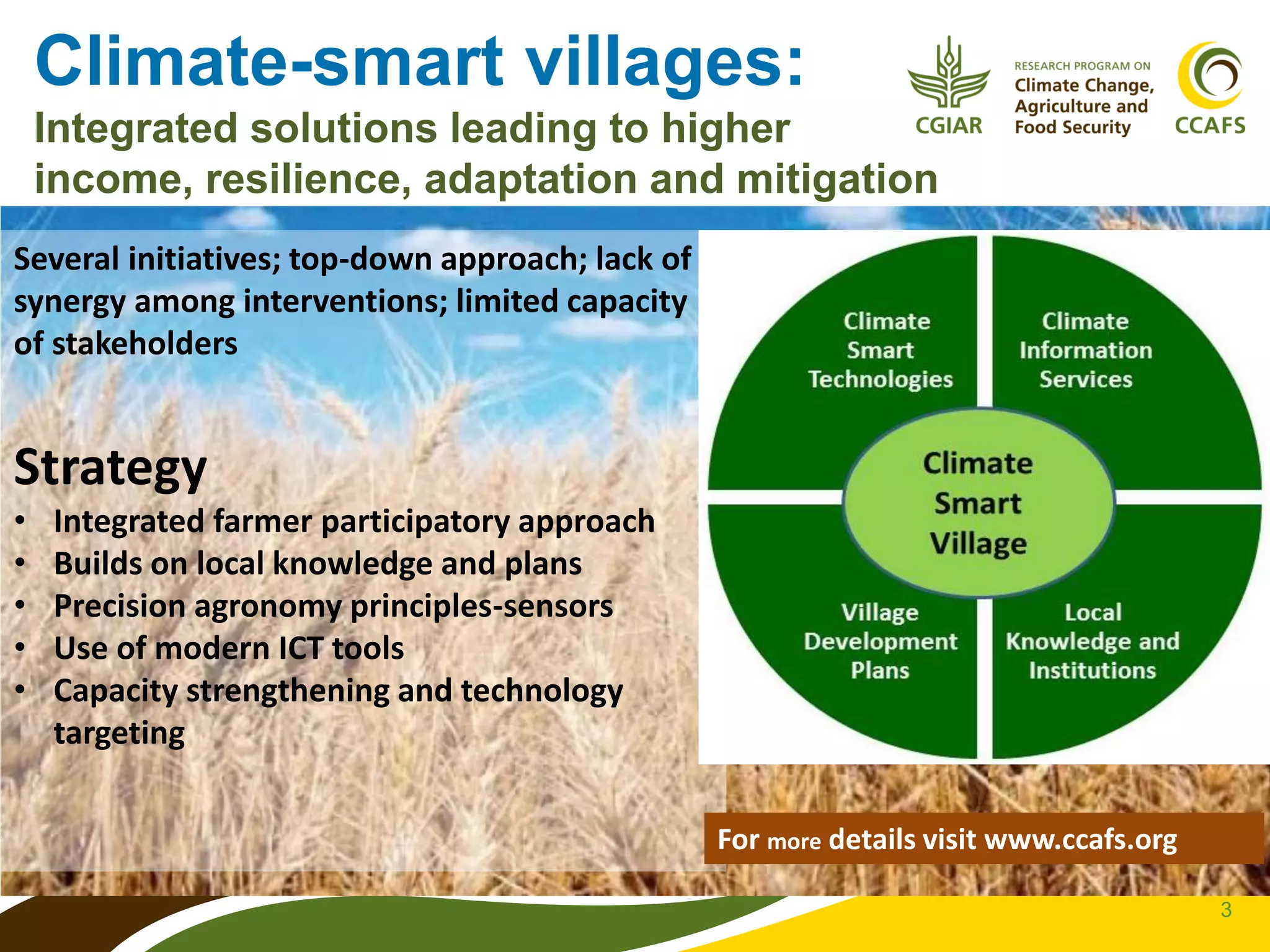
Climate-smart villages:
Integrated solutions leading to higher
income, resilience, adaptation and mitigation
Several initiatives; top-down approach; lack of
synergy among interventions; limited capacity
of stakeholders
Strategy
• Integrated farmer participatory approach
• Builds on local knowledge and plans
• Precision agronomy principles-sensors
• Use of modern ICT tools
• Capacity strengthening and technology
targeting
For more details visit www.ccafs.org
4
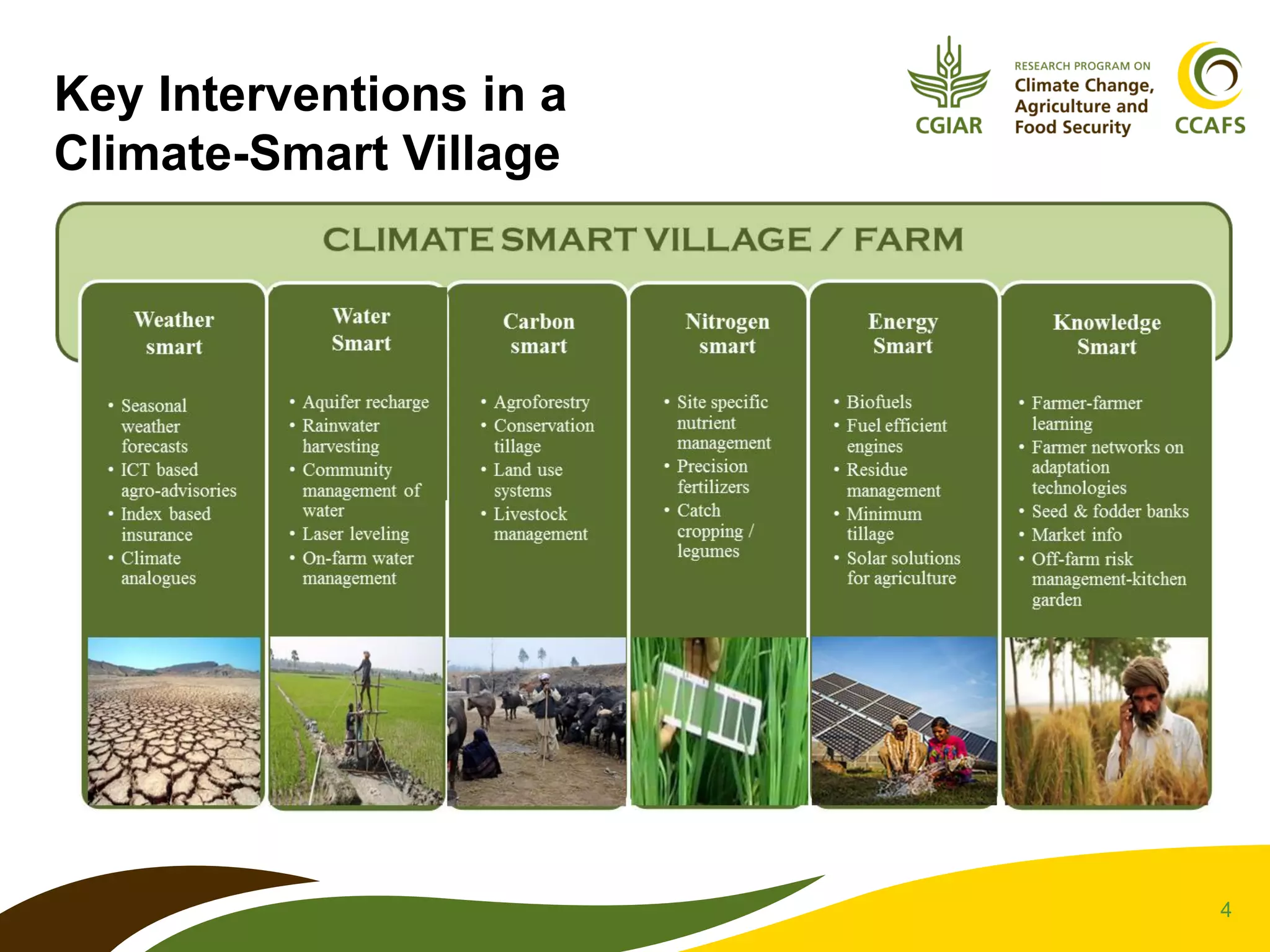
Key Interventions in a
Climate-Smart Village
5
Climate-Smart Villages in
South Asia- Progress
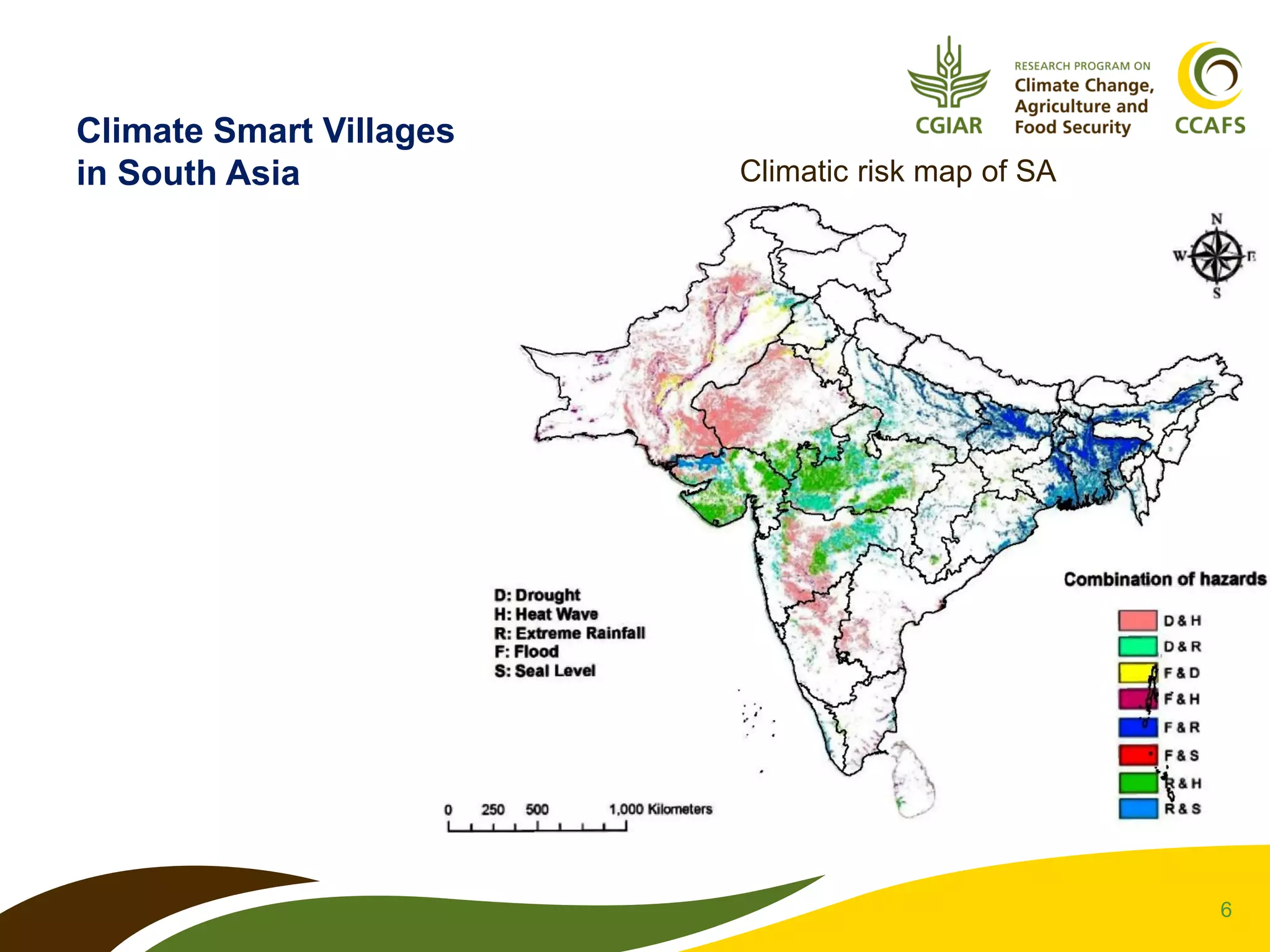
6
Climate Smart Villages
in South Asia Climatic risk map of SA
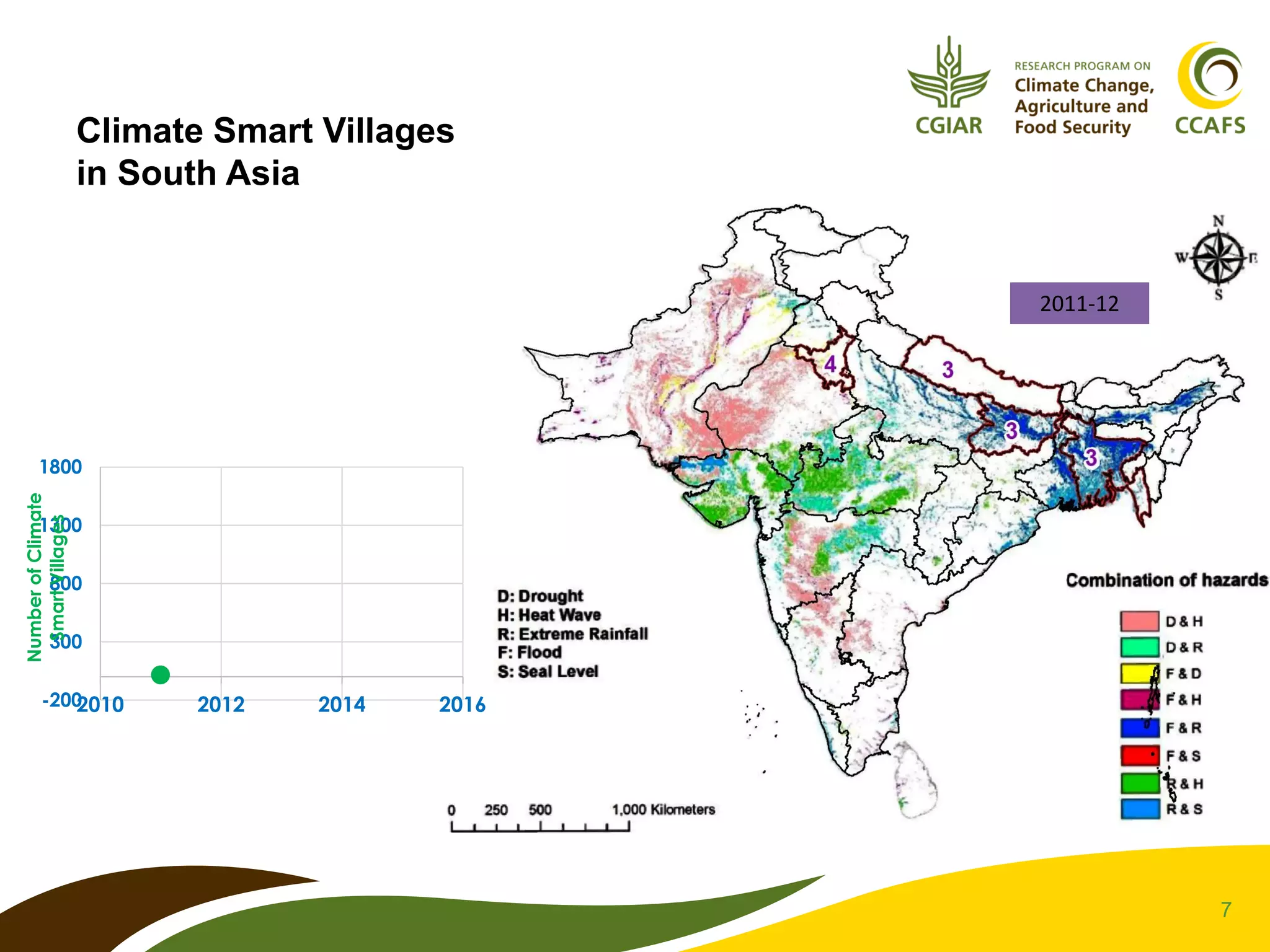
7
Climate Smart Villages
in South Asia
-200
300
800
1300
1800
2010 2012 2014 2016
NumberofClimate
SmartVillages
2011-12
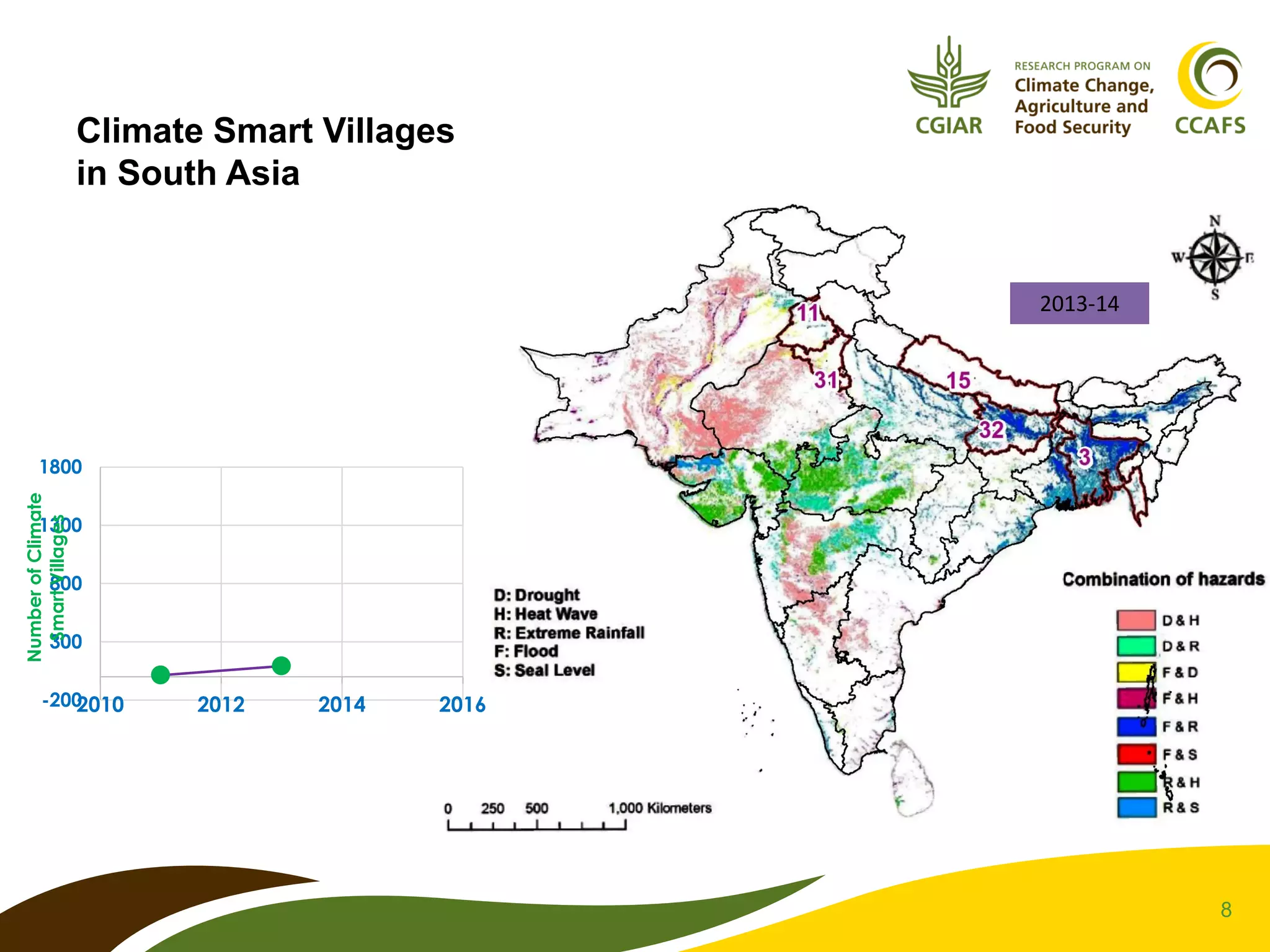
8
Climate Smart Villages
in South Asia
-200
300
800
1300
1800
2010 2012 2014 2016
NumberofClimate
SmartVillages
2013-14
9
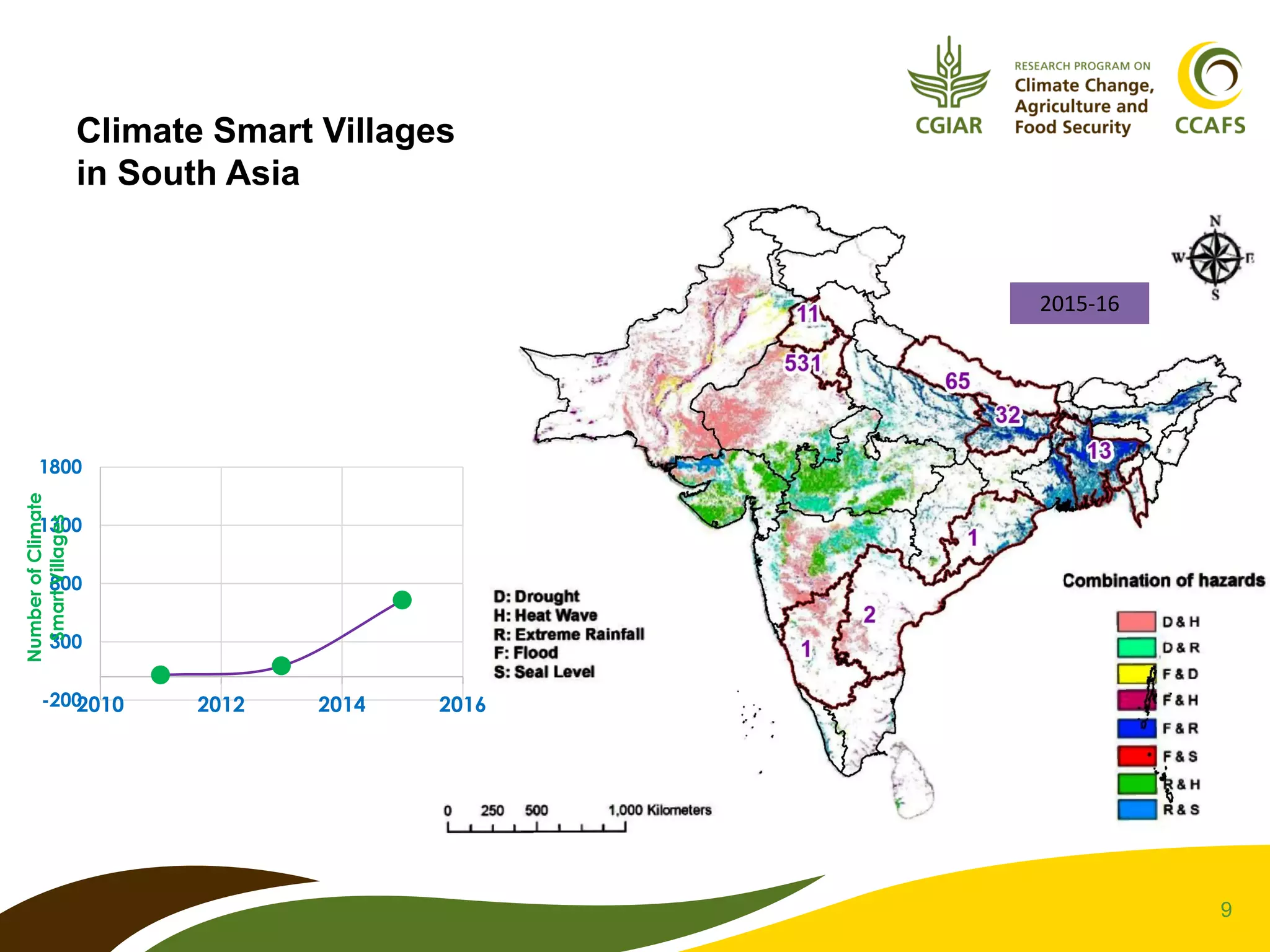
Climate Smart Villages
in South Asia
2015-16
-200
300
800
1300
1800
2010 2012 2014 2016
NumberofClimate
SmartVillages
10
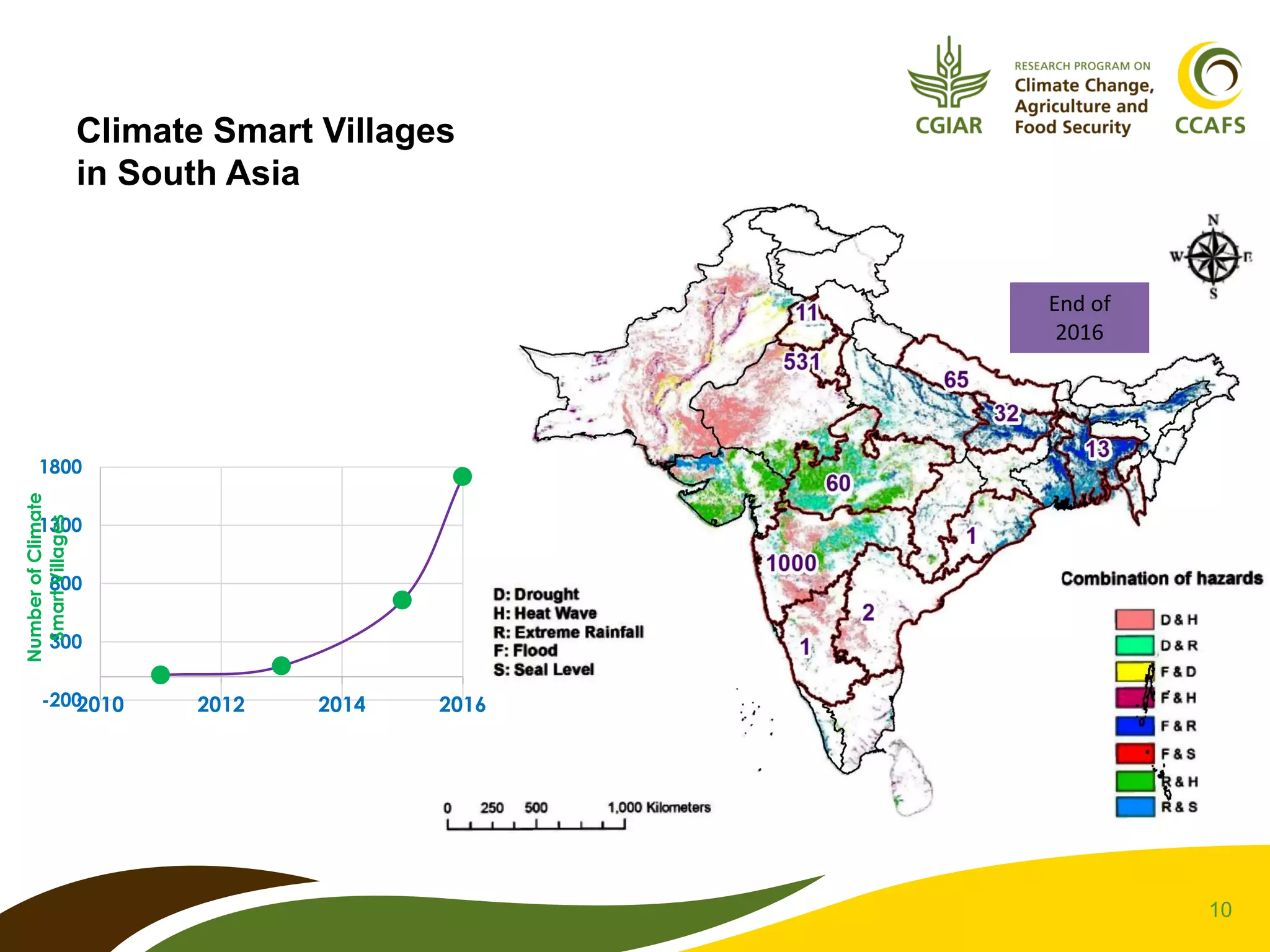
Climate Smart Villages
in South Asia
End of
2016
-200
300
800
1300
1800
2010 2012 2014 2016
NumberofClimate
SmartVillages
11
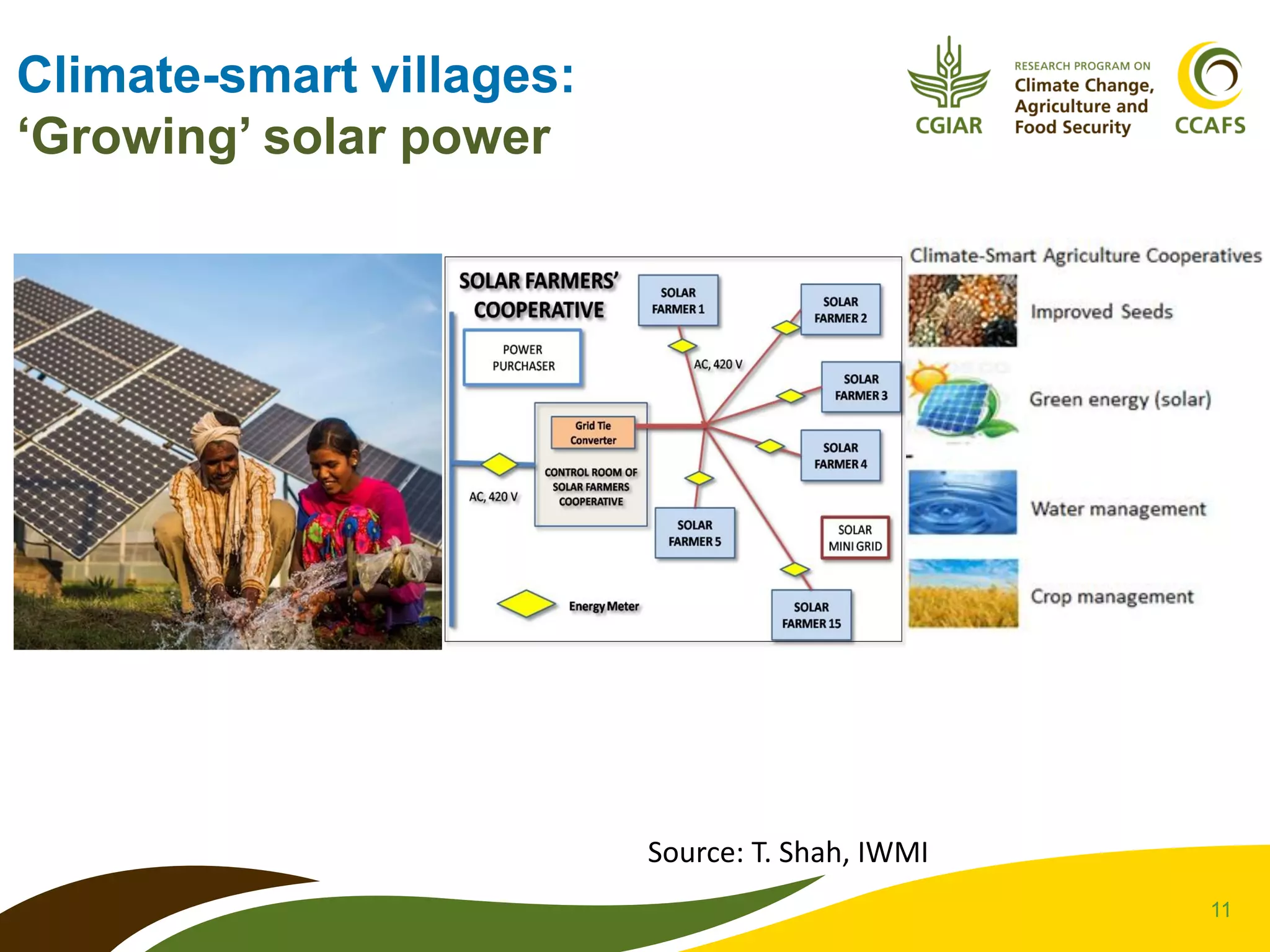
Climate-smart villages:
‘Growing’ solar power
Source: T. Shah, IWMI
12
Evolution of climate-smart village concept
13
Priorities in IGP 2011-15:
Focus area 1: Design and demonstration of community led climate-smart agriculture in
benchmark CCAFS sites/villages (April 2011: CCAFS PMC)
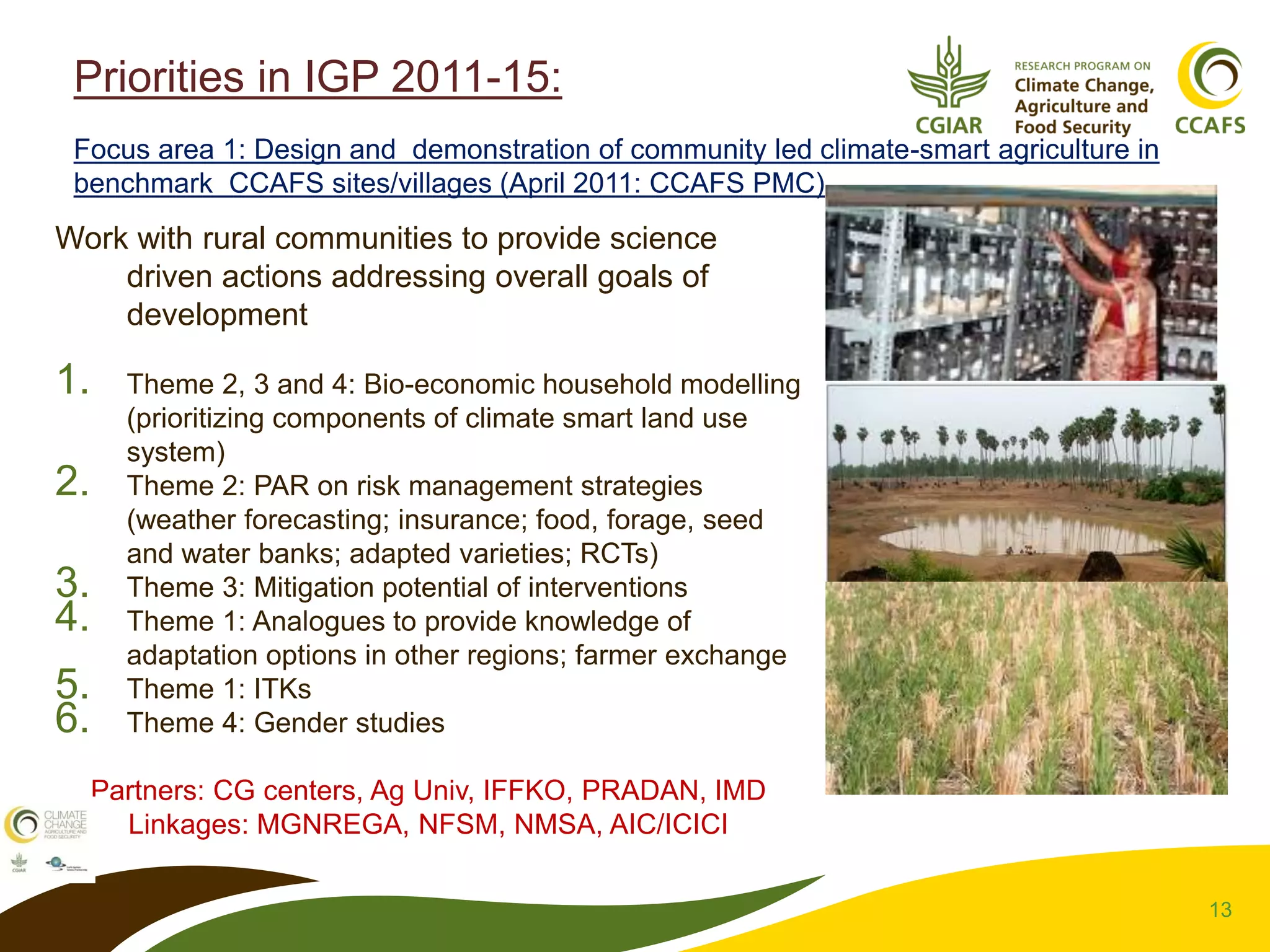
Work with rural communities to provide science
driven actions addressing overall goals of
development
1. Theme 2, 3 and 4: Bio-economic household modelling
(prioritizing components of climate smart land use
system)
2. Theme 2: PAR on risk management strategies
(weather forecasting; insurance; food, forage, seed
and water banks; adapted varieties; RCTs)
3. Theme 3: Mitigation potential of interventions
4. Theme 1: Analogues to provide knowledge of
adaptation options in other regions; farmer exchange
5. Theme 1: ITKs
6. Theme 4: Gender studies
Partners: CG centers, Ag Univ, IFFKO, PRADAN, IMD
Linkages: MGNREGA, NFSM, NMSA, AIC/ICICI
14
Integration: Participatory action research
- climate smart villages/farms (Nov 2011, CCAFS-SC)
Objective:
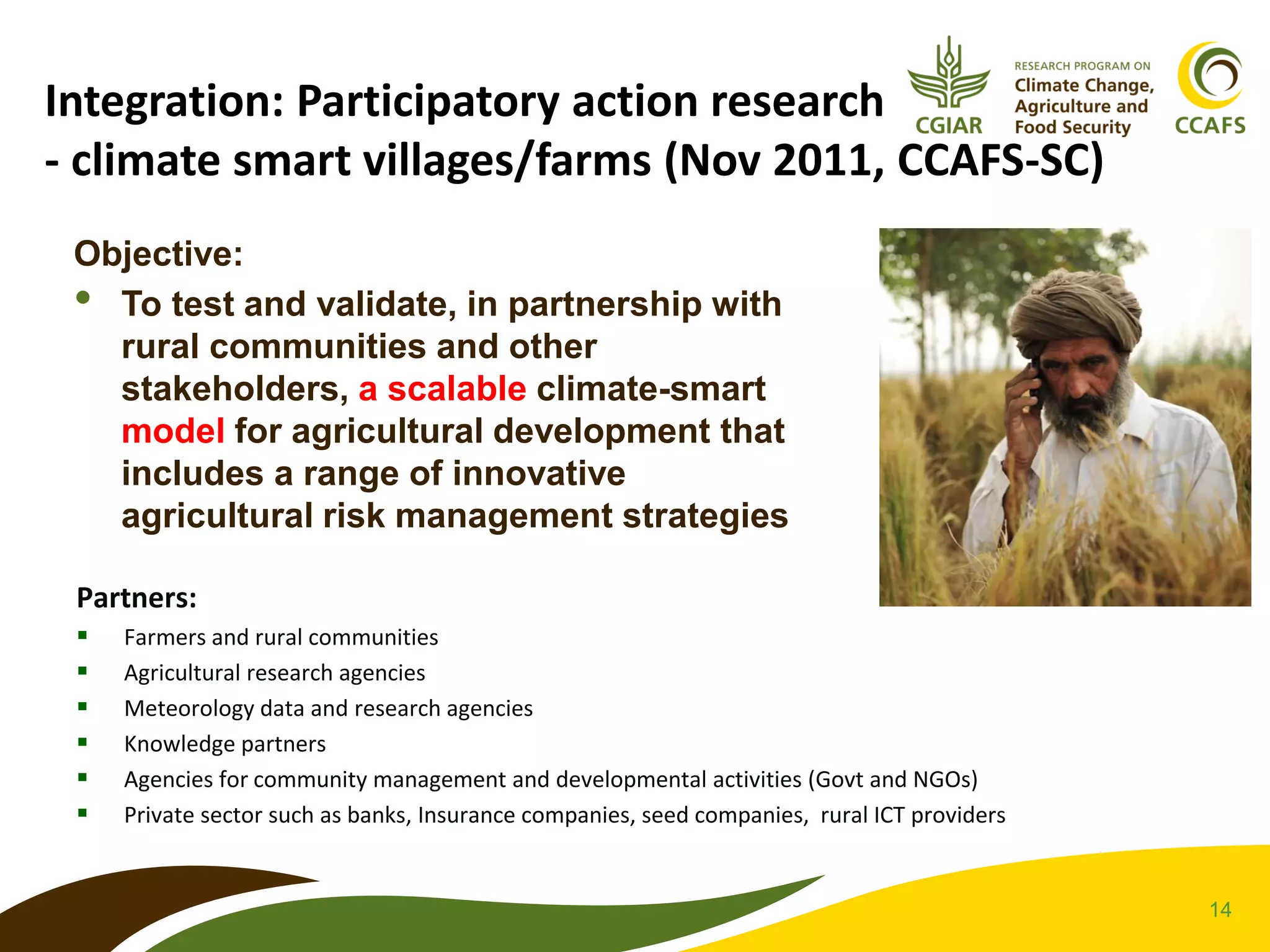
• To test and validate, in partnership with
rural communities and other
stakeholders, a scalable climate-smart
model for agricultural development that
includes a range of innovative
agricultural risk management strategies
Partners:
 Farmers and rural communities
 Agricultural research agencies
 Meteorology data and research agencies
 Knowledge partners
 Agencies for community management and developmental activities (Govt and NGOs)
 Private sector such as banks, Insurance companies, seed companies, rural ICT providers
15
Consensus needed on CSV
definition/concept
1. CSV to integrate CSA- technologies, institutions, village development
plans
2. CSV to facilitate collaboration among diverse partners
3. CSV- a participatory approach
4. CSV to identify adaptation domains of technological interventions
5. CSV as operational model for scaling- up: LAPA, development and
industry partners
16
Need to address criticism of CSVs
• Old wine in new bottle: Re-packaging historical
CGIAR/NARES agronomy work
• No science but demonstrations
• Landscape versus village approach
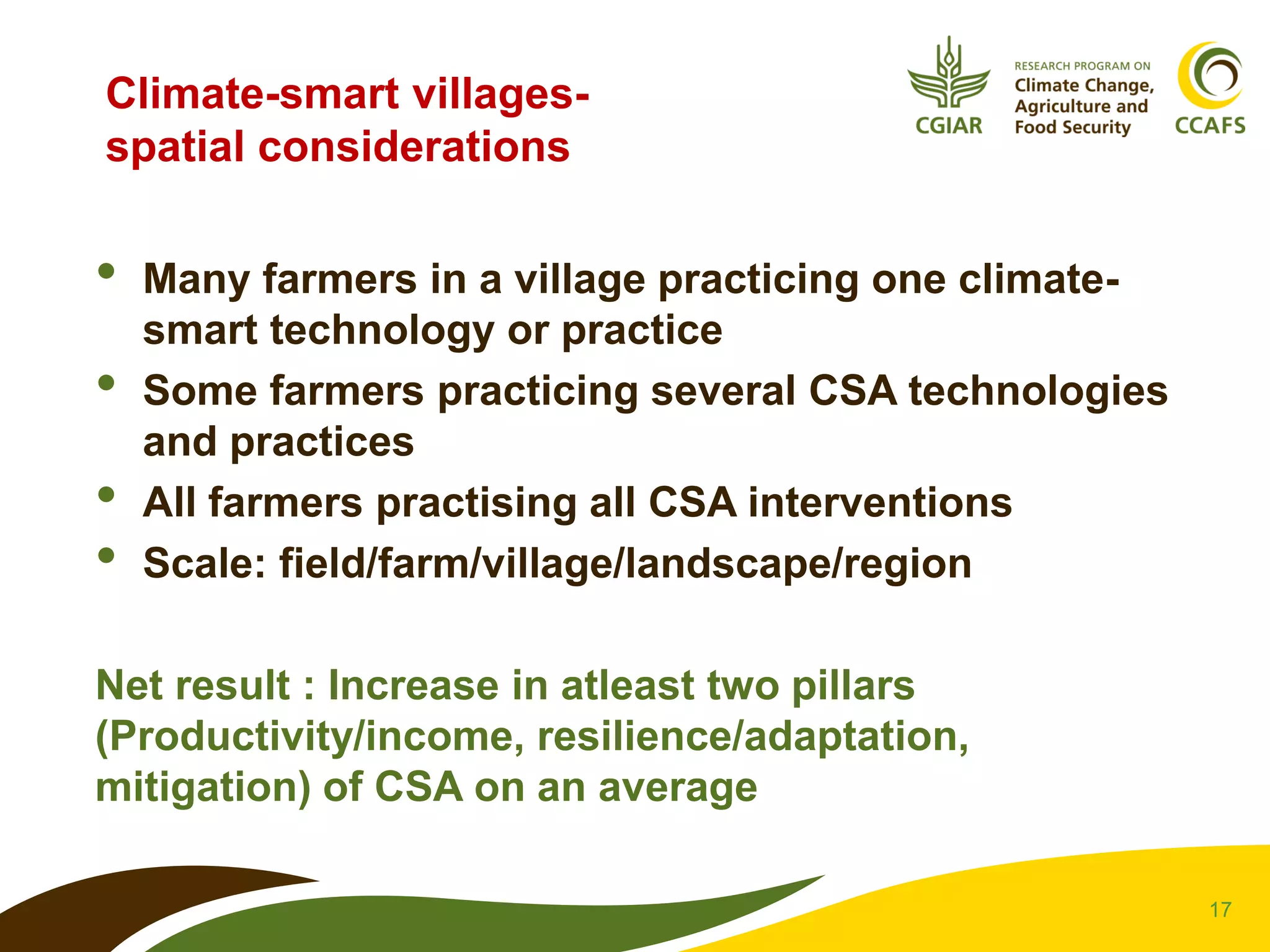
17
Climate-smart villages-
spatial considerations
• Many farmers in a village practicing one climate-
smart technology or practice
• Some farmers practicing several CSA technologies
and practices
• All farmers practising all CSA interventions
• Scale: field/farm/village/landscape/region
Net result : Increase in atleast two pillars
(Productivity/income, resilience/adaptation,
mitigation) of CSA on an average
18
Climate-Smart Villages-
temporal considerations
• Are we adapting to current climatic variability
or to climate change: climatic risks beyond
current climatic variability?
• How do we prove that synergies are maintained
in future?
• How to ensure that we do not promote
maladaptation and mainstreamed CSV
programs are robust?
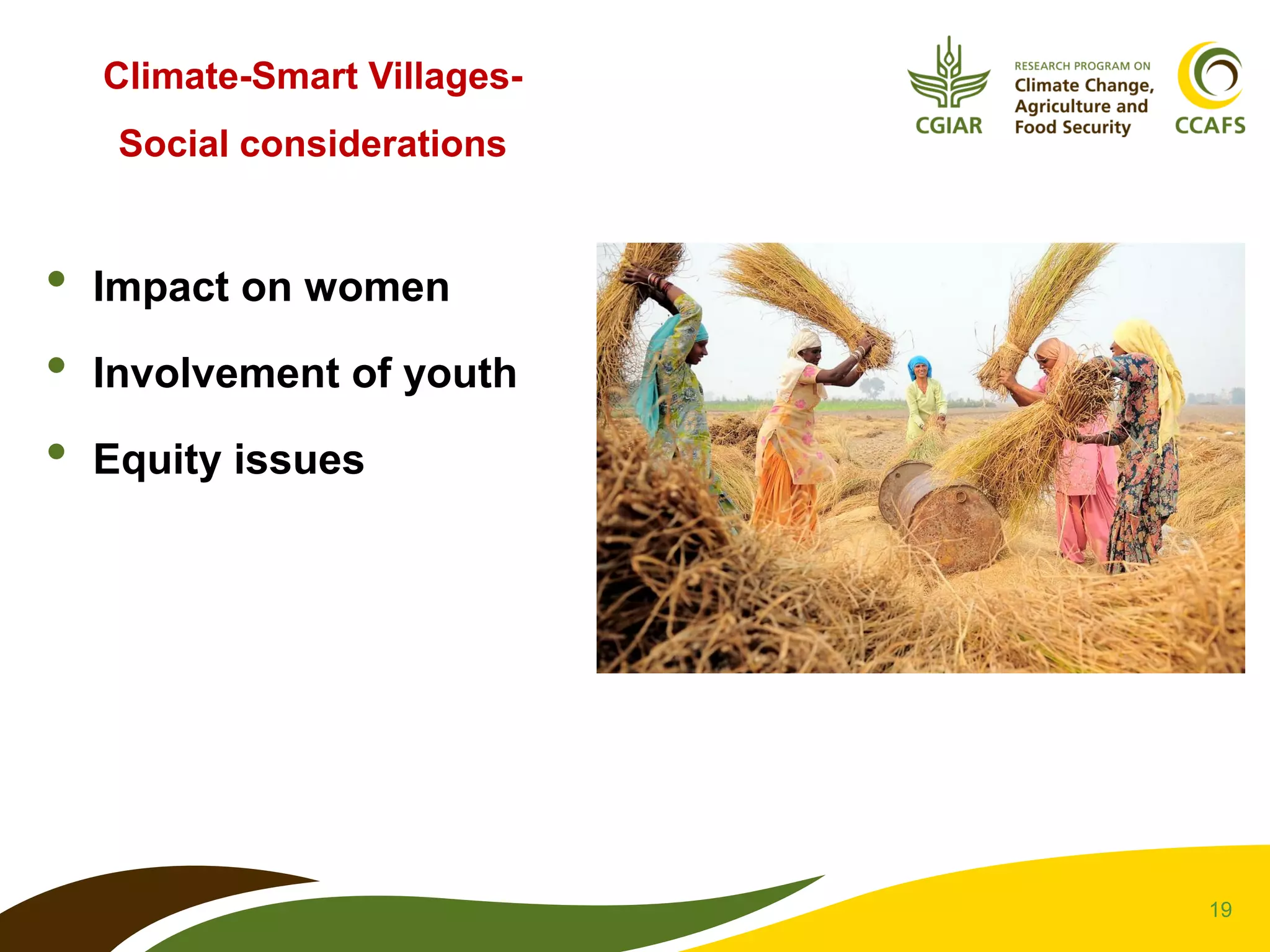
19
Climate-Smart Villages-
Social considerations
• Impact on women
• Involvement of youth
• Equity issues
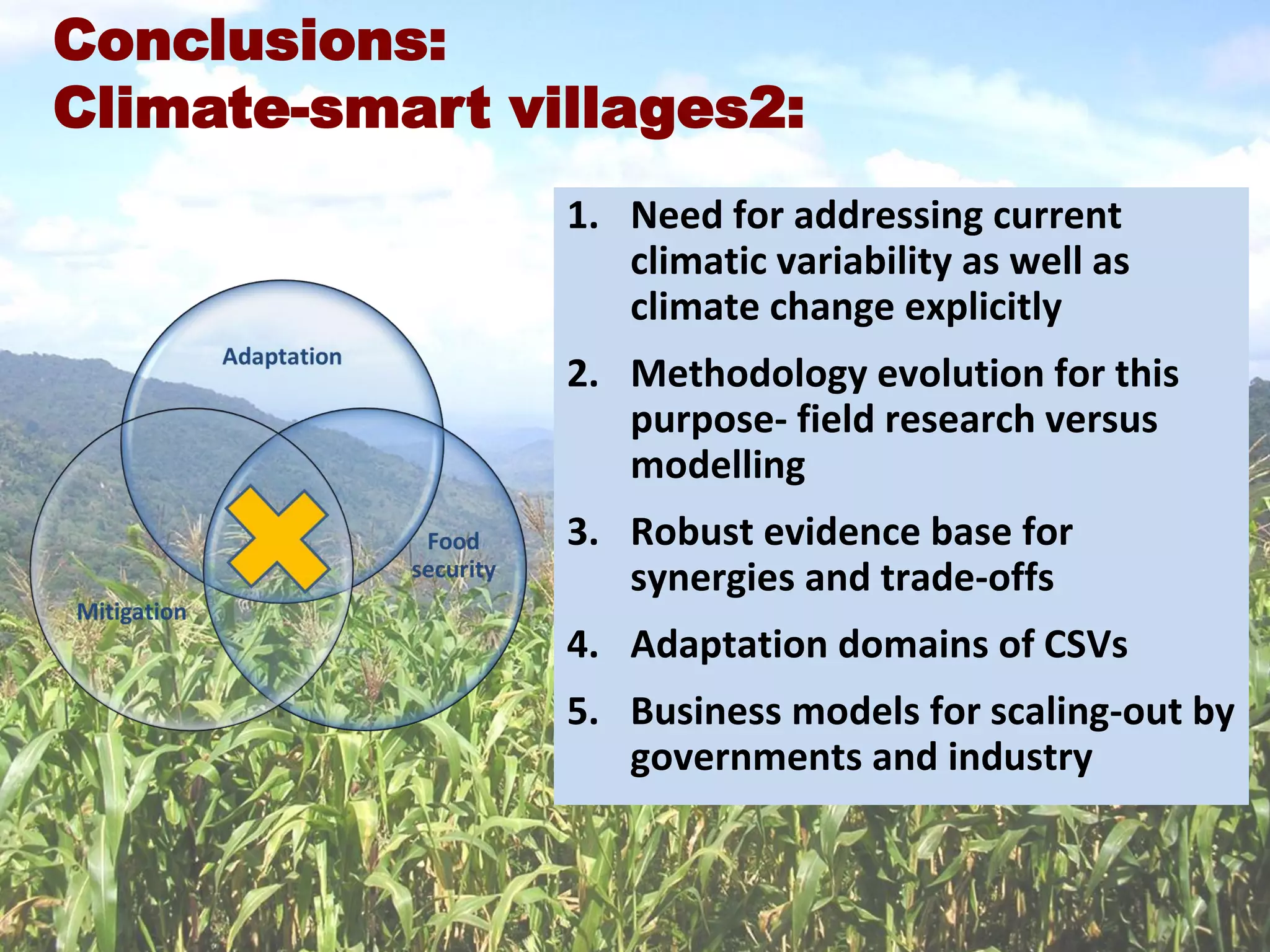
20
1. Need for addressing current
climatic variability as well as
climate change explicitly
2. Methodology evolution for this
purpose- field research versus
modelling
3. Robust evidence base for
synergies and trade-offs
4. Adaptation domains of CSVs
5. Business models for scaling-out by
governments and industry
Conclusions:
Climate-smart villages2:

CSVs: Concept experiences and way forward

  • 1.
    1 Climate Smart Villages Concept,Experiences and Way Forward Pramod Aggarwal CGIAR Research Program on Climate Change, Agriculture and Food Security
  • 2.
    2 South Asia: Home for40% of World’s Poor Source: World Bank, 2015 • > 1.6 billion people, 2.4% of the world’s land area and 17% of world’s population • Still has high growth rate of population • Tremendous progress in last 4 decades  Food consumption increased from 1900 kcals to > 2500 kcals  Average GDP growth >6%  Little food imports now • Yet, 1/4th of the world’s hungry; 40% of the world’s malnourished children and women • Lagging in MDGs • Agriculture important for livelihood security of > 50% population • Projected to be very vulnerable to climatic risks Source: Maplecroft, 2010
  • 3.
    3 Climate-smart villages: Integrated solutionsleading to higher income, resilience, adaptation and mitigation Several initiatives; top-down approach; lack of synergy among interventions; limited capacity of stakeholders Strategy • Integrated farmer participatory approach • Builds on local knowledge and plans • Precision agronomy principles-sensors • Use of modern ICT tools • Capacity strengthening and technology targeting For more details visit www.ccafs.org
  • 4.
    4 Key Interventions ina Climate-Smart Village
  • 5.
  • 6.
    6 Climate Smart Villages inSouth Asia Climatic risk map of SA
  • 7.
    7 Climate Smart Villages inSouth Asia -200 300 800 1300 1800 2010 2012 2014 2016 NumberofClimate SmartVillages 2011-12
  • 8.
    8 Climate Smart Villages inSouth Asia -200 300 800 1300 1800 2010 2012 2014 2016 NumberofClimate SmartVillages 2013-14
  • 9.
    9 Climate Smart Villages inSouth Asia 2015-16 -200 300 800 1300 1800 2010 2012 2014 2016 NumberofClimate SmartVillages
  • 10.
    10 Climate Smart Villages inSouth Asia End of 2016 -200 300 800 1300 1800 2010 2012 2014 2016 NumberofClimate SmartVillages
  • 11.
  • 12.
  • 13.
    13 Priorities in IGP2011-15: Focus area 1: Design and demonstration of community led climate-smart agriculture in benchmark CCAFS sites/villages (April 2011: CCAFS PMC) Work with rural communities to provide science driven actions addressing overall goals of development 1. Theme 2, 3 and 4: Bio-economic household modelling (prioritizing components of climate smart land use system) 2. Theme 2: PAR on risk management strategies (weather forecasting; insurance; food, forage, seed and water banks; adapted varieties; RCTs) 3. Theme 3: Mitigation potential of interventions 4. Theme 1: Analogues to provide knowledge of adaptation options in other regions; farmer exchange 5. Theme 1: ITKs 6. Theme 4: Gender studies Partners: CG centers, Ag Univ, IFFKO, PRADAN, IMD Linkages: MGNREGA, NFSM, NMSA, AIC/ICICI
  • 14.
    14 Integration: Participatory actionresearch - climate smart villages/farms (Nov 2011, CCAFS-SC) Objective: • To test and validate, in partnership with rural communities and other stakeholders, a scalable climate-smart model for agricultural development that includes a range of innovative agricultural risk management strategies Partners:  Farmers and rural communities  Agricultural research agencies  Meteorology data and research agencies  Knowledge partners  Agencies for community management and developmental activities (Govt and NGOs)  Private sector such as banks, Insurance companies, seed companies, rural ICT providers
  • 15.
    15 Consensus needed onCSV definition/concept 1. CSV to integrate CSA- technologies, institutions, village development plans 2. CSV to facilitate collaboration among diverse partners 3. CSV- a participatory approach 4. CSV to identify adaptation domains of technological interventions 5. CSV as operational model for scaling- up: LAPA, development and industry partners
  • 16.
    16 Need to addresscriticism of CSVs • Old wine in new bottle: Re-packaging historical CGIAR/NARES agronomy work • No science but demonstrations • Landscape versus village approach
  • 17.
    17 Climate-smart villages- spatial considerations •Many farmers in a village practicing one climate- smart technology or practice • Some farmers practicing several CSA technologies and practices • All farmers practising all CSA interventions • Scale: field/farm/village/landscape/region Net result : Increase in atleast two pillars (Productivity/income, resilience/adaptation, mitigation) of CSA on an average
  • 18.
    18 Climate-Smart Villages- temporal considerations •Are we adapting to current climatic variability or to climate change: climatic risks beyond current climatic variability? • How do we prove that synergies are maintained in future? • How to ensure that we do not promote maladaptation and mainstreamed CSV programs are robust?
  • 19.
    19 Climate-Smart Villages- Social considerations •Impact on women • Involvement of youth • Equity issues
  • 20.
    20 1. Need foraddressing current climatic variability as well as climate change explicitly 2. Methodology evolution for this purpose- field research versus modelling 3. Robust evidence base for synergies and trade-offs 4. Adaptation domains of CSVs 5. Business models for scaling-out by governments and industry Conclusions: Climate-smart villages2: