The Future of Organizational Learning 
Brett Elmgren, October 9th, 2014 
Read my blog at: www.brettelmgren.com 
Add me on LinkedIn @ Brett Elmgren 
Slides Available at: http://www.slideshare.net/BrettElmgren
2 
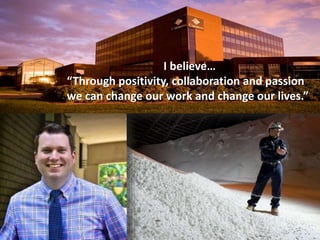
I believe… 
“Through positivity, collaboration and passion 
we can change our work and change our lives.”
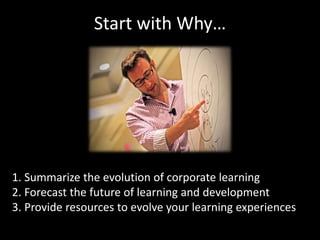
Start with Why… 
1. Summarize the evolution of corporate learning 
2. Forecast the future of learning and development 
3. Provide resources to evolve your learning experiences
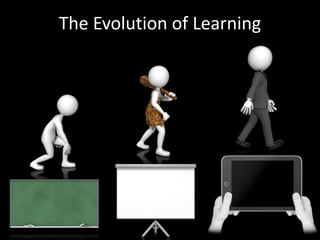
The Evolution of Learning
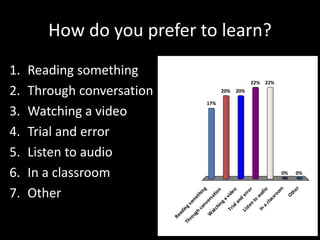
How do you prefer to learn? 
1. Reading something 
2. Through conversation 
3. Watching a video 
4. Trial and error 
5. Listen to audio 
6. In a classroom 
7. Other 
Reading something 
Through conversation 
Trial and error 
Watching a video 
In a classroom 
Listen to audio 
Other 
17% 
20% 20% 
0% 0% 
22% 22%
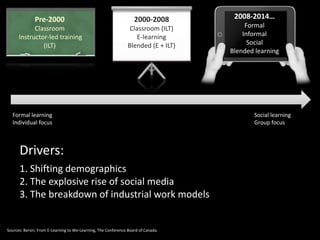
Pre-2000 
Classroom 
Instructor-led training 
(ILT) 
2000-2008 
Classroom (ILT) 
E-learning 
Blended (E + ILT) 
2008-2014… 
Formal 
Informal 
Social 
Blended learning 
Formal learning 
Individual focus 
Social learning 
Group focus 
Drivers: 
1. Shifting demographics 
2. The explosive rise of social media 
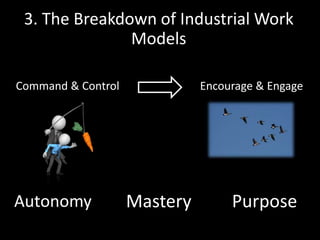
3. The breakdown of industrial work models 
Sources: Bersin, From E-Learning to We-Learning, The Conference Board of Canada.
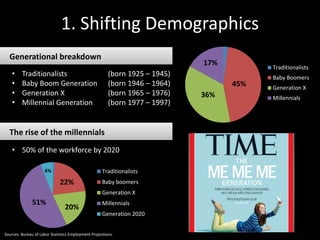
1. Shifting Demographics 
Generational breakdown 
• Traditionalists (born 1925 – 1945) 
• Baby Boom Generation (born 1946 – 1964) 
• Generation X (born 1965 – 1976) 
• Millennial Generation (born 1977 – 1997) 
Generations 
Traditionalists 
Baby Boomers 
45% 
Generation X 
36% 
Millennials 17% 
The rise of the millennials 
• 50% of the workforce by 2020 
Traditionalists 
Baby boomers 
Generation X 
Millennials 
Generation 2020 
51% 
22% 
20% 
6% 
Sources: Bureau of Labor Statistics Employment Projections.
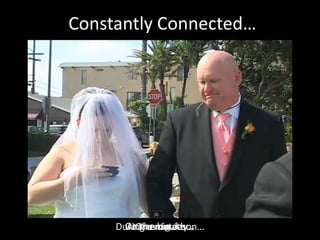
Constantly Connected… 
DuOArintnO tgthnh ae ea mm bdiaaogrtv aediet…ahsyo……n…
2. The Rise of Social Media
3. The Breakdown of Industrial Work 
Models 
Command & Control Encourage & Engage 
Autonomy Mastery Purpose
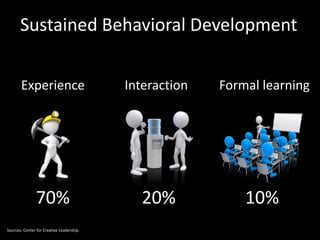
Sustained Behavioral Development 
Experience Interaction Formal learning 
70% 20% 10% 
Sources: Center for Creative Leadership.
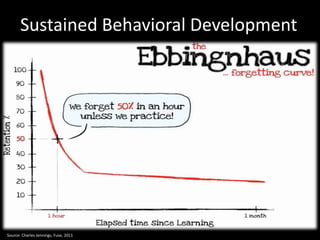
Sustained Behavioral Development 
Source: Charles Jennings, Fuse, 2011
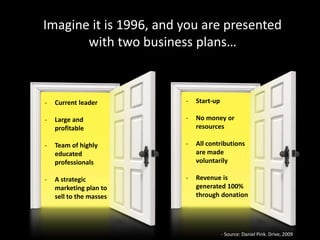
Imagine it is 1996, and you are presented 
with two business plans… 
- Current leader 
- Large and 
profitable 
- Team of highly 
educated 
professionals 
- A strategic 
marketing plan to 
sell to the masses 
- Start-up 
- No money or 
resources 
- All contributions 
are made 
voluntarily 
- Revenue is 
generated 100% 
through donation 
- Source: Daniel Pink. Drive, 2009
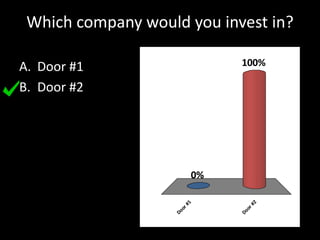
Which company would you invest in? 
A. Door #1 
B. Door #2 
100% 
0% 
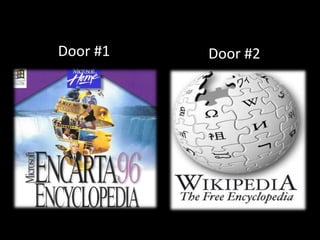
Door #1 
Door #2
Door #1 Door #2
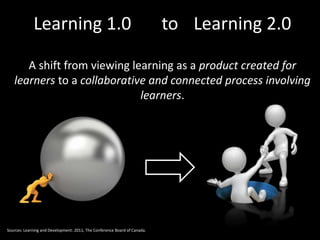
Learning 1.0 to Learning 2.0 
A shift from viewing learning as a product created for 
learners to a collaborative and connected process involving 
learners. 
Sources: Learning and Development: 2011, The Conference Board of Canada.
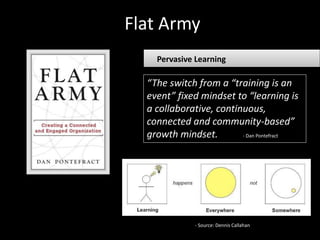
Flat Army 
Pervasive Learning 
“The switch from a “training is an 
event” fixed mindset to “learning is 
a collaborative, continuous, 
connected and community-based” 
growth mindset. - Dan Pontefract 
- Source: Dennis Callahan
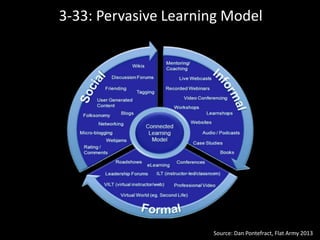
3-33: Pervasive Learning Model 
Source: Dan Pontefract, Flat Army 2013
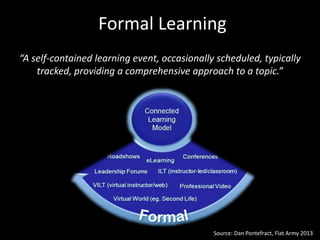
Formal Learning 
“A self-contained learning event, occasionally scheduled, typically 
tracked, providing a comprehensive approach to a topic.” 
Source: Dan Pontefract, Flat Army 2013
Formal Learning
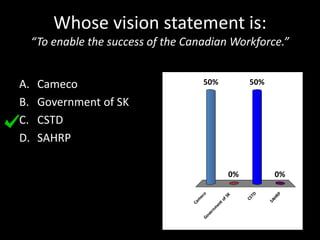
Whose vision statement is: 
“To enable the success of the Canadian Workforce.” 
A. Cameco 
B. Government of SK 
C. CSTD 
D. SAHRP 
Cameco 
Government of SK 
CSTD 
SAHRP 
50% 
0% 
50% 
0%
Fastest Responders 
Seconds Participant Seconds Participant 
4.734 3B534D
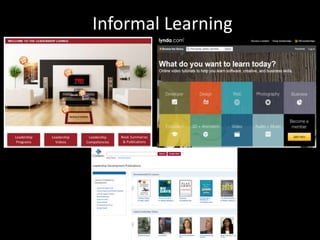
Informal Learning 
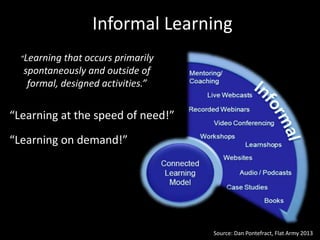
“Learning that occurs primarily 
spontaneously and outside of 
formal, designed activities.” 
Source: Dan Pontefract, Flat Army 2013 
“Learning at the speed of need!” 
“Learning on demand!”
Informal Learning
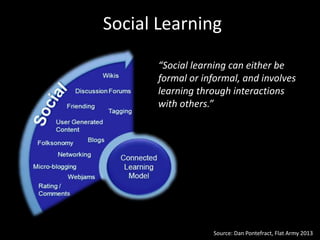
Social Learning 
“Social learning can either be 
formal or informal, and involves 
learning through interactions 
with others.” 
Source: Dan Pontefract, Flat Army 2013
Social learning is NOT social 
media. Social media provides 
a tool through which social 
learning can thrive.
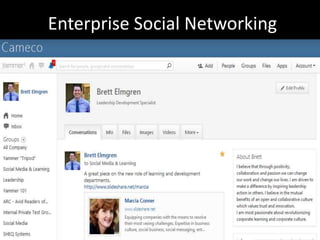
Enterprise Social Networking
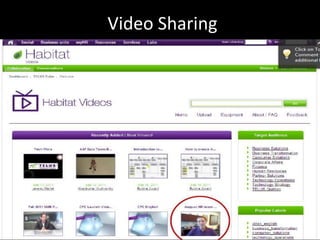
Video Sharing
What will learning look like in 2020? 
1. The rise of gamification 
2. The “flipped” classroom 
3. The ARC
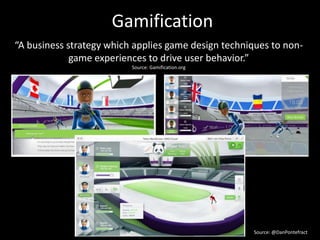
Gamification 
“A business strategy which applies game design techniques to non-game 
experiences to drive user behavior.” 
Source: Gamification.org 
Source: @DanPontefract
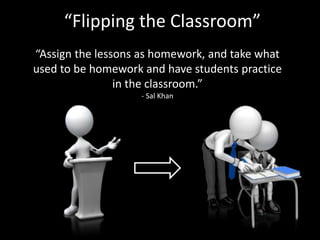
“Flipping the Classroom” 
“Assign the lessons as homework, and take what 
used to be homework and have students practice 
in the classroom.” 
- Sal Khan
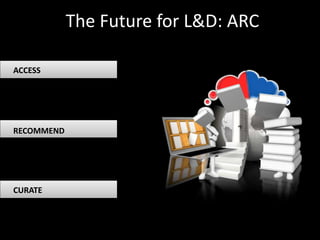
The Future for L&D: ARC 
ACCESS 
RECOMMEND 
CURATE
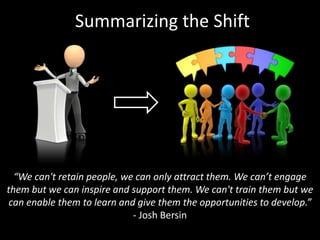
Summarizing the Shift 
“We can't retain people, we can only attract them. We can’t engage 
them but we can inspire and support them. We can't train them but we 
can enable them to learn and give them the opportunities to develop.” 
- Josh Bersin
What does the Future of 
Organizational Learning look like?
“The only way to know the future, is 
to create it.” 
Slides Available at: http://www.slideshare.net/BrettElmgren 
Read my blog at: www.brettelmgren.com 
Contact me at: brett_elmgren@cameco.com

Cstd presentation, oct 9

  • 1.
    The Future ofOrganizational Learning Brett Elmgren, October 9th, 2014 Read my blog at: www.brettelmgren.com Add me on LinkedIn @ Brett Elmgren Slides Available at: http://www.slideshare.net/BrettElmgren
  • 2.
    2 I believe… “Through positivity, collaboration and passion we can change our work and change our lives.”
  • 3.
    Start with Why… 1. Summarize the evolution of corporate learning 2. Forecast the future of learning and development 3. Provide resources to evolve your learning experiences
  • 4.
  • 5.
    How do youprefer to learn? 1. Reading something 2. Through conversation 3. Watching a video 4. Trial and error 5. Listen to audio 6. In a classroom 7. Other Reading something Through conversation Trial and error Watching a video In a classroom Listen to audio Other 17% 20% 20% 0% 0% 22% 22%
  • 6.
    Pre-2000 Classroom Instructor-ledtraining (ILT) 2000-2008 Classroom (ILT) E-learning Blended (E + ILT) 2008-2014… Formal Informal Social Blended learning Formal learning Individual focus Social learning Group focus Drivers: 1. Shifting demographics 2. The explosive rise of social media 3. The breakdown of industrial work models Sources: Bersin, From E-Learning to We-Learning, The Conference Board of Canada.
  • 7.
    1. Shifting Demographics Generational breakdown • Traditionalists (born 1925 – 1945) • Baby Boom Generation (born 1946 – 1964) • Generation X (born 1965 – 1976) • Millennial Generation (born 1977 – 1997) Generations Traditionalists Baby Boomers 45% Generation X 36% Millennials 17% The rise of the millennials • 50% of the workforce by 2020 Traditionalists Baby boomers Generation X Millennials Generation 2020 51% 22% 20% 6% Sources: Bureau of Labor Statistics Employment Projections.
  • 8.
    Constantly Connected… DuOArintnOtgthnh ae ea mm bdiaaogrtv aediet…ahsyo……n…
  • 9.
    2. The Riseof Social Media
  • 11.
    3. The Breakdownof Industrial Work Models Command & Control Encourage & Engage Autonomy Mastery Purpose
  • 12.
    Sustained Behavioral Development Experience Interaction Formal learning 70% 20% 10% Sources: Center for Creative Leadership.
  • 13.
    Sustained Behavioral Development Source: Charles Jennings, Fuse, 2011
  • 14.
    Imagine it is1996, and you are presented with two business plans… - Current leader - Large and profitable - Team of highly educated professionals - A strategic marketing plan to sell to the masses - Start-up - No money or resources - All contributions are made voluntarily - Revenue is generated 100% through donation - Source: Daniel Pink. Drive, 2009
  • 15.
    Which company wouldyou invest in? A. Door #1 B. Door #2 100% 0% Door #1 Door #2
  • 16.
  • 17.
    Learning 1.0 toLearning 2.0 A shift from viewing learning as a product created for learners to a collaborative and connected process involving learners. Sources: Learning and Development: 2011, The Conference Board of Canada.
  • 18.
    Flat Army PervasiveLearning “The switch from a “training is an event” fixed mindset to “learning is a collaborative, continuous, connected and community-based” growth mindset. - Dan Pontefract - Source: Dennis Callahan
  • 19.
    3-33: Pervasive LearningModel Source: Dan Pontefract, Flat Army 2013
  • 20.
    Formal Learning “Aself-contained learning event, occasionally scheduled, typically tracked, providing a comprehensive approach to a topic.” Source: Dan Pontefract, Flat Army 2013
  • 21.
  • 22.
    Whose vision statementis: “To enable the success of the Canadian Workforce.” A. Cameco B. Government of SK C. CSTD D. SAHRP Cameco Government of SK CSTD SAHRP 50% 0% 50% 0%
  • 23.
    Fastest Responders SecondsParticipant Seconds Participant 4.734 3B534D
  • 24.
    Informal Learning “Learningthat occurs primarily spontaneously and outside of formal, designed activities.” Source: Dan Pontefract, Flat Army 2013 “Learning at the speed of need!” “Learning on demand!”
  • 25.
  • 26.
    Social Learning “Sociallearning can either be formal or informal, and involves learning through interactions with others.” Source: Dan Pontefract, Flat Army 2013
  • 27.
    Social learning isNOT social media. Social media provides a tool through which social learning can thrive.
  • 28.
  • 29.
  • 30.
    What will learninglook like in 2020? 1. The rise of gamification 2. The “flipped” classroom 3. The ARC
  • 31.
    Gamification “A businessstrategy which applies game design techniques to non-game experiences to drive user behavior.” Source: Gamification.org Source: @DanPontefract
  • 32.
    “Flipping the Classroom” “Assign the lessons as homework, and take what used to be homework and have students practice in the classroom.” - Sal Khan
  • 34.
    The Future forL&D: ARC ACCESS RECOMMEND CURATE
  • 35.
    Summarizing the Shift “We can't retain people, we can only attract them. We can’t engage them but we can inspire and support them. We can't train them but we can enable them to learn and give them the opportunities to develop.” - Josh Bersin
  • 36.
    What does theFuture of Organizational Learning look like?
  • 37.
    “The only wayto know the future, is to create it.” Slides Available at: http://www.slideshare.net/BrettElmgren Read my blog at: www.brettelmgren.com Contact me at: brett_elmgren@cameco.com