
NEW GOVERNMENT ENGINEERING
COLLAGE RAIPUR (C.G.)
A PRESENTATION
ON
VOCATIONAL TRANING
AT
CHHATISGARH STATE POWER TRANSMISSION
COMPONY LIMITED RAIPUR (C.G.)
GUIDENCE BY PRESENTED BY
MR. AASHISH RAI E.E OMPRAKASH SAHU
ET&T 5 SEM .
INTRODUCTION
Power Line Communication has been found to be the most
economical & reliable method of communication for the
medium and long distance in the power network.
For short distance the ordinary telephone phone system is
used. In PLCC the higher mechanical strength and insulation
level of high voltage power line result in increased reliability
of communication & lower attenuation over long distance.
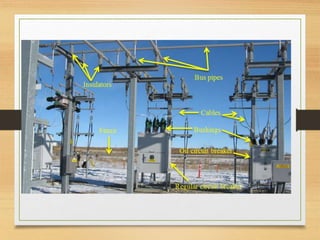
SUBSTATION
• A substation is the part of an electrical generation,
transmission, and distribution system.
• Substation transform voltage from high to low, or
the reverse, or perform other important functions.
• A substation may include transformer to change
voltage levels between high transmission voltages
and lower distribution voltages..
PARTS OF SUBSTATION
• Insulator.
• Circuit breaker.
• Lightning arrester.
• Bus bar.
• Transformer.
INSULATOR
• Insulator is an element which
opposes the flow of current or
stops current. It used
extensively in distribution &
transmission. It stops current
to flow through electrical
poles.
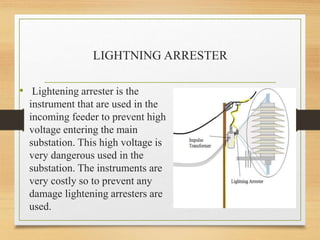
LIGHTNING ARRESTER
• Lightening arrester is the
instrument that are used in the
incoming feeder to prevent high
voltage entering the main
substation. This high voltage is
very dangerous used in the
substation. The instruments are
very costly so to prevent any
damage lightening arresters are
used.
CIRCUIT BREAKER
• A vacuum circuit breaker is
such kind of circuit breaker
where the arc quenching takes
place vacuum .it is suitable for
medium voltage application.
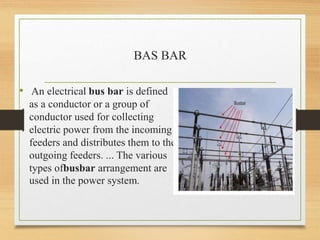
BAS BAR
• An electrical bus bar is defined
as a conductor or a group of
conductor used for collecting
electric power from the incoming
feeders and distributes them to the
outgoing feeders. ... The various
types ofbusbar arrangement are
used in the power system.
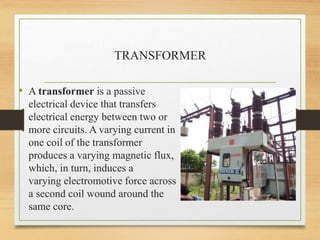
TRANSFORMER
• A transformer is a passive
electrical device that transfers
electrical energy between two or
more circuits. A varying current in
one coil of the transformer
produces a varying magnetic flux,
which, in turn, induces a
varying electromotive force across
a second coil wound around the
same core.
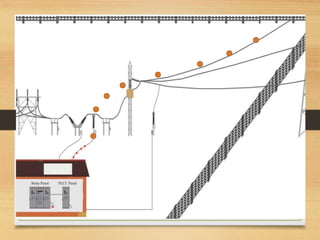
POWER LINE CARRIER
COMMUNICATION (PLCC)
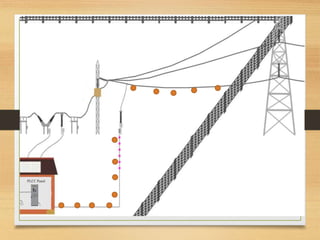
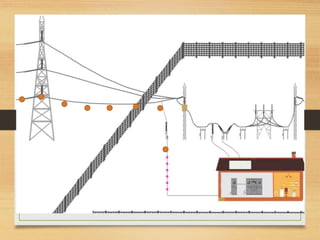
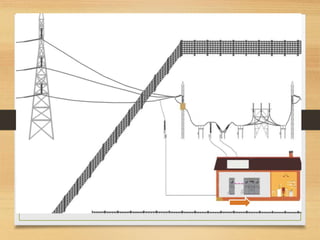
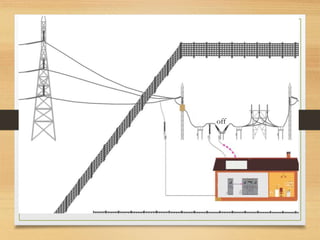
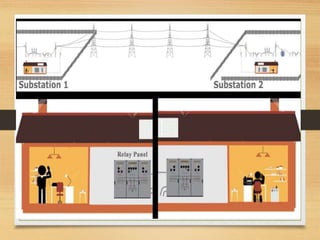
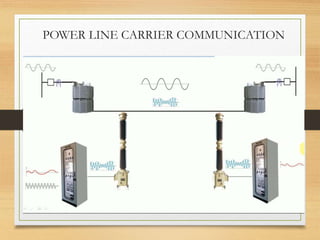
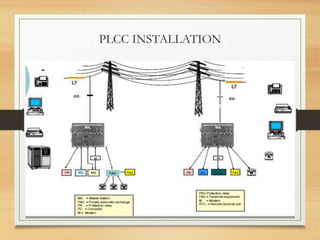
• Power line carrier communication (PLCC)is mainly
used for telecommunication, tele-protection and tele-
monitoring between electrical substations through
power lines at high voltages, such as 110 kV,220 kV,
400 kV. In a PLCC integrates the transmission of
communication signal and 50/60Hz power signal
through the same electric power cable.
• PLCC is highly reliable communication system.
• PLCC is point to point communication.
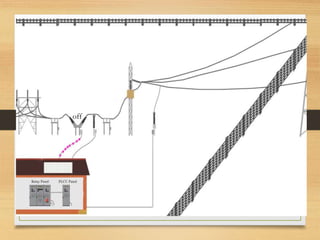
off
off
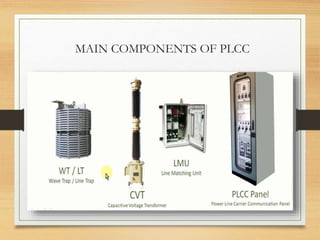
MAIN COMPONENTS OF PLCC
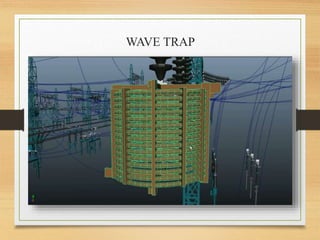
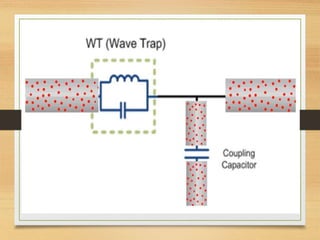
WAVE TRAP
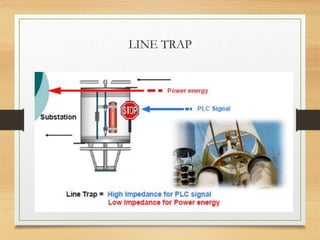
LINE TRAP
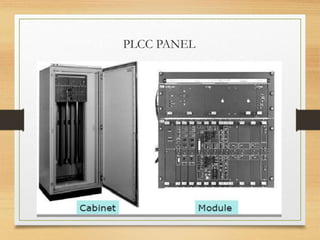
PLCC PANEL
POWER LINE CARRIER COMMUNICATION
METHODS OF PLCC COUPLING
There are different type of PLCC coupling –
• Phase to ground
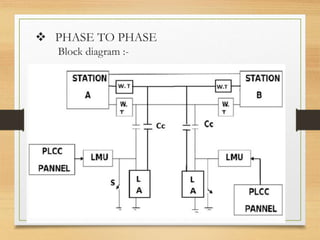
• Phase to phase
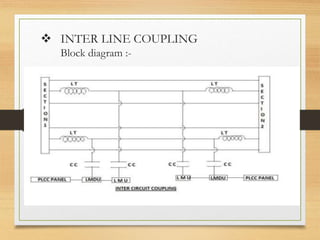
• Inter Line coupling
 PHASE TO GROUND
Block diagram :-
 PHASE TO PHASE
Block diagram :-
 INTER LINE COUPLING
Block diagram :-
PLCC INSTALLATION
ADVANTAGES
• No separate wires are needed for communication
purpose.
• Both communication and power transfer can be
possible on same circuit.
• Increased reliability.
• Lower attenuation over long distance.
Thank
You

CSPTCL DANGANIYA RAIPUR (C.G.)

  • 1.
    NEW GOVERNMENT ENGINEERING COLLAGERAIPUR (C.G.) A PRESENTATION ON VOCATIONAL TRANING AT CHHATISGARH STATE POWER TRANSMISSION COMPONY LIMITED RAIPUR (C.G.) GUIDENCE BY PRESENTED BY MR. AASHISH RAI E.E OMPRAKASH SAHU ET&T 5 SEM .
  • 2.
    INTRODUCTION Power Line Communicationhas been found to be the most economical & reliable method of communication for the medium and long distance in the power network. For short distance the ordinary telephone phone system is used. In PLCC the higher mechanical strength and insulation level of high voltage power line result in increased reliability of communication & lower attenuation over long distance.
  • 3.
    SUBSTATION • A substationis the part of an electrical generation, transmission, and distribution system. • Substation transform voltage from high to low, or the reverse, or perform other important functions. • A substation may include transformer to change voltage levels between high transmission voltages and lower distribution voltages..
  • 5.
    PARTS OF SUBSTATION •Insulator. • Circuit breaker. • Lightning arrester. • Bus bar. • Transformer.
  • 6.
    INSULATOR • Insulator isan element which opposes the flow of current or stops current. It used extensively in distribution & transmission. It stops current to flow through electrical poles.
  • 7.
    LIGHTNING ARRESTER • Lighteningarrester is the instrument that are used in the incoming feeder to prevent high voltage entering the main substation. This high voltage is very dangerous used in the substation. The instruments are very costly so to prevent any damage lightening arresters are used.
  • 8.
    CIRCUIT BREAKER • Avacuum circuit breaker is such kind of circuit breaker where the arc quenching takes place vacuum .it is suitable for medium voltage application.
  • 9.
    BAS BAR • Anelectrical bus bar is defined as a conductor or a group of conductor used for collecting electric power from the incoming feeders and distributes them to the outgoing feeders. ... The various types ofbusbar arrangement are used in the power system.
  • 10.
    TRANSFORMER • A transformeris a passive electrical device that transfers electrical energy between two or more circuits. A varying current in one coil of the transformer produces a varying magnetic flux, which, in turn, induces a varying electromotive force across a second coil wound around the same core.
  • 11.
    POWER LINE CARRIER COMMUNICATION(PLCC) • Power line carrier communication (PLCC)is mainly used for telecommunication, tele-protection and tele- monitoring between electrical substations through power lines at high voltages, such as 110 kV,220 kV, 400 kV. In a PLCC integrates the transmission of communication signal and 50/60Hz power signal through the same electric power cable. • PLCC is highly reliable communication system. • PLCC is point to point communication.
  • 14.
  • 18.
  • 20.
  • 22.
  • 23.
  • 24.
  • 25.
    POWER LINE CARRIERCOMMUNICATION
  • 27.
    METHODS OF PLCCCOUPLING There are different type of PLCC coupling – • Phase to ground • Phase to phase • Inter Line coupling
  • 28.
     PHASE TOGROUND Block diagram :-
  • 29.
     PHASE TOPHASE Block diagram :-
  • 30.
     INTER LINECOUPLING Block diagram :-
  • 31.
  • 32.
    ADVANTAGES • No separatewires are needed for communication purpose. • Both communication and power transfer can be possible on same circuit. • Increased reliability. • Lower attenuation over long distance.
  • 33.