Sample to Insight
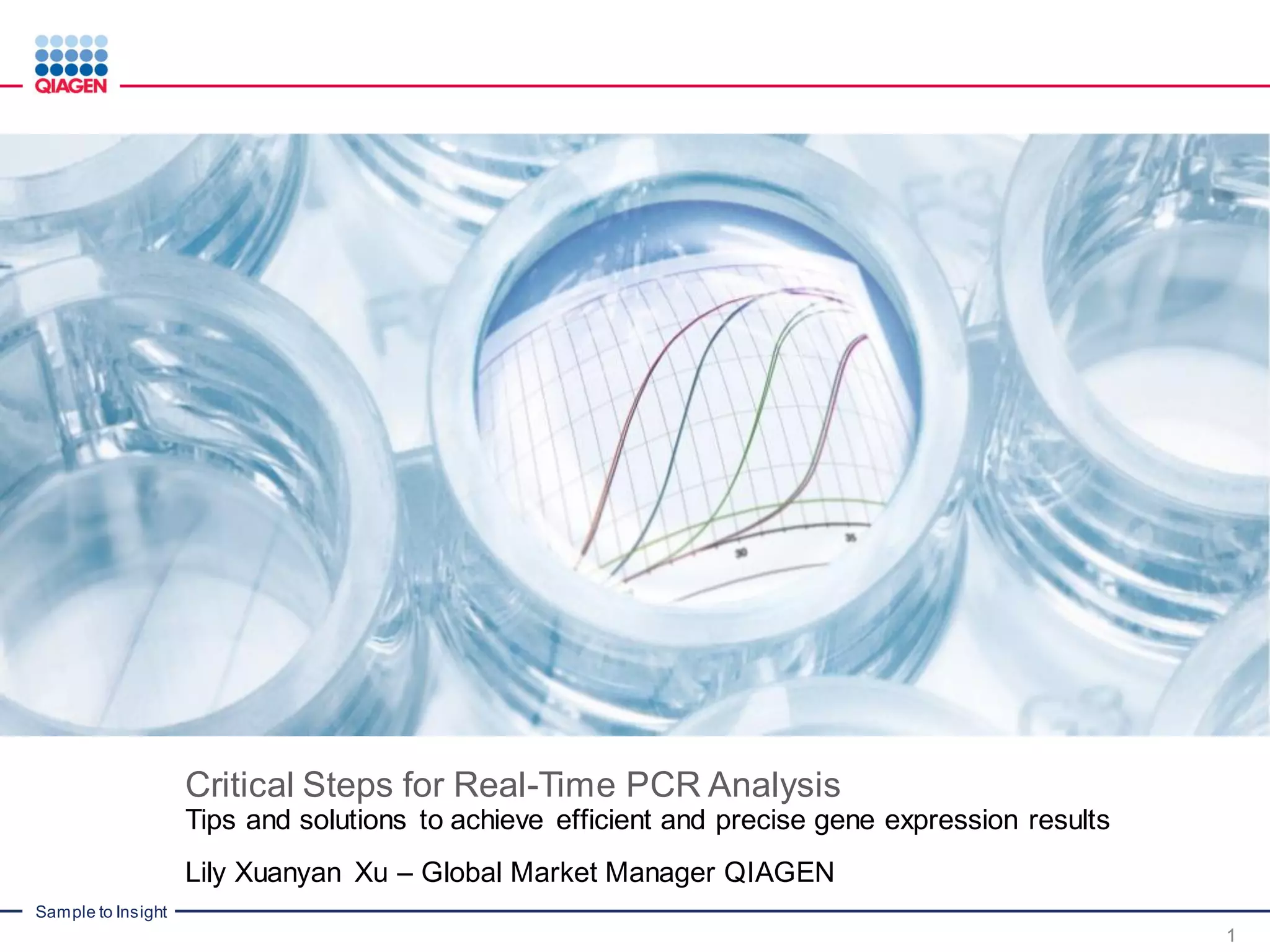
Critical Steps for Real-Time PCR Analysis
Tips and solutions to achieve efficient and precise gene expression results
Lily Xuanyan Xu – Global Market Manager QIAGEN
11
Sample to Insight
Legal disclaimer
2
QIAGEN products shown here are intended for molecular biology
applications. These products are not intended for the diagnosis,
prevention or treatment of a disease.
For up-to-date licensing information and product-specific
disclaimers, see the respective QIAGEN kit handbook or user
manual. QIAGEN kit handbooks and user manuals are available at
www.QIAGEN.com or can be requested from QIAGEN Technical
Services or your local distributor.
Sample to Insight
Agenda
3
Gene expressionworkflows
1.1 Advantages of real-time PCR
Critical steps for real-time PCR analysis
2.1 Stabilization of RNA in-sample
2.2 RNA isolation
2.3 cDNAsynthesis
QIAGEN gene expressionworkflow solutions
Questions
1
2
3
4
Sample to Insight
Agenda
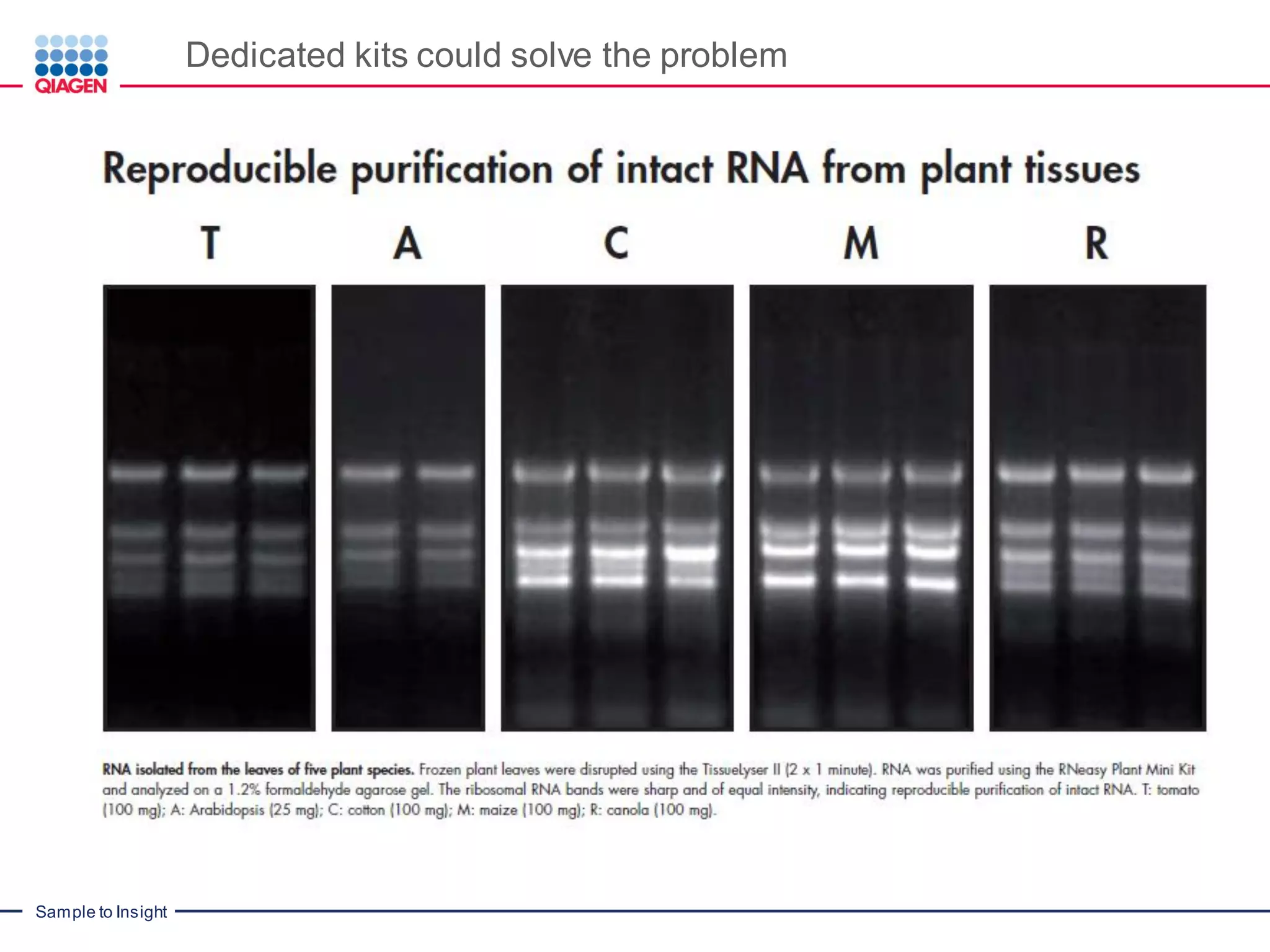
4
Gene expressionworkflows
1.1 Advantages of real-time PCR
Critical steps for real-time PCR analysis
2.1 Stabilization of RNA in-sample
2.2 RNA isolation
2.3 cDNAsynthesis
QIAGEN gene expressionworkflow solutions
Questions
1
2
3
4
Sample to Insight
Gene expression profiling
Understanding biological pathways and cellular system
Gene expression is regulated at different levels
• Transcriptional
• Post-transcriptional
• Translational
• Post-translational
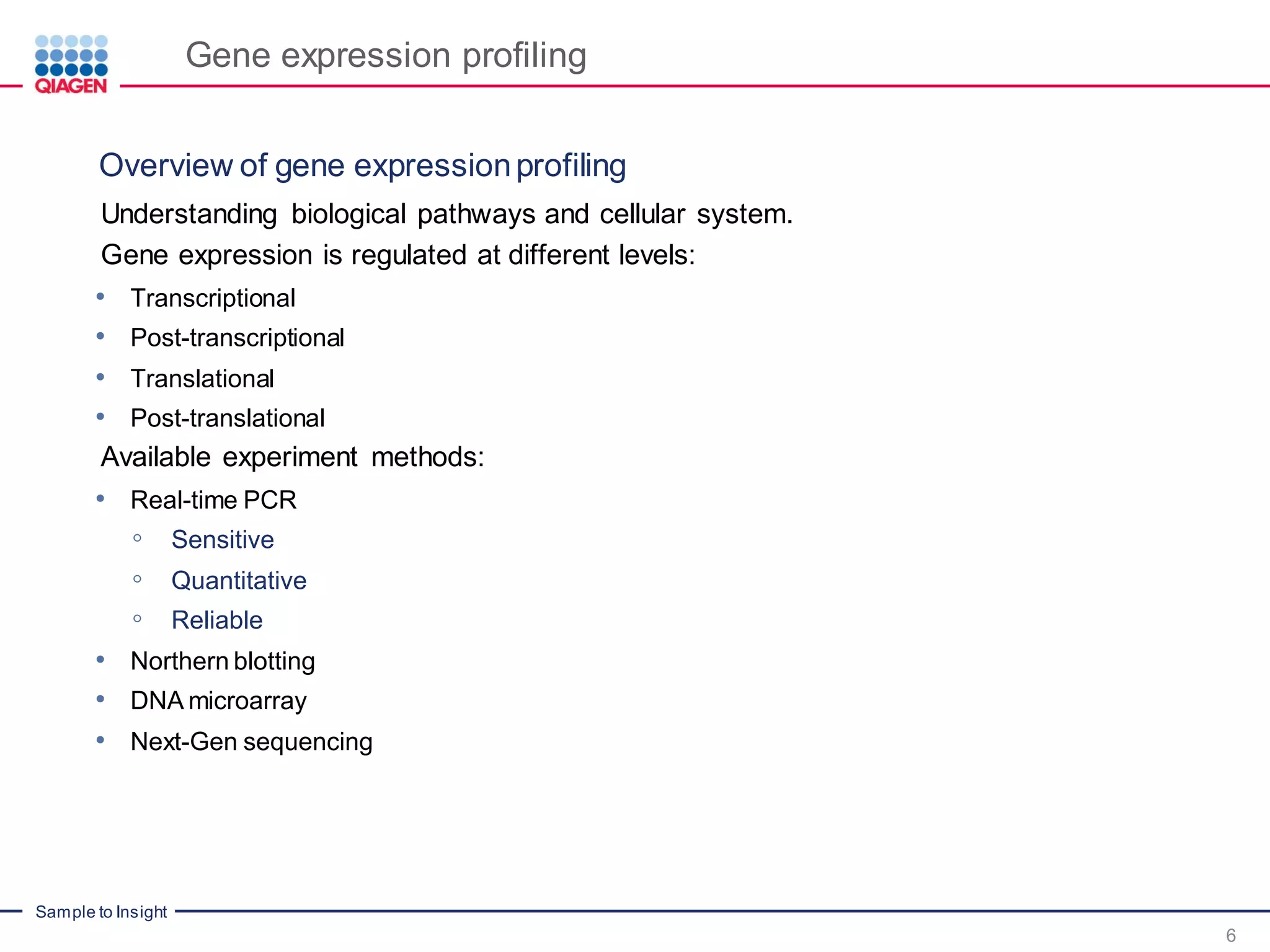
Available experiment methods
• Real-time PCR
• Northern blotting
• DNA microarray
• Next-Gen sequencing
5
Overview of gene expressionprofiling
Sample to Insight
Gene expression profiling
Understanding biological pathways and cellular system.
Gene expression is regulated at different levels:
• Transcriptional
• Post-transcriptional
• Translational
• Post-translational
Available experiment methods:
• Real-time PCR
◦ Sensitive
◦ Quantitative
◦ Reliable
• Northern blotting
• DNA microarray
• Next-Gen sequencing
6
Overview of gene expressionprofiling
Sample to Insight
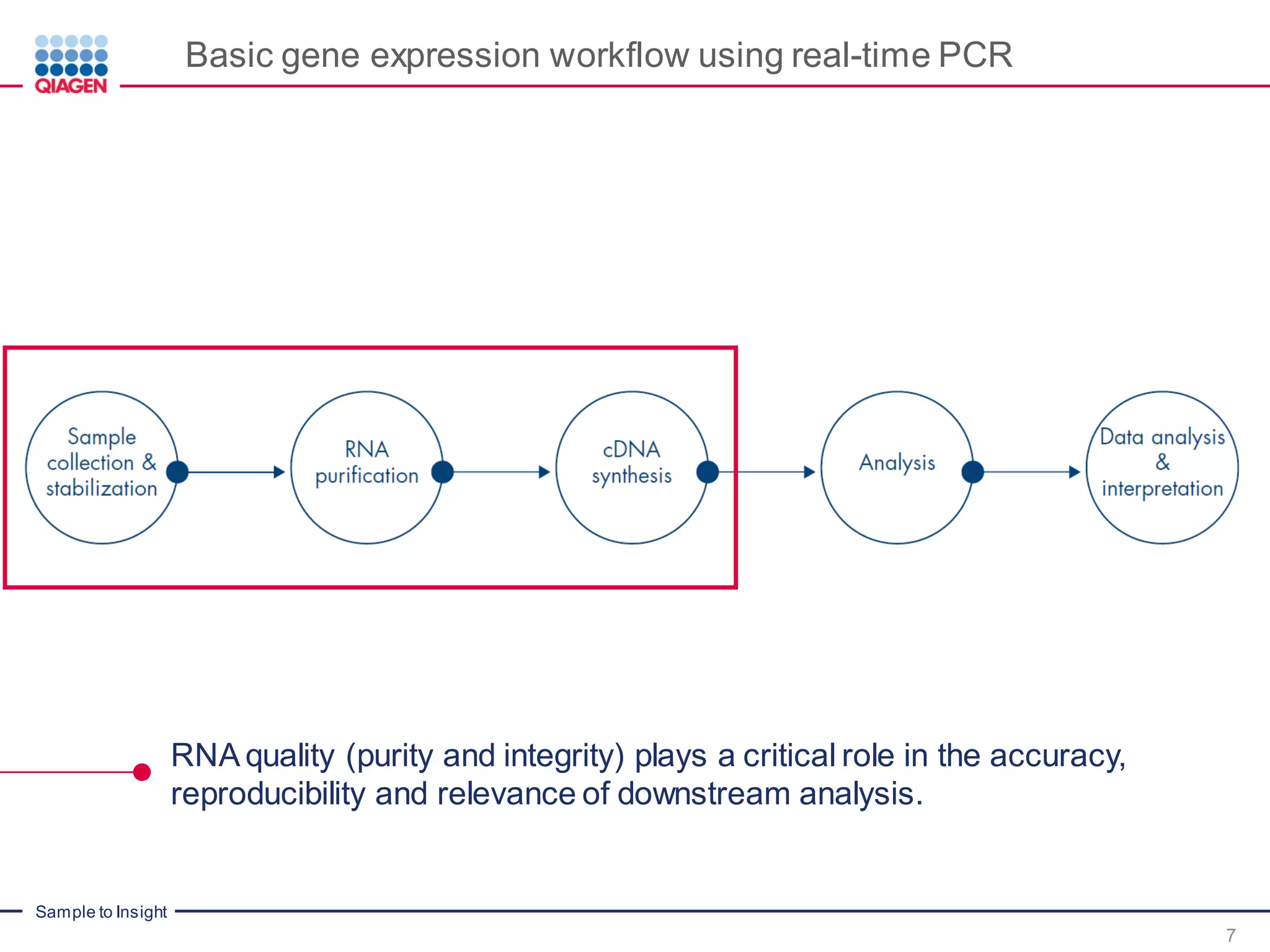
Basic gene expression workflow using real-time PCR
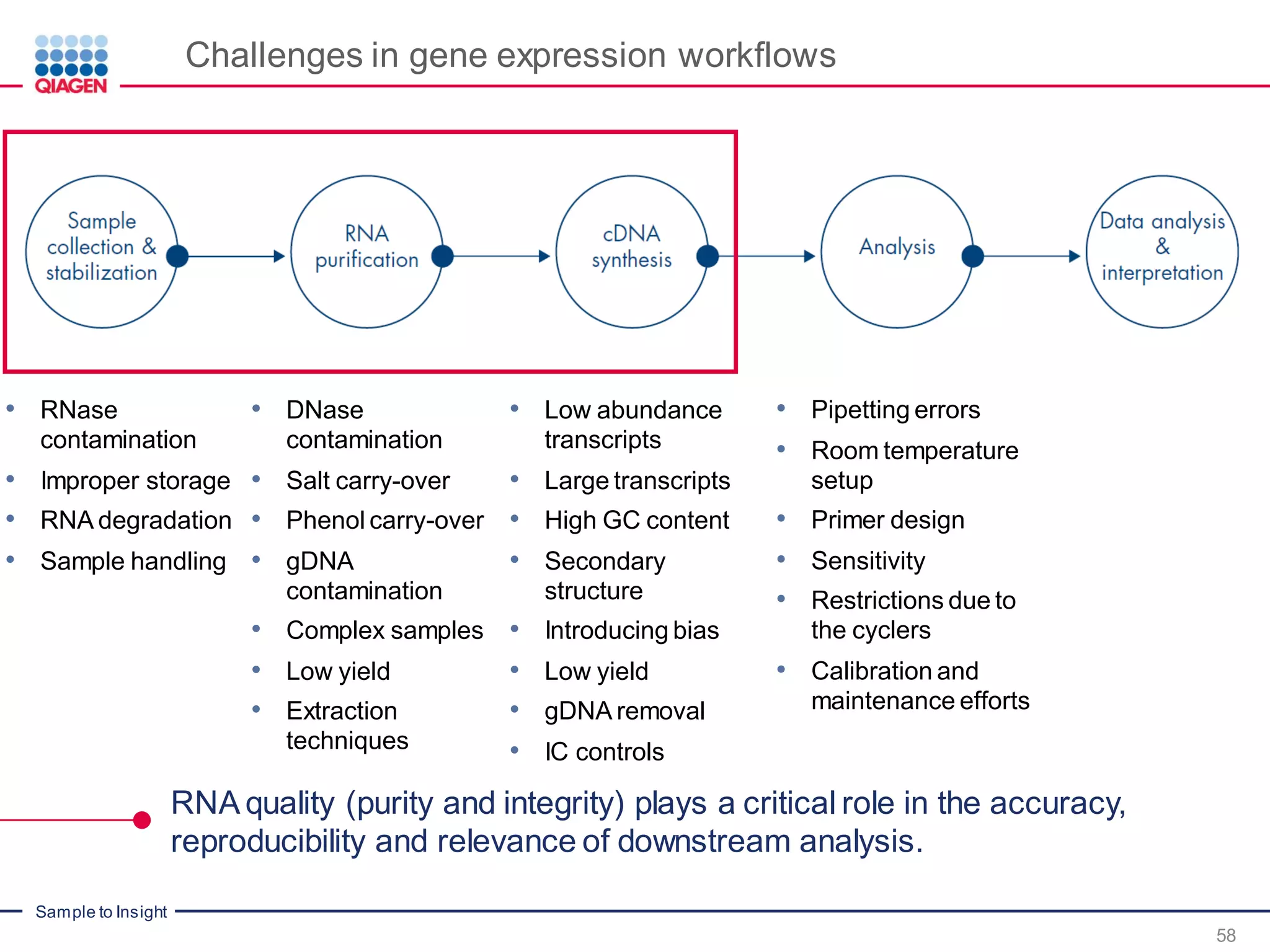
RNA quality (purity and integrity) plays a critical role in the accuracy,
reproducibility and relevance of downstream analysis.
7
Sample to Insight
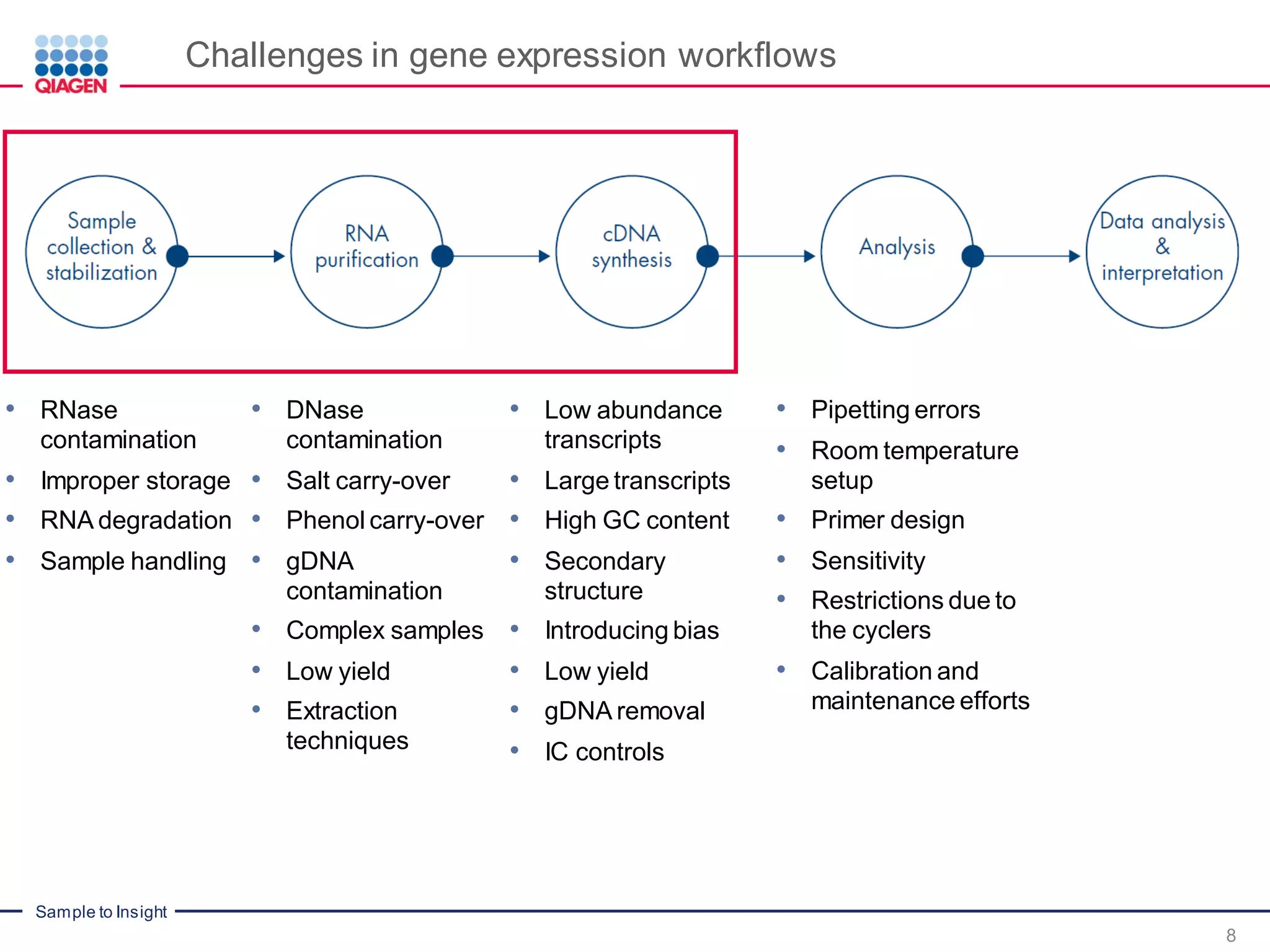
Challenges in gene expression workflows
• DNase
contamination
• Salt carry-over
• Phenol carry-over
• gDNA
contamination
• Complex samples
• Low yield
• Extraction
techniques
• RNase
contamination
• Improper storage
• RNA degradation
• Sample handling
• Low abundance
transcripts
• Large transcripts
• High GC content
• Secondary
structure
• Introducing bias
• Low yield
• gDNA removal
• IC controls
• Pipetting errors
• Room temperature
setup
• Primer design
• Sensitivity
• Restrictions due to
the cyclers
• Calibration and
maintenance efforts
8
Sample to Insight
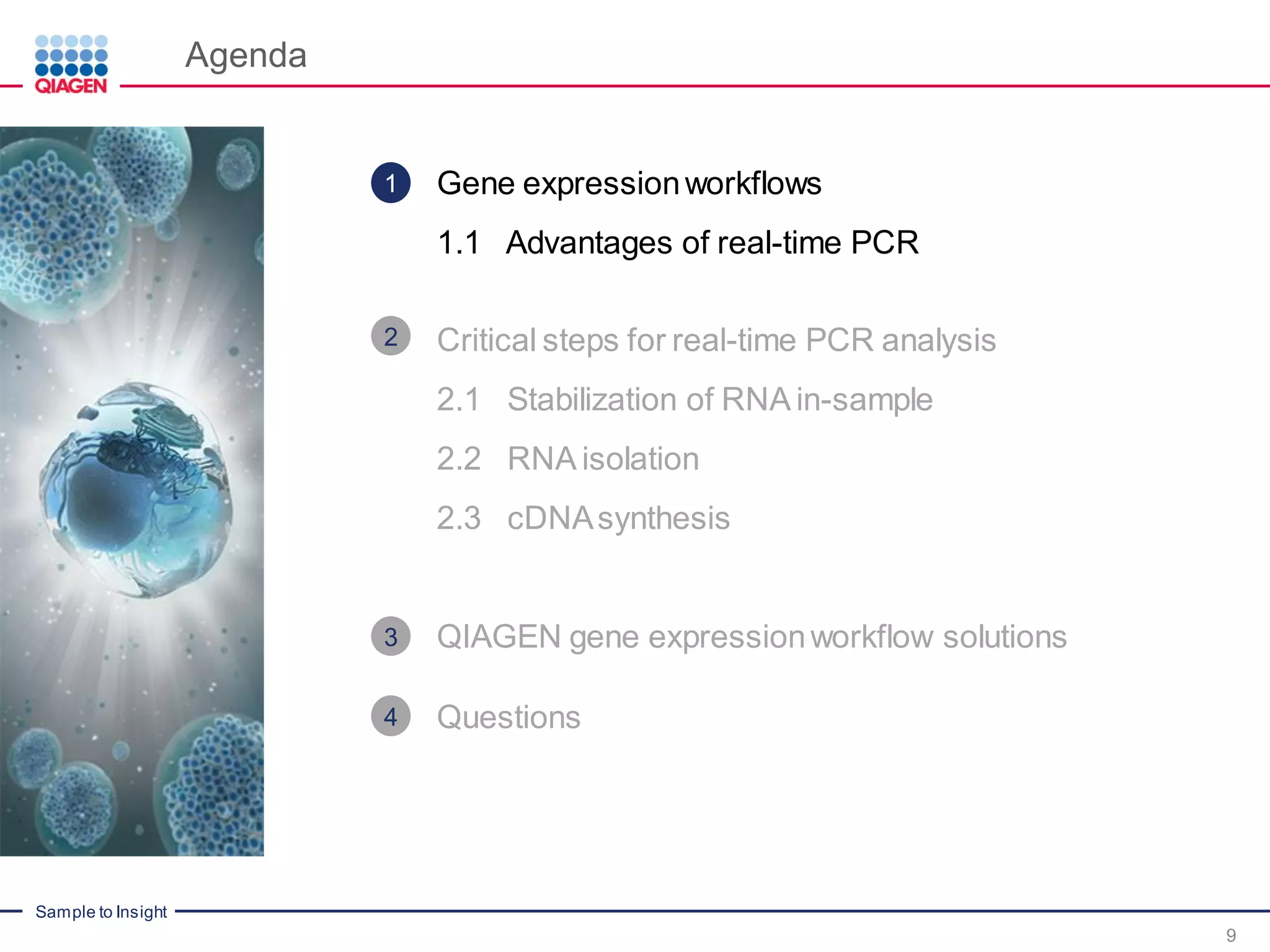
Agenda
9
Gene expressionworkflows
1.1 Advantages of real-time PCR
Critical steps for real-time PCR analysis
2.1 Stabilization of RNA in-sample
2.2 RNA isolation
2.3 cDNAsynthesis
QIAGEN gene expressionworkflow solutions
Questions
1
2
3
4
Sample to Insight
Agenda
10
Gene expressionworkflows
1.1 Advantages of real-time PCR
Critical steps for real-time PCR analysis
2.1 Stabilization of RNA in-sample
2.2 RNA isolation
2.3 cDNAsynthesis
QIAGEN gene expressionworkflow solutions
Questions
1
2
3
4
Sample to Insight
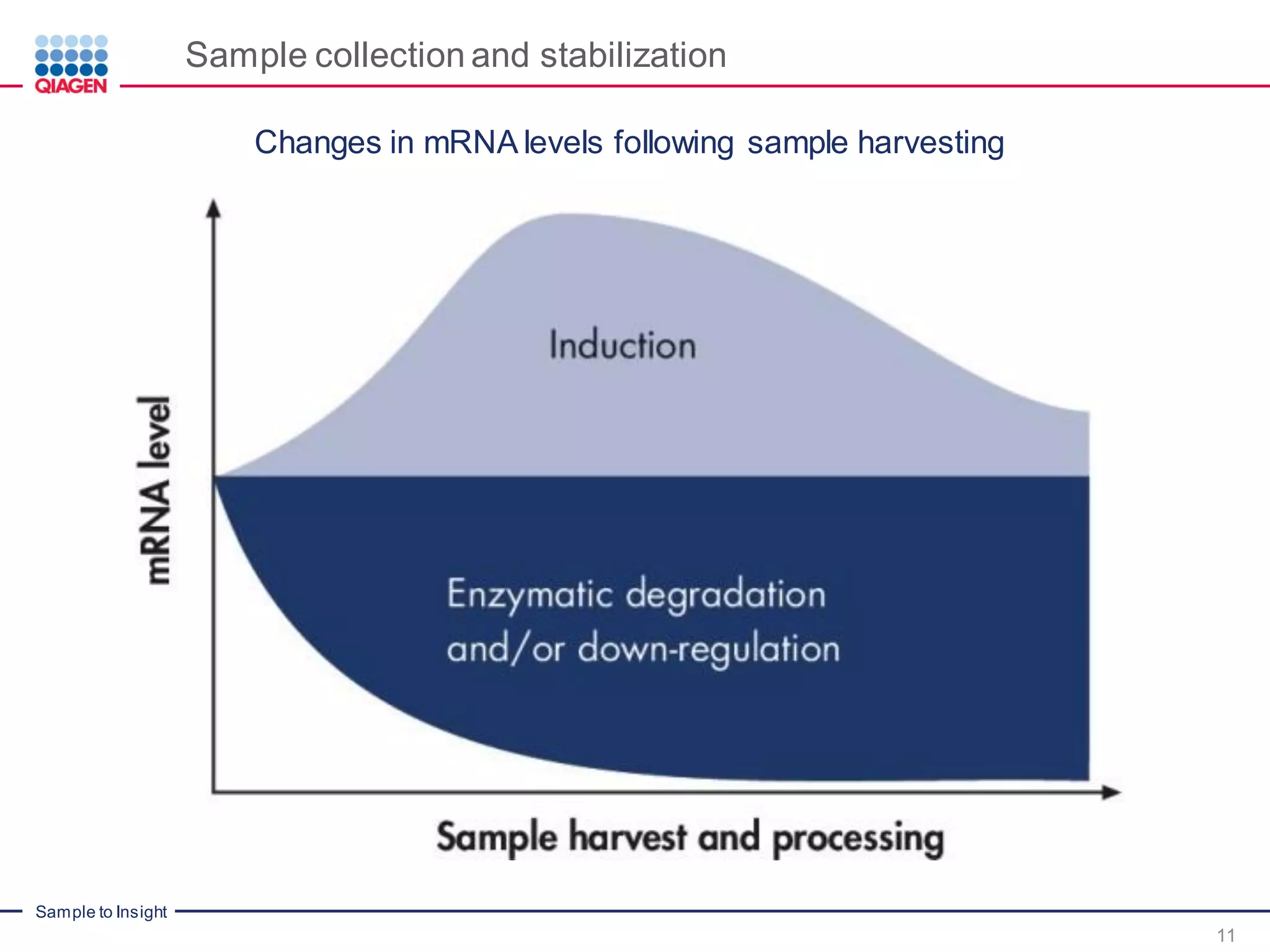
Sample collection and stabilization
11
Changes in mRNA levels following sample harvesting
Sample to Insight
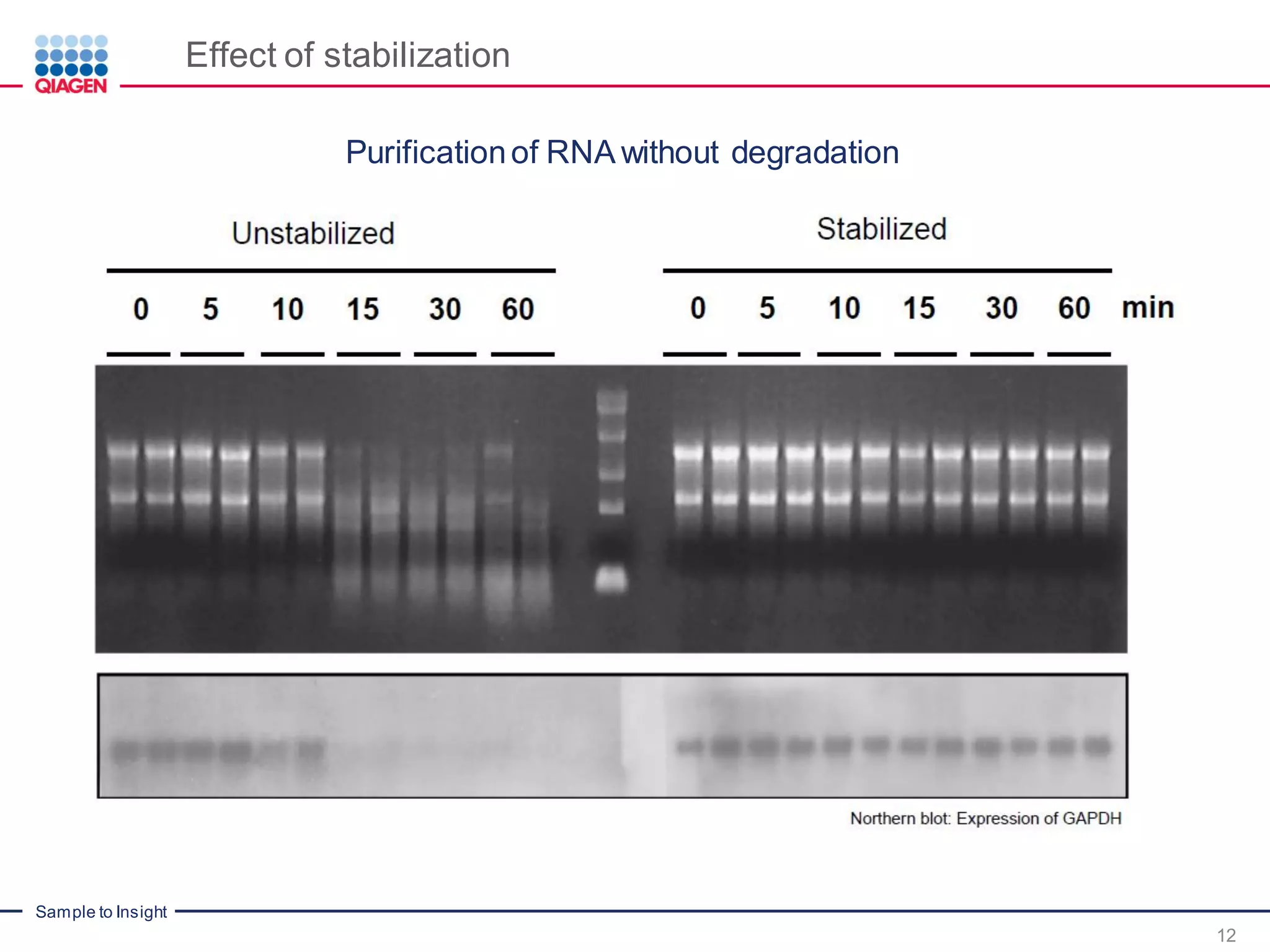
Effect of stabilization
12
Purificationof RNA without degradation
Sample to Insight
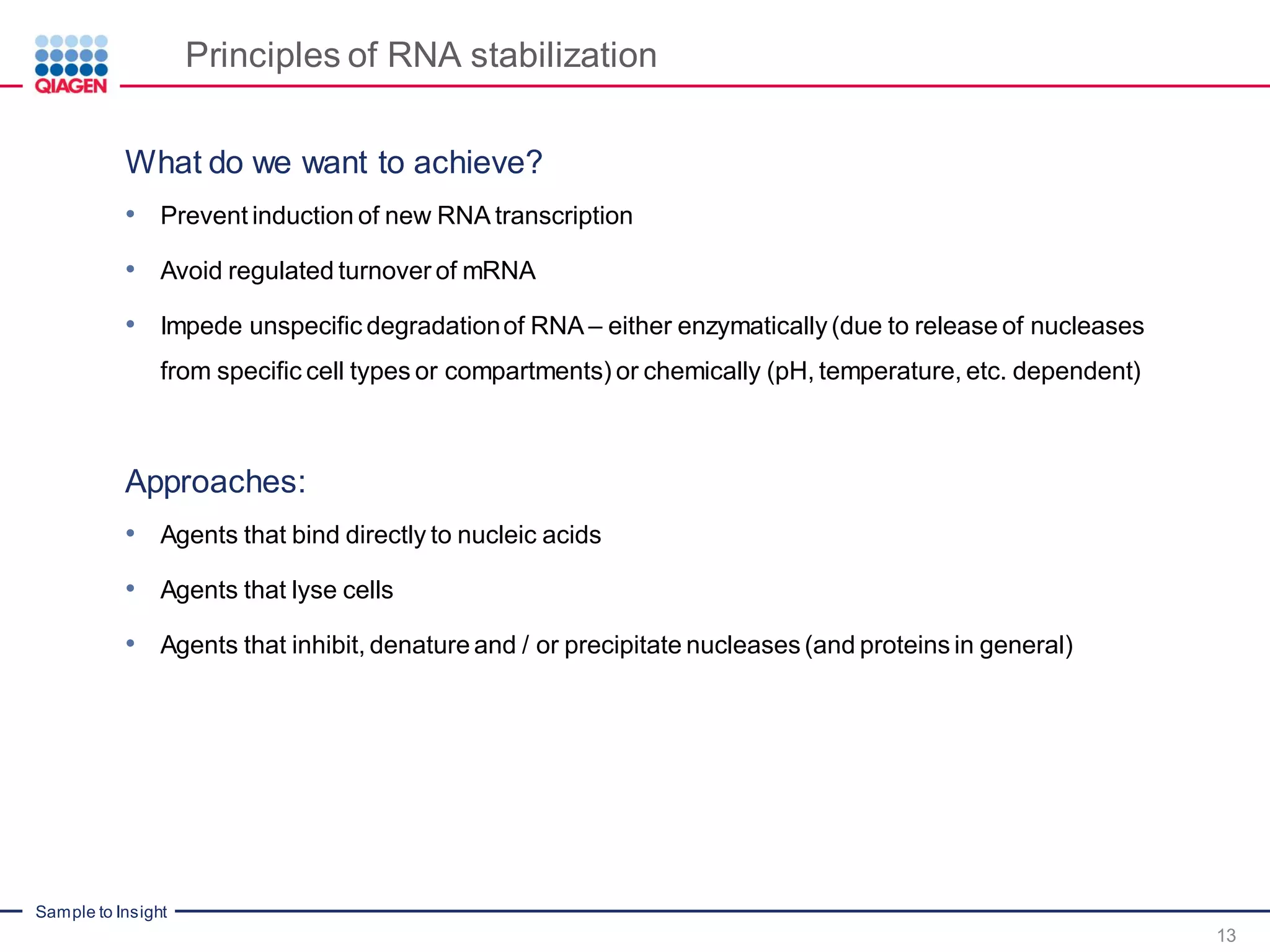
Principles of RNA stabilization
What do we want to achieve?
• Prevent induction of new RNA transcription
• Avoid regulated turnover of mRNA
• Impede unspecific degradationof RNA – either enzymatically(due to release of nucleases
from specific cell types or compartments) or chemically (pH, temperature, etc. dependent)
Approaches:
• Agents that bind directly to nucleic acids
• Agents that lyse cells
• Agents that inhibit, denature and / or precipitate nucleases(and proteins in general)
13
Sample to Insight
Requirements for stabilization of blood and tissue samples
Blood contains only individual cells but has a high protein content:
• Diffusion rates of the stabilizing agent are not problematic
• Agents that precipitate or cross-link proteins are detrimental
• In principle, blood volume is not limited (container is limited)
• One-step stabilization technologyis required
Tissue contains connected cells:
• Diffusion rates of the stabilizing agent are critical
• Thickness of the tissue sample is limited
• Multi-step technology applicableas tissue pieces are transferrable
• Protein precipitation or cross-linking is not an issue
14Practical Hintsfor Real-TimePCR
QIAGEN offers a variety of stabilization reagents for several different
sample types: blood, tissue, cells, bone marrow, bacteria, saliva etc.
14
Sample to Insight
Agenda
15
Gene expressionworkflows
1.1 Advantages of real-time PCR
Critical steps for real-time PCR analysis
2.1 Stabilization of RNA in-sample
2.2 RNA isolation
2.3 cDNAsynthesis
QIAGEN gene expressionworkflow solutions
Questions
1
2
3
4
Sample to Insight
Agenda
16
Gene expressionworkflows
1.1 Advantages of real-time PCR
Critical steps for real-time PCR analysis
2.1 Stabilization of RNA in-sample
2.2 RNA isolation
2.3 cDNAsynthesis
QIAGEN gene expressionworkflow solutions
Questions
1
2
3
4
Sample to Insight
Sample disruption and homogenization
17
Disruption and homogenization: two distinct steps.
Disruption: complete disruption of tissue structure, cell walls and plasma
membranes of cells is required to release all the RNA contained in the sample.
• Different samples require different methods to achieve complete disruption.
• Incomplete disruption results in significantly reduced yields.
Homogenization: Homogenization is necessary to reduce the viscosity of the cell
lysates produced by disruption. Homogenization shears the high-molecular-weight
genomic DNA and other high-molecular-weight cellular components to create a
homogeneous lysate.
• Incomplete homogenization results in inefficient binding of RNAand therefore significantly
reduced yields.
Efficient disruption and homogenization - an absolute requirement
Sample to Insight
Manual disruption and homogenization
18
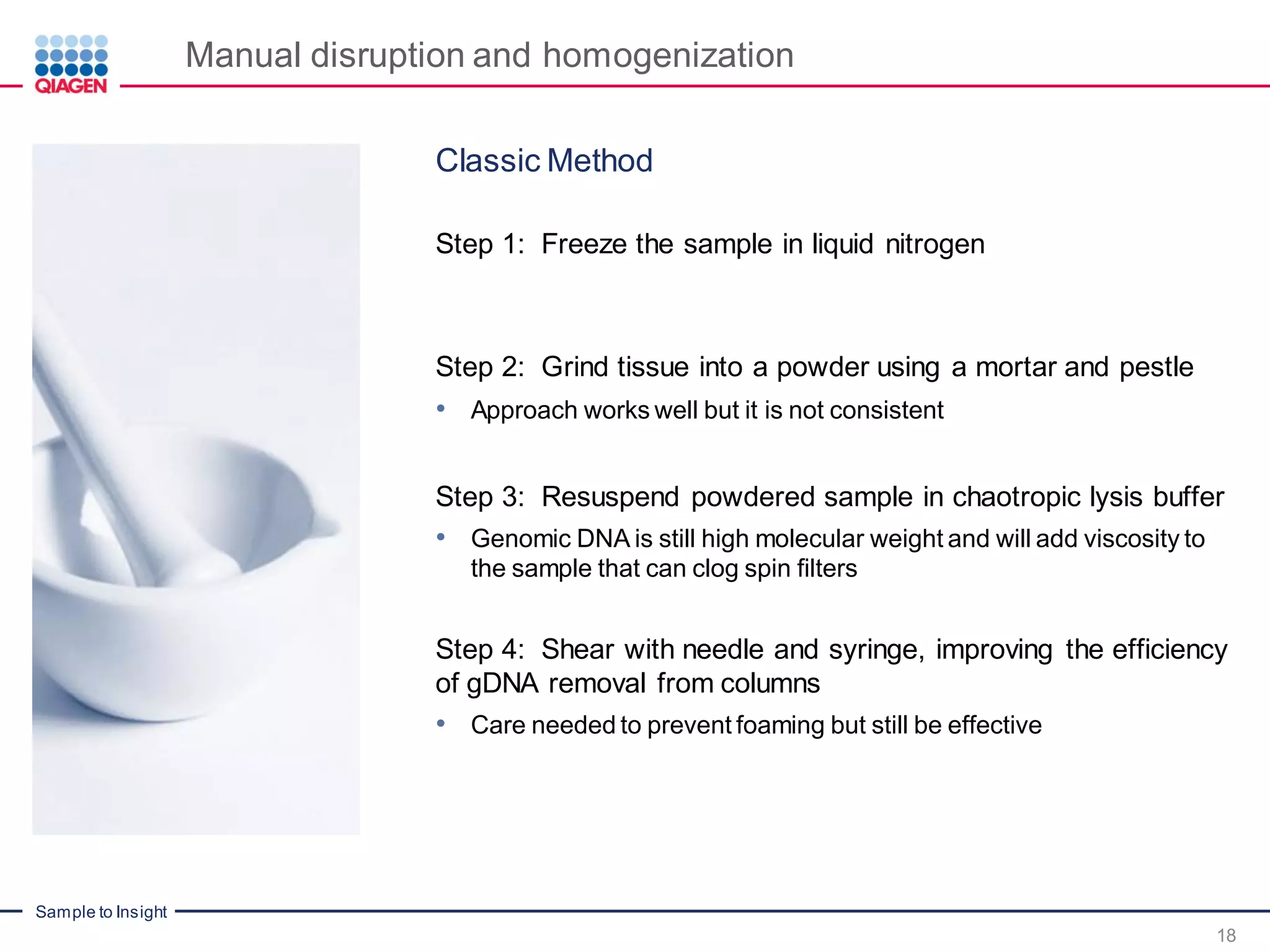
Classic Method
Step 1: Freeze the sample in liquid nitrogen
Step 2: Grind tissue into a powder using a mortar and pestle
• Approach works well but it is not consistent
Step 3: Resuspend powdered sample in chaotropic lysis buffer
• Genomic DNA is still high molecular weight and will add viscosity to
the sample that can clog spin filters
Step 4: Shear with needle and syringe, improving the efficiency
of gDNA removal from columns
• Care needed to prevent foaming but still be effective
Sample to Insight
19
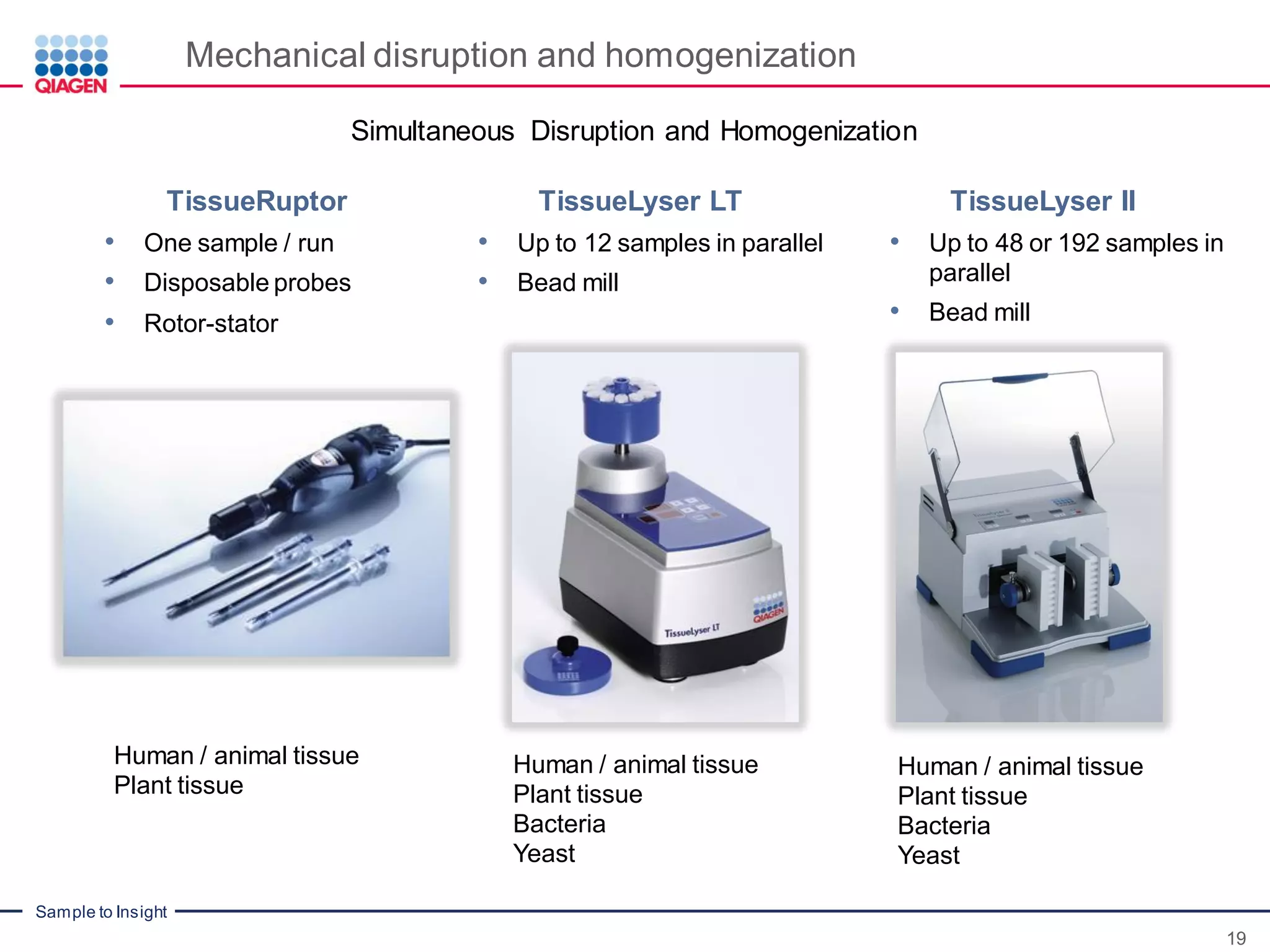
Simultaneous Disruption and Homogenization
TissueRuptor
• One sample / run
• Disposable probes
• Rotor-stator
TissueLyser LT
• Up to 12 samples in parallel
• Bead mill
TissueLyser II
• Up to 48 or 192 samples in
parallel
• Bead mill
Mechanical disruption and homogenization
Human / animal tissue
Plant tissue
Human / animal tissue
Plant tissue
Bacteria
Yeast
Human / animal tissue
Plant tissue
Bacteria
Yeast
Sample to Insight
Effective tissue disruption
20
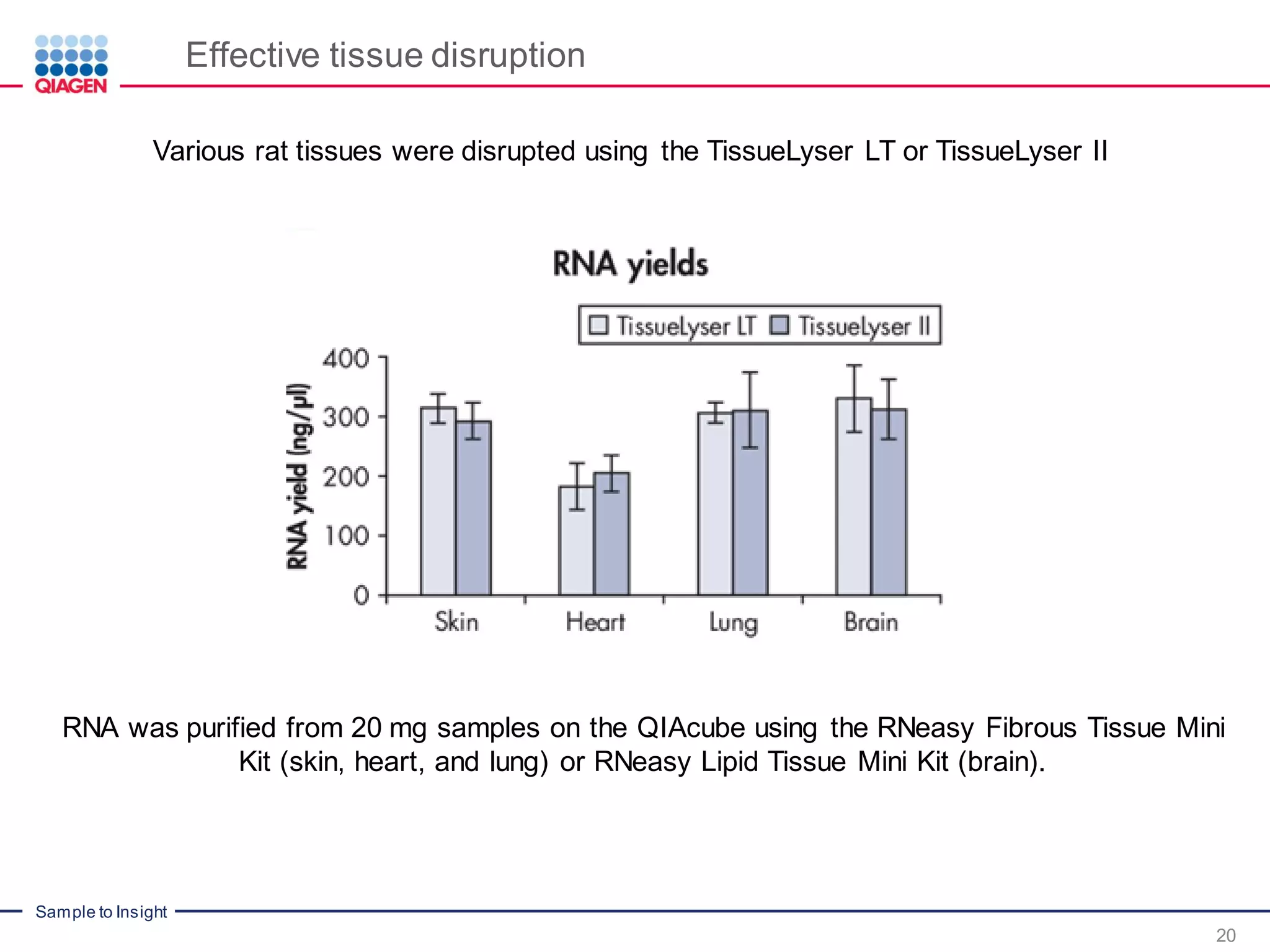
Various rat tissues were disrupted using the TissueLyser LT or TissueLyser II
RNA was purified from 20 mg samples on the QIAcube using the RNeasy Fibrous Tissue Mini
Kit (skin, heart, and lung) or RNeasy Lipid Tissue Mini Kit (brain).
Sample to Insight
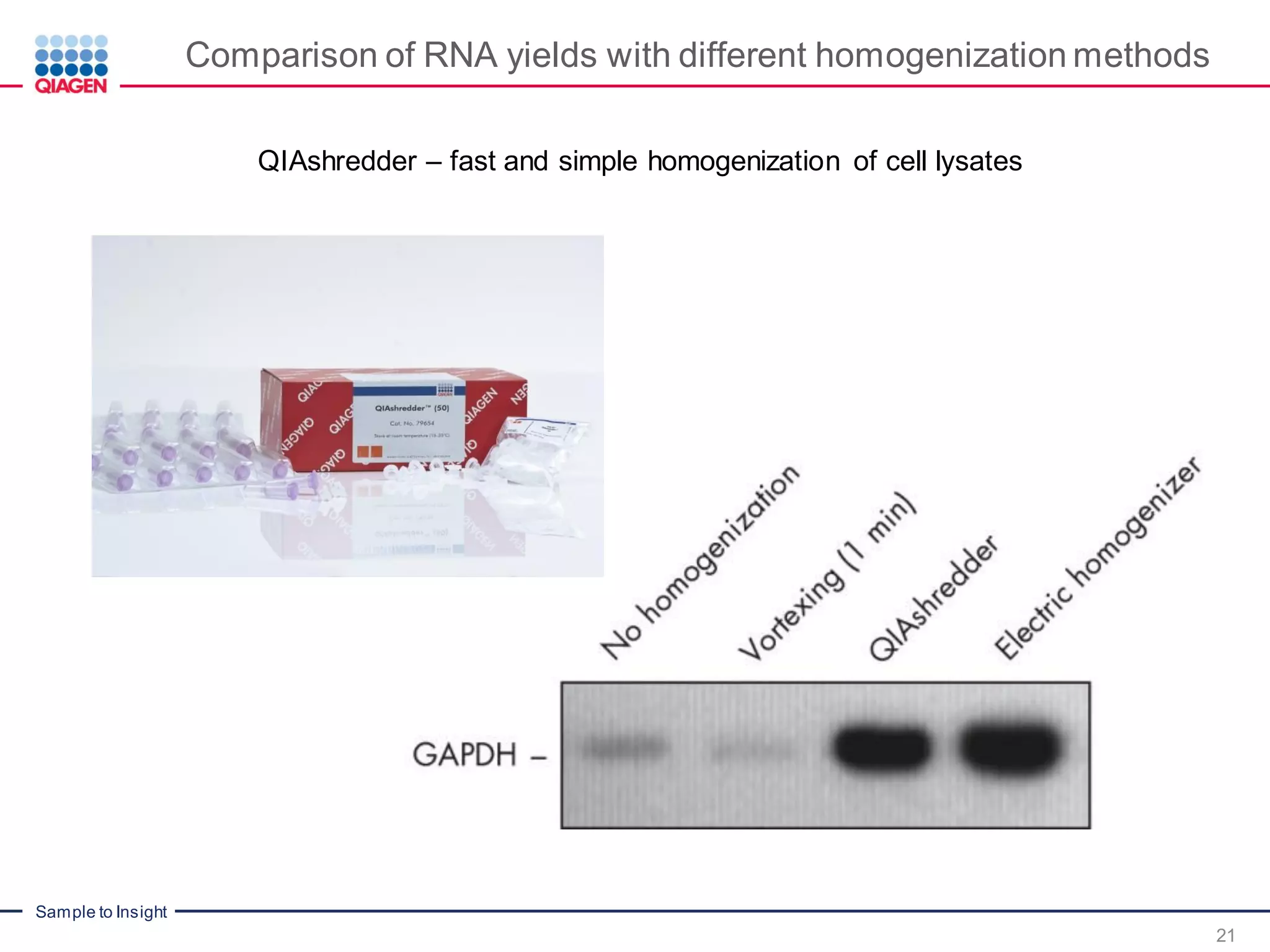
Comparison of RNA yields with different homogenization methods
21
QIAshredder – fast and simple homogenization of cell lysates
Sample to Insight
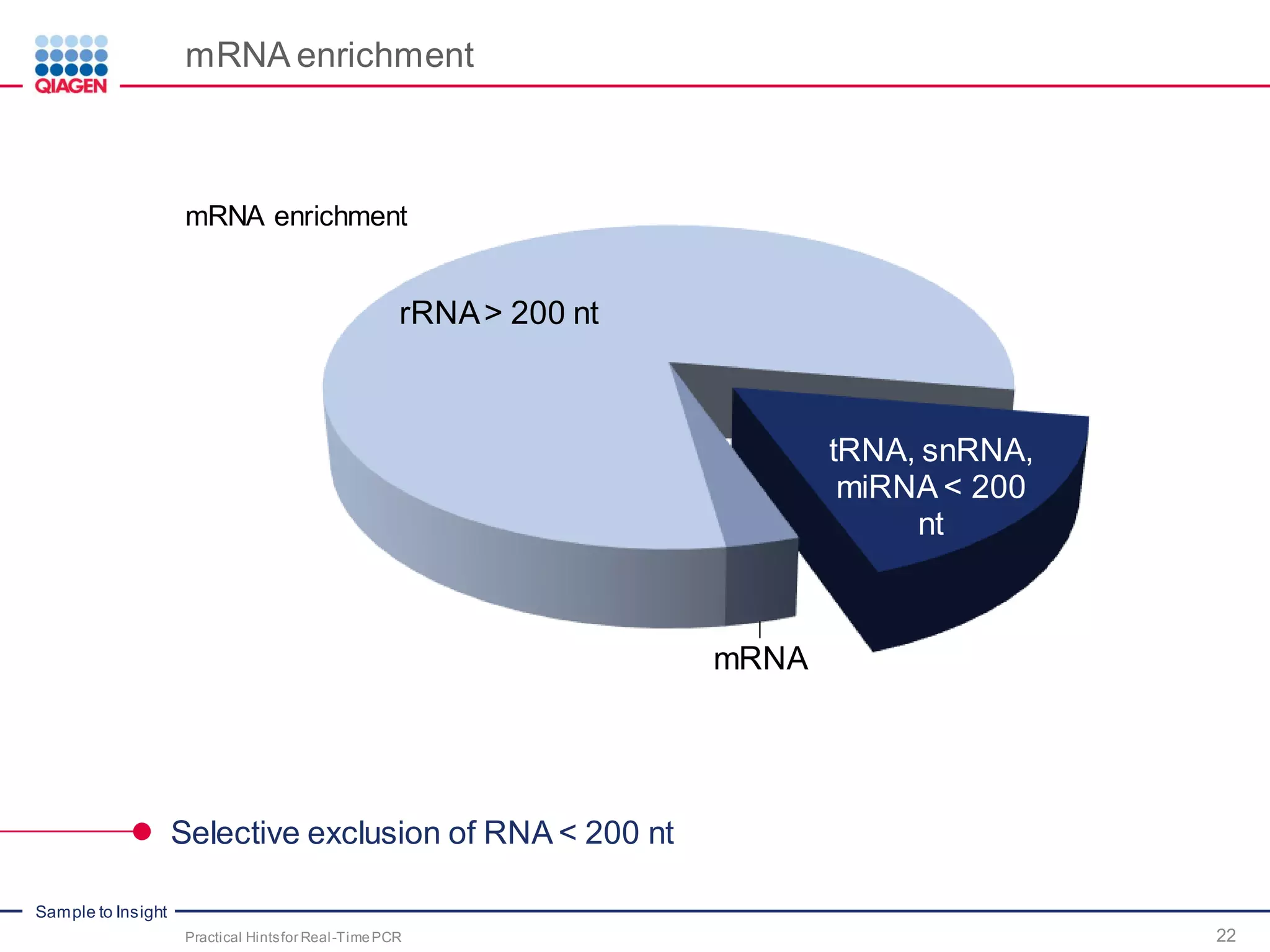
mRNA enrichment
mRNA enrichment
Selective exclusion of RNA < 200 nt
mRNA
rRNA> 200 nt
tRNA, snRNA,
miRNA < 200
nt
Practical Hintsfor Real-TimePCR 22
Sample to Insight
Choosing the right RNA purification product / protocol
Is the RNA purification procedure appropriate for the amount of starting material?
• Overloading usually results in lower purity, lower yields
• With small samples, it is important to use an efficient RNA purification method
RNA purification from large samples:
• Provides a pool of RNAthat can be used for multiple experiments
• May be required to get sufficient amounts of RNA from samples that have low RNA content
• High binding capacity – usually also implies higher dead volume
Practical Hintsfor Real-TimePCR 23
Sample to Insight
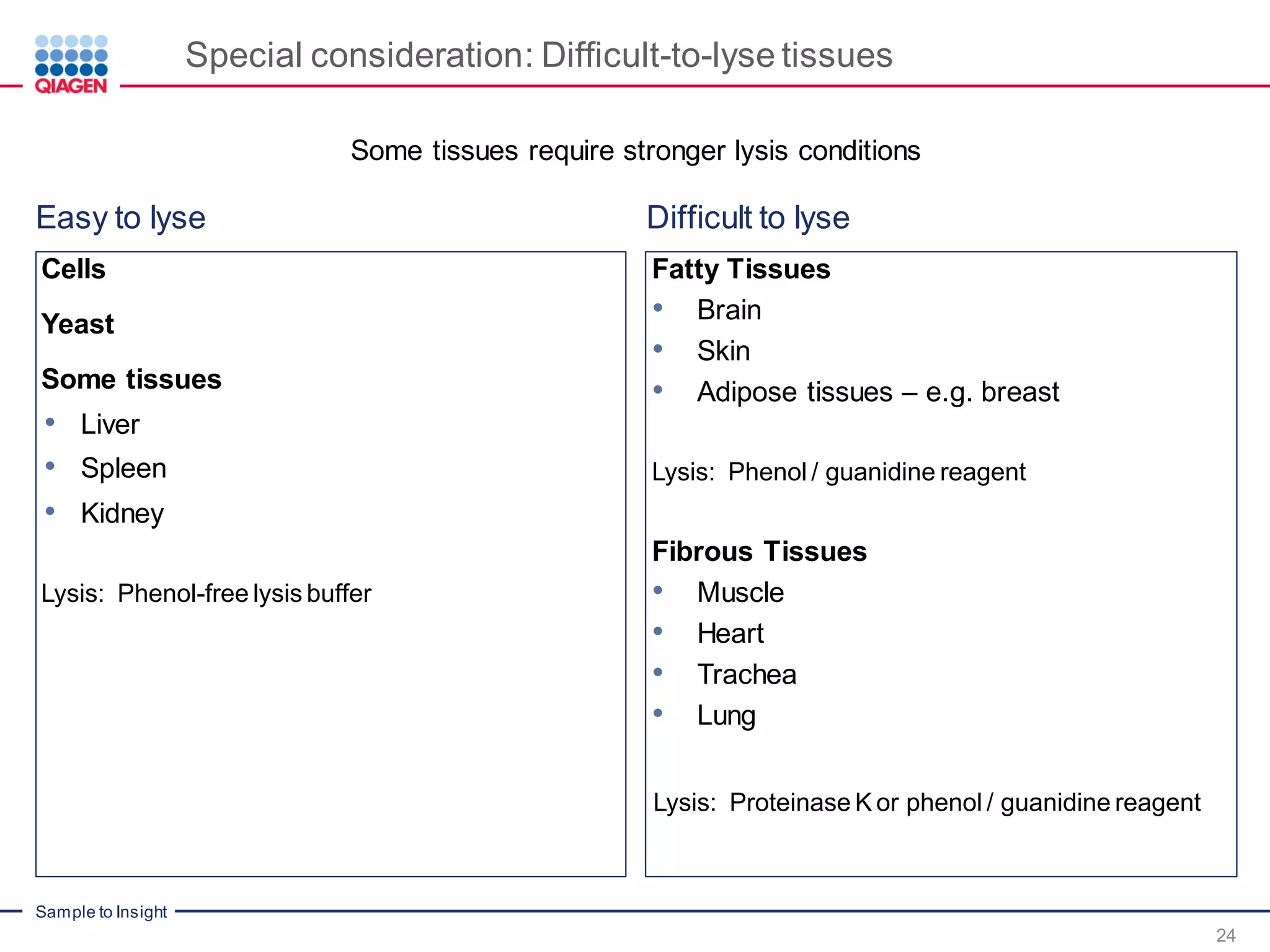
Special consideration: Difficult-to-lyse tissues
24
Cells
Yeast
Some tissues
• Liver
• Spleen
• Kidney
Lysis: Phenol-free lysis buffer
Fatty Tissues
• Brain
• Skin
• Adipose tissues – e.g. breast
Lysis: Phenol / guanidine reagent
Fibrous Tissues
• Muscle
• Heart
• Trachea
• Lung
Lysis: Proteinase K or phenol / guanidine reagent
Easy to lyse Difficult to lyse
Some tissues require stronger lysis conditions
Sample to Insight
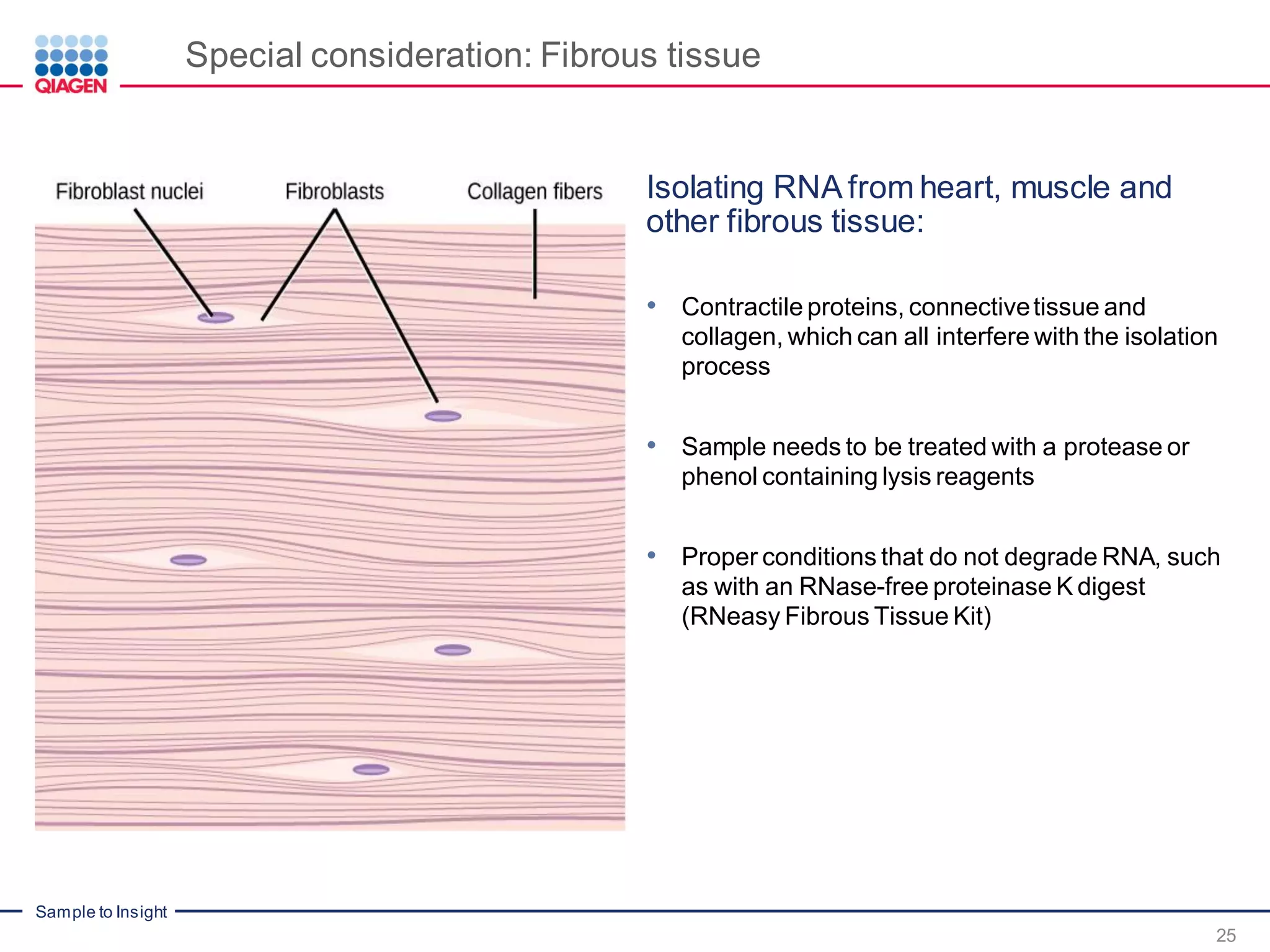
Special consideration: Fibrous tissue
25
Isolating RNA from heart, muscle and
other fibrous tissue:
• Contractile proteins, connectivetissue and
collagen, which can all interfere with the isolation
process
• Sample needs to be treated with a protease or
phenol containing lysis reagents
• Proper conditions that do not degrade RNA, such
as with an RNase-free proteinase K digest
(RNeasy Fibrous Tissue Kit)
Sample to Insight
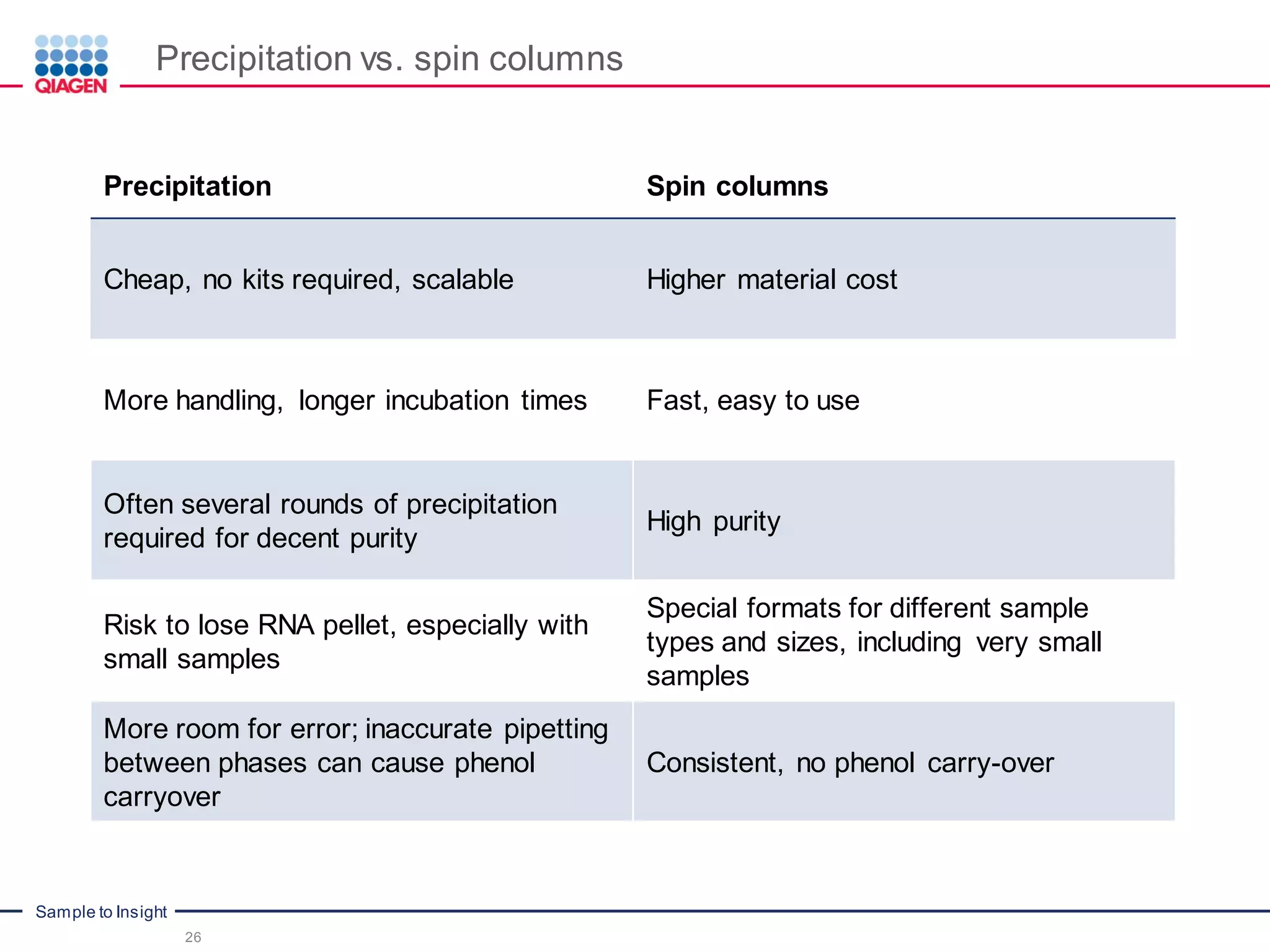
Precipitation vs. spin columns
Precipitation Spin columns
Cheap, no kits required, scalable Higher material cost
More handling, longer incubation times Fast, easy to use
Often several rounds of precipitation
required for decent purity
High purity
Risk to lose RNA pellet, especially with
small samples
Special formats for different sample
types and sizes, including very small
samples
More room for error; inaccurate pipetting
between phases can cause phenol
carryover
Consistent, no phenol carry-over
26
Sample to Insight
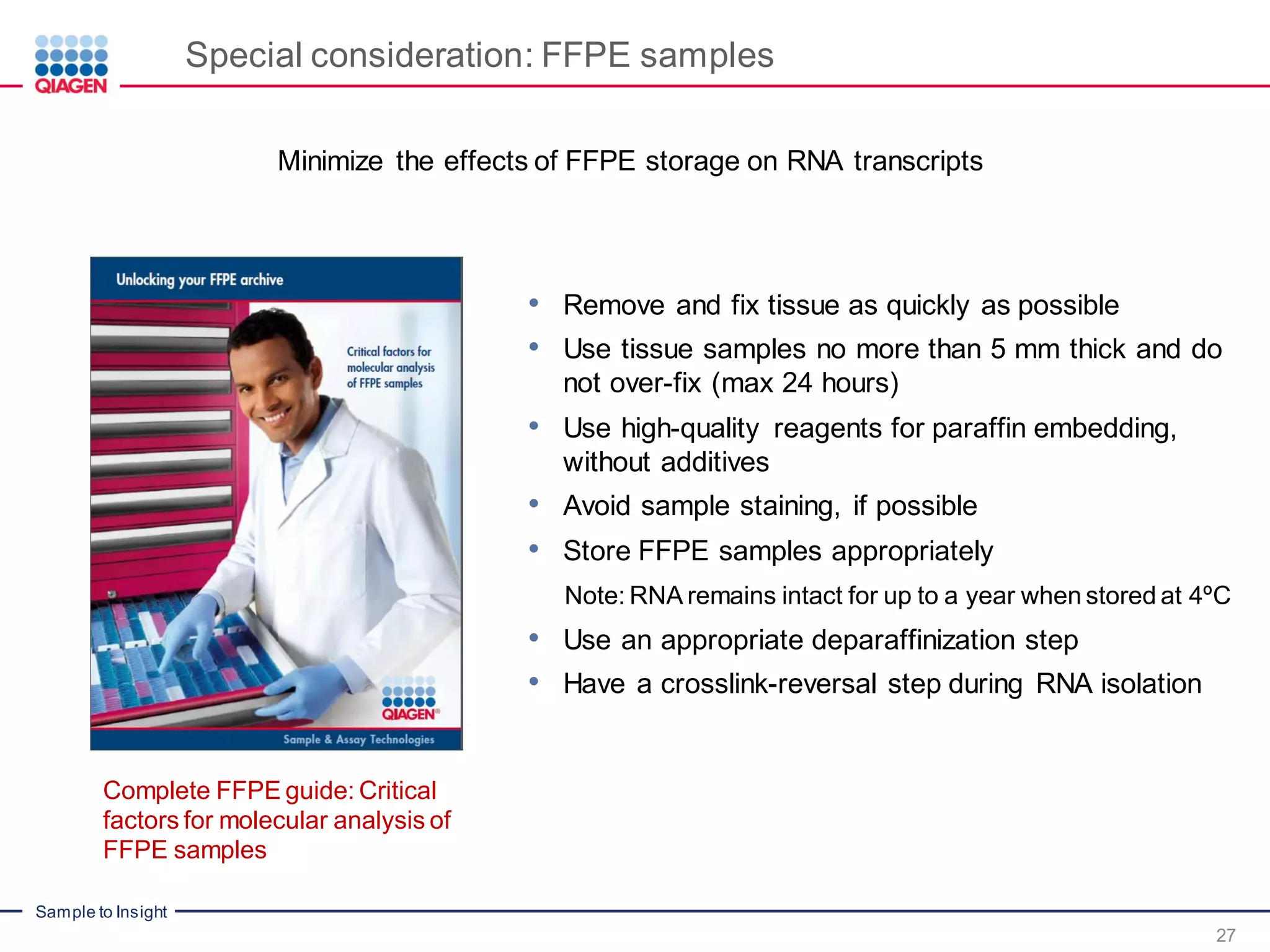
Special consideration: FFPE samples
• Remove and fix tissue as quickly as possible
• Use tissue samples no more than 5 mm thick and do
not over-fix (max 24 hours)
• Use high-quality reagents for paraffin embedding,
without additives
• Avoid sample staining, if possible
• Store FFPE samples appropriately
Note: RNA remains intact for up to a year when stored at 4ºC
• Use an appropriate deparaffinization step
• Have a crosslink-reversal step during RNA isolation
Minimize the effects of FFPE storage on RNA transcripts
Complete FFPE guide: Critical
factors for molecular analysis of
FFPE samples
27
Sample to Insight
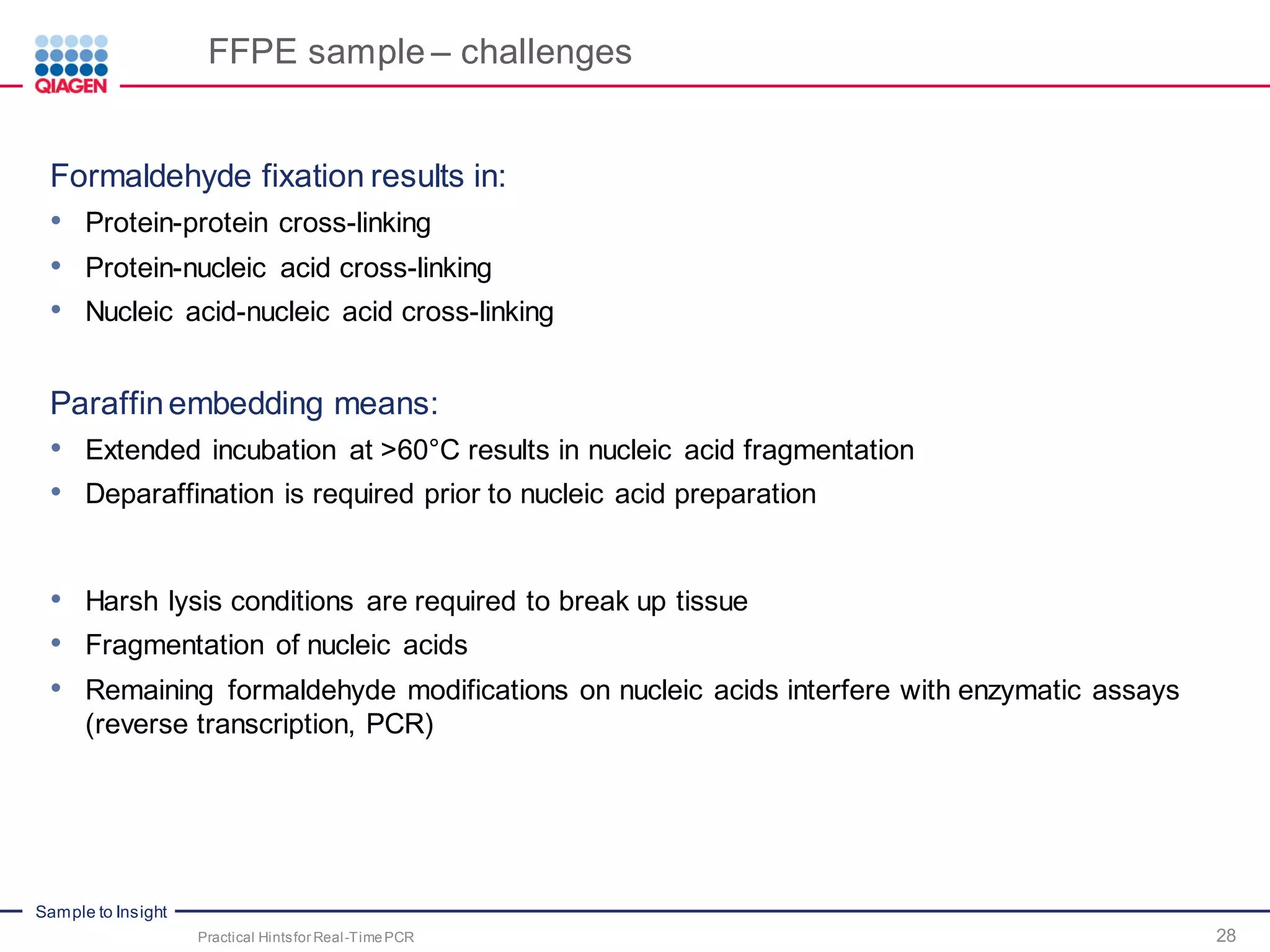
FFPE sample – challenges
Formaldehyde fixation results in:
• Protein-protein cross-linking
• Protein-nucleic acid cross-linking
• Nucleic acid-nucleic acid cross-linking
Paraffinembedding means:
• Extended incubation at >60°C results in nucleic acid fragmentation
• Deparaffination is required prior to nucleic acid preparation
• Harsh lysis conditions are required to break up tissue
• Fragmentation of nucleic acids
• Remaining formaldehyde modifications on nucleic acids interfere with enzymatic assays
(reverse transcription, PCR)
Practical Hintsfor Real-TimePCR 28
Sample to Insight
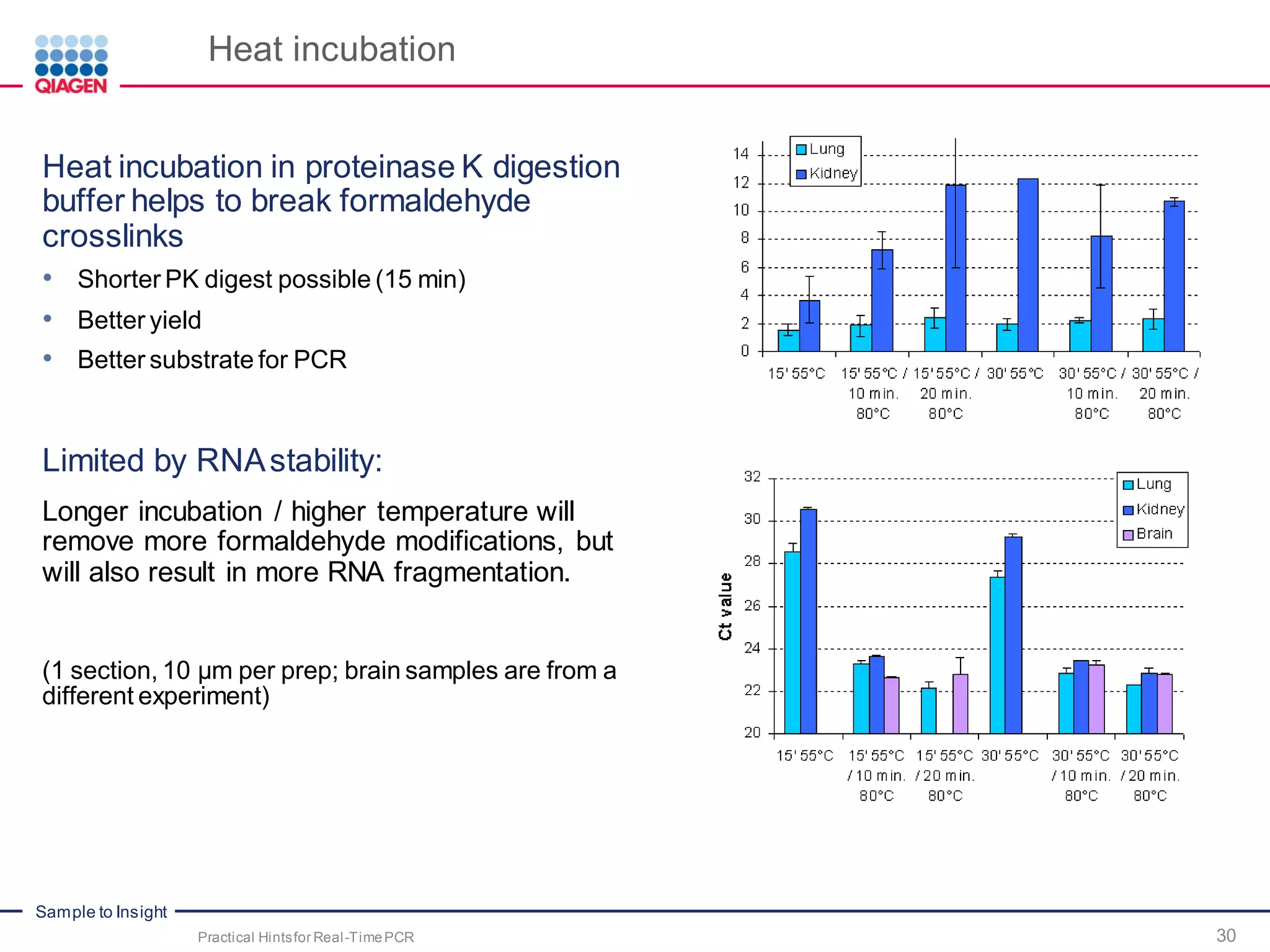
Heat incubation
Heat incubation in proteinase K digestion
buffer helps to break formaldehyde
crosslinks
• Shorter PK digest possible (15 min)
• Better yield
• Better substrate for PCR
Limited by RNAstability:
Longer incubation / higher temperature will
remove more formaldehyde modifications, but
will also result in more RNA fragmentation.
(1 section, 10 µm per prep; brain samples are from a
different experiment)
Practical Hintsfor Real-TimePCR 30
Sample to Insight
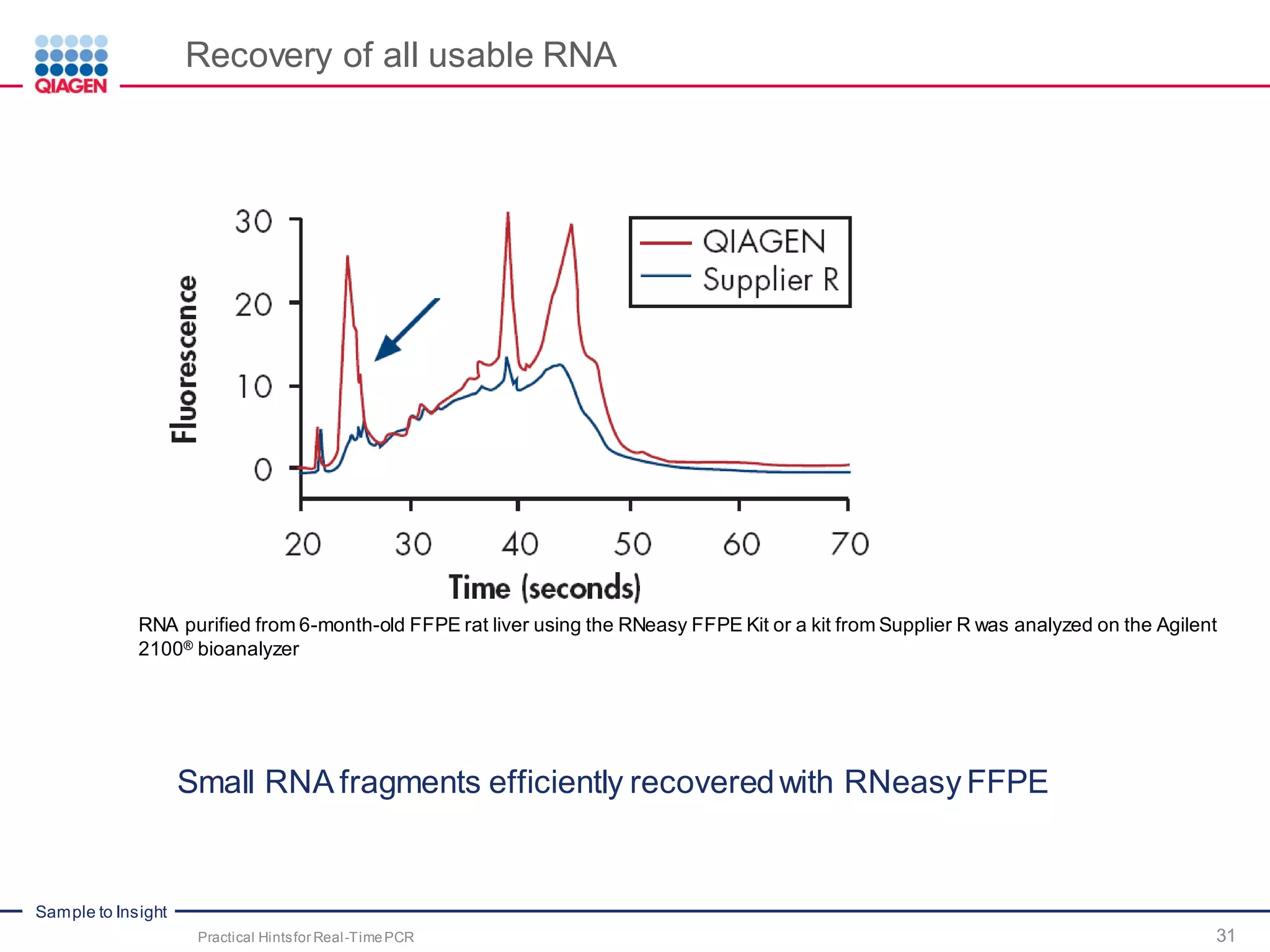
Recovery of all usable RNA
Small RNA fragments efficiently recoveredwith RNeasy FFPE
Practical Hintsfor Real-TimePCR 31
RNA purified from 6-month-old FFPE rat liver using the RNeasy FFPE Kit or a kit from Supplier R was analyzed on the Agilent
2100® bioanalyzer
Sample to Insight
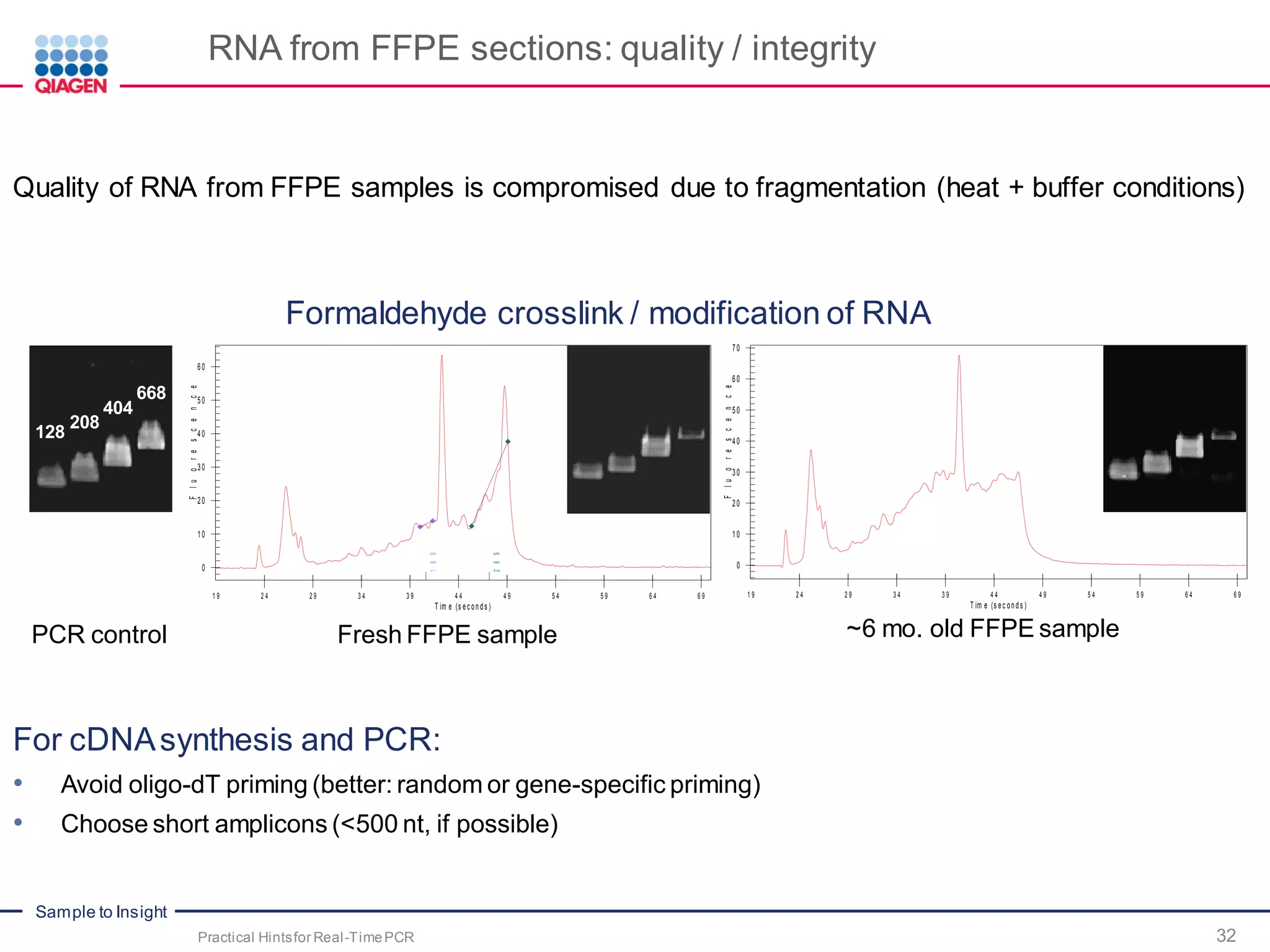
RNA from FFPE sections: quality / integrity
Quality of RNA from FFPE samples is compromised due to fragmentation (heat + buffer conditions)
Formaldehyde crosslink / modification of RNA
For cDNAsynthesis and PCR:
• Avoid oligo-dT priming (better: random or gene-specific priming)
• Choose short amplicons (<500 nt, if possible)
18S
28S
Fluorescence
T im e (s ec on ds )
0
10
20
30
40
50
60
1 9 2 4 2 9 3 4 3 9 4 4 4 9 5 4 5 9 6 4 6 9
Fluorescence
T im e (s ec on ds )
0
10
20
30
40
50
60
70
1 9 2 4 2 9 3 4 3 9 4 4 4 9 5 4 5 9 6 4 6 9
Fresh FFPE sample ~6 mo. old FFPE samplePCR control
128
208
404
668
Practical Hintsfor Real-TimePCR 32
Sample to Insight
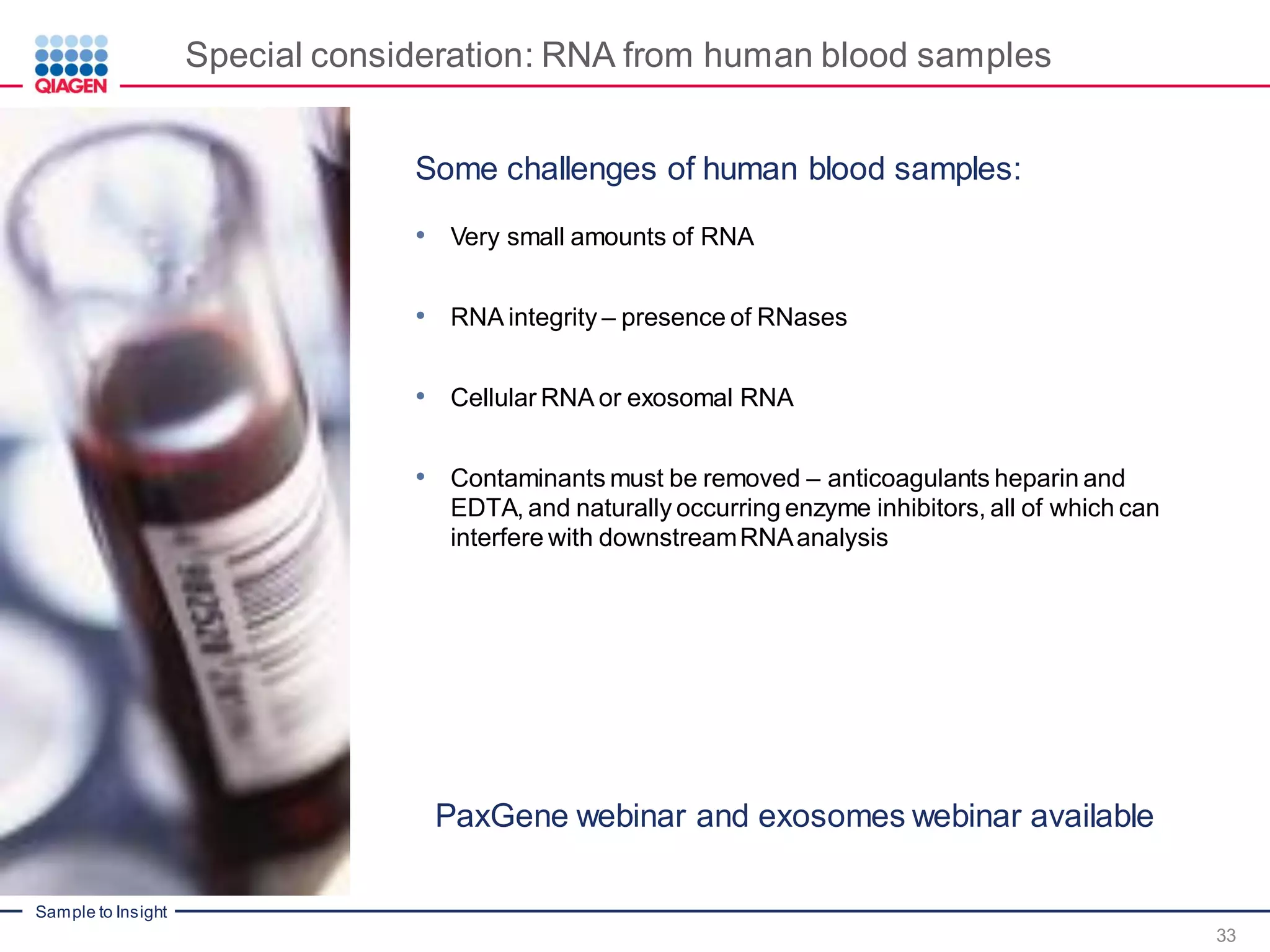
Special consideration: RNA from human blood samples
• Very small amounts of RNA
• RNA integrity – presence of RNases
• Cellular RNA or exosomal RNA
• Contaminants must be removed – anticoagulants heparin and
EDTA, and naturally occurring enzyme inhibitors, all of which can
interfere with downstreamRNAanalysis
PaxGene webinar and exosomes webinar available
33
Some challenges of human blood samples:
Sample to Insight
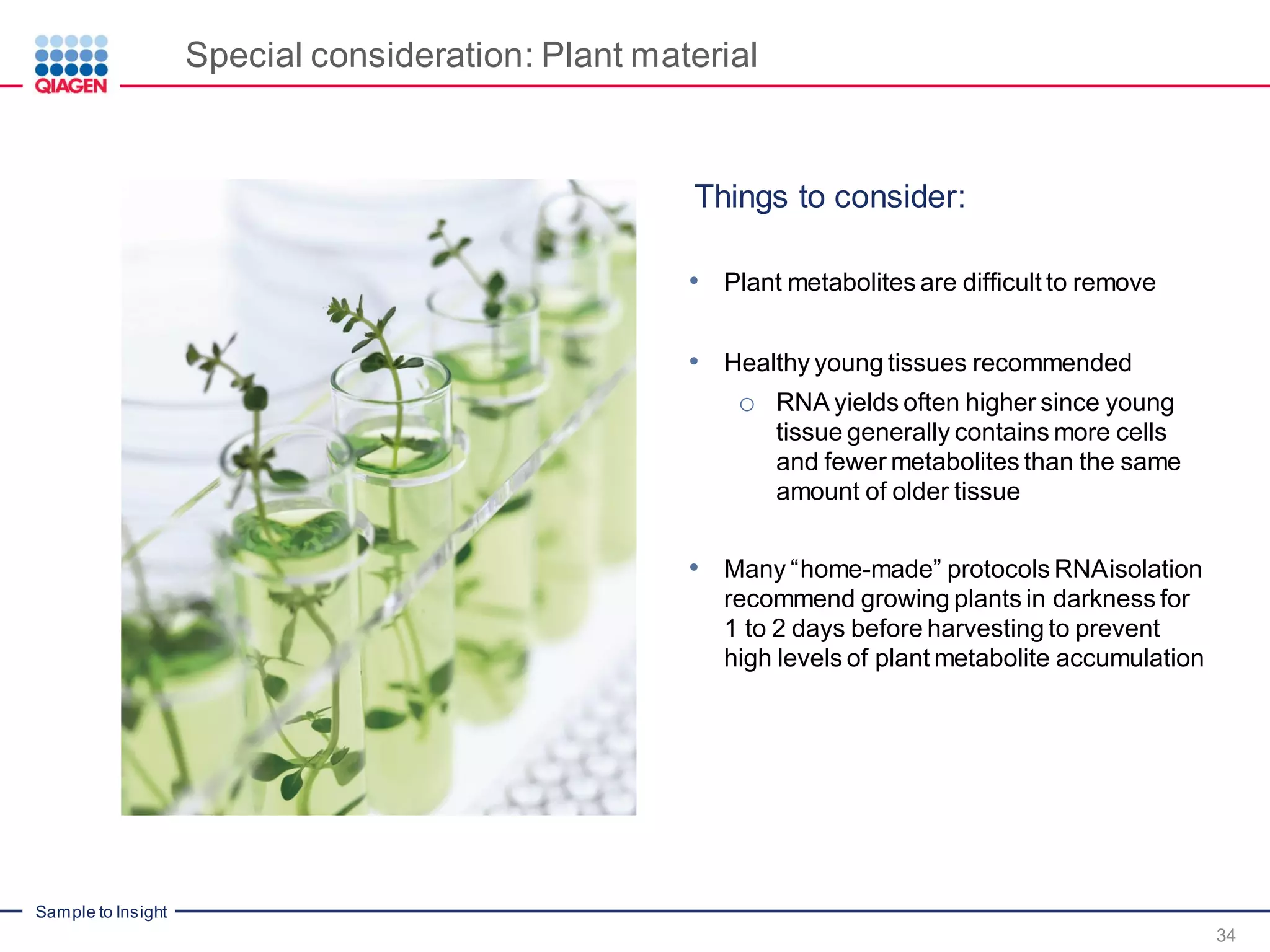
Special consideration: Plant material
Things to consider:
• Plant metabolites are difficult to remove
• Healthy young tissues recommended
o RNA yields often higher since young
tissue generally contains more cells
and fewer metabolites than the same
amount of older tissue
• Many “home-made” protocols RNAisolation
recommend growing plants in darkness for
1 to 2 days before harvesting to prevent
high levels of plant metabolite accumulation
34
Sample to Insight
Dedicated kits could solve the problem
Sample to Insight
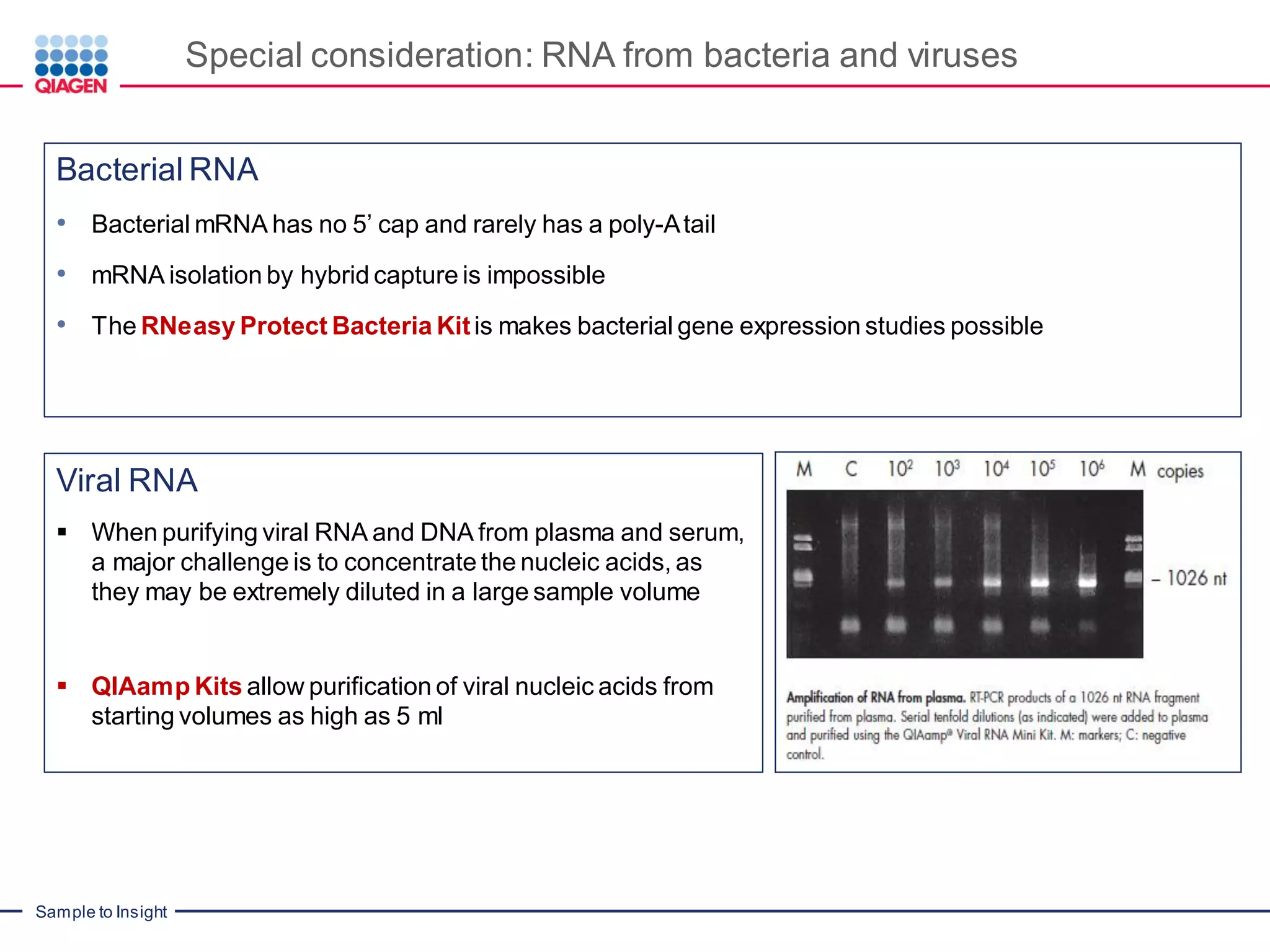
Special consideration: RNA from bacteria and viruses
Bacterial RNA
• Bacterial mRNA has no 5’ cap and rarely has a poly-Atail
• mRNA isolation by hybrid capture is impossible
• The RNeasy Protect Bacteria Kitis makes bacterial gene expression studies possible
Viral RNA
▪ When purifying viral RNA and DNA from plasma and serum,
a major challenge is to concentrate the nucleic acids, as
they may be extremely diluted in a large sample volume
▪ QIAamp Kits allow purification of viral nucleic acids from
starting volumes as high as 5 ml
Sample to Insight
Removal of genomic DNA contamination
Back to Basics: RNA Isolation
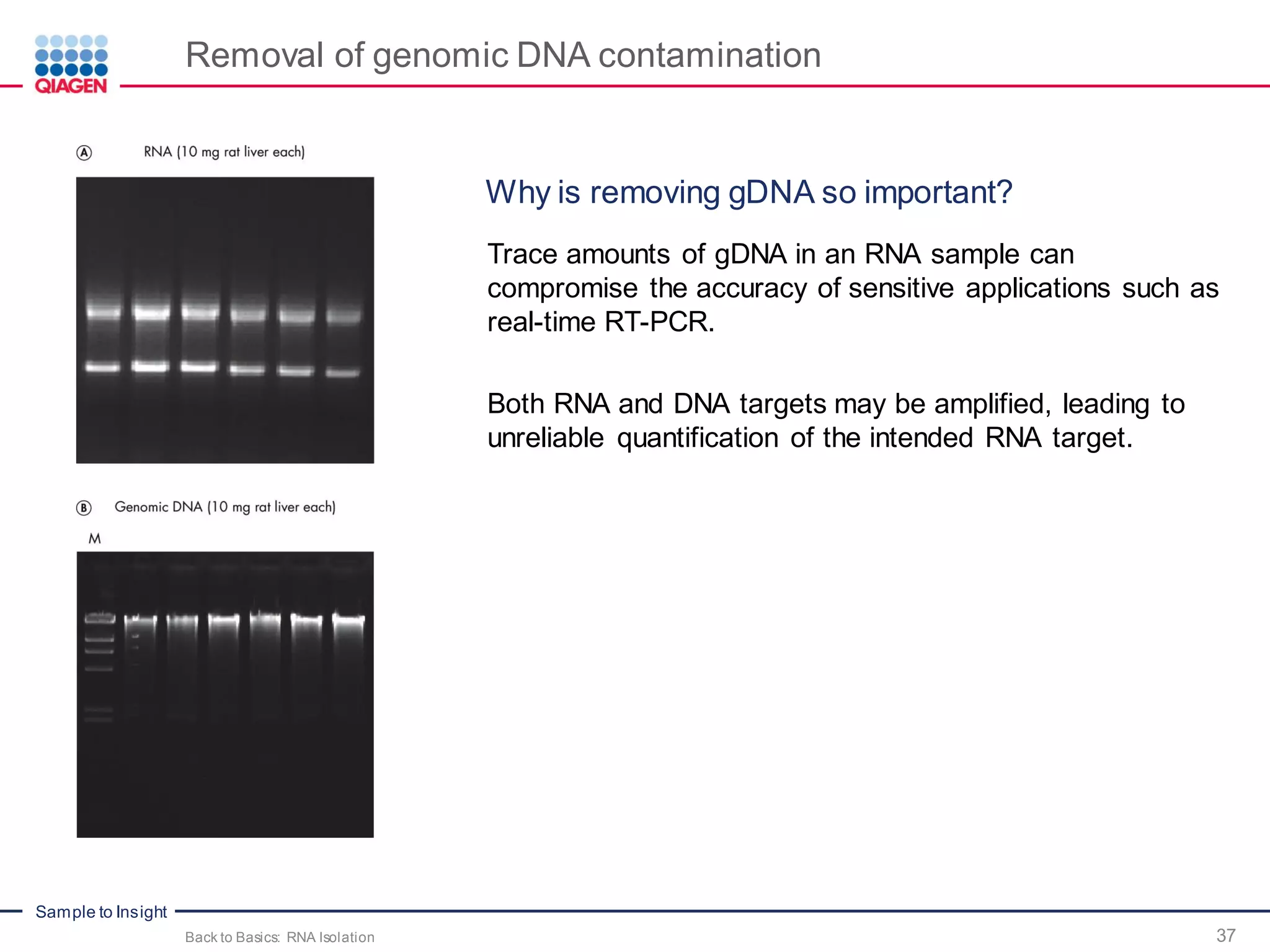
Why is removing gDNA so important?
Trace amounts of gDNA in an RNA sample can
compromise the accuracy of sensitive applications such as
real-time RT-PCR.
Both RNA and DNA targets may be amplified, leading to
unreliable quantification of the intended RNA target.
37
Sample to Insight
Removal of genomic DNA contamination
Back to Basics: RNA Isolation 38
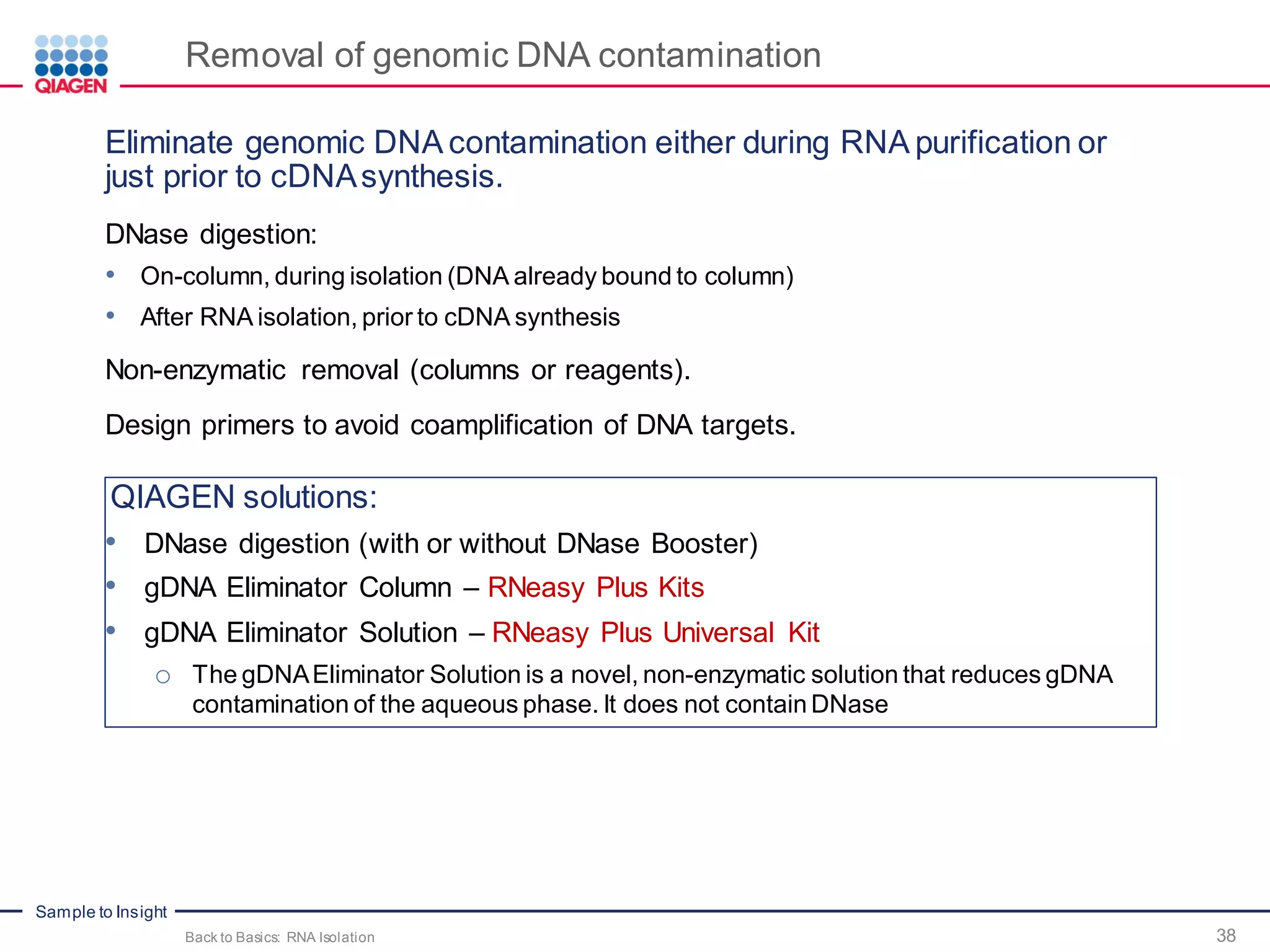
Eliminate genomic DNA contamination either during RNA purification or
just prior to cDNAsynthesis.
DNase digestion:
• On-column, during isolation (DNA already bound to column)
• After RNA isolation, prior to cDNA synthesis
Non-enzymatic removal (columns or reagents).
Design primers to avoid coamplification of DNA targets.
QIAGEN solutions:
• DNase digestion (with or without DNase Booster)
• gDNA Eliminator Column – RNeasy Plus Kits
• gDNA Eliminator Solution – RNeasy Plus Universal Kit
o The gDNAEliminator Solution is a novel, non-enzymatic solution that reduces gDNA
contamination of the aqueous phase. It does not contain DNase
Sample to Insight
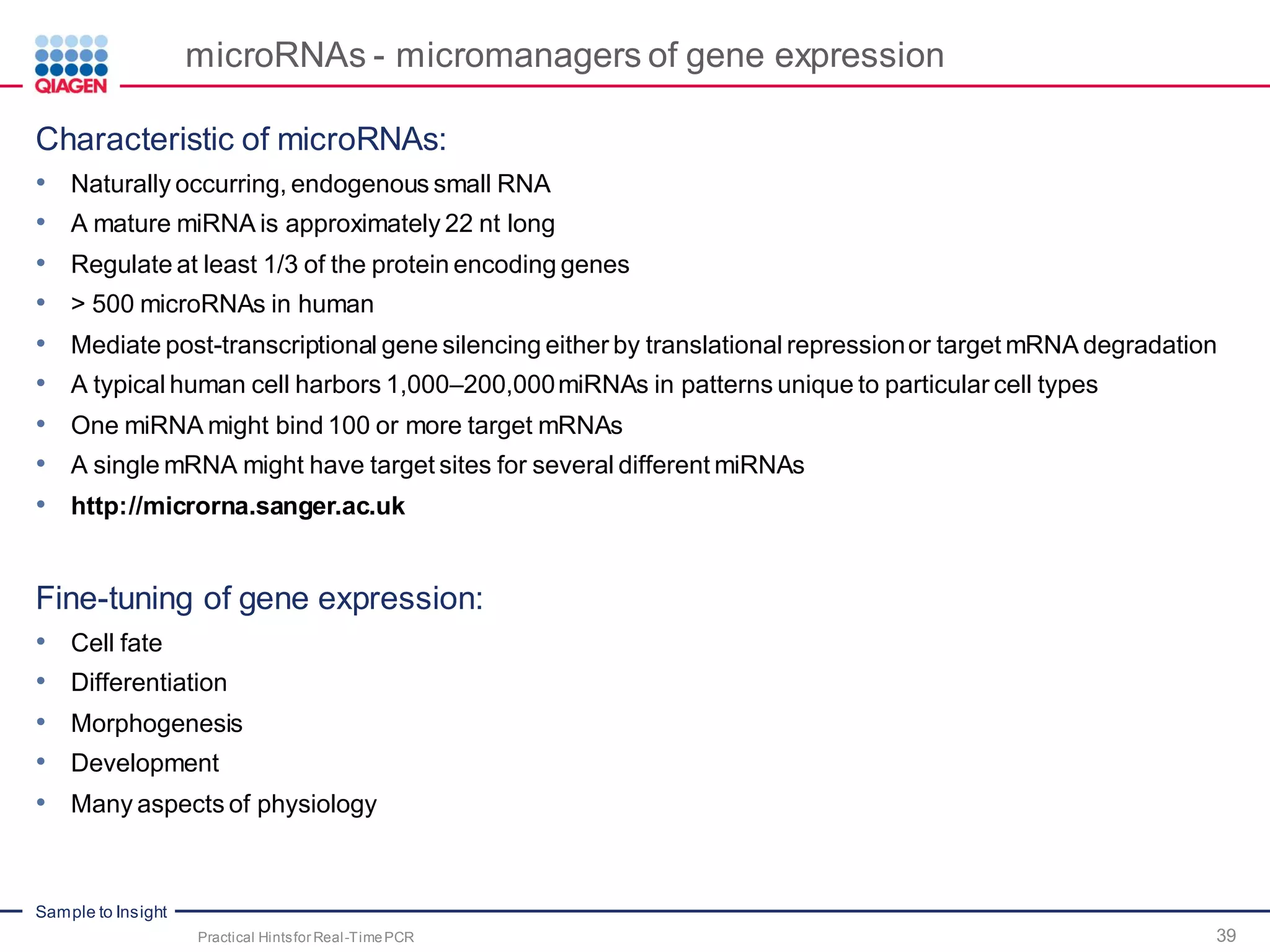
microRNAs - micromanagers of gene expression
Characteristic of microRNAs:
• Naturally occurring, endogenous small RNA
• A mature miRNA is approximately 22 nt long
• Regulate at least 1/3 of the protein encoding genes
• > 500 microRNAs in human
• Mediate post-transcriptional gene silencing either by translational repressionor target mRNA degradation
• A typical human cell harbors 1,000–200,000miRNAs in patterns unique to particular cell types
• One miRNA might bind 100 or more target mRNAs
• A single mRNA might have target sites for several different miRNAs
• http://microrna.sanger.ac.uk
Fine-tuning of gene expression:
• Cell fate
• Differentiation
• Morphogenesis
• Development
• Many aspects of physiology
Practical Hintsfor Real-TimePCR 39
Sample to Insight
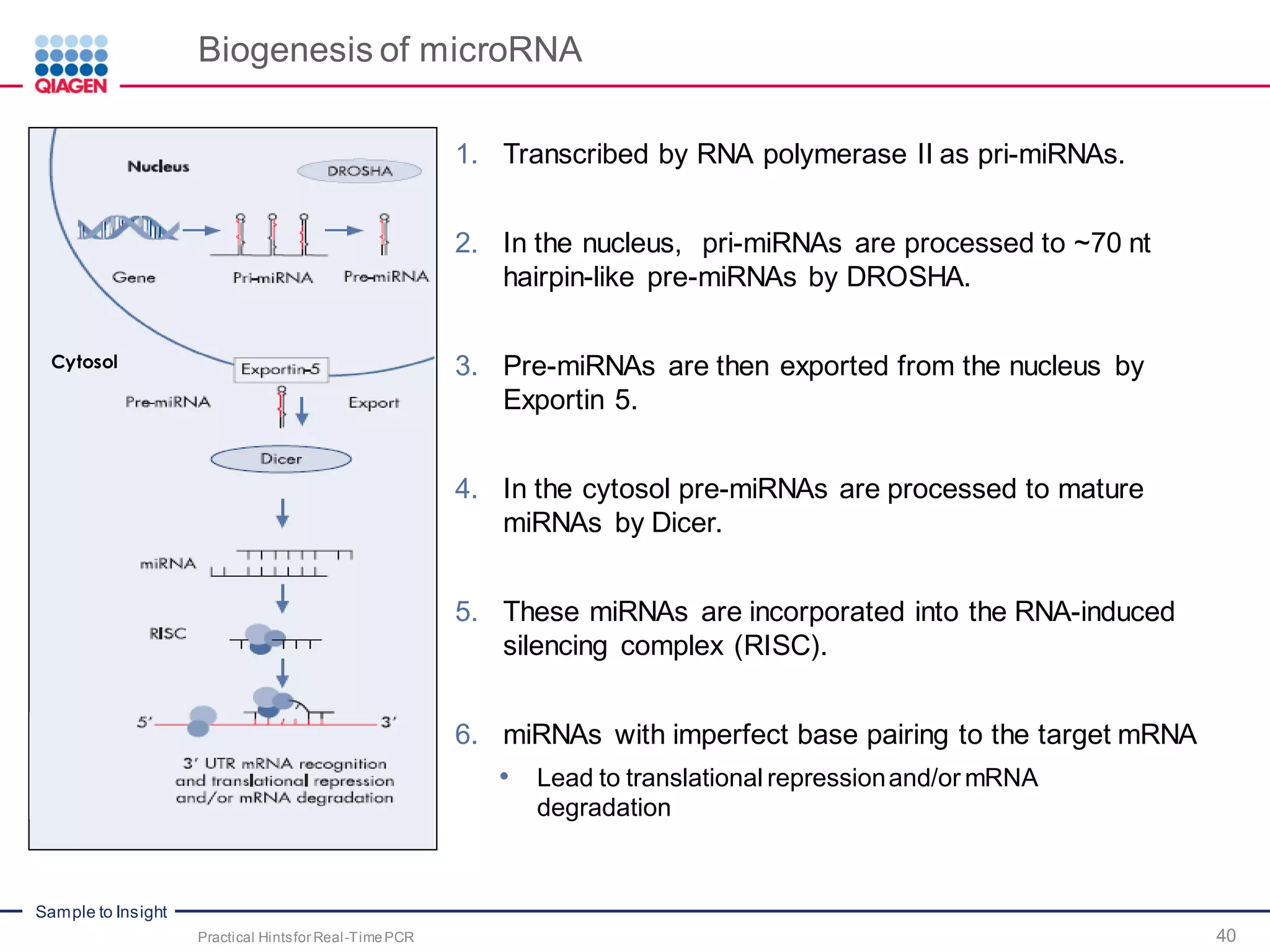
Biogenesis of microRNA
1. Transcribed by RNA polymerase II as pri-miRNAs.
2. In the nucleus, pri-miRNAs are processed to ~70 nt
hairpin-like pre-miRNAs by DROSHA.
3. Pre-miRNAs are then exported from the nucleus by
Exportin 5.
4. In the cytosol pre-miRNAs are processed to mature
miRNAs by Dicer.
5. These miRNAs are incorporated into the RNA-induced
silencing complex (RISC).
6. miRNAs with imperfect base pairing to the target mRNA
• Lead to translational repressionand/or mRNA
degradation
Cytosol
Practical Hintsfor Real-TimePCR 40
Sample to Insight
RIBOSOME
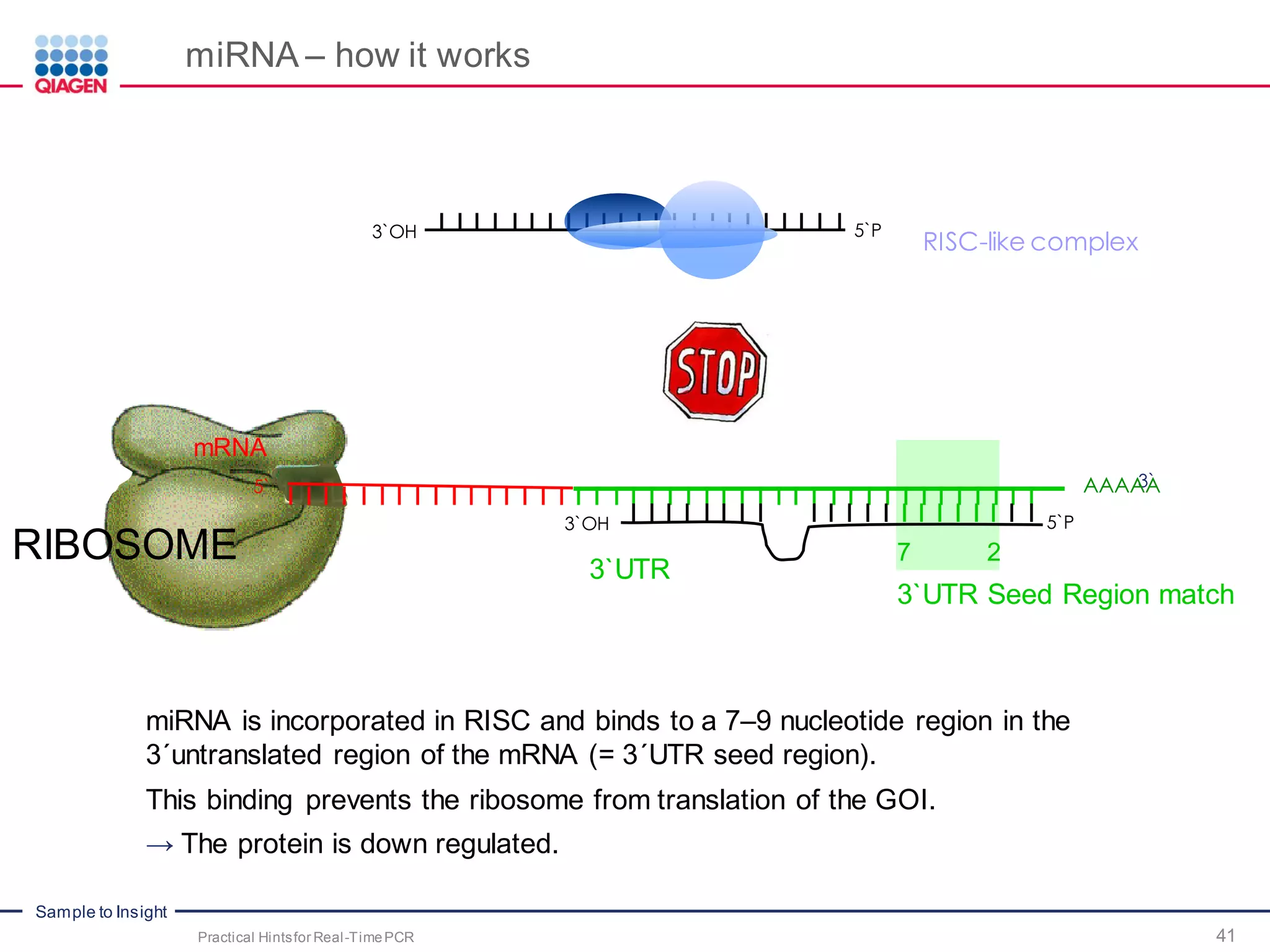
miRNA – how it works
3`5` AAAAA
mRNA
RISC-like complex
5`P3`OH
5`P3`OH
3`UTR
3`UTR Seed Region match
27
miRNA is incorporated in RISC and binds to a 7–9 nucleotide region in the
3´untranslated region of the mRNA (= 3´UTR seed region).
This binding prevents the ribosome from translation of the GOI.
→ The protein is down regulated.
Practical Hintsfor Real-TimePCR 41
Sample to Insight
miRNAs will likely enter the clinic as biomarkers and diagnostics
Most applications are expected to be in oncology because many
miRNAs affect the cell cycle.
• Half of all human miRNAs discovered so far are expressed abnormally in at
least one cancer
• Some miRNA profiles are specific to one cancer, others are common to
many cancers
Regardless of whether the change in expressionis causal or a
downstream effect, miRNA profiling is helping discover new
markers for human disease classification.
Practical Hintsfor Real-TimePCR 42
Sample to Insight
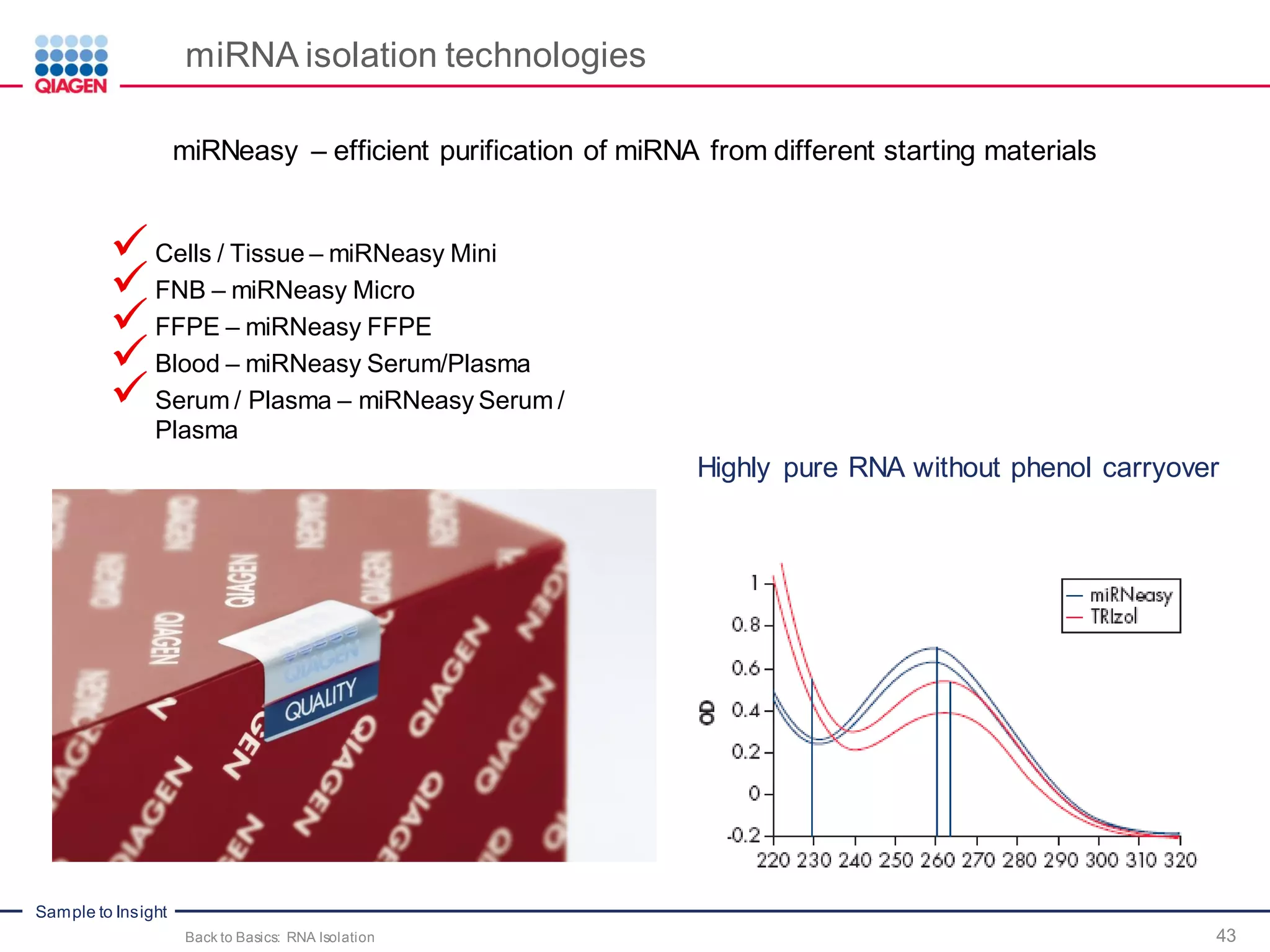
miRNA isolation technologies
✓Cells / Tissue – miRNeasy Mini
✓FNB – miRNeasy Micro
✓FFPE – miRNeasy FFPE
✓Blood – miRNeasy Serum/Plasma
✓Serum / Plasma – miRNeasy Serum /
Plasma
miRNeasy – efficient purification of miRNA from different starting materials
Highly pure RNA without phenol carryover
Back to Basics: RNA Isolation 43
Sample to Insight
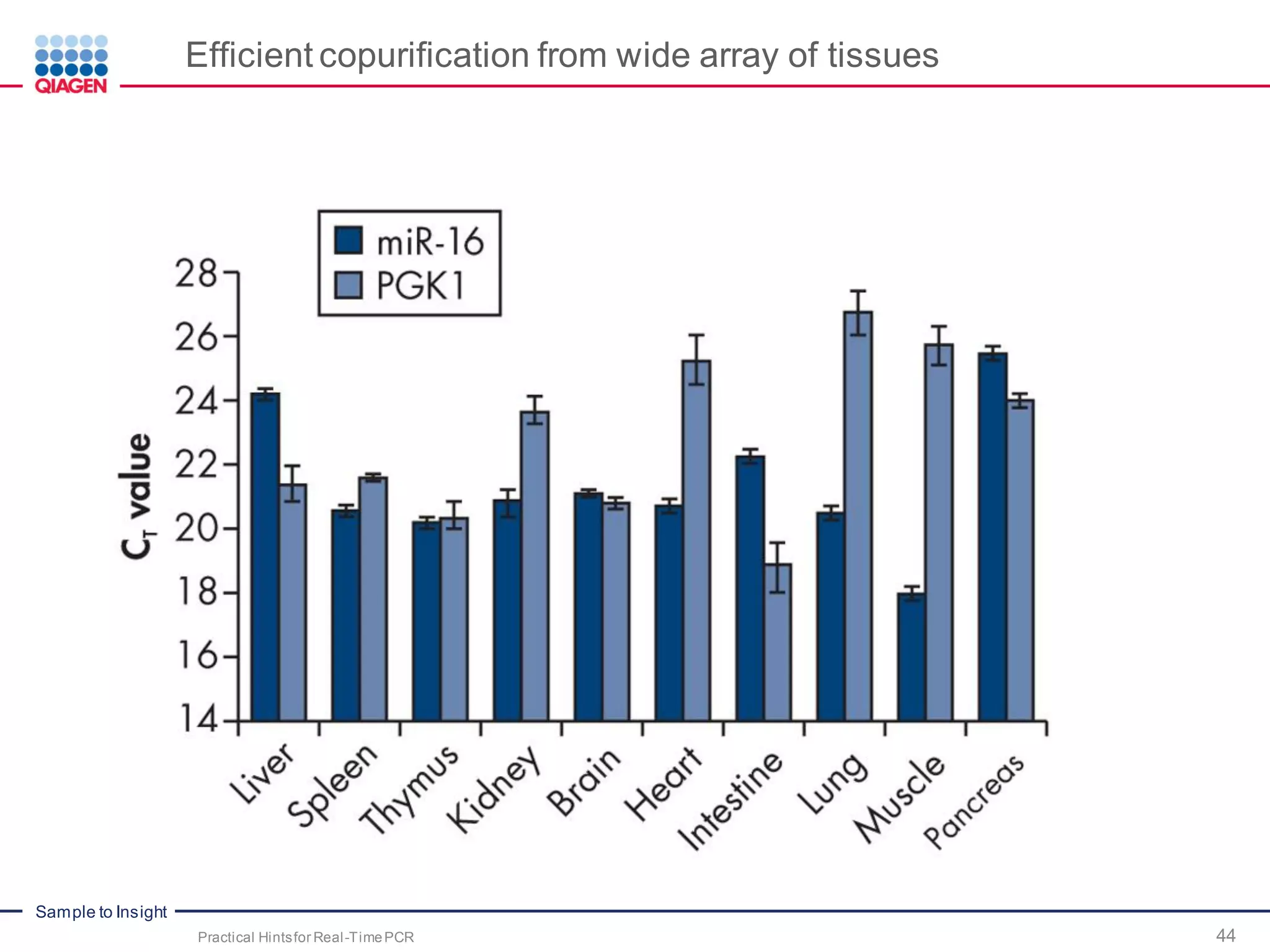
Efficient copurification from wide array of tissues
Practical Hintsfor Real-TimePCR 44
Sample to Insight
Agenda
45
Gene expressionworkflows
1.1 Advantages of real-time PCR
Critical steps for real-time PCR analysis
2.1 Stabilization of RNA in-sample
2.2 RNA isolation
2.3 cDNAsynthesis
QIAGEN gene expressionworkflow solutions
Questions
1
2
3
4
Sample to Insight
Agenda
46
Gene expressionworkflows
1.1 Advantages of real-time PCR
Critical steps for real-time PCR analysis
2.1 Stabilization of RNA in-sample
2.2 RNA isolation
2.3 cDNAsynthesis
QIAGEN gene expressionworkflow solutions
Questions
1
2
3
4
Sample to Insight
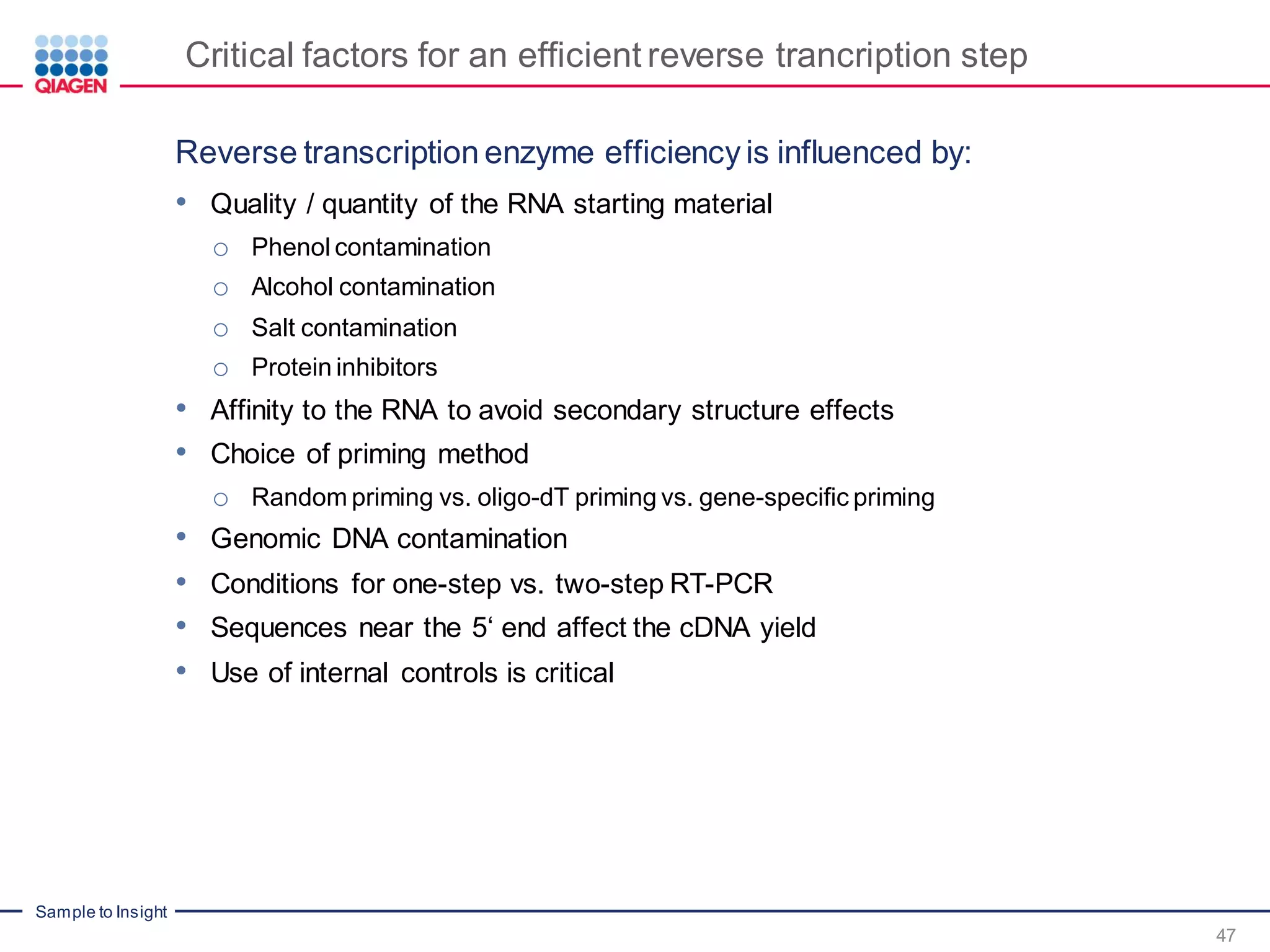
Critical factors for an efficient reverse trancription step
Reverse transcription enzyme efficiency is influenced by:
• Quality / quantity of the RNA starting material
o Phenol contamination
o Alcohol contamination
o Salt contamination
o Protein inhibitors
• Affinity to the RNA to avoid secondary structure effects
• Choice of priming method
o Random priming vs. oligo-dT priming vs. gene-specific priming
• Genomic DNA contamination
• Conditions for one-step vs. two-step RT-PCR
• Sequences near the 5‘ end affect the cDNA yield
• Use of internal controls is critical
47
Sample to Insight
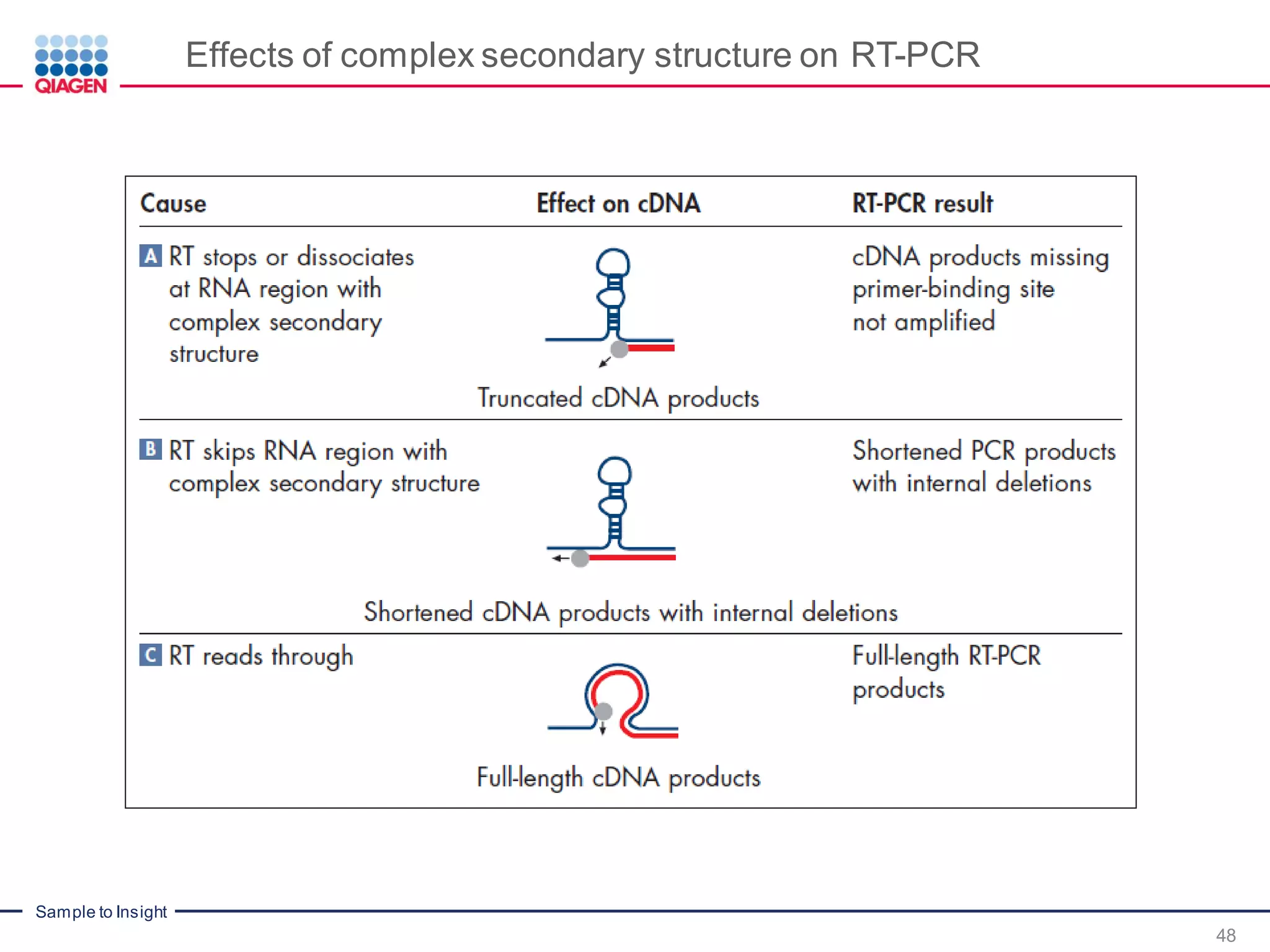
Effects of complex secondary structure on RT-PCR
48
Sample to Insight
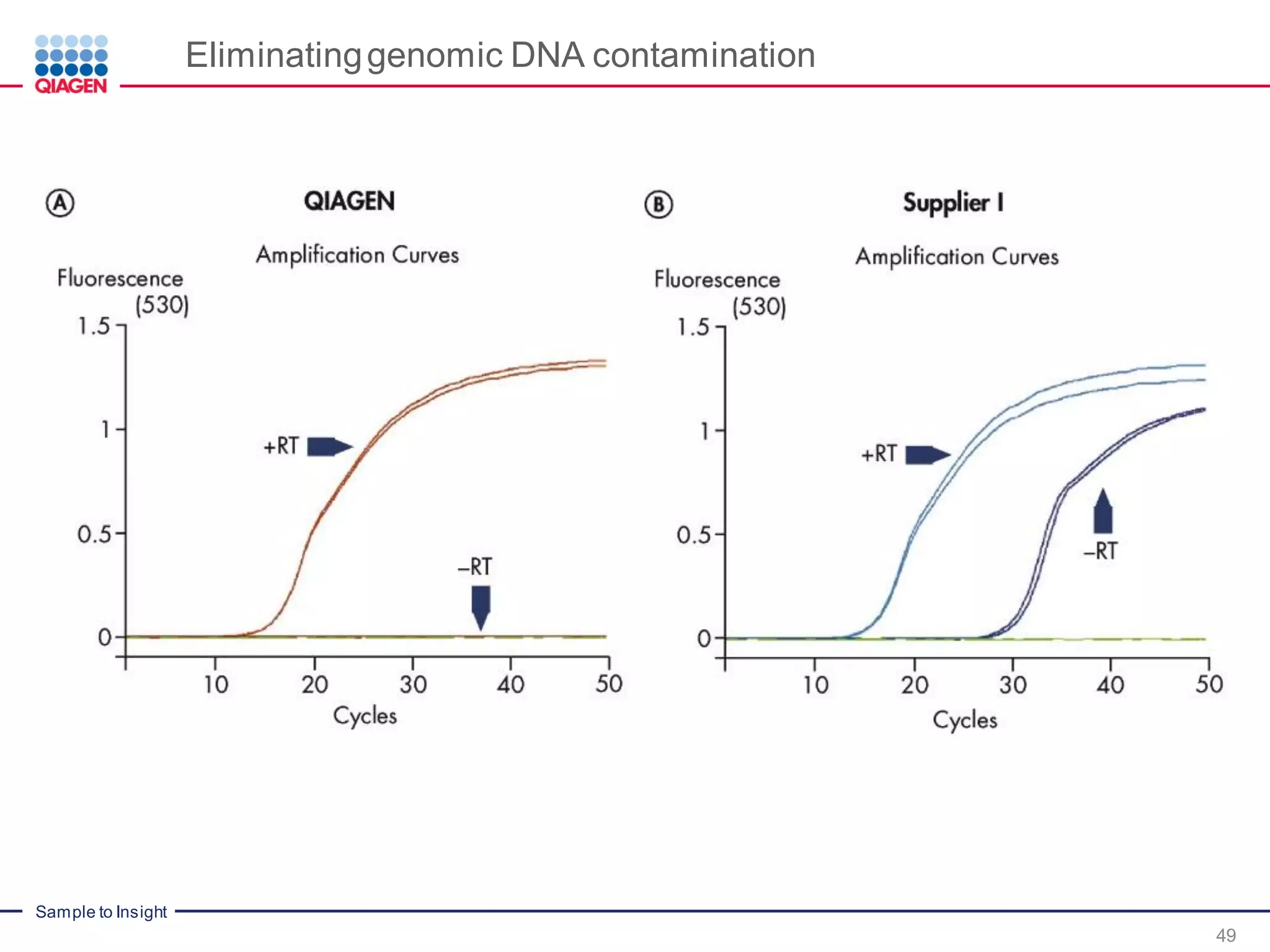
Eliminatinggenomic DNA contamination
49
Sample to Insight
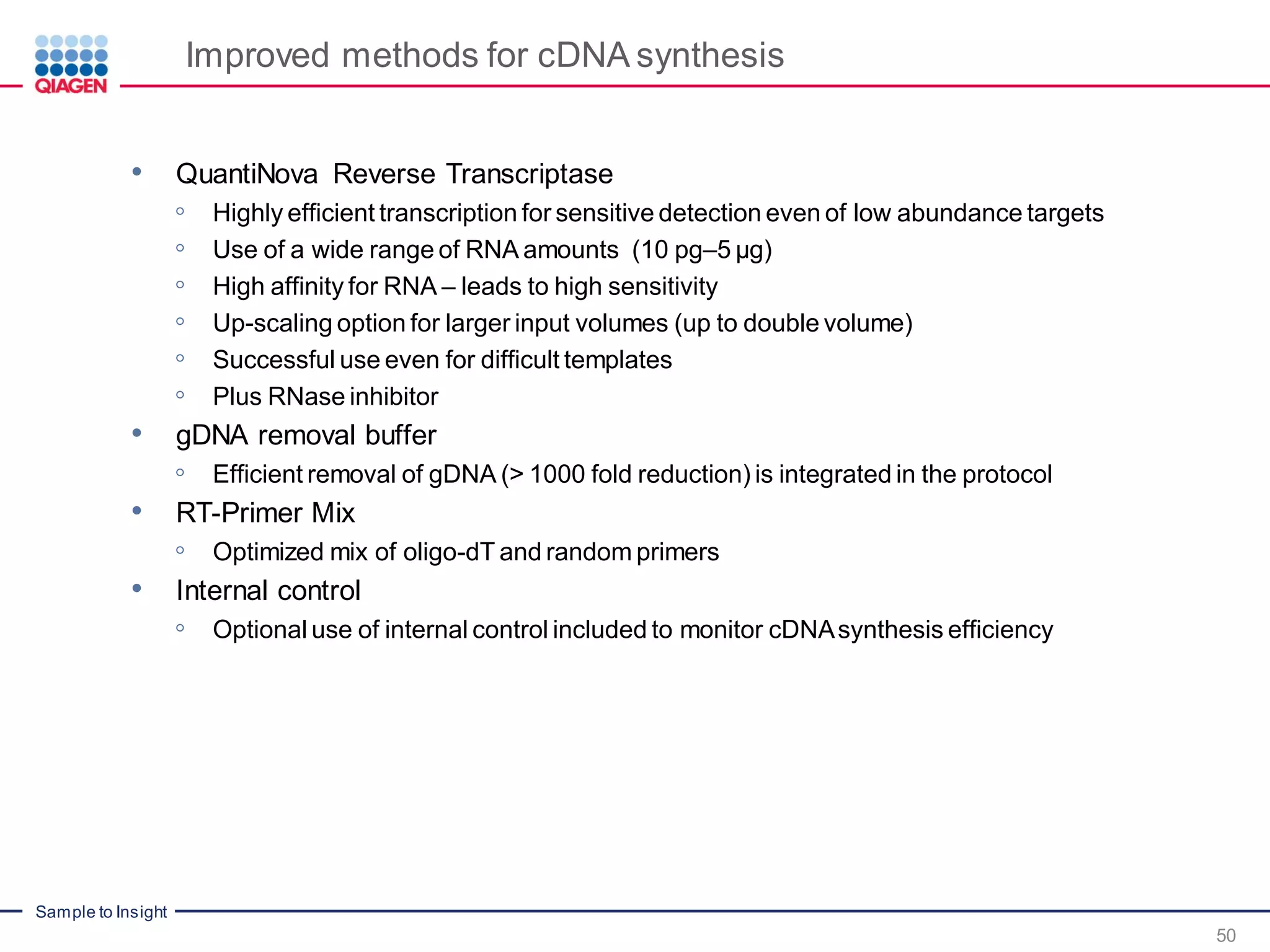
Improved methods for cDNA synthesis
• QuantiNova Reverse Transcriptase
◦ Highly efficient transcription for sensitive detection even of low abundance targets
◦ Use of a wide range of RNA amounts (10 pg–5 μg)
◦ High affinity for RNA – leads to high sensitivity
◦ Up-scaling option for larger input volumes (up to double volume)
◦ Successful use even for difficult templates
◦ Plus RNase inhibitor
• gDNA removal buffer
◦ Efficient removal of gDNA (> 1000 fold reduction) is integrated in the protocol
• RT-Primer Mix
◦ Optimized mix of oligo-dT and random primers
• Internal control
◦ Optional use of internal control included to monitor cDNAsynthesis efficiency
50
Sample to Insight
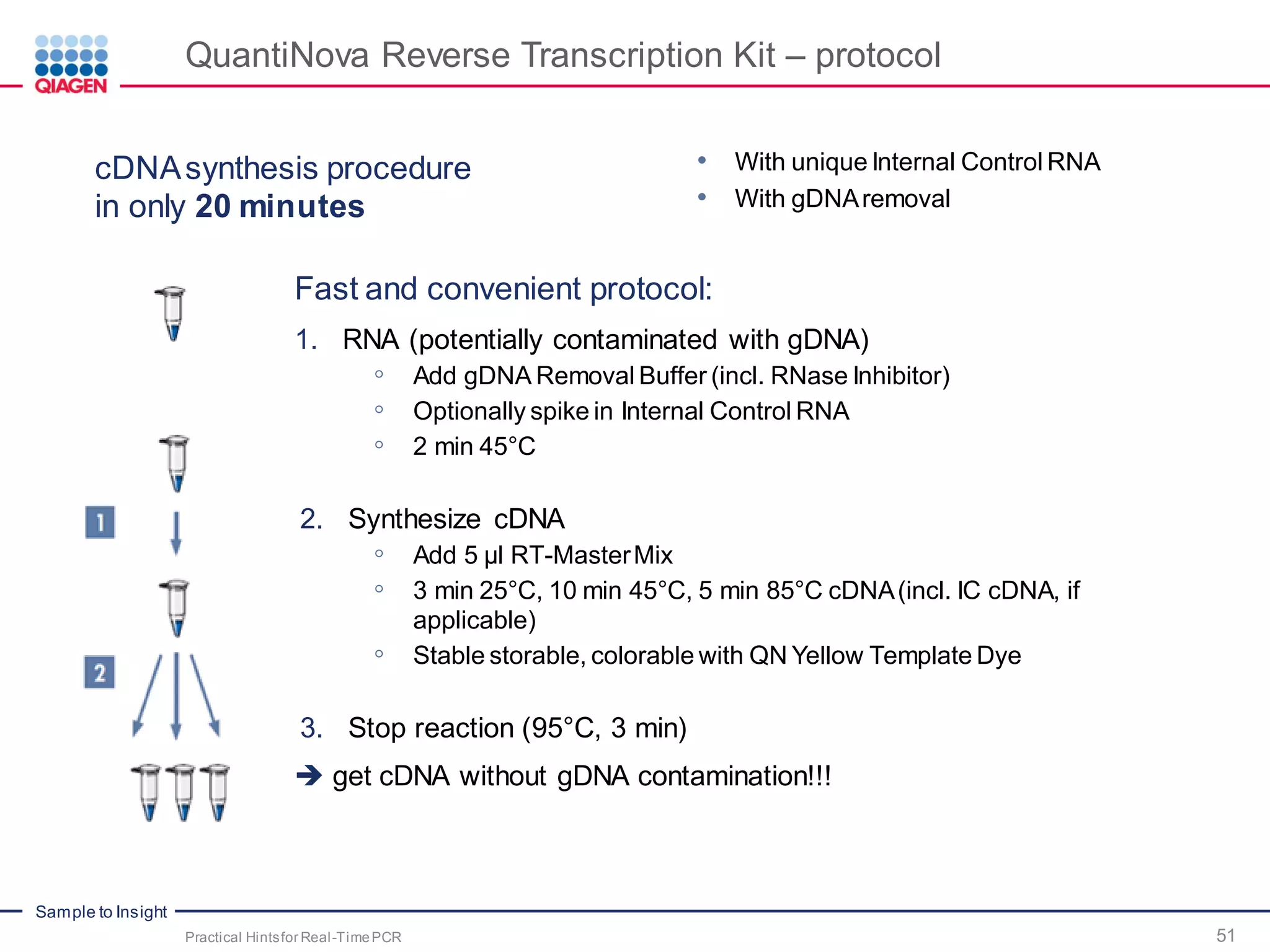
QuantiNova Reverse Transcription Kit – protocol
• With unique Internal Control RNA
• With gDNAremoval
Fast and convenient protocol:
1. RNA (potentially contaminated with gDNA)
◦ Add gDNA Removal Buffer (incl. RNase Inhibitor)
◦ Optionally spike in Internal Control RNA
◦ 2 min 45°C
2. Synthesize cDNA
◦ Add 5 µl RT-MasterMix
◦ 3 min 25°C, 10 min 45°C, 5 min 85°C cDNA(incl. IC cDNA, if
applicable)
◦ Stable storable, colorable with QN Yellow Template Dye
3. Stop reaction (95°C, 3 min)
 get cDNA without gDNA contamination!!!
cDNAsynthesis procedure
in only 20 minutes
Practical Hintsfor Real-TimePCR 51
Sample to Insight
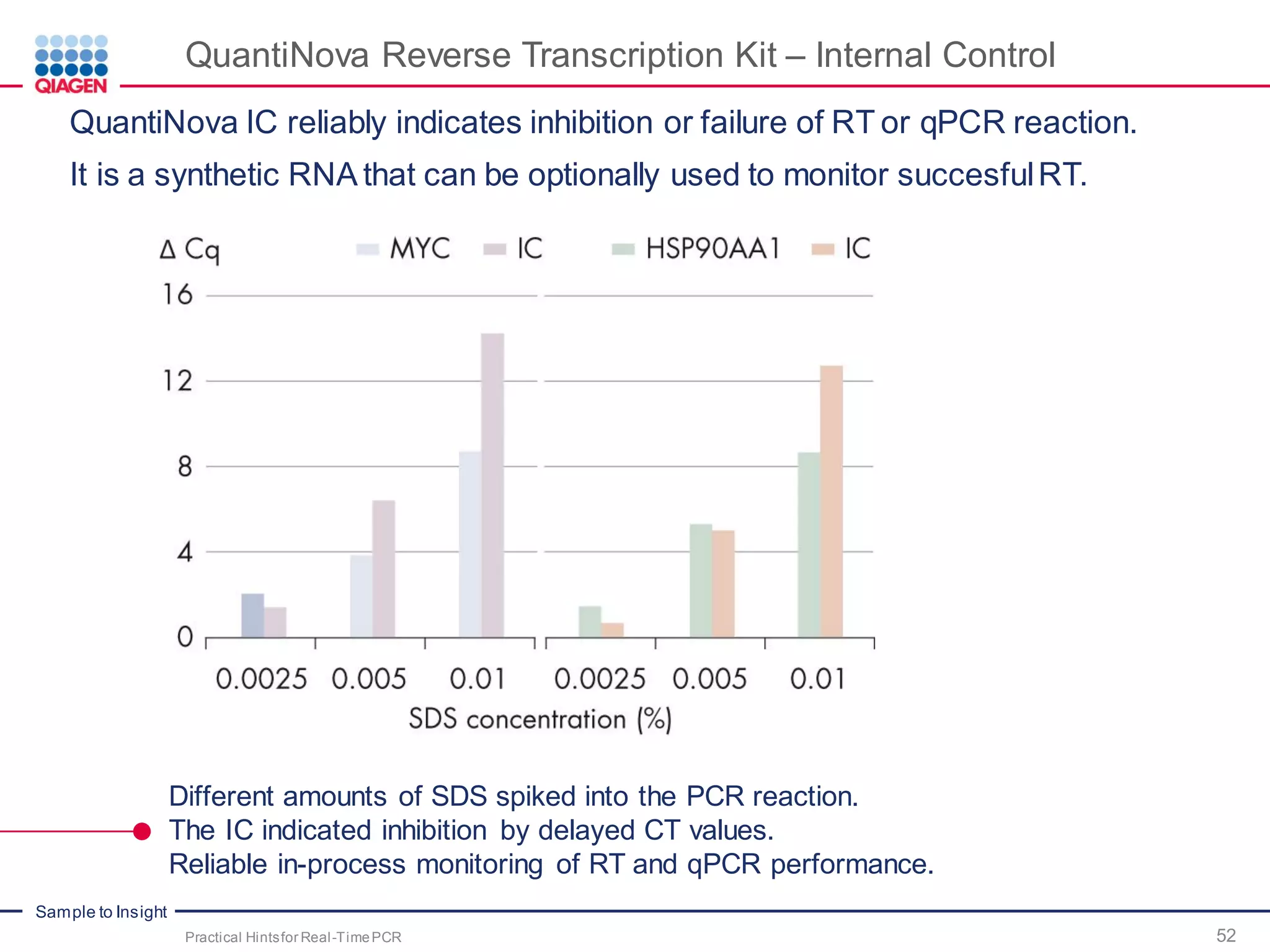
QuantiNova Reverse Transcription Kit – Internal Control
QuantiNova IC reliably indicates inhibition or failure of RT or qPCR reaction.
It is a synthetic RNA that can be optionally used to monitor succesfulRT.
Different amounts of SDS spiked into the PCR reaction.
The IC indicated inhibition by delayed CT values.
Reliable in-process monitoring of RT and qPCR performance.
Practical Hintsfor Real-TimePCR 52
Sample to Insight
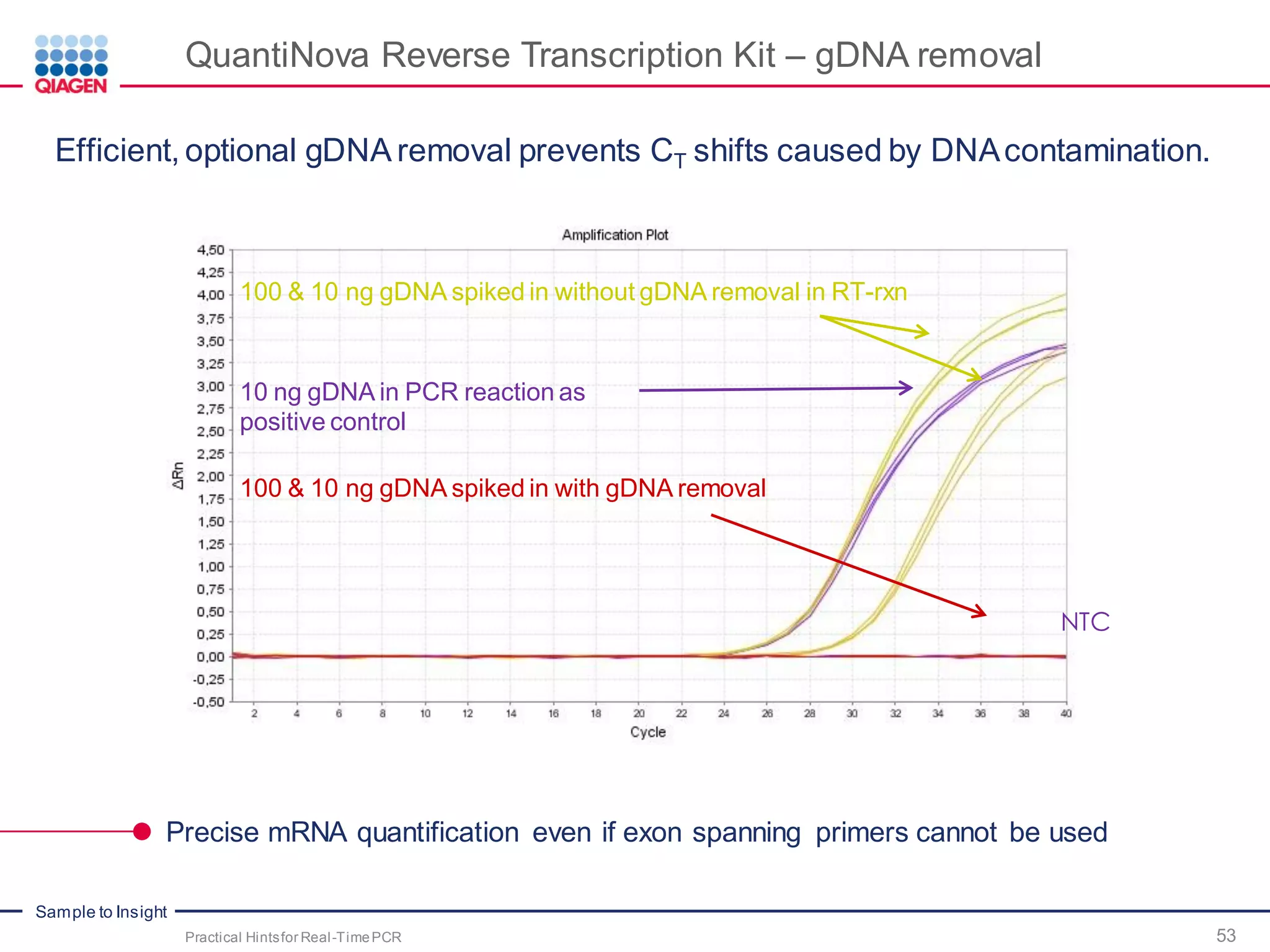
QuantiNova Reverse Transcription Kit – gDNA removal
Efficient, optional gDNA removal prevents CT shifts caused by DNAcontamination.
Precise mRNA quantification even if exon spanning primers cannot be used
10 ng gDNA in PCR reaction as
positive control
100 & 10 ng gDNA spiked in without gDNA removal in RT-rxn
NTC
100 & 10 ng gDNA spiked in with gDNA removal
Practical Hintsfor Real-TimePCR 53
Sample to Insight
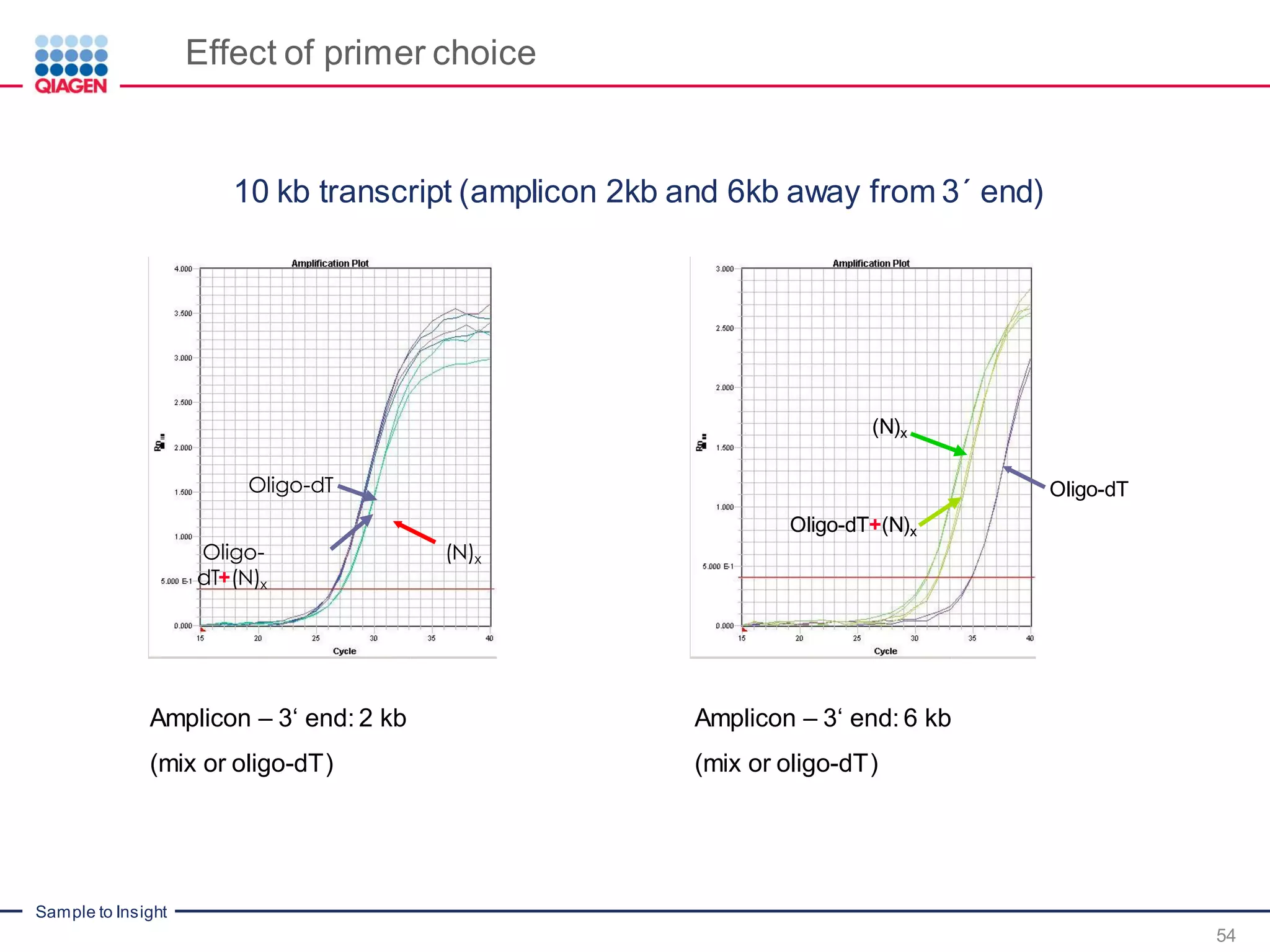
Effect of primer choice
Amplicon – 3‘ end: 2 kb
(mix or oligo-dT)
(N)xOligo-
dT+(N)x
Oligo-dT
Amplicon – 3‘ end: 6 kb
(mix or oligo-dT)
Oligo-dT
Oligo-dT+(N)x
(N)x
̣10 kb transcript (amplicon 2kb and 6kb away from 3´ end)
54
Sample to Insight
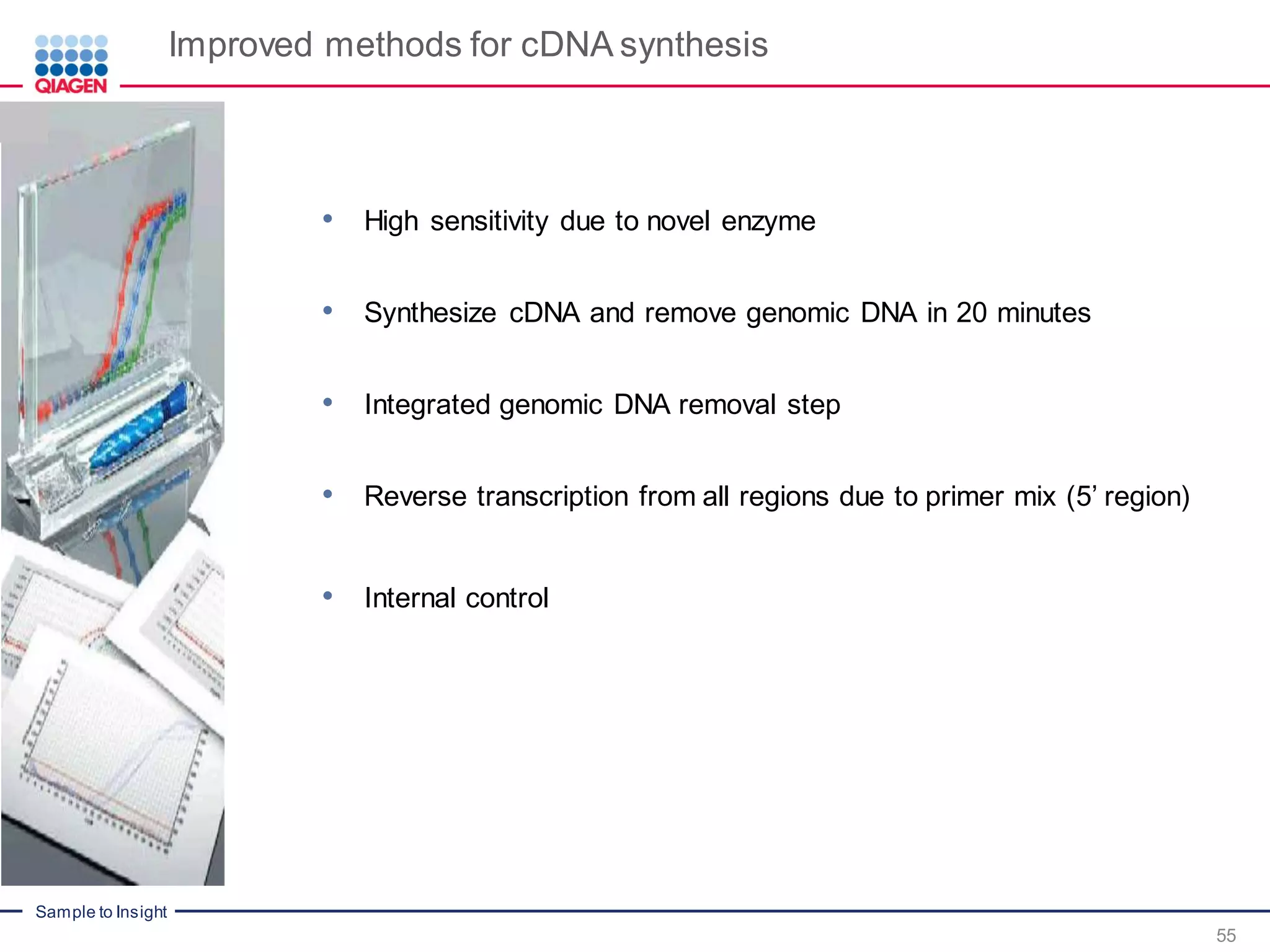
• High sensitivity due to novel enzyme
• Synthesize cDNA and remove genomic DNA in 20 minutes
• Integrated genomic DNA removal step
• Reverse transcription from all regions due to primer mix (5’ region)
• Internal control
Improved methods for cDNA synthesis
55
Sample to Insight
Agenda
56
Gene expressionworkflows
1.1 Advantages of real-time PCR
Critical steps for real-time PCR analysis
2.1 Stabilization of RNA in-sample
2.2 RNA isolation
2.3 cDNAsynthesis
QIAGEN gene expressionworkflow solutions
Questions
1
2
3
4
Sample to Insight
Agenda
57
Gene expressionworkflows
1.1 Advantages of real-time PCR
Critical steps for real-time PCR analysis
2.1 Stabilization of RNA in-sample
2.2 RNA isolation
2.3 cDNAsynthesis
QIAGEN gene expressionworkflow solutions
Questions
1
2
3
4
Sample to Insight
Challenges in gene expression workflows
• DNase
contamination
• Salt carry-over
• Phenol carry-over
• gDNA
contamination
• Complex samples
• Low yield
• Extraction
techniques
• RNase
contamination
• Improper storage
• RNA degradation
• Sample handling
• Low abundance
transcripts
• Large transcripts
• High GC content
• Secondary
structure
• Introducing bias
• Low yield
• gDNA removal
• IC controls
• Pipetting errors
• Room temperature
setup
• Primer design
• Sensitivity
• Restrictions due to
the cyclers
• Calibration and
maintenance efforts
58
RNA quality (purity and integrity) plays a critical role in the accuracy,
reproducibility and relevance of downstream analysis.
Sample to Insight
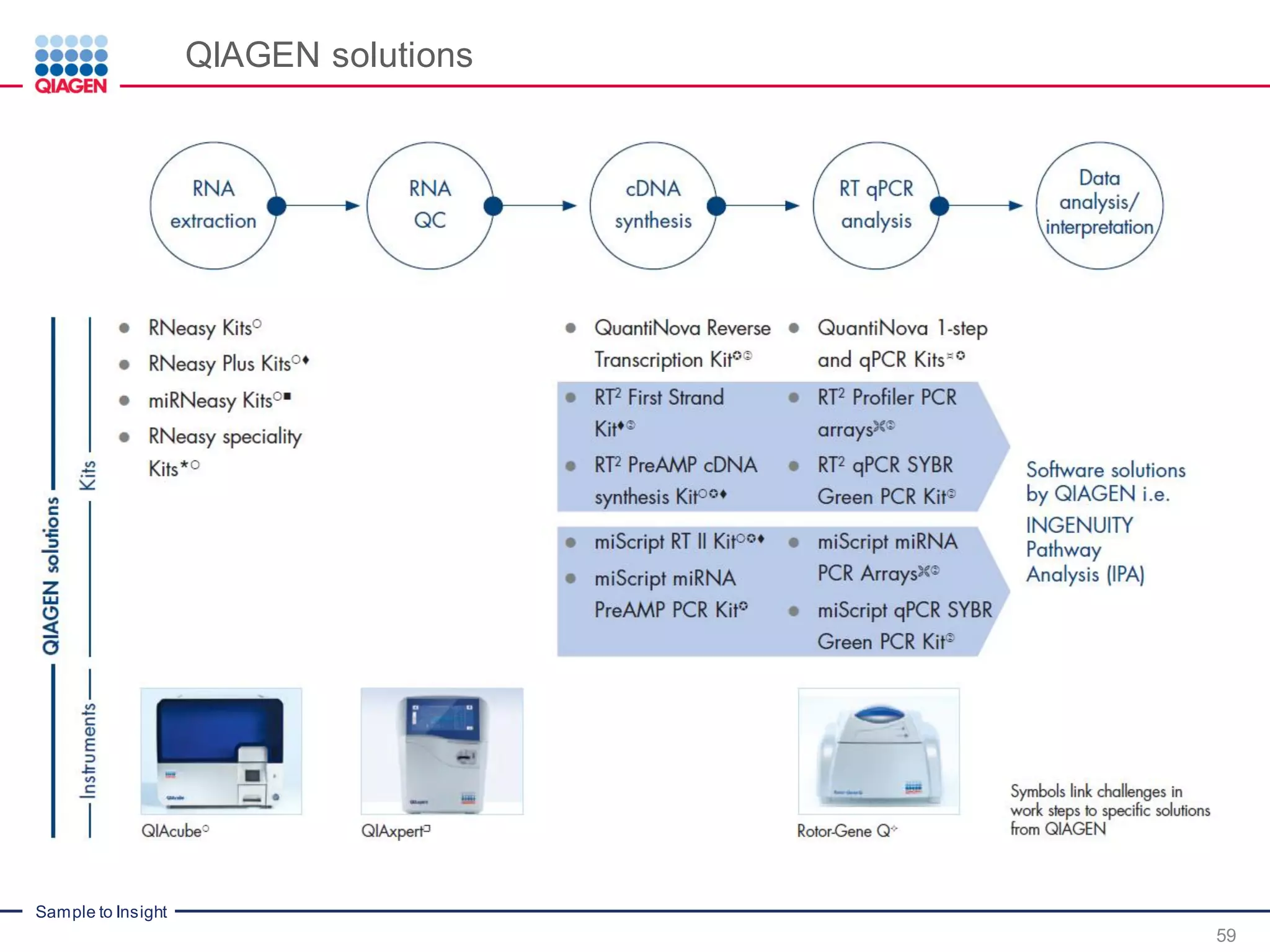
QIAGEN solutions
59
Sample to Insight
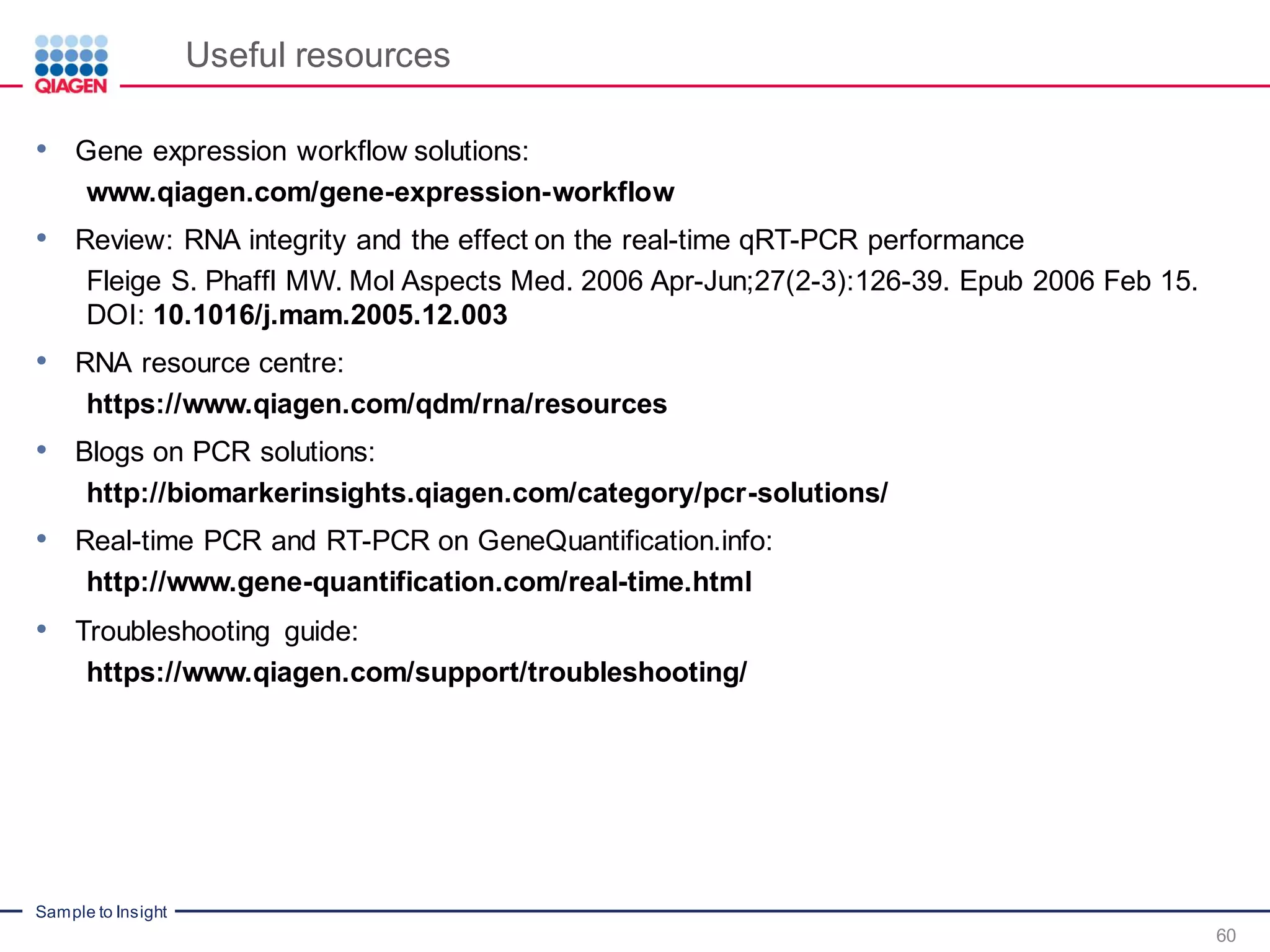
Useful resources
60
• Gene expression workflow solutions:
www.qiagen.com/gene-expression-workflow
• Review: RNA integrity and the effect on the real-time qRT-PCR performance
Fleige S. Phaffl MW. Mol Aspects Med. 2006 Apr-Jun;27(2-3):126-39. Epub 2006 Feb 15.
DOI: 10.1016/j.mam.2005.12.003
• RNA resource centre:
https://www.qiagen.com/qdm/rna/resources
• Blogs on PCR solutions:
http://biomarkerinsights.qiagen.com/category/pcr-solutions/
• Real-time PCR and RT-PCR on GeneQuantification.info:
http://www.gene-quantification.com/real-time.html
• Troubleshooting guide:
https://www.qiagen.com/support/troubleshooting/
Sample to Insight
Agenda
61
Gene expressionworkflows
1.1 Advantages of real-time PCR
Critical steps for real-time PCR analysis
2.1 Stabilization of RNA in-sample
2.2 RNA isolation
2.3 cDNAsynthesis
QIAGEN gene expressionworkflow solutions
Questions
1
2
3
4
Sample to Insight
Agenda
62
Gene expressionworkflows
1.1 Advantages of real-time PCR
Critical steps for real-time PCR analysis
2.1 Stabilization of RNA in-sample
2.2 RNA isolation
2.3 cDNAsynthesis
QIAGEN gene expressionworkflow solutions
Questions
1
2
3
4
Sample to Insight
Thank you for attending today’s webinar!
Contact QIAGEN Technical Service
Call: 1-800-426-8157 for US
Call: +49 2103-29-12400 for EU
Email:
techservice-na@qiagen.com
techservice-eu@qiagen.com
QIAwebinars@qiagen.com
Lily Xu Xuanyan, MSc
Lilyxu.xuanyan@qiagen.com
Questions?
Thank you for attending
63

Critical Steps for Real-Time PCR Analysis: Tips and Solutions to Achieve Efficient and Precise Gene Expression Results

  • 1.
    Sample to Insight CriticalSteps for Real-Time PCR Analysis Tips and solutions to achieve efficient and precise gene expression results Lily Xuanyan Xu – Global Market Manager QIAGEN 11
  • 2.
    Sample to Insight Legaldisclaimer 2 QIAGEN products shown here are intended for molecular biology applications. These products are not intended for the diagnosis, prevention or treatment of a disease. For up-to-date licensing information and product-specific disclaimers, see the respective QIAGEN kit handbook or user manual. QIAGEN kit handbooks and user manuals are available at www.QIAGEN.com or can be requested from QIAGEN Technical Services or your local distributor.
  • 3.
    Sample to Insight Agenda 3 Geneexpressionworkflows 1.1 Advantages of real-time PCR Critical steps for real-time PCR analysis 2.1 Stabilization of RNA in-sample 2.2 RNA isolation 2.3 cDNAsynthesis QIAGEN gene expressionworkflow solutions Questions 1 2 3 4
  • 4.
    Sample to Insight Agenda 4 Geneexpressionworkflows 1.1 Advantages of real-time PCR Critical steps for real-time PCR analysis 2.1 Stabilization of RNA in-sample 2.2 RNA isolation 2.3 cDNAsynthesis QIAGEN gene expressionworkflow solutions Questions 1 2 3 4
  • 5.
    Sample to Insight Geneexpression profiling Understanding biological pathways and cellular system Gene expression is regulated at different levels • Transcriptional • Post-transcriptional • Translational • Post-translational Available experiment methods • Real-time PCR • Northern blotting • DNA microarray • Next-Gen sequencing 5 Overview of gene expressionprofiling
  • 6.
    Sample to Insight Geneexpression profiling Understanding biological pathways and cellular system. Gene expression is regulated at different levels: • Transcriptional • Post-transcriptional • Translational • Post-translational Available experiment methods: • Real-time PCR ◦ Sensitive ◦ Quantitative ◦ Reliable • Northern blotting • DNA microarray • Next-Gen sequencing 6 Overview of gene expressionprofiling
  • 7.
    Sample to Insight Basicgene expression workflow using real-time PCR RNA quality (purity and integrity) plays a critical role in the accuracy, reproducibility and relevance of downstream analysis. 7
  • 8.
    Sample to Insight Challengesin gene expression workflows • DNase contamination • Salt carry-over • Phenol carry-over • gDNA contamination • Complex samples • Low yield • Extraction techniques • RNase contamination • Improper storage • RNA degradation • Sample handling • Low abundance transcripts • Large transcripts • High GC content • Secondary structure • Introducing bias • Low yield • gDNA removal • IC controls • Pipetting errors • Room temperature setup • Primer design • Sensitivity • Restrictions due to the cyclers • Calibration and maintenance efforts 8
  • 9.
    Sample to Insight Agenda 9 Geneexpressionworkflows 1.1 Advantages of real-time PCR Critical steps for real-time PCR analysis 2.1 Stabilization of RNA in-sample 2.2 RNA isolation 2.3 cDNAsynthesis QIAGEN gene expressionworkflow solutions Questions 1 2 3 4
  • 10.
    Sample to Insight Agenda 10 Geneexpressionworkflows 1.1 Advantages of real-time PCR Critical steps for real-time PCR analysis 2.1 Stabilization of RNA in-sample 2.2 RNA isolation 2.3 cDNAsynthesis QIAGEN gene expressionworkflow solutions Questions 1 2 3 4
  • 11.
    Sample to Insight Samplecollection and stabilization 11 Changes in mRNA levels following sample harvesting
  • 12.
    Sample to Insight Effectof stabilization 12 Purificationof RNA without degradation
  • 13.
    Sample to Insight Principlesof RNA stabilization What do we want to achieve? • Prevent induction of new RNA transcription • Avoid regulated turnover of mRNA • Impede unspecific degradationof RNA – either enzymatically(due to release of nucleases from specific cell types or compartments) or chemically (pH, temperature, etc. dependent) Approaches: • Agents that bind directly to nucleic acids • Agents that lyse cells • Agents that inhibit, denature and / or precipitate nucleases(and proteins in general) 13
  • 14.
    Sample to Insight Requirementsfor stabilization of blood and tissue samples Blood contains only individual cells but has a high protein content: • Diffusion rates of the stabilizing agent are not problematic • Agents that precipitate or cross-link proteins are detrimental • In principle, blood volume is not limited (container is limited) • One-step stabilization technologyis required Tissue contains connected cells: • Diffusion rates of the stabilizing agent are critical • Thickness of the tissue sample is limited • Multi-step technology applicableas tissue pieces are transferrable • Protein precipitation or cross-linking is not an issue 14Practical Hintsfor Real-TimePCR QIAGEN offers a variety of stabilization reagents for several different sample types: blood, tissue, cells, bone marrow, bacteria, saliva etc. 14
  • 15.
    Sample to Insight Agenda 15 Geneexpressionworkflows 1.1 Advantages of real-time PCR Critical steps for real-time PCR analysis 2.1 Stabilization of RNA in-sample 2.2 RNA isolation 2.3 cDNAsynthesis QIAGEN gene expressionworkflow solutions Questions 1 2 3 4
  • 16.
    Sample to Insight Agenda 16 Geneexpressionworkflows 1.1 Advantages of real-time PCR Critical steps for real-time PCR analysis 2.1 Stabilization of RNA in-sample 2.2 RNA isolation 2.3 cDNAsynthesis QIAGEN gene expressionworkflow solutions Questions 1 2 3 4
  • 17.
    Sample to Insight Sampledisruption and homogenization 17 Disruption and homogenization: two distinct steps. Disruption: complete disruption of tissue structure, cell walls and plasma membranes of cells is required to release all the RNA contained in the sample. • Different samples require different methods to achieve complete disruption. • Incomplete disruption results in significantly reduced yields. Homogenization: Homogenization is necessary to reduce the viscosity of the cell lysates produced by disruption. Homogenization shears the high-molecular-weight genomic DNA and other high-molecular-weight cellular components to create a homogeneous lysate. • Incomplete homogenization results in inefficient binding of RNAand therefore significantly reduced yields. Efficient disruption and homogenization - an absolute requirement
  • 18.
    Sample to Insight Manualdisruption and homogenization 18 Classic Method Step 1: Freeze the sample in liquid nitrogen Step 2: Grind tissue into a powder using a mortar and pestle • Approach works well but it is not consistent Step 3: Resuspend powdered sample in chaotropic lysis buffer • Genomic DNA is still high molecular weight and will add viscosity to the sample that can clog spin filters Step 4: Shear with needle and syringe, improving the efficiency of gDNA removal from columns • Care needed to prevent foaming but still be effective
  • 19.
    Sample to Insight 19 SimultaneousDisruption and Homogenization TissueRuptor • One sample / run • Disposable probes • Rotor-stator TissueLyser LT • Up to 12 samples in parallel • Bead mill TissueLyser II • Up to 48 or 192 samples in parallel • Bead mill Mechanical disruption and homogenization Human / animal tissue Plant tissue Human / animal tissue Plant tissue Bacteria Yeast Human / animal tissue Plant tissue Bacteria Yeast
  • 20.
    Sample to Insight Effectivetissue disruption 20 Various rat tissues were disrupted using the TissueLyser LT or TissueLyser II RNA was purified from 20 mg samples on the QIAcube using the RNeasy Fibrous Tissue Mini Kit (skin, heart, and lung) or RNeasy Lipid Tissue Mini Kit (brain).
  • 21.
    Sample to Insight Comparisonof RNA yields with different homogenization methods 21 QIAshredder – fast and simple homogenization of cell lysates
  • 22.
    Sample to Insight mRNAenrichment mRNA enrichment Selective exclusion of RNA < 200 nt mRNA rRNA> 200 nt tRNA, snRNA, miRNA < 200 nt Practical Hintsfor Real-TimePCR 22
  • 23.
    Sample to Insight Choosingthe right RNA purification product / protocol Is the RNA purification procedure appropriate for the amount of starting material? • Overloading usually results in lower purity, lower yields • With small samples, it is important to use an efficient RNA purification method RNA purification from large samples: • Provides a pool of RNAthat can be used for multiple experiments • May be required to get sufficient amounts of RNA from samples that have low RNA content • High binding capacity – usually also implies higher dead volume Practical Hintsfor Real-TimePCR 23
  • 24.
    Sample to Insight Specialconsideration: Difficult-to-lyse tissues 24 Cells Yeast Some tissues • Liver • Spleen • Kidney Lysis: Phenol-free lysis buffer Fatty Tissues • Brain • Skin • Adipose tissues – e.g. breast Lysis: Phenol / guanidine reagent Fibrous Tissues • Muscle • Heart • Trachea • Lung Lysis: Proteinase K or phenol / guanidine reagent Easy to lyse Difficult to lyse Some tissues require stronger lysis conditions
  • 25.
    Sample to Insight Specialconsideration: Fibrous tissue 25 Isolating RNA from heart, muscle and other fibrous tissue: • Contractile proteins, connectivetissue and collagen, which can all interfere with the isolation process • Sample needs to be treated with a protease or phenol containing lysis reagents • Proper conditions that do not degrade RNA, such as with an RNase-free proteinase K digest (RNeasy Fibrous Tissue Kit)
  • 26.
    Sample to Insight Precipitationvs. spin columns Precipitation Spin columns Cheap, no kits required, scalable Higher material cost More handling, longer incubation times Fast, easy to use Often several rounds of precipitation required for decent purity High purity Risk to lose RNA pellet, especially with small samples Special formats for different sample types and sizes, including very small samples More room for error; inaccurate pipetting between phases can cause phenol carryover Consistent, no phenol carry-over 26
  • 27.
    Sample to Insight Specialconsideration: FFPE samples • Remove and fix tissue as quickly as possible • Use tissue samples no more than 5 mm thick and do not over-fix (max 24 hours) • Use high-quality reagents for paraffin embedding, without additives • Avoid sample staining, if possible • Store FFPE samples appropriately Note: RNA remains intact for up to a year when stored at 4ºC • Use an appropriate deparaffinization step • Have a crosslink-reversal step during RNA isolation Minimize the effects of FFPE storage on RNA transcripts Complete FFPE guide: Critical factors for molecular analysis of FFPE samples 27
  • 28.
    Sample to Insight FFPEsample – challenges Formaldehyde fixation results in: • Protein-protein cross-linking • Protein-nucleic acid cross-linking • Nucleic acid-nucleic acid cross-linking Paraffinembedding means: • Extended incubation at >60°C results in nucleic acid fragmentation • Deparaffination is required prior to nucleic acid preparation • Harsh lysis conditions are required to break up tissue • Fragmentation of nucleic acids • Remaining formaldehyde modifications on nucleic acids interfere with enzymatic assays (reverse transcription, PCR) Practical Hintsfor Real-TimePCR 28
  • 29.
    Sample to Insight Heatincubation Heat incubation in proteinase K digestion buffer helps to break formaldehyde crosslinks • Shorter PK digest possible (15 min) • Better yield • Better substrate for PCR Limited by RNAstability: Longer incubation / higher temperature will remove more formaldehyde modifications, but will also result in more RNA fragmentation. (1 section, 10 µm per prep; brain samples are from a different experiment) Practical Hintsfor Real-TimePCR 30
  • 30.
    Sample to Insight Recoveryof all usable RNA Small RNA fragments efficiently recoveredwith RNeasy FFPE Practical Hintsfor Real-TimePCR 31 RNA purified from 6-month-old FFPE rat liver using the RNeasy FFPE Kit or a kit from Supplier R was analyzed on the Agilent 2100® bioanalyzer
  • 31.
    Sample to Insight RNAfrom FFPE sections: quality / integrity Quality of RNA from FFPE samples is compromised due to fragmentation (heat + buffer conditions) Formaldehyde crosslink / modification of RNA For cDNAsynthesis and PCR: • Avoid oligo-dT priming (better: random or gene-specific priming) • Choose short amplicons (<500 nt, if possible) 18S 28S Fluorescence T im e (s ec on ds ) 0 10 20 30 40 50 60 1 9 2 4 2 9 3 4 3 9 4 4 4 9 5 4 5 9 6 4 6 9 Fluorescence T im e (s ec on ds ) 0 10 20 30 40 50 60 70 1 9 2 4 2 9 3 4 3 9 4 4 4 9 5 4 5 9 6 4 6 9 Fresh FFPE sample ~6 mo. old FFPE samplePCR control 128 208 404 668 Practical Hintsfor Real-TimePCR 32
  • 32.
    Sample to Insight Specialconsideration: RNA from human blood samples • Very small amounts of RNA • RNA integrity – presence of RNases • Cellular RNA or exosomal RNA • Contaminants must be removed – anticoagulants heparin and EDTA, and naturally occurring enzyme inhibitors, all of which can interfere with downstreamRNAanalysis PaxGene webinar and exosomes webinar available 33 Some challenges of human blood samples:
  • 33.
    Sample to Insight Specialconsideration: Plant material Things to consider: • Plant metabolites are difficult to remove • Healthy young tissues recommended o RNA yields often higher since young tissue generally contains more cells and fewer metabolites than the same amount of older tissue • Many “home-made” protocols RNAisolation recommend growing plants in darkness for 1 to 2 days before harvesting to prevent high levels of plant metabolite accumulation 34
  • 34.
    Sample to Insight Dedicatedkits could solve the problem
  • 35.
    Sample to Insight Specialconsideration: RNA from bacteria and viruses Bacterial RNA • Bacterial mRNA has no 5’ cap and rarely has a poly-Atail • mRNA isolation by hybrid capture is impossible • The RNeasy Protect Bacteria Kitis makes bacterial gene expression studies possible Viral RNA ▪ When purifying viral RNA and DNA from plasma and serum, a major challenge is to concentrate the nucleic acids, as they may be extremely diluted in a large sample volume ▪ QIAamp Kits allow purification of viral nucleic acids from starting volumes as high as 5 ml
  • 36.
    Sample to Insight Removalof genomic DNA contamination Back to Basics: RNA Isolation Why is removing gDNA so important? Trace amounts of gDNA in an RNA sample can compromise the accuracy of sensitive applications such as real-time RT-PCR. Both RNA and DNA targets may be amplified, leading to unreliable quantification of the intended RNA target. 37
  • 37.
    Sample to Insight Removalof genomic DNA contamination Back to Basics: RNA Isolation 38 Eliminate genomic DNA contamination either during RNA purification or just prior to cDNAsynthesis. DNase digestion: • On-column, during isolation (DNA already bound to column) • After RNA isolation, prior to cDNA synthesis Non-enzymatic removal (columns or reagents). Design primers to avoid coamplification of DNA targets. QIAGEN solutions: • DNase digestion (with or without DNase Booster) • gDNA Eliminator Column – RNeasy Plus Kits • gDNA Eliminator Solution – RNeasy Plus Universal Kit o The gDNAEliminator Solution is a novel, non-enzymatic solution that reduces gDNA contamination of the aqueous phase. It does not contain DNase
  • 38.
    Sample to Insight microRNAs- micromanagers of gene expression Characteristic of microRNAs: • Naturally occurring, endogenous small RNA • A mature miRNA is approximately 22 nt long • Regulate at least 1/3 of the protein encoding genes • > 500 microRNAs in human • Mediate post-transcriptional gene silencing either by translational repressionor target mRNA degradation • A typical human cell harbors 1,000–200,000miRNAs in patterns unique to particular cell types • One miRNA might bind 100 or more target mRNAs • A single mRNA might have target sites for several different miRNAs • http://microrna.sanger.ac.uk Fine-tuning of gene expression: • Cell fate • Differentiation • Morphogenesis • Development • Many aspects of physiology Practical Hintsfor Real-TimePCR 39
  • 39.
    Sample to Insight Biogenesisof microRNA 1. Transcribed by RNA polymerase II as pri-miRNAs. 2. In the nucleus, pri-miRNAs are processed to ~70 nt hairpin-like pre-miRNAs by DROSHA. 3. Pre-miRNAs are then exported from the nucleus by Exportin 5. 4. In the cytosol pre-miRNAs are processed to mature miRNAs by Dicer. 5. These miRNAs are incorporated into the RNA-induced silencing complex (RISC). 6. miRNAs with imperfect base pairing to the target mRNA • Lead to translational repressionand/or mRNA degradation Cytosol Practical Hintsfor Real-TimePCR 40
  • 40.
    Sample to Insight RIBOSOME miRNA– how it works 3`5` AAAAA mRNA RISC-like complex 5`P3`OH 5`P3`OH 3`UTR 3`UTR Seed Region match 27 miRNA is incorporated in RISC and binds to a 7–9 nucleotide region in the 3´untranslated region of the mRNA (= 3´UTR seed region). This binding prevents the ribosome from translation of the GOI. → The protein is down regulated. Practical Hintsfor Real-TimePCR 41
  • 41.
    Sample to Insight miRNAswill likely enter the clinic as biomarkers and diagnostics Most applications are expected to be in oncology because many miRNAs affect the cell cycle. • Half of all human miRNAs discovered so far are expressed abnormally in at least one cancer • Some miRNA profiles are specific to one cancer, others are common to many cancers Regardless of whether the change in expressionis causal or a downstream effect, miRNA profiling is helping discover new markers for human disease classification. Practical Hintsfor Real-TimePCR 42
  • 42.
    Sample to Insight miRNAisolation technologies ✓Cells / Tissue – miRNeasy Mini ✓FNB – miRNeasy Micro ✓FFPE – miRNeasy FFPE ✓Blood – miRNeasy Serum/Plasma ✓Serum / Plasma – miRNeasy Serum / Plasma miRNeasy – efficient purification of miRNA from different starting materials Highly pure RNA without phenol carryover Back to Basics: RNA Isolation 43
  • 43.
    Sample to Insight Efficientcopurification from wide array of tissues Practical Hintsfor Real-TimePCR 44
  • 44.
    Sample to Insight Agenda 45 Geneexpressionworkflows 1.1 Advantages of real-time PCR Critical steps for real-time PCR analysis 2.1 Stabilization of RNA in-sample 2.2 RNA isolation 2.3 cDNAsynthesis QIAGEN gene expressionworkflow solutions Questions 1 2 3 4
  • 45.
    Sample to Insight Agenda 46 Geneexpressionworkflows 1.1 Advantages of real-time PCR Critical steps for real-time PCR analysis 2.1 Stabilization of RNA in-sample 2.2 RNA isolation 2.3 cDNAsynthesis QIAGEN gene expressionworkflow solutions Questions 1 2 3 4
  • 46.
    Sample to Insight Criticalfactors for an efficient reverse trancription step Reverse transcription enzyme efficiency is influenced by: • Quality / quantity of the RNA starting material o Phenol contamination o Alcohol contamination o Salt contamination o Protein inhibitors • Affinity to the RNA to avoid secondary structure effects • Choice of priming method o Random priming vs. oligo-dT priming vs. gene-specific priming • Genomic DNA contamination • Conditions for one-step vs. two-step RT-PCR • Sequences near the 5‘ end affect the cDNA yield • Use of internal controls is critical 47
  • 47.
    Sample to Insight Effectsof complex secondary structure on RT-PCR 48
  • 48.
  • 49.
    Sample to Insight Improvedmethods for cDNA synthesis • QuantiNova Reverse Transcriptase ◦ Highly efficient transcription for sensitive detection even of low abundance targets ◦ Use of a wide range of RNA amounts (10 pg–5 μg) ◦ High affinity for RNA – leads to high sensitivity ◦ Up-scaling option for larger input volumes (up to double volume) ◦ Successful use even for difficult templates ◦ Plus RNase inhibitor • gDNA removal buffer ◦ Efficient removal of gDNA (> 1000 fold reduction) is integrated in the protocol • RT-Primer Mix ◦ Optimized mix of oligo-dT and random primers • Internal control ◦ Optional use of internal control included to monitor cDNAsynthesis efficiency 50
  • 50.
    Sample to Insight QuantiNovaReverse Transcription Kit – protocol • With unique Internal Control RNA • With gDNAremoval Fast and convenient protocol: 1. RNA (potentially contaminated with gDNA) ◦ Add gDNA Removal Buffer (incl. RNase Inhibitor) ◦ Optionally spike in Internal Control RNA ◦ 2 min 45°C 2. Synthesize cDNA ◦ Add 5 µl RT-MasterMix ◦ 3 min 25°C, 10 min 45°C, 5 min 85°C cDNA(incl. IC cDNA, if applicable) ◦ Stable storable, colorable with QN Yellow Template Dye 3. Stop reaction (95°C, 3 min)  get cDNA without gDNA contamination!!! cDNAsynthesis procedure in only 20 minutes Practical Hintsfor Real-TimePCR 51
  • 51.
    Sample to Insight QuantiNovaReverse Transcription Kit – Internal Control QuantiNova IC reliably indicates inhibition or failure of RT or qPCR reaction. It is a synthetic RNA that can be optionally used to monitor succesfulRT. Different amounts of SDS spiked into the PCR reaction. The IC indicated inhibition by delayed CT values. Reliable in-process monitoring of RT and qPCR performance. Practical Hintsfor Real-TimePCR 52
  • 52.
    Sample to Insight QuantiNovaReverse Transcription Kit – gDNA removal Efficient, optional gDNA removal prevents CT shifts caused by DNAcontamination. Precise mRNA quantification even if exon spanning primers cannot be used 10 ng gDNA in PCR reaction as positive control 100 & 10 ng gDNA spiked in without gDNA removal in RT-rxn NTC 100 & 10 ng gDNA spiked in with gDNA removal Practical Hintsfor Real-TimePCR 53
  • 53.
    Sample to Insight Effectof primer choice Amplicon – 3‘ end: 2 kb (mix or oligo-dT) (N)xOligo- dT+(N)x Oligo-dT Amplicon – 3‘ end: 6 kb (mix or oligo-dT) Oligo-dT Oligo-dT+(N)x (N)x ̣10 kb transcript (amplicon 2kb and 6kb away from 3´ end) 54
  • 54.
    Sample to Insight •High sensitivity due to novel enzyme • Synthesize cDNA and remove genomic DNA in 20 minutes • Integrated genomic DNA removal step • Reverse transcription from all regions due to primer mix (5’ region) • Internal control Improved methods for cDNA synthesis 55
  • 55.
    Sample to Insight Agenda 56 Geneexpressionworkflows 1.1 Advantages of real-time PCR Critical steps for real-time PCR analysis 2.1 Stabilization of RNA in-sample 2.2 RNA isolation 2.3 cDNAsynthesis QIAGEN gene expressionworkflow solutions Questions 1 2 3 4
  • 56.
    Sample to Insight Agenda 57 Geneexpressionworkflows 1.1 Advantages of real-time PCR Critical steps for real-time PCR analysis 2.1 Stabilization of RNA in-sample 2.2 RNA isolation 2.3 cDNAsynthesis QIAGEN gene expressionworkflow solutions Questions 1 2 3 4
  • 57.
    Sample to Insight Challengesin gene expression workflows • DNase contamination • Salt carry-over • Phenol carry-over • gDNA contamination • Complex samples • Low yield • Extraction techniques • RNase contamination • Improper storage • RNA degradation • Sample handling • Low abundance transcripts • Large transcripts • High GC content • Secondary structure • Introducing bias • Low yield • gDNA removal • IC controls • Pipetting errors • Room temperature setup • Primer design • Sensitivity • Restrictions due to the cyclers • Calibration and maintenance efforts 58 RNA quality (purity and integrity) plays a critical role in the accuracy, reproducibility and relevance of downstream analysis.
  • 58.
  • 59.
    Sample to Insight Usefulresources 60 • Gene expression workflow solutions: www.qiagen.com/gene-expression-workflow • Review: RNA integrity and the effect on the real-time qRT-PCR performance Fleige S. Phaffl MW. Mol Aspects Med. 2006 Apr-Jun;27(2-3):126-39. Epub 2006 Feb 15. DOI: 10.1016/j.mam.2005.12.003 • RNA resource centre: https://www.qiagen.com/qdm/rna/resources • Blogs on PCR solutions: http://biomarkerinsights.qiagen.com/category/pcr-solutions/ • Real-time PCR and RT-PCR on GeneQuantification.info: http://www.gene-quantification.com/real-time.html • Troubleshooting guide: https://www.qiagen.com/support/troubleshooting/
  • 60.
    Sample to Insight Agenda 61 Geneexpressionworkflows 1.1 Advantages of real-time PCR Critical steps for real-time PCR analysis 2.1 Stabilization of RNA in-sample 2.2 RNA isolation 2.3 cDNAsynthesis QIAGEN gene expressionworkflow solutions Questions 1 2 3 4
  • 61.
    Sample to Insight Agenda 62 Geneexpressionworkflows 1.1 Advantages of real-time PCR Critical steps for real-time PCR analysis 2.1 Stabilization of RNA in-sample 2.2 RNA isolation 2.3 cDNAsynthesis QIAGEN gene expressionworkflow solutions Questions 1 2 3 4
  • 62.
    Sample to Insight Thankyou for attending today’s webinar! Contact QIAGEN Technical Service Call: 1-800-426-8157 for US Call: +49 2103-29-12400 for EU Email: techservice-na@qiagen.com techservice-eu@qiagen.com QIAwebinars@qiagen.com Lily Xu Xuanyan, MSc Lilyxu.xuanyan@qiagen.com Questions? Thank you for attending 63