critical loads—
and ecosystem impacts of air pollutants
Clean Air Conference
Wood Quay Venue, Dublin City Council [28 September 2015]
It is well established that anthropogenic air pollution can have
negative impacts on the natural environment, both in terms of
direct effects on vegetation, and indirectly through effects on the
acid and nutrient status of soils and waters.
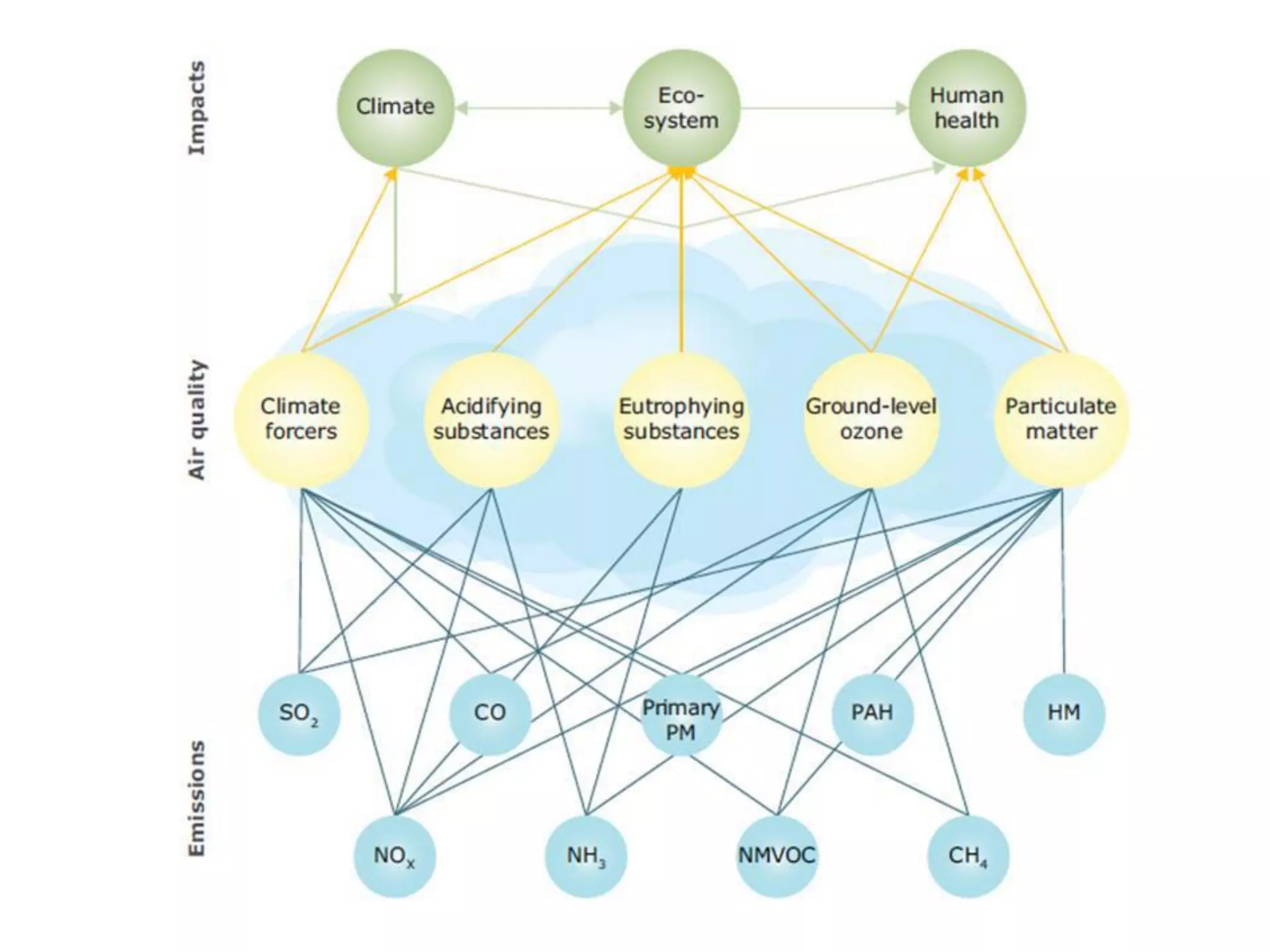
impacts to ecosystem health such as acidification, eutrophication (loss of
species diversity) and ground level ozone (crop damage) associated with
the emissions of the sulphur (S) and nitrogen (N) oxides, and ammonia
(national and transboundary air pollutants).
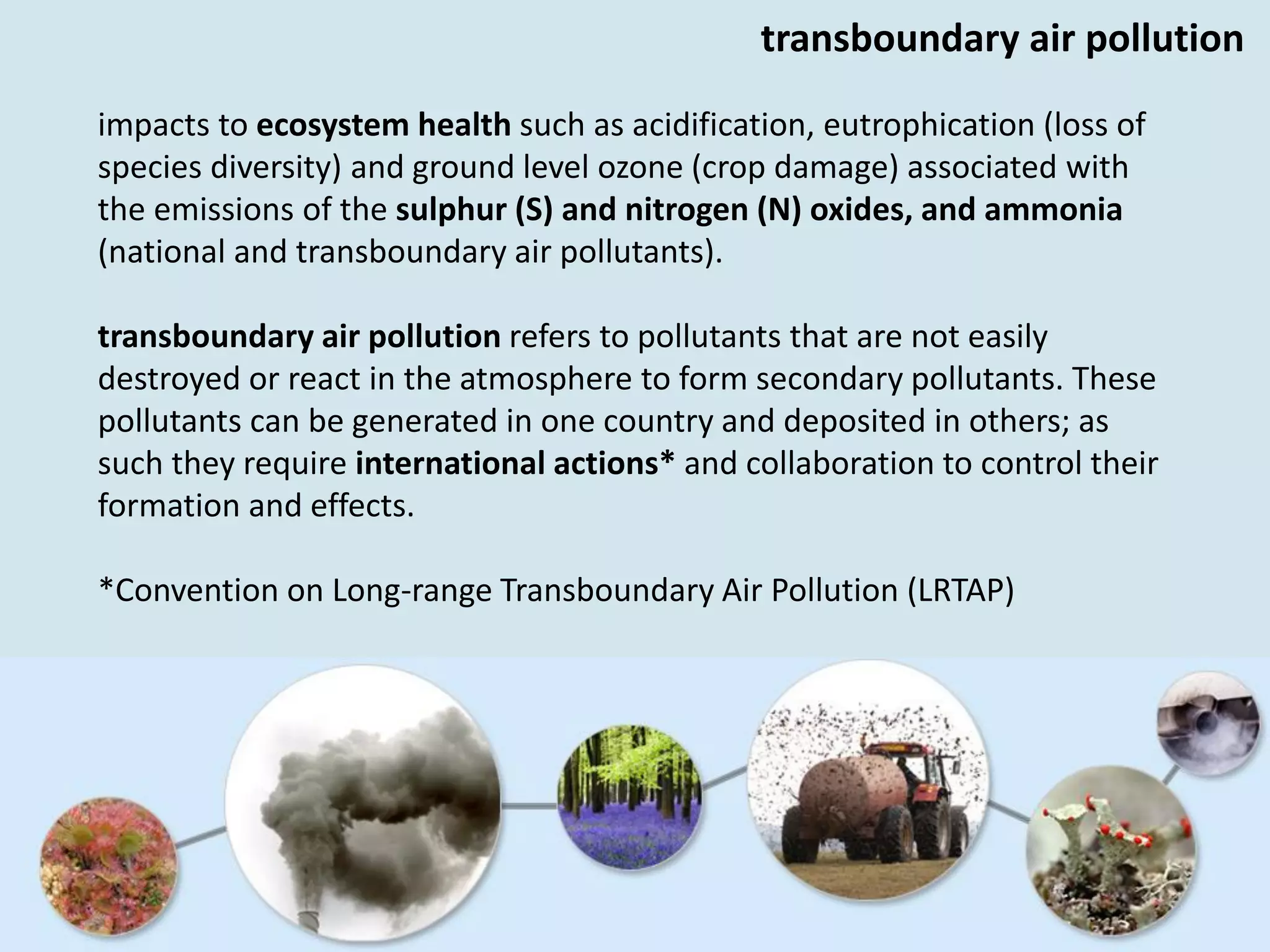
transboundary air pollution refers to pollutants that are not easily
destroyed or react in the atmosphere to form secondary pollutants. These
pollutants can be generated in one country and deposited in others; as
such they require international actions* and collaboration to control their
formation and effects.
*Convention on Long-range Transboundary Air Pollution (LRTAP)
transboundary air pollution
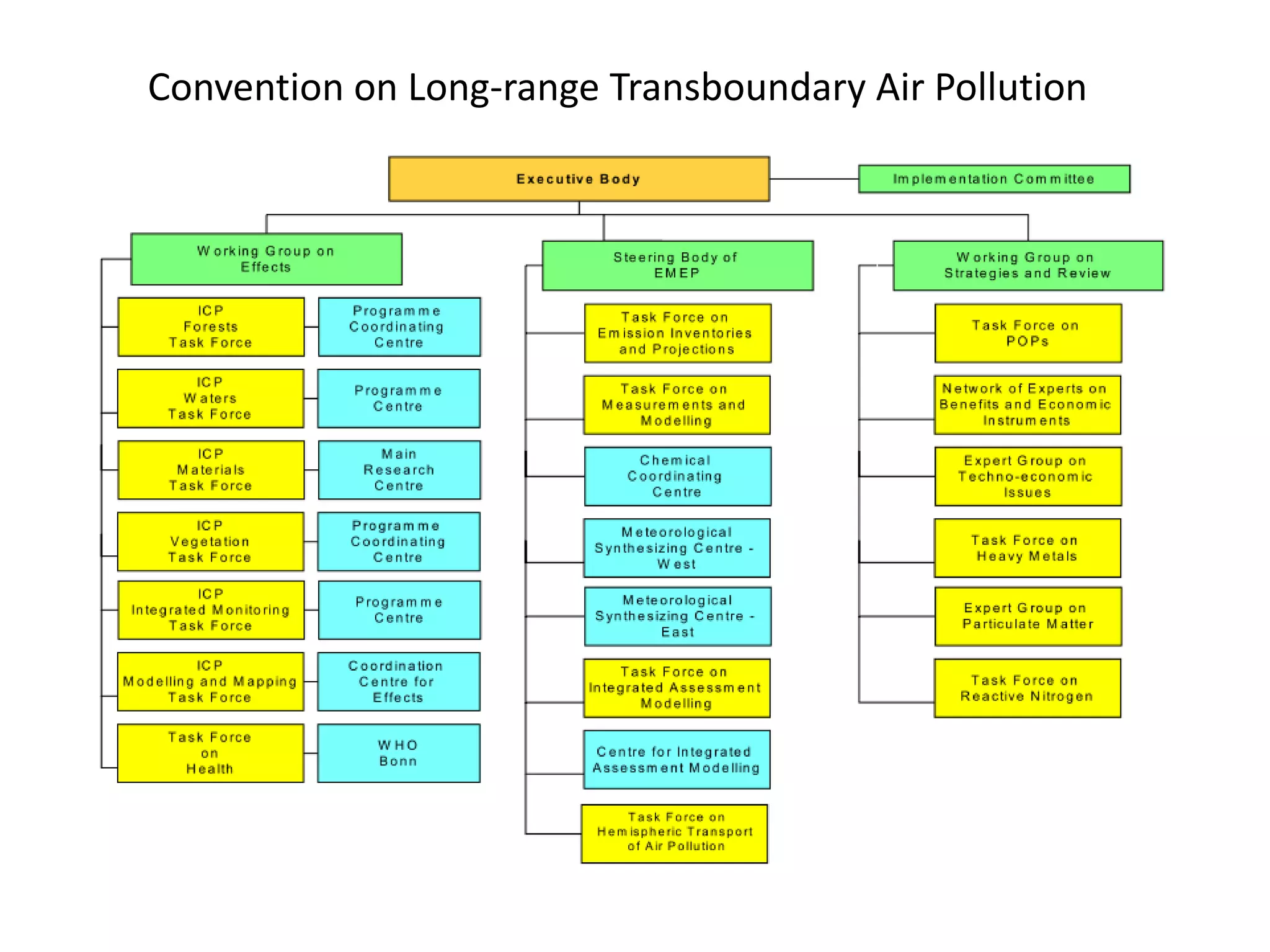
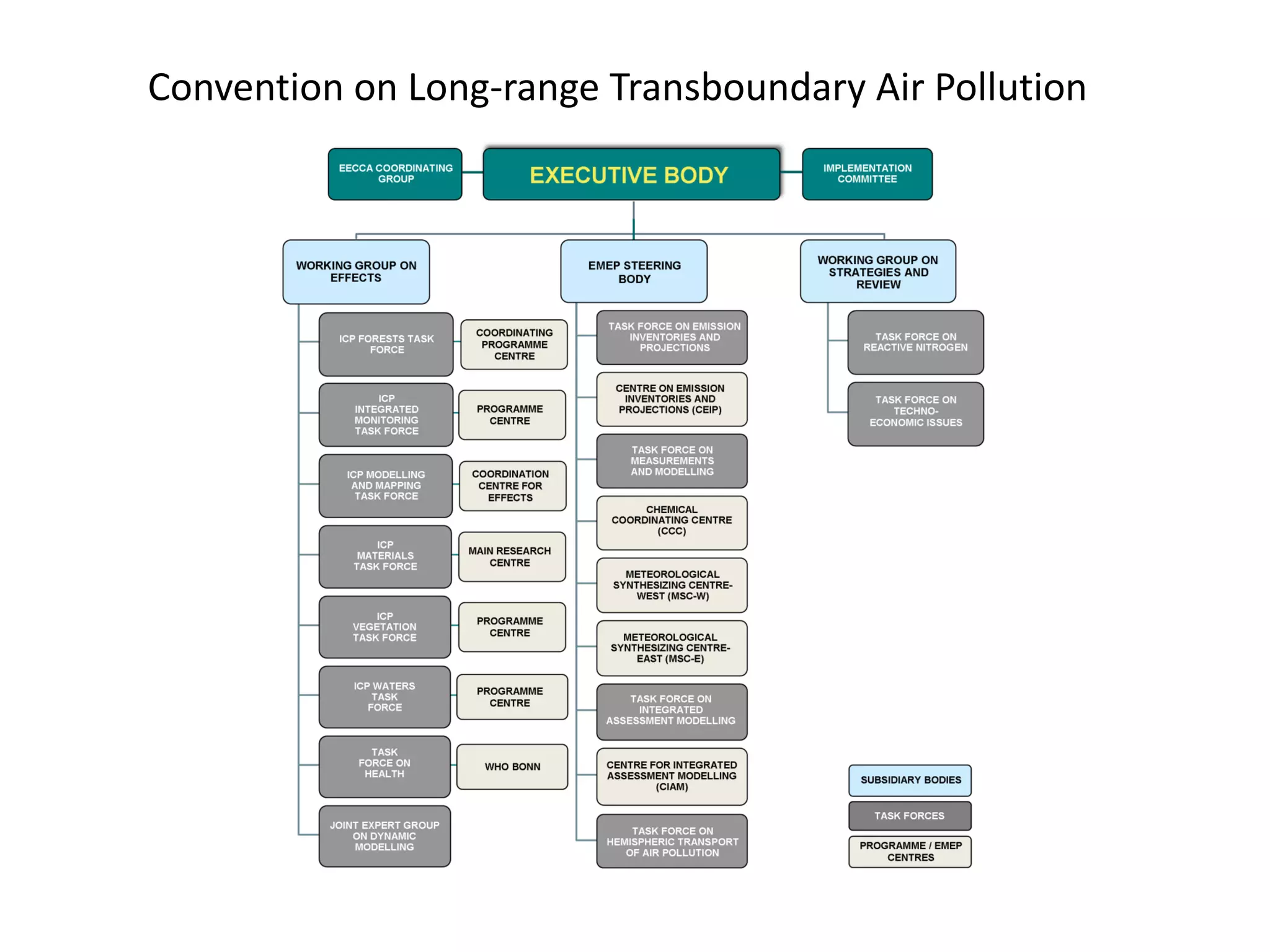
Convention on Long-range Transboundary Air Pollution
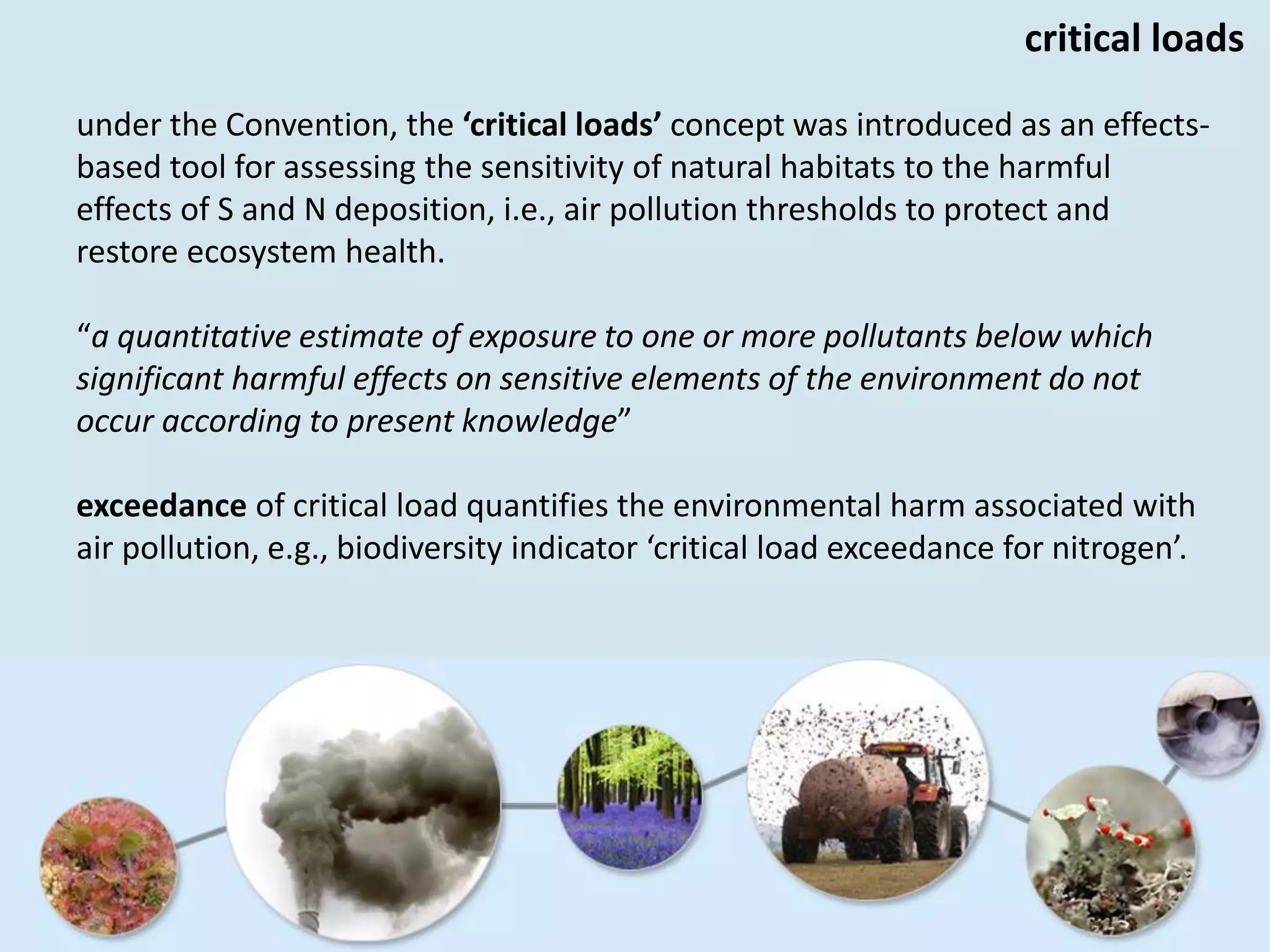
under the Convention, the ‘critical loads’ concept was introduced as an effects-
based tool for assessing the sensitivity of natural habitats to the harmful
effects of S and N deposition, i.e., air pollution thresholds to protect and
restore ecosystem health.
“a quantitative estimate of exposure to one or more pollutants below which
significant harmful effects on sensitive elements of the environment do not
occur according to present knowledge”
exceedance of critical load quantifies the environmental harm associated with
air pollution, e.g., biodiversity indicator ‘critical load exceedance for nitrogen’.
critical loads
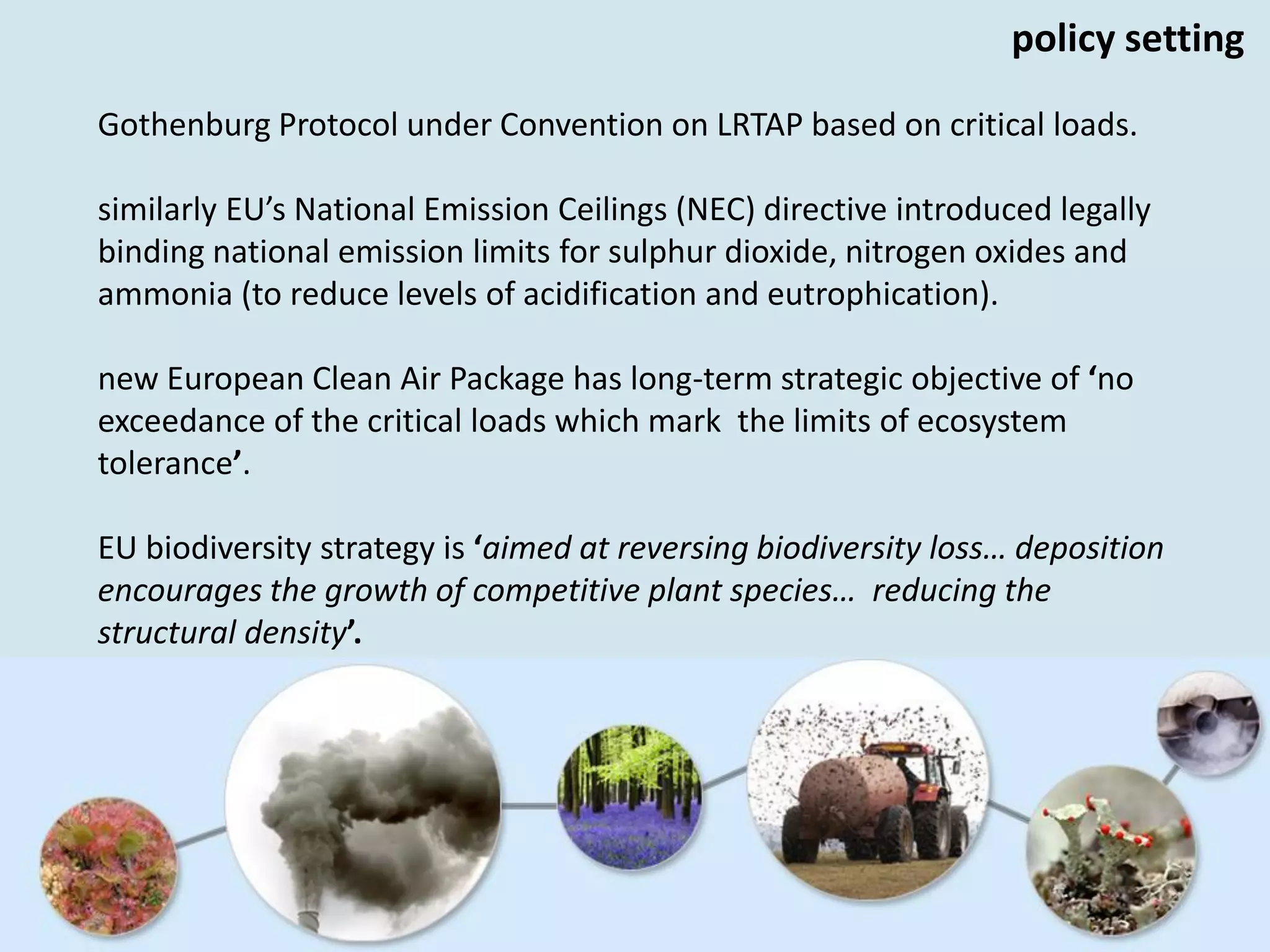
Gothenburg Protocol under Convention on LRTAP based on critical loads.
similarly EU’s National Emission Ceilings (NEC) directive introduced legally
binding national emission limits for sulphur dioxide, nitrogen oxides and
ammonia (to reduce levels of acidification and eutrophication).
new European Clean Air Package has long-term strategic objective of ‘no
exceedance of the critical loads which mark the limits of ecosystem
tolerance’.
EU biodiversity strategy is ‘aimed at reversing biodiversity loss… deposition
encourages the growth of competitive plant species… reducing the
structural density’.
policy setting
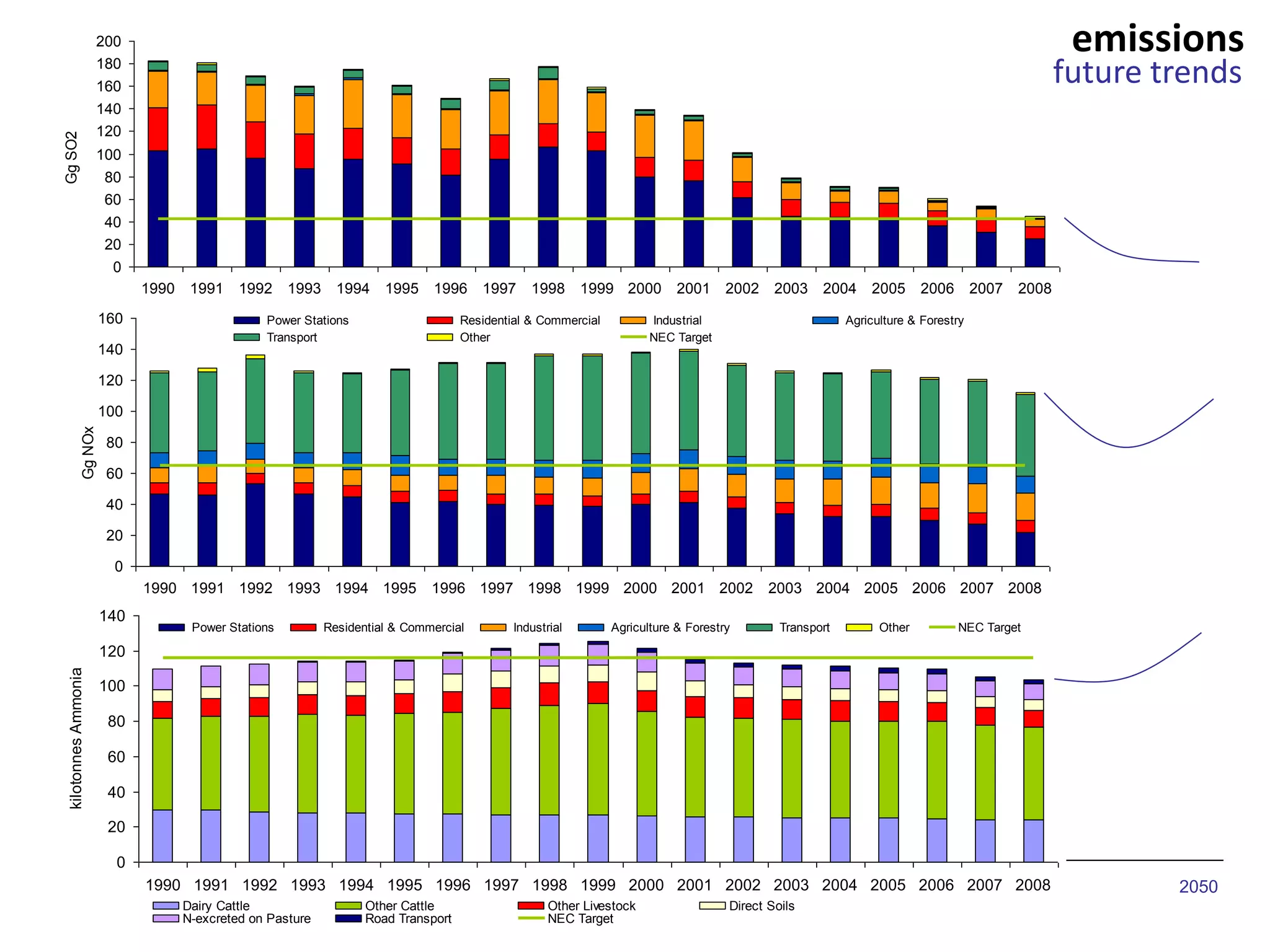
0
20
40
60
80
100
120
140
1990 1991 1992 1993 1994 1995 1996 1997 1998 1999 2000 2001 2002 2003 2004 2005 2006 2007 2008
kilotonnesAmmonia
Dairy Cattle Other Cattle Other Livestock Direct Soils
N-excreted on Pasture Road Transport NEC Target
0
20
40
60
80
100
120
140
160
1990 1991 1992 1993 1994 1995 1996 1997 1998 1999 2000 2001 2002 2003 2004 2005 2006 2007 2008
GgNOx
Power Stations Residential & Commercial Industrial Agriculture & Forestry Transport Other NEC Target
0
20
40
60
80
100
120
140
160
180
200
1990 1991 1992 1993 1994 1995 1996 1997 1998 1999 2000 2001 2002 2003 2004 2005 2006 2007 2008
GgSO2
Power Stations Residential & Commercial Industrial Agriculture & Forestry
Transport Other NEC Target
2050
future trends
emissions
ecosystem response to emissions protocols
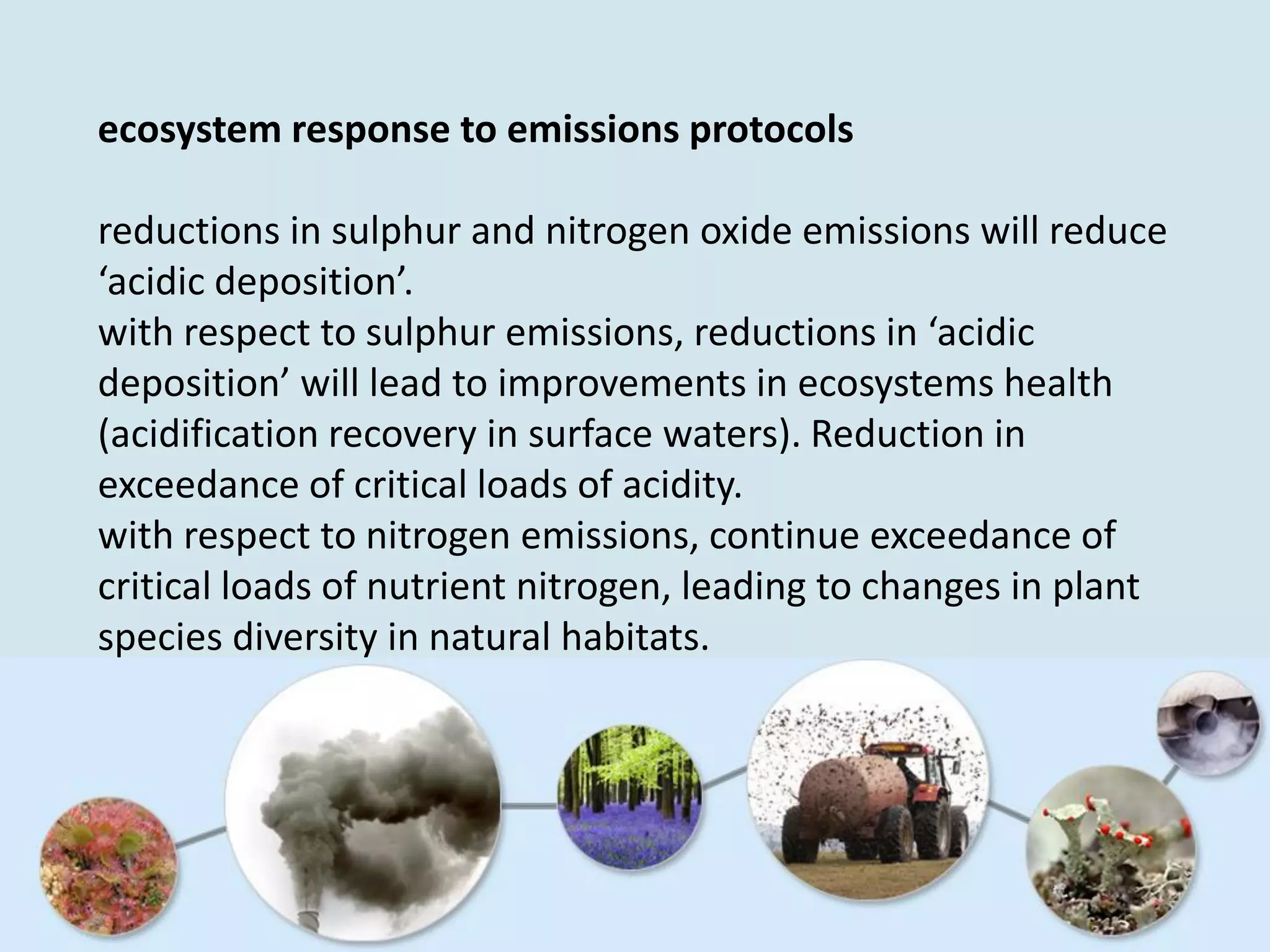
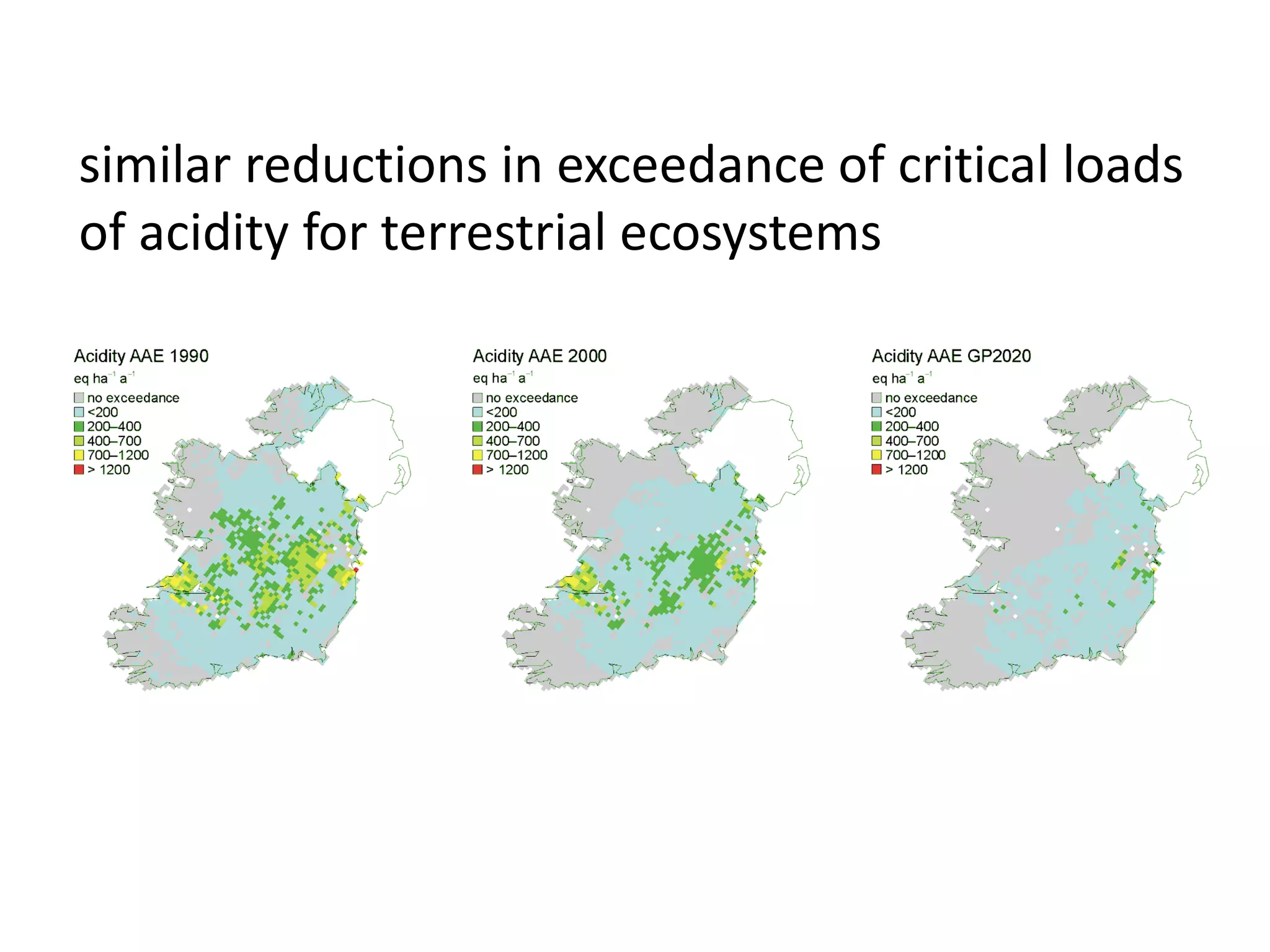
reductions in sulphur and nitrogen oxide emissions will reduce
‘acidic deposition’.
with respect to sulphur emissions, reductions in ‘acidic
deposition’ will lead to improvements in ecosystems health
(acidification recovery in surface waters). Reduction in
exceedance of critical loads of acidity.
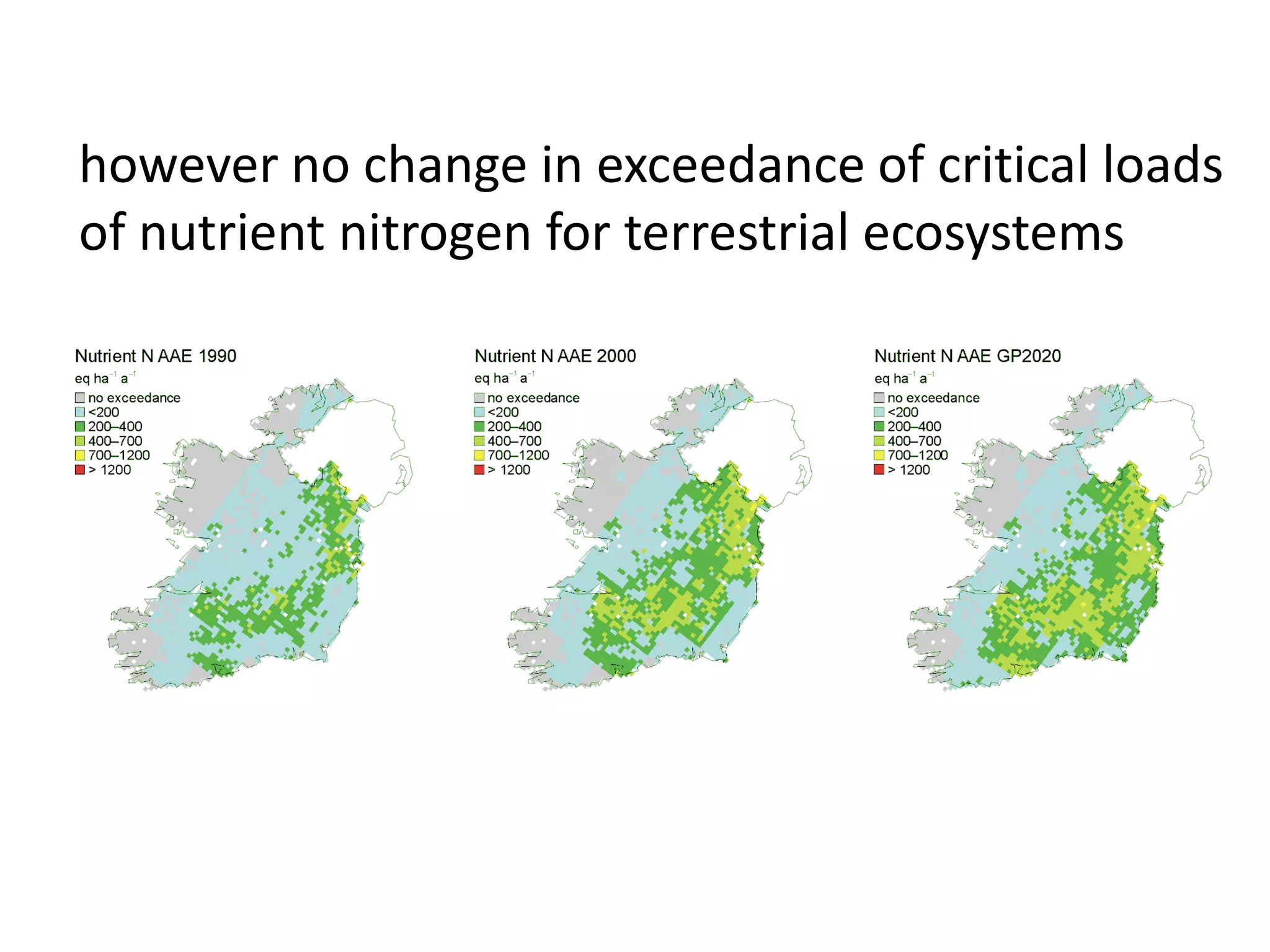
with respect to nitrogen emissions, continue exceedance of
critical loads of nutrient nitrogen, leading to changes in plant
species diversity in natural habitats.
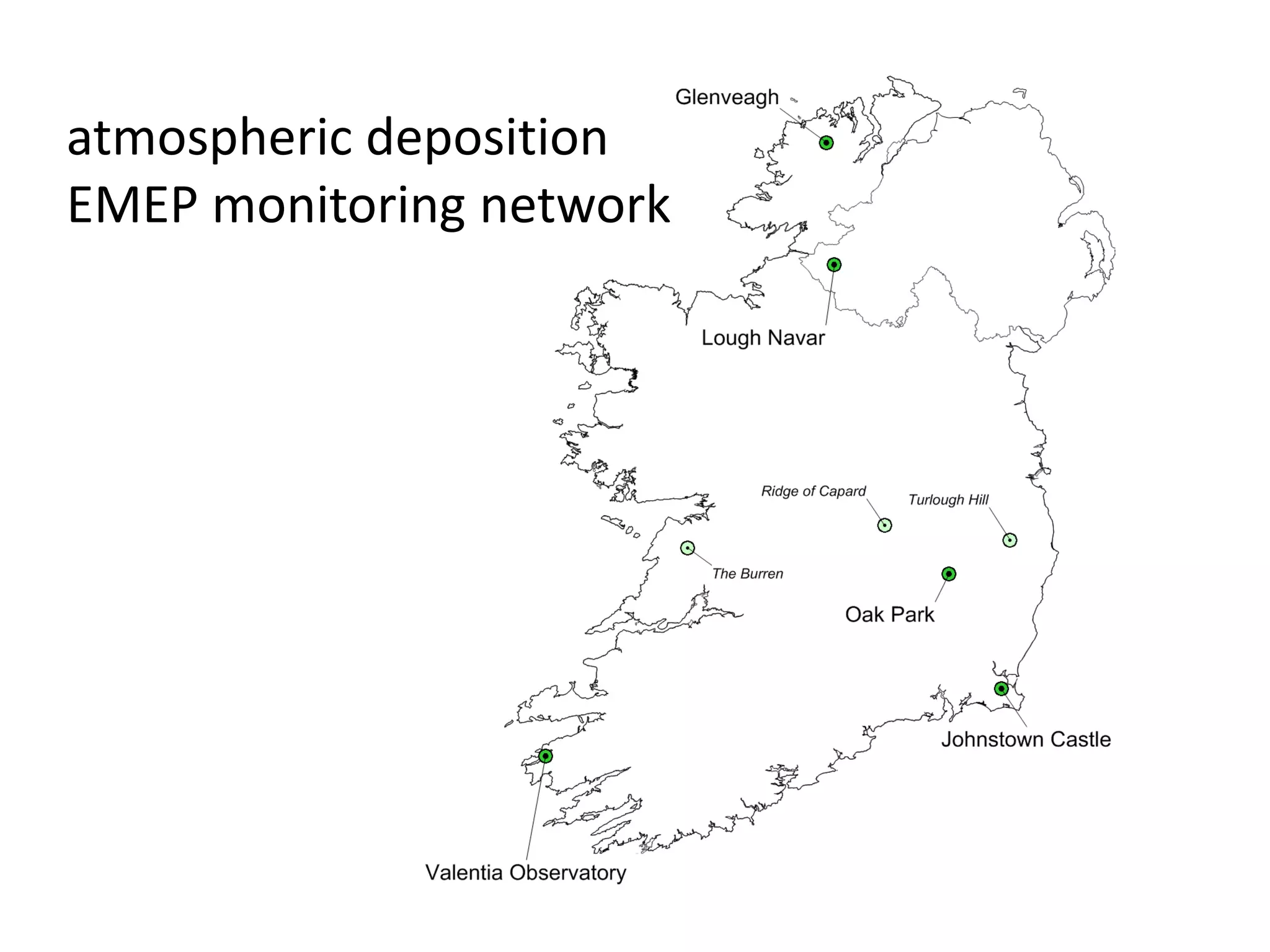
atmospheric deposition
EMEP monitoring network
0.0
0.1
0.2
0.3
0.4
0.5
0.6
1990 1995 2000 2005 2010
Non-marine sulphate (mg L
–1
)
0.00
0.10
0.20
0.30
0.40
1990 1995 2000 2005 2010
Valentia Observatory
Turlough Hill
The Burren
Ridge of Capard
Oak Park
Glenveagh
Johnstown Castle
Lough Navar
Median concentration
Nitrate (mg L
–1
)
0.0
0.1
0.2
0.3
0.4
0.5
0.6
1990 1995 2000 2005 2010
Ammonium (mg L
–1
)
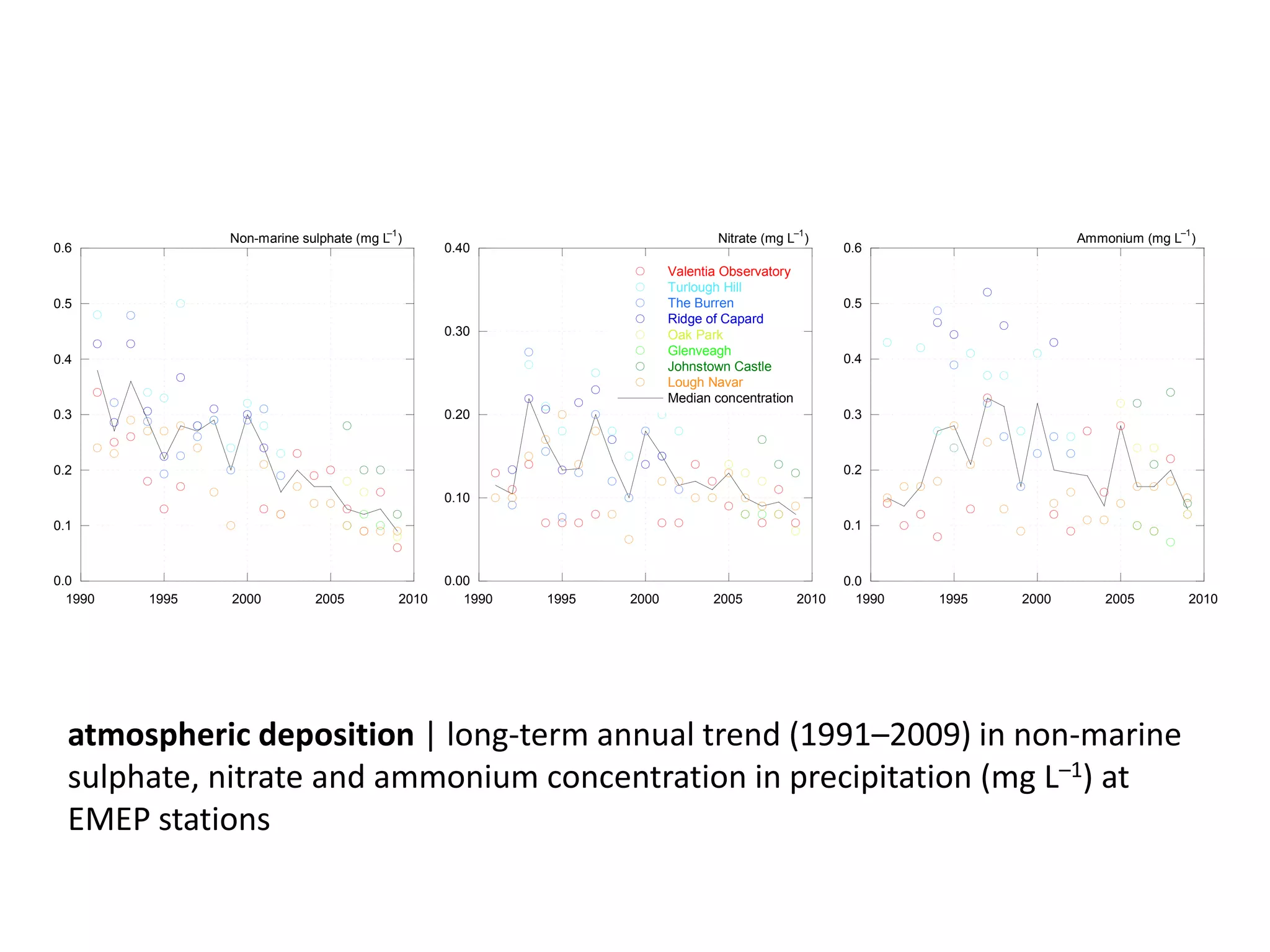
atmospheric deposition | long-term annual trend (1991–2009) in non-marine
sulphate, nitrate and ammonium concentration in precipitation (mg L–1) at
EMEP stations
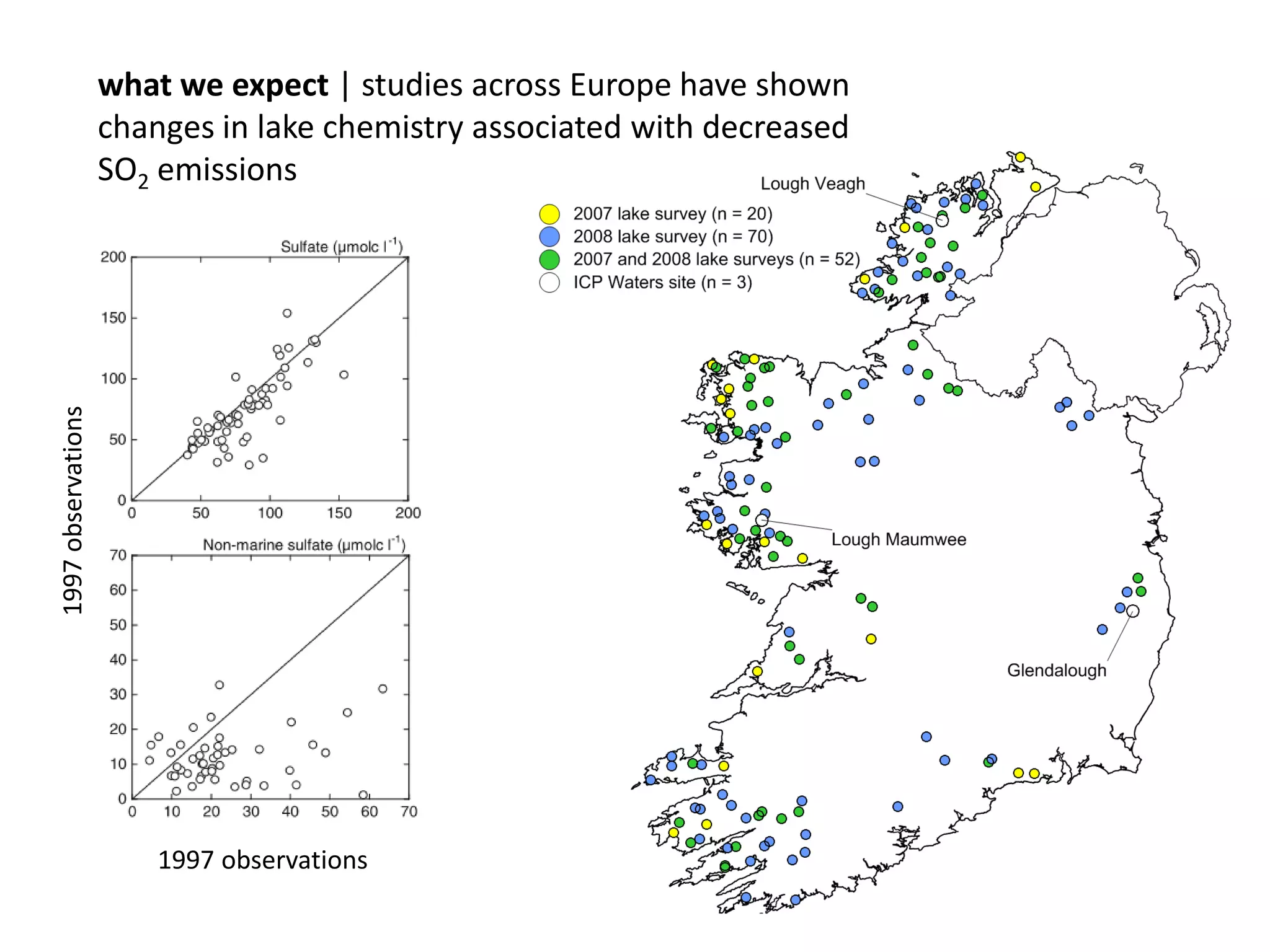
what we expect | studies across Europe have shown
changes in lake chemistry associated with decreased
SO2 emissions
1997 observations
1997observations
upper lake Glendalough, Co. Wicklow
Long-term trend [1984–2010] in surface acidity [pH]
3.0
3.5
4.0
4.5
5.0
5.5
6.0
6.5
7.0
1984 1989 1994 1999 2004 2009
pH: mid-lake observations [1984–2010]
pH: inflow 3 [1984–2010]
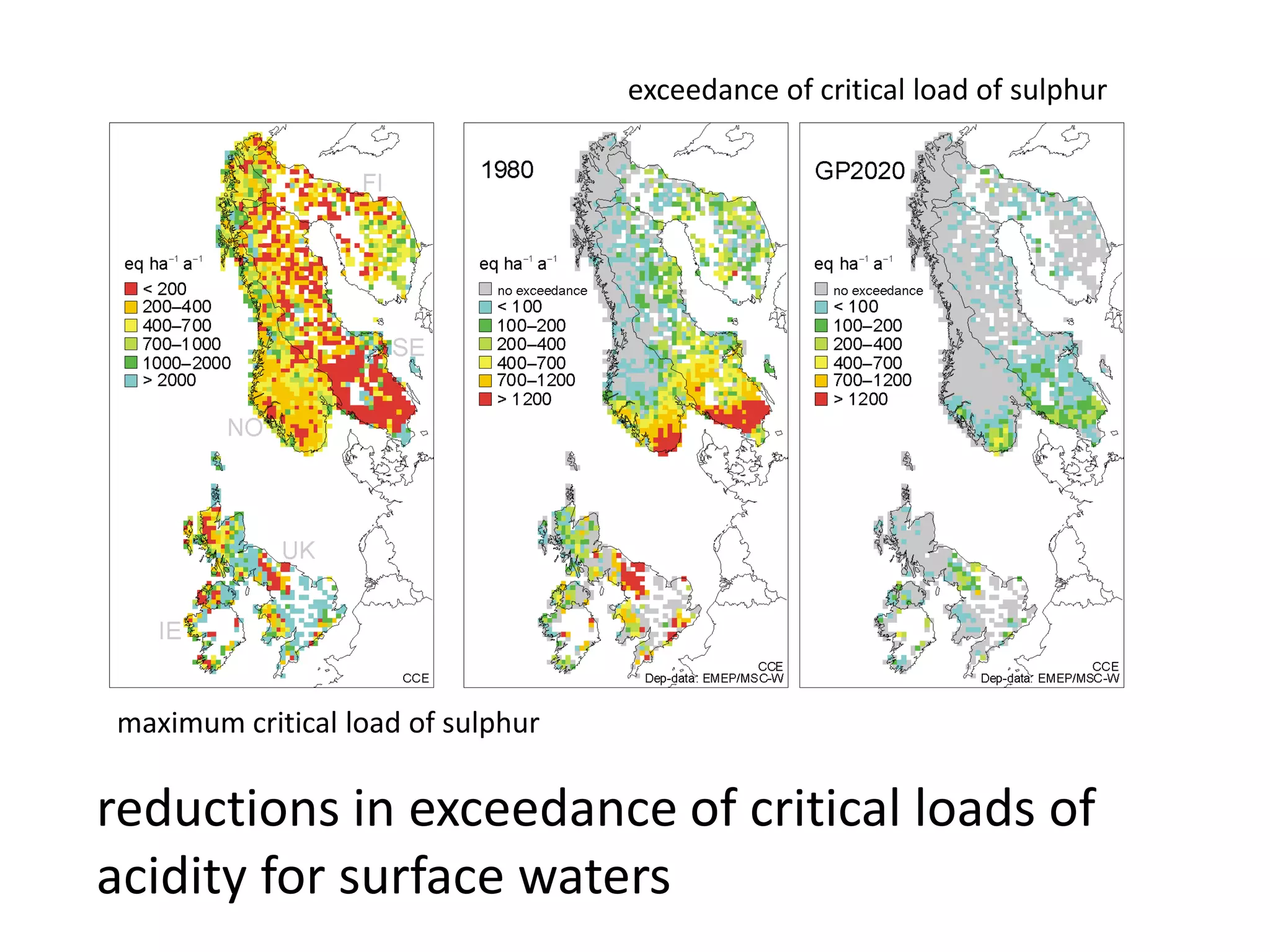
maximum critical load of sulphur
exceedance of critical load of sulphur
reductions in exceedance of critical loads of
acidity for surface waters
similar reductions in exceedance of critical loads
of acidity for terrestrial ecosystems
however no change in exceedance of critical loads
of nutrient nitrogen for terrestrial ecosystems
0
10
20
30
40
50
60
70
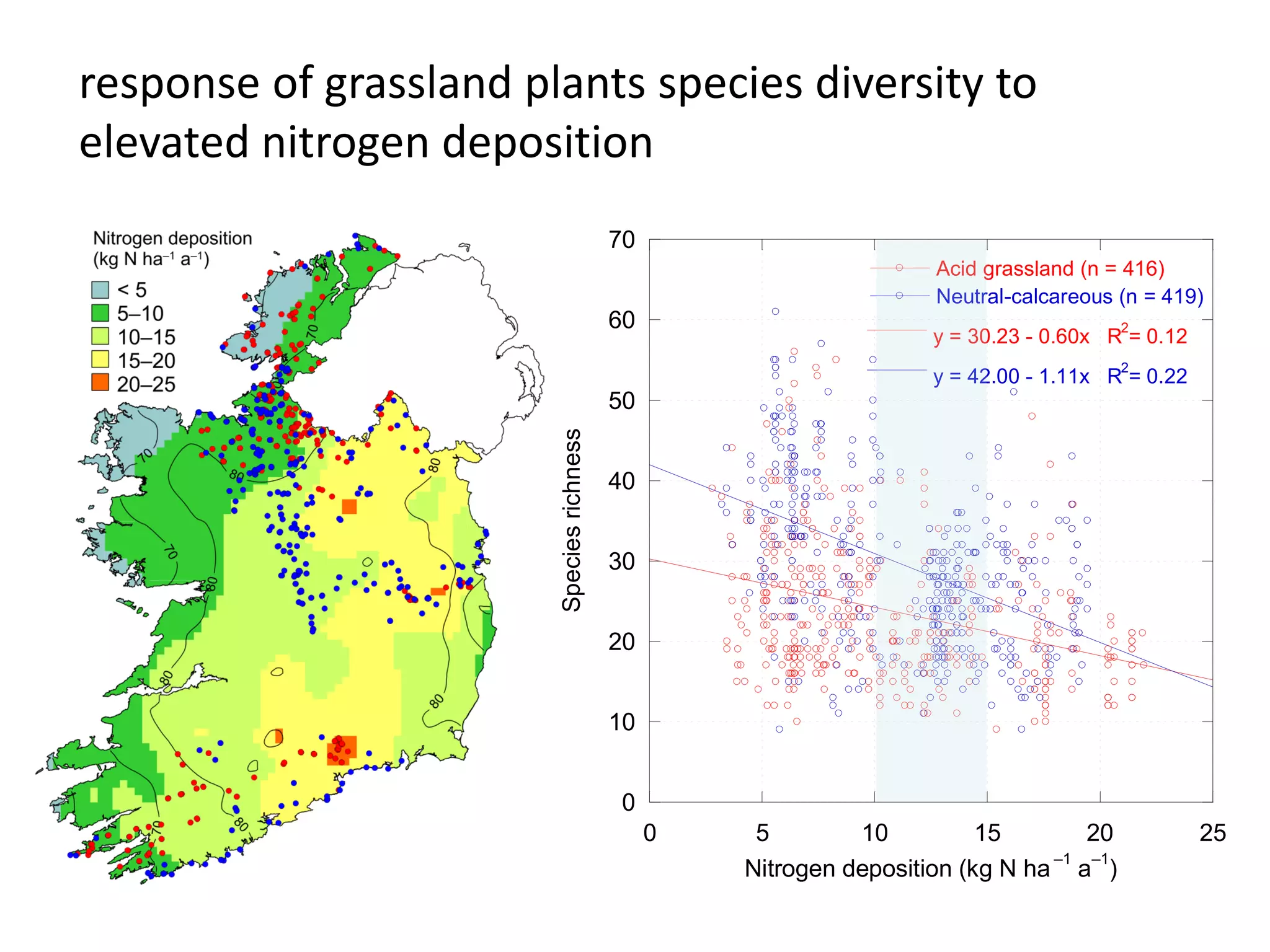
0 5 10 15 20 25
Acid grassland (n = 416)
Neutral-calcareous (n = 419)
y = 30.23 - 0.60x R
2
= 0.12
y = 42.00 - 1.11x R
2
= 0.22
Speciesrichness
Nitrogen deposition (kg N ha
–1
a
–1
)
response of grassland plants species diversity to
elevated nitrogen deposition
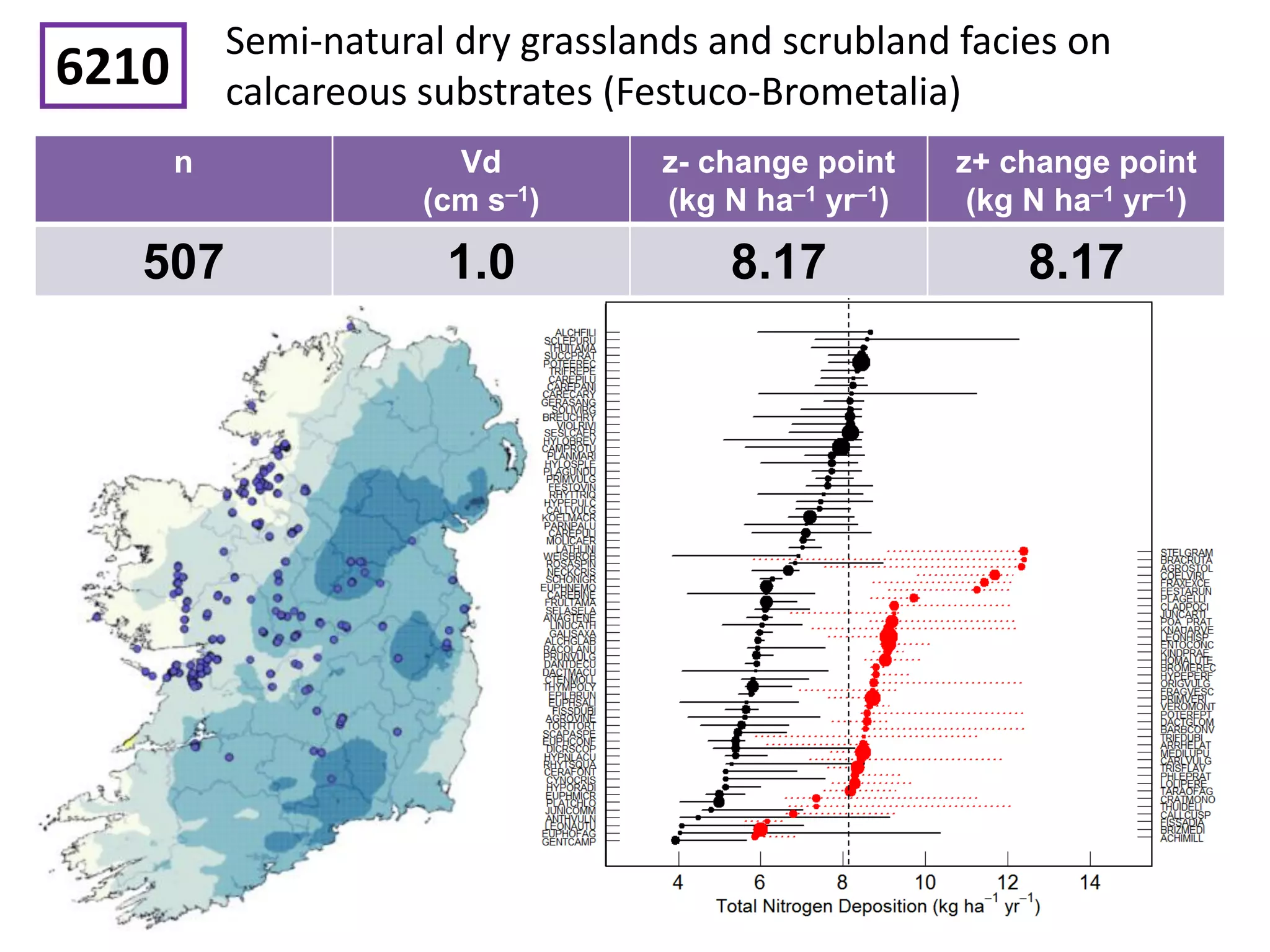
Semi-natural dry grasslands and scrubland facies on
calcareous substrates (Festuco-Brometalia)6210
n Vd
(cm s–1)
z- change point
(kg N ha–1 yr–1)
z+ change point
(kg N ha–1 yr–1)
507 1.0 8.17 8.17
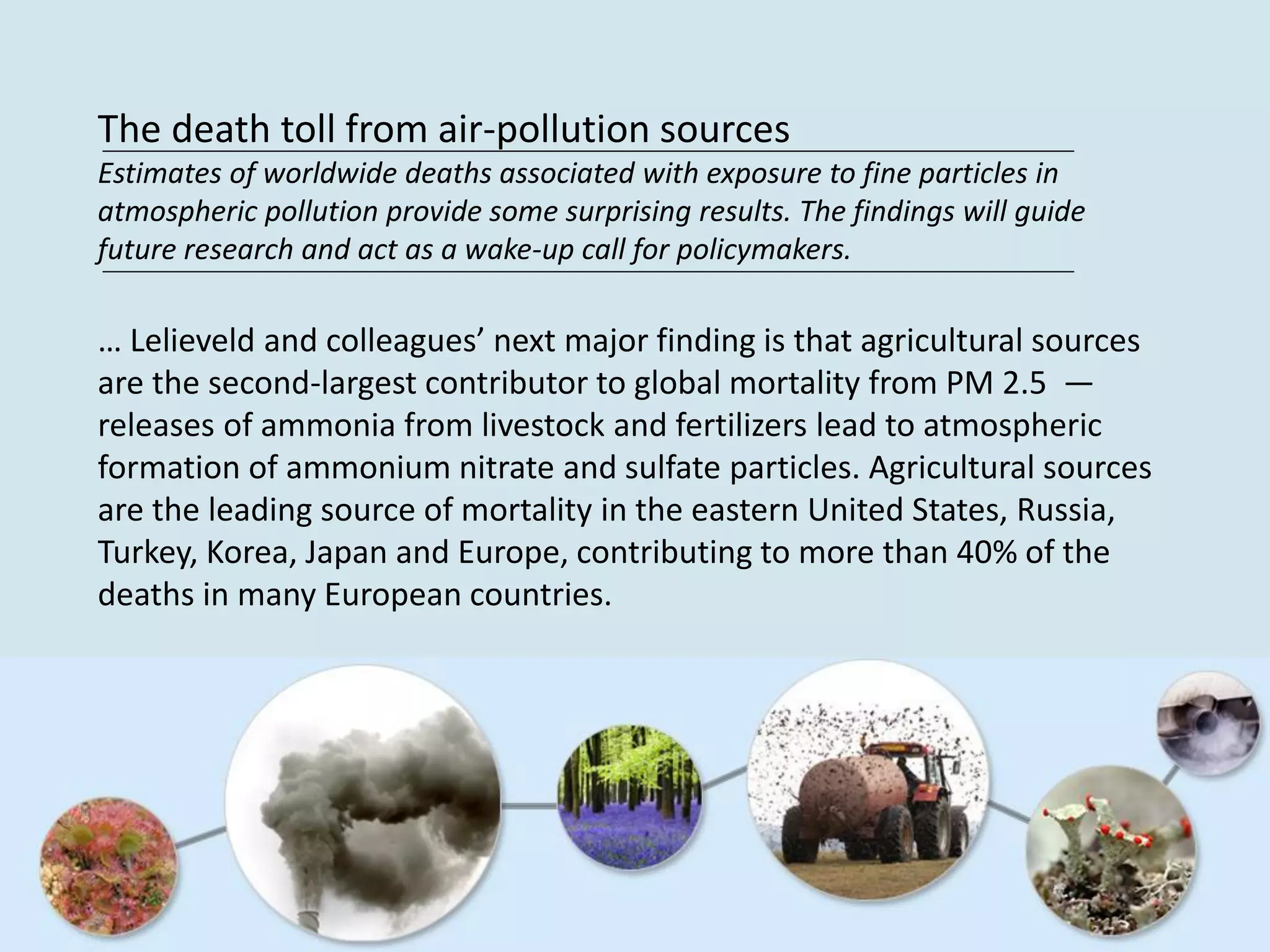
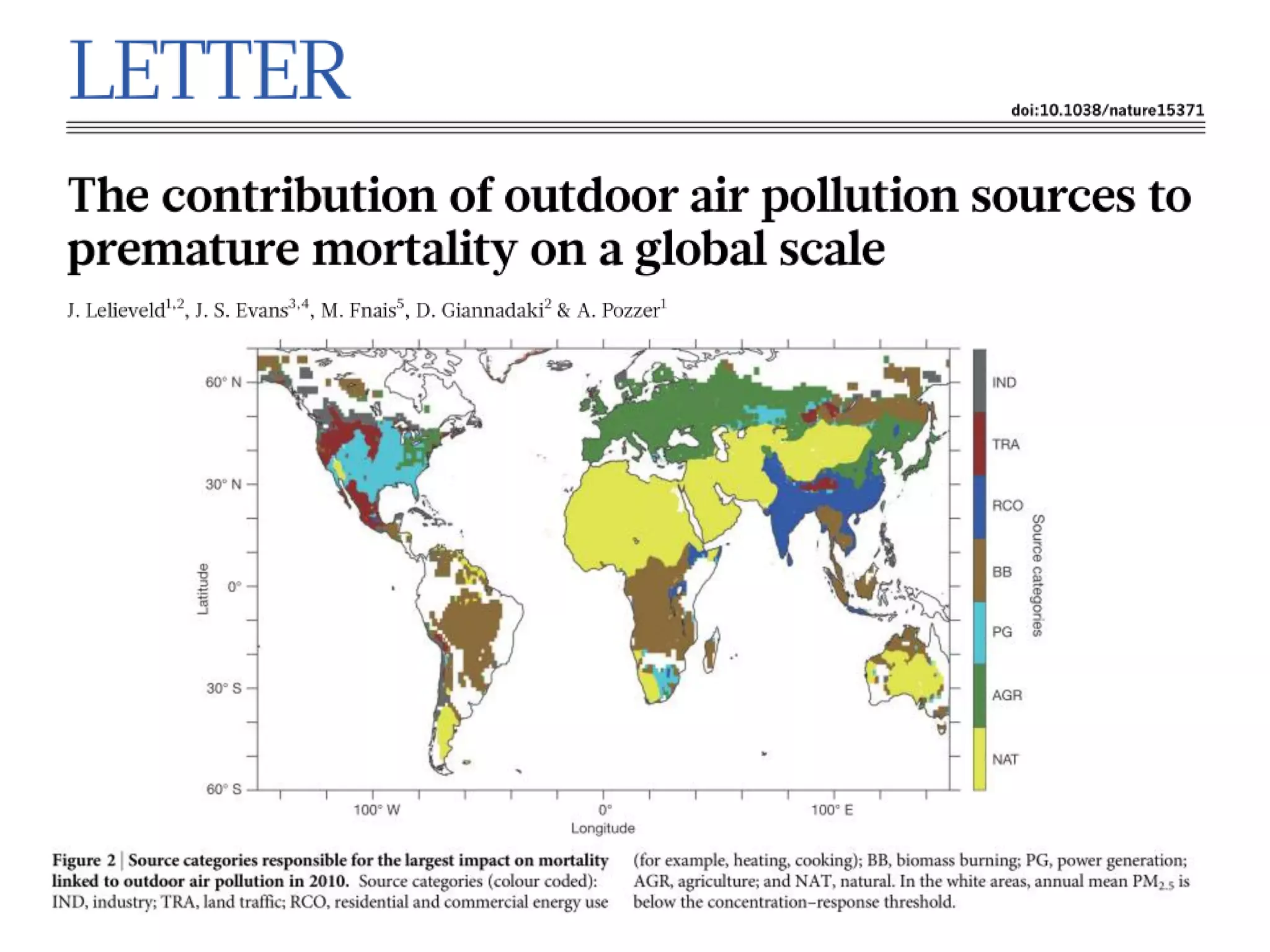
The death toll from air-pollution sources
Estimates of worldwide deaths associated with exposure to fine particles in
atmospheric pollution provide some surprising results. The findings will guide
future research and act as a wake-up call for policymakers.
… Lelieveld and colleagues’ next major finding is that agricultural sources
are the second-largest contributor to global mortality from PM 2.5 —
releases of ammonia from livestock and fertilizers lead to atmospheric
formation of ammonium nitrate and sulfate particles. Agricultural sources
are the leading source of mortality in the eastern United States, Russia,
Turkey, Korea, Japan and Europe, contributing to more than 40% of the
deaths in many European countries.
Meeting greenhouse gas and ammonia emission reduction targets
will be particularly challenging…
Strategic Environmental Objective: Manage air pollution
SEO Indicator: Air quality measurements from
EPA national monitoring programme
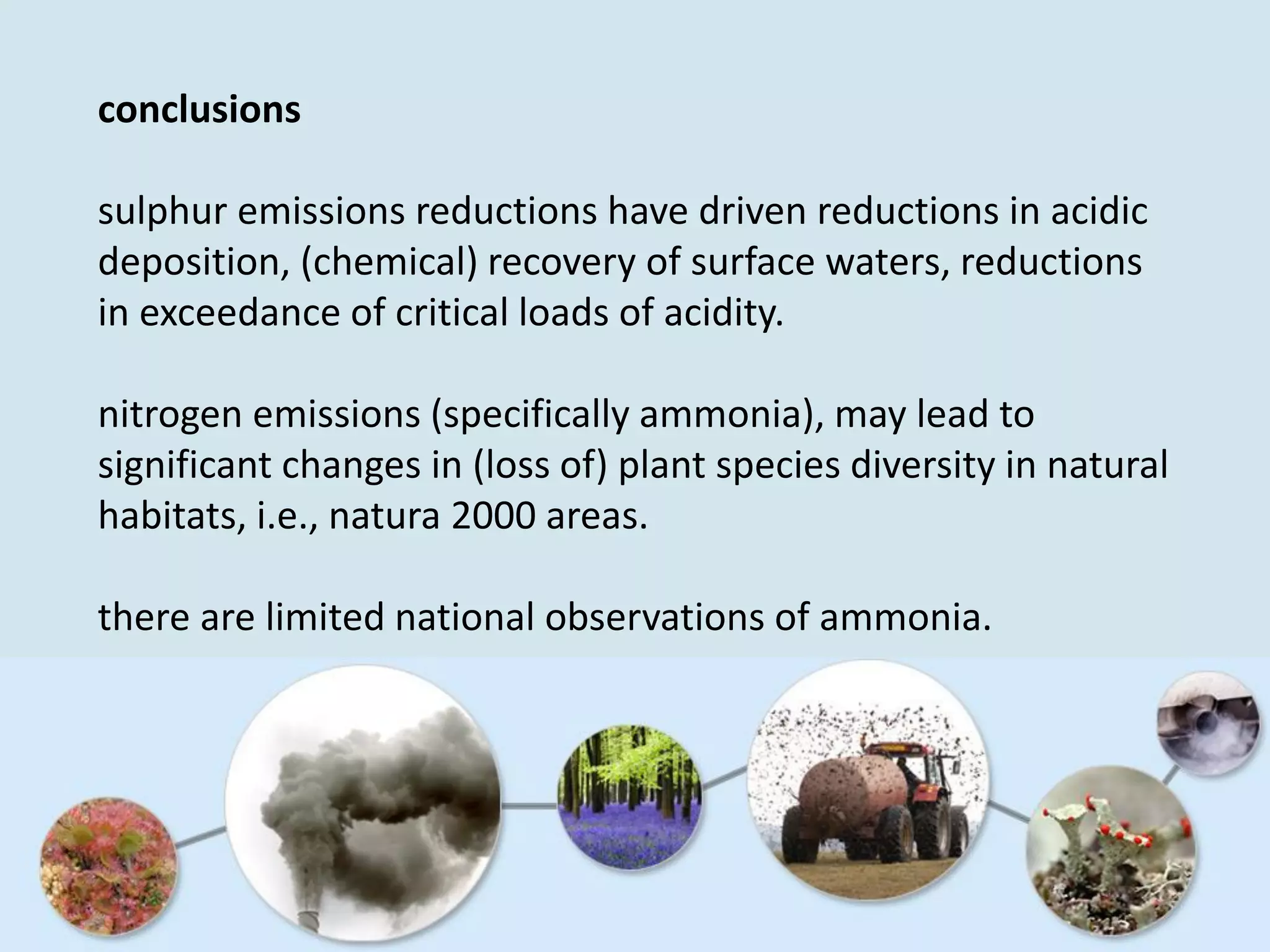
conclusions
sulphur emissions reductions have driven reductions in acidic
deposition, (chemical) recovery of surface waters, reductions
in exceedance of critical loads of acidity.
nitrogen emissions (specifically ammonia), may lead to
significant changes in (loss of) plant species diversity in natural
habitats, i.e., natura 2000 areas.
there are limited national observations of ammonia.
Convention on Long-range Transboundary Air Pollution

Critical loads - and ecosystem impacts of air pollutants

  • 1.
    critical loads— and ecosystemimpacts of air pollutants Clean Air Conference Wood Quay Venue, Dublin City Council [28 September 2015]
  • 2.
    It is wellestablished that anthropogenic air pollution can have negative impacts on the natural environment, both in terms of direct effects on vegetation, and indirectly through effects on the acid and nutrient status of soils and waters.
  • 4.
    impacts to ecosystemhealth such as acidification, eutrophication (loss of species diversity) and ground level ozone (crop damage) associated with the emissions of the sulphur (S) and nitrogen (N) oxides, and ammonia (national and transboundary air pollutants). transboundary air pollution refers to pollutants that are not easily destroyed or react in the atmosphere to form secondary pollutants. These pollutants can be generated in one country and deposited in others; as such they require international actions* and collaboration to control their formation and effects. *Convention on Long-range Transboundary Air Pollution (LRTAP) transboundary air pollution
  • 5.
    Convention on Long-rangeTransboundary Air Pollution
  • 6.
    under the Convention,the ‘critical loads’ concept was introduced as an effects- based tool for assessing the sensitivity of natural habitats to the harmful effects of S and N deposition, i.e., air pollution thresholds to protect and restore ecosystem health. “a quantitative estimate of exposure to one or more pollutants below which significant harmful effects on sensitive elements of the environment do not occur according to present knowledge” exceedance of critical load quantifies the environmental harm associated with air pollution, e.g., biodiversity indicator ‘critical load exceedance for nitrogen’. critical loads
  • 7.
    Gothenburg Protocol underConvention on LRTAP based on critical loads. similarly EU’s National Emission Ceilings (NEC) directive introduced legally binding national emission limits for sulphur dioxide, nitrogen oxides and ammonia (to reduce levels of acidification and eutrophication). new European Clean Air Package has long-term strategic objective of ‘no exceedance of the critical loads which mark the limits of ecosystem tolerance’. EU biodiversity strategy is ‘aimed at reversing biodiversity loss… deposition encourages the growth of competitive plant species… reducing the structural density’. policy setting
  • 8.
    0 20 40 60 80 100 120 140 1990 1991 19921993 1994 1995 1996 1997 1998 1999 2000 2001 2002 2003 2004 2005 2006 2007 2008 kilotonnesAmmonia Dairy Cattle Other Cattle Other Livestock Direct Soils N-excreted on Pasture Road Transport NEC Target 0 20 40 60 80 100 120 140 160 1990 1991 1992 1993 1994 1995 1996 1997 1998 1999 2000 2001 2002 2003 2004 2005 2006 2007 2008 GgNOx Power Stations Residential & Commercial Industrial Agriculture & Forestry Transport Other NEC Target 0 20 40 60 80 100 120 140 160 180 200 1990 1991 1992 1993 1994 1995 1996 1997 1998 1999 2000 2001 2002 2003 2004 2005 2006 2007 2008 GgSO2 Power Stations Residential & Commercial Industrial Agriculture & Forestry Transport Other NEC Target 2050 future trends emissions
  • 9.
    ecosystem response toemissions protocols reductions in sulphur and nitrogen oxide emissions will reduce ‘acidic deposition’. with respect to sulphur emissions, reductions in ‘acidic deposition’ will lead to improvements in ecosystems health (acidification recovery in surface waters). Reduction in exceedance of critical loads of acidity. with respect to nitrogen emissions, continue exceedance of critical loads of nutrient nitrogen, leading to changes in plant species diversity in natural habitats.
  • 10.
  • 11.
    0.0 0.1 0.2 0.3 0.4 0.5 0.6 1990 1995 20002005 2010 Non-marine sulphate (mg L –1 ) 0.00 0.10 0.20 0.30 0.40 1990 1995 2000 2005 2010 Valentia Observatory Turlough Hill The Burren Ridge of Capard Oak Park Glenveagh Johnstown Castle Lough Navar Median concentration Nitrate (mg L –1 ) 0.0 0.1 0.2 0.3 0.4 0.5 0.6 1990 1995 2000 2005 2010 Ammonium (mg L –1 ) atmospheric deposition | long-term annual trend (1991–2009) in non-marine sulphate, nitrate and ammonium concentration in precipitation (mg L–1) at EMEP stations
  • 13.
    what we expect| studies across Europe have shown changes in lake chemistry associated with decreased SO2 emissions 1997 observations 1997observations
  • 14.
    upper lake Glendalough,Co. Wicklow Long-term trend [1984–2010] in surface acidity [pH]
  • 15.
    3.0 3.5 4.0 4.5 5.0 5.5 6.0 6.5 7.0 1984 1989 19941999 2004 2009 pH: mid-lake observations [1984–2010] pH: inflow 3 [1984–2010]
  • 16.
    maximum critical loadof sulphur exceedance of critical load of sulphur reductions in exceedance of critical loads of acidity for surface waters
  • 17.
    similar reductions inexceedance of critical loads of acidity for terrestrial ecosystems
  • 18.
    however no changein exceedance of critical loads of nutrient nitrogen for terrestrial ecosystems
  • 19.
    0 10 20 30 40 50 60 70 0 5 1015 20 25 Acid grassland (n = 416) Neutral-calcareous (n = 419) y = 30.23 - 0.60x R 2 = 0.12 y = 42.00 - 1.11x R 2 = 0.22 Speciesrichness Nitrogen deposition (kg N ha –1 a –1 ) response of grassland plants species diversity to elevated nitrogen deposition
  • 20.
    Semi-natural dry grasslandsand scrubland facies on calcareous substrates (Festuco-Brometalia)6210 n Vd (cm s–1) z- change point (kg N ha–1 yr–1) z+ change point (kg N ha–1 yr–1) 507 1.0 8.17 8.17
  • 21.
    The death tollfrom air-pollution sources Estimates of worldwide deaths associated with exposure to fine particles in atmospheric pollution provide some surprising results. The findings will guide future research and act as a wake-up call for policymakers. … Lelieveld and colleagues’ next major finding is that agricultural sources are the second-largest contributor to global mortality from PM 2.5 — releases of ammonia from livestock and fertilizers lead to atmospheric formation of ammonium nitrate and sulfate particles. Agricultural sources are the leading source of mortality in the eastern United States, Russia, Turkey, Korea, Japan and Europe, contributing to more than 40% of the deaths in many European countries.
  • 23.
    Meeting greenhouse gasand ammonia emission reduction targets will be particularly challenging… Strategic Environmental Objective: Manage air pollution SEO Indicator: Air quality measurements from EPA national monitoring programme
  • 24.
    conclusions sulphur emissions reductionshave driven reductions in acidic deposition, (chemical) recovery of surface waters, reductions in exceedance of critical loads of acidity. nitrogen emissions (specifically ammonia), may lead to significant changes in (loss of) plant species diversity in natural habitats, i.e., natura 2000 areas. there are limited national observations of ammonia.
  • 26.
    Convention on Long-rangeTransboundary Air Pollution