
The BRIDE Project
Opportunities for multiple benefits
Project Objectives
1. Improve farmland biodiversity
2. Reward farmers for improvements
3. Raise awareness of environmental problems and their solutions on
farms
4. Create a template for a Results-based Payment scheme for
biodiversity on intensive farmland
5. Facilitate the creation of a market-based demand by the agri-food
industry for supply of ecosystem services from farmers
Challenges of the Project
• Pre-application – difficulty in being taken seriously
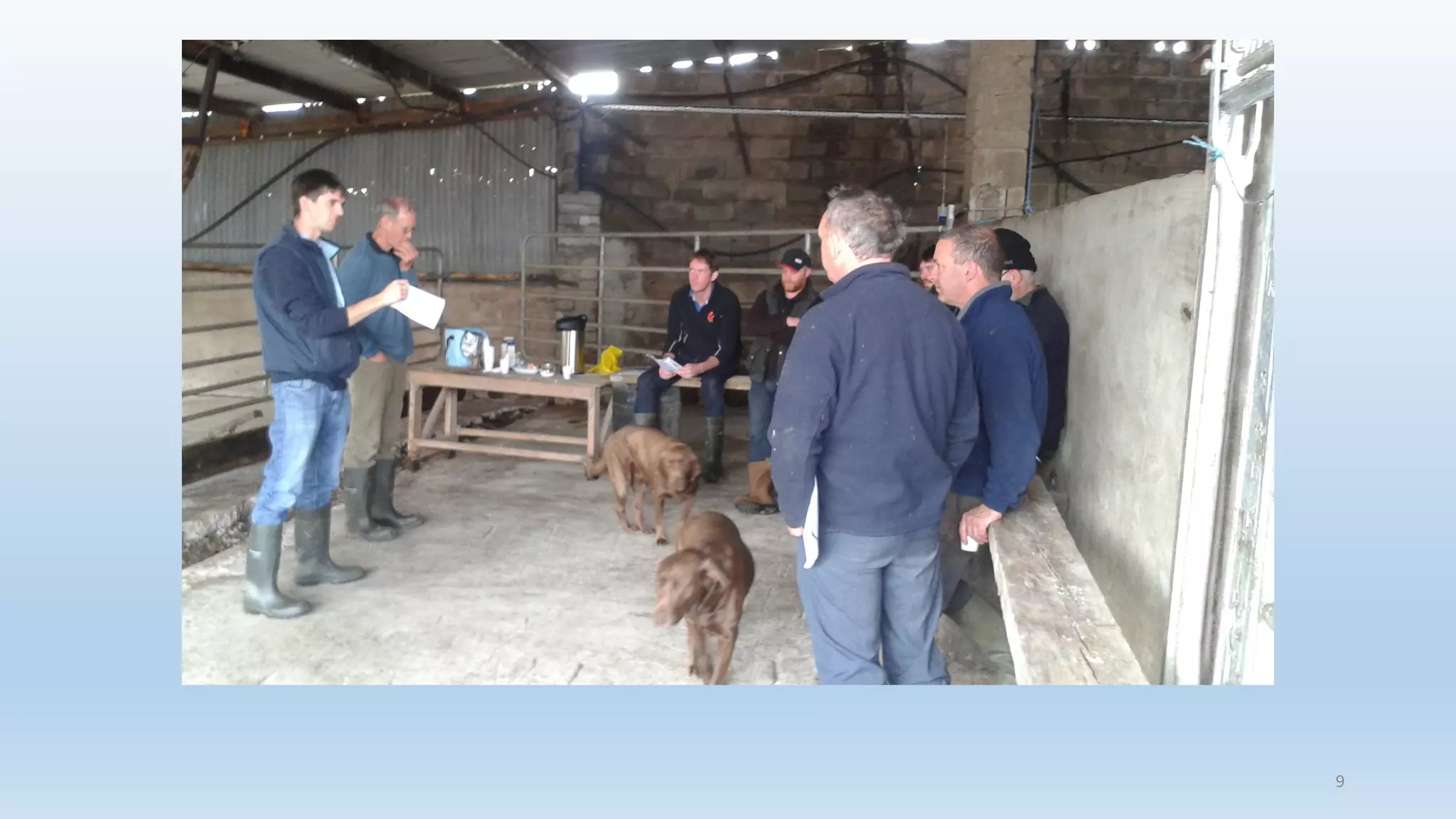
• Bringing farmers on board – bottom up approach but also requires top-
down, peer learning, the language of farmers!
• Dept. funding and support - vital
• Operational Group and Working Group
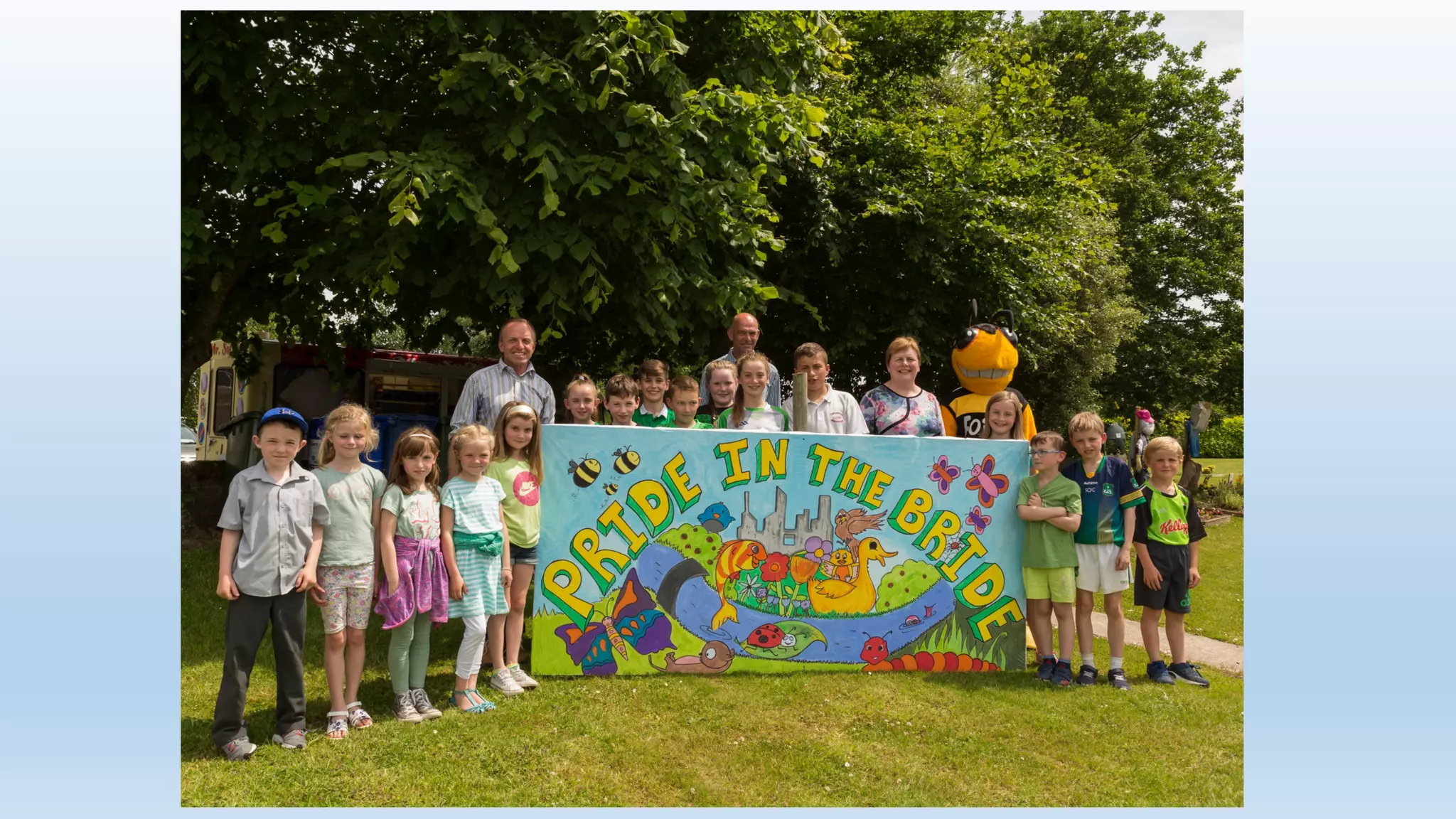
• Importance of local element – school - “Pride in the BRIDE”
• Simple goals to achieve for farmers – retain existing habitats.
• Awareness and changing mindsets – most difficult aspect
• The farmer must know the goal we are trying to achieve. Involvement of
the farmer is vital.
7
9
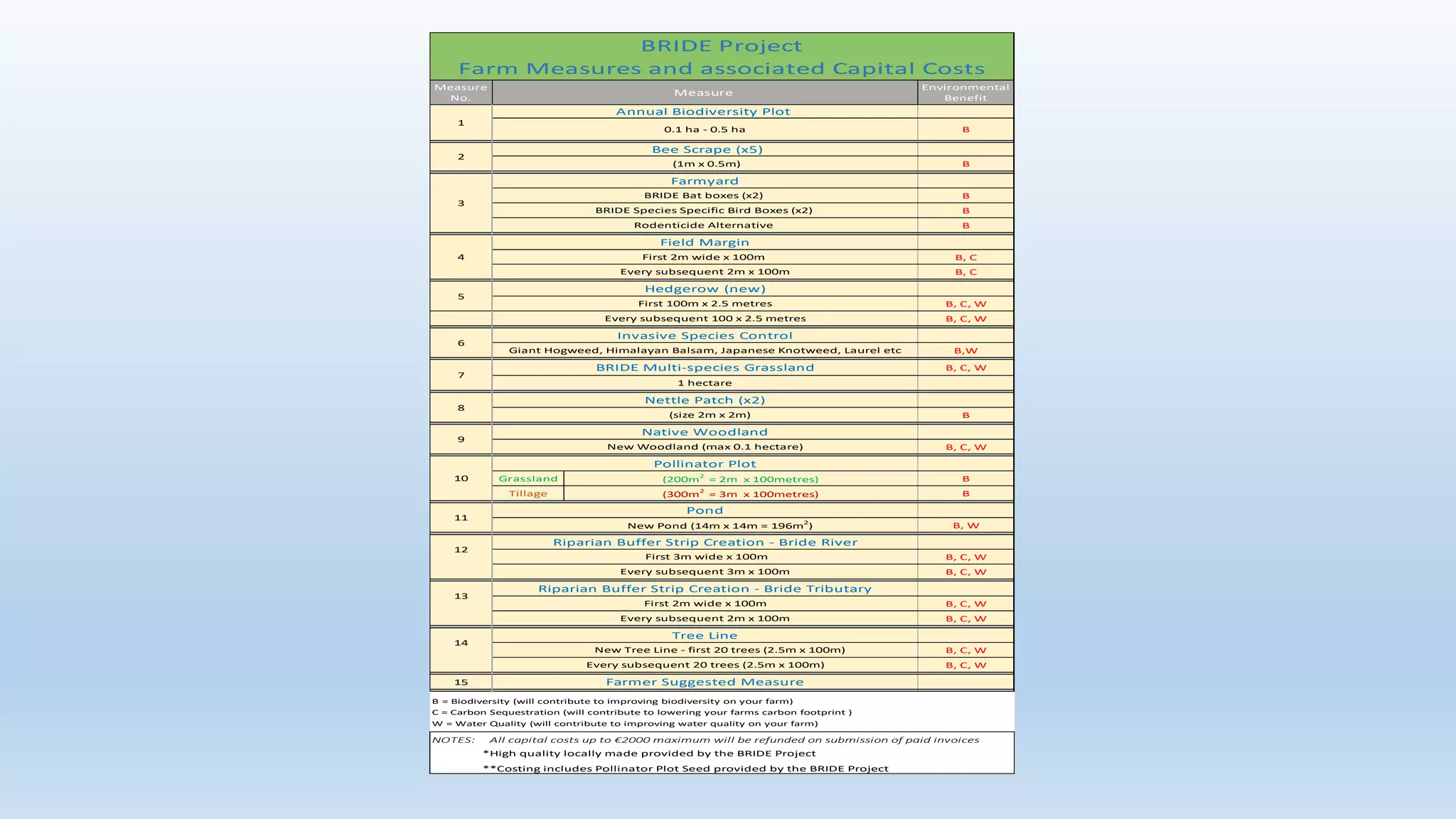
Measure
No.
Environmental
Benefit
B
B
B
B
B
B, C
B, C
B, C, W
B, C, W
B,W
B, C, W
B
B, C, W
Grassland (200m
2
= 2m x 100metres) B
Tillage (300m2
= 3m x 100metres) B
B, W
B, C, W
B, C, W
B, C, W
B, C, W
B, C, W
B, C, W
15
B = Biodiversity (will contribute to improving biodiversity on your farm)
C = Carbon Sequestration (will contribute to lowering your farms carbon footprint )
W = Water Quality (will contribute to improving water quality on your farm)
*High quality locally made provided by the BRIDE Project
**Costing includes Pollinator Plot Seed provided by the BRIDE Project
NOTES: All capital costs up to €2000 maximum will be refunded on submission of paid invoices
Every subsequent 2m x 100m
14
Tree Line
New Tree Line - first 20 trees (2.5m x 100m)
Every subsequent 20 trees (2.5m x 100m)
Farmer Suggested Measure
12
Riparian Buffer Strip Creation - Bride River
First 3m wide x 100m
Every subsequent 3m x 100m
13
Riparian Buffer Strip Creation - Bride Tributary
First 2m wide x 100m
10
Pollinator Plot
11
Pond
New Pond (14m x 14m = 196m
2
)
8
Nettle Patch (x2)
(size 2m x 2m)
9
Native Woodland
New Woodland (max 0.1 hectare)
Every subsequent 100 x 2.5 metres
6
Invasive Species Control
Giant Hogweed, Himalayan Balsam, Japanese Knotweed, Laurel etc
7
BRIDE Multi-species Grassland
1 hectare
4
Field Margin
First 2m wide x 100m
Every subsequent 2m x 100m
5
Hedgerow (new)
First 100m x 2.5 metres
(1m x 0.5m)
3
Farmyard
BRIDE Bat boxes (x2)
BRIDE Species Specific Bird Boxes (x2)
Rodenticide Alternative
2
Bee Scrape (x5)
BRIDE Project
Farm Measures and associated Capital Costs
Measure
1
Annual Biodiversity Plot
0.1 ha - 0.5 ha
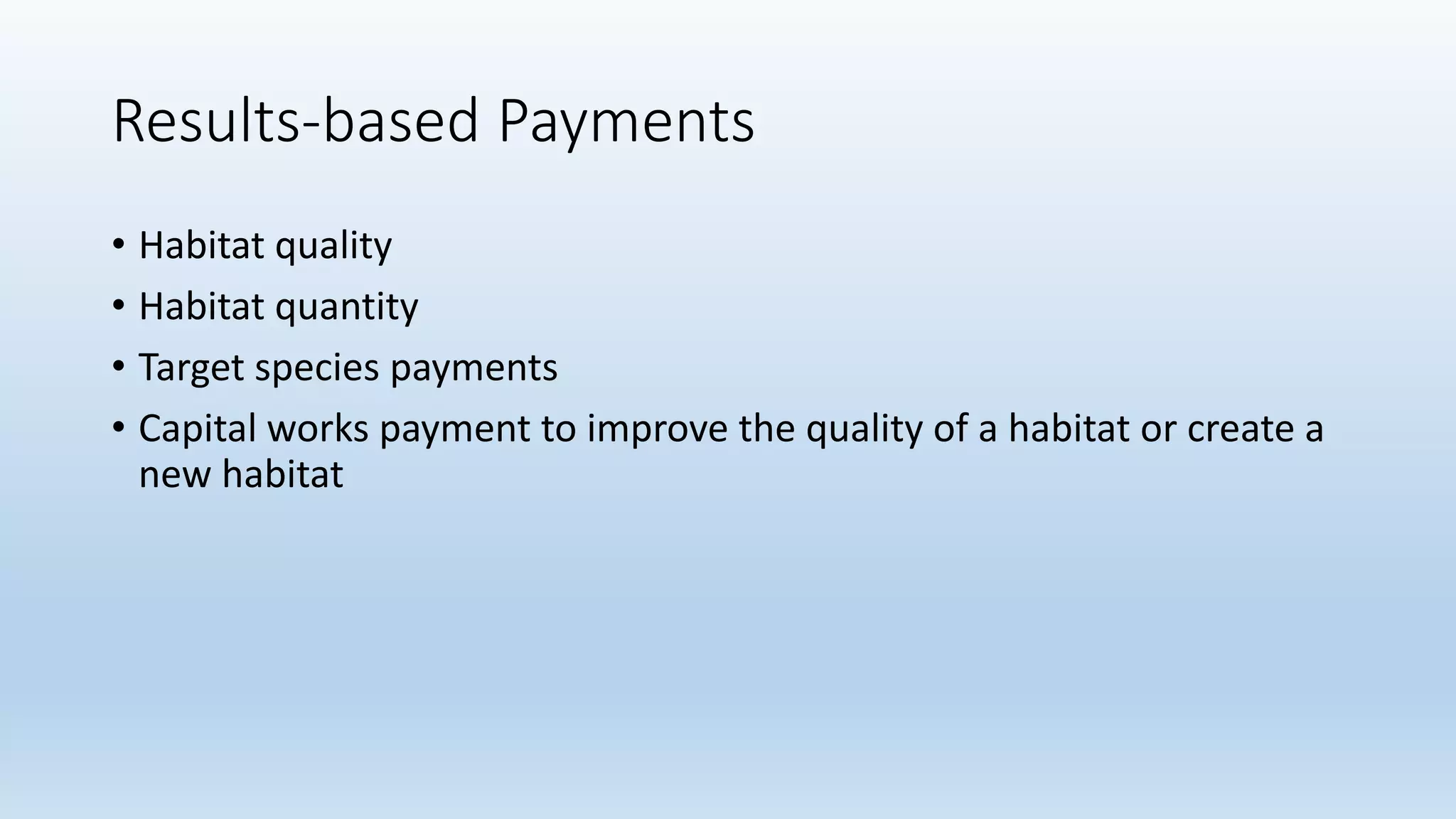
Results-based Payments
• Habitat quality
• Habitat quantity
• Target species payments
• Capital works payment to improve the quality of a habitat or create a
new habitat
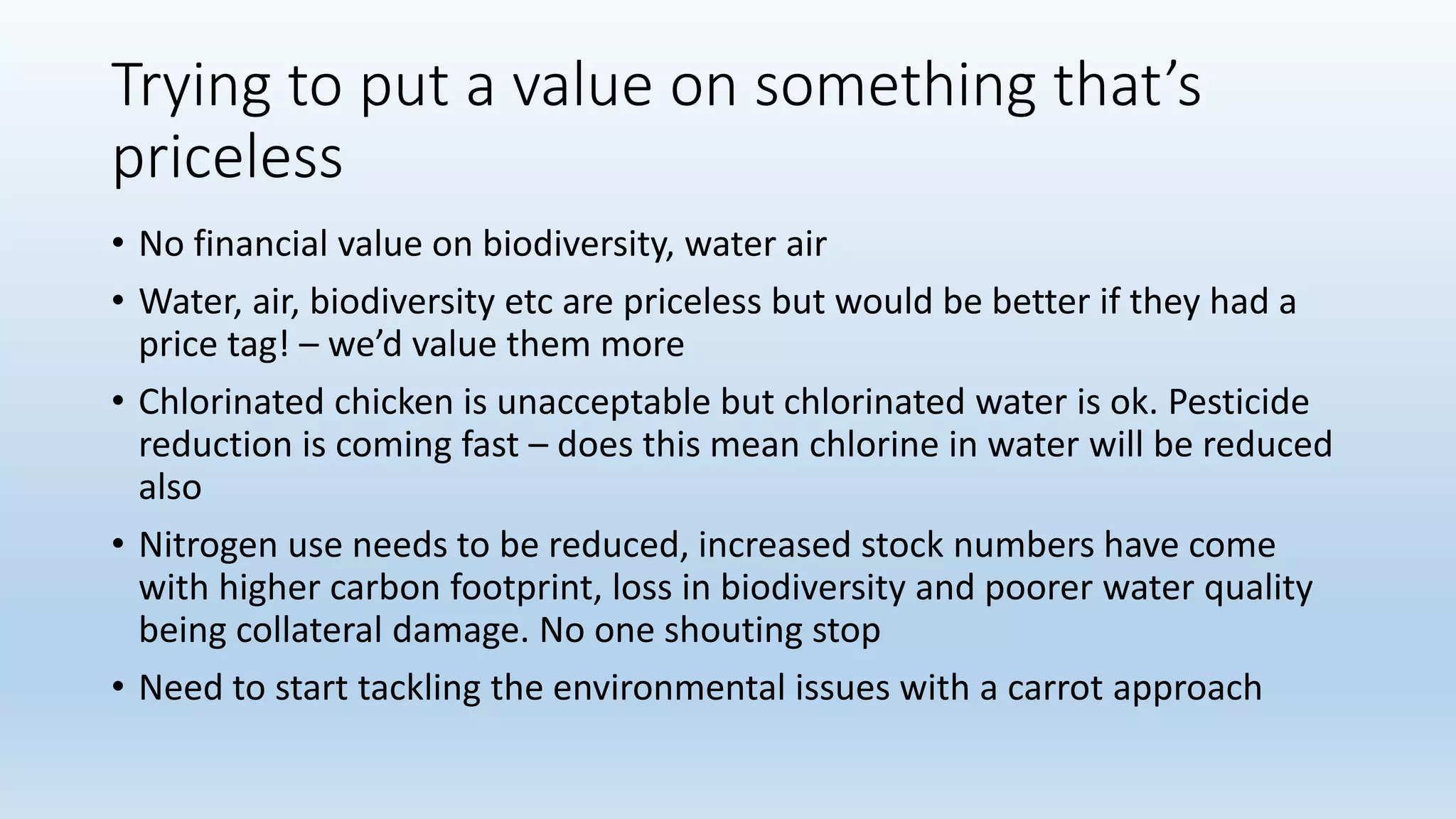
Trying to put a value on something that’s
priceless
• No financial value on biodiversity, water air
• Water, air, biodiversity etc are priceless but would be better if they had a
price tag! – we’d value them more
• Chlorinated chicken is unacceptable but chlorinated water is ok. Pesticide
reduction is coming fast – does this mean chlorine in water will be reduced
also
• Nitrogen use needs to be reduced, increased stock numbers have come
with higher carbon footprint, loss in biodiversity and poorer water quality
being collateral damage. No one shouting stop
• Need to start tackling the environmental issues with a carrot approach
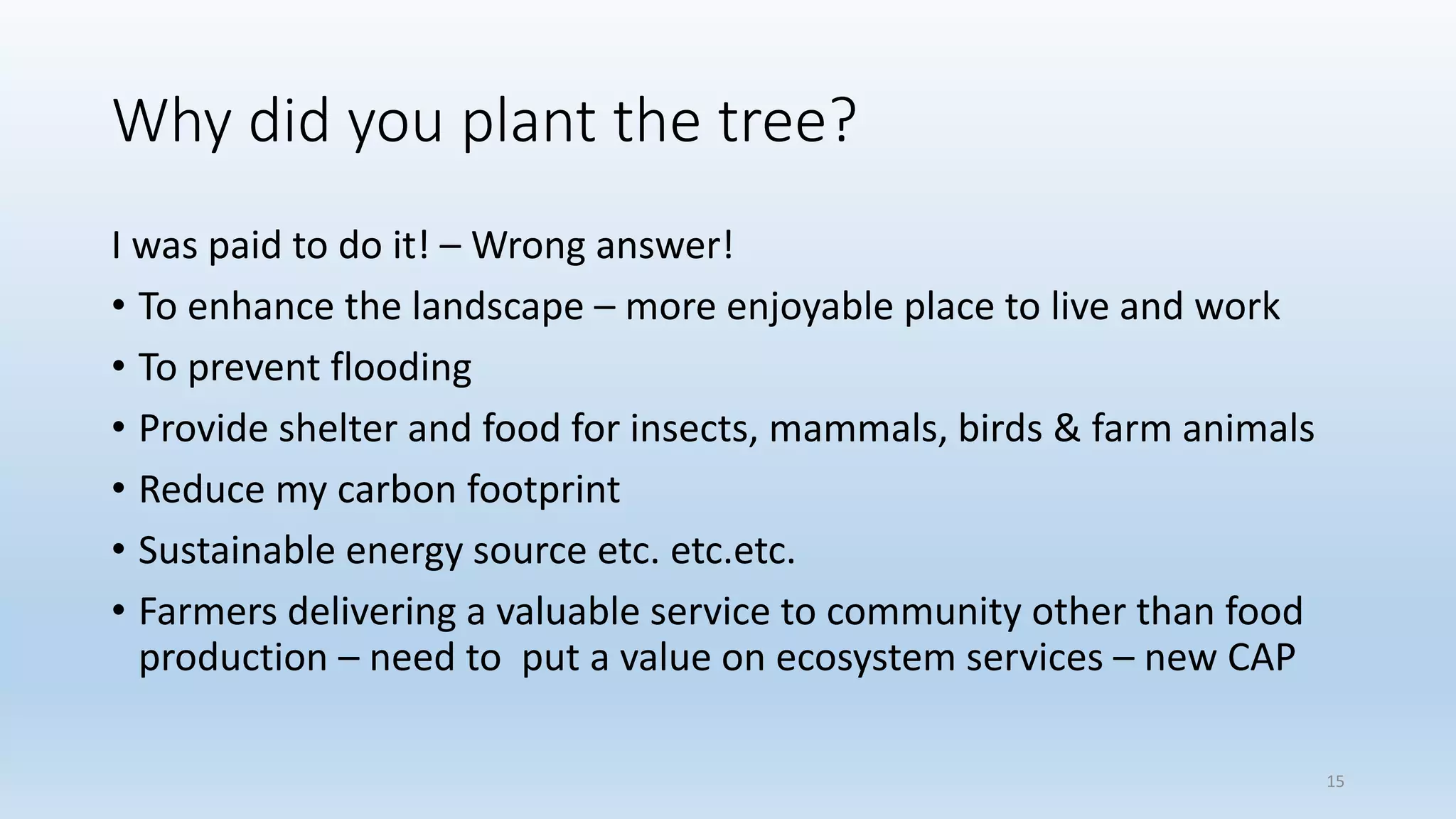
Why did you plant the tree?
I was paid to do it! – Wrong answer!
• To enhance the landscape – more enjoyable place to live and work
• To prevent flooding
• Provide shelter and food for insects, mammals, birds & farm animals
• Reduce my carbon footprint
• Sustainable energy source etc. etc.etc.
• Farmers delivering a valuable service to community other than food
production – need to put a value on ecosystem services – new CAP
15
Thank you for staying awake!
• Sinead Hickey – Project Administrator
• Tony Nagle – Project Ecologist
• Working Group
• BRIDE Farmers

13. The BRIDE project: working for multiple benefits - Donal Sheehan, BRIDE Project

  • 1.
    The BRIDE Project Opportunitiesfor multiple benefits
  • 4.
    Project Objectives 1. Improvefarmland biodiversity 2. Reward farmers for improvements 3. Raise awareness of environmental problems and their solutions on farms 4. Create a template for a Results-based Payment scheme for biodiversity on intensive farmland 5. Facilitate the creation of a market-based demand by the agri-food industry for supply of ecosystem services from farmers
  • 7.
    Challenges of theProject • Pre-application – difficulty in being taken seriously • Bringing farmers on board – bottom up approach but also requires top- down, peer learning, the language of farmers! • Dept. funding and support - vital • Operational Group and Working Group • Importance of local element – school - “Pride in the BRIDE” • Simple goals to achieve for farmers – retain existing habitats. • Awareness and changing mindsets – most difficult aspect • The farmer must know the goal we are trying to achieve. Involvement of the farmer is vital. 7
  • 9.
  • 10.
    Measure No. Environmental Benefit B B B B B B, C B, C B,C, W B, C, W B,W B, C, W B B, C, W Grassland (200m 2 = 2m x 100metres) B Tillage (300m2 = 3m x 100metres) B B, W B, C, W B, C, W B, C, W B, C, W B, C, W B, C, W 15 B = Biodiversity (will contribute to improving biodiversity on your farm) C = Carbon Sequestration (will contribute to lowering your farms carbon footprint ) W = Water Quality (will contribute to improving water quality on your farm) *High quality locally made provided by the BRIDE Project **Costing includes Pollinator Plot Seed provided by the BRIDE Project NOTES: All capital costs up to €2000 maximum will be refunded on submission of paid invoices Every subsequent 2m x 100m 14 Tree Line New Tree Line - first 20 trees (2.5m x 100m) Every subsequent 20 trees (2.5m x 100m) Farmer Suggested Measure 12 Riparian Buffer Strip Creation - Bride River First 3m wide x 100m Every subsequent 3m x 100m 13 Riparian Buffer Strip Creation - Bride Tributary First 2m wide x 100m 10 Pollinator Plot 11 Pond New Pond (14m x 14m = 196m 2 ) 8 Nettle Patch (x2) (size 2m x 2m) 9 Native Woodland New Woodland (max 0.1 hectare) Every subsequent 100 x 2.5 metres 6 Invasive Species Control Giant Hogweed, Himalayan Balsam, Japanese Knotweed, Laurel etc 7 BRIDE Multi-species Grassland 1 hectare 4 Field Margin First 2m wide x 100m Every subsequent 2m x 100m 5 Hedgerow (new) First 100m x 2.5 metres (1m x 0.5m) 3 Farmyard BRIDE Bat boxes (x2) BRIDE Species Specific Bird Boxes (x2) Rodenticide Alternative 2 Bee Scrape (x5) BRIDE Project Farm Measures and associated Capital Costs Measure 1 Annual Biodiversity Plot 0.1 ha - 0.5 ha
  • 12.
    Results-based Payments • Habitatquality • Habitat quantity • Target species payments • Capital works payment to improve the quality of a habitat or create a new habitat
  • 14.
    Trying to puta value on something that’s priceless • No financial value on biodiversity, water air • Water, air, biodiversity etc are priceless but would be better if they had a price tag! – we’d value them more • Chlorinated chicken is unacceptable but chlorinated water is ok. Pesticide reduction is coming fast – does this mean chlorine in water will be reduced also • Nitrogen use needs to be reduced, increased stock numbers have come with higher carbon footprint, loss in biodiversity and poorer water quality being collateral damage. No one shouting stop • Need to start tackling the environmental issues with a carrot approach
  • 15.
    Why did youplant the tree? I was paid to do it! – Wrong answer! • To enhance the landscape – more enjoyable place to live and work • To prevent flooding • Provide shelter and food for insects, mammals, birds & farm animals • Reduce my carbon footprint • Sustainable energy source etc. etc.etc. • Farmers delivering a valuable service to community other than food production – need to put a value on ecosystem services – new CAP 15
  • 16.
    Thank you forstaying awake! • Sinead Hickey – Project Administrator • Tony Nagle – Project Ecologist • Working Group • BRIDE Farmers