CREATIVITY & INNOVATION
Creativity & Innovation

 Creativity
   The ability to generate & combine ideas in a
    unique way or to make an unusual association.
 Innovation
   Turning the outcomes of the creative process into
    useful products, services, or work methods.
 “Innovative” is an “external” word. It can be
  measured. It generally talks about things that
  have been tested properly and found to have
  worked in the real world.
 “Creative”, however, is more of an “internal”
  word. It’s subjective, it’s murkier. It’s far
  harder to measure, it’s far harder to define.
  It’s an inward journey, not outward.
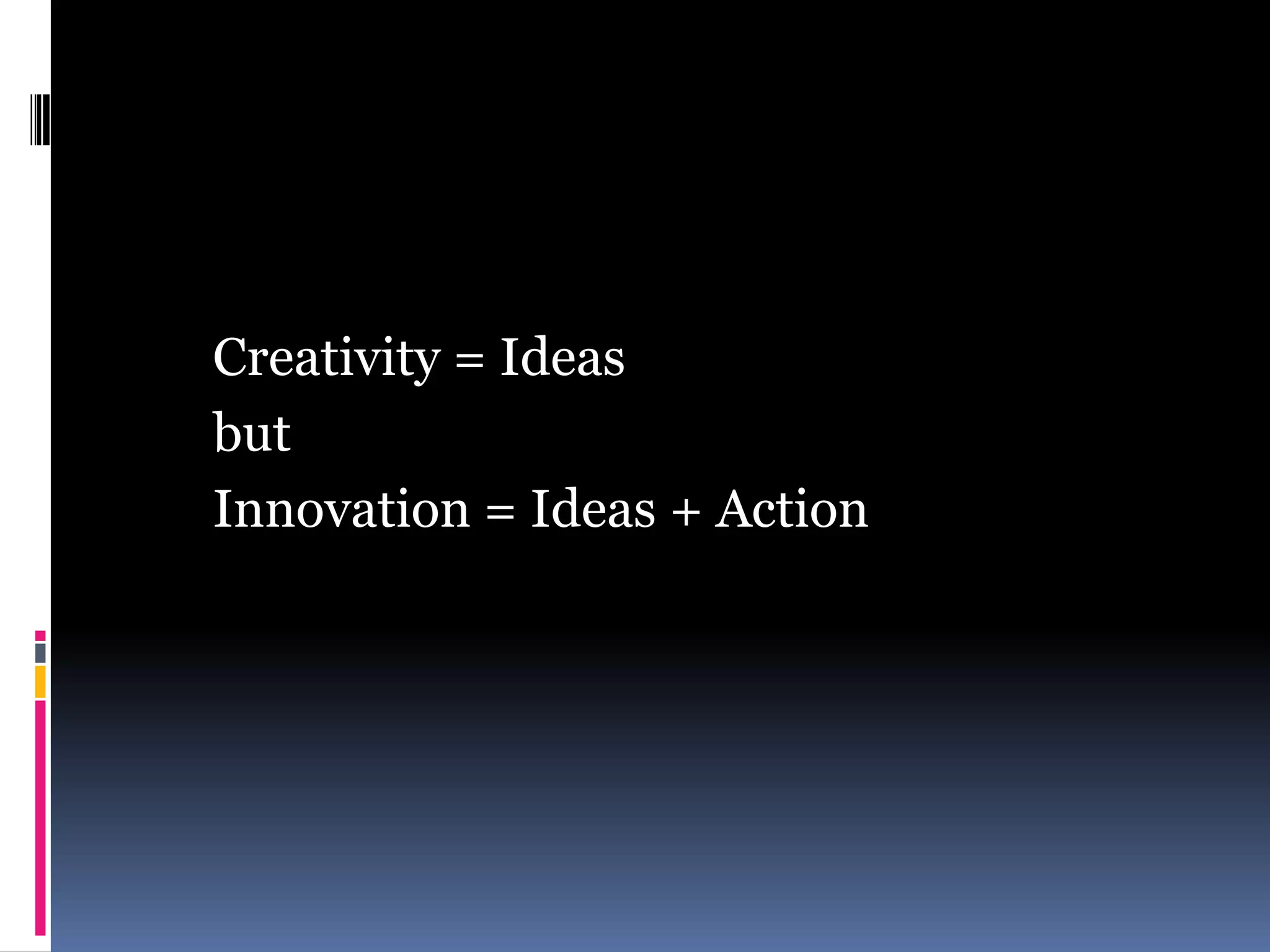
Creativity = Ideas
but
Innovation = Ideas + Action
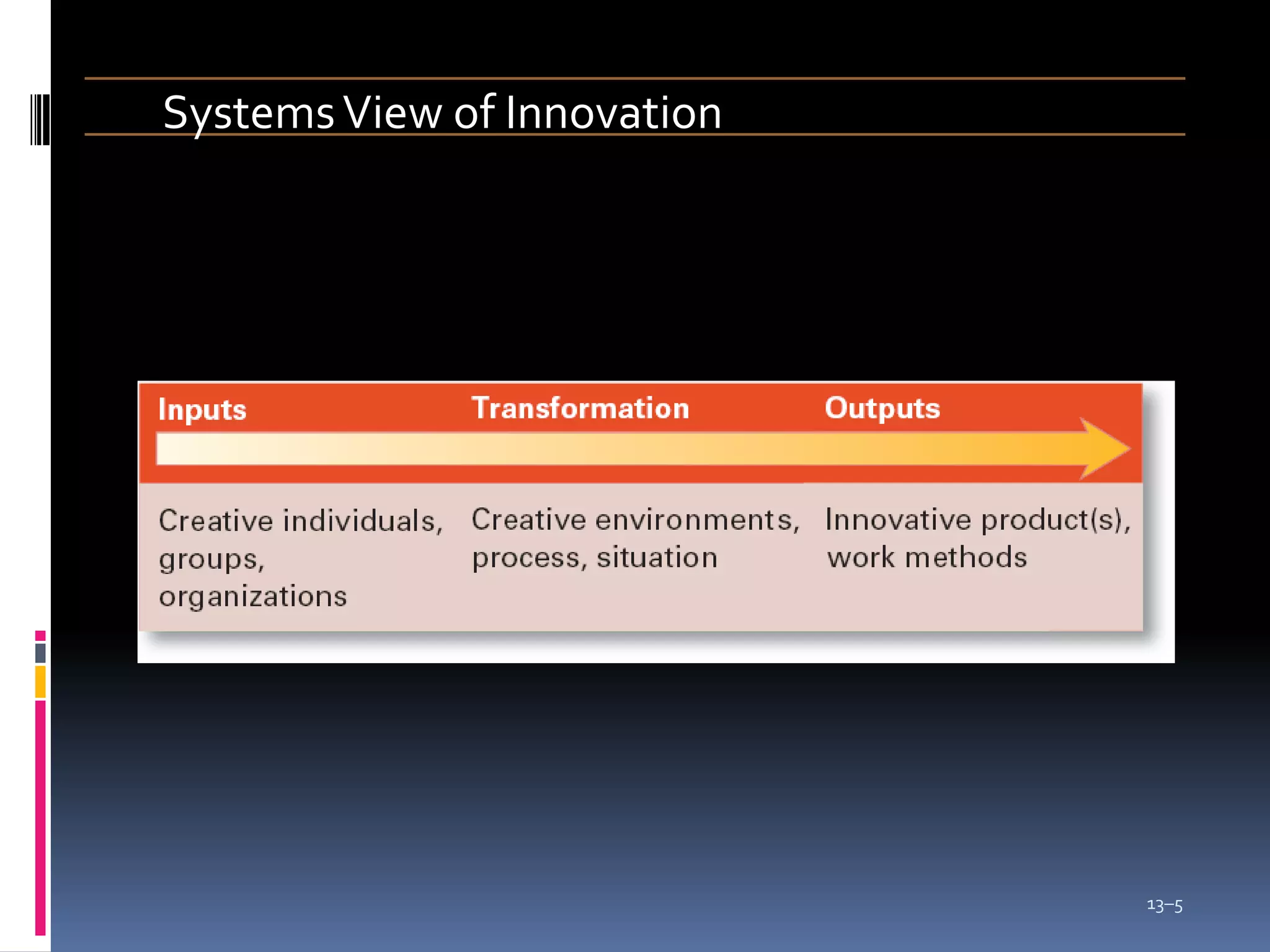
Systems View of Innovation


                             13–5
NEED FOR INNOVATION
 Organisations face challenges to meet the growing demands of
     the consumers and hence Innovation helps to meet those
     demands.


 Innovation helps to cope with:
1.    Uncertainty
2.    Ambiguity
3.    Diversity
4. Complexity
 It is regarded as strategic resource for sustainable competitive
     advantage
Innovation Vs Invention
 A new product or process originally made is
  termed as Invention,

Whereas,

 Conversion of new knowledge into new or
  modified products, process and services is
  known as Innovation
 E.g. MP3 and i-pod
Creating the “Right”
Environment for Innovation
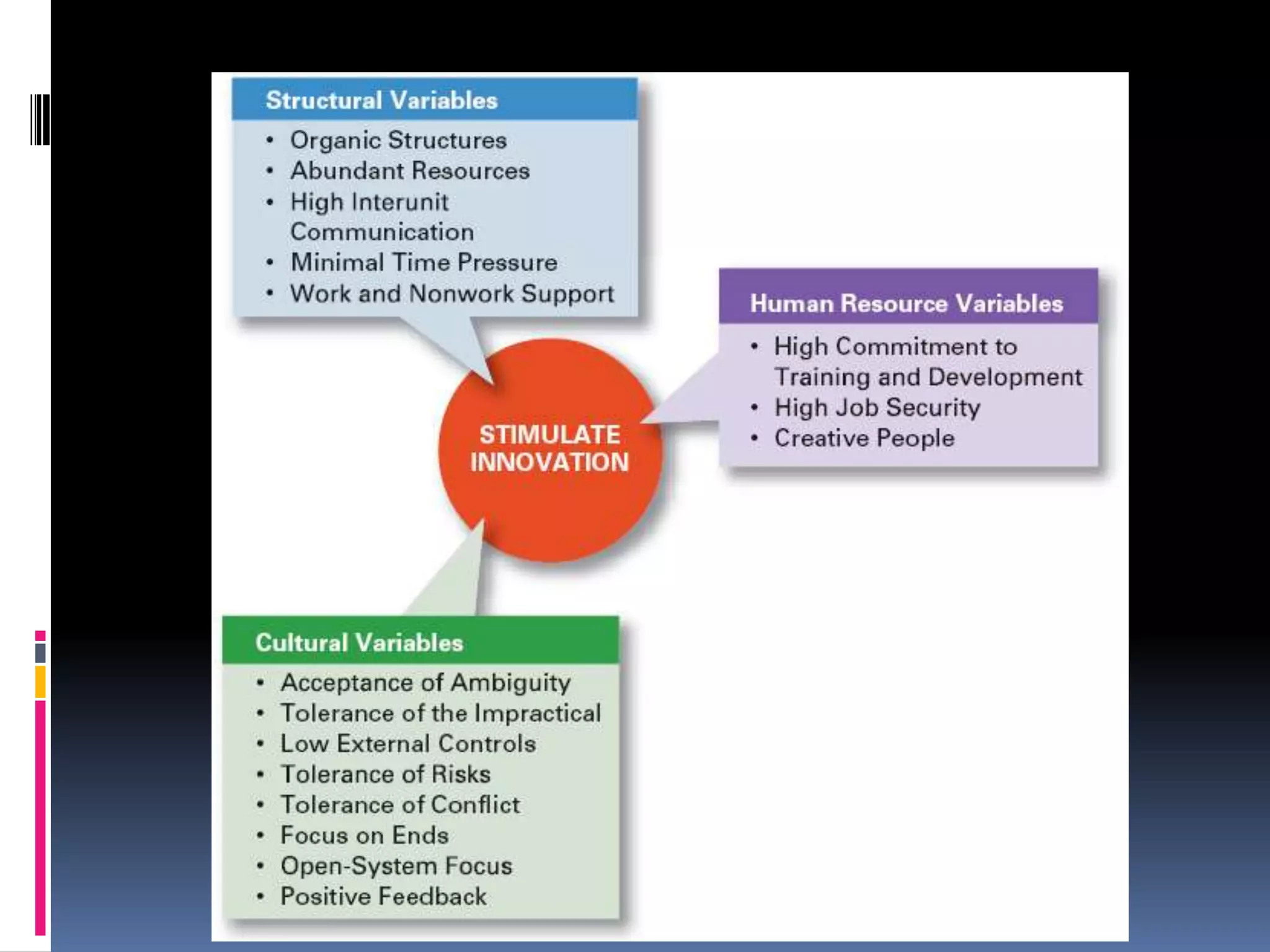
 Structural Variables
   Adopt an organic structure
   Make available plentiful resources
   Engage in frequent interunit communication
   Minimize extreme time pressures on creative
    activities
   Provide explicit support for creativity
 Cultural Variables
   Accept ambiguity
   Tolerate the impractical
   Have low external controls
   Tolerate risk taking
   Tolerate conflict
   Develop an open-system focus
   Provide positive feedback
 Human Resource Variables
   Actively promote training and development to
    keep employees’ skills current.
   Offer high job security to encourage risk taking.
   Encourage individual to be “champions” of
    change.
TYPES OF INNOVATION

 Product and Process Innovation
 Radical and Incremental Innovation
 Technical and Social Innovation
Creativity & innovation 2

Creativity & innovation 2

  • 1.
  • 2.
    Creativity & Innovation Creativity  The ability to generate & combine ideas in a unique way or to make an unusual association.  Innovation  Turning the outcomes of the creative process into useful products, services, or work methods.
  • 3.
     “Innovative” isan “external” word. It can be measured. It generally talks about things that have been tested properly and found to have worked in the real world.  “Creative”, however, is more of an “internal” word. It’s subjective, it’s murkier. It’s far harder to measure, it’s far harder to define. It’s an inward journey, not outward.
  • 4.
  • 5.
    Systems View ofInnovation 13–5
  • 6.
    NEED FOR INNOVATION Organisations face challenges to meet the growing demands of the consumers and hence Innovation helps to meet those demands.  Innovation helps to cope with: 1. Uncertainty 2. Ambiguity 3. Diversity 4. Complexity  It is regarded as strategic resource for sustainable competitive advantage
  • 7.
    Innovation Vs Invention A new product or process originally made is termed as Invention, Whereas,  Conversion of new knowledge into new or modified products, process and services is known as Innovation  E.g. MP3 and i-pod
  • 9.
    Creating the “Right” Environmentfor Innovation  Structural Variables  Adopt an organic structure  Make available plentiful resources  Engage in frequent interunit communication  Minimize extreme time pressures on creative activities  Provide explicit support for creativity
  • 10.
     Cultural Variables  Accept ambiguity  Tolerate the impractical  Have low external controls  Tolerate risk taking  Tolerate conflict  Develop an open-system focus  Provide positive feedback
  • 11.
     Human ResourceVariables  Actively promote training and development to keep employees’ skills current.  Offer high job security to encourage risk taking.  Encourage individual to be “champions” of change.
  • 12.
    TYPES OF INNOVATION Product and Process Innovation  Radical and Incremental Innovation  Technical and Social Innovation