Some assembly required
Innovation for complex challenges
Joeri van den Steenhoven
Director, MaRS Solutions Lab
@joerivds solutions-lab.marsdd.com#CKX
The basic economic resource – the means of production, to use economist’s term – is no longer
capital, nor land, nor labor. It is and will be knowledge.
Value is now created by productivity and innovation, both applications of knowledge to work.
!
Peter Drucker (1993)
Good news | Bad news
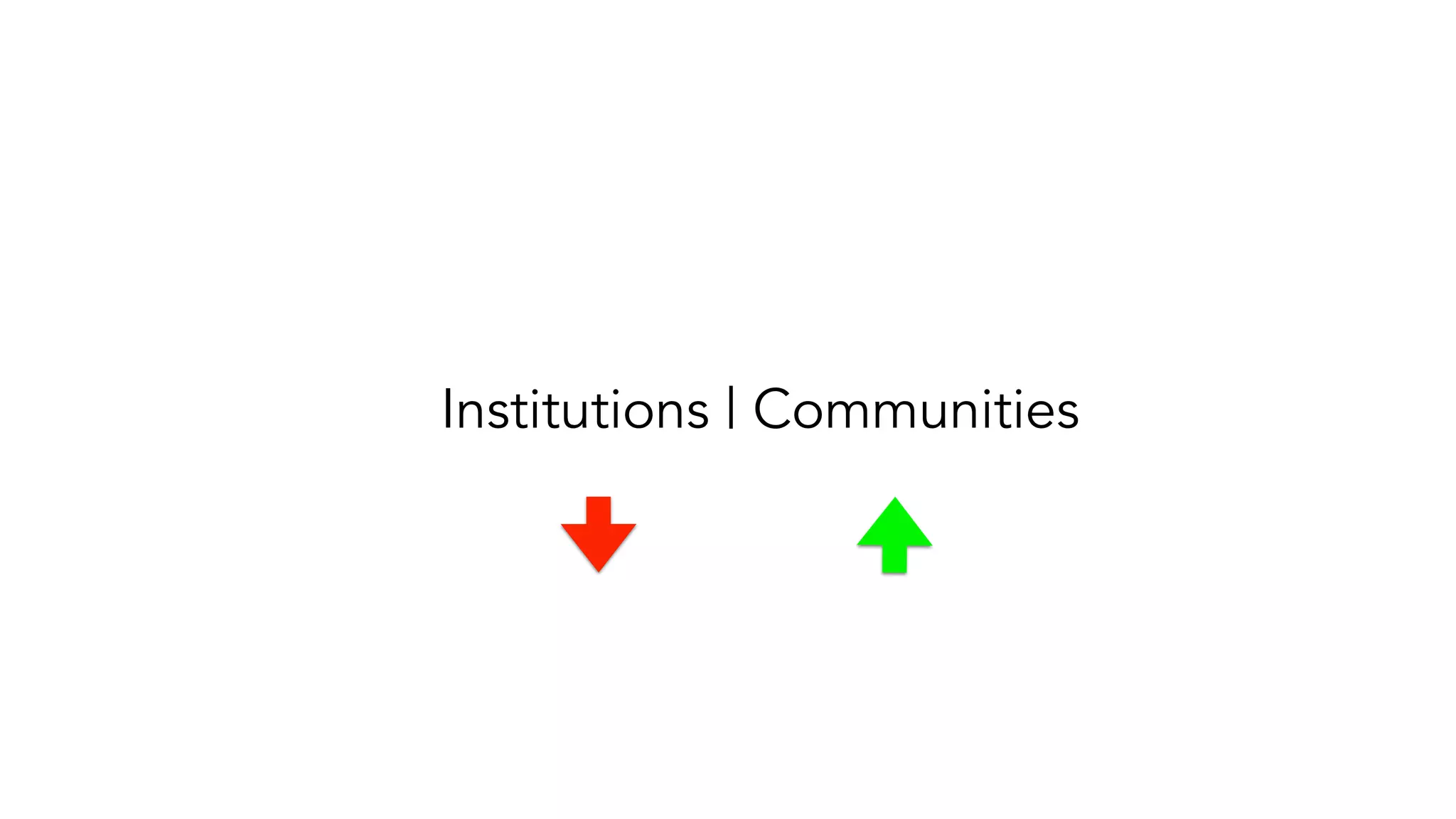
Institutions | Communities
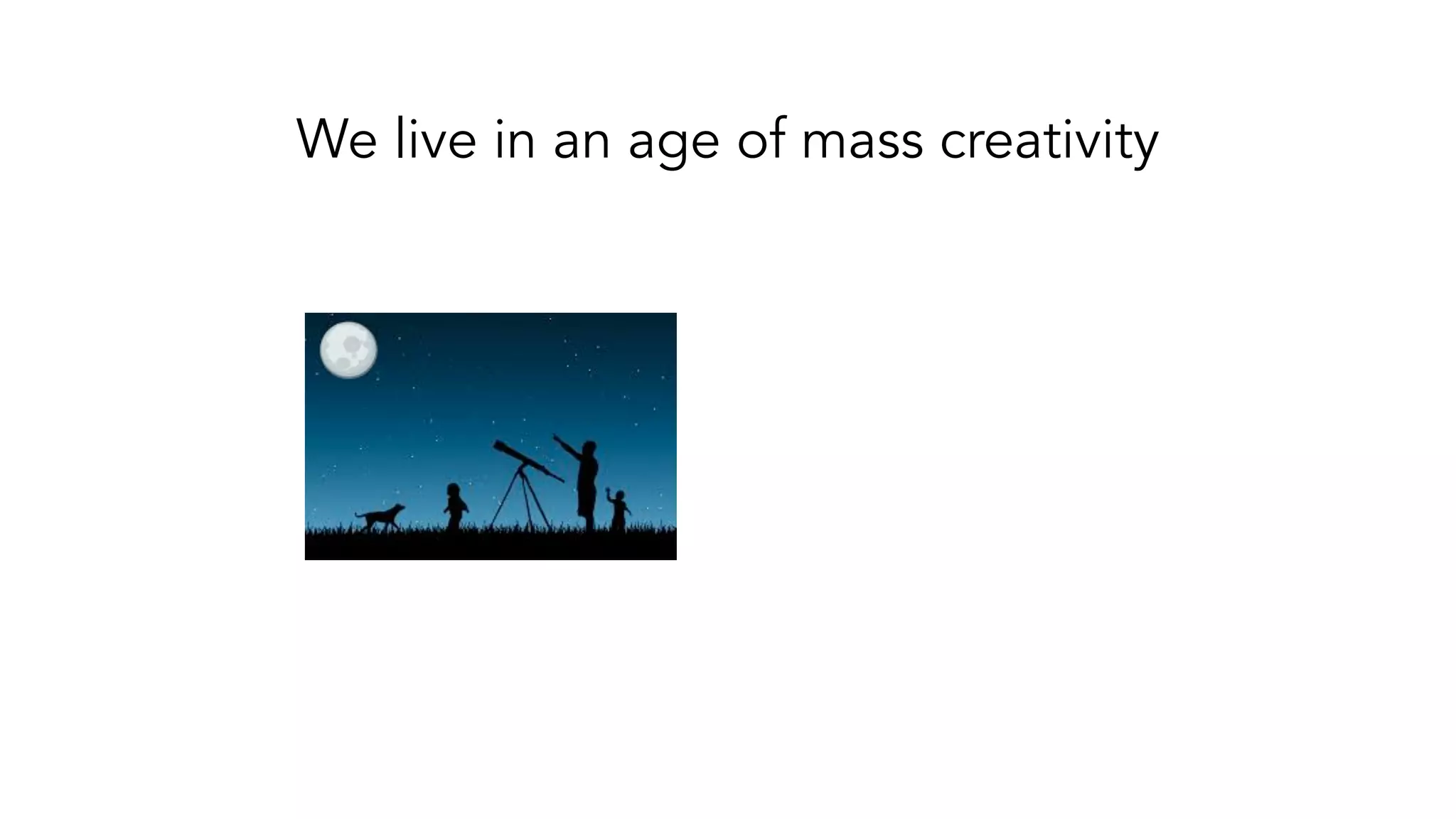
We live in an age of mass creativity
Fire fighters
in the US
Police Officers
in the Netherlands
Food Banks
in Canada
Families in need
in Australia
The power of the community
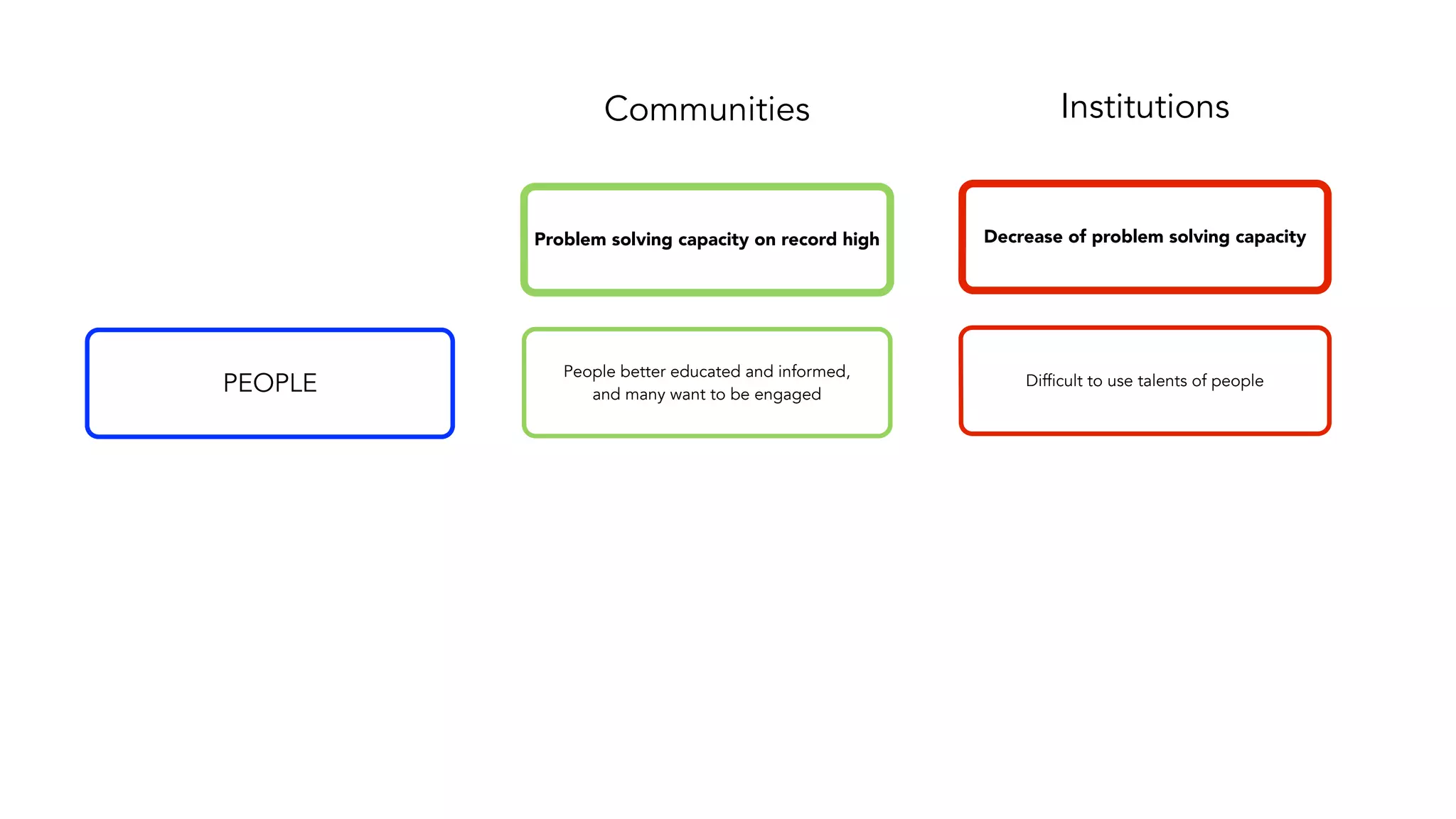
InstitutionsCommunities
Difficult to use talents of people
Decrease of problem solving capacity
People better educated and informed,
and many want to be engaged
Problem solving capacity on record high
PEOPLE
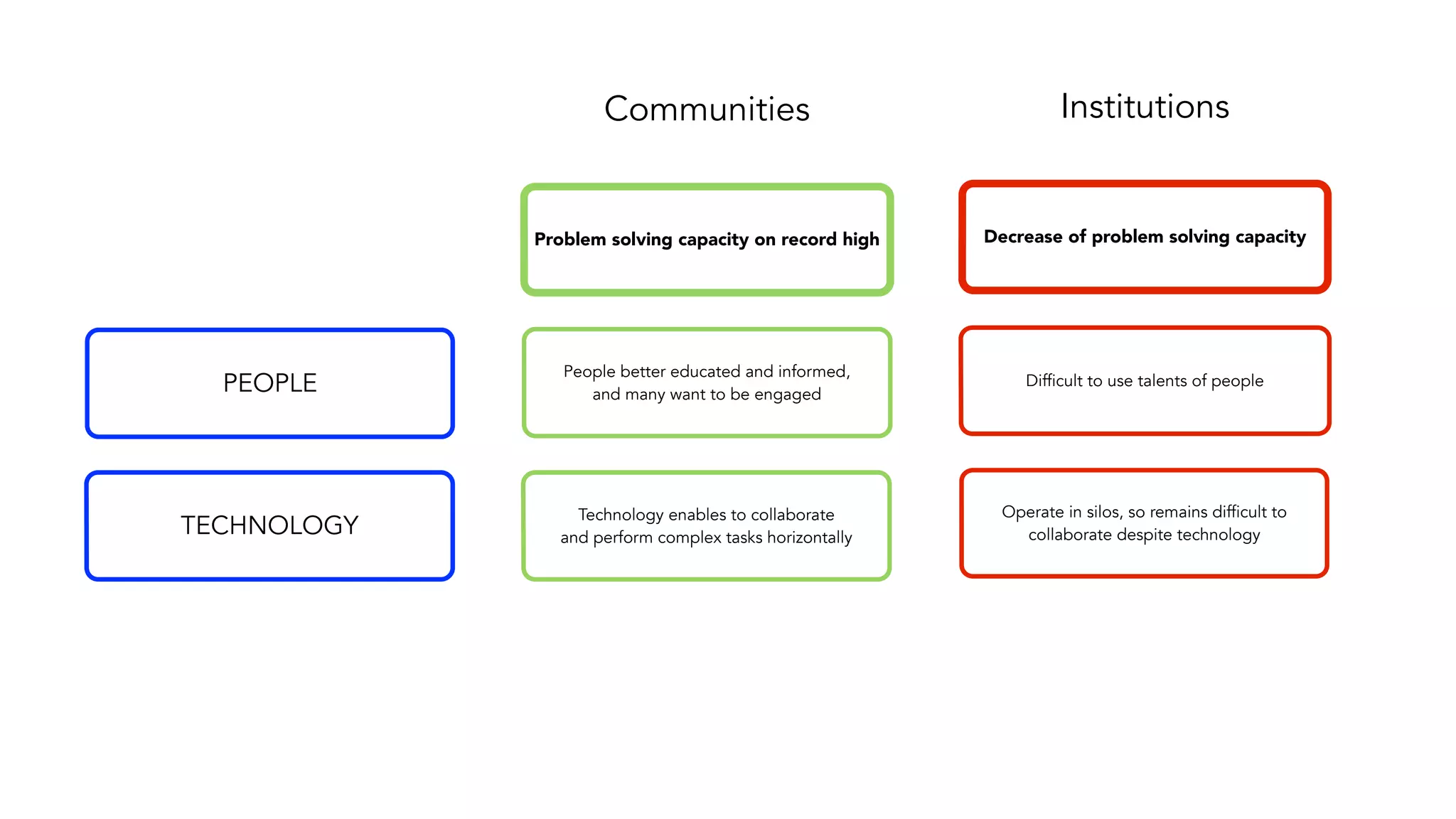
InstitutionsCommunities
Difficult to use talents of people
Operate in silos, so remains difficult to
collaborate despite technology
Decrease of problem solving capacity
People better educated and informed,
and many want to be engaged
Technology enables to collaborate
and perform complex tasks horizontally
Problem solving capacity on record high
PEOPLE
TECHNOLOGY
InstitutionsCommunities
Difficult to use talents of people
Fewer public resources, often restricted to
certain kind of funding
Difficult to collaborate, operate in silos
Decrease of problem solving capacity
People better educated and informed,
and many want to be engaged
More private capital for social good, and
investing it for impact
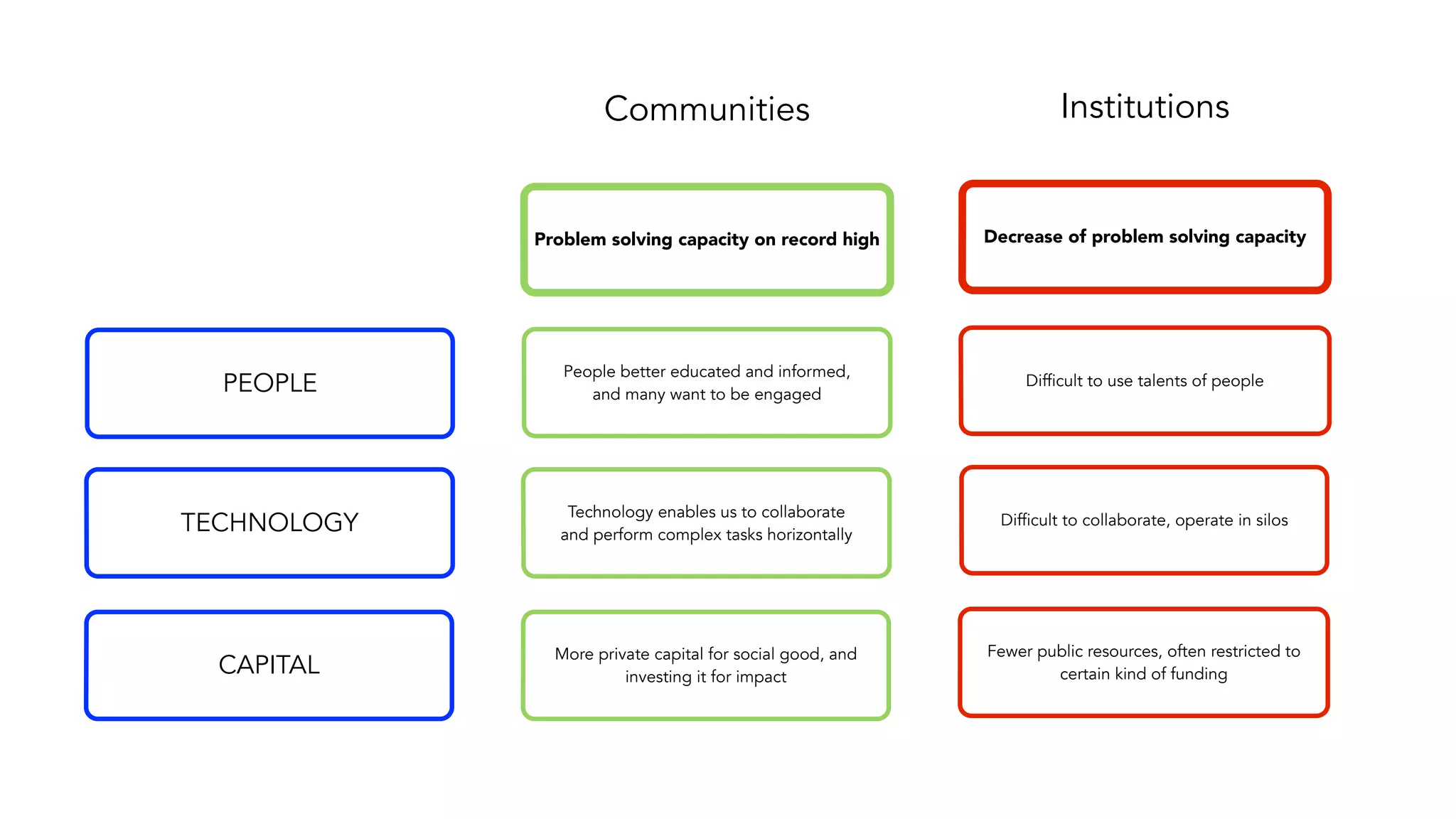
Technology enables us to collaborate
and perform complex tasks horizontally
Problem solving capacity on record high
PEOPLE
CAPITAL
TECHNOLOGY
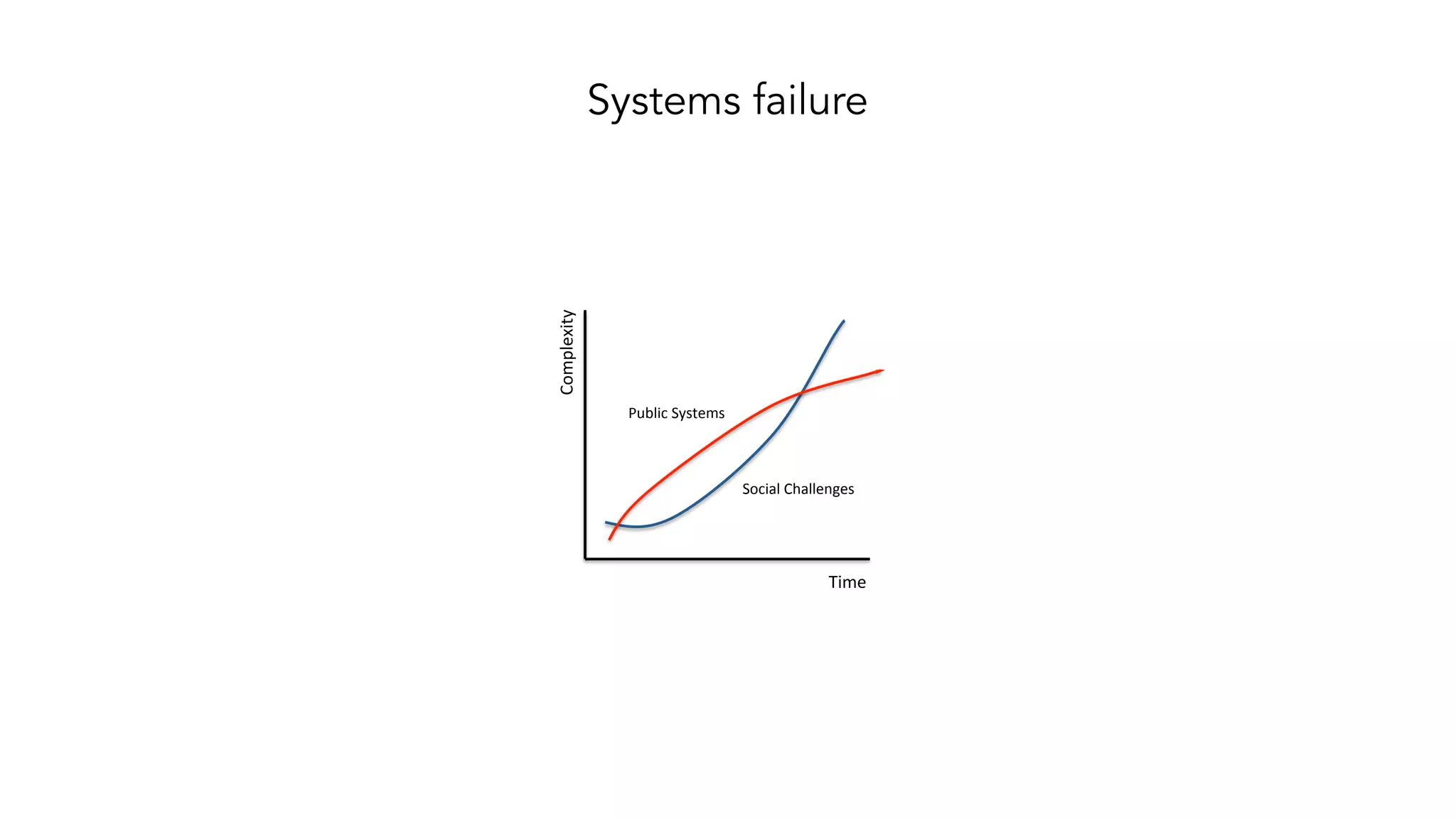
But now the bad news…..
Time%
Complexity%
Public%Systems%
Social%Challenges%
Systems failure
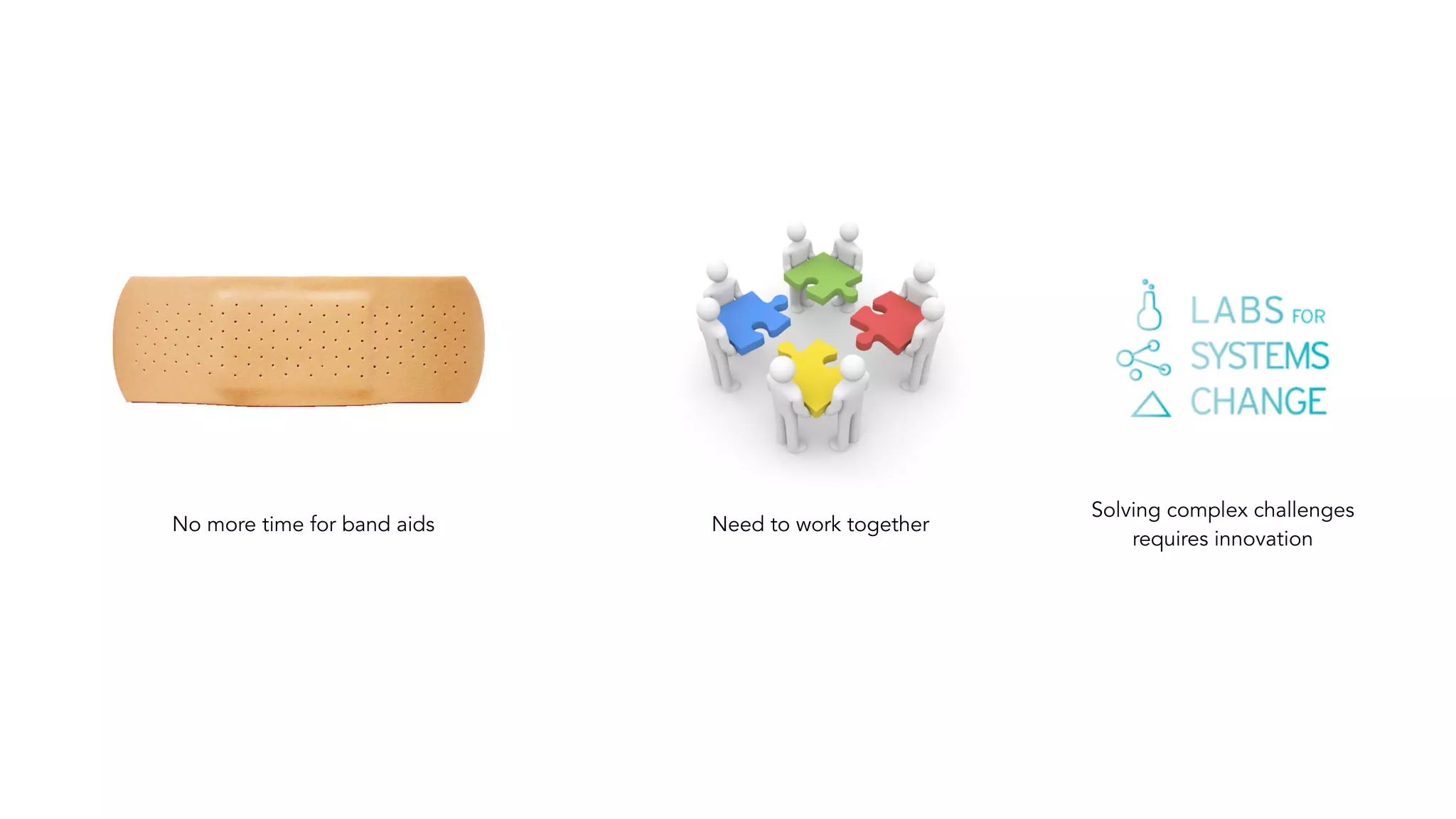
No more time for band aids Need to work together
Solving complex challenges
requires innovation
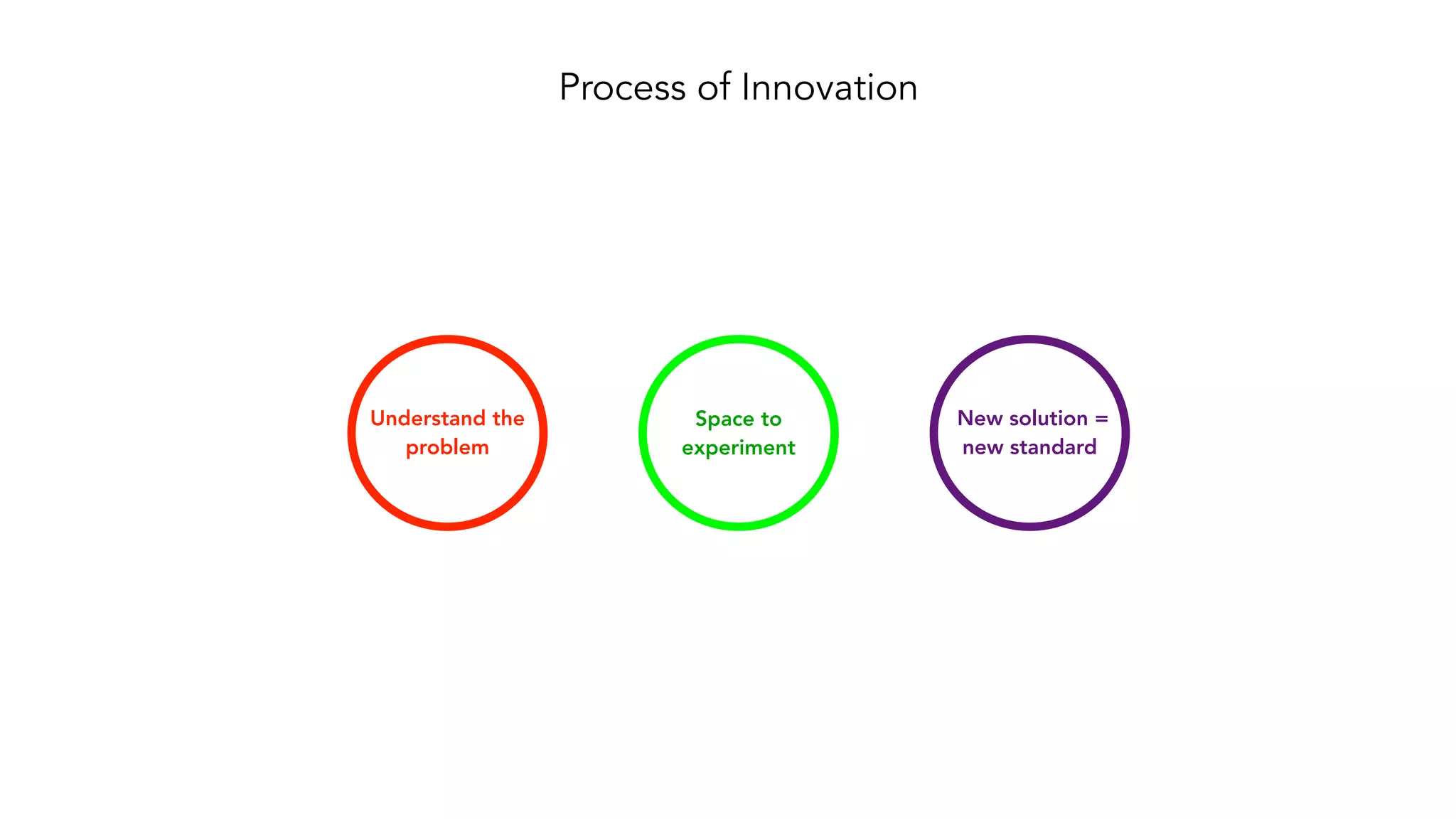
Understand the
problem
Space to
experiment
New solution =
new standard
Process of Innovation
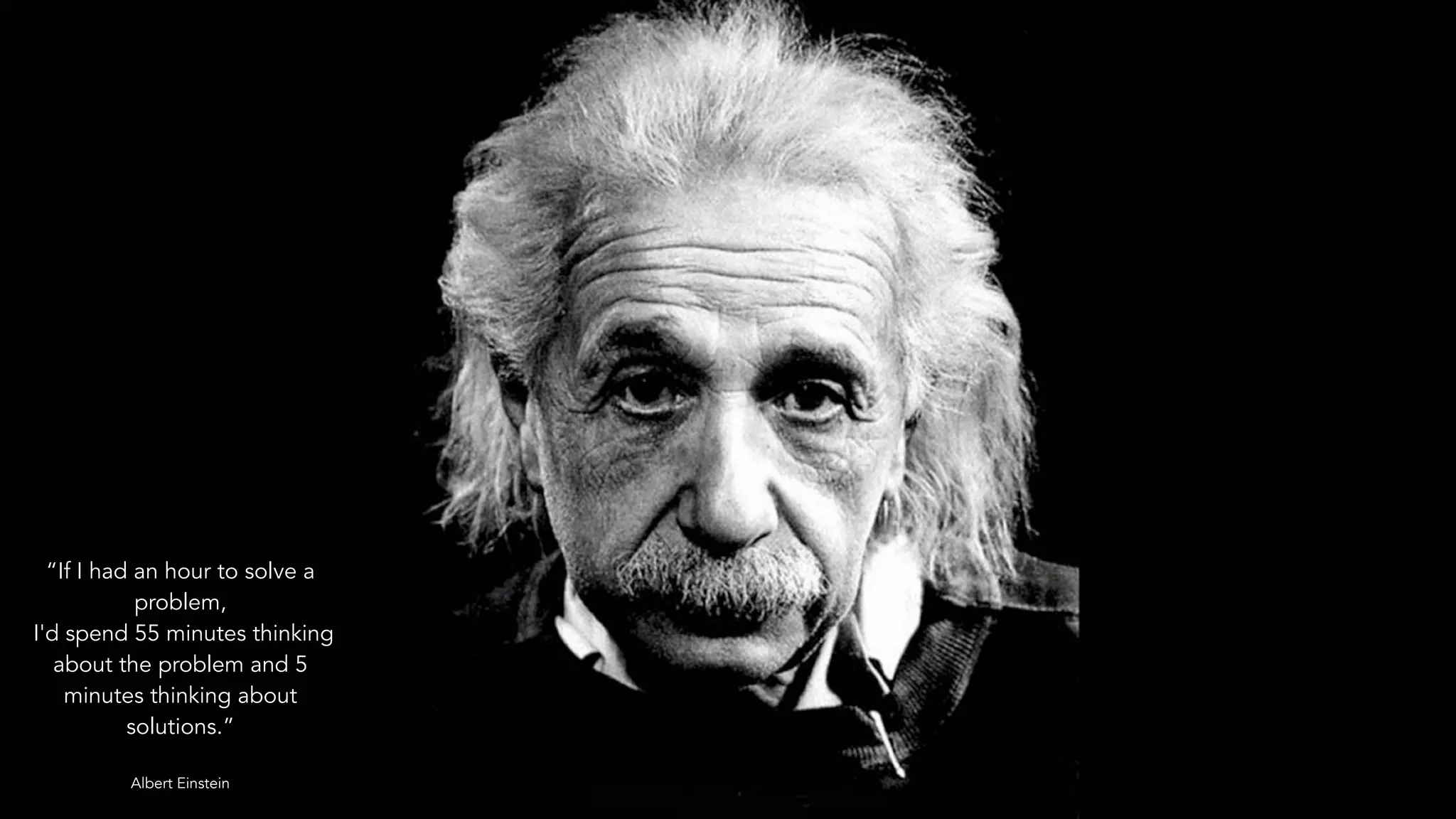
Albert Einstein
“If I had an hour to solve a
problem,
I'd spend 55 minutes thinking
about the problem and 5
minutes thinking about
solutions.”
!
Albert Einstein
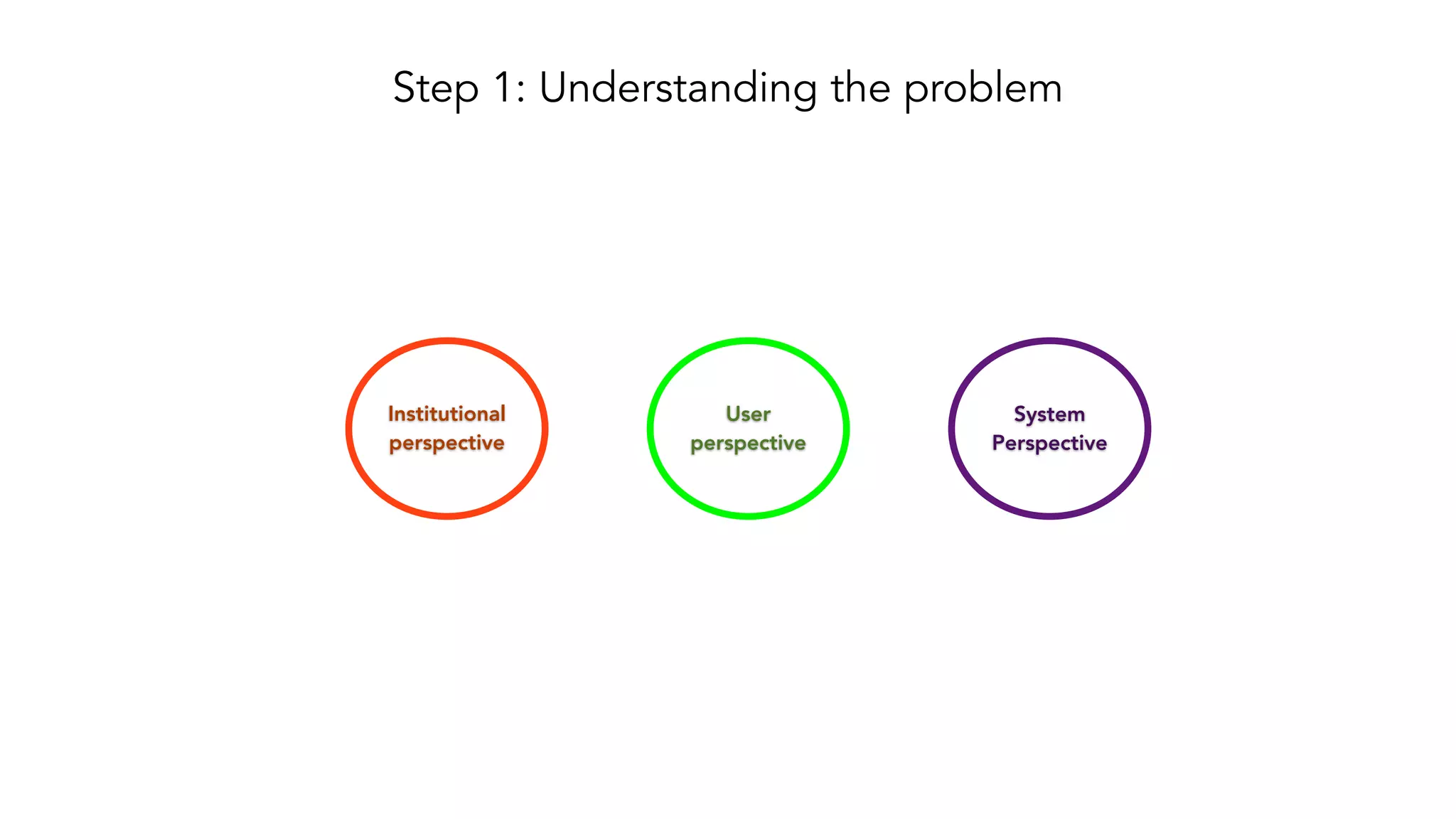
Step 1: Understanding the problem
User
perspective
System
Perspective
Institutional
perspective
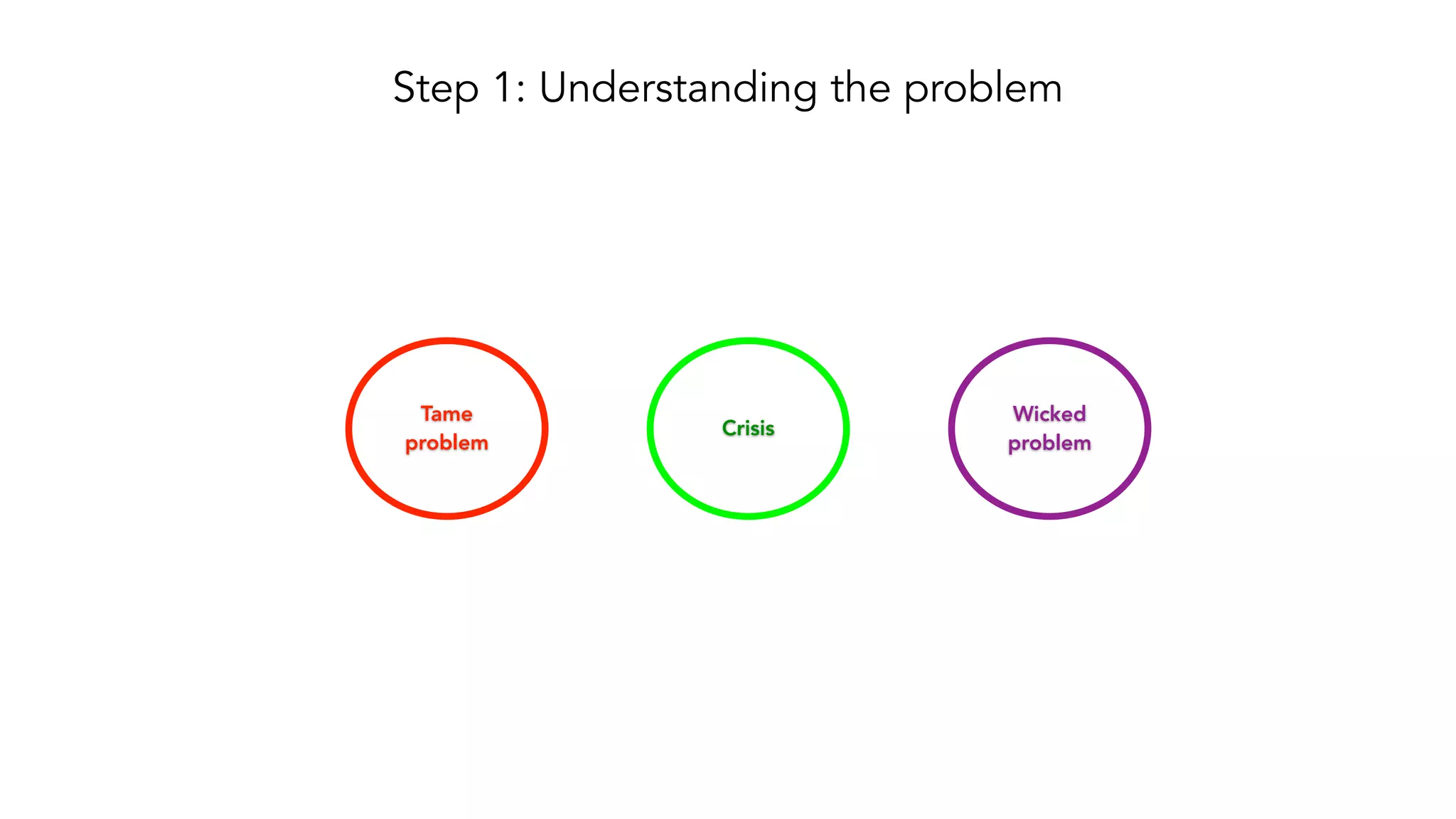
Step 1: Understanding the problem
Tame
problem
Crisis
Wicked
problem
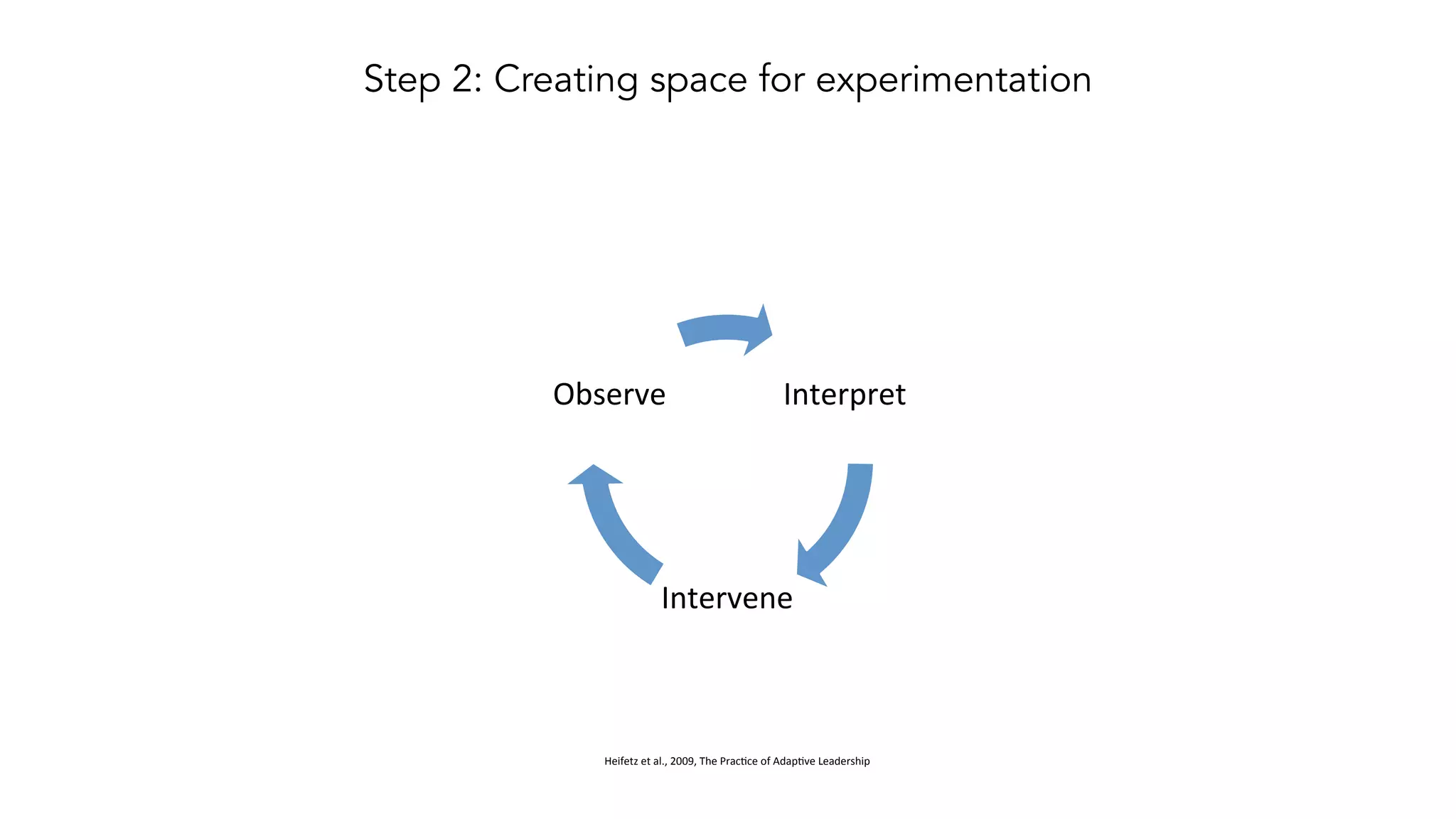
Step 2: Creating space for experimentation
Interpret'
Intervene'
Observe'
Heifetz'et'al.,'2009,'The'Prac4ce'of'Adap4ve'Leadership'
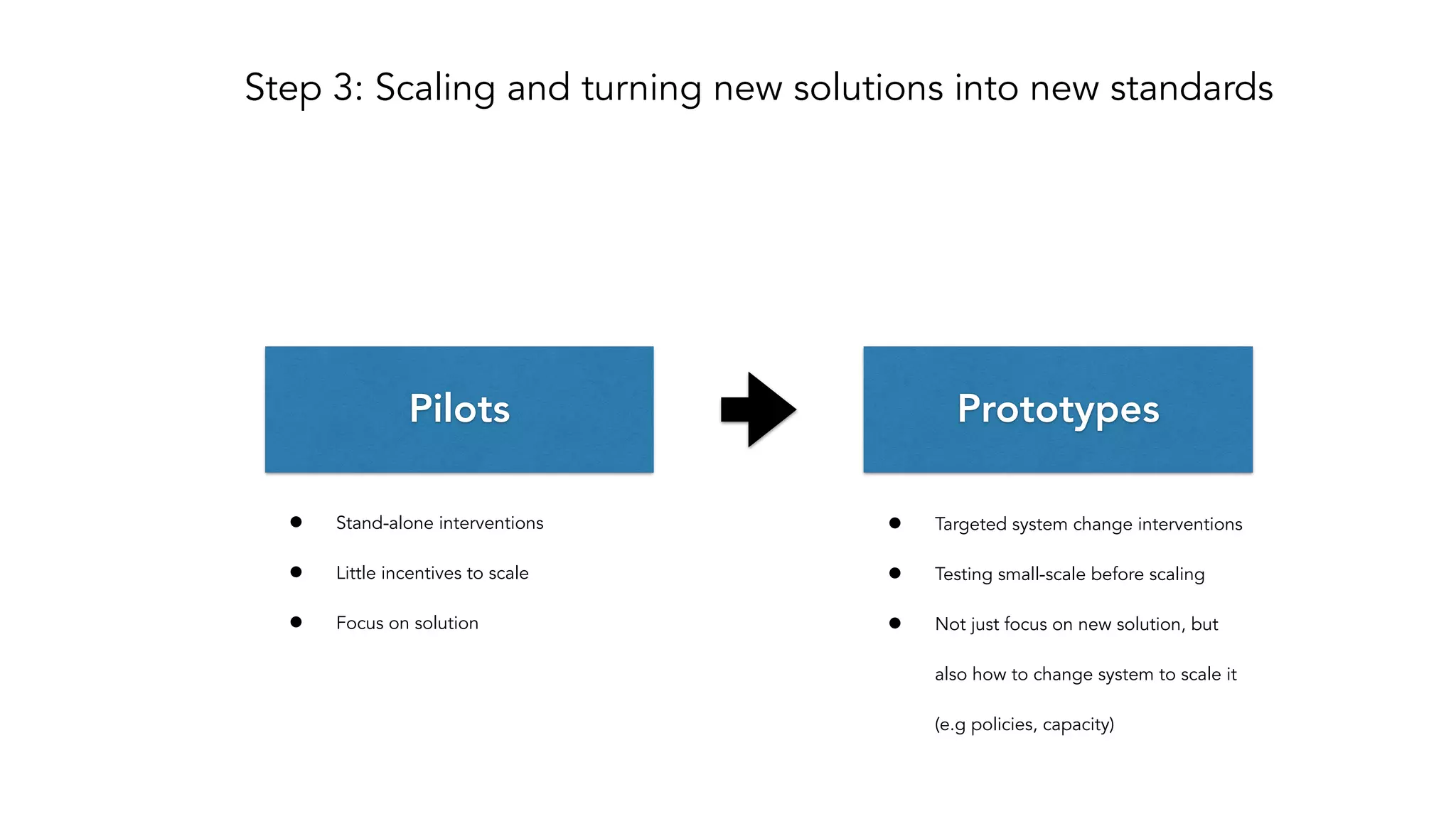
Step 3: Scaling and turning new solutions into new standards
Pilots Prototypes
• Targeted system change interventions
• Testing small-scale before scaling
• Not just focus on new solution, but
also how to change system to scale it
(e.g policies, capacity)
• Stand-alone interventions
• Little incentives to scale
• Focus on solution
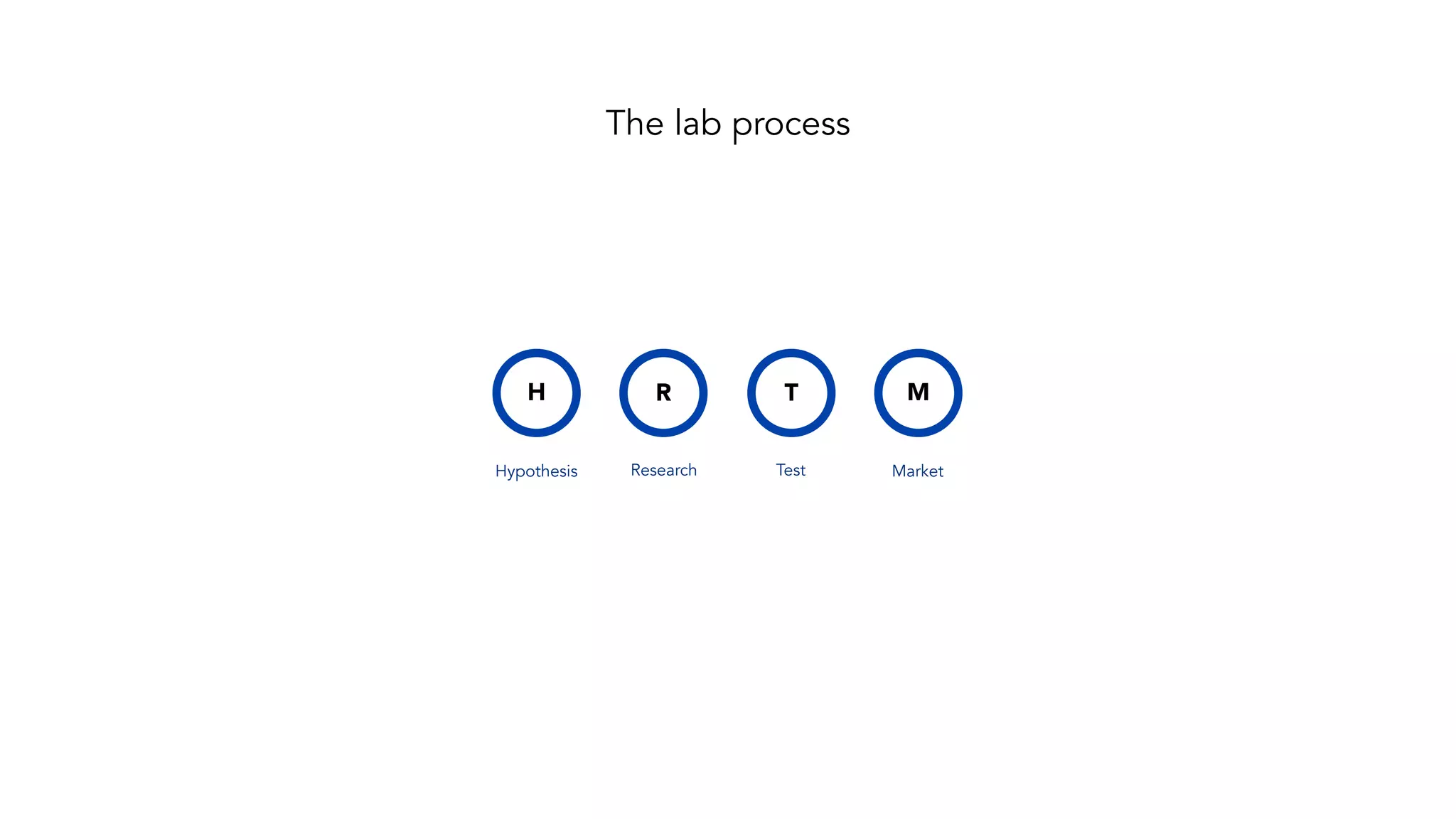
The lab process
H R T M
Hypothesis Research Test Market
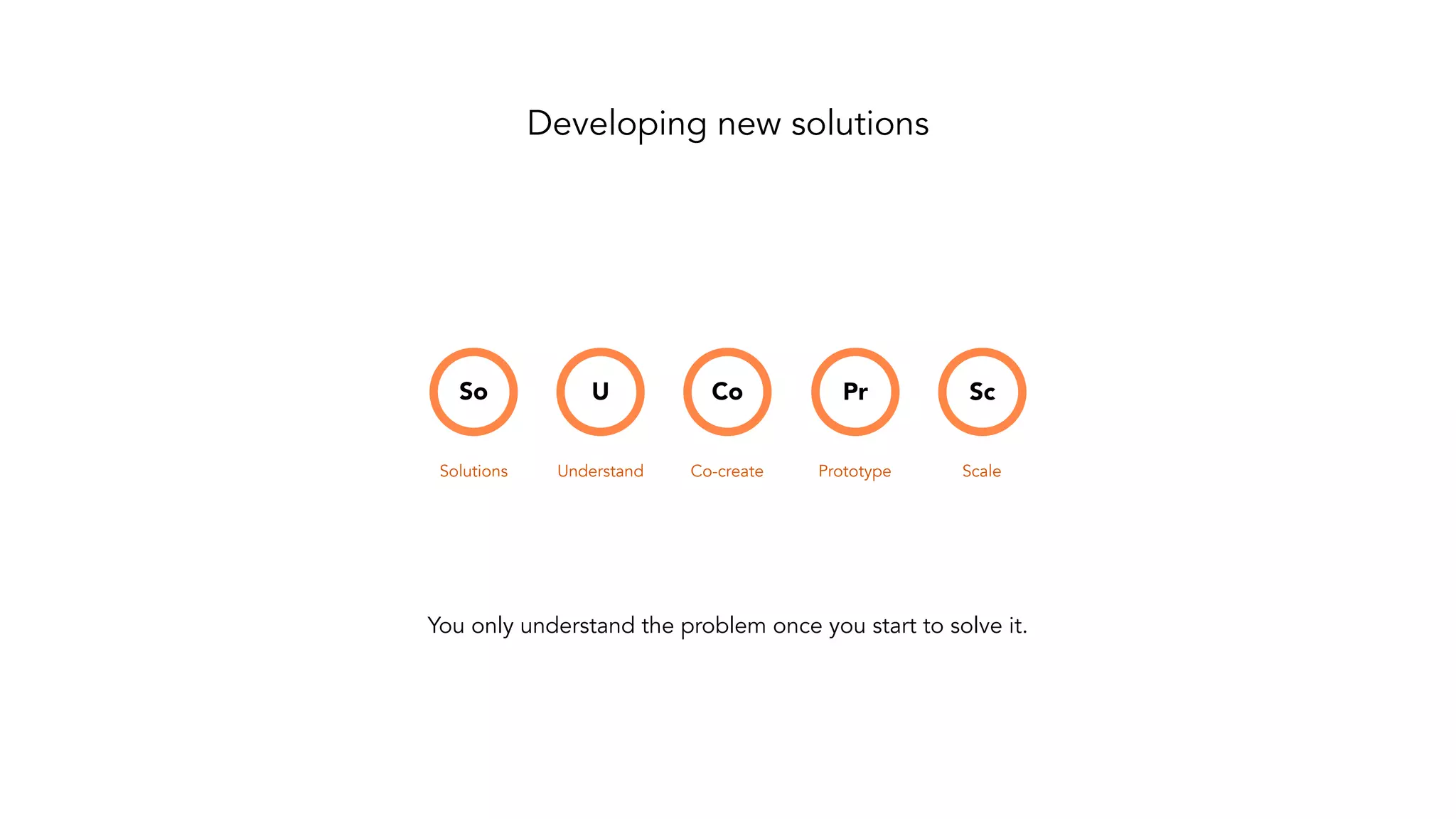
Developing new solutions
So U Co Pr Sc
Solutions Understand Co-create Prototype Scale
You only understand the problem once you start to solve it.
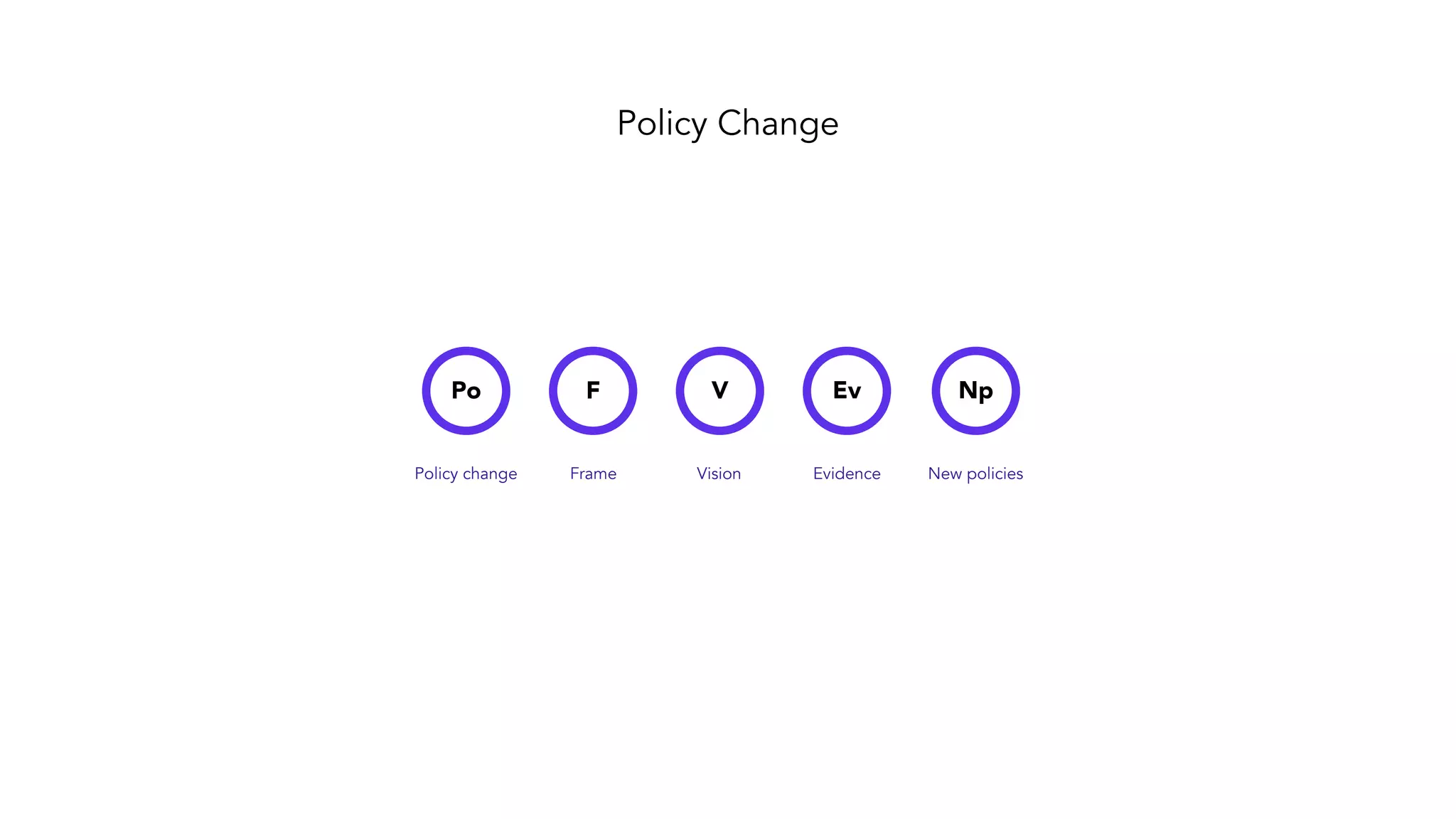
Policy Change
Po F V Ev Np
Policy change Frame Vision Evidence New policies
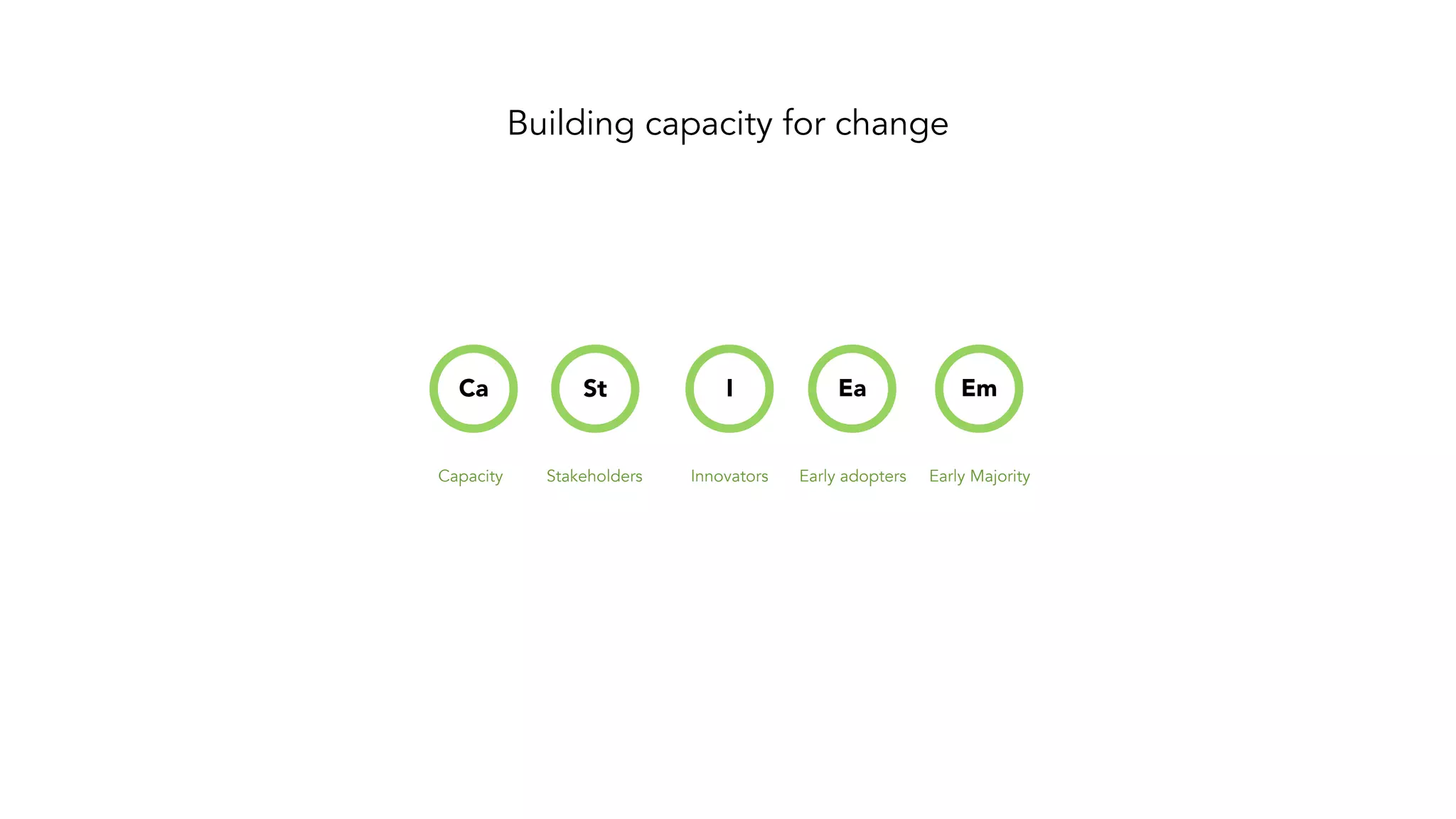
Building capacity for change
Ca St I Ea Em
Capacity Stakeholders Innovators Early adopters Early Majority
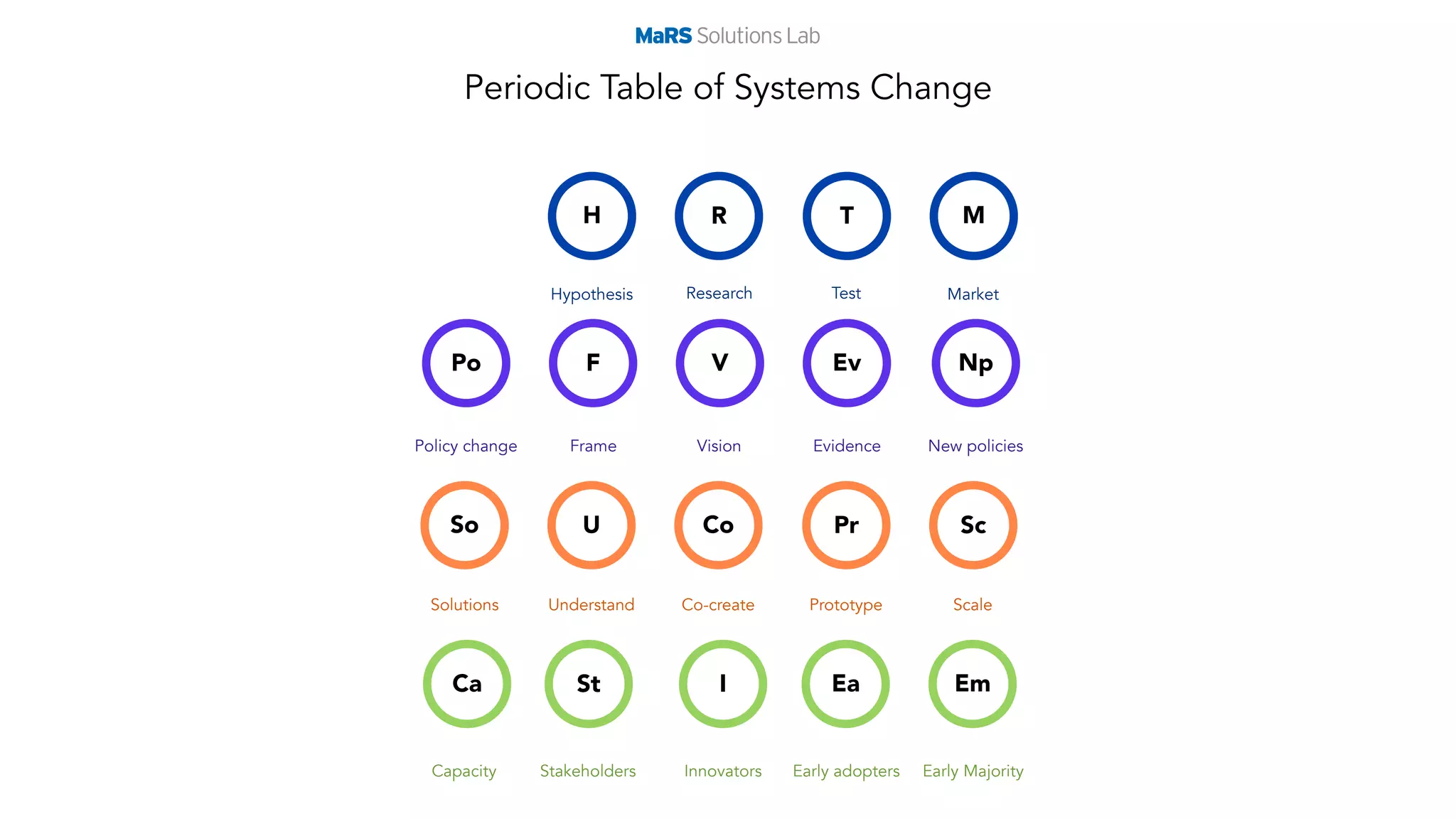
H R T M
Hypothesis Research Test Market
Po F V Ev Np
Policy change Frame Vision Evidence New policies
So U Co Pr Sc
Solutions Understand Co-create Prototype Scale
Ca St I Ea Em
Capacity Stakeholders Innovators Early adopters Early Majority
Periodic Table of Systems Change
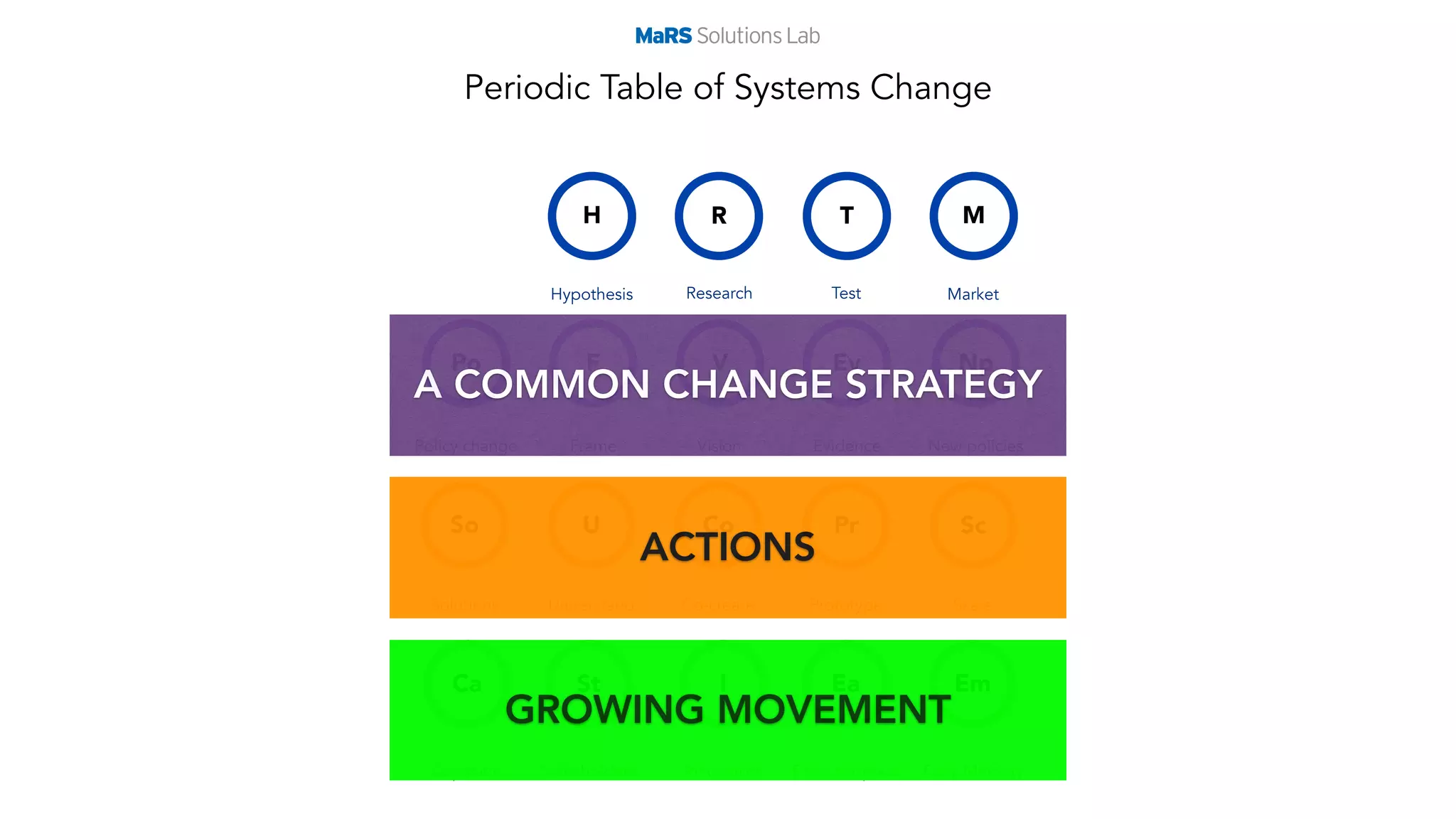
H R T M
Hypothesis Research Test Market
Po F V Ev Np
Policy change Frame Vision Evidence New policies
So U Co Pr Sc
Solutions Understand Co-create Prototype Scale
Ca St I Ea Em
Capacity Stakeholders Innovators Early adopters Early Majority
Periodic Table of Systems Change
A COMMON CHANGE STRATEGY
ACTIONS
GROWING MOVEMENT
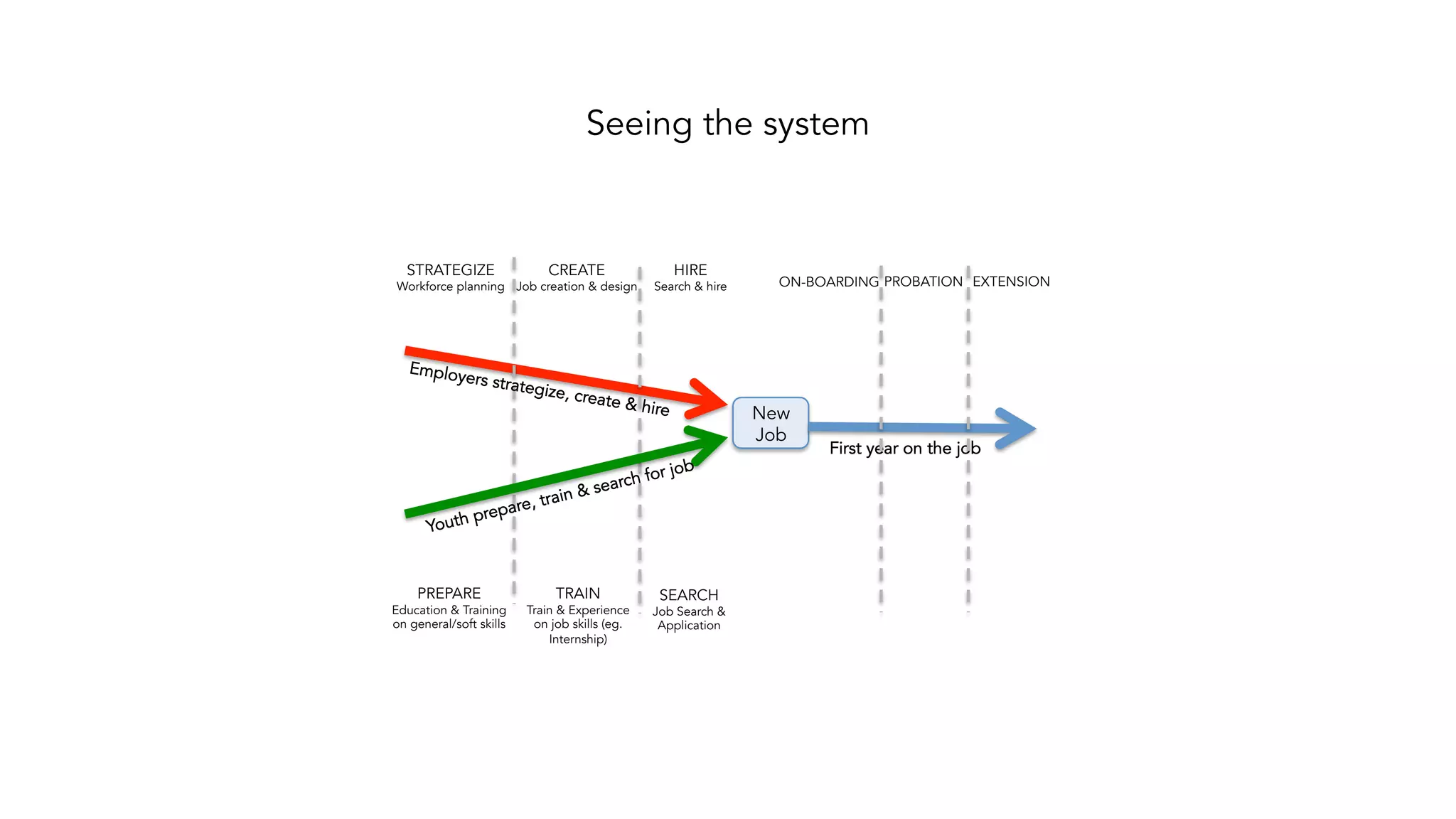
New
Job
First year on the job
Youth prepare, train & search for job
Employers strategize, create & hire
STRATEGIZE
Workforce planning
CREATE
Job creation & design
HIRE
Search & hire
PREPARE
Education & Training
on general/soft skills
TRAIN
Train & Experience
on job skills (eg.
Internship)
SEARCH
Job Search &
Application
ON-BOARDING PROBATION EXTENSION
Seeing the system
New
Job
First year on the job
Youth prepare, train & search for job
Employers strategize, create & hire
STRATEGIZE
Workforce planning
CREATE
Job creation & design
HIRE
Search & hire
PREPARE
Education & Training
on general/soft skills
TRAIN
Train & Experience
on job skills (eg.
Internship)
SEARCH
Job Search &
Application
ON-BOARDING PROBATION EXTENSION
1
2
3
4
4
5
5
A
B
CD
E
E
F
Designing & Prototyping Interventions
Scaling for change
The Business Model Canvas
Systems Change Edition
This work is created under a Creative Commons
Attribution-NonCommercial-ShareAlike 4.0
International License
Problem Concept
Users & Customers
List your targeted users and customers.
Value Proposition
others.
Systems Change
List what your intervention can achieve at scale.
Key Activities
List the actions you must undertake.
Key Partnerships
List the partners, suppliers, and allies you need.
Key Resources
List the resources you need for your key activities.
Revenue Streams
List your most important sources of revenue.
Cost Structure
Team Name / Organization
Affordable Housing
!
Food Security
!
Youth Employment
CKX Solutions Lab
Seeing the system
!
Designing Interventions
!
Scaling for change
Finally, some design principles
#1 Work back to the future
#2 Work back to citizen
#3 Look for the smallest possible intervention,
with the largest possible impact
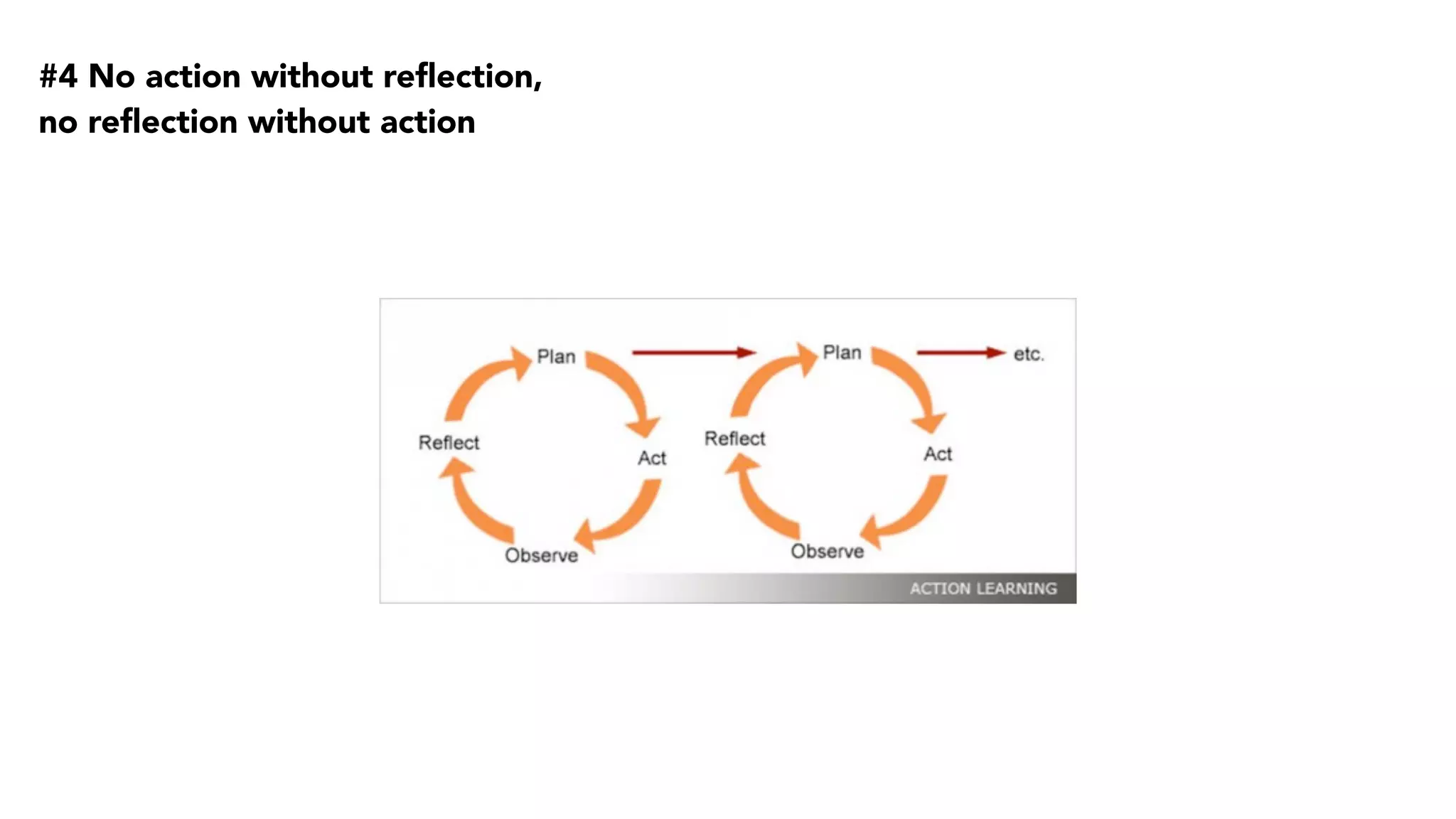
#4 No action without reflection,
no reflection without action
Some assembly required
Innovation for complex challenges
Joeri van den Steenhoven
Director, MaRS Solutions Lab
@joerivds solutions-lab.marsdd.com#CKX

CKX: Some Assembly Required - Innovation for Complex Challenges

  • 1.
    Some assembly required Innovationfor complex challenges Joeri van den Steenhoven Director, MaRS Solutions Lab @joerivds solutions-lab.marsdd.com#CKX
  • 4.
    The basic economicresource – the means of production, to use economist’s term – is no longer capital, nor land, nor labor. It is and will be knowledge. Value is now created by productivity and innovation, both applications of knowledge to work. ! Peter Drucker (1993)
  • 5.
    Good news |Bad news
  • 6.
  • 7.
    We live inan age of mass creativity
  • 8.
    Fire fighters in theUS Police Officers in the Netherlands Food Banks in Canada Families in need in Australia The power of the community
  • 9.
    InstitutionsCommunities Difficult to usetalents of people Decrease of problem solving capacity People better educated and informed, and many want to be engaged Problem solving capacity on record high PEOPLE
  • 10.
    InstitutionsCommunities Difficult to usetalents of people Operate in silos, so remains difficult to collaborate despite technology Decrease of problem solving capacity People better educated and informed, and many want to be engaged Technology enables to collaborate and perform complex tasks horizontally Problem solving capacity on record high PEOPLE TECHNOLOGY
  • 11.
    InstitutionsCommunities Difficult to usetalents of people Fewer public resources, often restricted to certain kind of funding Difficult to collaborate, operate in silos Decrease of problem solving capacity People better educated and informed, and many want to be engaged More private capital for social good, and investing it for impact Technology enables us to collaborate and perform complex tasks horizontally Problem solving capacity on record high PEOPLE CAPITAL TECHNOLOGY
  • 12.
    But now thebad news…..
  • 13.
  • 14.
    No more timefor band aids Need to work together Solving complex challenges requires innovation
  • 15.
    Understand the problem Space to experiment Newsolution = new standard Process of Innovation
  • 16.
    Albert Einstein “If Ihad an hour to solve a problem, I'd spend 55 minutes thinking about the problem and 5 minutes thinking about solutions.” ! Albert Einstein
  • 17.
    Step 1: Understandingthe problem User perspective System Perspective Institutional perspective
  • 18.
    Step 1: Understandingthe problem Tame problem Crisis Wicked problem
  • 19.
    Step 2: Creatingspace for experimentation Interpret' Intervene' Observe' Heifetz'et'al.,'2009,'The'Prac4ce'of'Adap4ve'Leadership'
  • 20.
    Step 3: Scalingand turning new solutions into new standards Pilots Prototypes • Targeted system change interventions • Testing small-scale before scaling • Not just focus on new solution, but also how to change system to scale it (e.g policies, capacity) • Stand-alone interventions • Little incentives to scale • Focus on solution
  • 21.
    The lab process HR T M Hypothesis Research Test Market
  • 22.
    Developing new solutions SoU Co Pr Sc Solutions Understand Co-create Prototype Scale You only understand the problem once you start to solve it.
  • 23.
    Policy Change Po FV Ev Np Policy change Frame Vision Evidence New policies
  • 24.
    Building capacity forchange Ca St I Ea Em Capacity Stakeholders Innovators Early adopters Early Majority
  • 25.
    H R TM Hypothesis Research Test Market Po F V Ev Np Policy change Frame Vision Evidence New policies So U Co Pr Sc Solutions Understand Co-create Prototype Scale Ca St I Ea Em Capacity Stakeholders Innovators Early adopters Early Majority Periodic Table of Systems Change
  • 26.
    H R TM Hypothesis Research Test Market Po F V Ev Np Policy change Frame Vision Evidence New policies So U Co Pr Sc Solutions Understand Co-create Prototype Scale Ca St I Ea Em Capacity Stakeholders Innovators Early adopters Early Majority Periodic Table of Systems Change A COMMON CHANGE STRATEGY ACTIONS GROWING MOVEMENT
  • 27.
    New Job First year onthe job Youth prepare, train & search for job Employers strategize, create & hire STRATEGIZE Workforce planning CREATE Job creation & design HIRE Search & hire PREPARE Education & Training on general/soft skills TRAIN Train & Experience on job skills (eg. Internship) SEARCH Job Search & Application ON-BOARDING PROBATION EXTENSION Seeing the system
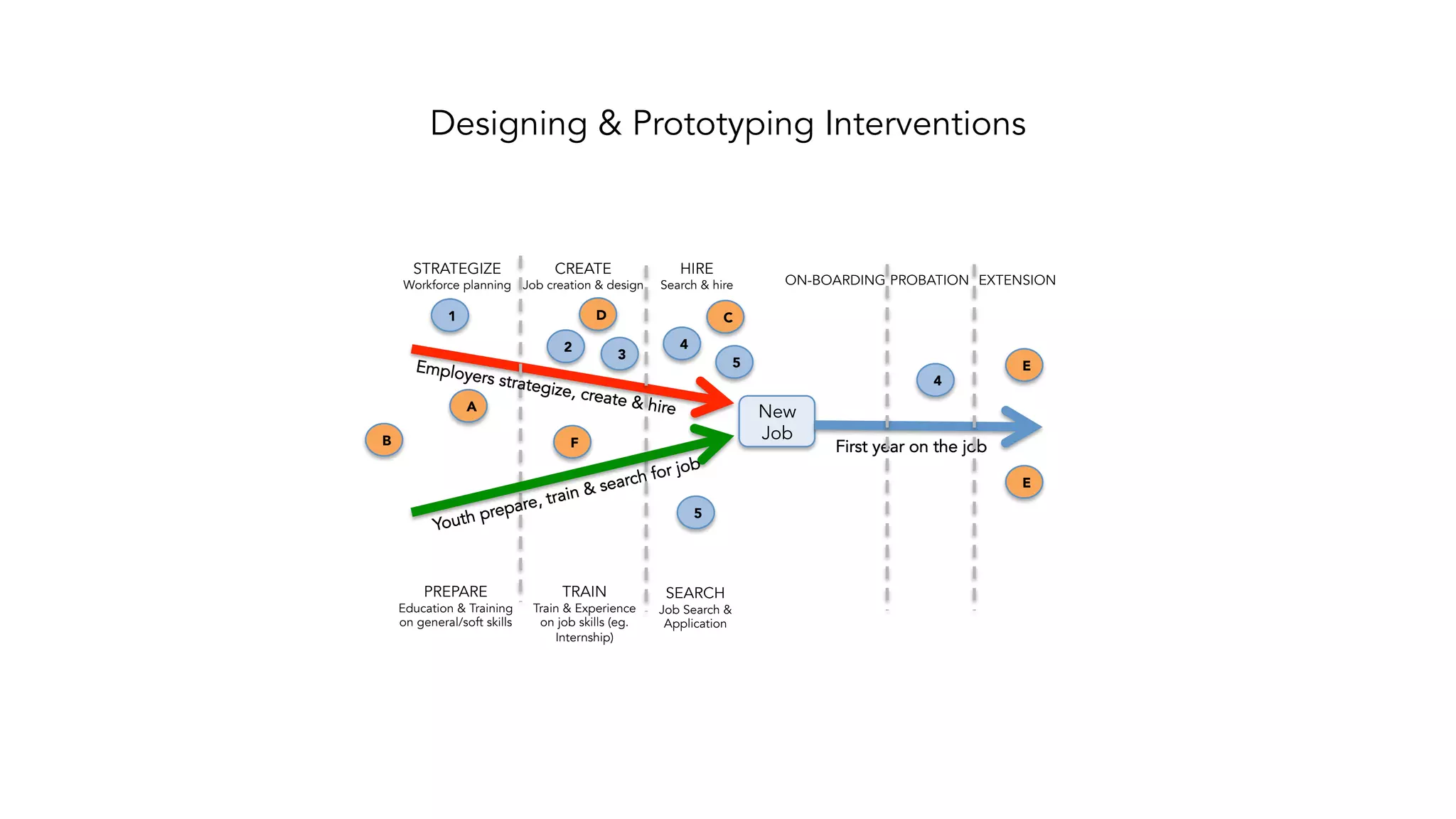
  • 28.
    New Job First year onthe job Youth prepare, train & search for job Employers strategize, create & hire STRATEGIZE Workforce planning CREATE Job creation & design HIRE Search & hire PREPARE Education & Training on general/soft skills TRAIN Train & Experience on job skills (eg. Internship) SEARCH Job Search & Application ON-BOARDING PROBATION EXTENSION 1 2 3 4 4 5 5 A B CD E E F Designing & Prototyping Interventions
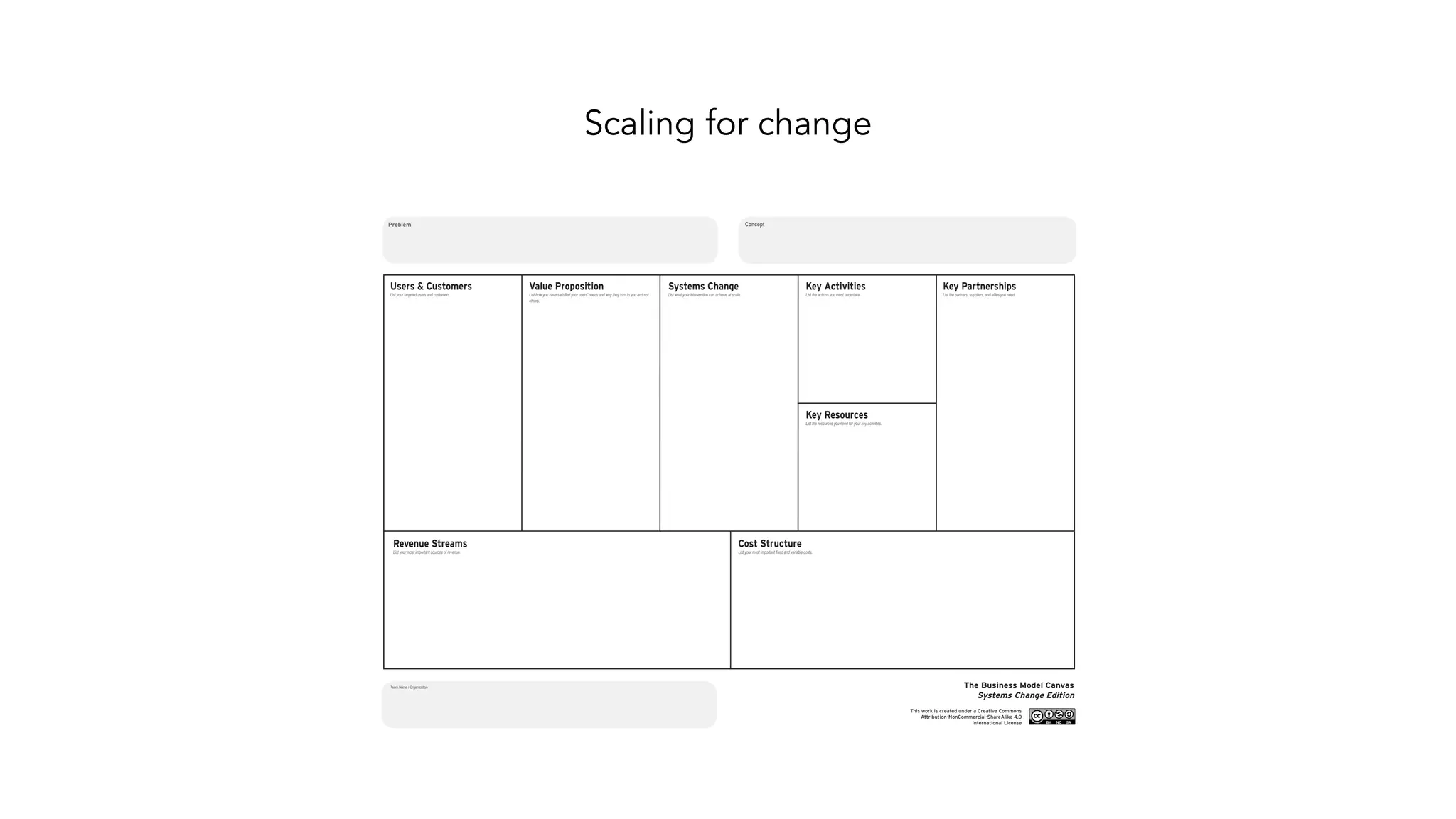
  • 29.
    Scaling for change TheBusiness Model Canvas Systems Change Edition This work is created under a Creative Commons Attribution-NonCommercial-ShareAlike 4.0 International License Problem Concept Users & Customers List your targeted users and customers. Value Proposition others. Systems Change List what your intervention can achieve at scale. Key Activities List the actions you must undertake. Key Partnerships List the partners, suppliers, and allies you need. Key Resources List the resources you need for your key activities. Revenue Streams List your most important sources of revenue. Cost Structure Team Name / Organization
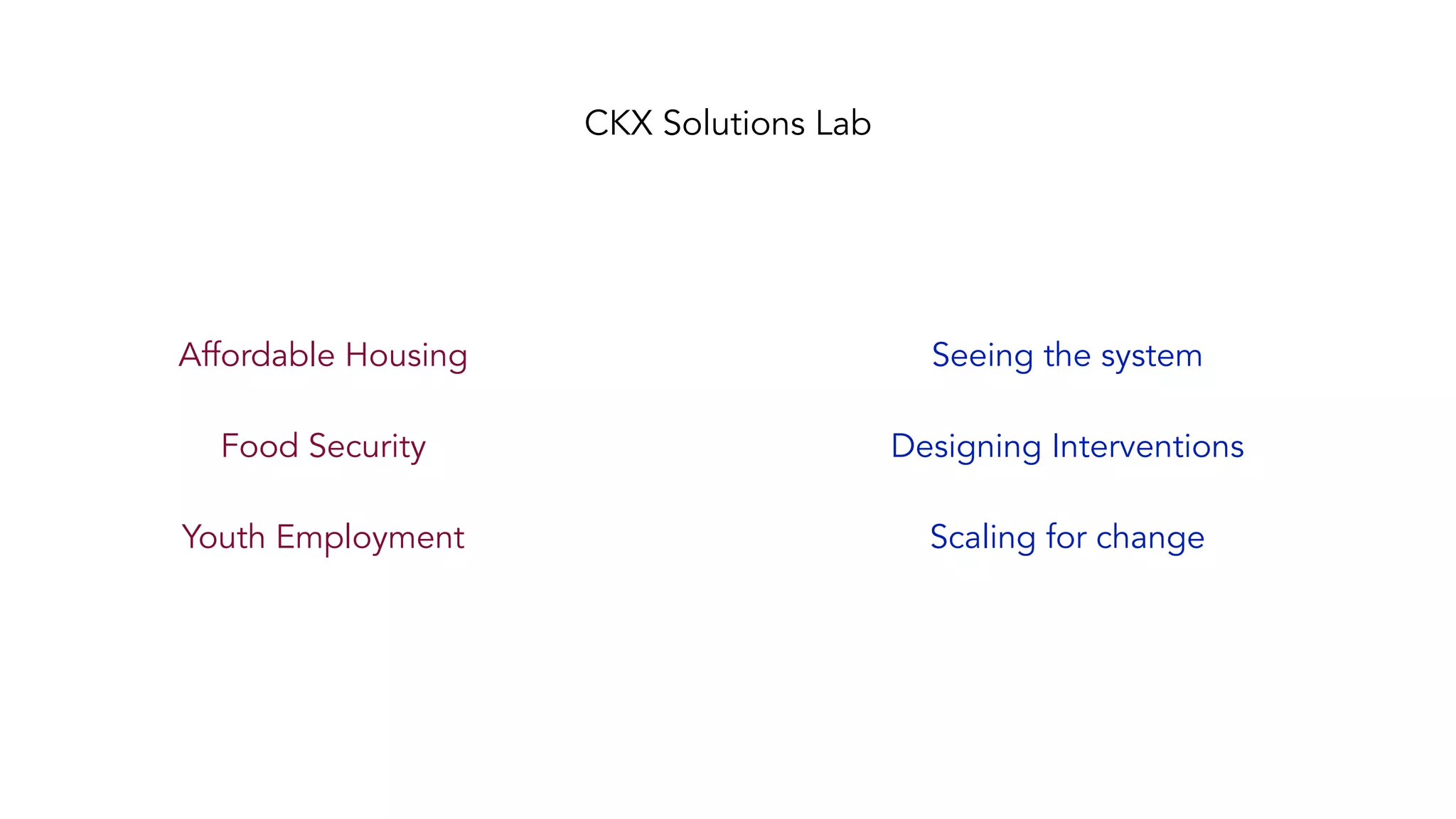
  • 30.
    Affordable Housing ! Food Security ! YouthEmployment CKX Solutions Lab Seeing the system ! Designing Interventions ! Scaling for change
  • 31.
  • 32.
    #1 Work backto the future
  • 33.
    #2 Work backto citizen
  • 34.
    #3 Look forthe smallest possible intervention, with the largest possible impact
  • 35.
    #4 No actionwithout reflection, no reflection without action
  • 36.
    Some assembly required Innovationfor complex challenges Joeri van den Steenhoven Director, MaRS Solutions Lab @joerivds solutions-lab.marsdd.com#CKX