TOPIC--8th cranial
nerve
SUBMITTED TO..
MA’AM DIDENKO
victoria
Sub.by…MOHD.ALI
GROUP 4th
Sem.7
PATOK- 1
5YEAR COURSE
NTRODUCTION
 8th cranial nerve
 consists of two divisions:
2 components:
 a) cochlear (hearing)
 b) vestibular (equilibrium)
 OBJECTIVES
 1) Anatomy and
 2) functions.
 3) Blood supply
 4)Clinical Significance
 5) Examination
 6) How to test
 7) Treatment
Vestibulocochlear nerve VIII
•ANATOMY
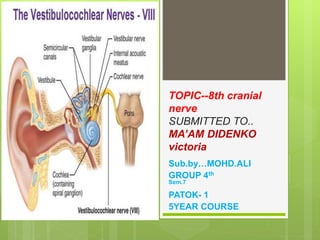
The vestibulocochlear nerve [VIII] carries SA fibers for hearing
and balance,
consists of two divisions:
1. A Vestibular component for balance.
2. A Vochlear component for hearing.
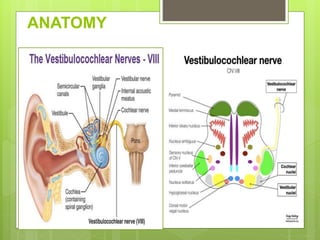
1.The vestibulocochlear nerve
attaches to the lateral surface of the brainstem,
between the pons and medulla,
 after emerging from the internal acoustic meatus and
crossing the posterior cranial fossa into the single nerve seen
in the posterior cranial fossa within the substance of the
petrous part of the temporal bone
ANATOMY
Vestibular nerves
 Vestibular nerves
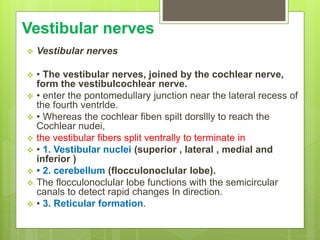
 • The vestibular nerves, joined by the cochlear nerve,
form the vestibulcochlear nerve.
 • enter the pontomedullary junction near the lateral recess of
the fourth ventrlde.
 • Whereas the cochlear fiben spilt dorsllly to reach the
Cochlear nudei,
 the vestibular fibers split ventrally to terminate in
 • 1. Vestibular nuclei (superior , lateral , medial and
inferior )
 • 2. cerebellum (flocculonoclular lobe).
 The flocculonoclular lobe functions with the semicircular
canals to detect rapid changes In direction.
 • 3. Reticular formation.
Blood supply
 The blood supply to the cochlea and auditory
brainstem nuclei arises from the internal auditory
(labyrinthine) artery, usually a branch of the anterior
inferior cerebellar artery.
 The superior olivary complex and lateral lemniscus
are supplied by circumferential branches of the basilar
artery
 the inferior colliculus is vascularized by branches of
the superior cerebellar and quadrigeminal arteries
 whereas the medial geniculate bodies receive their
blood supply from the thalamogeniculate arteries.
 Branches of the middle cerebral artery supply the
primary auditory and associated cortices
FUNCTIONS--8th cranial nerve
 This is the nerve along which the sensory cells
(the hair cells) of the inner ear transmit information
to the brain.
 It consists of the cochlear nerve, carrying
information about hearing, and
 the vestibular nerve, carrying information
about balance.
 It emerges from the pontomedullary junction and
exits the inner skull via the internal acoustic
meatus (or internal auditory meatus) in
the temporal bone.
 The vestibulocochlear nerve carries axons of type
SSA (special somatic afferent)
Clinical Significance
Symptoms of damage
Patients may present with pain in or behind the ear preceding
or appearing with the development of facial weakness.
There is inability to close the eye or move the lower face and
mouth
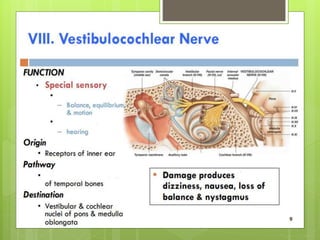
 Damage to the vestibulocochlear nerve may cause the
following symptoms:
 hearing loss
 vertigo
 false sense of motion
 loss of equilibrium (in dark places)
 nystagmus is a condition of involuntary (or voluntary, in
some cases) eye movement
 motion sickness
 gaze-evoked tinnitus -is the perception of sound)
Examination
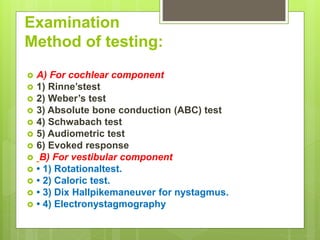
Method of testing:
 A) For cochlear component
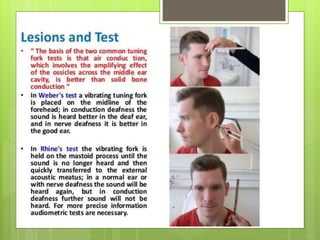
 1) Rinne’stest
 2) Weber’s test
 3) Absolute bone conduction (ABC) test
 4) Schwabach test
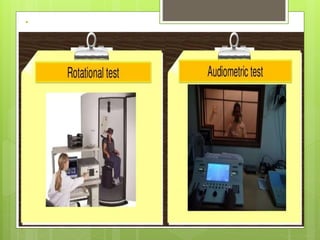
 5) Audiometric test
 6) Evoked response
 B) For vestibular component
 • 1) Rotationaltest.
 • 2) Caloric test.
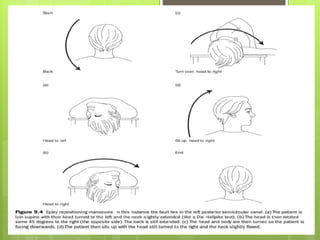
 • 3) Dix Hallpikemaneuver for nystagmus.
 • 4) Electronystagmography
.
.
.
Treatment
 In the acute attack most patients require bed rest
 accompanied by an injection or suppository to
relieve
 the vomiting. In adults a prochlorperazine
suppository of 25 mg or an injection of 6.25–12.5
mg may
 be useful. Frequent attacks may be treated with a
 vestibular sedative such as cinnarizine or
betahistine, although there have been no proper
trials of
Treatment
 treatment in the acute phase. Most treatment regimens
now use a graded approach, starting with
 dietary changes with the elimination of caffeine and
 vestibular sedative. Vestibular rehabilitation exercises
may also be used. About 80% of patients
 respond to such measures but in those that do not,
 surgery may be employed – either endolymphatic sac
Surgery or ablative therapy to destroy the affected
labyrinth or its function.
 These procedures will produce deafness but can give
relief
THANK
YOU

cranial nerve

  • 1.
    TOPIC--8th cranial nerve SUBMITTED TO.. MA’AMDIDENKO victoria Sub.by…MOHD.ALI GROUP 4th Sem.7 PATOK- 1 5YEAR COURSE
  • 2.
    NTRODUCTION  8th cranialnerve  consists of two divisions: 2 components:  a) cochlear (hearing)  b) vestibular (equilibrium)  OBJECTIVES  1) Anatomy and  2) functions.  3) Blood supply  4)Clinical Significance  5) Examination  6) How to test  7) Treatment
  • 3.
    Vestibulocochlear nerve VIII •ANATOMY Thevestibulocochlear nerve [VIII] carries SA fibers for hearing and balance, consists of two divisions: 1. A Vestibular component for balance. 2. A Vochlear component for hearing. 1.The vestibulocochlear nerve attaches to the lateral surface of the brainstem, between the pons and medulla,  after emerging from the internal acoustic meatus and crossing the posterior cranial fossa into the single nerve seen in the posterior cranial fossa within the substance of the petrous part of the temporal bone
  • 4.
  • 5.
    Vestibular nerves  Vestibularnerves  • The vestibular nerves, joined by the cochlear nerve, form the vestibulcochlear nerve.  • enter the pontomedullary junction near the lateral recess of the fourth ventrlde.  • Whereas the cochlear fiben spilt dorsllly to reach the Cochlear nudei,  the vestibular fibers split ventrally to terminate in  • 1. Vestibular nuclei (superior , lateral , medial and inferior )  • 2. cerebellum (flocculonoclular lobe).  The flocculonoclular lobe functions with the semicircular canals to detect rapid changes In direction.  • 3. Reticular formation.
  • 6.
    Blood supply  Theblood supply to the cochlea and auditory brainstem nuclei arises from the internal auditory (labyrinthine) artery, usually a branch of the anterior inferior cerebellar artery.  The superior olivary complex and lateral lemniscus are supplied by circumferential branches of the basilar artery  the inferior colliculus is vascularized by branches of the superior cerebellar and quadrigeminal arteries  whereas the medial geniculate bodies receive their blood supply from the thalamogeniculate arteries.  Branches of the middle cerebral artery supply the primary auditory and associated cortices
  • 7.
    FUNCTIONS--8th cranial nerve This is the nerve along which the sensory cells (the hair cells) of the inner ear transmit information to the brain.  It consists of the cochlear nerve, carrying information about hearing, and  the vestibular nerve, carrying information about balance.  It emerges from the pontomedullary junction and exits the inner skull via the internal acoustic meatus (or internal auditory meatus) in the temporal bone.  The vestibulocochlear nerve carries axons of type SSA (special somatic afferent)
  • 9.
    Clinical Significance Symptoms ofdamage Patients may present with pain in or behind the ear preceding or appearing with the development of facial weakness. There is inability to close the eye or move the lower face and mouth  Damage to the vestibulocochlear nerve may cause the following symptoms:  hearing loss  vertigo  false sense of motion  loss of equilibrium (in dark places)  nystagmus is a condition of involuntary (or voluntary, in some cases) eye movement  motion sickness  gaze-evoked tinnitus -is the perception of sound)
  • 10.
    Examination Method of testing: A) For cochlear component  1) Rinne’stest  2) Weber’s test  3) Absolute bone conduction (ABC) test  4) Schwabach test  5) Audiometric test  6) Evoked response  B) For vestibular component  • 1) Rotationaltest.  • 2) Caloric test.  • 3) Dix Hallpikemaneuver for nystagmus.  • 4) Electronystagmography
  • 12.
  • 13.
  • 14.
  • 15.
    Treatment  In theacute attack most patients require bed rest  accompanied by an injection or suppository to relieve  the vomiting. In adults a prochlorperazine suppository of 25 mg or an injection of 6.25–12.5 mg may  be useful. Frequent attacks may be treated with a  vestibular sedative such as cinnarizine or betahistine, although there have been no proper trials of
  • 16.
    Treatment  treatment inthe acute phase. Most treatment regimens now use a graded approach, starting with  dietary changes with the elimination of caffeine and  vestibular sedative. Vestibular rehabilitation exercises may also be used. About 80% of patients  respond to such measures but in those that do not,  surgery may be employed – either endolymphatic sac Surgery or ablative therapy to destroy the affected labyrinth or its function.  These procedures will produce deafness but can give relief
  • 17.