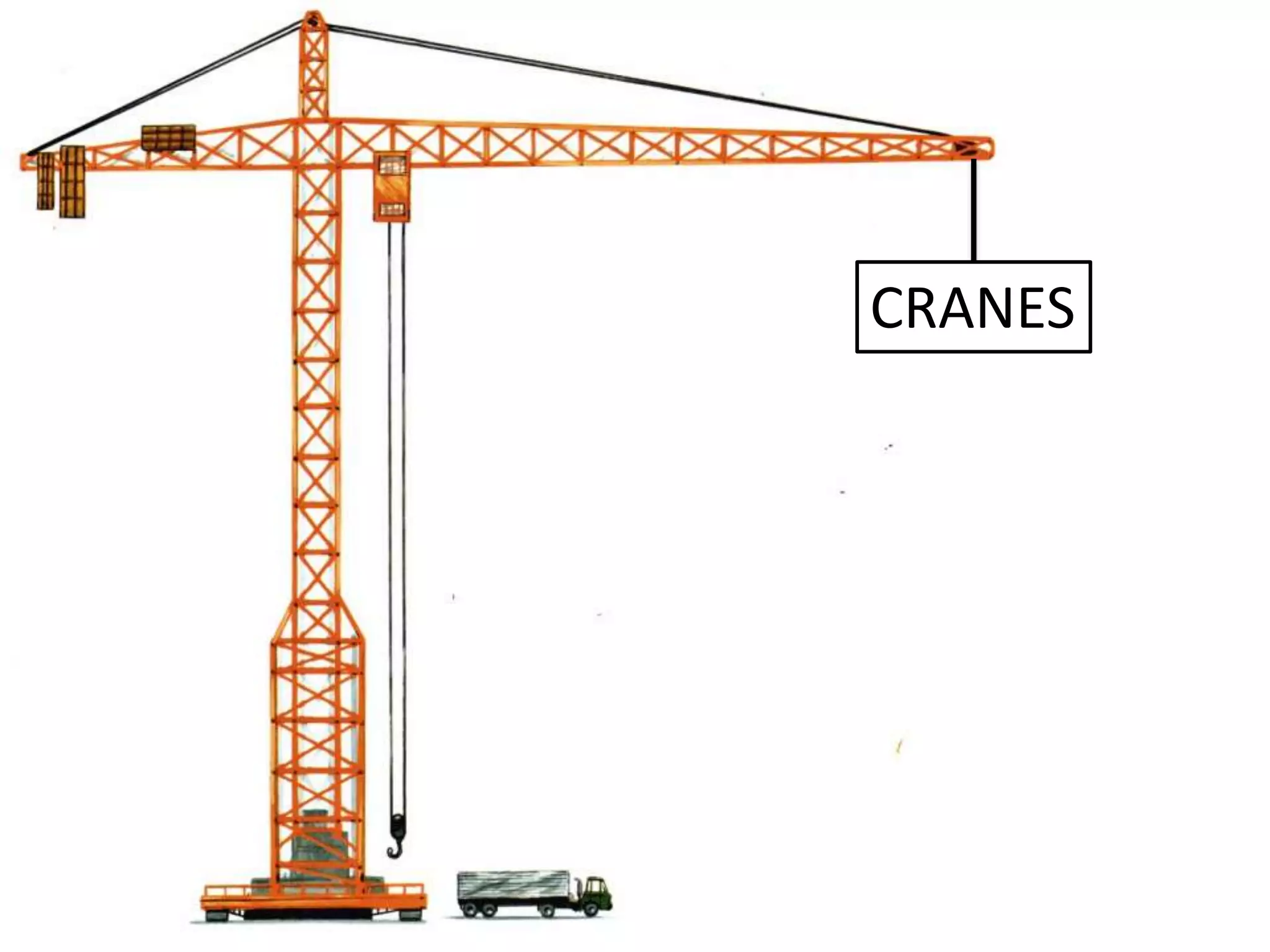
CRANES
CRANE : DEFINITION
A crane is a lifting machine that principally works with the use of pulleys and
cables. For the construction industry, cranes are valuable assets because they
make working with heavy machinery and construction materials easy.
The ancient Greeks invented the first construction crane hundreds of years ago.
Modern day construction cranes are huge, taking up tons of material hundreds
of meters in height. For high end infrastructure projects, tower cranes are used
that have a reach as high as 800 meters.
WORKING OF CRANE
• Crane uses the pulley and cable system to create a
mechanical advantage so that large loads can be
lifted.
• Winders, cables, ropes, chains, and a basic level-
pulley system are essential parts of any type of crane.
• The lever and other simple machines make work
easier by decreasing the amount of force required to
accomplish lifting and moving tasks.
• Levers manipulate the torque involved and enable
construction engineers to lift heavy loads.
• A pulley serves its basic purpose, which is to
distribute the amount of weight needed to lift an
object.
• Inclusion of electronic components has made cranes
even easier to operate because the control remains
no more manual.
TYPES OF CRANES
Mobile Cranes
Telescopic Crane
Tower Crane
Truck Mounted Crane
Rough Terrain Crane
Loader Crane Overhead Crane
1. MOBILE CRANES
Mobile crane is a cable-controlled crane mounted on crawlers or
rubber-tired carriers or a hydraulic-powered crane with a
telescoping boom mounted on truck-type carriers or as self-
propelled models. They are designed to easily transport to a site
and use with different types of load and cargo with little or no
setup or assembly.
They are designed to easily transport to a site
and use with different types of load and cargo
with little or no setup or assembly.
Mobile cranes generally operate a boom from
the end of which a hook is suspended by wire
rope and sheaves. The wire ropes are
operated by whatever prime movers the
designers have available, operating through a
variety of transmissions. Steam
engines, electric motors, and internal
combustion engines (IC) have all been used.
D
I
M
E
N
S
I
O
N
S
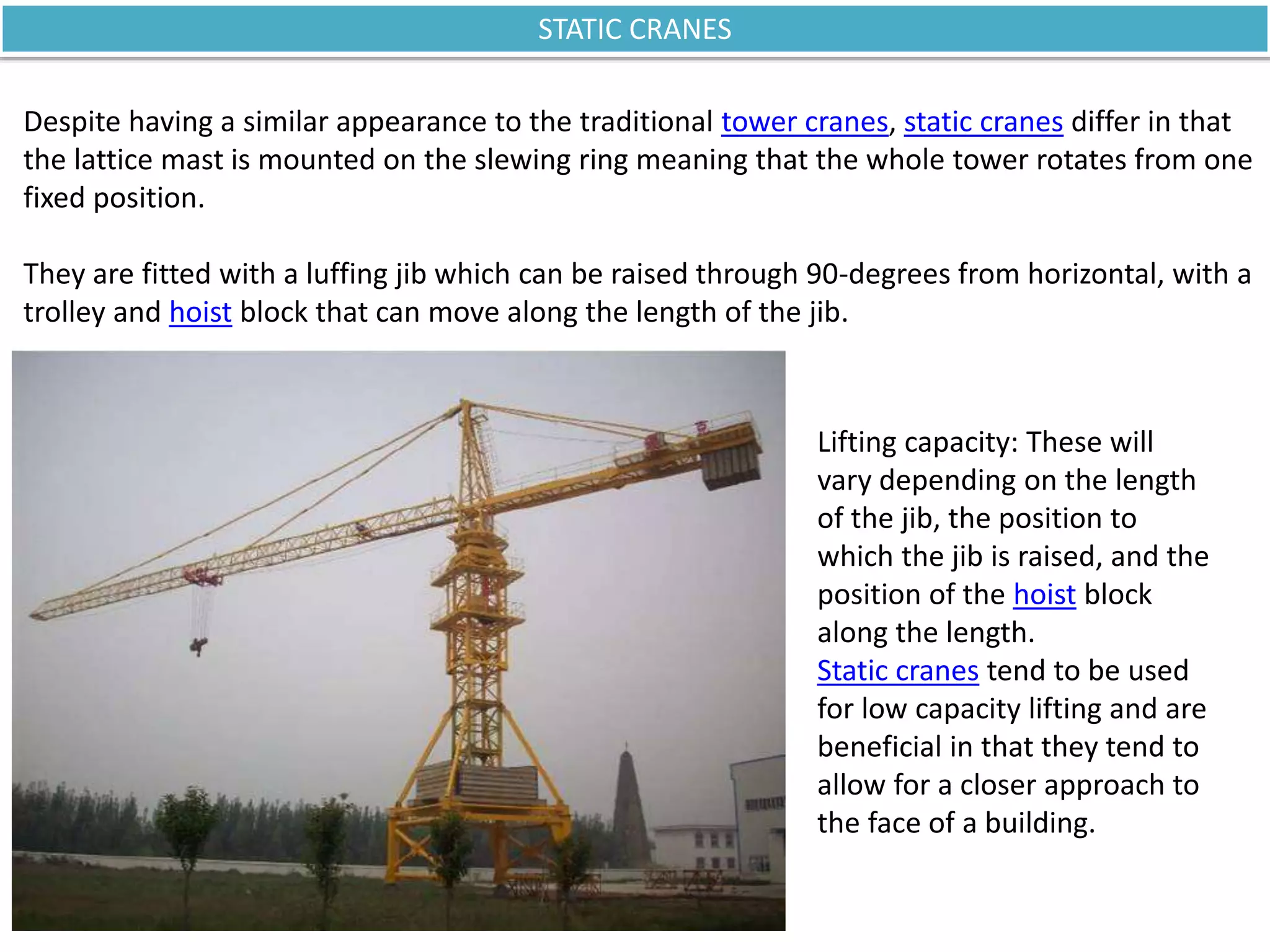
STATIC CRANES
Despite having a similar appearance to the traditional tower cranes, static cranes differ in that
the lattice mast is mounted on the slewing ring meaning that the whole tower rotates from one
fixed position.
They are fitted with a luffing jib which can be raised through 90-degrees from horizontal, with a
trolley and hoist block that can move along the length of the jib.
Lifting capacity: These will
vary depending on the length
of the jib, the position to
which the jib is raised, and the
position of the hoist block
along the length.
Static cranes tend to be used
for low capacity lifting and are
beneficial in that they tend to
allow for a closer approach to
the face of a building.
STATIC CRANE DETAILS
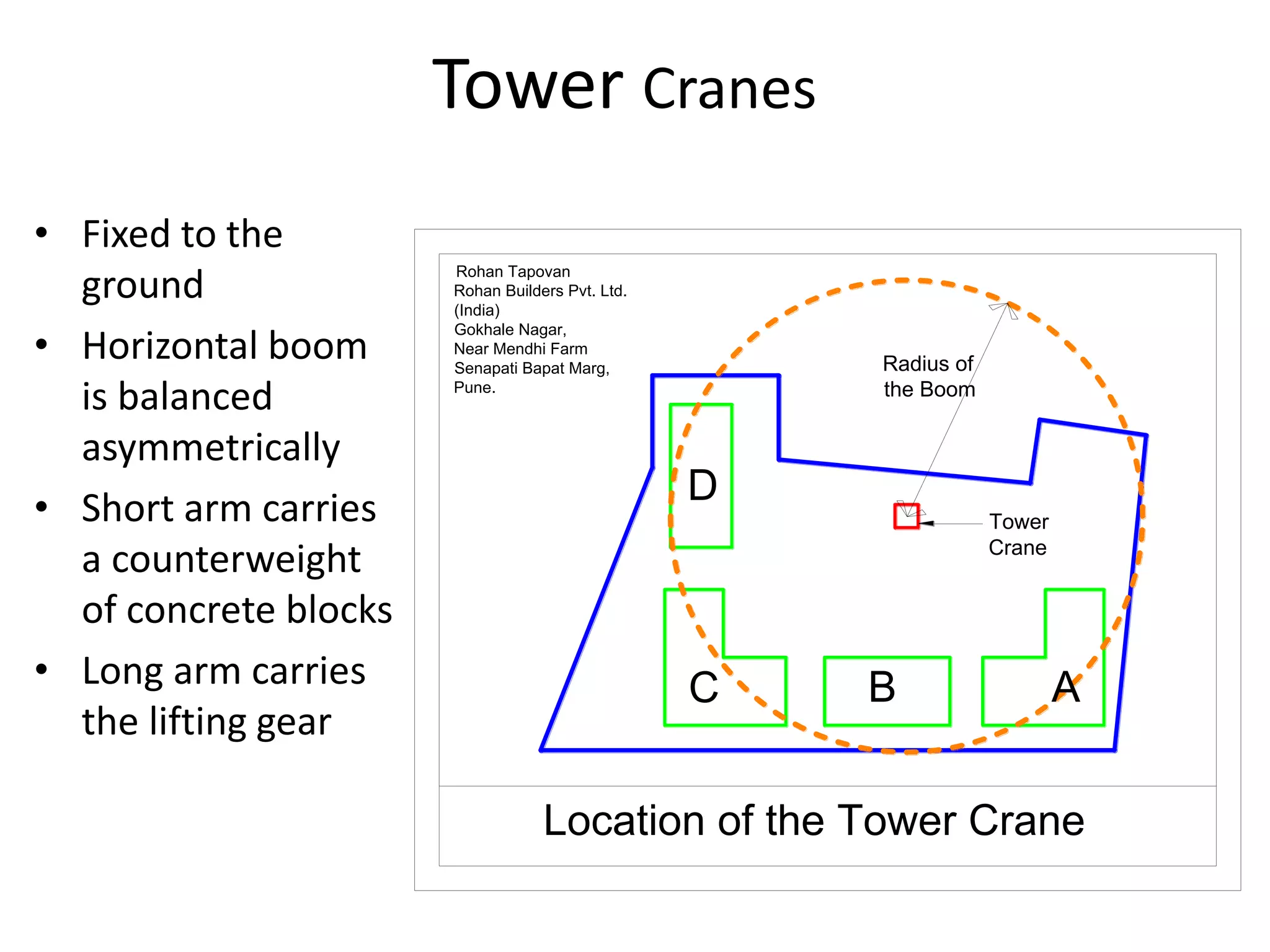
ABC
D
Radius of
the Boom
Location of the Tower Crane
Tower
Crane
Rohan Tapovan
Rohan Builders Pvt. Ltd.
(India)
Gokhale Nagar,
Near Mendhi Farm
Senapati Bapat Marg,
Pune.
Tower Cranes
• Fixed to the
ground
• Horizontal boom
is balanced
asymmetrically
• Short arm carries
a counterweight
of concrete blocks
• Long arm carries
the lifting gear
CONCRETE MIXER
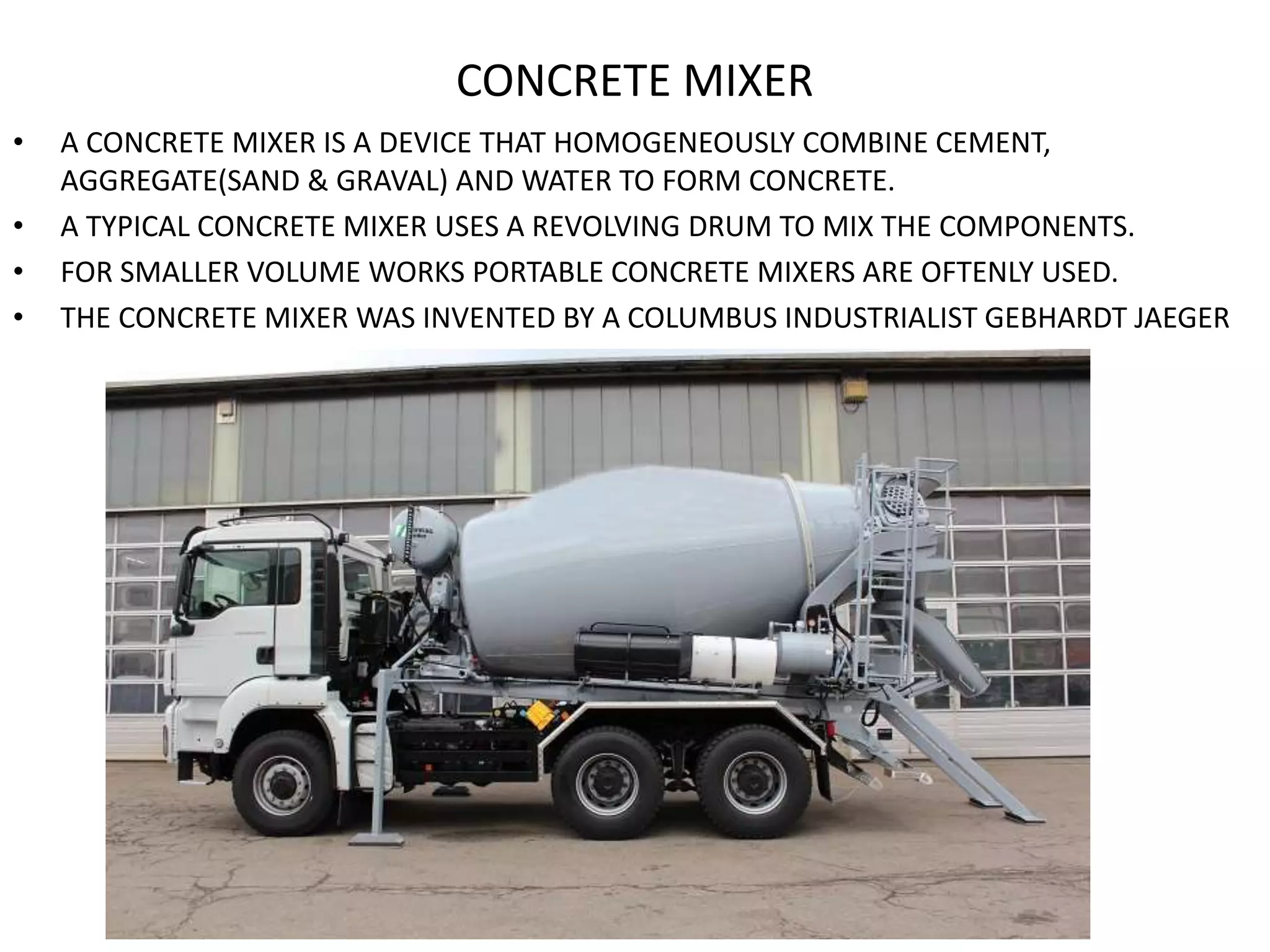
• A CONCRETE MIXER IS A DEVICE THAT HOMOGENEOUSLY COMBINE CEMENT,
AGGREGATE(SAND & GRAVAL) AND WATER TO FORM CONCRETE.
• A TYPICAL CONCRETE MIXER USES A REVOLVING DRUM TO MIX THE COMPONENTS.
• FOR SMALLER VOLUME WORKS PORTABLE CONCRETE MIXERS ARE OFTENLY USED.
• THE CONCRETE MIXER WAS INVENTED BY A COLUMBUS INDUSTRIALIST GEBHARDT JAEGER
TYPES OF CONCRETE MIXER
• THERE ARE 3 TYPES OF CONCRETE MIXER
• (1) TWIN SHAFT MIXER
• (2) VERTICAL AXIS MIXER
• (3) DRUM MIXER
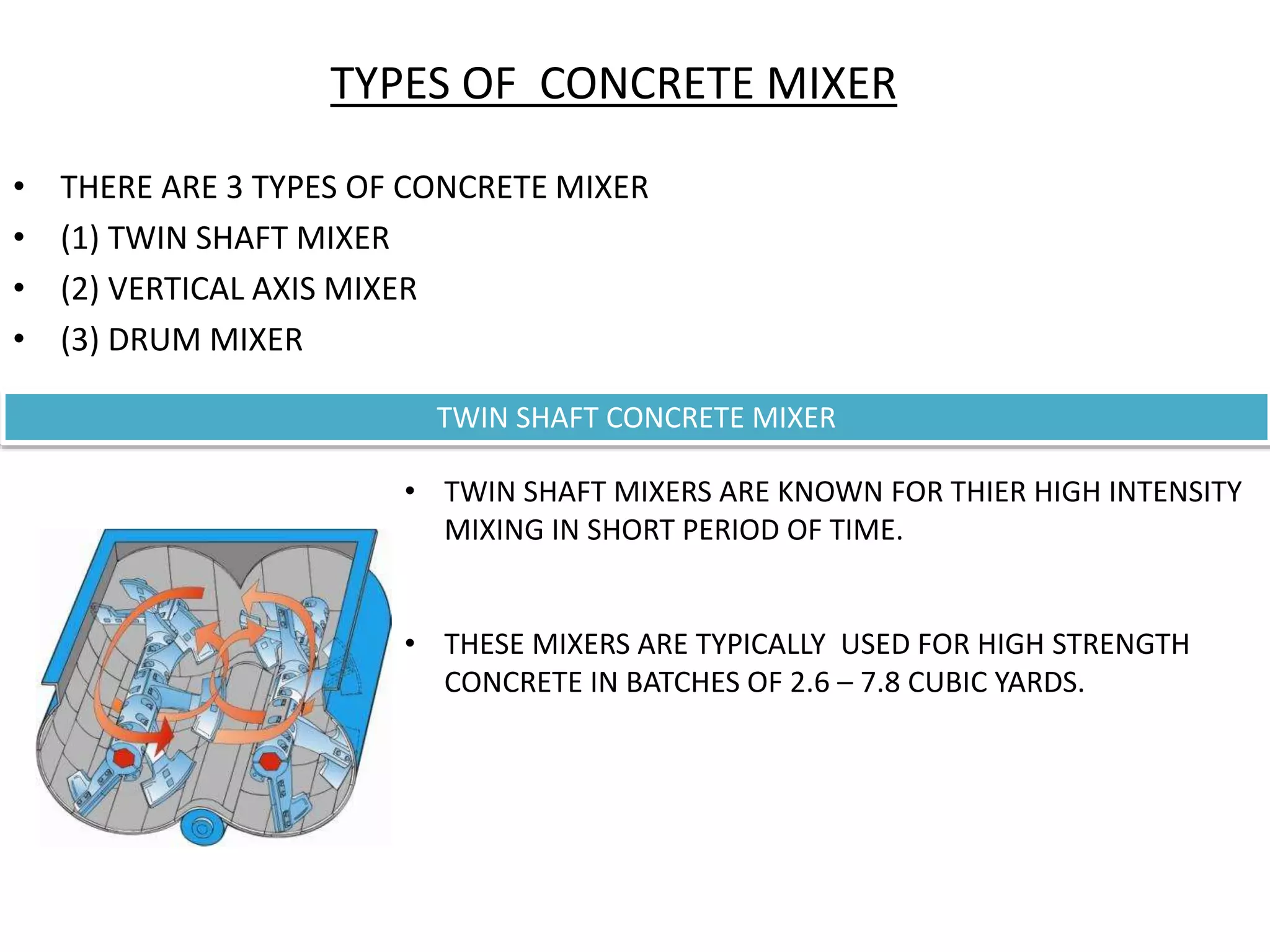
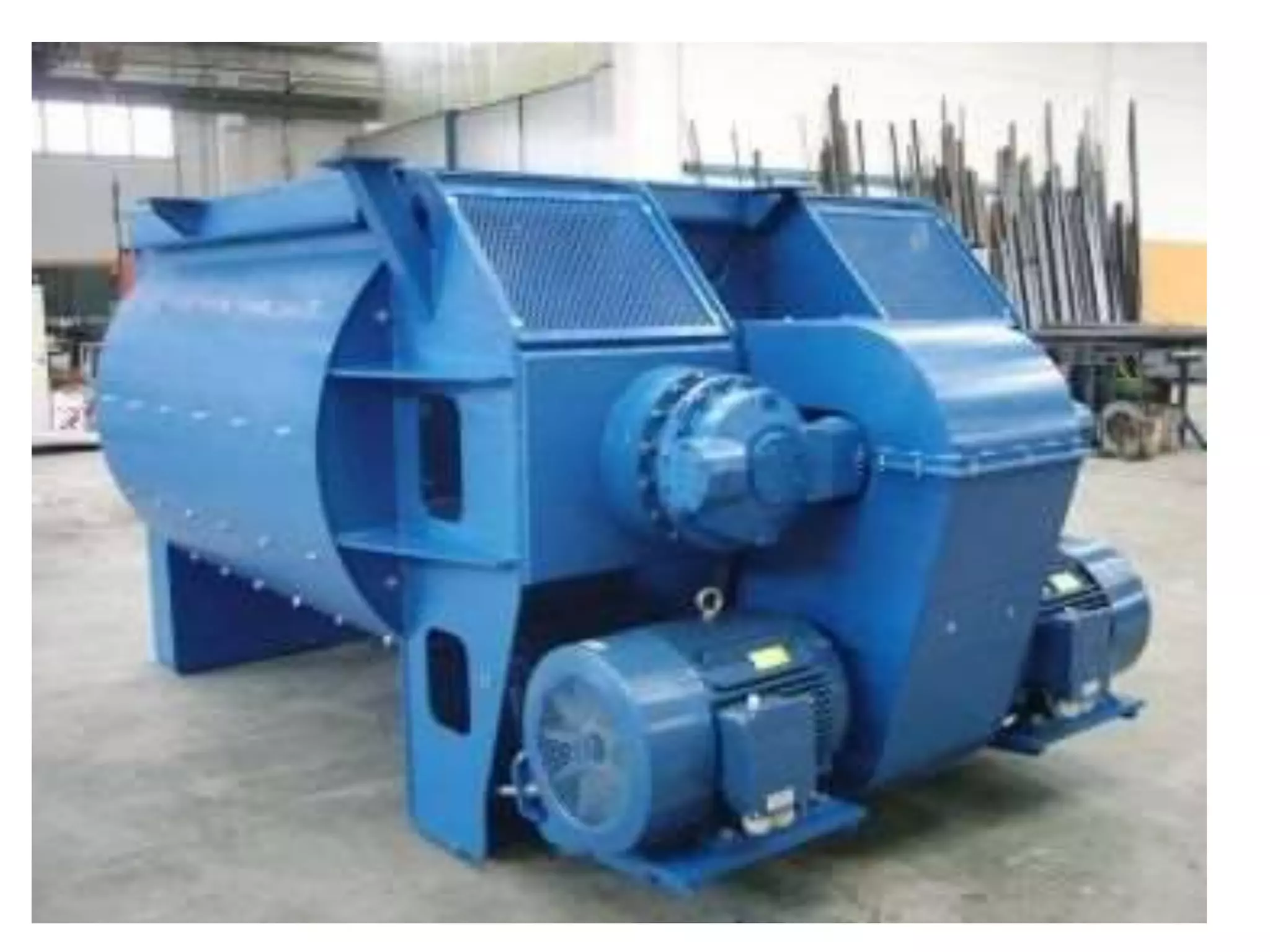
TWIN SHAFT CONCRETE MIXER
• TWIN SHAFT MIXERS ARE KNOWN FOR THIER HIGH INTENSITY
MIXING IN SHORT PERIOD OF TIME.
• THESE MIXERS ARE TYPICALLY USED FOR HIGH STRENGTH
CONCRETE IN BATCHES OF 2.6 – 7.8 CUBIC YARDS.
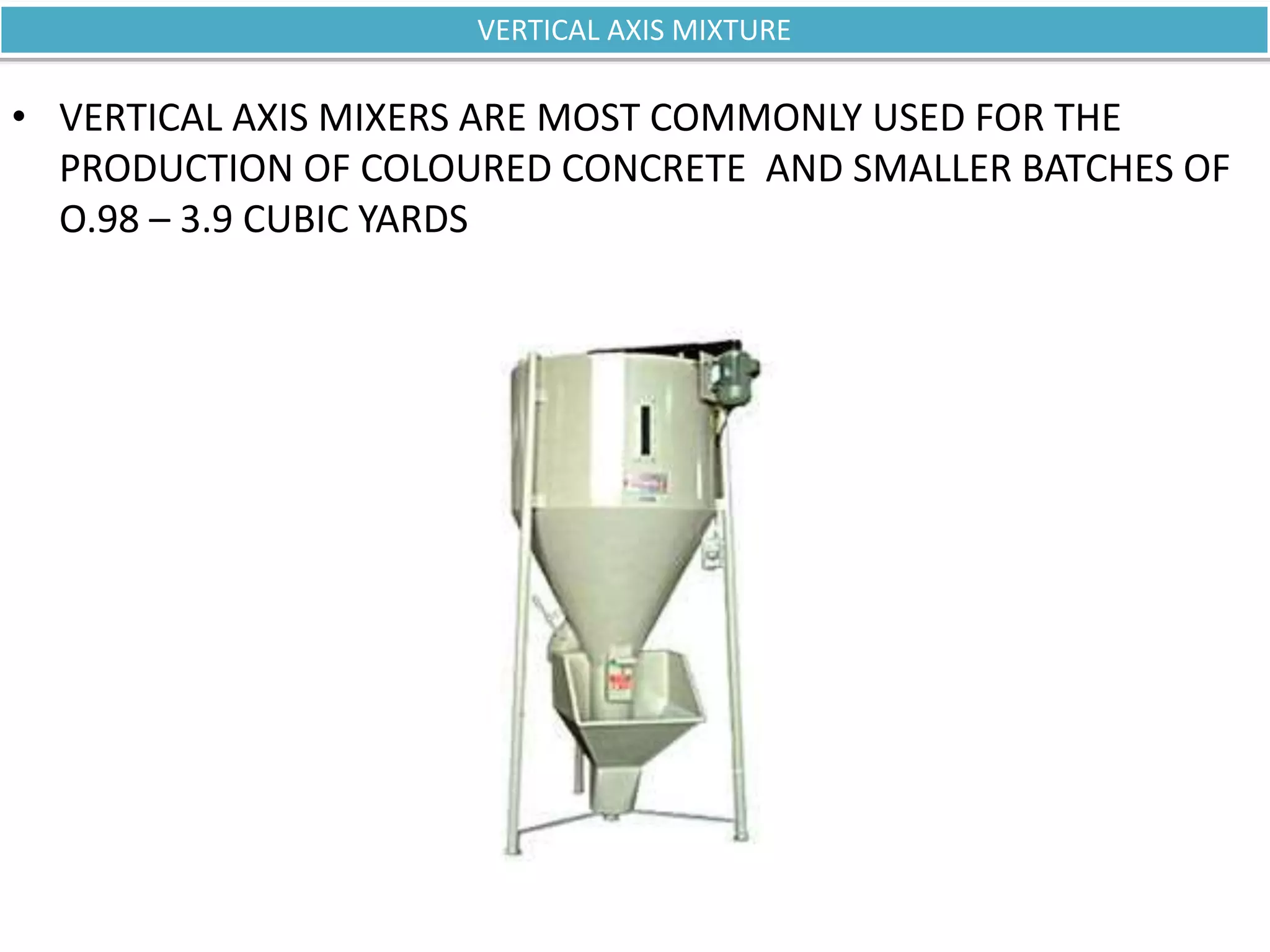
• VERTICAL AXIS MIXERS ARE MOST COMMONLY USED FOR THE
PRODUCTION OF COLOURED CONCRETE AND SMALLER BATCHES OF
O.98 – 3.9 CUBIC YARDS
VERTICAL AXIS MIXTURE
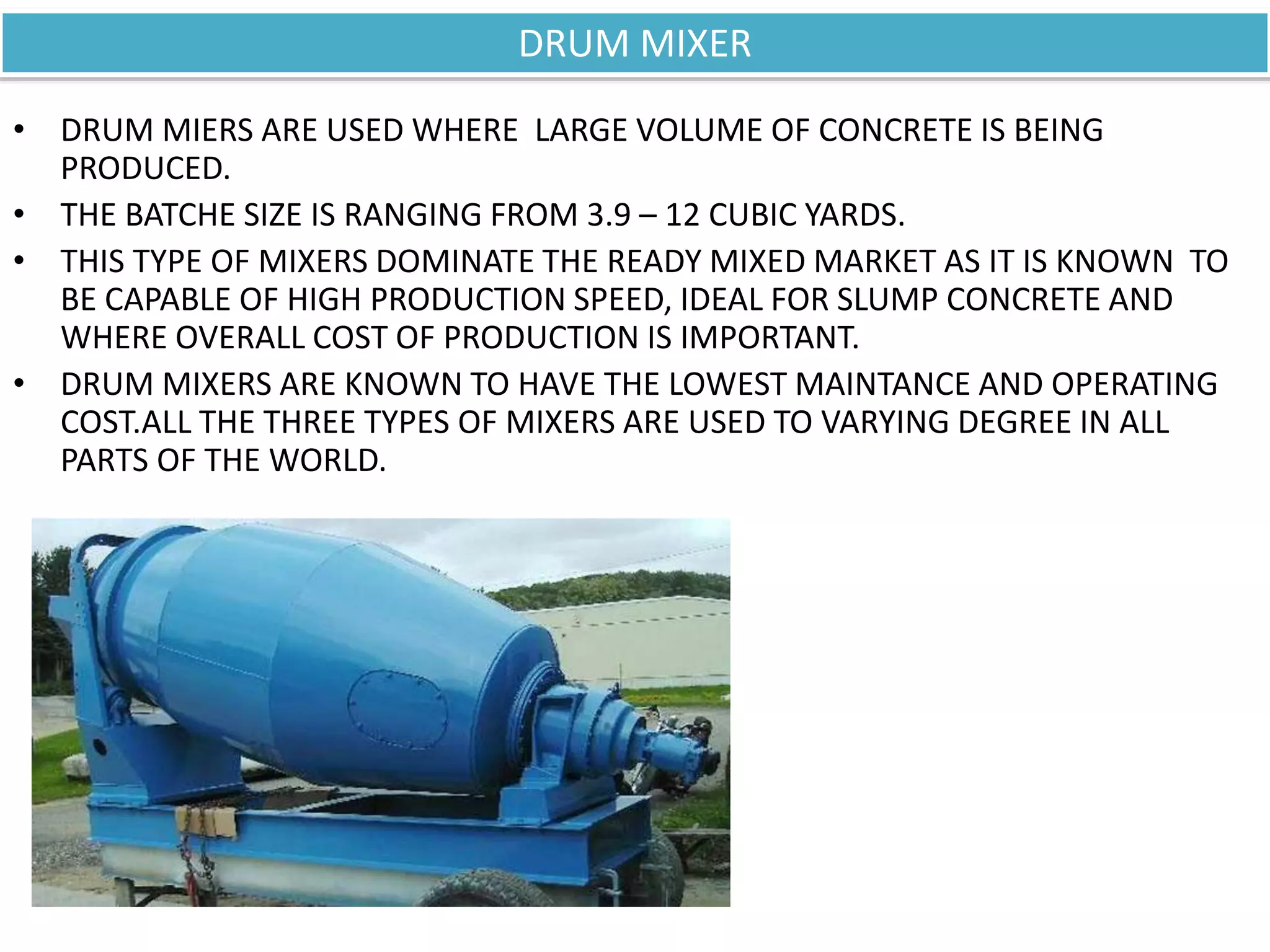
• DRUM MIERS ARE USED WHERE LARGE VOLUME OF CONCRETE IS BEING
PRODUCED.
• THE BATCHE SIZE IS RANGING FROM 3.9 – 12 CUBIC YARDS.
• THIS TYPE OF MIXERS DOMINATE THE READY MIXED MARKET AS IT IS KNOWN TO
BE CAPABLE OF HIGH PRODUCTION SPEED, IDEAL FOR SLUMP CONCRETE AND
WHERE OVERALL COST OF PRODUCTION IS IMPORTANT.
• DRUM MIXERS ARE KNOWN TO HAVE THE LOWEST MAINTANCE AND OPERATING
COST.ALL THE THREE TYPES OF MIXERS ARE USED TO VARYING DEGREE IN ALL
PARTS OF THE WORLD.
DRUM MIXER
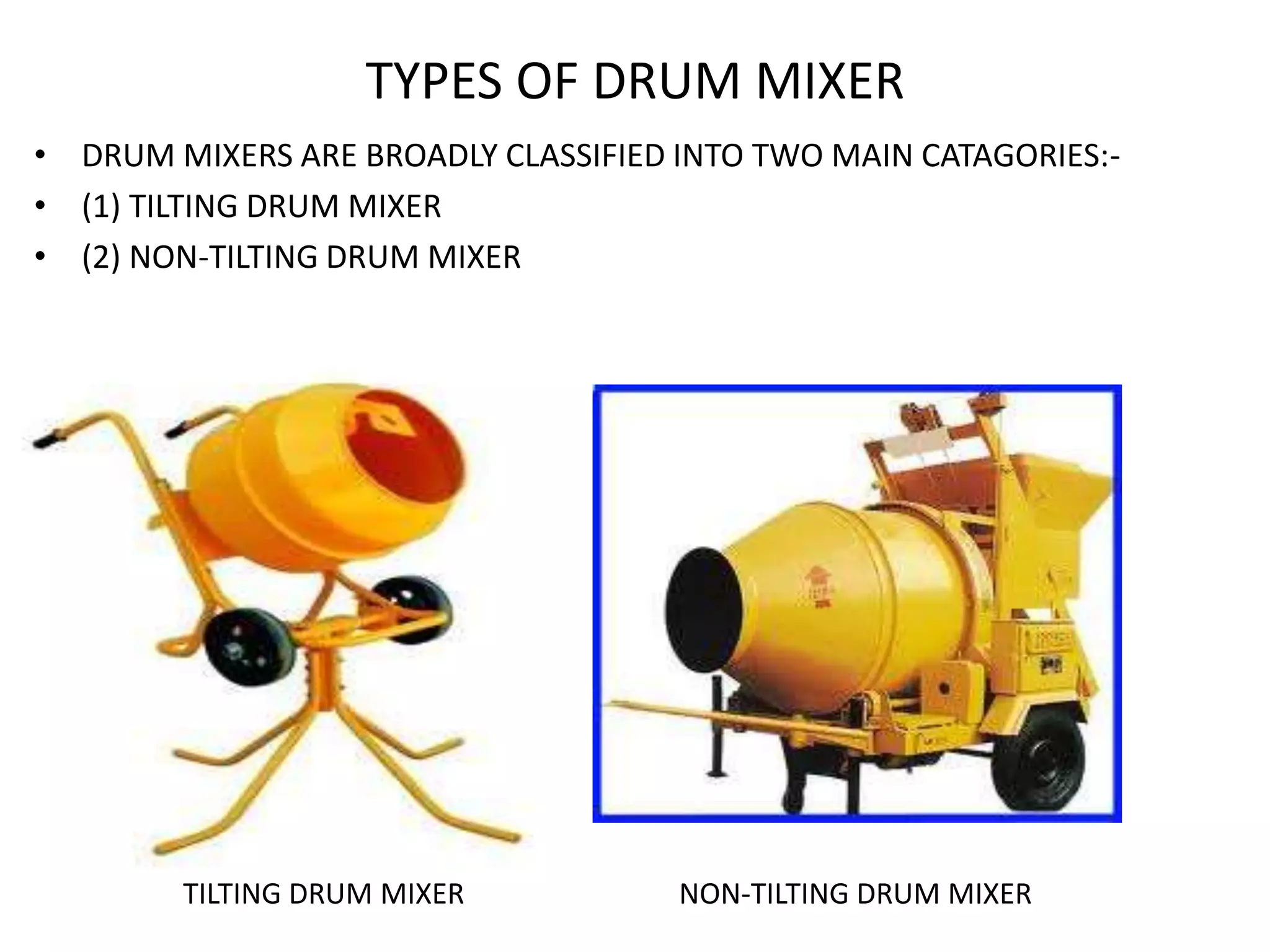
TYPES OF DRUM MIXER
• DRUM MIXERS ARE BROADLY CLASSIFIED INTO TWO MAIN CATAGORIES:-
• (1) TILTING DRUM MIXER
• (2) NON-TILTING DRUM MIXER
TILTING DRUM MIXER NON-TILTING DRUM MIXER

Cranes

  • 1.
  • 2.
    CRANE : DEFINITION Acrane is a lifting machine that principally works with the use of pulleys and cables. For the construction industry, cranes are valuable assets because they make working with heavy machinery and construction materials easy. The ancient Greeks invented the first construction crane hundreds of years ago. Modern day construction cranes are huge, taking up tons of material hundreds of meters in height. For high end infrastructure projects, tower cranes are used that have a reach as high as 800 meters. WORKING OF CRANE • Crane uses the pulley and cable system to create a mechanical advantage so that large loads can be lifted. • Winders, cables, ropes, chains, and a basic level- pulley system are essential parts of any type of crane. • The lever and other simple machines make work easier by decreasing the amount of force required to accomplish lifting and moving tasks. • Levers manipulate the torque involved and enable construction engineers to lift heavy loads. • A pulley serves its basic purpose, which is to distribute the amount of weight needed to lift an object. • Inclusion of electronic components has made cranes even easier to operate because the control remains no more manual.
  • 3.
    TYPES OF CRANES MobileCranes Telescopic Crane Tower Crane Truck Mounted Crane Rough Terrain Crane Loader Crane Overhead Crane 1. MOBILE CRANES Mobile crane is a cable-controlled crane mounted on crawlers or rubber-tired carriers or a hydraulic-powered crane with a telescoping boom mounted on truck-type carriers or as self- propelled models. They are designed to easily transport to a site and use with different types of load and cargo with little or no setup or assembly. They are designed to easily transport to a site and use with different types of load and cargo with little or no setup or assembly. Mobile cranes generally operate a boom from the end of which a hook is suspended by wire rope and sheaves. The wire ropes are operated by whatever prime movers the designers have available, operating through a variety of transmissions. Steam engines, electric motors, and internal combustion engines (IC) have all been used.
  • 4.
  • 5.
    STATIC CRANES Despite havinga similar appearance to the traditional tower cranes, static cranes differ in that the lattice mast is mounted on the slewing ring meaning that the whole tower rotates from one fixed position. They are fitted with a luffing jib which can be raised through 90-degrees from horizontal, with a trolley and hoist block that can move along the length of the jib. Lifting capacity: These will vary depending on the length of the jib, the position to which the jib is raised, and the position of the hoist block along the length. Static cranes tend to be used for low capacity lifting and are beneficial in that they tend to allow for a closer approach to the face of a building.
  • 7.
  • 8.
    ABC D Radius of the Boom Locationof the Tower Crane Tower Crane Rohan Tapovan Rohan Builders Pvt. Ltd. (India) Gokhale Nagar, Near Mendhi Farm Senapati Bapat Marg, Pune. Tower Cranes • Fixed to the ground • Horizontal boom is balanced asymmetrically • Short arm carries a counterweight of concrete blocks • Long arm carries the lifting gear
  • 9.
    CONCRETE MIXER • ACONCRETE MIXER IS A DEVICE THAT HOMOGENEOUSLY COMBINE CEMENT, AGGREGATE(SAND & GRAVAL) AND WATER TO FORM CONCRETE. • A TYPICAL CONCRETE MIXER USES A REVOLVING DRUM TO MIX THE COMPONENTS. • FOR SMALLER VOLUME WORKS PORTABLE CONCRETE MIXERS ARE OFTENLY USED. • THE CONCRETE MIXER WAS INVENTED BY A COLUMBUS INDUSTRIALIST GEBHARDT JAEGER
  • 10.
    TYPES OF CONCRETEMIXER • THERE ARE 3 TYPES OF CONCRETE MIXER • (1) TWIN SHAFT MIXER • (2) VERTICAL AXIS MIXER • (3) DRUM MIXER TWIN SHAFT CONCRETE MIXER • TWIN SHAFT MIXERS ARE KNOWN FOR THIER HIGH INTENSITY MIXING IN SHORT PERIOD OF TIME. • THESE MIXERS ARE TYPICALLY USED FOR HIGH STRENGTH CONCRETE IN BATCHES OF 2.6 – 7.8 CUBIC YARDS.
  • 12.
    • VERTICAL AXISMIXERS ARE MOST COMMONLY USED FOR THE PRODUCTION OF COLOURED CONCRETE AND SMALLER BATCHES OF O.98 – 3.9 CUBIC YARDS VERTICAL AXIS MIXTURE
  • 13.
    • DRUM MIERSARE USED WHERE LARGE VOLUME OF CONCRETE IS BEING PRODUCED. • THE BATCHE SIZE IS RANGING FROM 3.9 – 12 CUBIC YARDS. • THIS TYPE OF MIXERS DOMINATE THE READY MIXED MARKET AS IT IS KNOWN TO BE CAPABLE OF HIGH PRODUCTION SPEED, IDEAL FOR SLUMP CONCRETE AND WHERE OVERALL COST OF PRODUCTION IS IMPORTANT. • DRUM MIXERS ARE KNOWN TO HAVE THE LOWEST MAINTANCE AND OPERATING COST.ALL THE THREE TYPES OF MIXERS ARE USED TO VARYING DEGREE IN ALL PARTS OF THE WORLD. DRUM MIXER
  • 14.
    TYPES OF DRUMMIXER • DRUM MIXERS ARE BROADLY CLASSIFIED INTO TWO MAIN CATAGORIES:- • (1) TILTING DRUM MIXER • (2) NON-TILTING DRUM MIXER TILTING DRUM MIXER NON-TILTING DRUM MIXER