EMPLOYEE ON-BOARDING - HR
April 13, 2018
By Ankit AGGARWAL
2
Employee On-boarding
- YOU NEVER GET A SECOND CHANCE TO MAKE A FIRST IMPRESSION
The Cause of Employee Dis-Engagement
We live in 2018 and work in 1970.
3
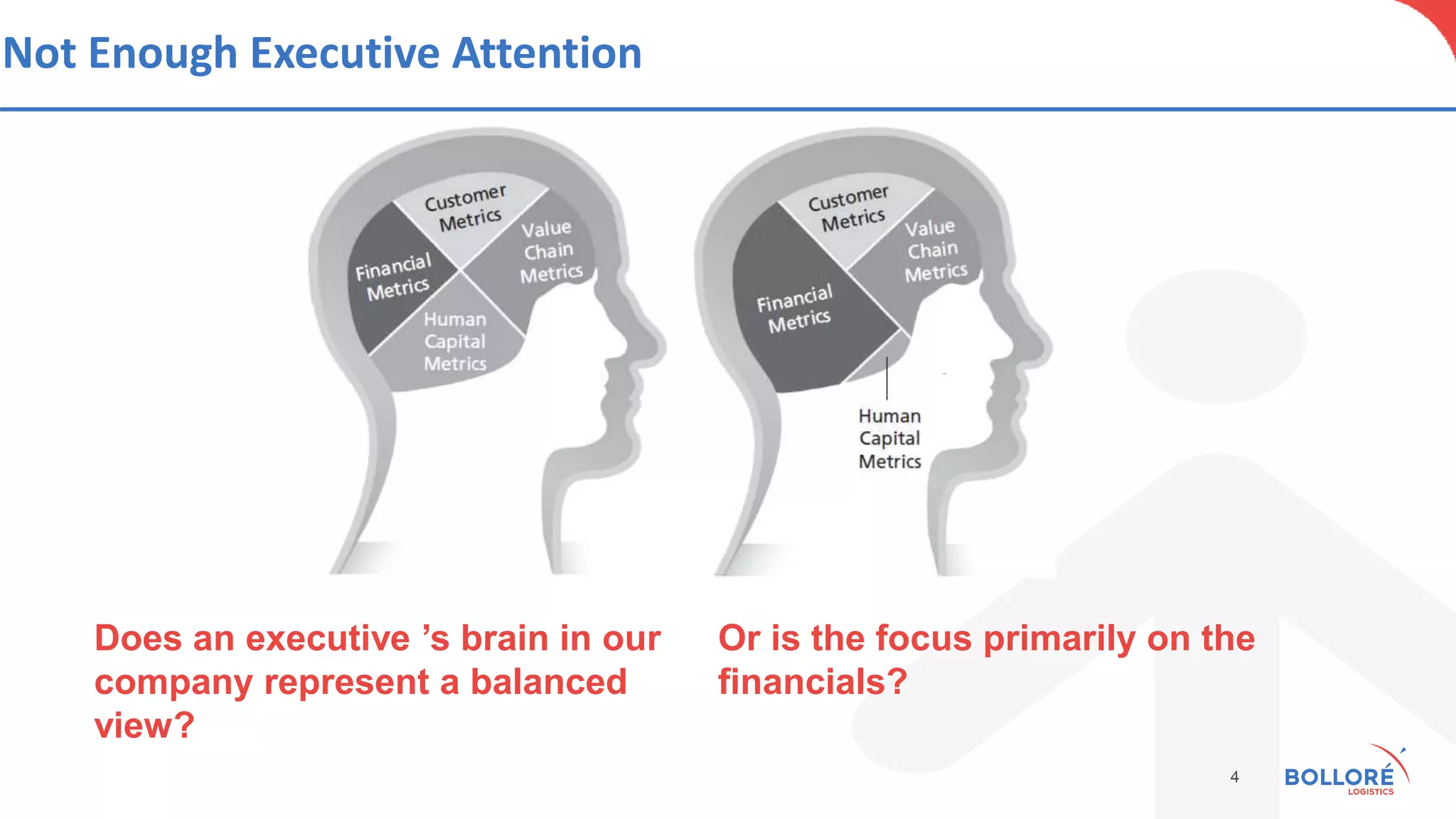
Not Enough Executive Attention
4
Does an executive ’s brain in our
company represent a balanced
view?
Or is the focus primarily on the
financials?
What Is Onboarding?
Onboarding is the process of bringing new hires into our
company—what Wikipedia calls “organizational socialization.”
When onboarding is well-executed, the new hire feels welcomed and integrated. Expectations are clearly
communicated, mentors and training opportunities are provided, and feedback is offered to support growth
and correction.
5
Current Performance
Only 39% of managers satisfied with integration efforts
—RHR Consulting
Only 56% of employees feel their managers have a good
knowledge of what they do and provide for the use of their unique
talents.
— TalentMap
An average of 50% of newly hired executives quit or are fired within
their first three years
— Harvard Business School
89% of new hires don’t have knowledge needed to “hit the ground
running”
— AIRS
46% of newly-hired employees will fail within 18 months, while only
19% will achieve unequivocal success
— Leadership IQ
6
Onboarding Should Be a Top HR Priority
25 percent of the working population experiences
career transitions
Managers begin new jobs every two to four years.
50% of senior outside hires fail within 18 months
in a new position.
50% of hourly workers leave new jobs within the
first 120 days.
7
What Do You Feel Is The Number One Reason For Improving
Onboarding?
47%
22%
14%
6%
0%
11%
0%
10%
20%
30%
40%
50%
60%
70%
80%
90%
100%
Improve
retention
rates
Improve
time to
productivity
Improve
stakeholder
satisfaction
Improve
org. brand
Reduce
admin. cost
Other
Frequency(%)
8
Structured Onboarding Impacts Retention & Engagement
A structured onboarding program - 58% more likely to remain with the organization after
three years:
Source: Wynhurst Group
The first 90 days of employment (often called the probationary period) is pivotal to building
rapport with the company, management and coworkers.
A study of 264 new employees published in a Management Journal found:
when support levels were high from the team and leaders, new hires often had more positive attitudes about their job and worked harder.
when not offered, the inverse occurred, leading to unhappy and unproductive employees who didn’t make it much further than four months.
Onboarding increase satisfaction, clarifying expectations and objectives to improve
performance, and reduces unwanted turnover.
9
Structured Onboarding Impacts Retention & Engagement
10
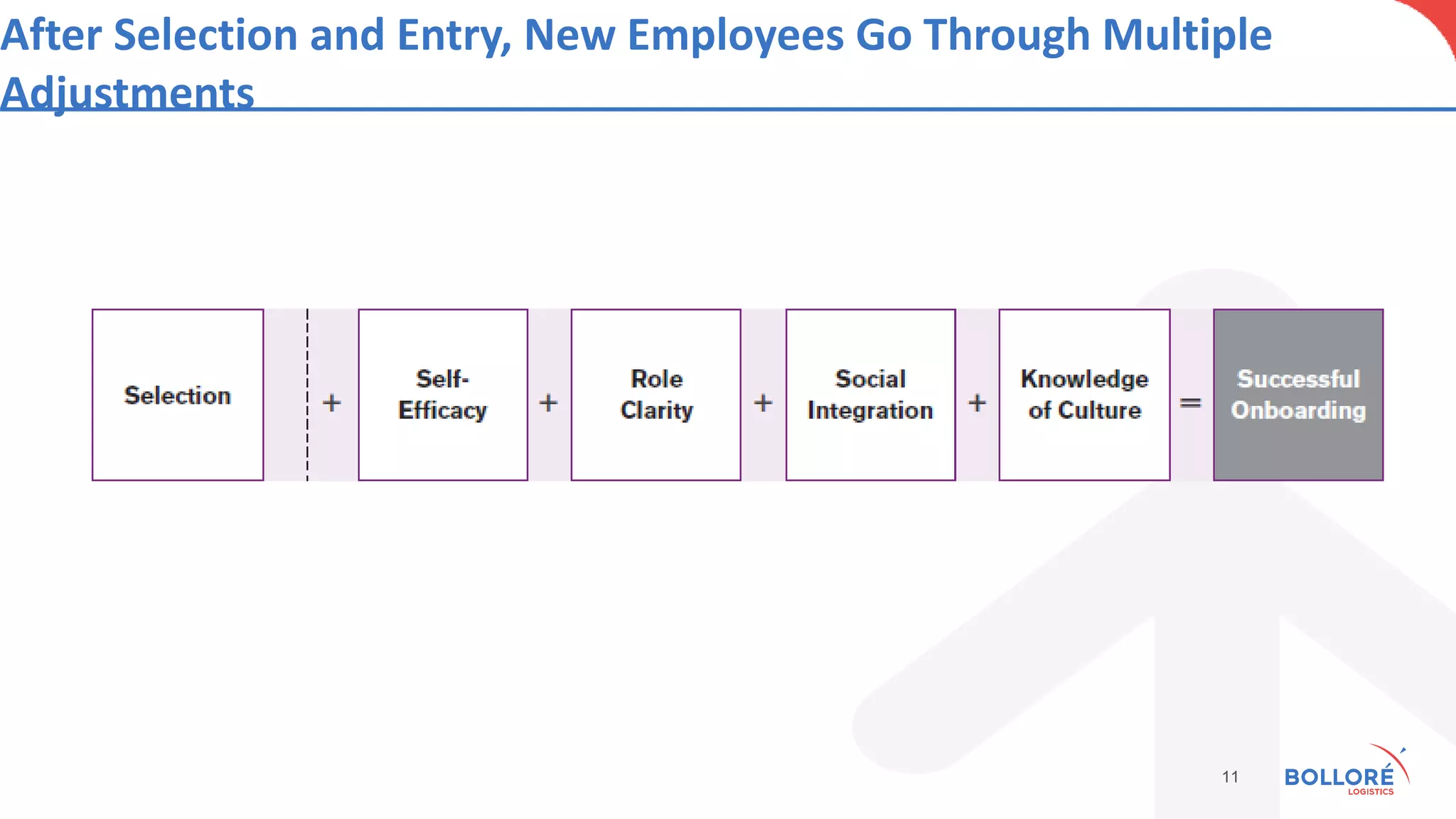
Onboarding helps new employees adjust to their jobs by
establishing better relationships to increase satisfaction,
clarifying expectations and objectives to improve performance,
and providing support to help reduce unwanted turnover.
After Selection and Entry, New Employees Go Through Multiple
Adjustments
11
The 4 Levels of On-boarding…
The Job
(clarification)
The Fit
(culture)
The Affirmation
(connection)
The Basics
(compliance)
12
Level 1 – The Basics
“Welcome Wagon”
Satisfies legal/HR Needs
Benefits enrollment/paperwork
Overview of the organizational chart
Company Presentations
Product/Services overview
13
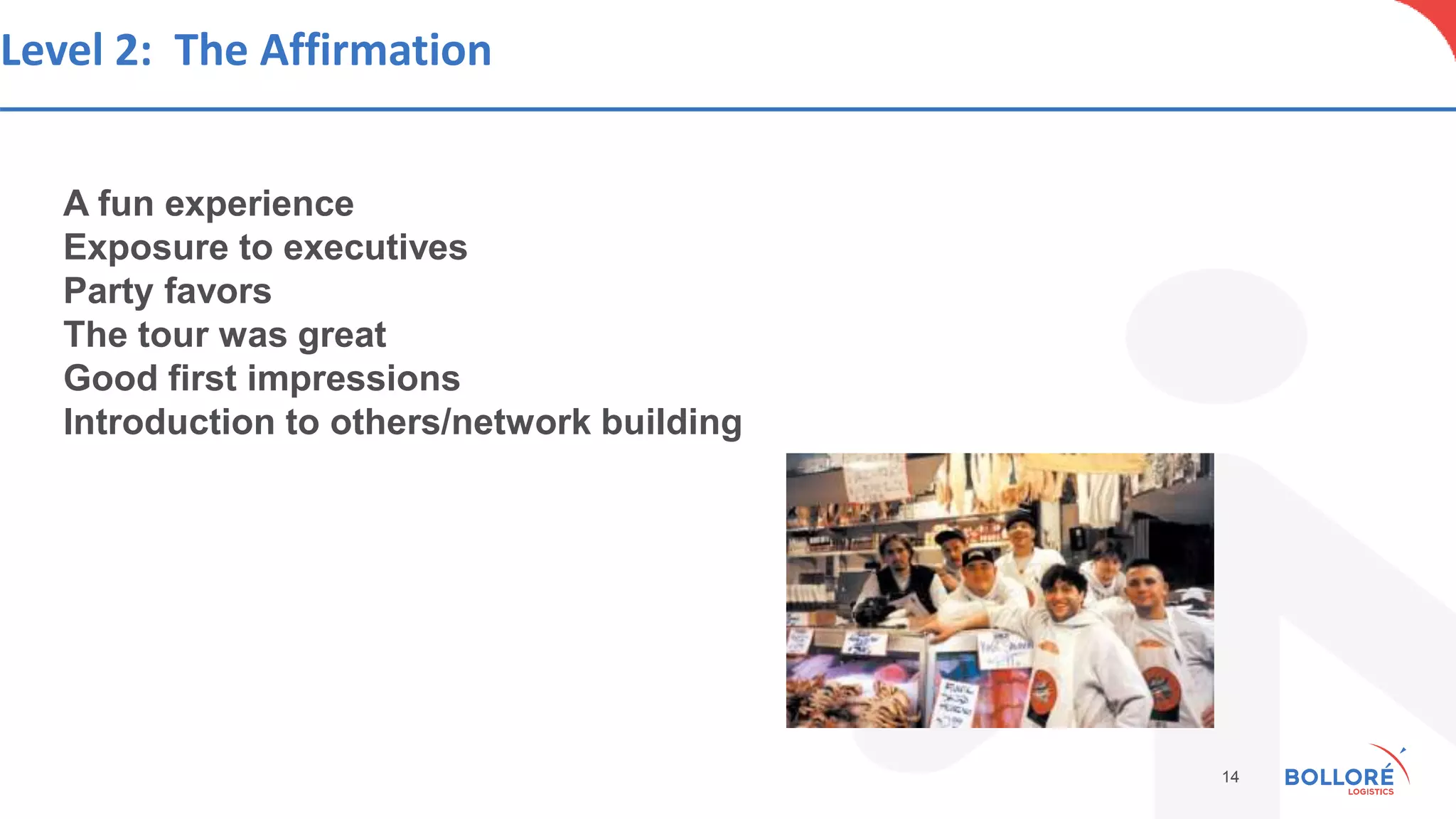
Level 2: The Affirmation
A fun experience
Exposure to executives
Party favors
The tour was great
Good first impressions
Introduction to others/network building
14
Level 3: The Fit
Mission/vision/values overview
Learning Maps – understanding your business
Model the culture you aspire to
Customers
Clarify work conditions/unspoken rules of the road
Job specific & function specific info
15
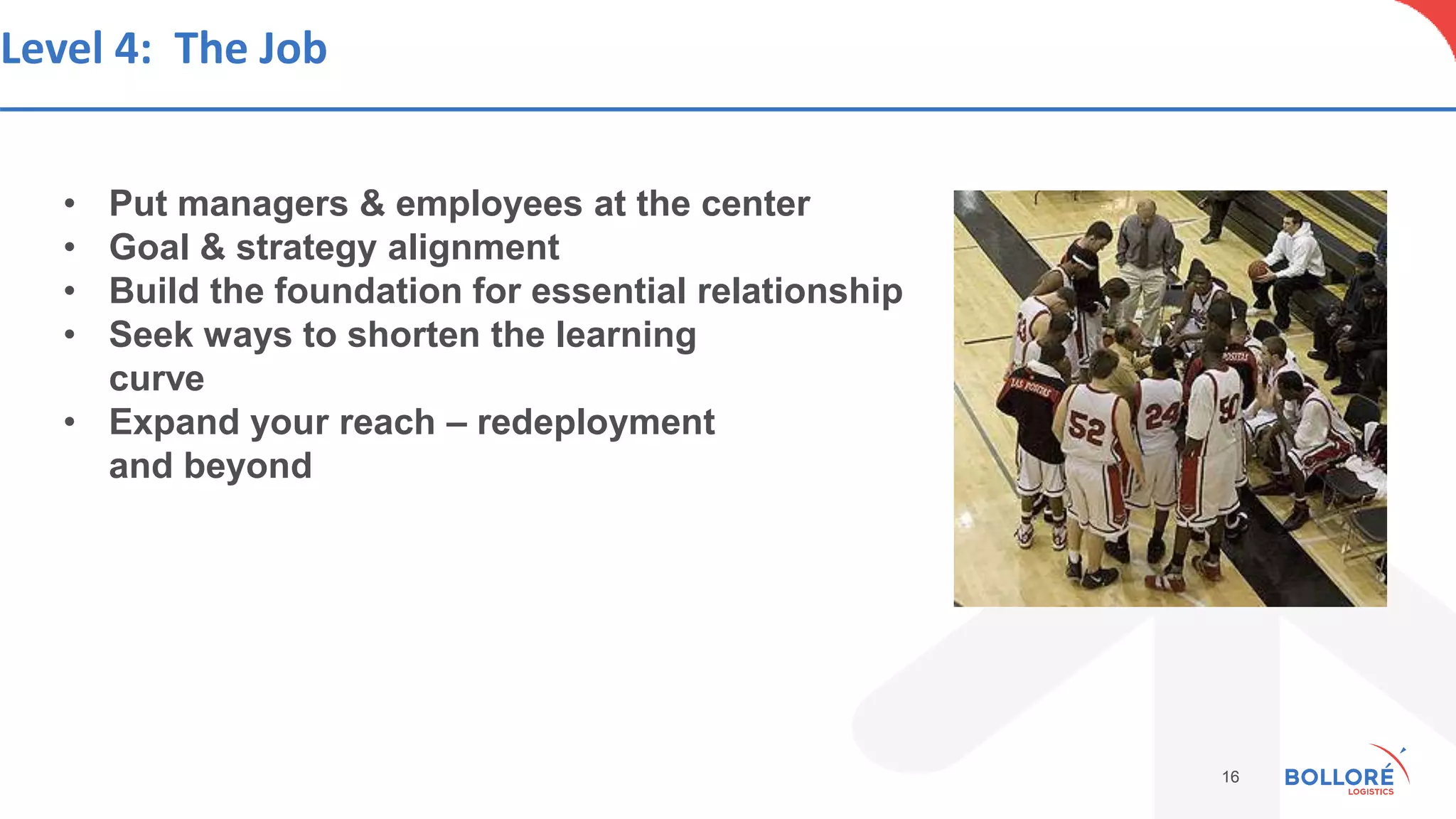
Level 4: The Job
• Put managers & employees at the center
• Goal & strategy alignment
• Build the foundation for essential relationship
• Seek ways to shorten the learning
curve
• Expand your reach – redeployment
and beyond
16
3 Stages of On-boarding
Separated on-boarding into 3 stages:
pre-hire
new hire (first day/week), and
post hire (1-3 and 3-6 months after joining)
17
Best Practices for Onboarding
✔ Implement the basics prior to the first day on
the job.
✔ Make the first day on the job special.
✔ Use formal orientation programs.
✔ Develop a written onboarding plan.
✔ Make onboarding participatory.
✔ Be sure your program is consistently
implemented.
✔ Ensure that the program is monitored over
time.
✔ Use technology to facilitate the process.
✔ Use milestones, such as 30, 60, 90 and 120
days on the job—and up to one year post-
organizational entry—to check in on employee
progress.
✔ Engage stakeholders in planning.
✔ Include key stakeholder meetings as part of
the program.
✔ Be crystal clear with new employees in terms
of:
• Objectives
• Timelines
• Roles
• Responsibilities
18
End Results if the Onboarding is done correctly
• Higher job satisfaction
• Organizational commitment
• Lower turnover
• Higher performance levels
• Career effectiveness
• Lowered stress
19
Importance of employee on boarding

Importance of employee on boarding

  • 1.
    EMPLOYEE ON-BOARDING -HR April 13, 2018 By Ankit AGGARWAL
  • 2.
    2 Employee On-boarding - YOUNEVER GET A SECOND CHANCE TO MAKE A FIRST IMPRESSION
  • 3.
    The Cause ofEmployee Dis-Engagement We live in 2018 and work in 1970. 3
  • 4.
    Not Enough ExecutiveAttention 4 Does an executive ’s brain in our company represent a balanced view? Or is the focus primarily on the financials?
  • 5.
    What Is Onboarding? Onboardingis the process of bringing new hires into our company—what Wikipedia calls “organizational socialization.” When onboarding is well-executed, the new hire feels welcomed and integrated. Expectations are clearly communicated, mentors and training opportunities are provided, and feedback is offered to support growth and correction. 5
  • 6.
    Current Performance Only 39%of managers satisfied with integration efforts —RHR Consulting Only 56% of employees feel their managers have a good knowledge of what they do and provide for the use of their unique talents. — TalentMap An average of 50% of newly hired executives quit or are fired within their first three years — Harvard Business School 89% of new hires don’t have knowledge needed to “hit the ground running” — AIRS 46% of newly-hired employees will fail within 18 months, while only 19% will achieve unequivocal success — Leadership IQ 6
  • 7.
    Onboarding Should Bea Top HR Priority 25 percent of the working population experiences career transitions Managers begin new jobs every two to four years. 50% of senior outside hires fail within 18 months in a new position. 50% of hourly workers leave new jobs within the first 120 days. 7
  • 8.
    What Do YouFeel Is The Number One Reason For Improving Onboarding? 47% 22% 14% 6% 0% 11% 0% 10% 20% 30% 40% 50% 60% 70% 80% 90% 100% Improve retention rates Improve time to productivity Improve stakeholder satisfaction Improve org. brand Reduce admin. cost Other Frequency(%) 8
  • 9.
    Structured Onboarding ImpactsRetention & Engagement A structured onboarding program - 58% more likely to remain with the organization after three years: Source: Wynhurst Group The first 90 days of employment (often called the probationary period) is pivotal to building rapport with the company, management and coworkers. A study of 264 new employees published in a Management Journal found: when support levels were high from the team and leaders, new hires often had more positive attitudes about their job and worked harder. when not offered, the inverse occurred, leading to unhappy and unproductive employees who didn’t make it much further than four months. Onboarding increase satisfaction, clarifying expectations and objectives to improve performance, and reduces unwanted turnover. 9
  • 10.
    Structured Onboarding ImpactsRetention & Engagement 10 Onboarding helps new employees adjust to their jobs by establishing better relationships to increase satisfaction, clarifying expectations and objectives to improve performance, and providing support to help reduce unwanted turnover.
  • 11.
    After Selection andEntry, New Employees Go Through Multiple Adjustments 11
  • 12.
    The 4 Levelsof On-boarding… The Job (clarification) The Fit (culture) The Affirmation (connection) The Basics (compliance) 12
  • 13.
    Level 1 –The Basics “Welcome Wagon” Satisfies legal/HR Needs Benefits enrollment/paperwork Overview of the organizational chart Company Presentations Product/Services overview 13
  • 14.
    Level 2: TheAffirmation A fun experience Exposure to executives Party favors The tour was great Good first impressions Introduction to others/network building 14
  • 15.
    Level 3: TheFit Mission/vision/values overview Learning Maps – understanding your business Model the culture you aspire to Customers Clarify work conditions/unspoken rules of the road Job specific & function specific info 15
  • 16.
    Level 4: TheJob • Put managers & employees at the center • Goal & strategy alignment • Build the foundation for essential relationship • Seek ways to shorten the learning curve • Expand your reach – redeployment and beyond 16
  • 17.
    3 Stages ofOn-boarding Separated on-boarding into 3 stages: pre-hire new hire (first day/week), and post hire (1-3 and 3-6 months after joining) 17
  • 18.
    Best Practices forOnboarding ✔ Implement the basics prior to the first day on the job. ✔ Make the first day on the job special. ✔ Use formal orientation programs. ✔ Develop a written onboarding plan. ✔ Make onboarding participatory. ✔ Be sure your program is consistently implemented. ✔ Ensure that the program is monitored over time. ✔ Use technology to facilitate the process. ✔ Use milestones, such as 30, 60, 90 and 120 days on the job—and up to one year post- organizational entry—to check in on employee progress. ✔ Engage stakeholders in planning. ✔ Include key stakeholder meetings as part of the program. ✔ Be crystal clear with new employees in terms of: • Objectives • Timelines • Roles • Responsibilities 18
  • 19.
    End Results ifthe Onboarding is done correctly • Higher job satisfaction • Organizational commitment • Lower turnover • Higher performance levels • Career effectiveness • Lowered stress 19