Water, food and ecosystemsA productivity lens vs. a resilience lensAlain Vidal & Marcela QuinteroCGIAR Challenge Program on Water and FoodIUCN Workshop on Managing Ecosystems for Food and Nutrition SecurityGland, Switzeland, 13-14 December 2010
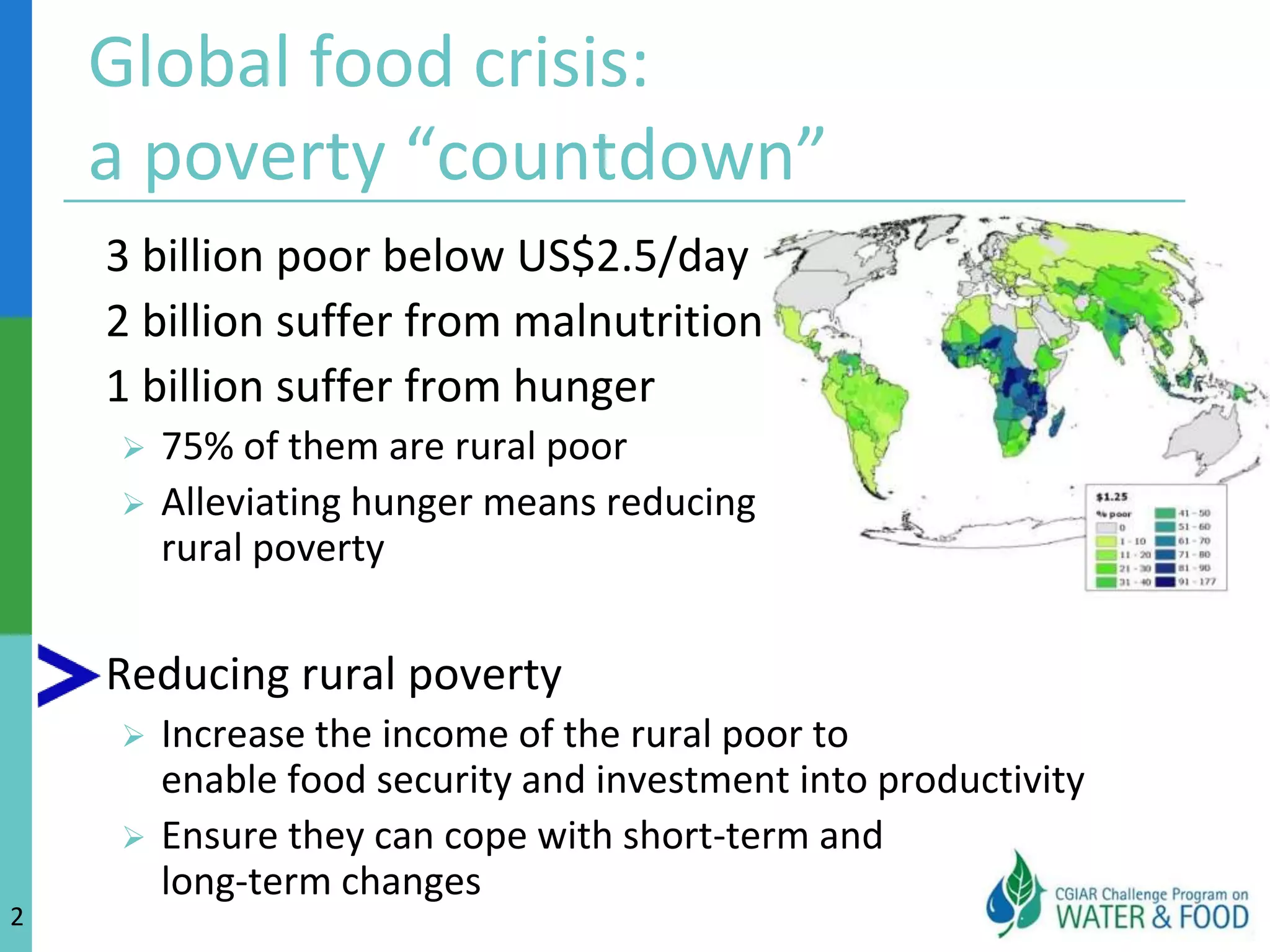
Global food crisis: a poverty “countdown”3 billion poor below US$2.5/day	2 billion suffer from malnutrition	1 billion suffer from hunger 75% of them are rural poor
Alleviating hunger means reducing rural povertyReducing rural povertyIncrease the income of the rural poor to enable food security and investment into productivity
Ensure they can cope with short-term and long-term changes2
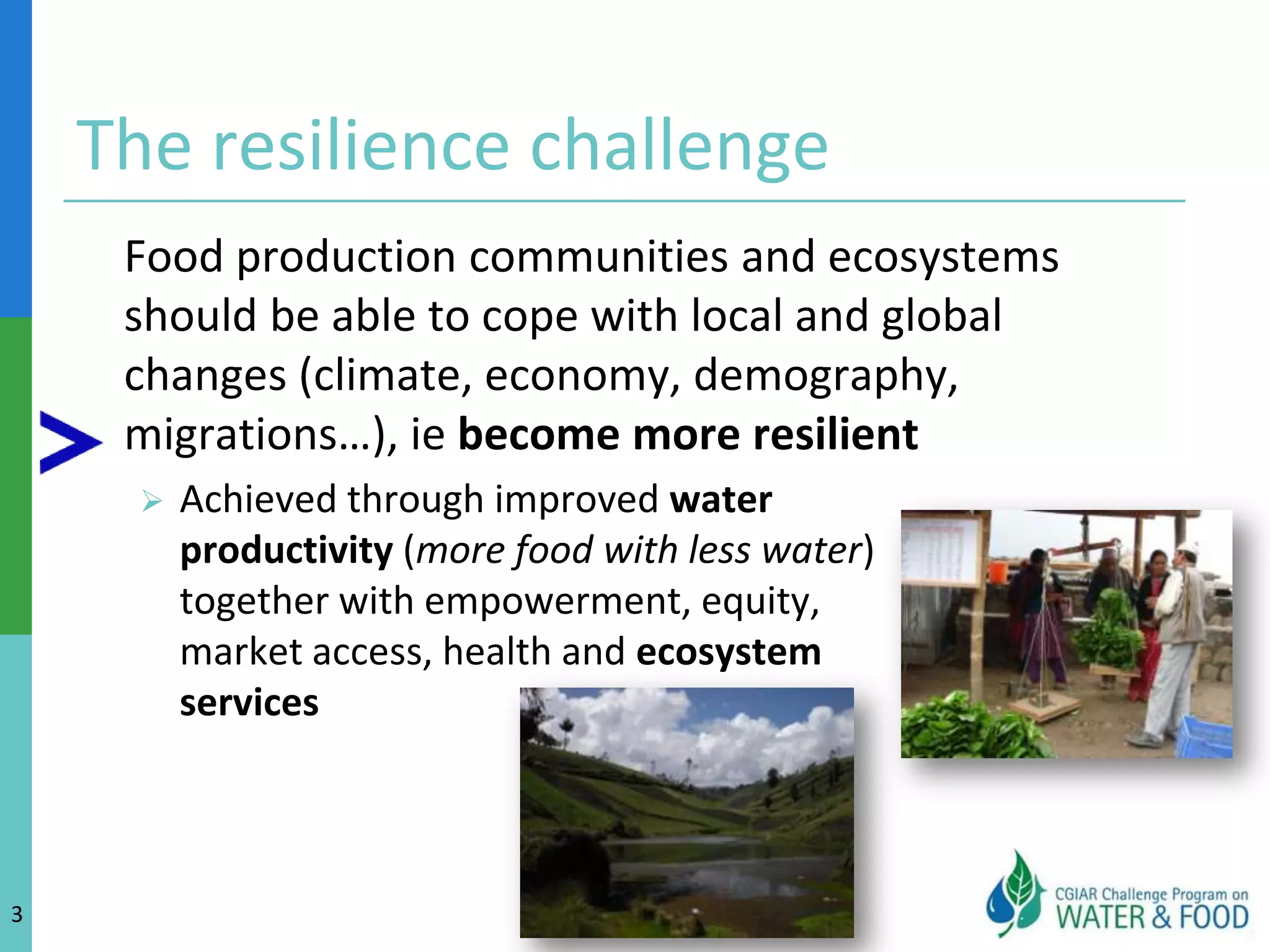
The resilience challenge	Food production communities and ecosystems should be able to cope with local and global changes (climate, economy, demography, migrations…), ie becomemore resilientAchieved through improved water productivity (more food with less water) together with empowerment, equity, market access, health and ecosystemservices3
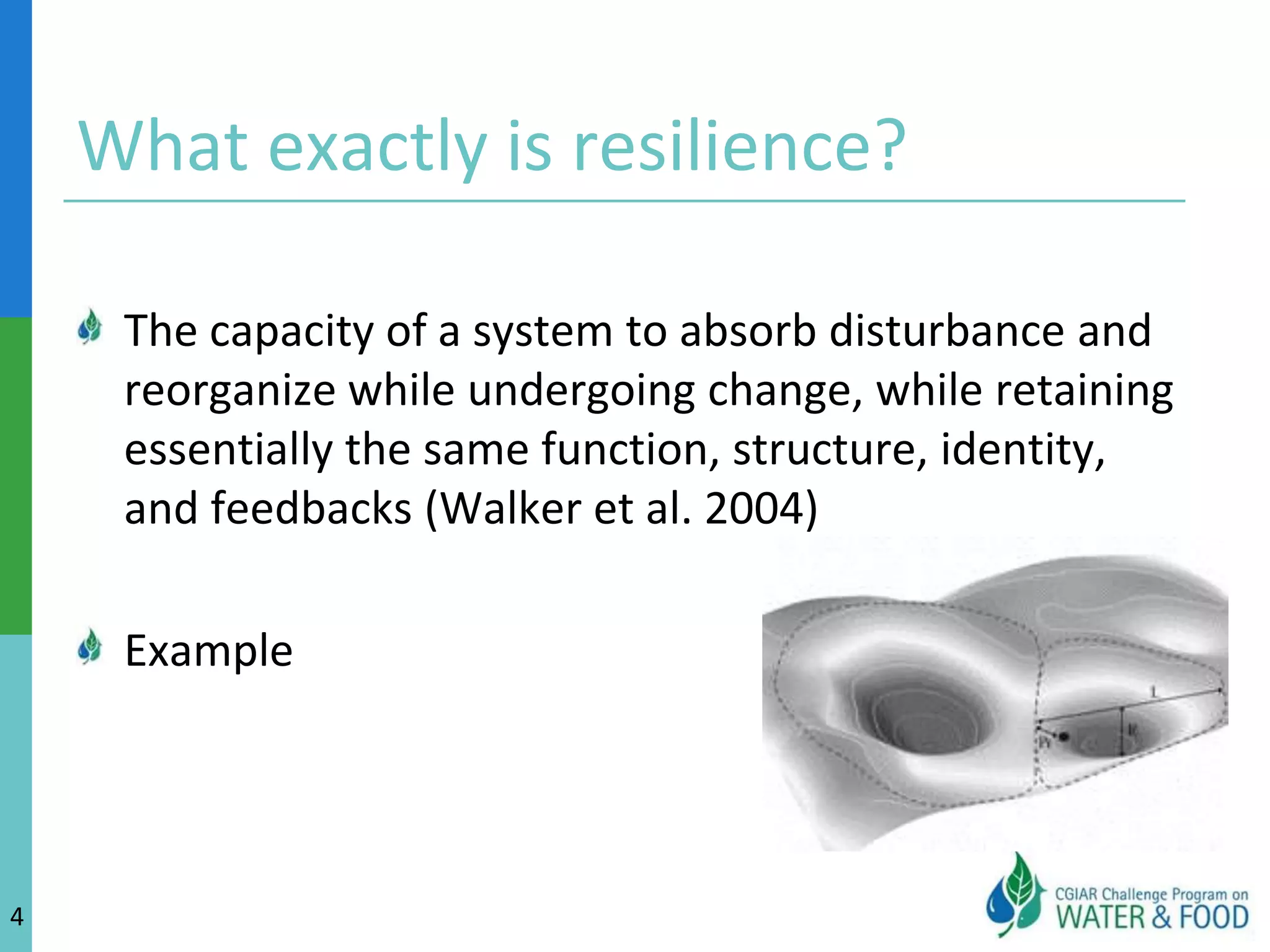
What exactly is resilience?The capacity of a system to absorb disturbance and reorganize while undergoing change, while retaining  essentially the same function, structure, identity, and feedbacks (Walker et al. 2004)Example4
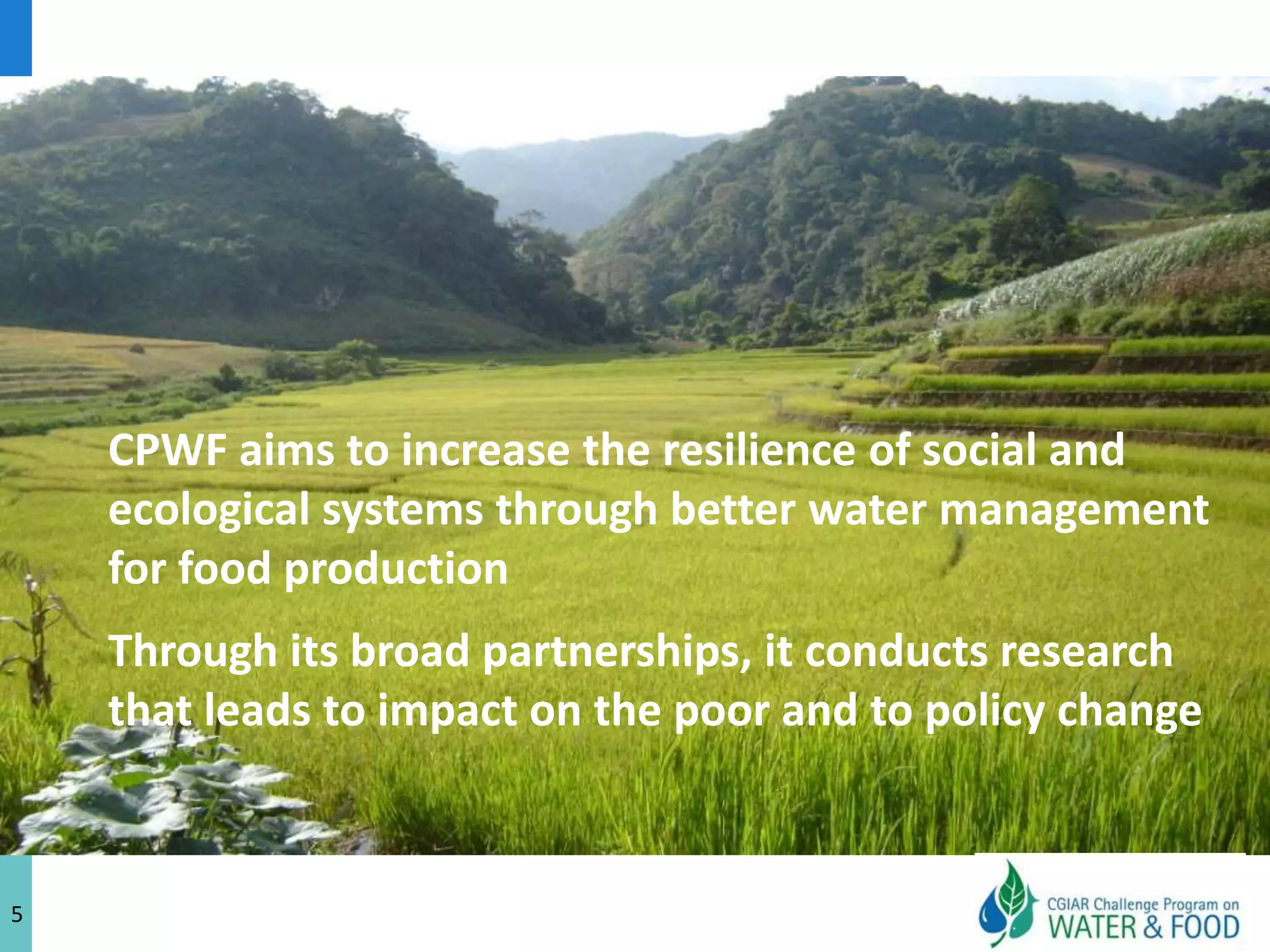
CPWF aims to increase the resilience of social and ecological systems through better water management for food productionThrough its broad partnerships, it conducts research that leads to impact on the poor and to policy change 5
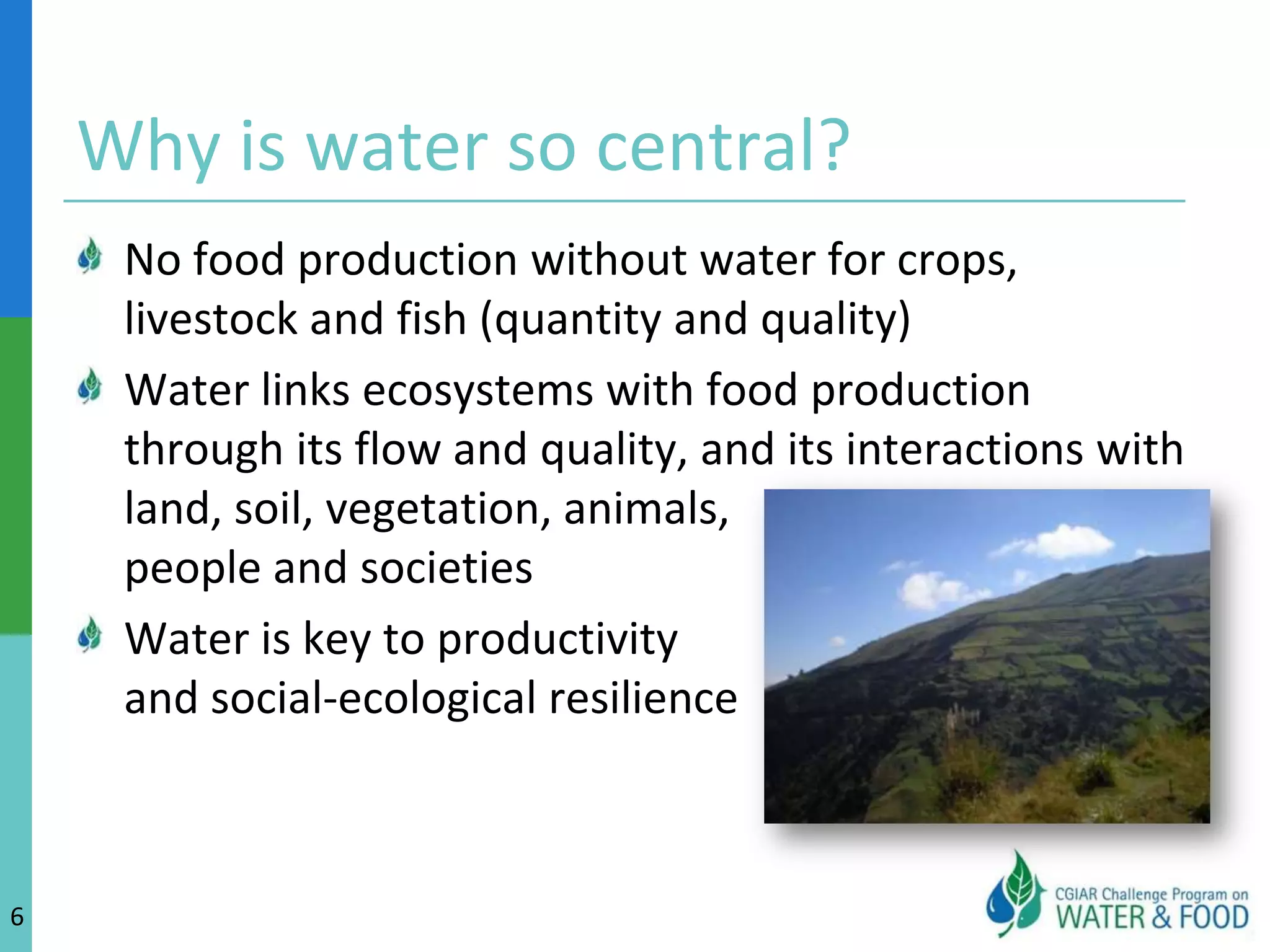
Why is water so central?	No food production without water for crops, livestock and fish (quantity and quality)Water links ecosystems with food production through its flow and quality, and its interactions with land, soil, vegetation, animals, people and societiesWater is key to productivity and social-ecological resilience6
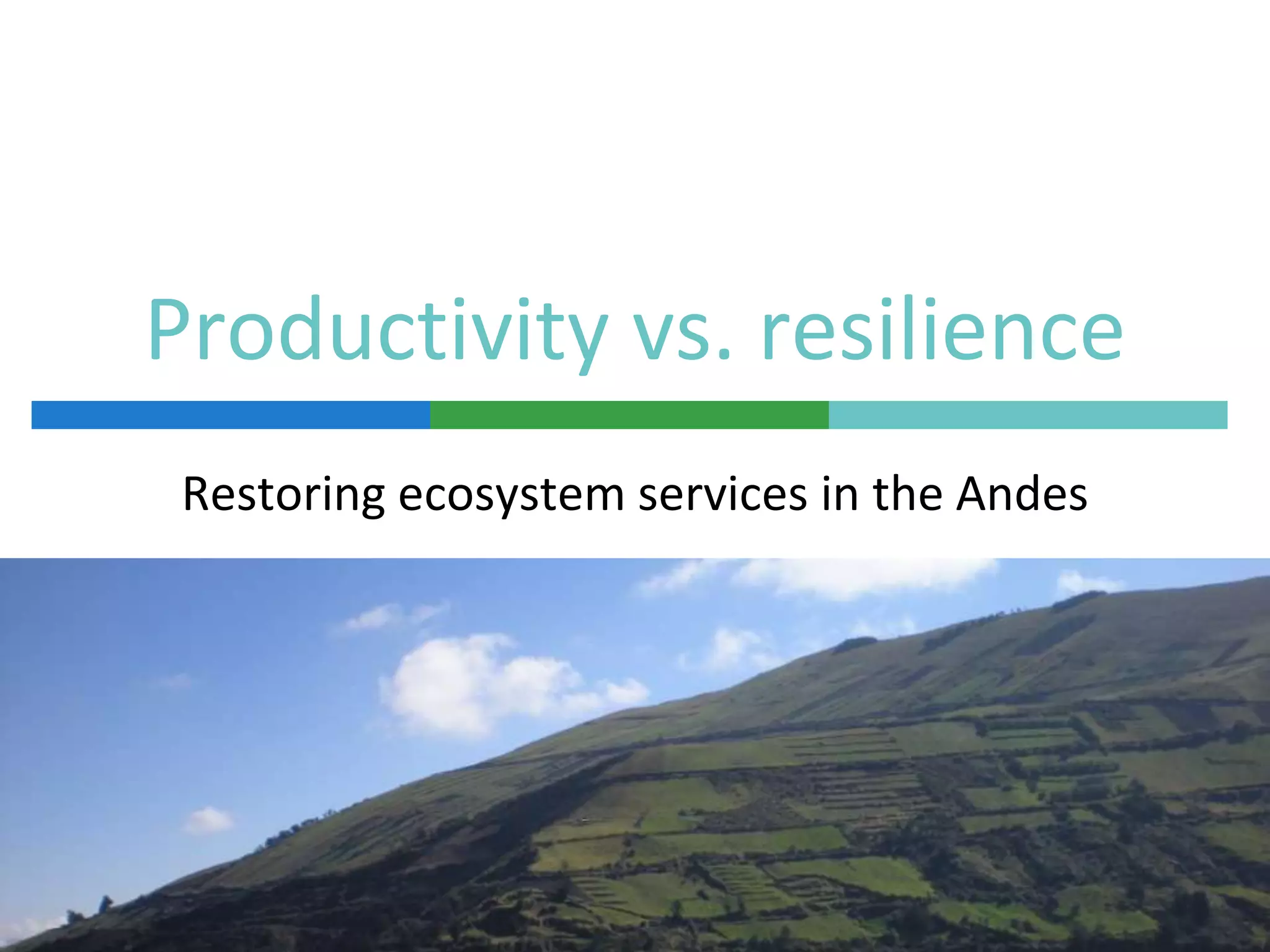
Productivity vs. resilienceRestoring ecosystem services in the Andes
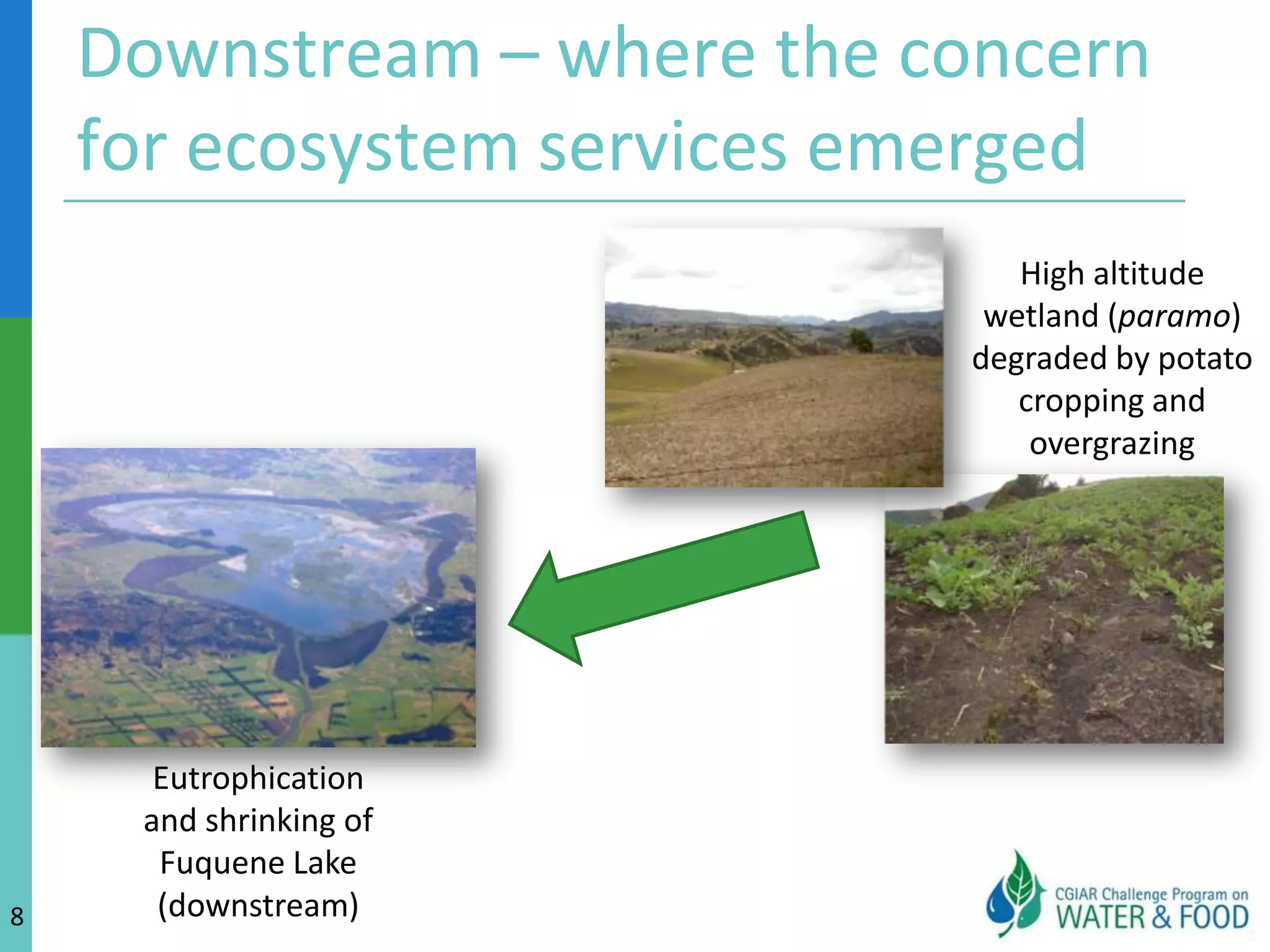
Downstream – where the concern for ecosystem services emerged8High altitude wetland (paramo) degraded by potato  cropping and overgrazing Eutrophication and shrinking of Fuquene Lake (downstream)
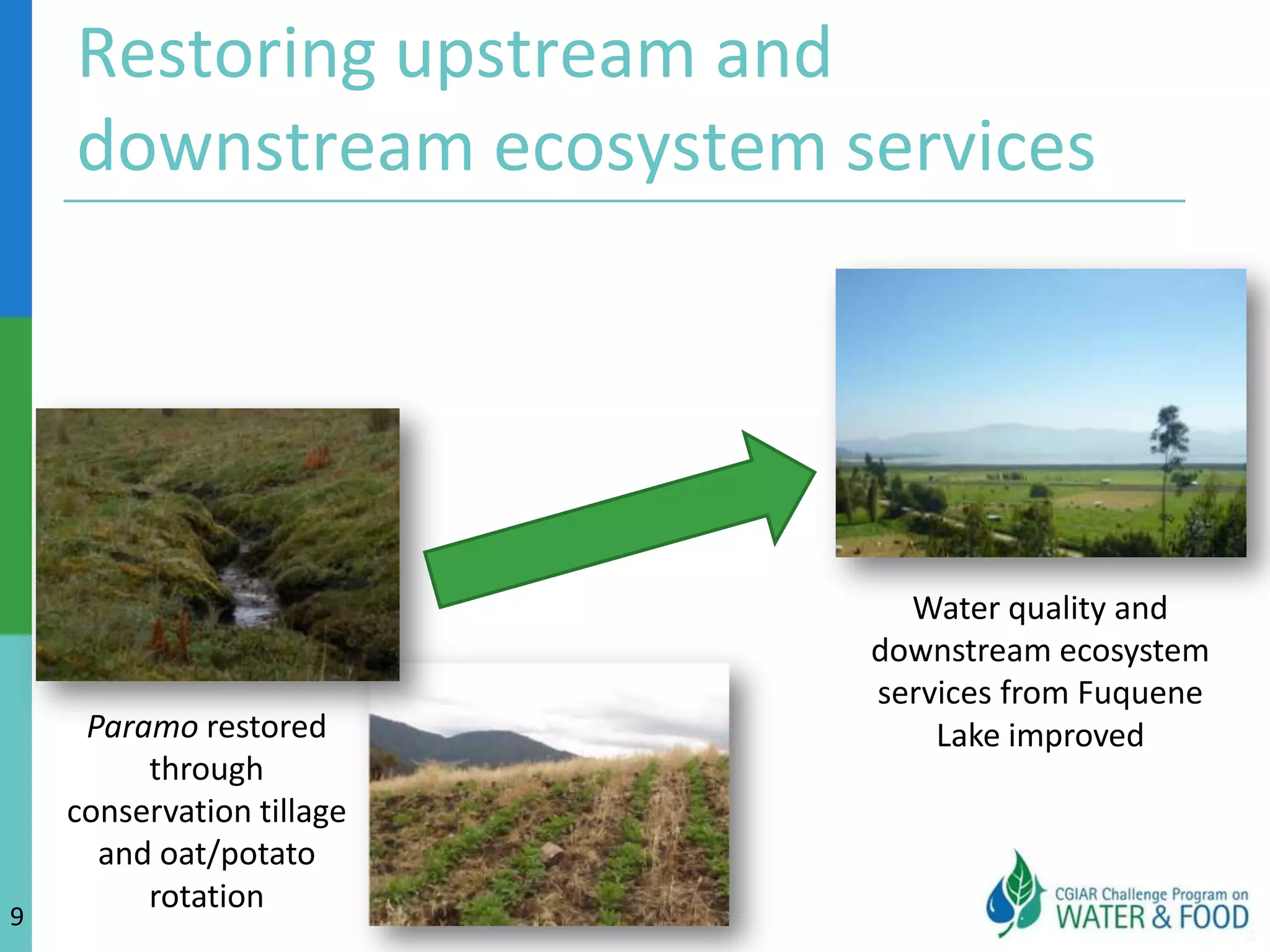
Restoring upstream and downstream ecosystem services 9Paramo restored through conservation tillage and oat/potato rotation Water quality and downstream ecosystem services from Fuquene Lake improved
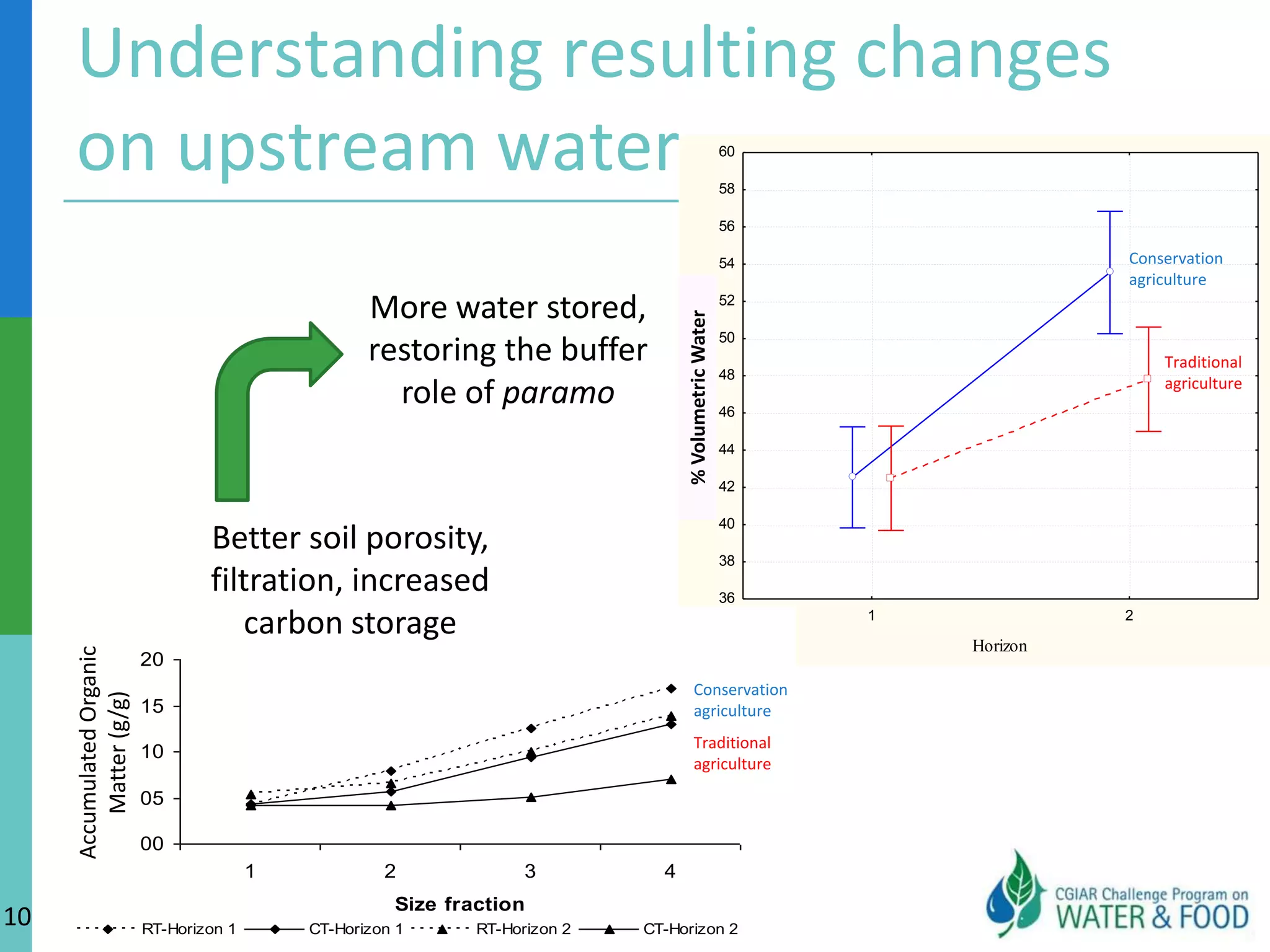
Understanding resulting changes on upstream water10Conservation agricultureMore water stored, restoring the buffer role of paramoTraditional agriculture% Volumetric WaterBetter soil porosity, filtration, increased   carbon storageConservation agricultureAccumulated Organic Matter (g/g)Traditional agriculture
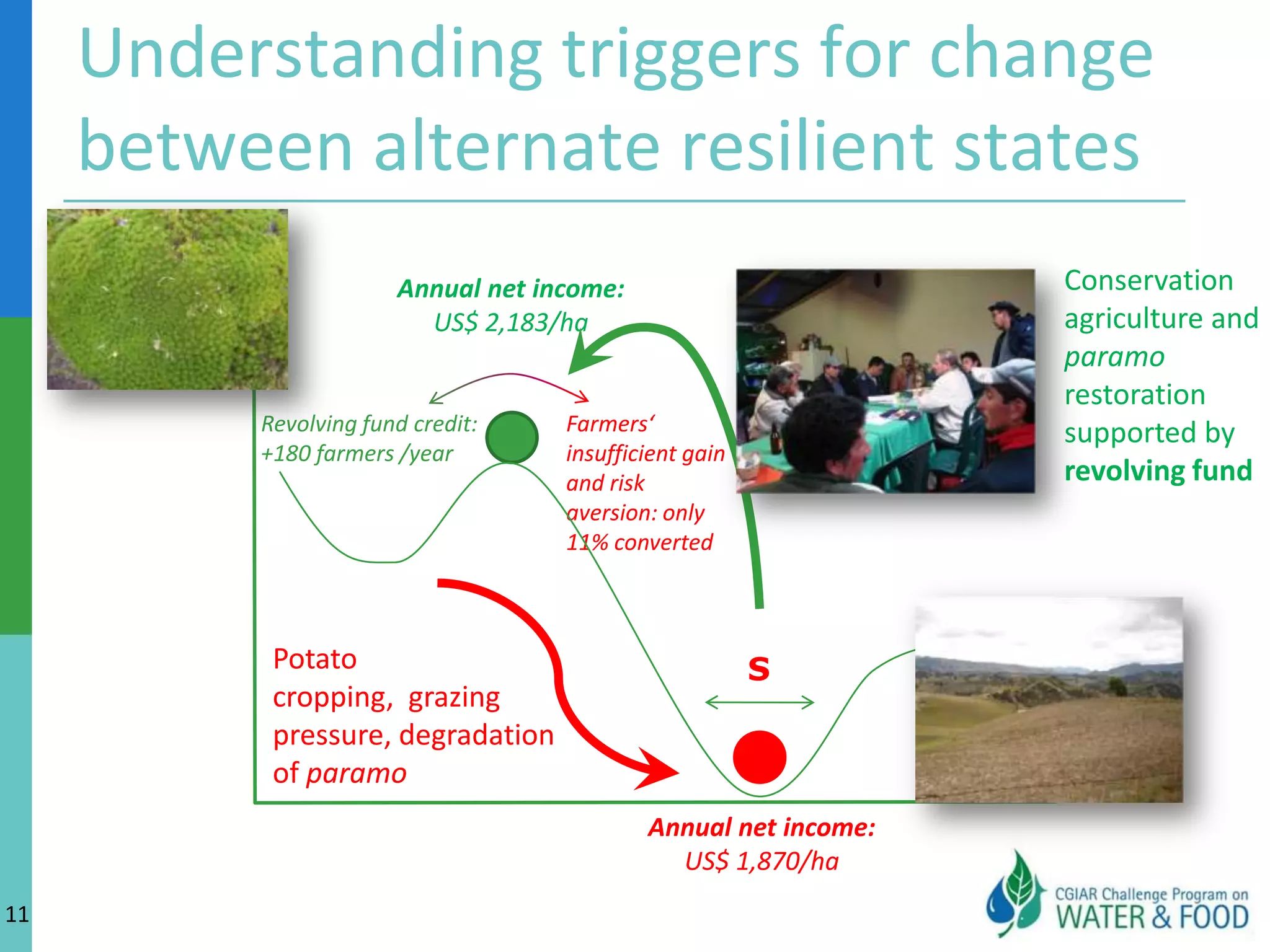
Understanding triggers for change between alternate resilient states11Conservation agriculture and paramo restoration supported by revolving fund Annual net income:US$ 2,183/haFarmers‘ insufficient gain and risk aversion: only 11% convertedRevolving fund credit: +180 farmers /yearPotato cropping,  grazing pressure, degradation of paramoSAnnual net income:US$ 1,870/ha
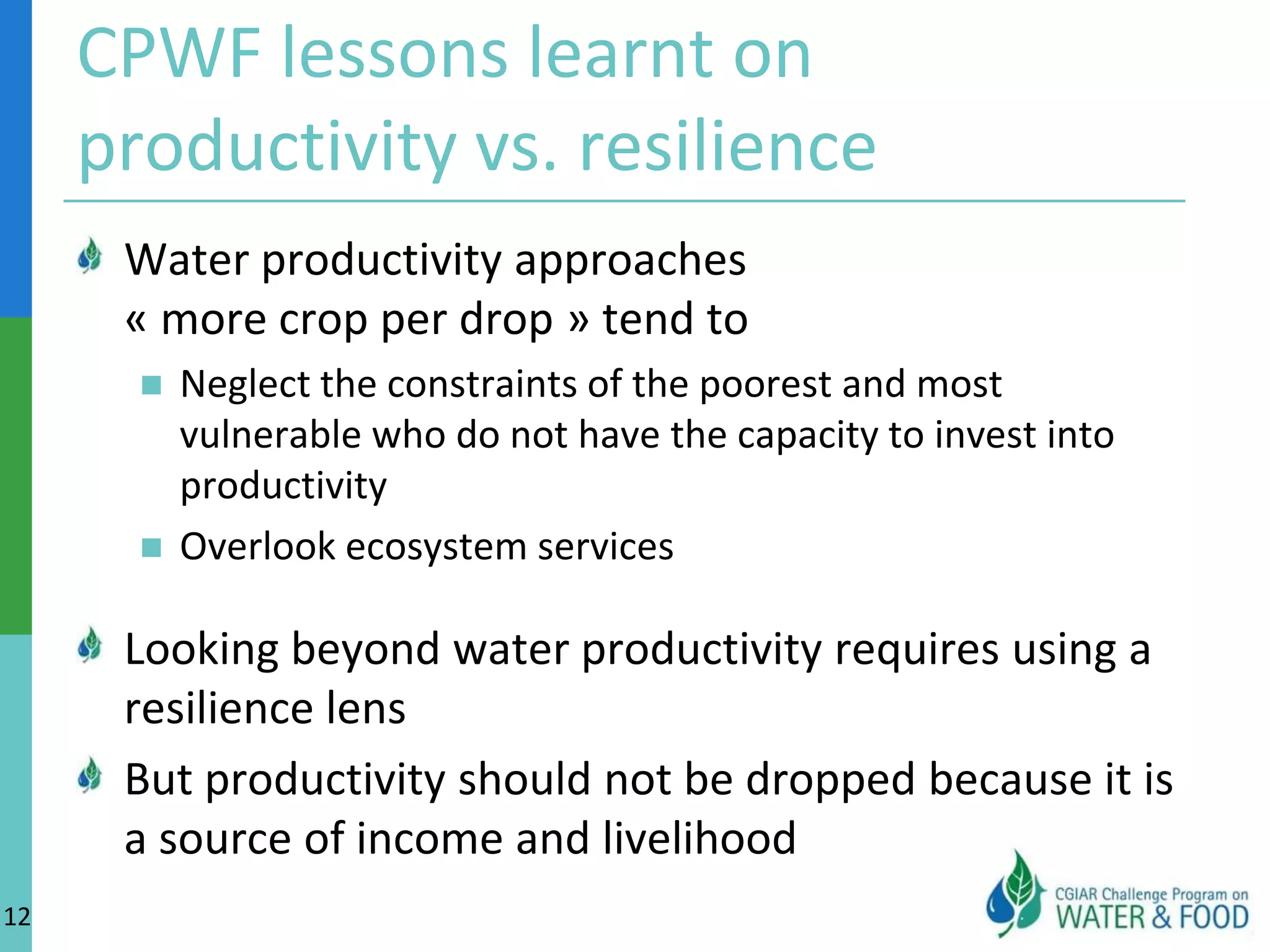
CPWF lessons learnt on productivity vs. resilienceWater productivity approaches « more crop per drop » tend toNeglect the constraints of the poorest and most vulnerable who do not have the capacity to invest into productivityOverlook ecosystem servicesLooking beyond water productivity requires using a resilience lens But productivity should not be dropped because it is a source of income and livelihood12
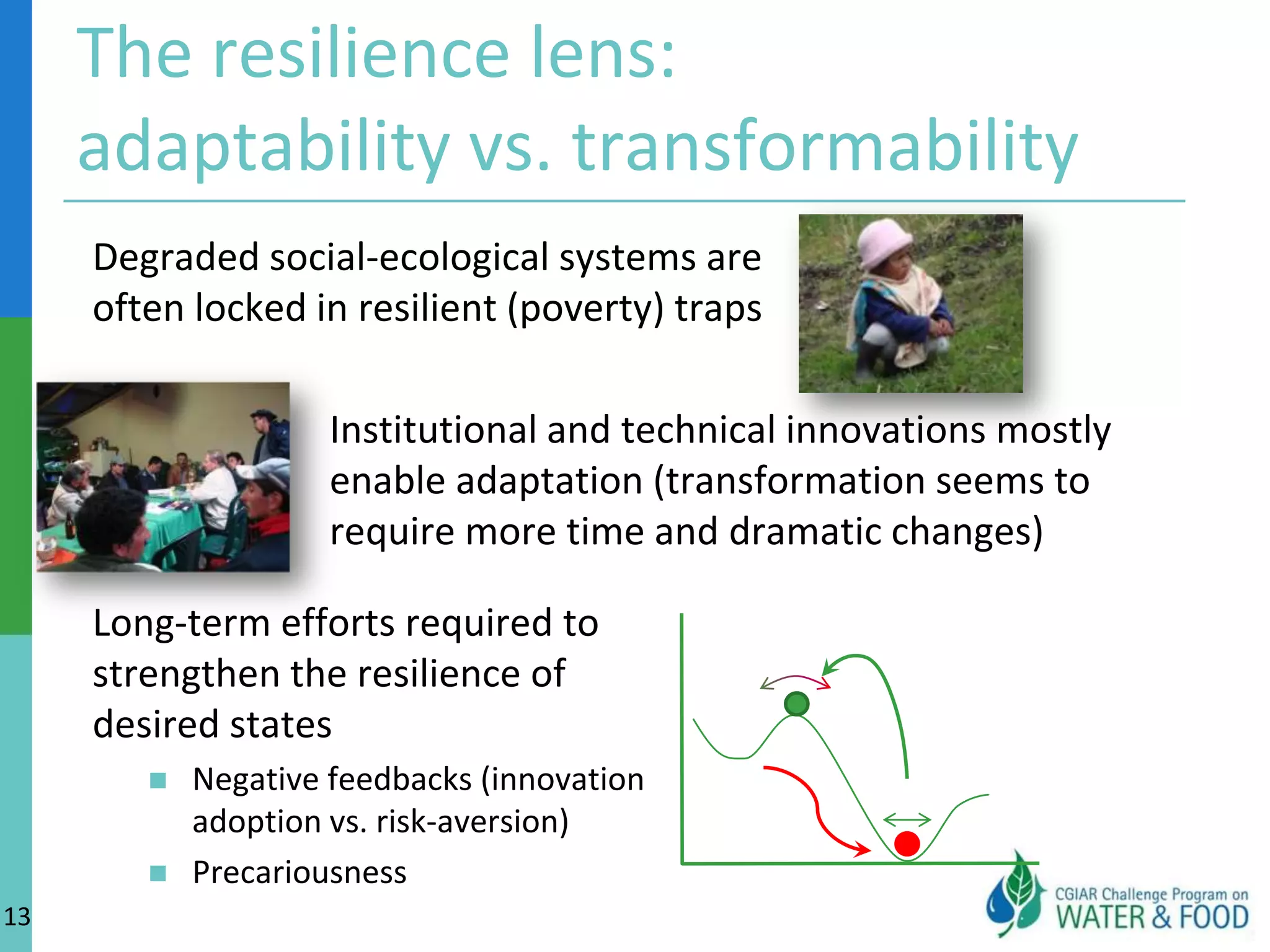
The resilience lens:adaptability vs. transformabilityDegraded social-ecological systems are often locked in resilient (poverty) traps	Institutional and technical innovations mostly enable adaptation (transformation seems to require more time and dramatic changes)Long-term efforts required to strengthen the resilience of desired statesNegative feedbacks (innovation adoption vs. risk-aversion)Precariousness13

CPWF productivity vs. resilience lens IUCN Workshop Dec 10

  • 1.
    Water, food andecosystemsA productivity lens vs. a resilience lensAlain Vidal & Marcela QuinteroCGIAR Challenge Program on Water and FoodIUCN Workshop on Managing Ecosystems for Food and Nutrition SecurityGland, Switzeland, 13-14 December 2010
  • 2.
    Global food crisis:a poverty “countdown”3 billion poor below US$2.5/day 2 billion suffer from malnutrition 1 billion suffer from hunger 75% of them are rural poor
  • 3.
    Alleviating hunger meansreducing rural povertyReducing rural povertyIncrease the income of the rural poor to enable food security and investment into productivity
  • 4.
    Ensure they cancope with short-term and long-term changes2
  • 5.
    The resilience challenge Foodproduction communities and ecosystems should be able to cope with local and global changes (climate, economy, demography, migrations…), ie becomemore resilientAchieved through improved water productivity (more food with less water) together with empowerment, equity, market access, health and ecosystemservices3
  • 6.
    What exactly isresilience?The capacity of a system to absorb disturbance and reorganize while undergoing change, while retaining essentially the same function, structure, identity, and feedbacks (Walker et al. 2004)Example4
  • 7.
    CPWF aims toincrease the resilience of social and ecological systems through better water management for food productionThrough its broad partnerships, it conducts research that leads to impact on the poor and to policy change 5
  • 8.
    Why is waterso central? No food production without water for crops, livestock and fish (quantity and quality)Water links ecosystems with food production through its flow and quality, and its interactions with land, soil, vegetation, animals, people and societiesWater is key to productivity and social-ecological resilience6
  • 9.
    Productivity vs. resilienceRestoringecosystem services in the Andes
  • 10.
    Downstream – wherethe concern for ecosystem services emerged8High altitude wetland (paramo) degraded by potato cropping and overgrazing Eutrophication and shrinking of Fuquene Lake (downstream)
  • 11.
    Restoring upstream anddownstream ecosystem services 9Paramo restored through conservation tillage and oat/potato rotation Water quality and downstream ecosystem services from Fuquene Lake improved
  • 12.
    Understanding resulting changeson upstream water10Conservation agricultureMore water stored, restoring the buffer role of paramoTraditional agriculture% Volumetric WaterBetter soil porosity, filtration, increased carbon storageConservation agricultureAccumulated Organic Matter (g/g)Traditional agriculture
  • 13.
    Understanding triggers forchange between alternate resilient states11Conservation agriculture and paramo restoration supported by revolving fund Annual net income:US$ 2,183/haFarmers‘ insufficient gain and risk aversion: only 11% convertedRevolving fund credit: +180 farmers /yearPotato cropping, grazing pressure, degradation of paramoSAnnual net income:US$ 1,870/ha
  • 14.
    CPWF lessons learnton productivity vs. resilienceWater productivity approaches « more crop per drop » tend toNeglect the constraints of the poorest and most vulnerable who do not have the capacity to invest into productivityOverlook ecosystem servicesLooking beyond water productivity requires using a resilience lens But productivity should not be dropped because it is a source of income and livelihood12
  • 15.
    The resilience lens:adaptabilityvs. transformabilityDegraded social-ecological systems are often locked in resilient (poverty) traps Institutional and technical innovations mostly enable adaptation (transformation seems to require more time and dramatic changes)Long-term efforts required to strengthen the resilience of desired statesNegative feedbacks (innovation adoption vs. risk-aversion)Precariousness13
  • 16.
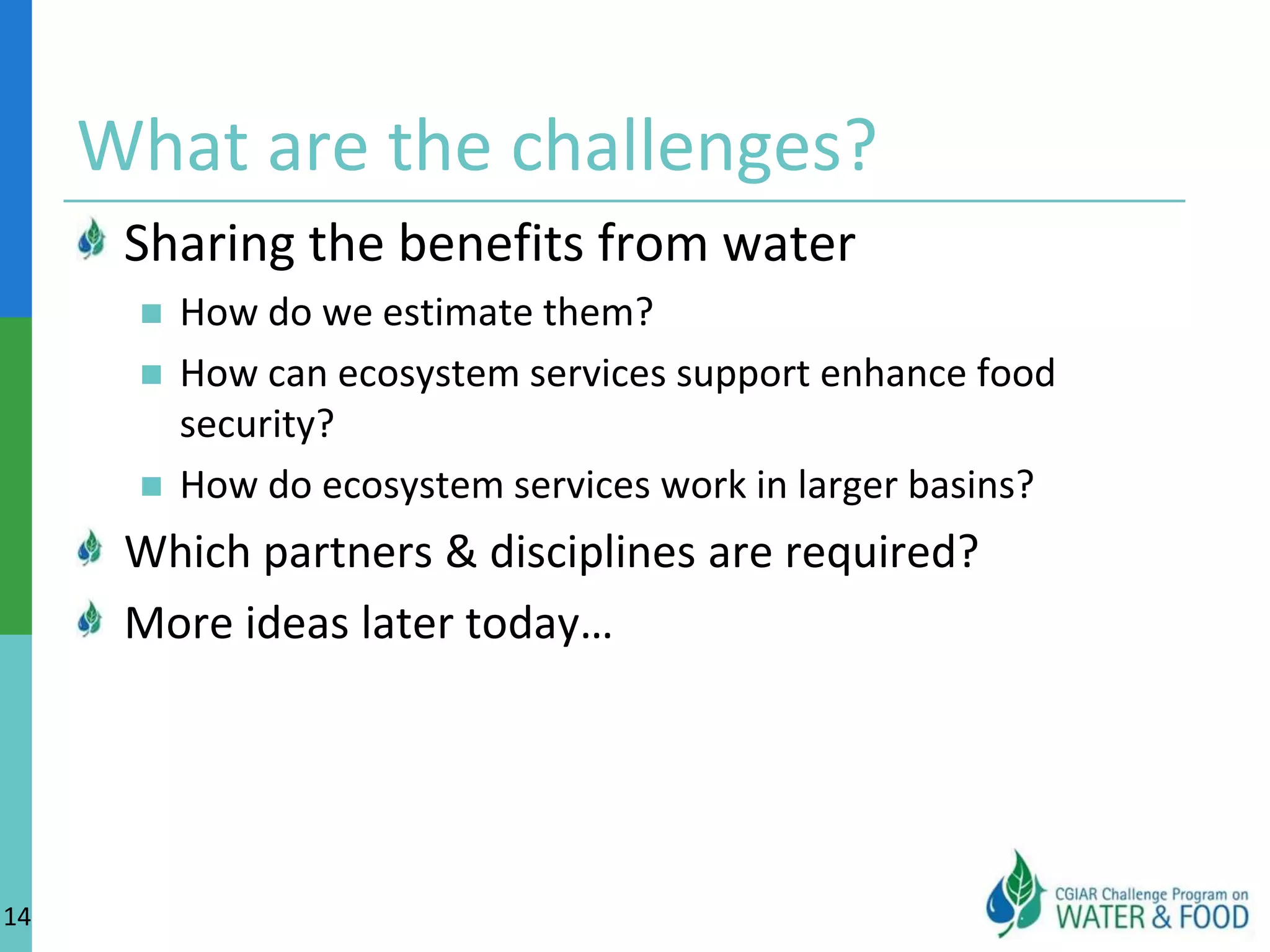
    What are thechallenges?Sharing the benefits from waterHow do we estimate them?How can ecosystem services support enhance food security?How do ecosystem services work in larger basins?Which partners & disciplines are required?More ideas later today…14
  • 17.