Food Security and Sustainable Resource
Use: Comments
Sara J. Scherr, President, EcoAgriculture Partners
Natural Resource Management and Food Security for a Growing Population
World Resources Institute,Washington, DC – May 15, 2013
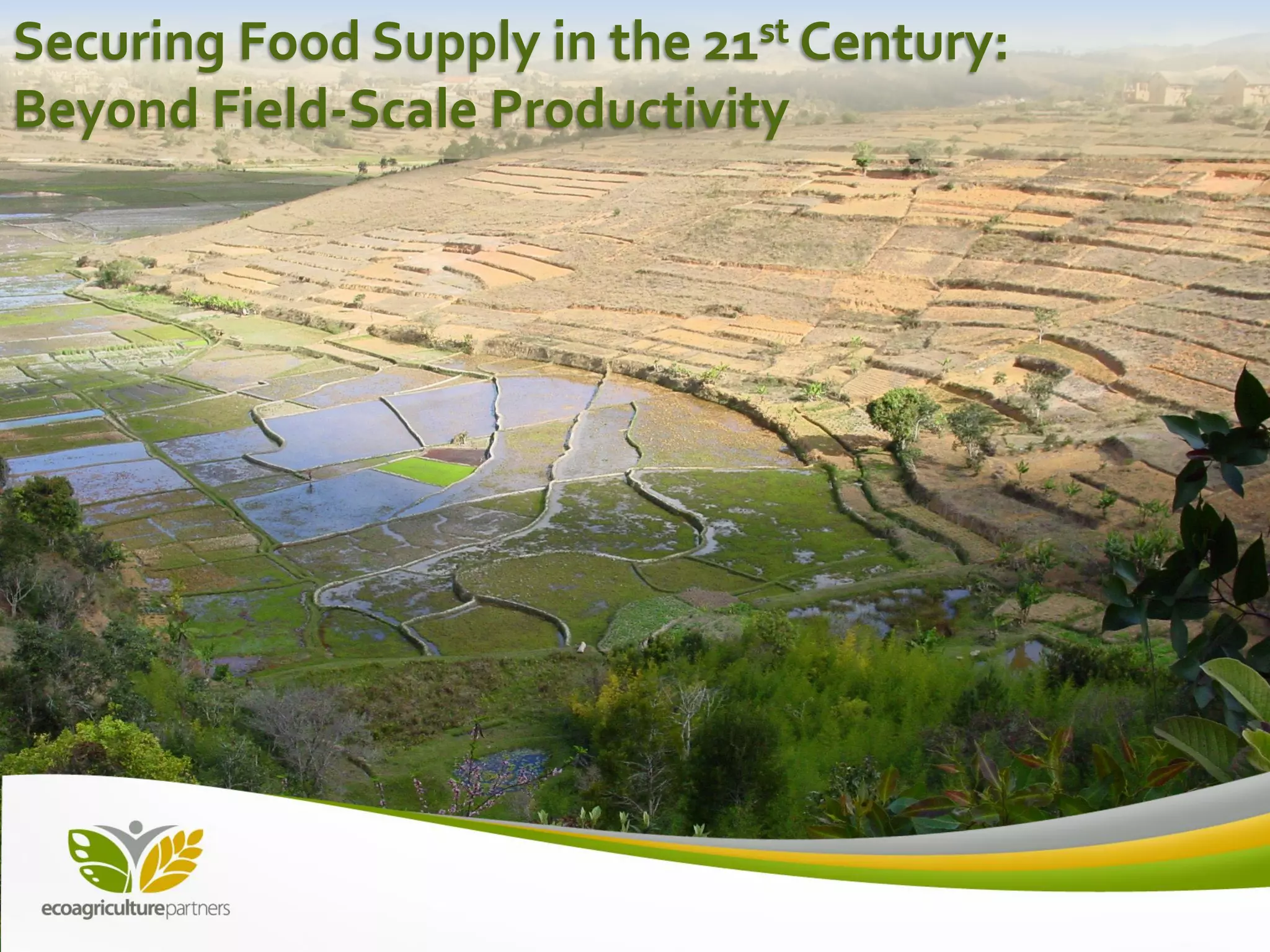
Securing Food Supply in the 21st Century:
Beyond Field-Scale Productivity
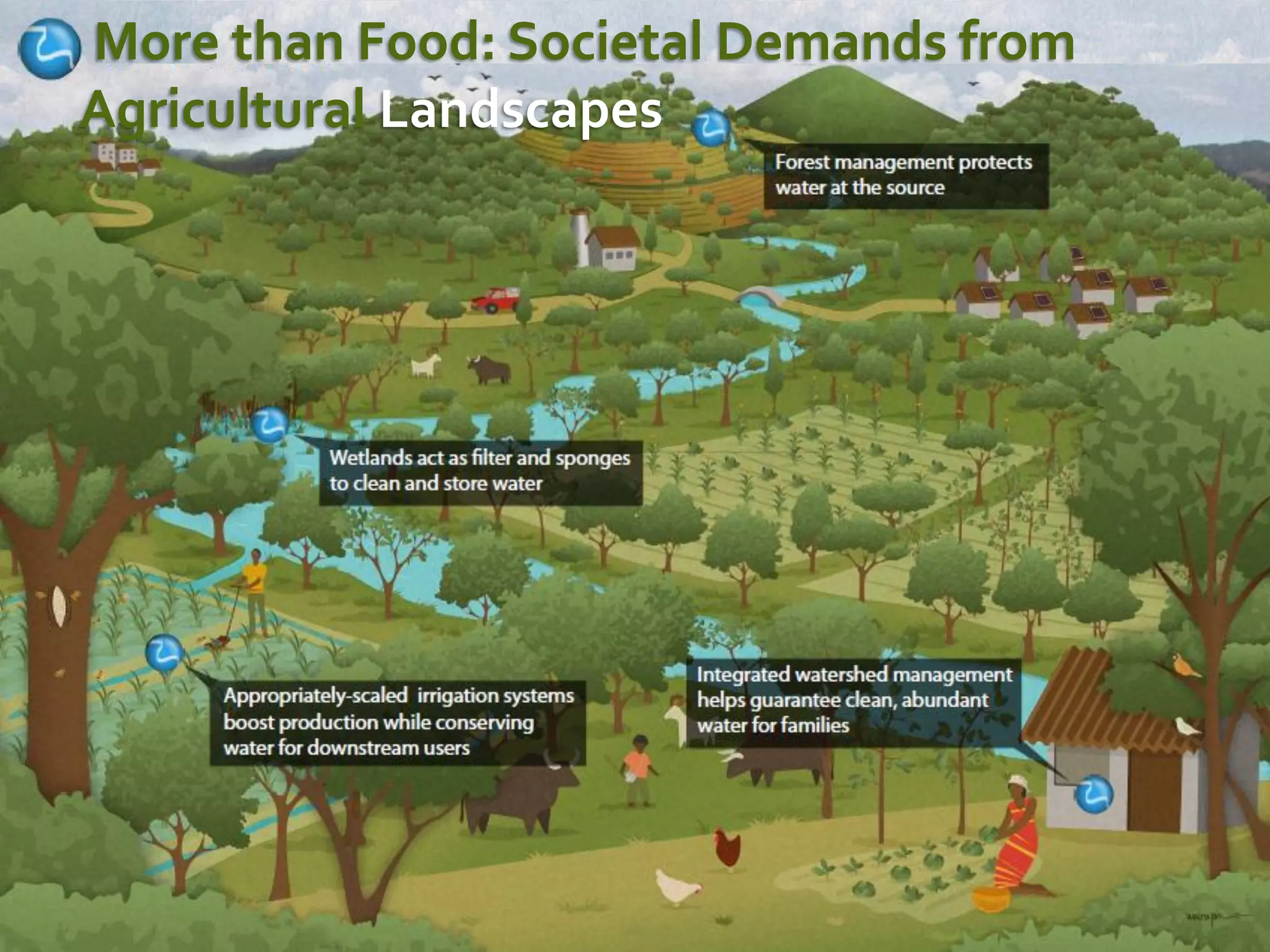
More than Food: Societal Demands from
Agricultural Landscapes
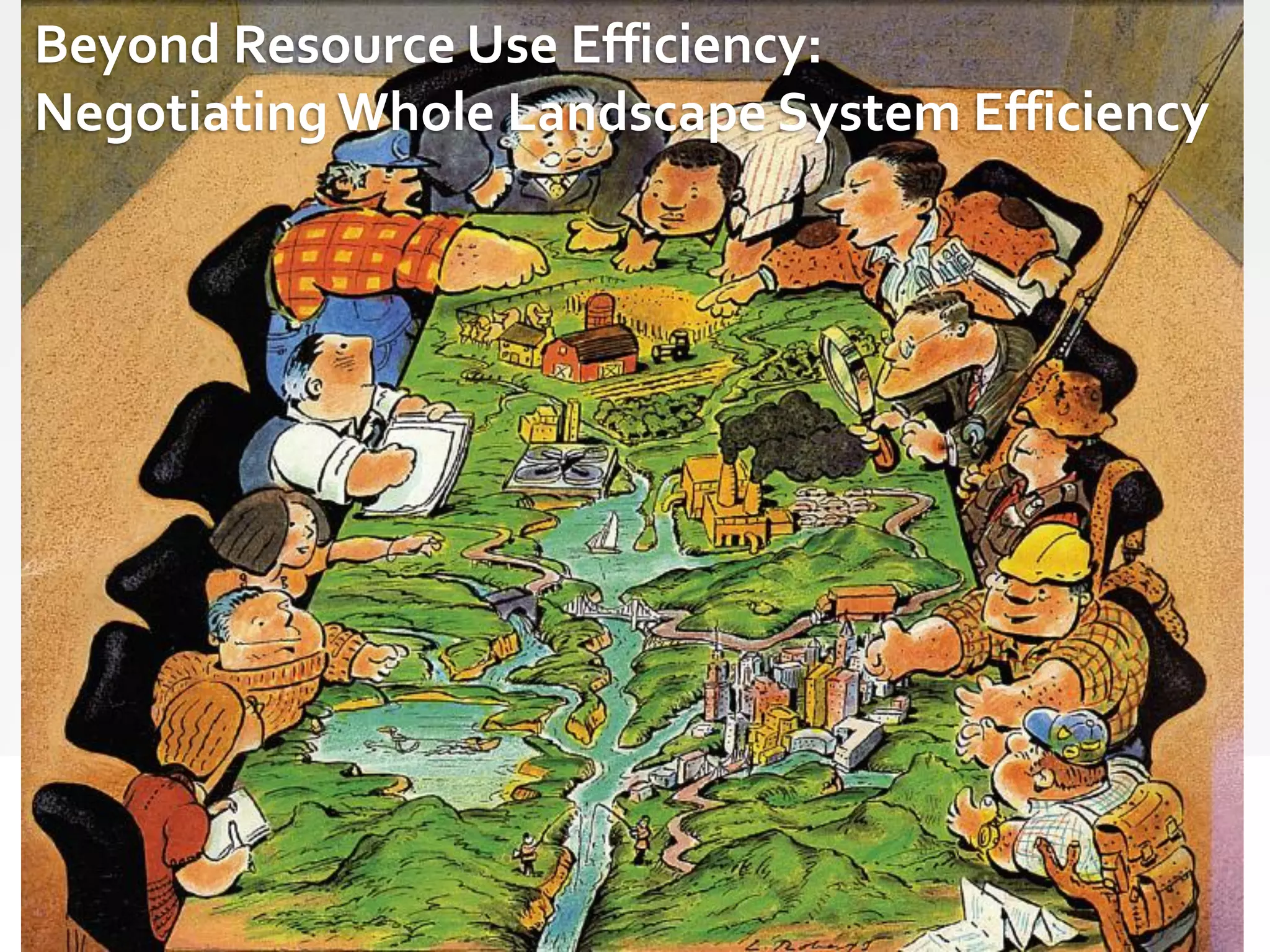
Beyond Resource Use Efficiency:
Negotiating Whole Landscape System Efficiency
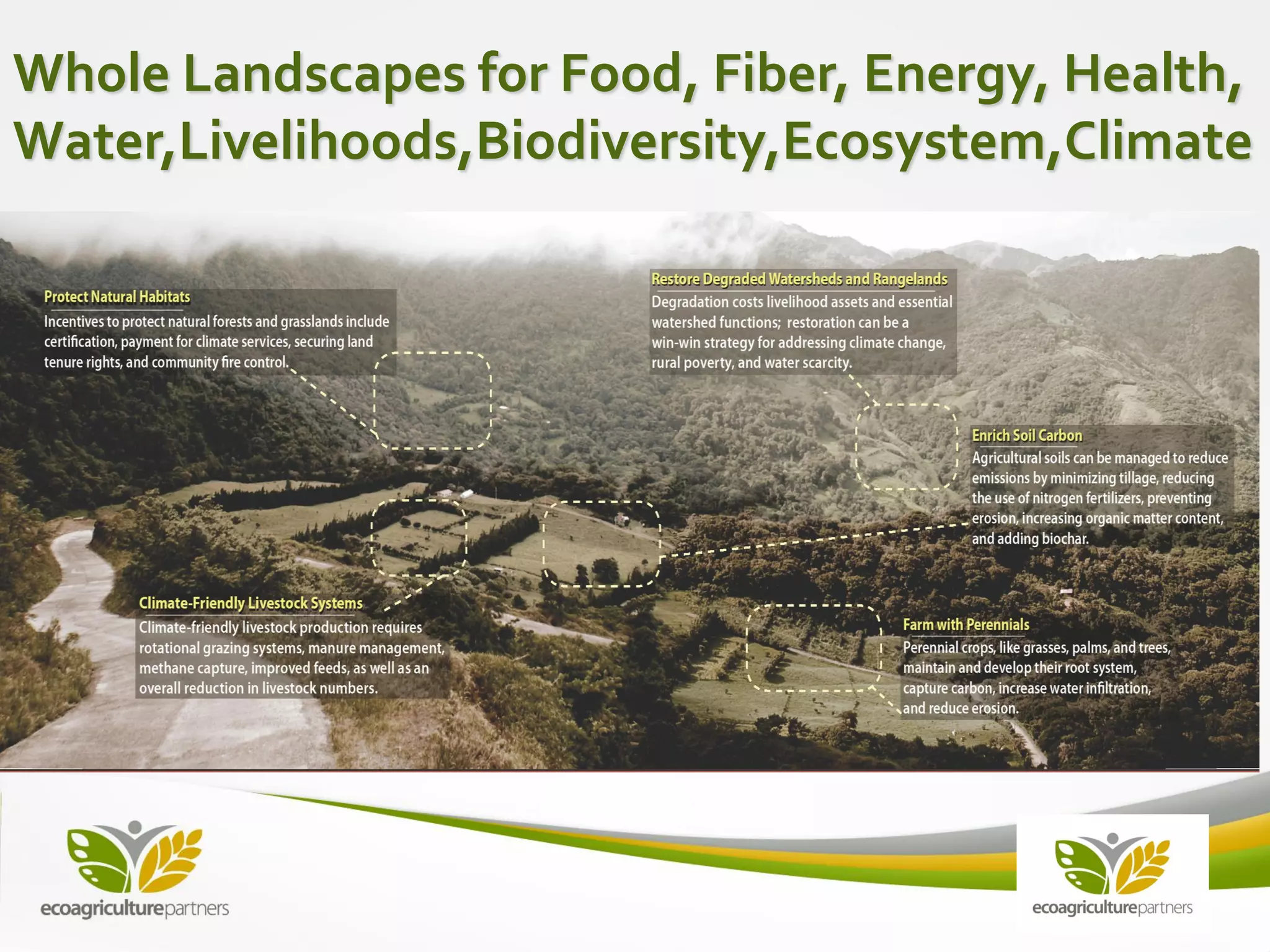
Whole Landscapes for Food, Fiber, Energy, Health,
Water,Livelihoods,Biodiversity,Ecosystem,Climate
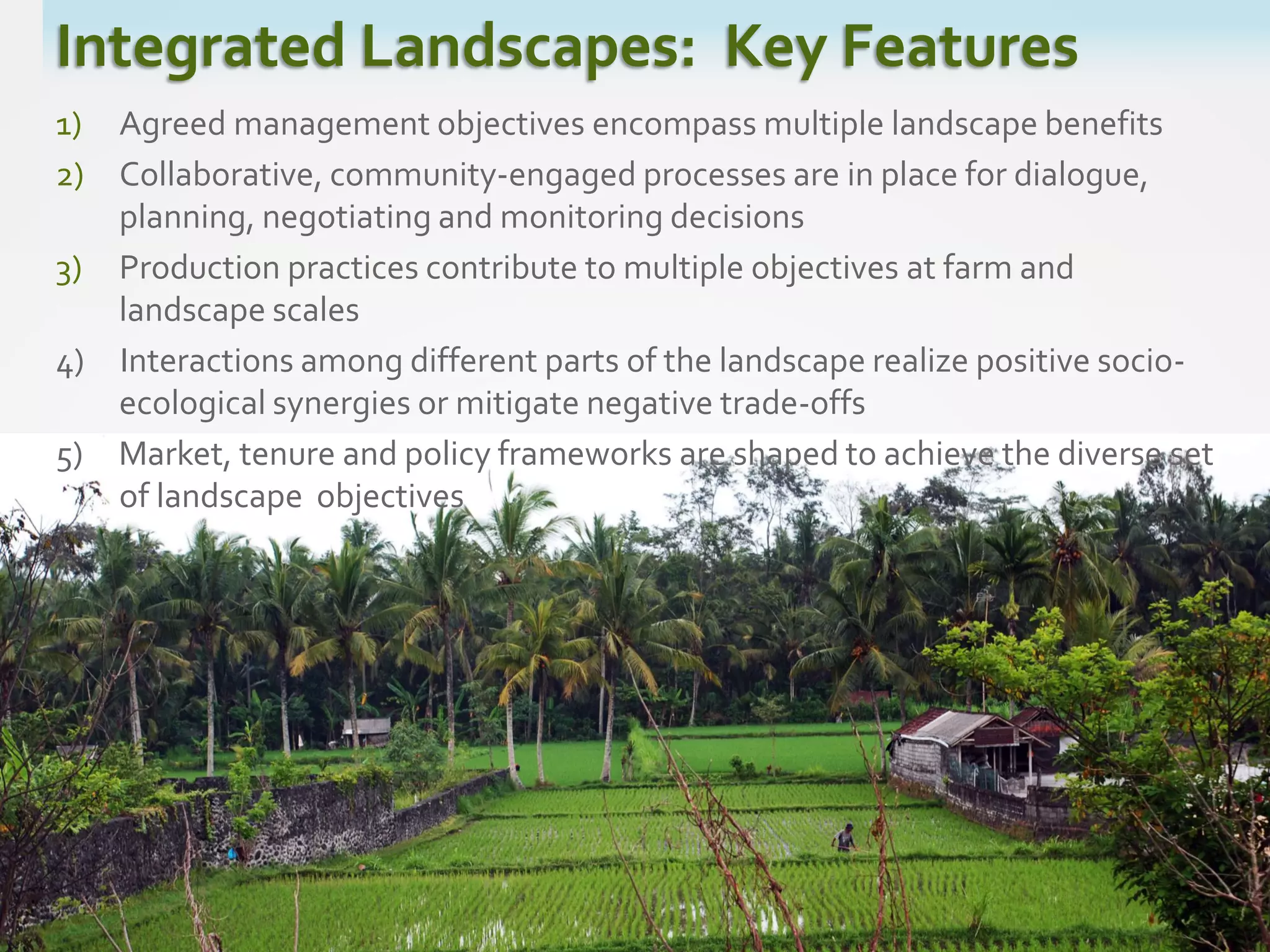
Integrated Landscapes: Key Features
1) Agreed management objectives encompass multiple landscape benefits
2) Collaborative, community-engaged processes are in place for dialogue,
planning, negotiating and monitoring decisions
3) Production practices contribute to multiple objectives at farm and
landscape scales
4) Interactions among different parts of the landscape realize positive socio-
ecological synergies or mitigate negative trade-offs
5) Market, tenure and policy frameworks are shaped to achieve the diverse set
of landscape objectives
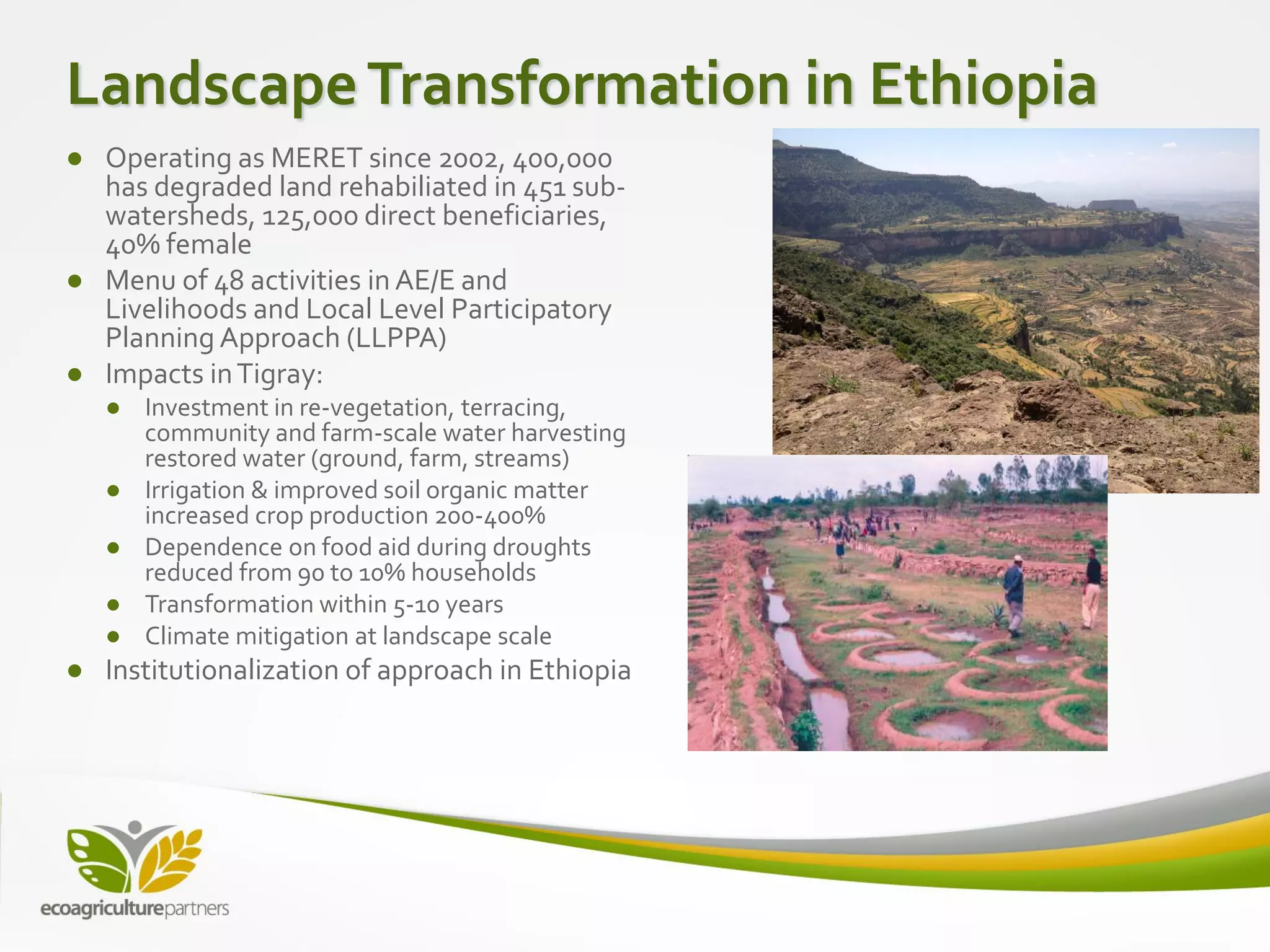
LandscapeTransformation in Ethiopia
● Operating as MERET since 2002, 400,000
has degraded land rehabiliated in 451 sub-
watersheds, 125,000 direct beneficiaries,
40% female
● Menu of 48 activities in AE/E and
Livelihoods and Local Level Participatory
Planning Approach (LLPPA)
● Impacts inTigray:
● Investment in re-vegetation, terracing,
community and farm-scale water harvesting
restored water (ground, farm, streams)
● Irrigation & improved soil organic matter
increased crop production 200-400%
● Dependence on food aid during droughts
reduced from 90 to 10% households
● Transformation within 5-10 years
● Climate mitigation at landscape scale
● Institutionalization of approach in Ethiopia
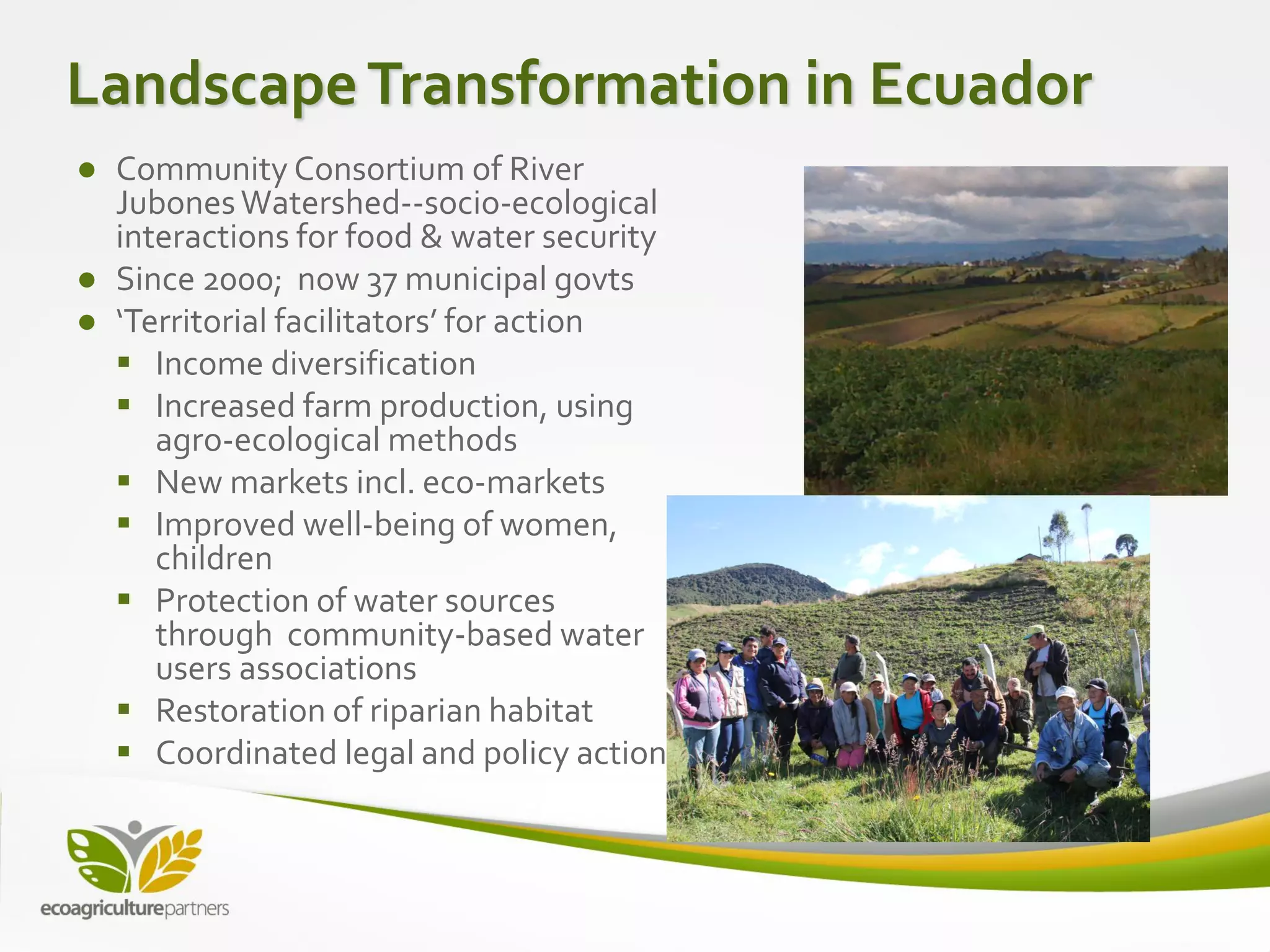
LandscapeTransformation in Ecuador
● Community Consortium of River
JubonesWatershed--socio-ecological
interactions for food & water security
● Since 2000; now 37 municipal govts
● ‘Territorial facilitators’ for action
 Income diversification
 Increased farm production, using
agro-ecological methods
 New markets incl. eco-markets
 Improved well-being of women,
children
 Protection of water sources
through community-based water
users associations
 Restoration of riparian habitat
 Coordinated legal and policy action
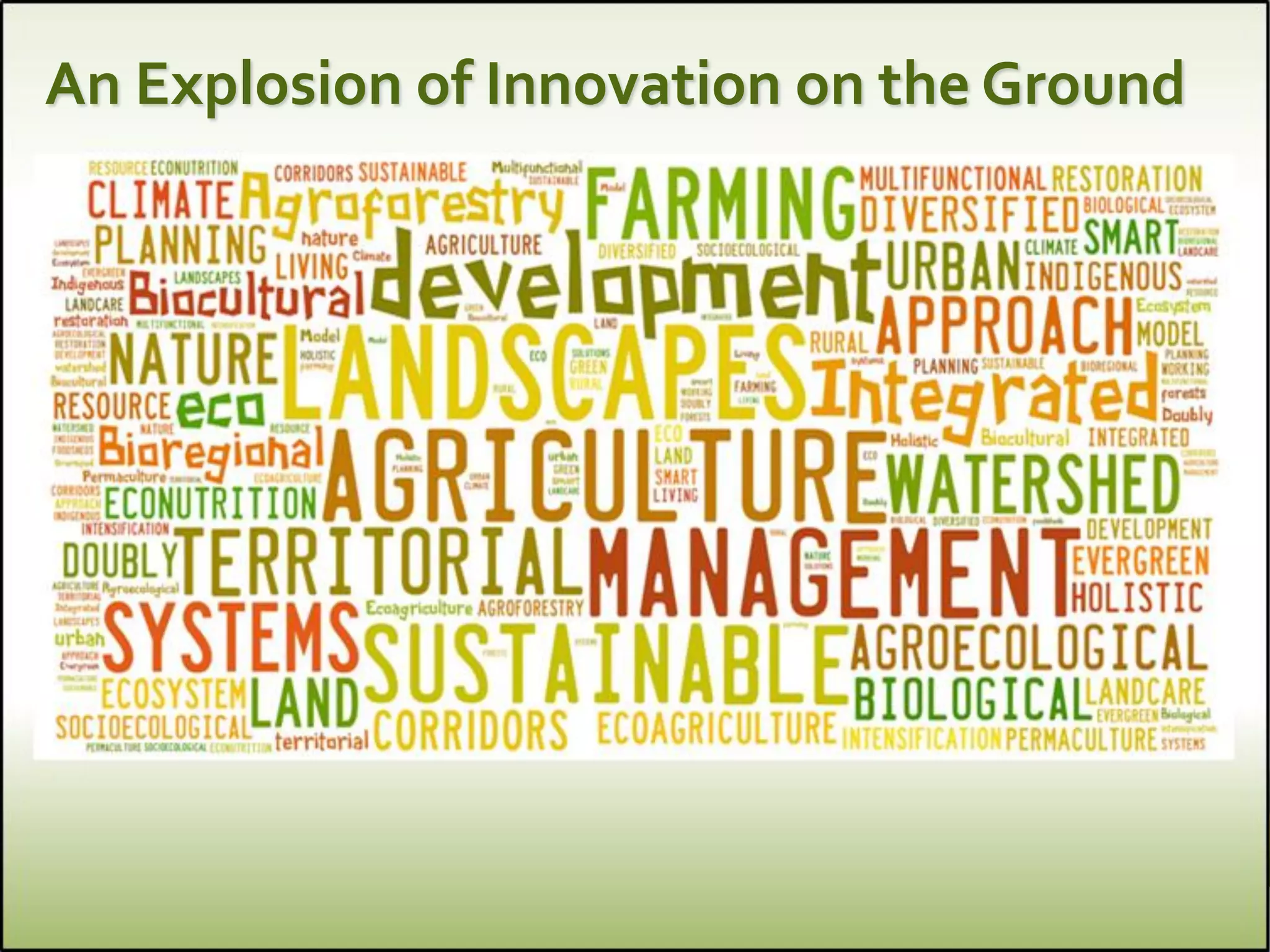
An Explosion of Innovation on the Ground
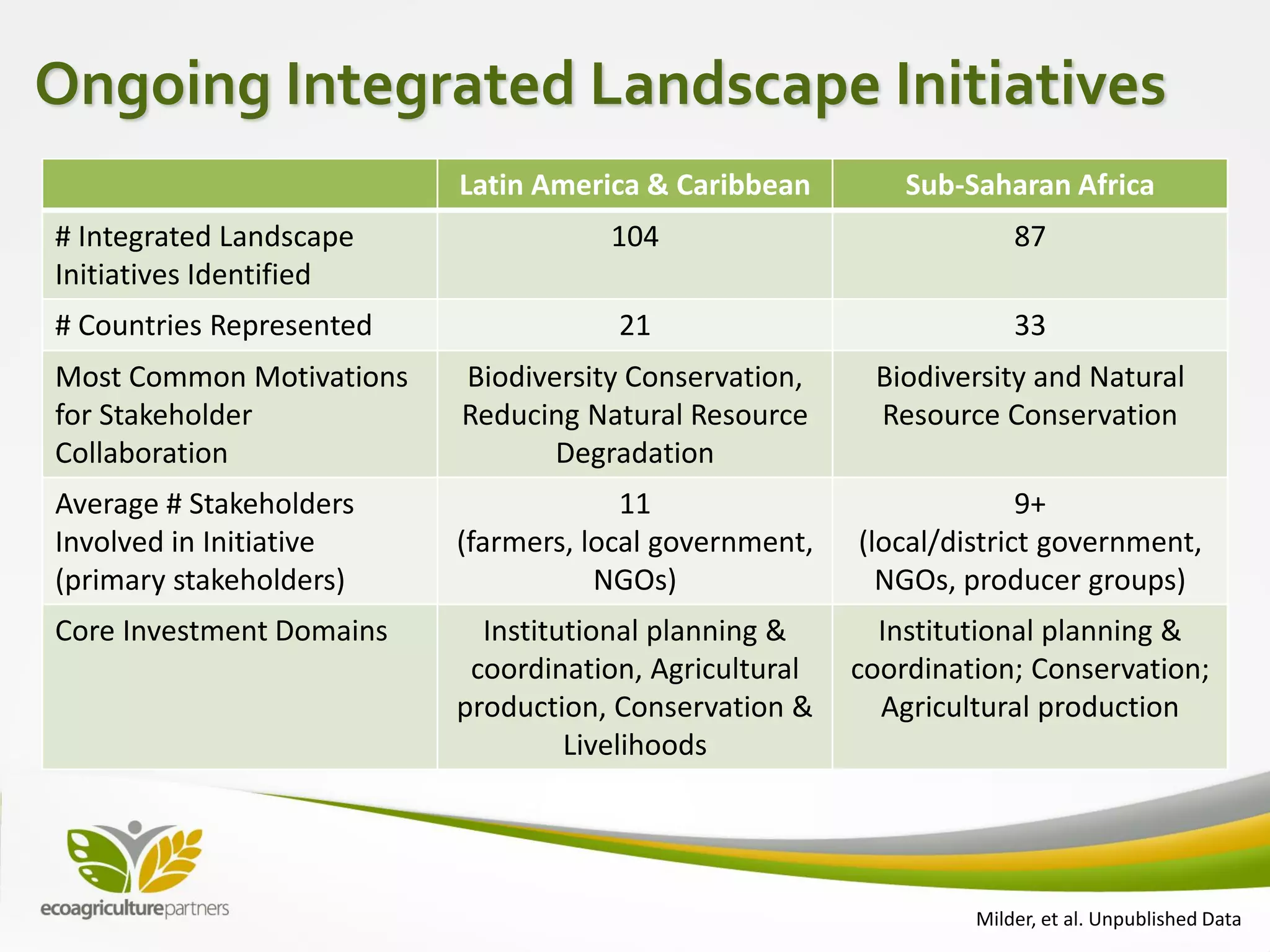
Ongoing Integrated Landscape Initiatives
Latin America & Caribbean Sub-Saharan Africa
# Integrated Landscape
Initiatives Identified
104 87
# Countries Represented 21 33
Most Common Motivations
for Stakeholder
Collaboration
Biodiversity Conservation,
Reducing Natural Resource
Degradation
Biodiversity and Natural
Resource Conservation
Average # Stakeholders
Involved in Initiative
(primary stakeholders)
11
(farmers, local government,
NGOs)
9+
(local/district government,
NGOs, producer groups)
Core Investment Domains Institutional planning &
coordination, Agricultural
production, Conservation &
Livelihoods
Institutional planning &
coordination; Conservation;
Agricultural production
Milder, et al. Unpublished Data
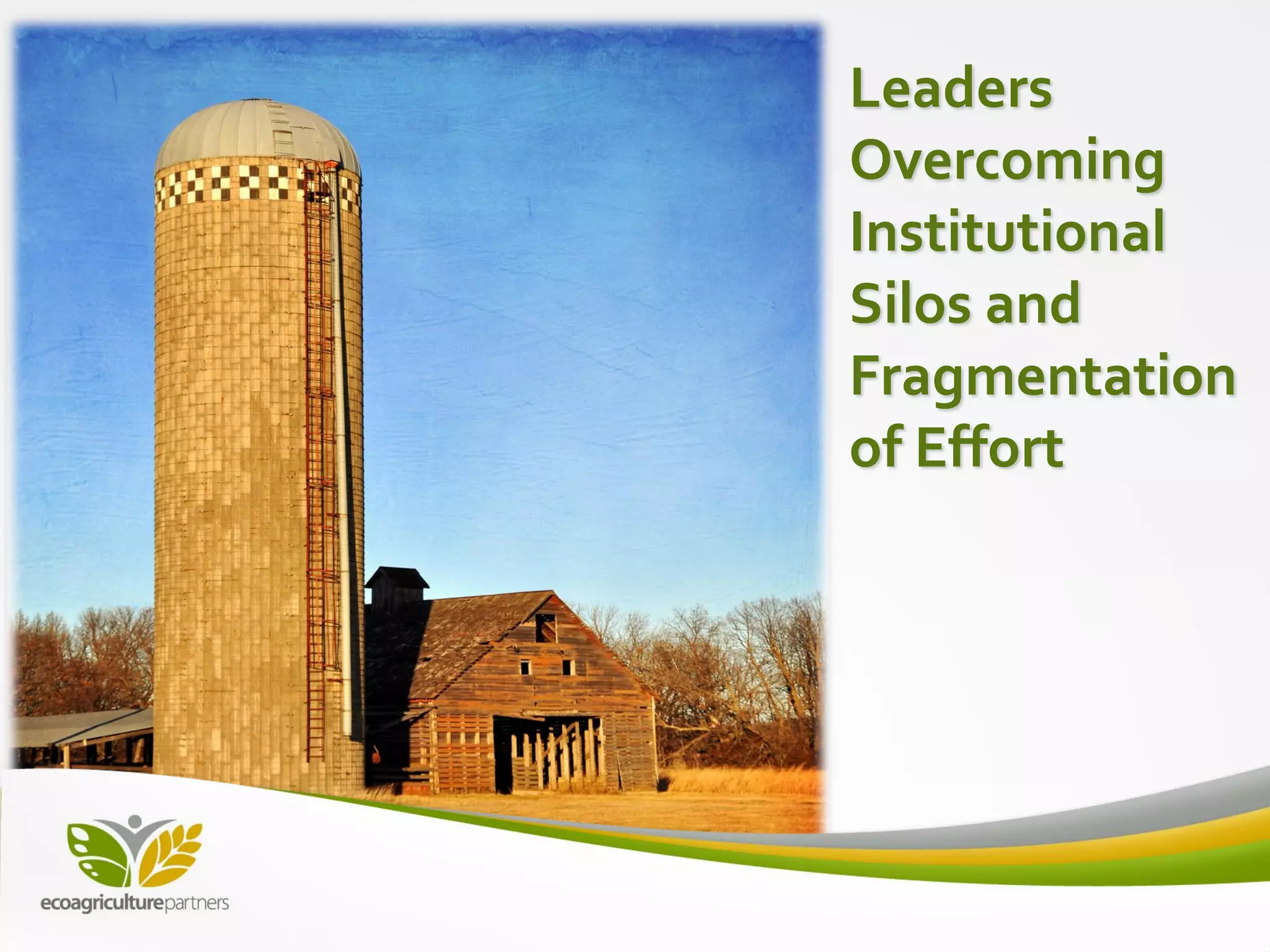
Leaders
Overcoming
Institutional
Silos and
Fragmentation
of Effort
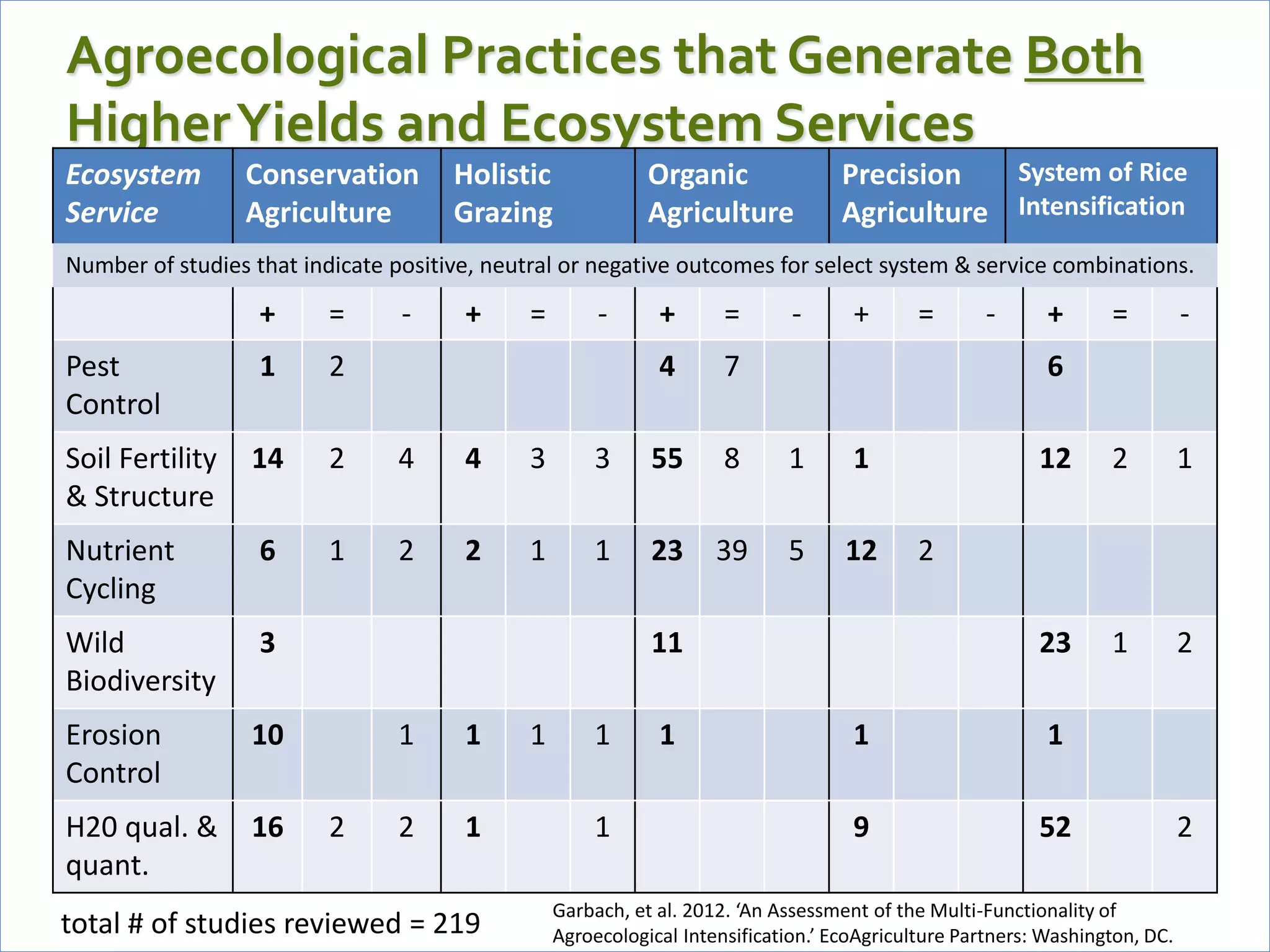
Agroecological Practices that Generate Both
HigherYields and Ecosystem Services
Ecosystem
Service
Conservation
Agriculture
Holistic
Grazing
Organic
Agriculture
Precision
Agriculture
System of Rice
Intensification
Number of studies that indicate positive, neutral or negative outcomes for select system & service combinations.
+ = - + = - + = - + = - + = -
Pest
Control
1 2 4 7 6
Soil Fertility
& Structure
14 2 4 4 3 3 55 8 1 1 12 2 1
Nutrient
Cycling
6 1 2 2 1 1 23 39 5 12 2
Wild
Biodiversity
3 11 23 1 2
Erosion
Control
10 1 1 1 1 1 1 1
H20 qual. &
quant.
16 2 2 1 1 9 52 2
Garbach, et al. 2012. ‘An Assessment of the Multi-Functionality of
Agroecological Intensification.’ EcoAgriculture Partners: Washington, DC.total # of studies reviewed = 219
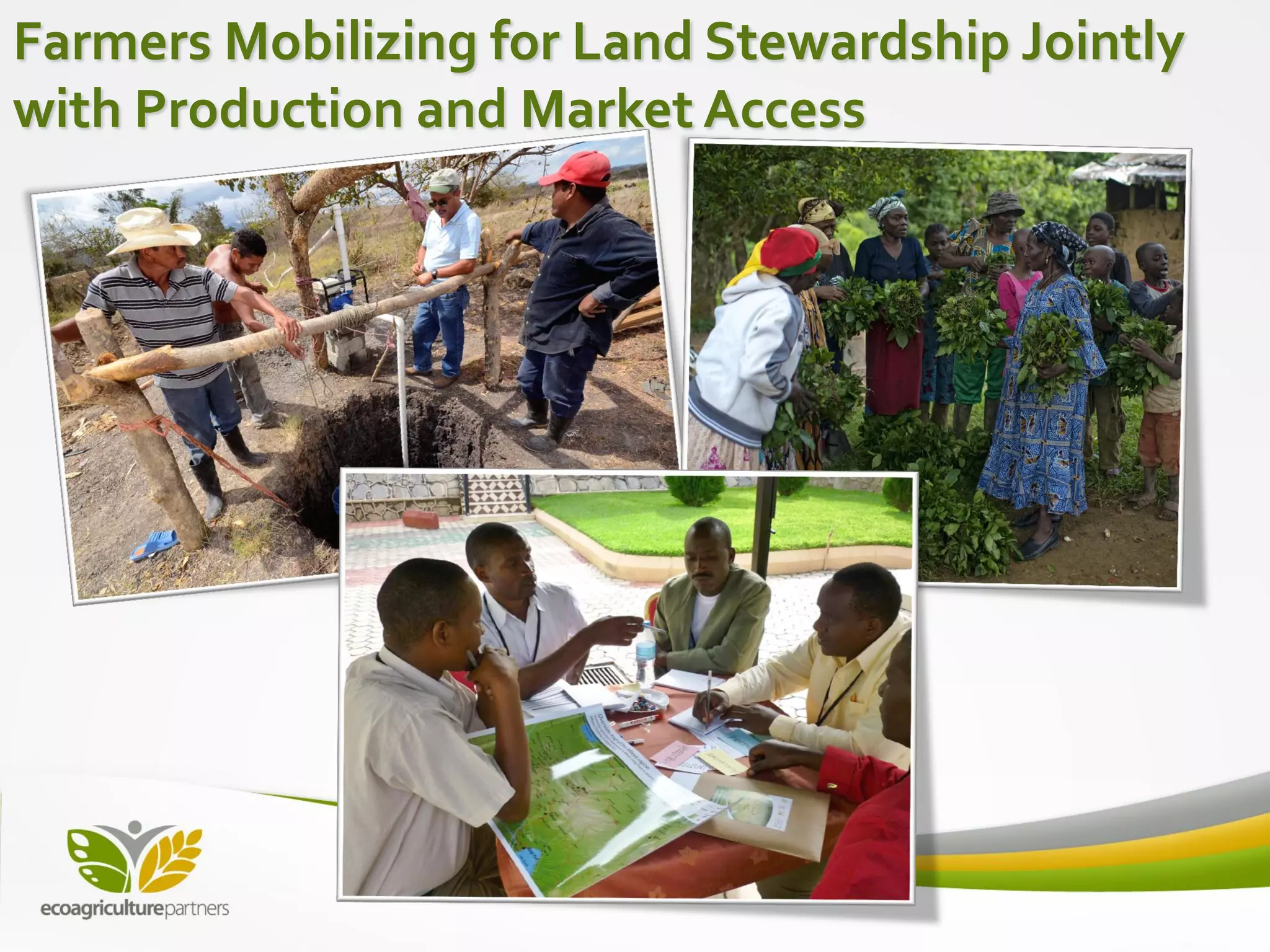
Farmers Mobilizing for Land Stewardship Jointly
with Production and Market Access
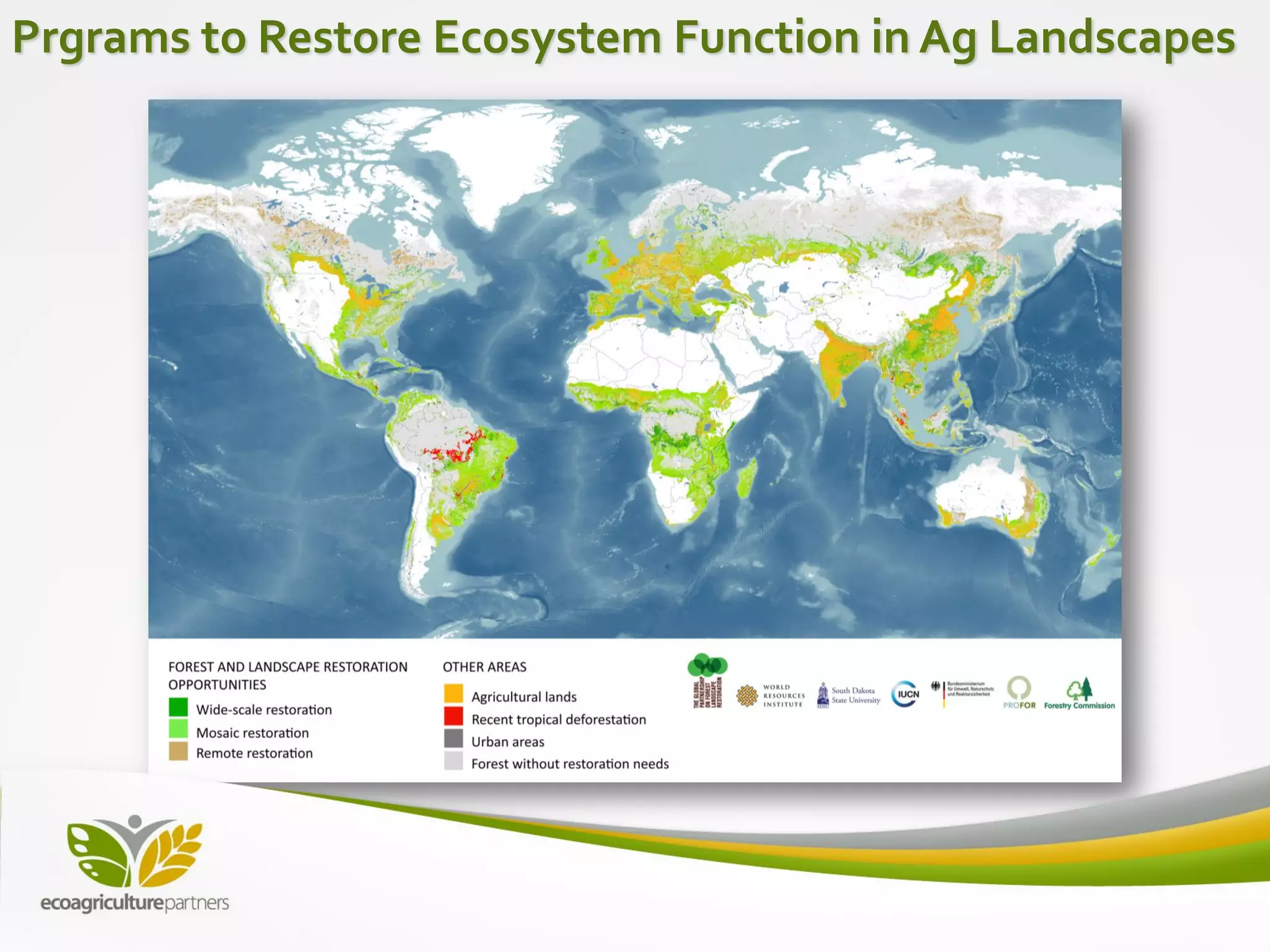
Prgrams to Restore Ecosystem Function in Ag Landscapes
www.landscapes.ecoagriculture.org
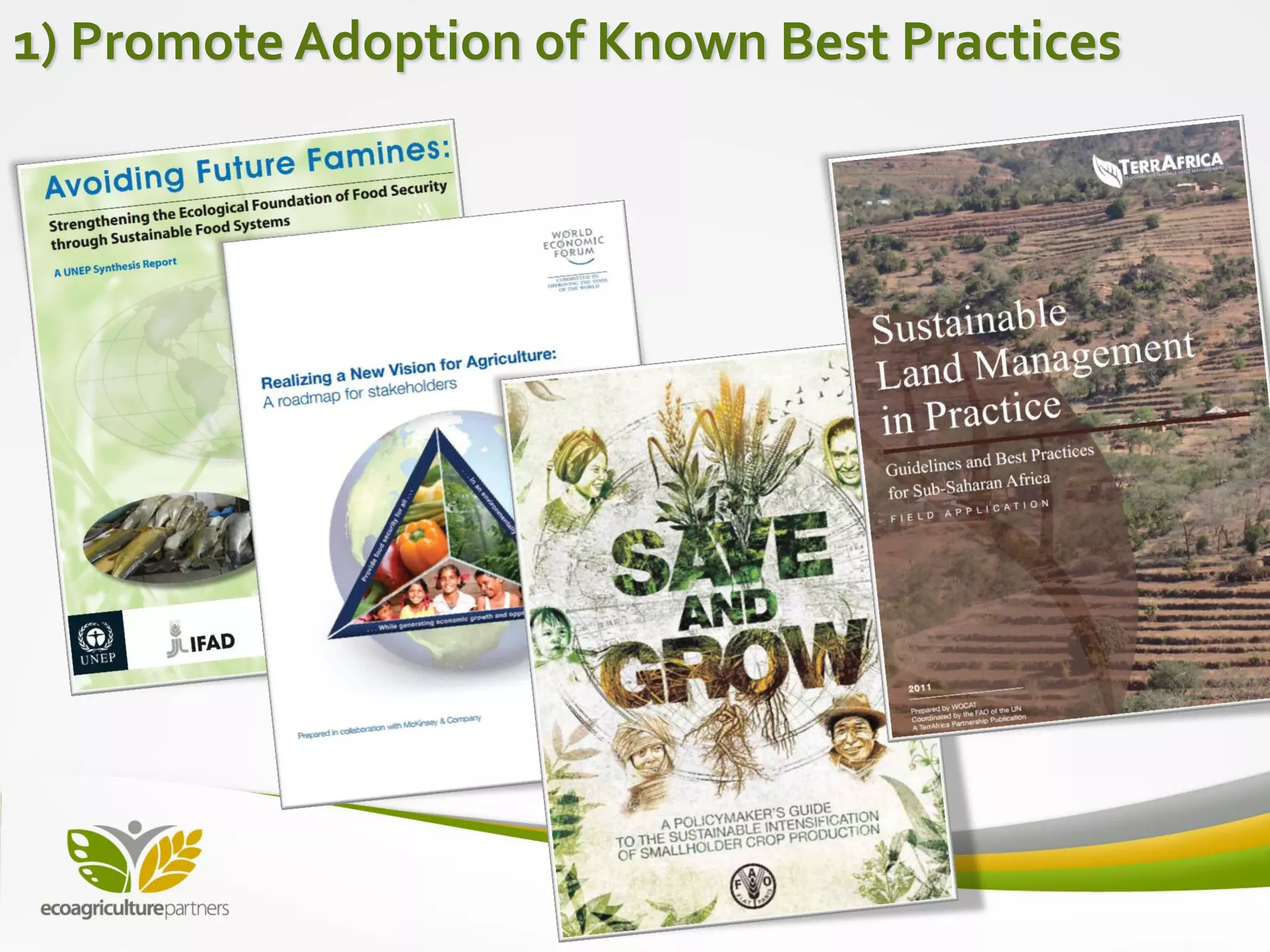
1) Promote Adoption of Known Best Practices
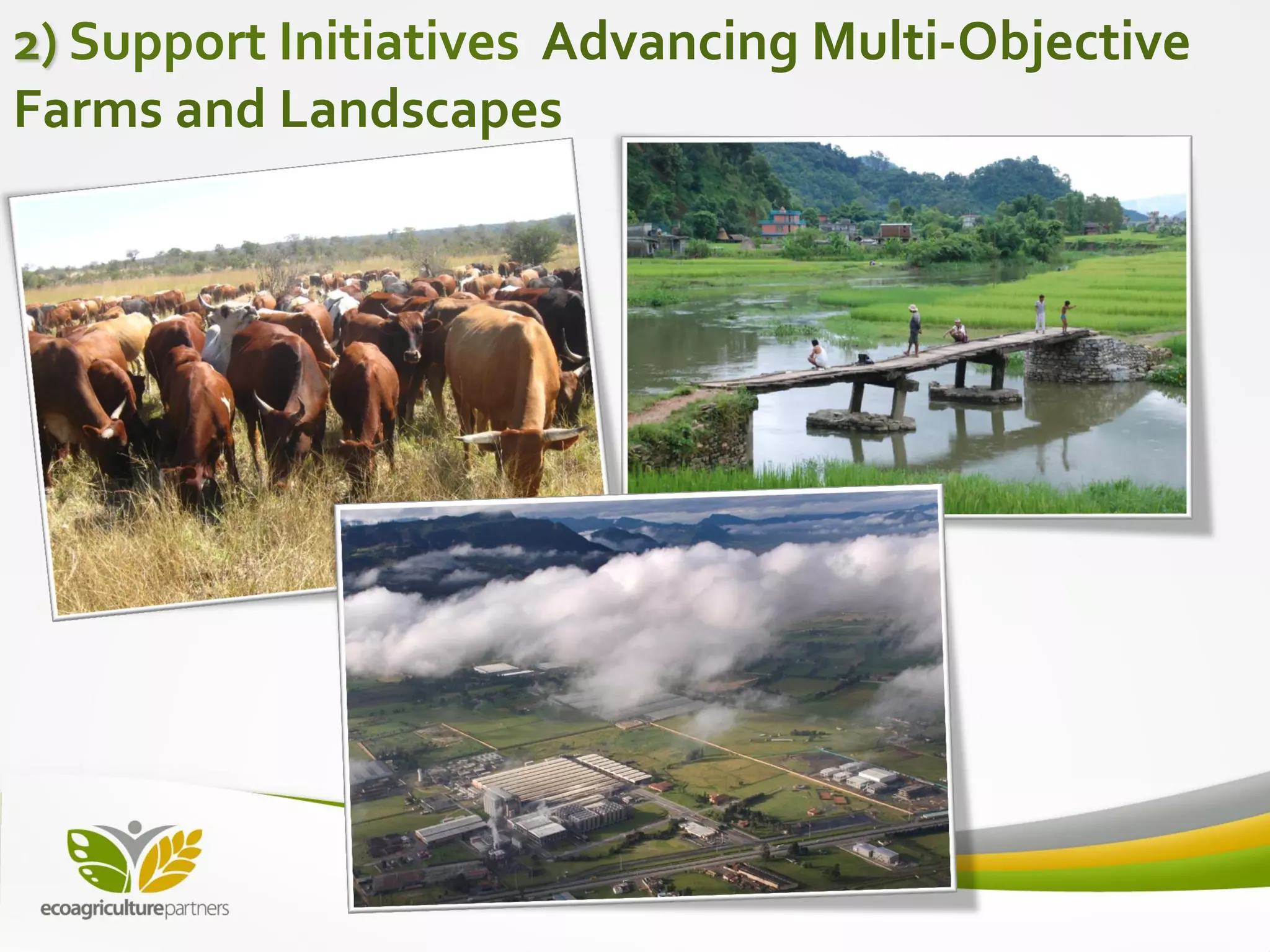
2) Support Initiatives Advancing Multi-Objective
Farms and Landscapes
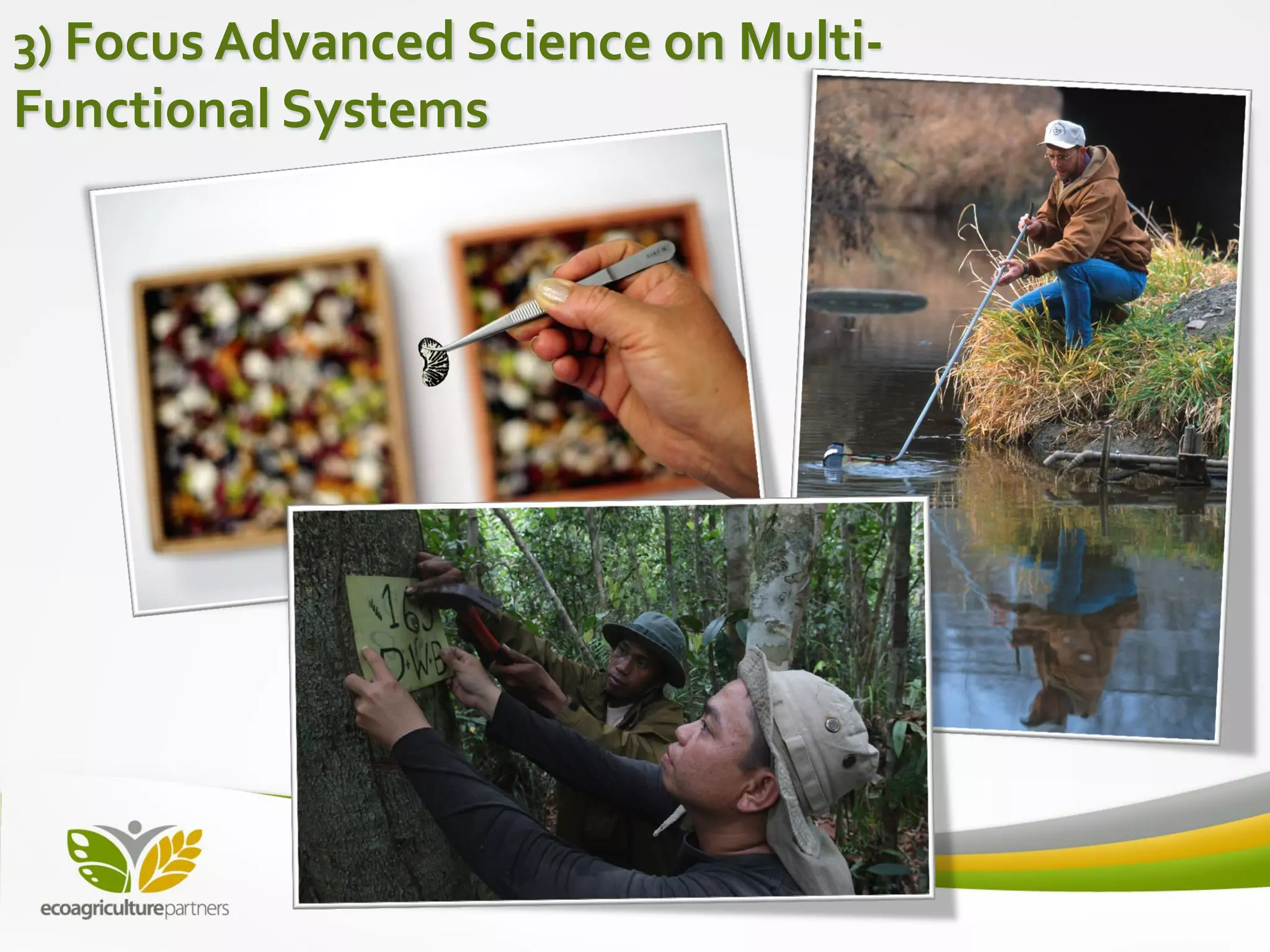
3) Focus Advanced Science on Multi-
Functional Systems
Thank you
www.ecoagriculture.org
landscapes.ecoagriculture.org

Food Security and Sustainable Resource Use: Comments

  • 1.
    Food Security andSustainable Resource Use: Comments Sara J. Scherr, President, EcoAgriculture Partners Natural Resource Management and Food Security for a Growing Population World Resources Institute,Washington, DC – May 15, 2013
  • 2.
    Securing Food Supplyin the 21st Century: Beyond Field-Scale Productivity
  • 3.
    More than Food:Societal Demands from Agricultural Landscapes
  • 4.
    Beyond Resource UseEfficiency: Negotiating Whole Landscape System Efficiency
  • 5.
    Whole Landscapes forFood, Fiber, Energy, Health, Water,Livelihoods,Biodiversity,Ecosystem,Climate
  • 7.
    Integrated Landscapes: KeyFeatures 1) Agreed management objectives encompass multiple landscape benefits 2) Collaborative, community-engaged processes are in place for dialogue, planning, negotiating and monitoring decisions 3) Production practices contribute to multiple objectives at farm and landscape scales 4) Interactions among different parts of the landscape realize positive socio- ecological synergies or mitigate negative trade-offs 5) Market, tenure and policy frameworks are shaped to achieve the diverse set of landscape objectives
  • 8.
    LandscapeTransformation in Ethiopia ●Operating as MERET since 2002, 400,000 has degraded land rehabiliated in 451 sub- watersheds, 125,000 direct beneficiaries, 40% female ● Menu of 48 activities in AE/E and Livelihoods and Local Level Participatory Planning Approach (LLPPA) ● Impacts inTigray: ● Investment in re-vegetation, terracing, community and farm-scale water harvesting restored water (ground, farm, streams) ● Irrigation & improved soil organic matter increased crop production 200-400% ● Dependence on food aid during droughts reduced from 90 to 10% households ● Transformation within 5-10 years ● Climate mitigation at landscape scale ● Institutionalization of approach in Ethiopia
  • 9.
    LandscapeTransformation in Ecuador ●Community Consortium of River JubonesWatershed--socio-ecological interactions for food & water security ● Since 2000; now 37 municipal govts ● ‘Territorial facilitators’ for action  Income diversification  Increased farm production, using agro-ecological methods  New markets incl. eco-markets  Improved well-being of women, children  Protection of water sources through community-based water users associations  Restoration of riparian habitat  Coordinated legal and policy action
  • 10.
    An Explosion ofInnovation on the Ground
  • 11.
    Ongoing Integrated LandscapeInitiatives Latin America & Caribbean Sub-Saharan Africa # Integrated Landscape Initiatives Identified 104 87 # Countries Represented 21 33 Most Common Motivations for Stakeholder Collaboration Biodiversity Conservation, Reducing Natural Resource Degradation Biodiversity and Natural Resource Conservation Average # Stakeholders Involved in Initiative (primary stakeholders) 11 (farmers, local government, NGOs) 9+ (local/district government, NGOs, producer groups) Core Investment Domains Institutional planning & coordination, Agricultural production, Conservation & Livelihoods Institutional planning & coordination; Conservation; Agricultural production Milder, et al. Unpublished Data
  • 12.
  • 13.
    Agroecological Practices thatGenerate Both HigherYields and Ecosystem Services Ecosystem Service Conservation Agriculture Holistic Grazing Organic Agriculture Precision Agriculture System of Rice Intensification Number of studies that indicate positive, neutral or negative outcomes for select system & service combinations. + = - + = - + = - + = - + = - Pest Control 1 2 4 7 6 Soil Fertility & Structure 14 2 4 4 3 3 55 8 1 1 12 2 1 Nutrient Cycling 6 1 2 2 1 1 23 39 5 12 2 Wild Biodiversity 3 11 23 1 2 Erosion Control 10 1 1 1 1 1 1 1 H20 qual. & quant. 16 2 2 1 1 9 52 2 Garbach, et al. 2012. ‘An Assessment of the Multi-Functionality of Agroecological Intensification.’ EcoAgriculture Partners: Washington, DC.total # of studies reviewed = 219
  • 14.
    Farmers Mobilizing forLand Stewardship Jointly with Production and Market Access
  • 15.
    Prgrams to RestoreEcosystem Function in Ag Landscapes
  • 16.
  • 17.
    1) Promote Adoptionof Known Best Practices
  • 18.
    2) Support InitiativesAdvancing Multi-Objective Farms and Landscapes
  • 19.
    3) Focus AdvancedScience on Multi- Functional Systems
  • 20.