CARDIO PULMONARY
RESUSCITATION
DEFINITION
 Cardio pulmonary
resuscitation is a
technique of basic life
support for oxygenating
the brain and heart until
appropriate,definitive
medical treatment can
restore normal heart and
ventilatory action.
CONT..
OR
CPR is a series of steps used to
establish artificial ventilation
and circulation in the patient who
is not breathing and has no pulse.
PRINCIPLES OF CPR
❖To restore effective circulation and
ventilation
❖To prevent irreversible cerebral damage due
to anoxia.
❖When the heart fails to maintain the
cerebral circulation for approximately 4
minutes,the brain may suffer irreversible
damage
purposes
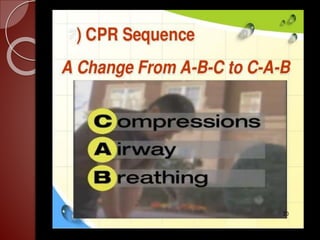
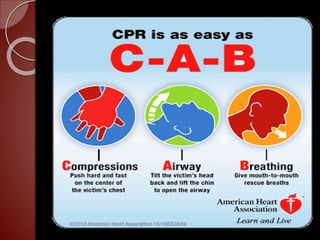
 To maintain blood circulation by external
cardiac massages (C).
 To maintain an open and clear airway
(A).
 To maintain breathing by external
ventilation (B).
 To save life of the patient.
 To provide basic life support till medical
and advanced life support arrives.
 Restore cardiopulmonary functioning.
INDICATION
✓Ventricular
fibrillation
✓Asystole
✓Pulseless
bradycardia
✓Pulseless
tachycardia
CONTRAINDICATION
 Do not resuscitate when a decision
not to resuscitate has been noted in
the chart.This order is often
abbreviated to DNR (do not
resuscitate).It is sometimes referred
to as no code,and is now discussed
with the client on admission and is
referred to as an advanced directive.
PROCEDURE
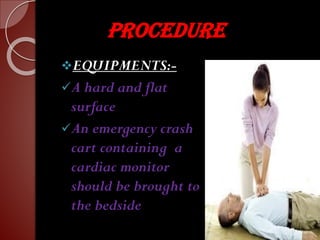
❖EQUIPMENTS:-
✓A hard and flat
surface
✓An emergency crash
cart containing a
cardiac monitor
should be brought to
the bedside
Cont..
✓Airway eqipment
✓Suction equipment
✓Intravenous equipment
✓Laboratory tubes and syringes
✓Pre packed medicines for advanced life
support
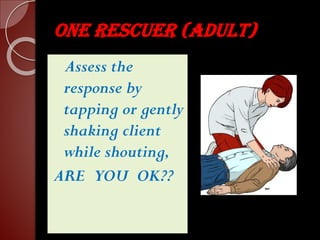
ONE RESCUER (ADULT)
Assess the
response by
tapping or gently
shaking client
while shouting,
ARE YOU OK??
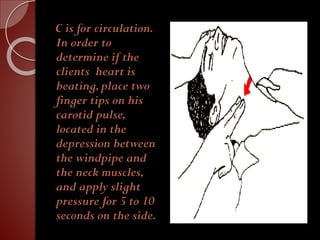
C is for circulation.
In order to
determine if the
clients heart is
beating,place two
finger tips on his
carotid pulse,
located in the
depression between
the windpipe and
the neck muscles,
and apply slight
pressure for 5 to 10
seconds on the side.
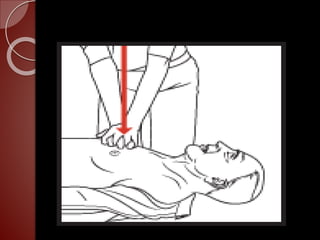
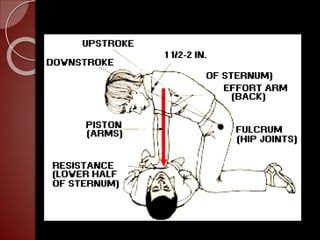
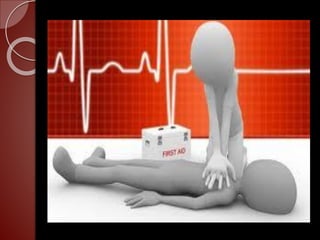
 Kneel beside the person who needs help.
 Place the heel of one hand on the center of the
chest.
 Place the heel of the other hand on top of the
first hand, then lace your fingers together.
 Position your body so that your shoulders are
directly over your hands, and keep your arms
straight.
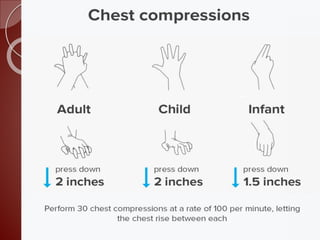
 Push hard, push fast. Use your body weight to
help you administer compressions that are at
least 2 inches deep and delivered at a rate of at
least 100 compressions per minute. (Just be sure
to let chest rise completely between
compressions.)
 Keep pushing. Continue hands-only CPR until
you see obvious signs of life, like breathing,
another trained responder or EMS professional
can take over, you're too exhausted to continue,
an AED becomes available, or the scene
becomes unsafe.
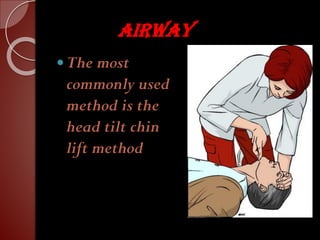
AIRWAY
The most
commonly used
method is the
head tilt chin
lift method
 Place the person carefully on their back and kneel
beside their chest. Tilt their head back slightly by
lifting their chin.
 Open their mouth and check for any obstruction,
such as food or vomit. Remove any obstruction if it
is loose. If it is not loose, trying to grasp it may
push it farther into the airway.
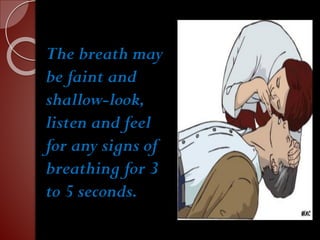
The breath may
be faint and
shallow-look,
listen and feel
for any signs of
breathing for 3
to 5 seconds.
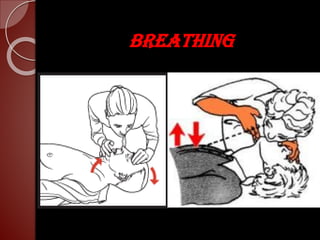
Breathing
 Place your ear next the person’s mouth and listen
for no more than 10 seconds. If you do not hear
breathing, or you only hear occasional gasps, begin
CPR.
 If someone is unconscious but still breathing, do
not perform CPR. Instead, if they do not seem to
have a spinal injury, place them in the recovery
position. Keep monitoring their breathing and
perform CPR if they stop breathing.
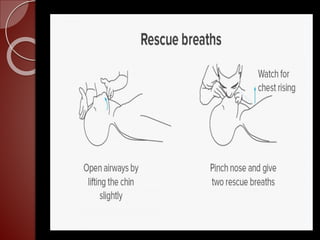
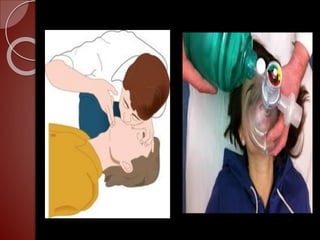
 Making sure their mouth is clear, tilt their head
back slightly and lift their chin. Pinch their nose
shut, place your mouth fully over theirs, and
blow to make their chest rise.
 If their chest does not rise with the first breath,
retilt their head. If their chest still does not rise
with a second breath, the person might be
choking.
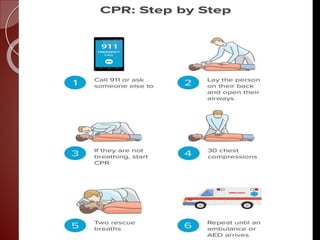
 Repeat the cycle of 30 chest compressions
and two rescue breaths until the person
starts breathing or help arrives. If an AED
arrives, carry on performing CPR until the
machine is set up and ready to use.
If someone is not breathing, giving CPR can
ensure that oxygen-rich blood reaches the brain.
This is important, as without oxygen, someone
can sustain permanent brain damage or die
in under 8 minutes.
 A person might need CPR if they stop
breathing in any of the following circumstances:
 a cardiac arrest or heart attack
 choking
 a road traffic accident
 near-drowning
 suffocation
 poisoning
 a drug or alcohol overdose
 smoke inhalation
 electrocution
 suspected sudden infant death syndrome
Only perform CPR if the adult is not
breathing, or in children and infants, when
they are not breathing normally, and their
blood is not circulating.This is why it is
important to ensure that the person does not
respond to verbal or physical calls to
attention before starting the CPR process.
Complication
 Coronary vessel injury
 Diaphragm injury
 Hemopericardium
 Hemothorax
 Rib fractures
 CPR is a life-saving first aid procedure. It can
significantly improve someone’s changes of
surviving if they suffer a heart attack or stop
breathing following an accident or trauma.
 The steps vary depending on whether the
person is an infant, child, or adult. However,
the basic cycle of chest compressions and
rescue breaths will remain the same.
 Only use CPR when an adult has stopped
breathing. Check the person to see whether
they respond to verbal or physical stimuli
before starting CPR.

CPR.pdf

  • 1.
  • 2.
    DEFINITION  Cardio pulmonary resuscitationis a technique of basic life support for oxygenating the brain and heart until appropriate,definitive medical treatment can restore normal heart and ventilatory action.
  • 3.
    CONT.. OR CPR is aseries of steps used to establish artificial ventilation and circulation in the patient who is not breathing and has no pulse.
  • 4.
    PRINCIPLES OF CPR ❖Torestore effective circulation and ventilation ❖To prevent irreversible cerebral damage due to anoxia. ❖When the heart fails to maintain the cerebral circulation for approximately 4 minutes,the brain may suffer irreversible damage
  • 5.
    purposes  To maintainblood circulation by external cardiac massages (C).  To maintain an open and clear airway (A).  To maintain breathing by external ventilation (B).  To save life of the patient.  To provide basic life support till medical and advanced life support arrives.  Restore cardiopulmonary functioning.
  • 8.
  • 9.
    CONTRAINDICATION  Do notresuscitate when a decision not to resuscitate has been noted in the chart.This order is often abbreviated to DNR (do not resuscitate).It is sometimes referred to as no code,and is now discussed with the client on admission and is referred to as an advanced directive.
  • 10.
    PROCEDURE ❖EQUIPMENTS:- ✓A hard andflat surface ✓An emergency crash cart containing a cardiac monitor should be brought to the bedside
  • 11.
    Cont.. ✓Airway eqipment ✓Suction equipment ✓Intravenousequipment ✓Laboratory tubes and syringes ✓Pre packed medicines for advanced life support
  • 12.
    ONE RESCUER (ADULT) Assessthe response by tapping or gently shaking client while shouting, ARE YOU OK??
  • 14.
    C is forcirculation. In order to determine if the clients heart is beating,place two finger tips on his carotid pulse, located in the depression between the windpipe and the neck muscles, and apply slight pressure for 5 to 10 seconds on the side.
  • 16.
     Kneel besidethe person who needs help.  Place the heel of one hand on the center of the chest.  Place the heel of the other hand on top of the first hand, then lace your fingers together.  Position your body so that your shoulders are directly over your hands, and keep your arms straight.
  • 17.
     Push hard,push fast. Use your body weight to help you administer compressions that are at least 2 inches deep and delivered at a rate of at least 100 compressions per minute. (Just be sure to let chest rise completely between compressions.)  Keep pushing. Continue hands-only CPR until you see obvious signs of life, like breathing, another trained responder or EMS professional can take over, you're too exhausted to continue, an AED becomes available, or the scene becomes unsafe.
  • 21.
    AIRWAY The most commonly used methodis the head tilt chin lift method
  • 22.
     Place theperson carefully on their back and kneel beside their chest. Tilt their head back slightly by lifting their chin.  Open their mouth and check for any obstruction, such as food or vomit. Remove any obstruction if it is loose. If it is not loose, trying to grasp it may push it farther into the airway.
  • 23.
    The breath may befaint and shallow-look, listen and feel for any signs of breathing for 3 to 5 seconds.
  • 24.
  • 25.
     Place yourear next the person’s mouth and listen for no more than 10 seconds. If you do not hear breathing, or you only hear occasional gasps, begin CPR.  If someone is unconscious but still breathing, do not perform CPR. Instead, if they do not seem to have a spinal injury, place them in the recovery position. Keep monitoring their breathing and perform CPR if they stop breathing.
  • 26.
     Making suretheir mouth is clear, tilt their head back slightly and lift their chin. Pinch their nose shut, place your mouth fully over theirs, and blow to make their chest rise.  If their chest does not rise with the first breath, retilt their head. If their chest still does not rise with a second breath, the person might be choking.
  • 30.
     Repeat thecycle of 30 chest compressions and two rescue breaths until the person starts breathing or help arrives. If an AED arrives, carry on performing CPR until the machine is set up and ready to use.
  • 31.
    If someone isnot breathing, giving CPR can ensure that oxygen-rich blood reaches the brain. This is important, as without oxygen, someone can sustain permanent brain damage or die in under 8 minutes.  A person might need CPR if they stop breathing in any of the following circumstances:  a cardiac arrest or heart attack  choking  a road traffic accident  near-drowning  suffocation  poisoning
  • 32.
     a drugor alcohol overdose  smoke inhalation  electrocution  suspected sudden infant death syndrome Only perform CPR if the adult is not breathing, or in children and infants, when they are not breathing normally, and their blood is not circulating.This is why it is important to ensure that the person does not respond to verbal or physical calls to attention before starting the CPR process.
  • 33.
    Complication  Coronary vesselinjury  Diaphragm injury  Hemopericardium  Hemothorax  Rib fractures
  • 34.
     CPR isa life-saving first aid procedure. It can significantly improve someone’s changes of surviving if they suffer a heart attack or stop breathing following an accident or trauma.  The steps vary depending on whether the person is an infant, child, or adult. However, the basic cycle of chest compressions and rescue breaths will remain the same.  Only use CPR when an adult has stopped breathing. Check the person to see whether they respond to verbal or physical stimuli before starting CPR.