Download to read offline


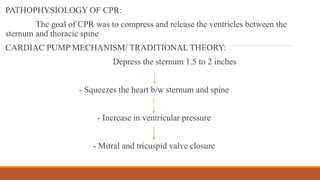

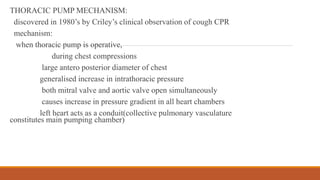


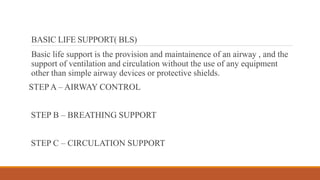
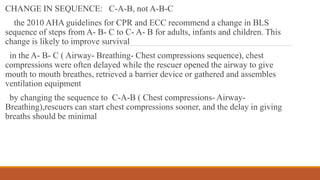
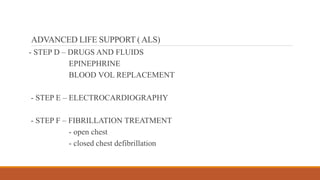





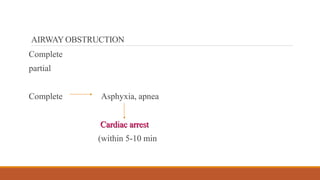
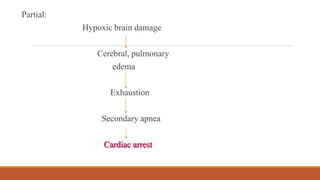


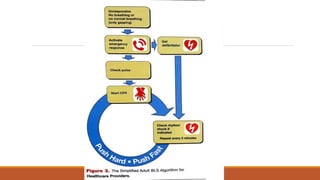


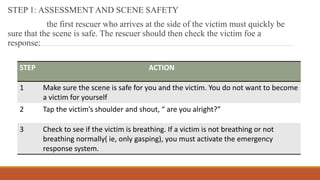

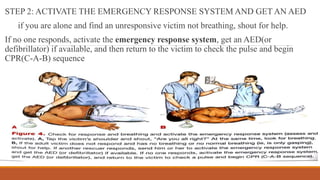


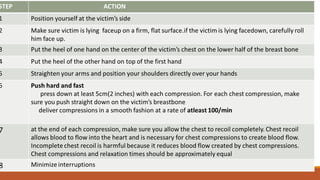


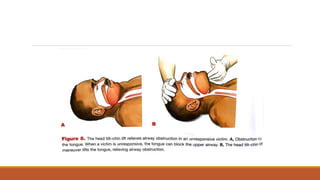
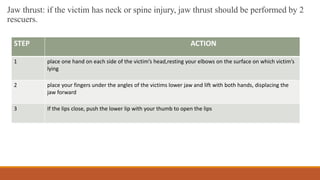
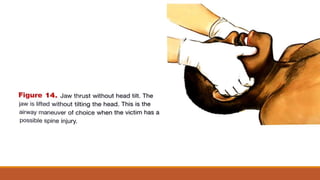
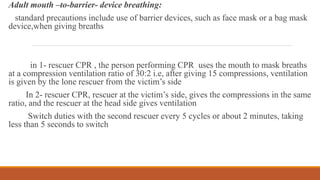


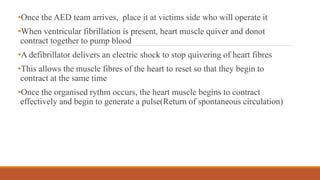
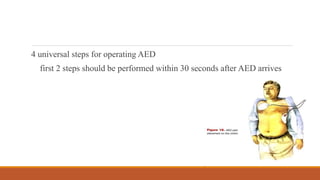
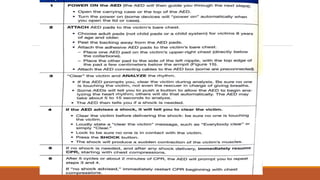
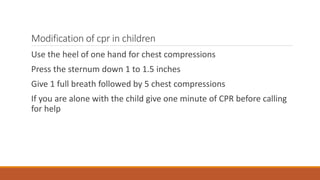

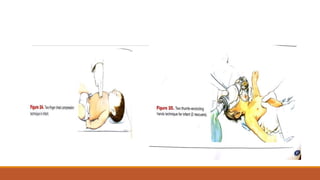




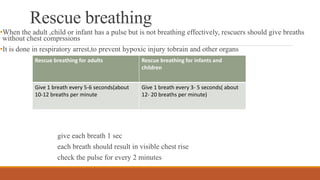




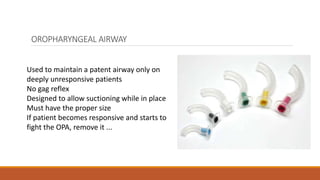

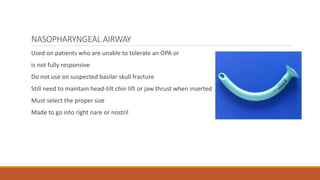


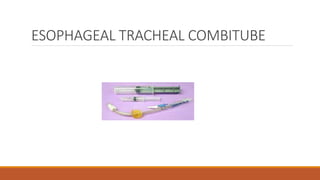
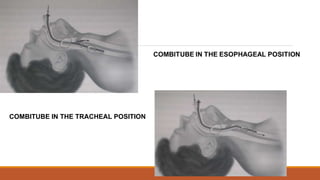
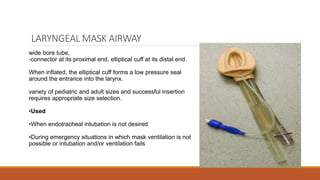
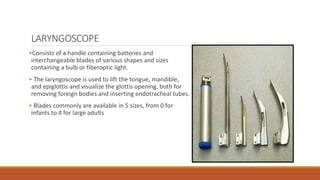
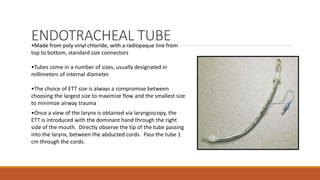



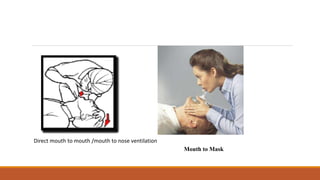


Cardiopulmonary resuscitation (CPR) is an emergency procedure that combines chest compressions and artificial ventilation to manually preserve brain function until spontaneous circulation and breathing can be restored in a person experiencing cardiac arrest. The document outlines the key steps and techniques for performing high-quality CPR, including establishing unresponsiveness, activating emergency services, providing chest compressions, opening the airway, delivering breaths, operating an automated external defibrillator, and modifying CPR for children and infants. Special considerations are also discussed for choking victims, pregnant patients, and those with potential neck or spine injuries.


