PEG TUBE CARE
BY
Manju Mulamoottil Abraham
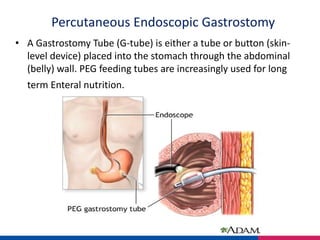
Percutaneous Endoscopic Gastrostomy
• A Gastrostomy Tube (G-tube) is either a tube or button (skin-
level device) placed into the stomach through the abdominal
(belly) wall. PEG feeding tubes are increasingly used for long
term Enteral nutrition.
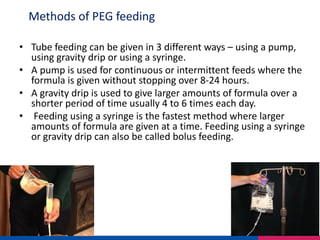
Methods of PEG feeding
• Tube feeding can be given in 3 different ways – using a pump,
using gravity drip or using a syringe.
• A pump is used for continuous or intermittent feeds where the
formula is given without stopping over 8-24 hours.
• A gravity drip is used to give larger amounts of formula over a
shorter period of time usually 4 to 6 times each day.
• Feeding using a syringe is the fastest method where larger
amounts of formula are given at a time. Feeding using a syringe
or gravity drip can also be called bolus feeding.
Bolus Feed procedure
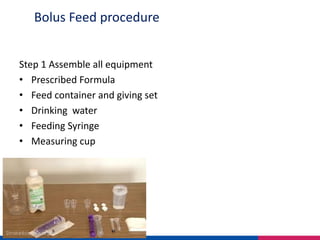
Step 1 Assemble all equipment
• Prescribed Formula
• Feed container and giving set
• Drinking water
• Feeding Syringe
• Measuring cup
Step 2 Wash hands well with soap and water
Step 3 Apply clean gloves
Give feed (see tube feeding plan as prescribed by treating
Doctor )
• Fill syringe with the set amount of warm water and gently push
it through the feeding tube (this is a flush)
• Measure the set amount of formula into a measuring cup (or
you can use the measuring scale on the syringe instead) .
• Remove plunger from syringe
• Rinse syringe with water and attach to feeding tube
• Tu
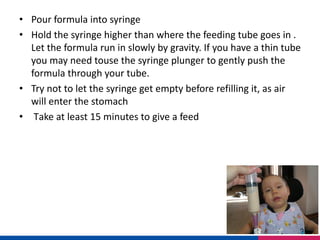
• Pour formula into syringe
• Hold the syringe higher than where the feeding tube goes in .
Let the formula run in slowly by gravity. If you have a thin tube
you may need touse the syringe plunger to gently push the
formula through your tube.
• Try not to let the syringe get empty before refilling it, as air
will enter the stomach
• Take at least 15 minutes to give a feed
When finished
• Flush the tube with the prescribed amount of
water
• Disconnect syringe and recap feeding tube
• Clean and replace the articles
• Wash hands
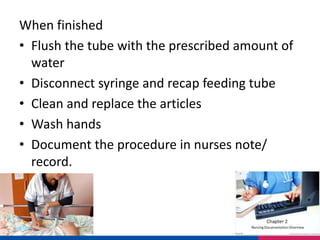
• Document the procedure in nurses note/
record.
Care of the site
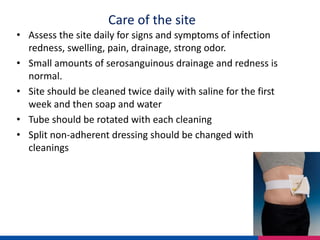
• Assess the site daily for signs and symptoms of infection
redness, swelling, pain, drainage, strong odor.
• Small amounts of serosanguinous drainage and redness is
normal.
• Site should be cleaned twice daily with saline for the first
week and then soap and water
• Tube should be rotated with each cleaning
• Split non-adherent dressing should be changed with
cleanings
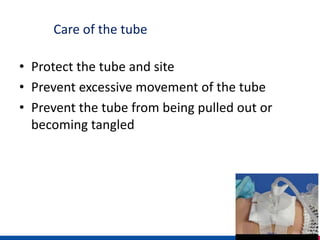
• Protect the tube and site
• Prevent excessive movement of the tube
• Prevent the tube from being pulled out or
becoming tangled
Care of the tube
To prevent a blocked tube
• Always crush medications well before giving through the
feeding tube.
• Always flush the feeding tube with 40mL water before,
between and after giving medications.
• Always flush the tube with at least 40mL water every 4 hours
or 8 hours if overnight.
• Always begin and finish each feeding session with a water flush.
This keeps the tube clean and stops feed building up inside the
tube.
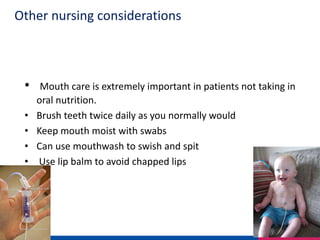
Other nursing considerations
• Mouth care is extremely important in patients not taking in
oral nutrition.
• Brush teeth twice daily as you normally would
• Keep mouth moist with swabs
• Can use mouthwash to swish and spit
• Use lip balm to avoid chapped lips
•Manju M Abraham

Peg

  • 1.
    PEG TUBE CARE BY ManjuMulamoottil Abraham
  • 2.
    Percutaneous Endoscopic Gastrostomy •A Gastrostomy Tube (G-tube) is either a tube or button (skin- level device) placed into the stomach through the abdominal (belly) wall. PEG feeding tubes are increasingly used for long term Enteral nutrition.
  • 3.
    Methods of PEGfeeding • Tube feeding can be given in 3 different ways – using a pump, using gravity drip or using a syringe. • A pump is used for continuous or intermittent feeds where the formula is given without stopping over 8-24 hours. • A gravity drip is used to give larger amounts of formula over a shorter period of time usually 4 to 6 times each day. • Feeding using a syringe is the fastest method where larger amounts of formula are given at a time. Feeding using a syringe or gravity drip can also be called bolus feeding.
  • 4.
    Bolus Feed procedure Step1 Assemble all equipment • Prescribed Formula • Feed container and giving set • Drinking water • Feeding Syringe • Measuring cup
  • 5.
    Step 2 Washhands well with soap and water Step 3 Apply clean gloves Give feed (see tube feeding plan as prescribed by treating Doctor ) • Fill syringe with the set amount of warm water and gently push it through the feeding tube (this is a flush) • Measure the set amount of formula into a measuring cup (or you can use the measuring scale on the syringe instead) . • Remove plunger from syringe • Rinse syringe with water and attach to feeding tube • Tu
  • 6.
    • Pour formulainto syringe • Hold the syringe higher than where the feeding tube goes in . Let the formula run in slowly by gravity. If you have a thin tube you may need touse the syringe plunger to gently push the formula through your tube. • Try not to let the syringe get empty before refilling it, as air will enter the stomach • Take at least 15 minutes to give a feed
  • 7.
    When finished • Flushthe tube with the prescribed amount of water • Disconnect syringe and recap feeding tube • Clean and replace the articles • Wash hands • Document the procedure in nurses note/ record.
  • 8.
    Care of thesite • Assess the site daily for signs and symptoms of infection redness, swelling, pain, drainage, strong odor. • Small amounts of serosanguinous drainage and redness is normal. • Site should be cleaned twice daily with saline for the first week and then soap and water • Tube should be rotated with each cleaning • Split non-adherent dressing should be changed with cleanings
  • 9.
    • Protect thetube and site • Prevent excessive movement of the tube • Prevent the tube from being pulled out or becoming tangled Care of the tube
  • 10.
    To prevent ablocked tube • Always crush medications well before giving through the feeding tube. • Always flush the feeding tube with 40mL water before, between and after giving medications. • Always flush the tube with at least 40mL water every 4 hours or 8 hours if overnight. • Always begin and finish each feeding session with a water flush. This keeps the tube clean and stops feed building up inside the tube.
  • 11.
    Other nursing considerations •Mouth care is extremely important in patients not taking in oral nutrition. • Brush teeth twice daily as you normally would • Keep mouth moist with swabs • Can use mouthwash to swish and spit • Use lip balm to avoid chapped lips
  • 12.