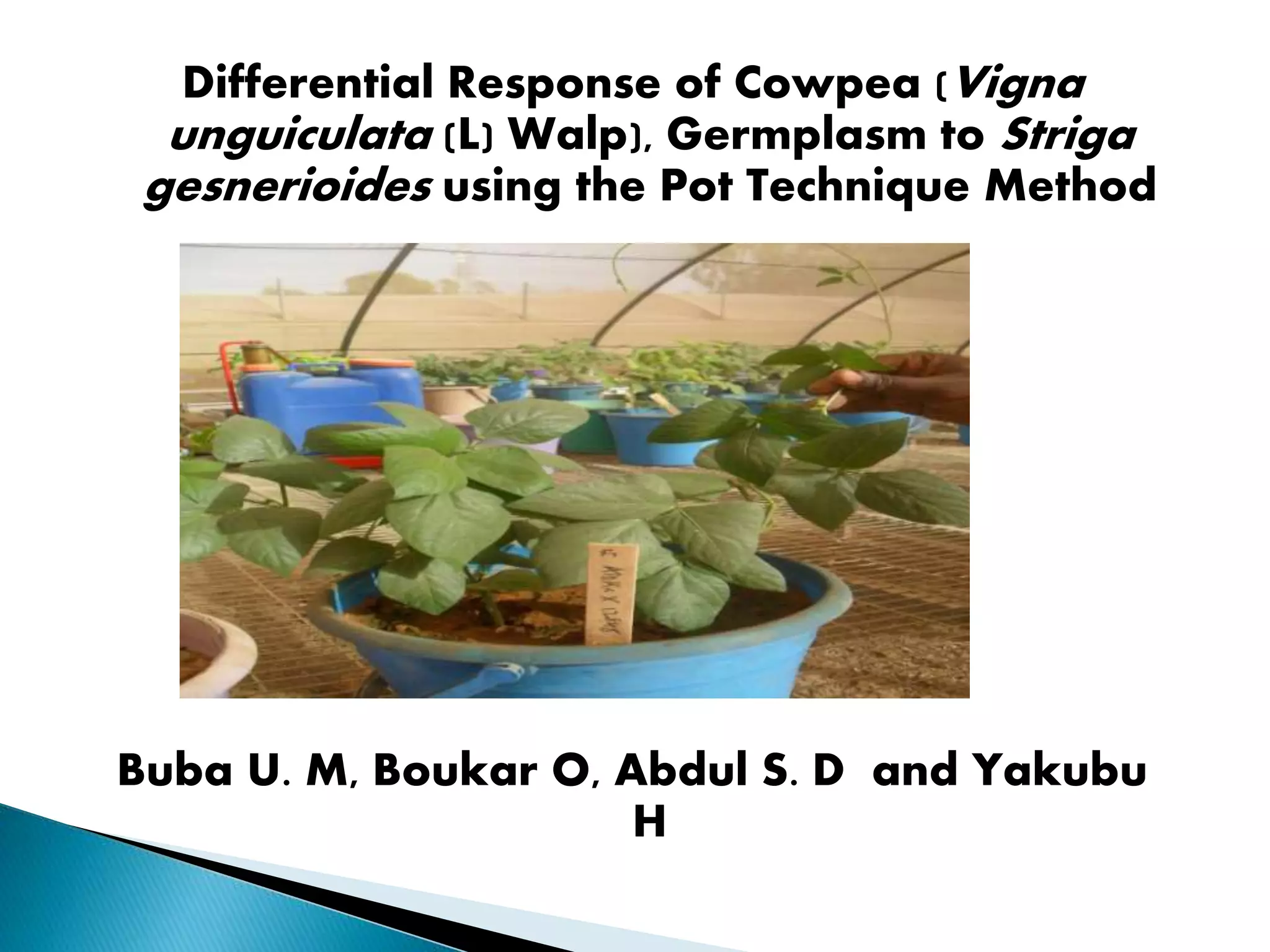
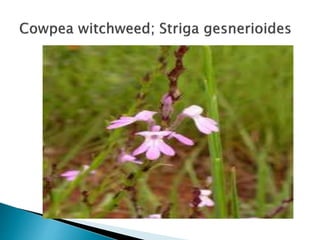
Differential Response of Cowpea (Vigna
unguiculata (L) Walp), Germplasm to Striga
gesnerioides using the Pot Technique Method
Buba U. M, Boukar O, Abdul S. D and Yakubu
H
 Cowpea is an important grain legume that is widely
cultivated in most tropical and sub-tropical
countries of the world ,especially Sub-Saharan
Africa
 West and Central Africa account for more than
sixty five (65%) percent of total world production.
 Cowpea has high protein quality due to its high levels
of lysine and methionine
 Cowpea complements starchy staple food crops such
as millet, sorghum, maize and cassava
 It can fix nitrogen even in soils where organic
matter content is less than 2% and sand
proportion is up to 85% (Singh et.al 1997);
 It is an effective resource in cereal based
cropping system (Carsky et.al,2003 )
 However, average yield per hactare for Nigeria
is as low as 270kg/ha compared to African
average
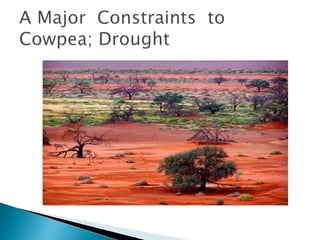
 Low yield is associated to both biotic and
abiotic factors.
 Large variability of wild and cultivated types
within the cowpea genome
 Some resistant genotypes among local
landraces and wild accessions have been
identified
 Gene(s) for resistance –easily identified
(dominant) and incorporated into cultivated
varieties
 Only vertical resistance(single dominant
gene) has so far being reported ,conferred by
three independent genes belonging to two
homologues
 The parasitic plant is self pollinating > any
mutation leads to fixation of genes > New
strains of parasite evolved> seven distinct
races in West Africa have been reported
 The current experiment was conducted to
evaluate some selected germplasm in order to
identify sources for multiple genes which may
confer horizontal resistance
 Examine some characters related to striga e.g
day to emergence & number of haustorium on
roots indicating level of resistance
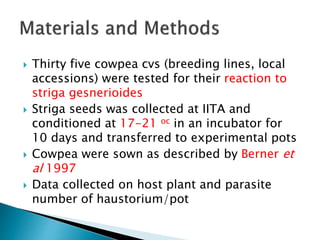
 Thirty five cowpea cvs (breeding lines, local
accessions) were tested for their reaction to
striga gesnerioides
 Striga seeds was collected at IITA and
conditioned at 17-21 oc in an incubator for
10 days and transferred to experimental pots
 Cowpea were sown as described by Berner et
al 1997
 Data collected on host plant and parasite
number of haustorium/pot
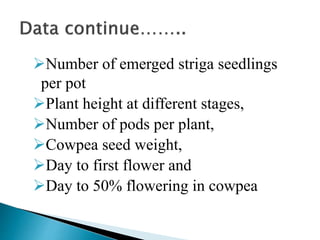
Number of emerged striga seedlings
per pot
Plant height at different stages,
Number of pods per plant,
Cowpea seed weight,
Day to first flower and
Day to 50% flowering in cowpea
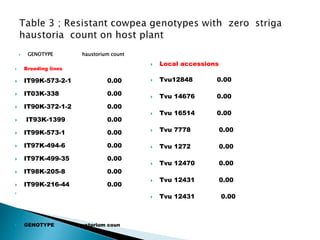
 GENOTYPE haustorium count
 Breeding lines
 IT99K-573-2-1 0.00
 IT03K-338 0.00
 IT90K-372-1-2 0.00
 IT93K-1399 0.00
 IT99K-573-1 0.00
 IT97K-494-6 0.00
 IT97K-499-35 0.00
 IT98K-205-8 0.00
 IT99K-216-44 0.00

 GENOTYPE haustorium coun
 Local accessions
 Tvu12848 0.00
 Tvu 14676 0.00
 Tvu 16514 0.00
 Tvu 7778 0.00
 Tvu 1272 0.00
 Tvu 12470 0.00
 Tvu 12431 0.00
 Tvu 12431 0.00
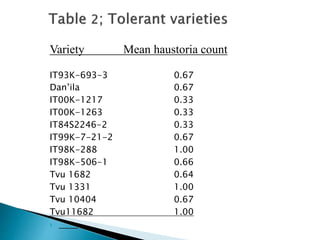
Variety Mean haustoria count
IT93K-693-3 0.67
Dan’ila 0.67
IT00K-1217 0.33
IT00K-1263 0.33
IT84S2246-2 0.33
IT99K-7-21-2 0.67
IT98K-288 1.00
IT98K-506-1 0.66
Tvu 1682 0.64
Tvu 1331 1.00
Tvu 10404 0.67
Tvu11682 1.00

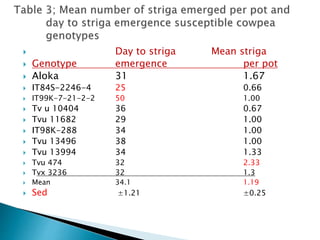
 Day to striga Mean striga
 Genotype emergence per pot
 Aloka 31 1.67
 IT84S-2246-4 25 0.66
 IT99K-7-21-2-2 50 1.00
 Tv u 10404 36 0.67
 Tvu 11682 29 1.00
 IT98K-288 34 1.00
 Tvu 13496 38 1.00
 Tvu 13994 34 1.33
 Tvu 474 32 2.33
 Tvx 3236 32 1.3
 Mean 34.1 1.19
 Sed ±1.21 ±0.25
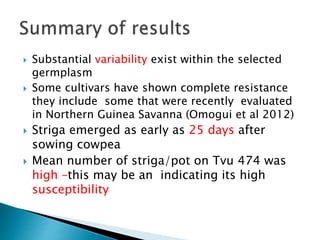
 Substantial variability exist within the selected
germplasm
 Some cultivars have shown complete resistance
they include some that were recently evaluated
in Northern Guinea Savanna (Omogui et al 2012)
 Striga emerged as early as 25 days after
sowing cowpea
 Mean number of striga/pot on Tvu 474 was
high –this may be an indicating its high
susceptibility
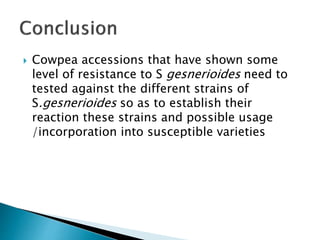
 Cowpea accessions that have shown some
level of resistance to S gesnerioides need to
tested against the different strains of
S.gesnerioides so as to establish their
reaction these strains and possible usage
/incorporation into susceptible varieties

 THANK YOU FOR LISTENING










Cowpea differential response to striga gesnerioides

  • 1.
    Differential Response ofCowpea (Vigna unguiculata (L) Walp), Germplasm to Striga gesnerioides using the Pot Technique Method Buba U. M, Boukar O, Abdul S. D and Yakubu H
  • 2.
     Cowpea isan important grain legume that is widely cultivated in most tropical and sub-tropical countries of the world ,especially Sub-Saharan Africa  West and Central Africa account for more than sixty five (65%) percent of total world production.  Cowpea has high protein quality due to its high levels of lysine and methionine  Cowpea complements starchy staple food crops such as millet, sorghum, maize and cassava
  • 3.
     It canfix nitrogen even in soils where organic matter content is less than 2% and sand proportion is up to 85% (Singh et.al 1997);  It is an effective resource in cereal based cropping system (Carsky et.al,2003 )  However, average yield per hactare for Nigeria is as low as 270kg/ha compared to African average  Low yield is associated to both biotic and abiotic factors.
  • 6.
     Large variabilityof wild and cultivated types within the cowpea genome  Some resistant genotypes among local landraces and wild accessions have been identified  Gene(s) for resistance –easily identified (dominant) and incorporated into cultivated varieties
  • 7.
     Only verticalresistance(single dominant gene) has so far being reported ,conferred by three independent genes belonging to two homologues  The parasitic plant is self pollinating > any mutation leads to fixation of genes > New strains of parasite evolved> seven distinct races in West Africa have been reported
  • 8.
     The currentexperiment was conducted to evaluate some selected germplasm in order to identify sources for multiple genes which may confer horizontal resistance  Examine some characters related to striga e.g day to emergence & number of haustorium on roots indicating level of resistance
  • 9.
     Thirty fivecowpea cvs (breeding lines, local accessions) were tested for their reaction to striga gesnerioides  Striga seeds was collected at IITA and conditioned at 17-21 oc in an incubator for 10 days and transferred to experimental pots  Cowpea were sown as described by Berner et al 1997  Data collected on host plant and parasite number of haustorium/pot
  • 10.
    Number of emergedstriga seedlings per pot Plant height at different stages, Number of pods per plant, Cowpea seed weight, Day to first flower and Day to 50% flowering in cowpea
  • 11.
     GENOTYPE haustoriumcount  Breeding lines  IT99K-573-2-1 0.00  IT03K-338 0.00  IT90K-372-1-2 0.00  IT93K-1399 0.00  IT99K-573-1 0.00  IT97K-494-6 0.00  IT97K-499-35 0.00  IT98K-205-8 0.00  IT99K-216-44 0.00   GENOTYPE haustorium coun  Local accessions  Tvu12848 0.00  Tvu 14676 0.00  Tvu 16514 0.00  Tvu 7778 0.00  Tvu 1272 0.00  Tvu 12470 0.00  Tvu 12431 0.00  Tvu 12431 0.00
  • 12.
    Variety Mean haustoriacount IT93K-693-3 0.67 Dan’ila 0.67 IT00K-1217 0.33 IT00K-1263 0.33 IT84S2246-2 0.33 IT99K-7-21-2 0.67 IT98K-288 1.00 IT98K-506-1 0.66 Tvu 1682 0.64 Tvu 1331 1.00 Tvu 10404 0.67 Tvu11682 1.00 
  • 13.
     Day tostriga Mean striga  Genotype emergence per pot  Aloka 31 1.67  IT84S-2246-4 25 0.66  IT99K-7-21-2-2 50 1.00  Tv u 10404 36 0.67  Tvu 11682 29 1.00  IT98K-288 34 1.00  Tvu 13496 38 1.00  Tvu 13994 34 1.33  Tvu 474 32 2.33  Tvx 3236 32 1.3  Mean 34.1 1.19  Sed ±1.21 ±0.25
  • 14.
     Substantial variabilityexist within the selected germplasm  Some cultivars have shown complete resistance they include some that were recently evaluated in Northern Guinea Savanna (Omogui et al 2012)  Striga emerged as early as 25 days after sowing cowpea  Mean number of striga/pot on Tvu 474 was high –this may be an indicating its high susceptibility
  • 15.
     Cowpea accessionsthat have shown some level of resistance to S gesnerioides need to tested against the different strains of S.gesnerioides so as to establish their reaction these strains and possible usage /incorporation into susceptible varieties
  • 16.
      THANK YOUFOR LISTENING         