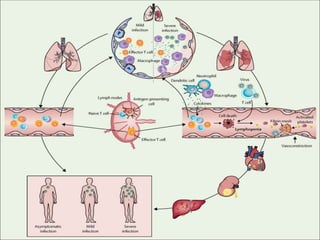
PATHOPHYSIOLOGY OF COVID 2019
Dr A P Naveen Kumar
Chief Specialist – Gen. Med.
Visakha Steel General Hospital
INTRODUCTION
 Coronaviruses are enveloped, positive-sense,
single-stranded RNA viruses of ~30 kb
 They are largely divided into four genera; α, β, γ,
and δ based on their genomic structure. α and β
coronaviruses infect only mammals
 Human coronaviruses such as 229E and NL63
are responsible for common cold and croup and
belong to α coronavirus
 In contrast, SARS-CoV, Middle East respiratory
syndrome coronavirus (MERS-CoV) and SARS-
Route of entry
 Transmission is believed to occur via respiratory
droplets from coughing and sneezing, as with other
respiratory pathogens
 Virus released in respiratory secretions can infect
other individuals via direct contact with mucous
membranes
 Droplets usually cannot travel more than 6 feet
TRANSMISSION
 detectable for up to 72 hours on some surfaces despite
decreasing infectivity over time.
 very susceptible to high heat (70°C)
 At room temperature and moderate (65%) humidity, no
infectious virus could be recovered from printing and
tissue papers after a 3-hour incubation period or from
wood and cloth by day two
 On treated smooth surfaces, infectious virus became
undetectable from glass by day 4 and from stainless steel
and plastic by day 7
 detectable level of infectious virus could still be
present on the outer layer of a surgical mask on day 7
incubationperiod
 The median incubation period is 5.1 days
(range 2–14 days)
 The precise interval is uncertain.
 The period of infectivity starts 2 days prior to
onset of symptoms and lasts up to 8 days
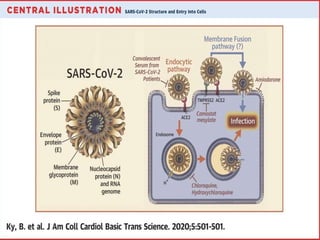
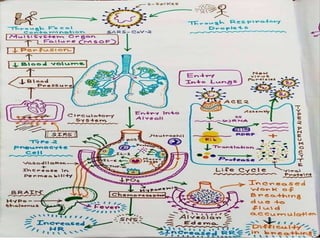
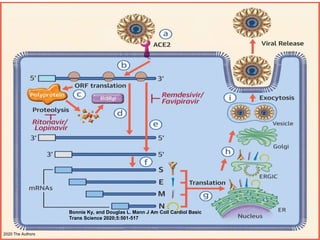
The life cycle of the virus with the host consists of
the following 5 steps:
 Attachment
 Penetration
 Biosynthesis
 Maturation
 Release
Once viruses bind to host receptors (attachment),
they enter host cells through endocytosis or
membrane fusion (penetration).
Coronaviruses consist of four structural proteins
 Spike (S)
 Membrane (M)
 Envelope (E)
 Nucleocapsid (N)
 Spike comprises two functional subunits; S1
subunit is responsible for binding to the host cell
receptor and S2 subunit is for the fusion of the
viral and cellular membranes
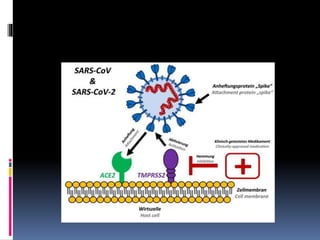
ACE2 Receptor
 The RBD of the S protein of SARS-CoV-2
specifically recognizes the host angiotensin-
converting enzyme 2 (ACE2) receptor
 ACE2 receptor -type 2 alveolar epithelial cells in
the lungs, heart, kidney, and gastrointestinal
tract
 Lungs seem to be particularly vulnerable
Large surface area
Reservoir for virus replication
RAAS- ACE -COVID
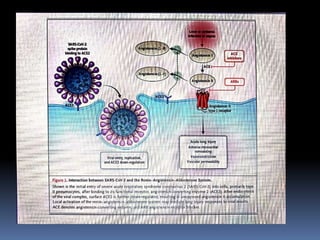
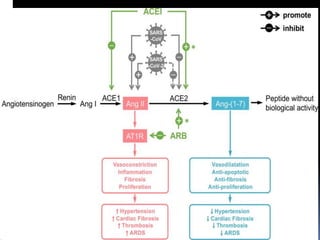
 ACE2 is a key counterregulatory enzyme that degrades
angiotensin II to angiotensin-(1–7), thereby attenuating its
effects on vasoconstriction, sodium retention, and fibrosis
 Despite substantial structural homology between ACE and ACE2,
their enzyme active sites are distinct
 ACE inhibitors in clinical use do not directly affect ACE2 activity
 SARS-CoV-2 appears to subsequently downregulate ACE2
expression
 Unabated angiotensin II activity may be in part responsible for organ
injury in Covid-19
Cytokine storm Syndrome -CSS
 CSS is an accentuated immune response to
triggers such as viral infections
 It results from an excess -proinflammatory and
inadequate anti-inflammatory stimuli
 Proinflammatory stimuli - interleukin (IL)–1β, IL-
2, IL-6, IL-7, IL-12, IL-18, tumor necrosis factor
(TNF)–α, interferon (IFN)–γ, and granulocyte
colony-stimulating factor (GCSF)
 Anti-inflammatory stimuli include regulatory T
cells, cytokines such as IL-10, transforming
CSS
 Increased production of IFNγ by hematopoietic
stem cells in response to viral infections is
thought to trigger CSS
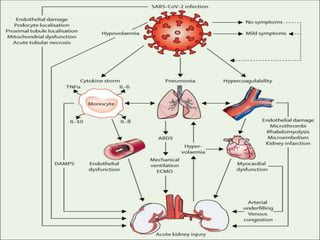
 CSS - unremitting fever and MODS including
ARDS and acute cardiac and renal injury
 Laboratory abnormalities include cytopenias,
increased ferritin, D-dimer, and increased
serum levels of proinflammatory cytokines
 Significant increased mortality in patients with
elevated ferritin (>1200 ng/mL) and elevated IL-
COVID 2019- Children
Pediatric COVID-19 patients have relatively milder
symptoms in general compared to elder patients
1. the expression level of ACE2 may differ between
adults and children- expressed on well-
differentiated ciliated epithelial cells
2. children have a qualitatively different response to the
SARS-CoV-2 virus to adults
3. presence of other viruses in the mucosa lungs and
airways, common in young children, can let SARS-
CoV-2 virus compete with them and limit its growth
COVID -Heart
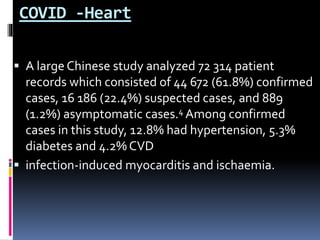
 A large Chinese study analyzed 72 314 patient
records which consisted of 44 672 (61.8%) confirmed
cases, 16 186 (22.4%) suspected cases, and 889
(1.2%) asymptomatic cases.4 Among confirmed
cases in this study, 12.8% had hypertension, 5.3%
diabetes and 4.2% CVD
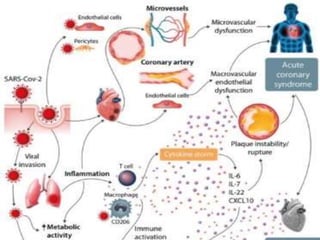
 infection-induced myocarditis and ischaemia.
COVID -Heart
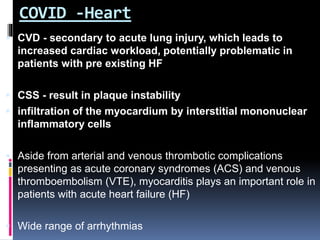
 CVD - secondary to acute lung injury, which leads to
increased cardiac workload, potentially problematic in
patients with pre existing HF
 CSS - result in plaque instability
 infiltration of the myocardium by interstitial mononuclear
inflammatory cells
 Aside from arterial and venous thrombotic complications
presenting as acute coronary syndromes (ACS) and venous
thromboembolism (VTE), myocarditis plays an important role in
patients with acute heart failure (HF)
 Wide range of arrhythmias
Bonnie Ky, and Douglas L. Mann J Am Coll Cardiol Basic
Trans Science 2020;5:501-517
2020 The Authors
CLINICAL FEATURES–COVID2019
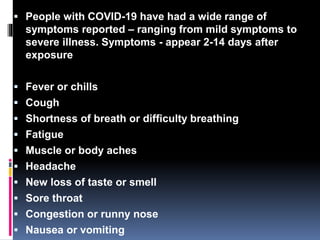
 People with COVID-19 have had a wide range of
symptoms reported – ranging from mild symptoms to
severe illness. Symptoms - appear 2-14 days after
exposure
 Fever or chills
 Cough
 Shortness of breath or difficulty breathing
 Fatigue
 Muscle or body aches
 Headache
 New loss of taste or smell
 Sore throat
 Congestion or runny nose
 Nausea or vomiting
Emergency warning signs* for
COVID-19
 Trouble breathing
 Persistent pain or pressure in the chest
 New confusion
 Inability to wake or stay awake
 Bluish lips or face
HIGH RISK GROUP
 Adults 60 years and older
 Children younger than 2 years old
 Pregnant women and women up to 2 weeks
after the end of pregnancy
 People who live in nursing homes and other
long-term care facilities
Health and age factors - risk of getting
serious complications
 COPD ,Moderate to severe Asthma
 CHF ,CAD ,Cardiomyopathies
 T2DM
 CKD CLD
 Obese and BMI > 30
 Sickle cell disease
 Cancer
 Immunocompromised
 Pregnancy
 CVA
SUSPECT CASE
 A. A patient with acute respiratory illness (fever and at least
one sign/symptom of respiratory disease, e.g., cough,
shortness of breath), AND a history of travel to or residence in
a location reporting community transmission of COVID-19
disease during the 14 days prior to symptom onset;
OR
 B. A patient with any acute respiratory illness AND having been
in contact with a confirmed or probable COVID-19 case in the
last 14 days prior to symptom onset;
OR
 C. A patient with severe acute respiratory illness (fever and at
least one sign/symptom of respiratory disease, e.g., cough,
shortness of breath; AND requiring hospitalization) AND in the
absence of an alternative diagnosis that fully explains the
clinical presentation
PROBABLE CASE
 A. A suspect case for whom testing for the
COVID-19 virus is inconclusive.
OR
 B. A suspect case for whom testing could not
be performed for any reason.
CONFIRMED CASE
 A person with laboratory confirmation of
COVID-19 infection, irrespective of clinical
signs and symptoms
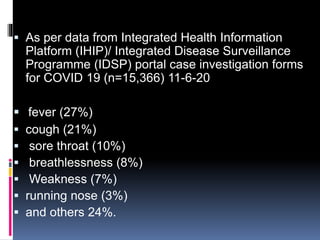
 As per data from Integrated Health Information
Platform (IHIP)/ Integrated Disease Surveillance
Programme (IDSP) portal case investigation forms
for COVID 19 (n=15,366) 11-6-20
 fever (27%)
 cough (21%)
 sore throat (10%)
 breathlessness (8%)
 Weakness (7%)
 running nose (3%)
 and others 24%.
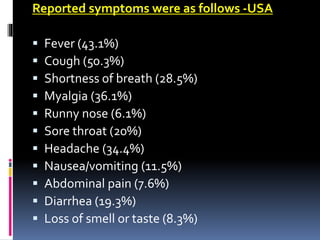
Reported symptoms were as follows -USA
 Fever (43.1%)
 Cough (50.3%)
 Shortness of breath (28.5%)
 Myalgia (36.1%)
 Runny nose (6.1%)
 Sore throat (20%)
 Headache (34.4%)
 Nausea/vomiting (11.5%)
 Abdominal pain (7.6%)
 Diarrhea (19.3%)
 Loss of smell or taste (8.3%)
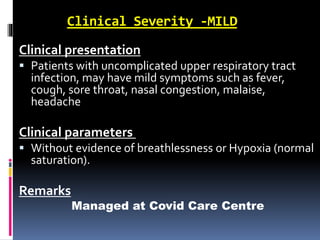
Clinical Severity -MILD
Clinical presentation
 Patients with uncomplicated upper respiratory tract
infection, may have mild symptoms such as fever,
cough, sore throat, nasal congestion, malaise,
headache
Clinical parameters
 Without evidence of breathlessness or Hypoxia (normal
saturation).
Remarks
Managed at Covid Care Centre
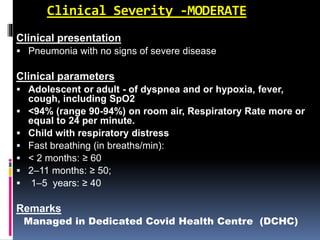
Clinical Severity -MODERATE
Clinical presentation
 Pneumonia with no signs of severe disease
Clinical parameters
 Adolescent or adult - of dyspnea and or hypoxia, fever,
cough, including SpO2
 <94% (range 90-94%) on room air, Respiratory Rate more or
equal to 24 per minute.
 Child with respiratory distress
 Fast breathing (in breaths/min):
 < 2 months: ≥ 60
 2–11 months: ≥ 50;
 1–5 years: ≥ 40
Remarks
Managed in Dedicated Covid Health Centre (DCHC)
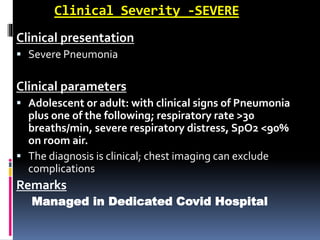
Clinical Severity -SEVERE
Clinical presentation
 Severe Pneumonia
Clinical parameters
 Adolescent or adult: with clinical signs of Pneumonia
plus one of the following; respiratory rate >30
breaths/min, severe respiratory distress, SpO2 <90%
on room air.
 The diagnosis is clinical; chest imaging can exclude
complications
Remarks
Managed in Dedicated Covid Hospital
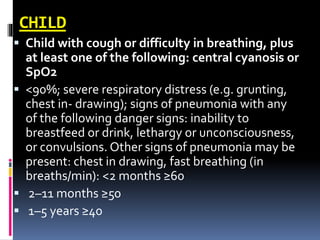
CHILD
 Child with cough or difficulty in breathing, plus
at least one of the following: central cyanosis or
SpO2
 <90%; severe respiratory distress (e.g. grunting,
chest in- drawing); signs of pneumonia with any
of the following danger signs: inability to
breastfeed or drink, lethargy or unconsciousness,
or convulsions. Other signs of pneumonia may be
present: chest in drawing, fast breathing (in
breaths/min): <2 months ≥60
 2–11 months ≥50
 1–5 years ≥40
ARDS
 Onset: new or worsening respiratory symptoms within one week of known clinical
insult.
 Chest imaging (Chest X ray and portable bed side lung ultrasound): bilateral
opacities, not fully explained by effusions, lobar or lung collapse, or nodules.
 Origin of Pulmonary infiltrates: respiratory failure not fully explained by cardiac
failure or fluid overload. Need objective assessment (e.g.
 echocardiography) to exclude hydrostatic cause of infiltrates/ oedema if no risk
factor present.
 Oxygenation impairment in adults:
 Mild ARDS: 200 mmHg < PaO2/FiO2 ≤ 300 mmHg (with PEEP or CPAP ≥5 cm
H2O)
 Moderate ARDS: 100 mmHg < PaO2/FiO2 ≤200 mmHg with PEEP
 ≥5 cm H2O)
 Severe ARDS: PaO2/FiO2 ≤ 100 mmHg with PEEP ≥5 cm H2O)
 When PaO2 is not available, SpO2/FiO2 ≤315 suggests ARDS (including in non-
ventilated patients)
 Oxygenation impairment in Children
 Note Oxygenation Index (OI) and OSI (Oxygen Saturation Index)
SEPSIS
 Acute life-threatening organ dysfunction caused
by a dys-regulated host response to suspected
or proven infection.
 Signs of organ dysfunction include: altered
mental status, difficult or fast breathing, low
oxygen saturation, reduced urine output, fast
heart rate, weak pulse, cold extremities or low
blood pressure, skin mottling, or laboratory
evidence of coagulopathy, thrombocytopenia,
acidosis, high lactate or hyperbilirubinemia
SEPTIC SHOCK
 Persisting hypotension despite volume
resuscitation, requiring vasopressors to
maintain MAP ≥65 mmHg and serum
lactate level > 2 mmol/L
THANK YOU
Covid Pathophysiology and clinical features

Covid Pathophysiology and clinical features

  • 1.
    PATHOPHYSIOLOGY OF COVID2019 Dr A P Naveen Kumar Chief Specialist – Gen. Med. Visakha Steel General Hospital
  • 3.
    INTRODUCTION  Coronaviruses areenveloped, positive-sense, single-stranded RNA viruses of ~30 kb  They are largely divided into four genera; α, β, γ, and δ based on their genomic structure. α and β coronaviruses infect only mammals  Human coronaviruses such as 229E and NL63 are responsible for common cold and croup and belong to α coronavirus  In contrast, SARS-CoV, Middle East respiratory syndrome coronavirus (MERS-CoV) and SARS-
  • 4.
    Route of entry Transmission is believed to occur via respiratory droplets from coughing and sneezing, as with other respiratory pathogens  Virus released in respiratory secretions can infect other individuals via direct contact with mucous membranes  Droplets usually cannot travel more than 6 feet
  • 5.
    TRANSMISSION  detectable forup to 72 hours on some surfaces despite decreasing infectivity over time.  very susceptible to high heat (70°C)  At room temperature and moderate (65%) humidity, no infectious virus could be recovered from printing and tissue papers after a 3-hour incubation period or from wood and cloth by day two  On treated smooth surfaces, infectious virus became undetectable from glass by day 4 and from stainless steel and plastic by day 7  detectable level of infectious virus could still be present on the outer layer of a surgical mask on day 7
  • 6.
    incubationperiod  The medianincubation period is 5.1 days (range 2–14 days)  The precise interval is uncertain.  The period of infectivity starts 2 days prior to onset of symptoms and lasts up to 8 days
  • 7.
    The life cycleof the virus with the host consists of the following 5 steps:  Attachment  Penetration  Biosynthesis  Maturation  Release Once viruses bind to host receptors (attachment), they enter host cells through endocytosis or membrane fusion (penetration).
  • 9.
    Coronaviruses consist offour structural proteins  Spike (S)  Membrane (M)  Envelope (E)  Nucleocapsid (N)  Spike comprises two functional subunits; S1 subunit is responsible for binding to the host cell receptor and S2 subunit is for the fusion of the viral and cellular membranes
  • 11.
    ACE2 Receptor  TheRBD of the S protein of SARS-CoV-2 specifically recognizes the host angiotensin- converting enzyme 2 (ACE2) receptor  ACE2 receptor -type 2 alveolar epithelial cells in the lungs, heart, kidney, and gastrointestinal tract  Lungs seem to be particularly vulnerable Large surface area Reservoir for virus replication
  • 12.
    RAAS- ACE -COVID ACE2 is a key counterregulatory enzyme that degrades angiotensin II to angiotensin-(1–7), thereby attenuating its effects on vasoconstriction, sodium retention, and fibrosis  Despite substantial structural homology between ACE and ACE2, their enzyme active sites are distinct  ACE inhibitors in clinical use do not directly affect ACE2 activity  SARS-CoV-2 appears to subsequently downregulate ACE2 expression  Unabated angiotensin II activity may be in part responsible for organ injury in Covid-19
  • 15.
    Cytokine storm Syndrome-CSS  CSS is an accentuated immune response to triggers such as viral infections  It results from an excess -proinflammatory and inadequate anti-inflammatory stimuli  Proinflammatory stimuli - interleukin (IL)–1β, IL- 2, IL-6, IL-7, IL-12, IL-18, tumor necrosis factor (TNF)–α, interferon (IFN)–γ, and granulocyte colony-stimulating factor (GCSF)  Anti-inflammatory stimuli include regulatory T cells, cytokines such as IL-10, transforming
  • 18.
    CSS  Increased productionof IFNγ by hematopoietic stem cells in response to viral infections is thought to trigger CSS  CSS - unremitting fever and MODS including ARDS and acute cardiac and renal injury  Laboratory abnormalities include cytopenias, increased ferritin, D-dimer, and increased serum levels of proinflammatory cytokines  Significant increased mortality in patients with elevated ferritin (>1200 ng/mL) and elevated IL-
  • 19.
    COVID 2019- Children PediatricCOVID-19 patients have relatively milder symptoms in general compared to elder patients 1. the expression level of ACE2 may differ between adults and children- expressed on well- differentiated ciliated epithelial cells 2. children have a qualitatively different response to the SARS-CoV-2 virus to adults 3. presence of other viruses in the mucosa lungs and airways, common in young children, can let SARS- CoV-2 virus compete with them and limit its growth
  • 20.
    COVID -Heart  Alarge Chinese study analyzed 72 314 patient records which consisted of 44 672 (61.8%) confirmed cases, 16 186 (22.4%) suspected cases, and 889 (1.2%) asymptomatic cases.4 Among confirmed cases in this study, 12.8% had hypertension, 5.3% diabetes and 4.2% CVD  infection-induced myocarditis and ischaemia.
  • 22.
    COVID -Heart  CVD- secondary to acute lung injury, which leads to increased cardiac workload, potentially problematic in patients with pre existing HF  CSS - result in plaque instability  infiltration of the myocardium by interstitial mononuclear inflammatory cells  Aside from arterial and venous thrombotic complications presenting as acute coronary syndromes (ACS) and venous thromboembolism (VTE), myocarditis plays an important role in patients with acute heart failure (HF)  Wide range of arrhythmias
  • 24.
    Bonnie Ky, andDouglas L. Mann J Am Coll Cardiol Basic Trans Science 2020;5:501-517 2020 The Authors
  • 26.
  • 27.
     People withCOVID-19 have had a wide range of symptoms reported – ranging from mild symptoms to severe illness. Symptoms - appear 2-14 days after exposure  Fever or chills  Cough  Shortness of breath or difficulty breathing  Fatigue  Muscle or body aches  Headache  New loss of taste or smell  Sore throat  Congestion or runny nose  Nausea or vomiting
  • 28.
    Emergency warning signs*for COVID-19  Trouble breathing  Persistent pain or pressure in the chest  New confusion  Inability to wake or stay awake  Bluish lips or face
  • 29.
    HIGH RISK GROUP Adults 60 years and older  Children younger than 2 years old  Pregnant women and women up to 2 weeks after the end of pregnancy  People who live in nursing homes and other long-term care facilities
  • 30.
    Health and agefactors - risk of getting serious complications  COPD ,Moderate to severe Asthma  CHF ,CAD ,Cardiomyopathies  T2DM  CKD CLD  Obese and BMI > 30  Sickle cell disease  Cancer  Immunocompromised  Pregnancy  CVA
  • 31.
    SUSPECT CASE  A.A patient with acute respiratory illness (fever and at least one sign/symptom of respiratory disease, e.g., cough, shortness of breath), AND a history of travel to or residence in a location reporting community transmission of COVID-19 disease during the 14 days prior to symptom onset; OR  B. A patient with any acute respiratory illness AND having been in contact with a confirmed or probable COVID-19 case in the last 14 days prior to symptom onset; OR  C. A patient with severe acute respiratory illness (fever and at least one sign/symptom of respiratory disease, e.g., cough, shortness of breath; AND requiring hospitalization) AND in the absence of an alternative diagnosis that fully explains the clinical presentation
  • 32.
    PROBABLE CASE  A.A suspect case for whom testing for the COVID-19 virus is inconclusive. OR  B. A suspect case for whom testing could not be performed for any reason.
  • 33.
    CONFIRMED CASE  Aperson with laboratory confirmation of COVID-19 infection, irrespective of clinical signs and symptoms
  • 34.
     As perdata from Integrated Health Information Platform (IHIP)/ Integrated Disease Surveillance Programme (IDSP) portal case investigation forms for COVID 19 (n=15,366) 11-6-20  fever (27%)  cough (21%)  sore throat (10%)  breathlessness (8%)  Weakness (7%)  running nose (3%)  and others 24%.
  • 35.
    Reported symptoms wereas follows -USA  Fever (43.1%)  Cough (50.3%)  Shortness of breath (28.5%)  Myalgia (36.1%)  Runny nose (6.1%)  Sore throat (20%)  Headache (34.4%)  Nausea/vomiting (11.5%)  Abdominal pain (7.6%)  Diarrhea (19.3%)  Loss of smell or taste (8.3%)
  • 36.
    Clinical Severity -MILD Clinicalpresentation  Patients with uncomplicated upper respiratory tract infection, may have mild symptoms such as fever, cough, sore throat, nasal congestion, malaise, headache Clinical parameters  Without evidence of breathlessness or Hypoxia (normal saturation). Remarks Managed at Covid Care Centre
  • 37.
    Clinical Severity -MODERATE Clinicalpresentation  Pneumonia with no signs of severe disease Clinical parameters  Adolescent or adult - of dyspnea and or hypoxia, fever, cough, including SpO2  <94% (range 90-94%) on room air, Respiratory Rate more or equal to 24 per minute.  Child with respiratory distress  Fast breathing (in breaths/min):  < 2 months: ≥ 60  2–11 months: ≥ 50;  1–5 years: ≥ 40 Remarks Managed in Dedicated Covid Health Centre (DCHC)
  • 38.
    Clinical Severity -SEVERE Clinicalpresentation  Severe Pneumonia Clinical parameters  Adolescent or adult: with clinical signs of Pneumonia plus one of the following; respiratory rate >30 breaths/min, severe respiratory distress, SpO2 <90% on room air.  The diagnosis is clinical; chest imaging can exclude complications Remarks Managed in Dedicated Covid Hospital
  • 39.
    CHILD  Child withcough or difficulty in breathing, plus at least one of the following: central cyanosis or SpO2  <90%; severe respiratory distress (e.g. grunting, chest in- drawing); signs of pneumonia with any of the following danger signs: inability to breastfeed or drink, lethargy or unconsciousness, or convulsions. Other signs of pneumonia may be present: chest in drawing, fast breathing (in breaths/min): <2 months ≥60  2–11 months ≥50  1–5 years ≥40
  • 40.
    ARDS  Onset: newor worsening respiratory symptoms within one week of known clinical insult.  Chest imaging (Chest X ray and portable bed side lung ultrasound): bilateral opacities, not fully explained by effusions, lobar or lung collapse, or nodules.  Origin of Pulmonary infiltrates: respiratory failure not fully explained by cardiac failure or fluid overload. Need objective assessment (e.g.  echocardiography) to exclude hydrostatic cause of infiltrates/ oedema if no risk factor present.  Oxygenation impairment in adults:  Mild ARDS: 200 mmHg < PaO2/FiO2 ≤ 300 mmHg (with PEEP or CPAP ≥5 cm H2O)  Moderate ARDS: 100 mmHg < PaO2/FiO2 ≤200 mmHg with PEEP  ≥5 cm H2O)  Severe ARDS: PaO2/FiO2 ≤ 100 mmHg with PEEP ≥5 cm H2O)  When PaO2 is not available, SpO2/FiO2 ≤315 suggests ARDS (including in non- ventilated patients)  Oxygenation impairment in Children  Note Oxygenation Index (OI) and OSI (Oxygen Saturation Index)
  • 41.
    SEPSIS  Acute life-threateningorgan dysfunction caused by a dys-regulated host response to suspected or proven infection.  Signs of organ dysfunction include: altered mental status, difficult or fast breathing, low oxygen saturation, reduced urine output, fast heart rate, weak pulse, cold extremities or low blood pressure, skin mottling, or laboratory evidence of coagulopathy, thrombocytopenia, acidosis, high lactate or hyperbilirubinemia
  • 42.
    SEPTIC SHOCK  Persistinghypotension despite volume resuscitation, requiring vasopressors to maintain MAP ≥65 mmHg and serum lactate level > 2 mmol/L
  • 43.

Editor's Notes

  • #25 The Replication Strategy of SARS-CoV (a) The severe acute respiratory syndrome coronavirus (SARS-CoV) spike (S) glycoprotein attaches to the angiotensin-converting enzyme 2 (ACE2) receptor on the cell surface. On entering the cytoplasm, the viral core particle, which contains the positive (5′ to 3′) strand genomic ribonucleic acid (RNA), is released into the cytoplasm of the cell (b). The positive-strand viral RNA is translated on host ribosomes to generate a large polyprotein (c) that undergoes proteolytic processing to generate multiple viral proteins, including an RNA-dependent RNA polymerase (RdRp). The RNA-dependent RNA polymerase generates a full-length, antisense negative-strand (3′ to 5′) viral RNA strand (d) that serves as template for replicating positive-strand viral genomic RNA, as well as shorter negative-strand RNAs (e) that serve as templates for synthesizing messenger ribonucleic acids (mRNAs) that code for structural proteins of the virus (f), including the S, membrane (M), envelope (E), and nucleocapsid (N) proteins. Translation of viral mRNAs occurs using the host endoplasmic reticulum (ER) (g). Once the viral structural proteins, S, E, and M, are translated and inserted into the ER, they move along the secretory pathway to the endoplasmic reticulum-Golgi intermediate compartment (ERGIC) (h). The viral proteins become encapsulated and bud into membranes containing viral structural proteins, where mature virions are assembled. (i) Following assembly, virions are transported to the cell surface in vesicles and released by exocytosis. Modified from Turner et al. (43). ORF = open reading frame.