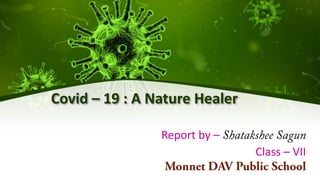
Covid – 19 : A Nature Healer
Report by –
Class – VII
What is Covid – 19 ?
• COVID-19 is a disease caused by a new strain of
coronavirus.
• 'CO' stands for corona, 'VI' for virus, and 'D' for
disease. Formerly, this disease was referred to as
'2019 novel coronavirus' or '2019-nCoV.‘
• COVID-19 is caused by the virus SARS-CoV-2.
Where was COVID-19 first discovered?
• The first known infections from SARS-CoV-2 were
discovered in Wuhan, China. The original source of viral
transmission to humans remains unclear, as does
whether the virus became pathogenic before or after the
spillover event.
How does COVID-19 spread?
• Current evidence suggests that the virus spreads mainly
between people who are in close contact with each
other, typically within 1 metre (short-range). A person
can be infected when aerosols or droplets containing the
virus are inhaled or come directly into contact with the
eyes, nose, or mouth.
Common symptoms of the coronavirus disease
 Common symptoms of infection may be in the form of respiratory symptoms such as-
* fever,
* cough,
* shortness of breath and
* breathing difficulties.
 In more severe cases, infection can cause pneumonia, severe acute respiratory syndrome, kidney
failure and even death.
 Symptoms may appear 2-14 days after exposure to the virus.
 Most people (about 80%) recover from the disease without needing hospital treatment. Older
people, and those with underlying medical problems like high blood pressure, heart and lung
problems, diabetes, or cancer, are high risk groups of developing serious illness.
 People of all ages who experience fever and/or cough associated with difficulty breathing/shortness
of breath, chest pain/pressure, or loss of speech or movement should seek medical attention
immediately.
New symptoms of Covid – 19 after 2nd wave
Most common symptoms:
• fever
• dry cough
• tiredness
Less common symptoms:
• aches and pains
• sore throat
• diarrhoea
• conjunctivitis
• headache
• loss of taste or smell
• a rash on skin, or discolouration of fingers or toes
What preventative measures can I take against
the coronavirus disease?
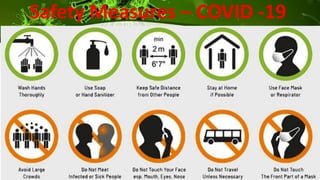
To prevent infection and to slow transmission of COVID-19, do the following:
• Wash your hands regularly with soap and water, or clean them with alcohol-based hand rub.
• Maintain at least 1 metre distance between you and people coughing or sneezing.
• Avoid touching your face.
• Cover your mouth and nose when coughing or sneezing.
• Stay home if you feel unwell.
• Refrain from smoking and other activities that weaken the lungs.
• Practice physical distancing by avoiding unnecessary travel and staying away from large groups of
people.
Safety Measures – COVID -19
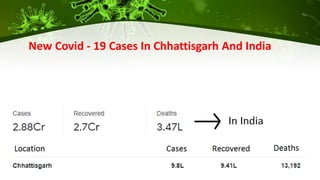
New Covid - 19 Cases In Chhattisgarh And India
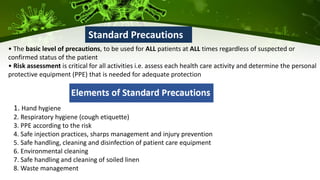
• The basic level of precautions, to be used for ALL patients at ALL times regardless of suspected or
confirmed status of the patient
• Risk assessment is critical for all activities i.e. assess each health care activity and determine the personal
protective equipment (PPE) that is needed for adequate protection
Standard Precautions
1. Hand hygiene
2. Respiratory hygiene (cough etiquette)
3. PPE according to the risk
4. Safe injection practices, sharps management and injury prevention
5. Safe handling, cleaning and disinfection of patient care equipment
6. Environmental cleaning
7. Safe handling and cleaning of soiled linen
8. Waste management
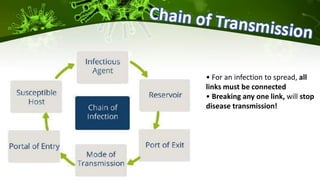
• For an infection to spread, all
links must be connected
• Breaking any one link, will stop
disease transmission!
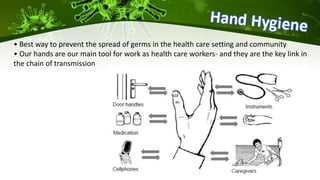
• Best way to prevent the spread of germs in the health care setting and community
• Our hands are our main tool for work as health care workers- and they are the key link in
the chain of transmission
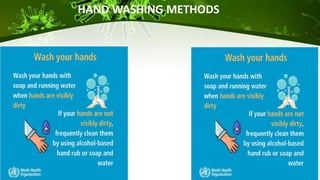
HAND WASHING METHODS
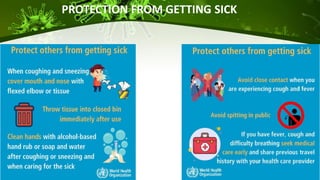
PROTECTION FROM GETTING SICK
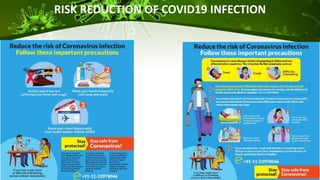
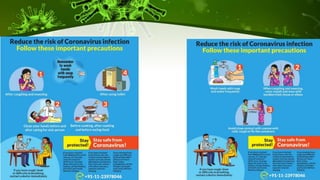
RISK REDUCTION OF COVID19 INFECTION
COVID- 19:
A Nature Healer
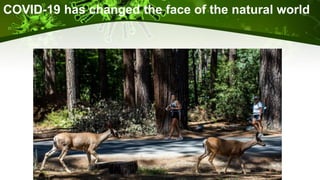
COVID-19 has changed the face of the natural world
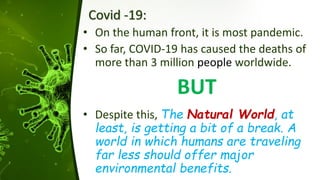
Covid -19:
• On the human front, it is most pandemic.
• So far, COVID-19 has caused the deaths of
more than 3 million people worldwide.
BUT
• Despite this, The Natural World, at
least, is getting a bit of a break. A
world in which humans are traveling
far less should offer major
environmental benefits.
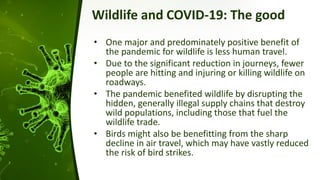
Wildlife and COVID-19: The good
• One major and predominately positive benefit of
the pandemic for wildlife is less human travel.
• Due to the significant reduction in journeys, fewer
people are hitting and injuring or killing wildlife on
roadways.
• The pandemic benefited wildlife by disrupting the
hidden, generally illegal supply chains that destroy
wild populations, including those that fuel the
wildlife trade.
• Birds might also be benefitting from the sharp
decline in air travel, which may have vastly reduced
the risk of bird strikes.
Marine life and Covid-1
• In addition, fewer ships are traveling through the
world’s waterways and oceans for shipping, fishing,
aquaculture, and tourism purposes.
• A reduction in water travel and activity could
reduce the risk of ships striking and injuring or
killing marine animals. It may also reduce the
marine disruption that occurs due to noise
pollution from ships, fishing sonar, and
recreational boats.
• In India reduced fishing and vehicle traffic at
nesting beaches may be boosting populations of
the critically endangered olive ridley sea turtle.
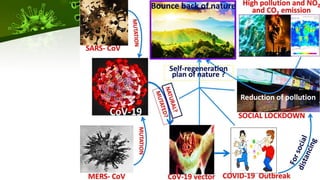
COVID-19 and air and water pollution
• daily global CO2 levels dropped by
17% during the early months of the
pandemic.
• levels of the pollutant nitric dioxide
lowered drastically, by 20-40%,across the
world.
• The unprecedented decrease in air
pollutant emissions during the pandemic
could reduce seasonal ozone
concentrations.
• Pollution levels dropped by nearly 16% in
India’s longest freshwater lake during a
lockdown period.
• During this time this could help improve
conservation and biodiversity efforts.
The Impact Of The Pandemic On The Natural World
Is Unlikely To Be Linear.
• It may also improve their ability to predict
global environmental changes and potential
cases of zoonoses, the transmission of
disease from animals to humans. This could
save millions of human lives, and economic
losses, going forward.
• Realistically, it will take years to assess
exactly how the COVID-19 pandemic has
affected wildlife, the environment, and the
climate.
• These positive changes may be
enough to give some people, and
Mother Nature, the hope
of a better future.
Covid - 19 - A Nature Healer

Covid - 19 - A Nature Healer

  • 1.
    Covid – 19: A Nature Healer Report by – Class – VII
  • 2.
    What is Covid– 19 ? • COVID-19 is a disease caused by a new strain of coronavirus. • 'CO' stands for corona, 'VI' for virus, and 'D' for disease. Formerly, this disease was referred to as '2019 novel coronavirus' or '2019-nCoV.‘ • COVID-19 is caused by the virus SARS-CoV-2.
  • 3.
    Where was COVID-19first discovered? • The first known infections from SARS-CoV-2 were discovered in Wuhan, China. The original source of viral transmission to humans remains unclear, as does whether the virus became pathogenic before or after the spillover event.
  • 4.
    How does COVID-19spread? • Current evidence suggests that the virus spreads mainly between people who are in close contact with each other, typically within 1 metre (short-range). A person can be infected when aerosols or droplets containing the virus are inhaled or come directly into contact with the eyes, nose, or mouth.
  • 6.
    Common symptoms ofthe coronavirus disease  Common symptoms of infection may be in the form of respiratory symptoms such as- * fever, * cough, * shortness of breath and * breathing difficulties.  In more severe cases, infection can cause pneumonia, severe acute respiratory syndrome, kidney failure and even death.  Symptoms may appear 2-14 days after exposure to the virus.  Most people (about 80%) recover from the disease without needing hospital treatment. Older people, and those with underlying medical problems like high blood pressure, heart and lung problems, diabetes, or cancer, are high risk groups of developing serious illness.  People of all ages who experience fever and/or cough associated with difficulty breathing/shortness of breath, chest pain/pressure, or loss of speech or movement should seek medical attention immediately.
  • 7.
    New symptoms ofCovid – 19 after 2nd wave Most common symptoms: • fever • dry cough • tiredness Less common symptoms: • aches and pains • sore throat • diarrhoea • conjunctivitis • headache • loss of taste or smell • a rash on skin, or discolouration of fingers or toes
  • 8.
    What preventative measurescan I take against the coronavirus disease? To prevent infection and to slow transmission of COVID-19, do the following: • Wash your hands regularly with soap and water, or clean them with alcohol-based hand rub. • Maintain at least 1 metre distance between you and people coughing or sneezing. • Avoid touching your face. • Cover your mouth and nose when coughing or sneezing. • Stay home if you feel unwell. • Refrain from smoking and other activities that weaken the lungs. • Practice physical distancing by avoiding unnecessary travel and staying away from large groups of people.
  • 9.
  • 10.
    New Covid -19 Cases In Chhattisgarh And India
  • 14.
    • The basiclevel of precautions, to be used for ALL patients at ALL times regardless of suspected or confirmed status of the patient • Risk assessment is critical for all activities i.e. assess each health care activity and determine the personal protective equipment (PPE) that is needed for adequate protection Standard Precautions 1. Hand hygiene 2. Respiratory hygiene (cough etiquette) 3. PPE according to the risk 4. Safe injection practices, sharps management and injury prevention 5. Safe handling, cleaning and disinfection of patient care equipment 6. Environmental cleaning 7. Safe handling and cleaning of soiled linen 8. Waste management
  • 15.
    • For aninfection to spread, all links must be connected • Breaking any one link, will stop disease transmission!
  • 16.
    • Best wayto prevent the spread of germs in the health care setting and community • Our hands are our main tool for work as health care workers- and they are the key link in the chain of transmission
  • 17.
  • 18.
  • 19.
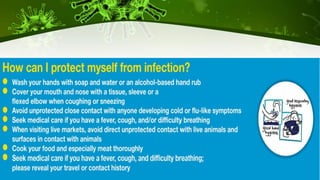
    RISK REDUCTION OFCOVID19 INFECTION
  • 21.
  • 22.
    COVID-19 has changedthe face of the natural world
  • 23.
    Covid -19: • Onthe human front, it is most pandemic. • So far, COVID-19 has caused the deaths of more than 3 million people worldwide. BUT • Despite this, The Natural World, at least, is getting a bit of a break. A world in which humans are traveling far less should offer major environmental benefits.
  • 25.
    Wildlife and COVID-19:The good • One major and predominately positive benefit of the pandemic for wildlife is less human travel. • Due to the significant reduction in journeys, fewer people are hitting and injuring or killing wildlife on roadways. • The pandemic benefited wildlife by disrupting the hidden, generally illegal supply chains that destroy wild populations, including those that fuel the wildlife trade. • Birds might also be benefitting from the sharp decline in air travel, which may have vastly reduced the risk of bird strikes.
  • 26.
    Marine life andCovid-1 • In addition, fewer ships are traveling through the world’s waterways and oceans for shipping, fishing, aquaculture, and tourism purposes. • A reduction in water travel and activity could reduce the risk of ships striking and injuring or killing marine animals. It may also reduce the marine disruption that occurs due to noise pollution from ships, fishing sonar, and recreational boats. • In India reduced fishing and vehicle traffic at nesting beaches may be boosting populations of the critically endangered olive ridley sea turtle.
  • 27.
    COVID-19 and airand water pollution • daily global CO2 levels dropped by 17% during the early months of the pandemic. • levels of the pollutant nitric dioxide lowered drastically, by 20-40%,across the world.
  • 28.
    • The unprecedenteddecrease in air pollutant emissions during the pandemic could reduce seasonal ozone concentrations. • Pollution levels dropped by nearly 16% in India’s longest freshwater lake during a lockdown period. • During this time this could help improve conservation and biodiversity efforts.
  • 29.
    The Impact OfThe Pandemic On The Natural World Is Unlikely To Be Linear. • It may also improve their ability to predict global environmental changes and potential cases of zoonoses, the transmission of disease from animals to humans. This could save millions of human lives, and economic losses, going forward. • Realistically, it will take years to assess exactly how the COVID-19 pandemic has affected wildlife, the environment, and the climate.
  • 30.
    • These positivechanges may be enough to give some people, and Mother Nature, the hope of a better future.