Compiled By: Taruna Anand, Nitin Virmani, B.C. Bera
ICAR-National Research Centre on Equines,
Hisar, Haryana, India
Coronavirus Pandemic
C vid-19
What is Covid-
19?
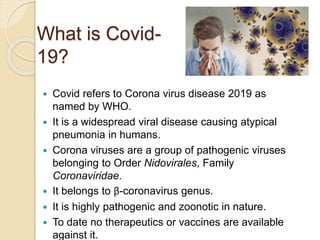
 Covid refers to Corona virus disease 2019 as
named by WHO.
 It is a widespread viral disease causing atypical
pneumonia in humans.
 Corona viruses are a group of pathogenic viruses
belonging to Order Nidovirales, Family
Coronaviridae.
 It belongs to β-coronavirus genus.
 It is highly pathogenic and zoonotic in nature.
 To date no therapeutics or vaccines are available
against it.
Coronaviruses
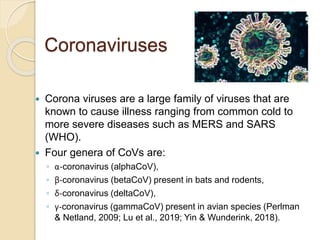
 Corona viruses are a large family of viruses that are
known to cause illness ranging from common cold to
more severe diseases such as MERS and SARS
(WHO).
 Four genera of CoVs are:
◦ α-coronavirus (alphaCoV),
◦ β-coronavirus (betaCoV) present in bats and rodents,
◦ δ-coronavirus (deltaCoV),
◦ γ-coronavirus (gammaCoV) present in avian species (Perlman
& Netland, 2009; Lu et al., 2019; Yin & Wunderink, 2018).
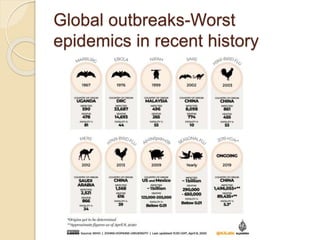
Global outbreaks-Worst
epidemics in recent history
Tracking the origin of virus
• Since December 2019, an increasing
number of patients with pneumonia of
unknown etiology in Wuhan, China,
alarmed the local hospital.
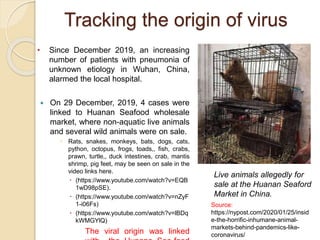
 On 29 December, 2019, 4 cases were
linked to Huanan Seafood wholesale
market, where non-aquatic live animals
and several wild animals were on sale.
 Rats, snakes, monkeys, bats, dogs, cats,
python, octopus, frogs, toads,, fish, crabs,
prawn, turtle,, duck intestines, crab, mantis
shrimp, pig feet, may be seen on sale in the
video links here.
 (https://www.youtube.com/watch?v=EQB
1wD98pSE).
 (https://www.youtube.com/watch?v=nZyF
1-i06Fs)
 (https://www.youtube.com/watch?v=lBDq
kWMGYlQ)
The viral origin was linked
Live animals allegedly for
sale at the Huanan Seaford
Market in China.
Source:
https://nypost.com/2020/01/25/insid
e-the-horrific-inhumane-animal-
markets-behind-pandemics-like-
coronavirus/
Contd…
 A new type of coronavirus was isolated by Chinese authorities. The genome
sequence of SARS-CoV-2 (WH-Human_1) was first released and shared by China
on 10 Jan (Zhou et al., 2020; Zhu et al., 2020).
 Wuhan, China is being referred as the epicentre of the SARS-Cov2.
 SARS-CoV-2 has been associated with an ongoing outbreak of atypical pneumonia
(Covid-2019).
 Natural and zoonotic origin:
◦ natural selection in an animal host before zoonotic transfer; and
◦ natural selection in humans following zoonotic transfer (Lu et al., 2020).
 Both SARS-CoV and SARS-CoV-2 are closely related and originated in bats, which
most likely serve as reservoir host for these two viruses (Ge et al., 2013; Hu et al.,
2017; Li et al.,2005b; Yang et al., 2015a; Zhou et al., 2020).
 Whereas palm civets and racoon dogs have been recognized as intermediate hosts
for zoonotic transmission of SARS-CoV between bats and humans (Guan et al.,
2003; Kan et al., 2005; Wang et al.,2005), the SARS-CoV-2 intermediate host
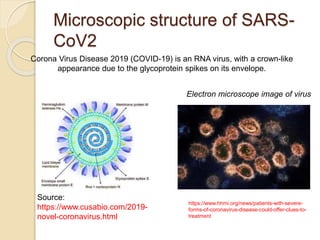
Microscopic structure of SARS-
CoV2
https://www.hhmi.org/news/patients-with-severe-
forms-of-coronavirus-disease-could-offer-clues-to-
treatment
Electron microscope image of virus
Source:
https://www.cusabio.com/2019-
novel-coronavirus.html
Corona Virus Disease 2019 (COVID-19) is an RNA virus, with a crown-like
appearance due to the glycoprotein spikes on its envelope.
Receptor Recognition by SARS-CoV2 and it’s
replication cycle
https://www.fpm.org.uk/blog/covid-19-sars-cov-2-
pandemic/
[1] Spike protein on the virion binds to ACE2, receptor and TMPRSS2 enzyme helps in the virion entery
[2] The virion releases its RNA
[3] RNA is translated by the cell’s protein synthesis machinery
[4] Some proteins form a replication complex to make more RNA
[5] Proteins and RNA are assembled into a new virion in the Golgi complex
[6] Release of mature virion particles
Sources: Song et al., ‘Viruses’, 2019; Jiang et al., ‘Emerging Microbes and Infections, 2012; ‘The Economist’.
 Feb 4:Belgium
 Feb 14: Egypt
 Feb 19: Iran
 Feb 21: Lebanon, Israel
 Feb 24: Kuwait, Bahrain, Afghanistan, Iraq, Oman
 Feb 25: Algeria, Switzerland, Croatia, Austria
 Feb 26: Brazil, Greece, Georgia, North Macedonia, Norway, Romania, Pakistan
 Feb 27: Denmark, Estonia, San Marino, Netherlands
 Feb 28: Nigeria, New Zealand, Belarus, Mexico, Lithuania, Azerbaijan, Ireland,
Iceland
Wuhan,
China
December January February March
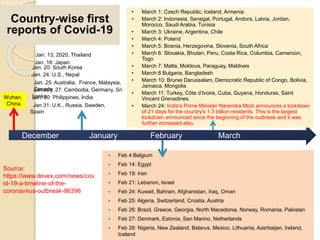
Jan. 13, 2020, Thailand
Jan. 16: Japan
Jan. 20: South Korea
Jan. 24: U.S., Nepal
January, 27: Cambodia, Germany, Sri
LankaJan, 30: Philippines, India
Source:
https://www.devex.com/news/cov
id-19-a-timeline-of-the-
coronavirus-outbreak-96396
Jan. 25: Australia, France, Malaysia,
Canada
Jan 31: U.K., Russia, Sweden,
Spain
Country-wise first
reports of Covid-19
• March 1: Czech Republic, Iceland, Armenia
• March 2: Indonesia, Senegal, Portugal, Andora, Latvia, Jordan,
Morocco, Saudi Arabia, Tunisia
• March 3: Ukraine, Argentina, Chile
• March 4: Poland
• March 5: Bosnia, Herzegovina, Slovenia, South Africa
• March 6: Slovakia, Bhutan, Peru, Costa Rica, Columbia, Cameroon,
Togo
• March 7: Malta, Moldova, Paraguay, Maldives
• March 8 Bulgaria, Bangladesh
• March 10: Brunei Darussalam, Democratic Republic of Congo, Bolivia,
Jamaica, Mongolia
• March 11: Turkey, Côte d’Ivoire, Cuba, Guyana, Honduras, Saint
Vincent Grenadines.
• March 24: India's Prime Minister Narendra Modi announces a lockdown
of 21 days for the country's 1.3 billion residents. This is the largest
lockdown announced since the beginning of the outbreak and it was
further increased also.
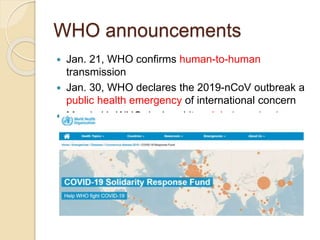
WHO announcements
 Jan. 21, WHO confirms human-to-human
transmission
 Jan. 30, WHO declares the 2019-nCoV outbreak a
public health emergency of international concern
 March 11: WHO declared it a global pandemic
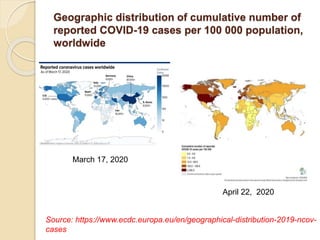
Geographic distribution of cumulative number of
reported COVID-19 cases per 100 000 population,
worldwide
Source: https://www.ecdc.europa.eu/en/geographical-distribution-2019-ncov-
cases
March 17, 2020
April 22, 2020
How does the Covid-19 virus
spread?
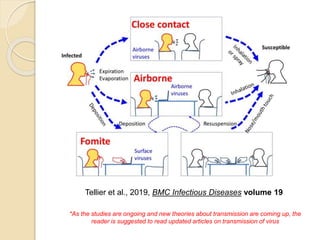
 By coming in close contact with a person infected
with COVID-19.
 Infection from respiratory droplets when an infected
person coughs or sneezes.
 Infection by touching a surface or object having
virus on it and then transmitting it to body by
touching mouth, nose, or eyes.
 Fecal contamination
*Aerosol transmission is also possible in case of protracted exposure to
elevated aerosol concentrations in closed spaces. Analysis of data related to
the spread of SARS-CoV-2 in China seems to indicate that close contact
between individuals is necessary.
Tellier et al., 2019, BMC Infectious Diseases volume 19
*As the studies are ongoing and new theories about transmission are coming up, the
reader is suggested to read updated articles on transmission of virus
Case Fatality Ratio of SARS-
Cov2
 CFR is the proportion of cases of a specified
condition that are fatal within a specified time
(Dictionary of Epidemiology)
 Based on the data so far, the estimated case
fatality ratio among medically attended patients
is approximately 2%, but as the disease is till
ongoing it may not be a true ratio. As on, 29th
of April 2020, we have globally 3.12 million
confirmed cases and 217K deaths (Source:
Wikipedia)
Symptoms and Complications
 Causes severe respiratory illness characterized
by the following:
◦ Fever,
◦ Cough,
◦ Shortness of breath,
◦ Myalgia or Fatigue
◦ Cold and nasal discharge
◦ Loss of taste and smell
◦ Skin rashes (in few cases)
◦ Asymptomatic cases have also been reported
Prevention
 Use face masks to cover coughs and sneezes
 Wash hands regularly with alcohol based sanitizer
 Completely avoid contact with infected people by staying
at home and practicing social distancing
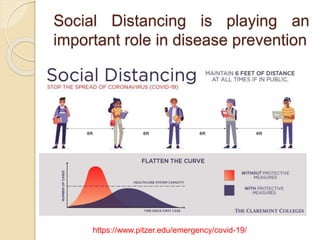
 Maintaining appropriate distance from people (atleast 6
feet)
 Practice good coughing and sneezing etiquettes
 Refrain from touching eyes, nose, and mouth
 Avoid sharing items and joint rides
 Avoid eating raw or improperly cooked foods
 Boost immune system by taking balanced diet, exercise
and sleep.
 In case of symptoms, seek medical care early by calling
ahead of visiting doctor
 Follow advice given by healthcare provider
Social Distancing is playing an
important role in disease prevention
https://www.pitzer.edu/emergency/covid-19/
Disease Treatment
 There is no specific antiviral treatment recommended for
COVID-19, and no vaccine is currently available.
 The treatment is symptomatic, and oxygen therapy
represents the major treatment intervention for patients
with severe infection. Mechanical ventilation may be
necessary in cases of respiratory failure.
 Home management is appropriate for asymptomatic
patients. They need a daily assessment of body
temperature, blood pressure, oxygen saturation and
respiratory symptoms for about 14 days. Management of
such patients should focus on prevention of transmission to
others and monitoring for clinical status with prompt
hospitalization if needed.
 Outpatients with COVID-19 should stay at home and try to
separate themselves from other people in the household.
 Disinfection of frequently touched surfaces is very
important to prevent fomite transmission.
Person under monitoring
(PUM)
 Persons who do not have symptoms of
Covid-19 but have
◦ Travel history to affected countries
◦ Have contacted confirmed infected cases of
Covid-19
◦ Such people are recommended to be on self
home quarantine
 Maintain yourself in a room
 Wear mask
 Avoid sharing items
 Monitor symptoms
 Call ahead before visiting doctor
Face mask
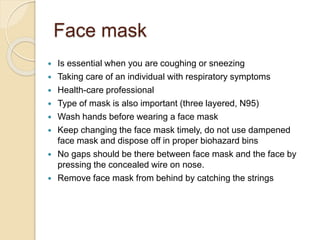
 Is essential when you are coughing or sneezing
 Taking care of an individual with respiratory symptoms
 Health-care professional
 Type of mask is also important (three layered, N95)
 Wash hands before wearing a face mask
 Keep changing the face mask timely, do not use dampened
face mask and dispose off in proper biohazard bins
 No gaps should be there between face mask and the face by
pressing the concealed wire on nose.
 Remove face mask from behind by catching the strings
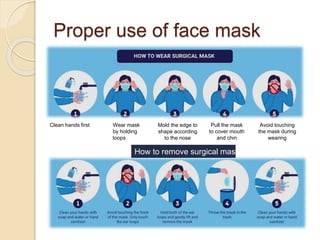
Proper use of face mask
Clean hands first Wear mask
by holding
loops
Mold the edge to
shape according
to the nose
Pull the mask
to cover mouth
and chin
Avoid touching
the mask during
wearing
How to remove surgical mask
Mechanism
 Interestingly, there is hypothesis of the link
between angiotensin converting enzyme
(ACE) inhibitors and COVID-19. Indeed,
SARS-CoV-2 uses ACE receptor 2 for entry
into target and in animal experiments both
lisinopril and losartan can significantly
increase mRNA expression of cardiac
ACE2. If this were the case, we might be
able to reduce the risk of fatal COVID-19
courses in many patients by temporarily
replacing these drugs (Watkins, 2020).
(Watkins, J. Preventing a covid-19 pandemic. BMJ 2020, 368. )
Factors boosting corona infection
 Higher age group
 Heart problem
 Diabetes
 Chronic lung diseases
 Gender-men seem more susceptible
https://m.economictimes.com/industry/healthcare/biotech/healthcare/age-is-not-the-
only-risk-for-severe-coronavirus-disease/articleshow/74876173.cms
Pharmacological experimental
options against Covid-19
 Glucocorticoids
 Remdesivir
 Chloroquine and hydroxychloroquine *
 Tocilizumab
 Lopinavir-ritonavir
 Baraticinib
 Non-steroidal anti-inflammatory drugs
 Angiotensin converting enzyme 2
* mainly in combination with azithromycin.
Remdesivir
 Remdesivir is a novel nucleotide analogue
that has activity against SARS-CoV-2 in
vitro and related coronaviruses (including
SARS and MERS-CoV) both in vitro and in
animal studies (Gordon et al., 2020; Cronin
et al., 2020). It is in human trials.
Gordon, C.J.; Tchesnokov, E.P.; Feng, J.Y.; Porter, D.P.; Gotte, M. The antiviral compound remdesivir potently inhibits
RNA-dependent RNA polymerase from Middle East respiratory syndrome coronavirus. J. Biol. Chem. 2020, 295,
4773–4779. [CrossRef] 45. de Wit, E.; Feldmann, F.; Cronin, J.; Jordan, R.; Okumura, A.; Thomas, T.; Scott, D.;
Cihlar, T.; Feldmann, H. Prophylactic and therapeutic remdesivir (GS-5734) treatment in the rhesus macaque model
of MERS-CoV infection. Proc. Natl. Acad. Sci. USA 2020, 117, 6771–6776. [CrossRef]
Chloroquine and
hydroxychloroquine
 Chloroquine and hydroxychloroquine have antiviral
activity in vitro, as well as anti-inflammatory
activities. They act on interference with the cellular
receptor ACE2, on impairment of acidification of
endosomes and on activity against many pro-
inflammatory cytokines (e.g., IL-1 and IL-6). (Yao
2020; Wang et al., 2020).
Yao, X.; Ye, F.; Zhang, M.; Cui, C.; Huang, B.; Niu, P.; Liu, X.; Zhao, L.; Dong, E.; Song, C.; et al. In vitro antiviral
activity and projection of optimized dosing design of hydroxychloroquine for the treatment of severe acute
respiratory syndrome coronavirus 2 (SARS-CoV-2). Clin. Infect. Dis. 2020. [CrossRef]
Wang, M.; Cao, R.; Zhang, L.; Yang, X.; Liu, J.; Xu, M.; Shi, Z.; Hu, Z.; Zhong, W.; Xiao, G.; et al. Remdesivir and
chloroquine effectively inhibit the recently emerged novel coronavirus (2019-nCoV) in vitro. Cell Res. 2020, 30,
269–271. [CrossRef]
Tocilizumab
 Tocilizumab is a recombinant humanized
monoclonal antibody which binds to the
interleukin-6 (IL-6) receptor and blocks it
from functioning. It is used for patients with
severe COVID-19 and elevated IL-6 levels;
the agent is being evaluated in a clinical
trial (Biggioggero et al., 2018).
Biggioggero, M.; Crotti, C.; Becciolini, A.; Favalli, E.G. Tocilizumab in the treatment of
rheumatoid arthritis: An evidence-based review and patient selection. Drug Des. Dev.
Ther. 2018, 13, 57–70.
Early detection of Covid-19
 Radiological examination of chest for
pneumonia
 Chest CT, especially thin-section chest CT, can
play a central role in early diagnosis of COVID-
19.
 The most common CT features in patients
affected by COVID-19 included ground glassy
opacity (GGO), consolidation, interlobular
septal thickening, adjacent pleura thickening,
and air bronchograms. - The infection most
commonly involves the bilateral lungs,
especially bilateral lower lobes. - Similar
imagine features are seen in other infections,
and the final diagnosis of COVID-19 should
still be based on reverse-transcription
polymerase chain reaction.
Covid-19 declared as a pandemic
by WHO
and called as Vaishvik Mahamari by
Sh. Narendra Modi (PM of India)
Conclusions
 The SARS-Cov2 is highly pathogenic and has spread
very rapidly.
 Here we have tried to present an overview of the
prevailing COVID-19 situation in terms of health impact,
pathophysiology, clinical manifestations, diagnosis,
management, emergency responses and
preparedness.
 The research literature is growing rapidly and hopefully
it will help in finding an effective vaccine (many in trials)
and the best practice for the management and
treatment of symptomatic cases.
 The health, social and economic impacts would be high
by this global killer.
 We should be able to learn lessons and hopefully we
will be more prepared for any such event in future.
Thankyou

Coronavirus Pandemic

  • 1.
    Compiled By: TarunaAnand, Nitin Virmani, B.C. Bera ICAR-National Research Centre on Equines, Hisar, Haryana, India Coronavirus Pandemic C vid-19
  • 2.
    What is Covid- 19? Covid refers to Corona virus disease 2019 as named by WHO.  It is a widespread viral disease causing atypical pneumonia in humans.  Corona viruses are a group of pathogenic viruses belonging to Order Nidovirales, Family Coronaviridae.  It belongs to β-coronavirus genus.  It is highly pathogenic and zoonotic in nature.  To date no therapeutics or vaccines are available against it.
  • 3.
    Coronaviruses  Corona virusesare a large family of viruses that are known to cause illness ranging from common cold to more severe diseases such as MERS and SARS (WHO).  Four genera of CoVs are: ◦ α-coronavirus (alphaCoV), ◦ β-coronavirus (betaCoV) present in bats and rodents, ◦ δ-coronavirus (deltaCoV), ◦ γ-coronavirus (gammaCoV) present in avian species (Perlman & Netland, 2009; Lu et al., 2019; Yin & Wunderink, 2018).
  • 4.
  • 5.
    Tracking the originof virus • Since December 2019, an increasing number of patients with pneumonia of unknown etiology in Wuhan, China, alarmed the local hospital.  On 29 December, 2019, 4 cases were linked to Huanan Seafood wholesale market, where non-aquatic live animals and several wild animals were on sale.  Rats, snakes, monkeys, bats, dogs, cats, python, octopus, frogs, toads,, fish, crabs, prawn, turtle,, duck intestines, crab, mantis shrimp, pig feet, may be seen on sale in the video links here.  (https://www.youtube.com/watch?v=EQB 1wD98pSE).  (https://www.youtube.com/watch?v=nZyF 1-i06Fs)  (https://www.youtube.com/watch?v=lBDq kWMGYlQ) The viral origin was linked Live animals allegedly for sale at the Huanan Seaford Market in China. Source: https://nypost.com/2020/01/25/insid e-the-horrific-inhumane-animal- markets-behind-pandemics-like- coronavirus/
  • 6.
    Contd…  A newtype of coronavirus was isolated by Chinese authorities. The genome sequence of SARS-CoV-2 (WH-Human_1) was first released and shared by China on 10 Jan (Zhou et al., 2020; Zhu et al., 2020).  Wuhan, China is being referred as the epicentre of the SARS-Cov2.  SARS-CoV-2 has been associated with an ongoing outbreak of atypical pneumonia (Covid-2019).  Natural and zoonotic origin: ◦ natural selection in an animal host before zoonotic transfer; and ◦ natural selection in humans following zoonotic transfer (Lu et al., 2020).  Both SARS-CoV and SARS-CoV-2 are closely related and originated in bats, which most likely serve as reservoir host for these two viruses (Ge et al., 2013; Hu et al., 2017; Li et al.,2005b; Yang et al., 2015a; Zhou et al., 2020).  Whereas palm civets and racoon dogs have been recognized as intermediate hosts for zoonotic transmission of SARS-CoV between bats and humans (Guan et al., 2003; Kan et al., 2005; Wang et al.,2005), the SARS-CoV-2 intermediate host
  • 7.
    Microscopic structure ofSARS- CoV2 https://www.hhmi.org/news/patients-with-severe- forms-of-coronavirus-disease-could-offer-clues-to- treatment Electron microscope image of virus Source: https://www.cusabio.com/2019- novel-coronavirus.html Corona Virus Disease 2019 (COVID-19) is an RNA virus, with a crown-like appearance due to the glycoprotein spikes on its envelope.
  • 8.
    Receptor Recognition bySARS-CoV2 and it’s replication cycle https://www.fpm.org.uk/blog/covid-19-sars-cov-2- pandemic/ [1] Spike protein on the virion binds to ACE2, receptor and TMPRSS2 enzyme helps in the virion entery [2] The virion releases its RNA [3] RNA is translated by the cell’s protein synthesis machinery [4] Some proteins form a replication complex to make more RNA [5] Proteins and RNA are assembled into a new virion in the Golgi complex [6] Release of mature virion particles Sources: Song et al., ‘Viruses’, 2019; Jiang et al., ‘Emerging Microbes and Infections, 2012; ‘The Economist’.
  • 9.
     Feb 4:Belgium Feb 14: Egypt  Feb 19: Iran  Feb 21: Lebanon, Israel  Feb 24: Kuwait, Bahrain, Afghanistan, Iraq, Oman  Feb 25: Algeria, Switzerland, Croatia, Austria  Feb 26: Brazil, Greece, Georgia, North Macedonia, Norway, Romania, Pakistan  Feb 27: Denmark, Estonia, San Marino, Netherlands  Feb 28: Nigeria, New Zealand, Belarus, Mexico, Lithuania, Azerbaijan, Ireland, Iceland Wuhan, China December January February March Jan. 13, 2020, Thailand Jan. 16: Japan Jan. 20: South Korea Jan. 24: U.S., Nepal January, 27: Cambodia, Germany, Sri LankaJan, 30: Philippines, India Source: https://www.devex.com/news/cov id-19-a-timeline-of-the- coronavirus-outbreak-96396 Jan. 25: Australia, France, Malaysia, Canada Jan 31: U.K., Russia, Sweden, Spain Country-wise first reports of Covid-19 • March 1: Czech Republic, Iceland, Armenia • March 2: Indonesia, Senegal, Portugal, Andora, Latvia, Jordan, Morocco, Saudi Arabia, Tunisia • March 3: Ukraine, Argentina, Chile • March 4: Poland • March 5: Bosnia, Herzegovina, Slovenia, South Africa • March 6: Slovakia, Bhutan, Peru, Costa Rica, Columbia, Cameroon, Togo • March 7: Malta, Moldova, Paraguay, Maldives • March 8 Bulgaria, Bangladesh • March 10: Brunei Darussalam, Democratic Republic of Congo, Bolivia, Jamaica, Mongolia • March 11: Turkey, Côte d’Ivoire, Cuba, Guyana, Honduras, Saint Vincent Grenadines. • March 24: India's Prime Minister Narendra Modi announces a lockdown of 21 days for the country's 1.3 billion residents. This is the largest lockdown announced since the beginning of the outbreak and it was further increased also.
  • 10.
    WHO announcements  Jan.21, WHO confirms human-to-human transmission  Jan. 30, WHO declares the 2019-nCoV outbreak a public health emergency of international concern  March 11: WHO declared it a global pandemic
  • 11.
    Geographic distribution ofcumulative number of reported COVID-19 cases per 100 000 population, worldwide Source: https://www.ecdc.europa.eu/en/geographical-distribution-2019-ncov- cases March 17, 2020 April 22, 2020
  • 12.
    How does theCovid-19 virus spread?  By coming in close contact with a person infected with COVID-19.  Infection from respiratory droplets when an infected person coughs or sneezes.  Infection by touching a surface or object having virus on it and then transmitting it to body by touching mouth, nose, or eyes.  Fecal contamination *Aerosol transmission is also possible in case of protracted exposure to elevated aerosol concentrations in closed spaces. Analysis of data related to the spread of SARS-CoV-2 in China seems to indicate that close contact between individuals is necessary.
  • 13.
    Tellier et al.,2019, BMC Infectious Diseases volume 19 *As the studies are ongoing and new theories about transmission are coming up, the reader is suggested to read updated articles on transmission of virus
  • 14.
    Case Fatality Ratioof SARS- Cov2  CFR is the proportion of cases of a specified condition that are fatal within a specified time (Dictionary of Epidemiology)  Based on the data so far, the estimated case fatality ratio among medically attended patients is approximately 2%, but as the disease is till ongoing it may not be a true ratio. As on, 29th of April 2020, we have globally 3.12 million confirmed cases and 217K deaths (Source: Wikipedia)
  • 15.
    Symptoms and Complications Causes severe respiratory illness characterized by the following: ◦ Fever, ◦ Cough, ◦ Shortness of breath, ◦ Myalgia or Fatigue ◦ Cold and nasal discharge ◦ Loss of taste and smell ◦ Skin rashes (in few cases) ◦ Asymptomatic cases have also been reported
  • 16.
    Prevention  Use facemasks to cover coughs and sneezes  Wash hands regularly with alcohol based sanitizer  Completely avoid contact with infected people by staying at home and practicing social distancing  Maintaining appropriate distance from people (atleast 6 feet)  Practice good coughing and sneezing etiquettes  Refrain from touching eyes, nose, and mouth  Avoid sharing items and joint rides  Avoid eating raw or improperly cooked foods  Boost immune system by taking balanced diet, exercise and sleep.  In case of symptoms, seek medical care early by calling ahead of visiting doctor  Follow advice given by healthcare provider
  • 17.
    Social Distancing isplaying an important role in disease prevention https://www.pitzer.edu/emergency/covid-19/
  • 18.
    Disease Treatment  Thereis no specific antiviral treatment recommended for COVID-19, and no vaccine is currently available.  The treatment is symptomatic, and oxygen therapy represents the major treatment intervention for patients with severe infection. Mechanical ventilation may be necessary in cases of respiratory failure.  Home management is appropriate for asymptomatic patients. They need a daily assessment of body temperature, blood pressure, oxygen saturation and respiratory symptoms for about 14 days. Management of such patients should focus on prevention of transmission to others and monitoring for clinical status with prompt hospitalization if needed.  Outpatients with COVID-19 should stay at home and try to separate themselves from other people in the household.  Disinfection of frequently touched surfaces is very important to prevent fomite transmission.
  • 19.
    Person under monitoring (PUM) Persons who do not have symptoms of Covid-19 but have ◦ Travel history to affected countries ◦ Have contacted confirmed infected cases of Covid-19 ◦ Such people are recommended to be on self home quarantine  Maintain yourself in a room  Wear mask  Avoid sharing items  Monitor symptoms  Call ahead before visiting doctor
  • 20.
    Face mask  Isessential when you are coughing or sneezing  Taking care of an individual with respiratory symptoms  Health-care professional  Type of mask is also important (three layered, N95)  Wash hands before wearing a face mask  Keep changing the face mask timely, do not use dampened face mask and dispose off in proper biohazard bins  No gaps should be there between face mask and the face by pressing the concealed wire on nose.  Remove face mask from behind by catching the strings
  • 21.
    Proper use offace mask Clean hands first Wear mask by holding loops Mold the edge to shape according to the nose Pull the mask to cover mouth and chin Avoid touching the mask during wearing How to remove surgical mask
  • 22.
    Mechanism  Interestingly, thereis hypothesis of the link between angiotensin converting enzyme (ACE) inhibitors and COVID-19. Indeed, SARS-CoV-2 uses ACE receptor 2 for entry into target and in animal experiments both lisinopril and losartan can significantly increase mRNA expression of cardiac ACE2. If this were the case, we might be able to reduce the risk of fatal COVID-19 courses in many patients by temporarily replacing these drugs (Watkins, 2020). (Watkins, J. Preventing a covid-19 pandemic. BMJ 2020, 368. )
  • 23.
    Factors boosting coronainfection  Higher age group  Heart problem  Diabetes  Chronic lung diseases  Gender-men seem more susceptible https://m.economictimes.com/industry/healthcare/biotech/healthcare/age-is-not-the- only-risk-for-severe-coronavirus-disease/articleshow/74876173.cms
  • 24.
    Pharmacological experimental options againstCovid-19  Glucocorticoids  Remdesivir  Chloroquine and hydroxychloroquine *  Tocilizumab  Lopinavir-ritonavir  Baraticinib  Non-steroidal anti-inflammatory drugs  Angiotensin converting enzyme 2 * mainly in combination with azithromycin.
  • 25.
    Remdesivir  Remdesivir isa novel nucleotide analogue that has activity against SARS-CoV-2 in vitro and related coronaviruses (including SARS and MERS-CoV) both in vitro and in animal studies (Gordon et al., 2020; Cronin et al., 2020). It is in human trials. Gordon, C.J.; Tchesnokov, E.P.; Feng, J.Y.; Porter, D.P.; Gotte, M. The antiviral compound remdesivir potently inhibits RNA-dependent RNA polymerase from Middle East respiratory syndrome coronavirus. J. Biol. Chem. 2020, 295, 4773–4779. [CrossRef] 45. de Wit, E.; Feldmann, F.; Cronin, J.; Jordan, R.; Okumura, A.; Thomas, T.; Scott, D.; Cihlar, T.; Feldmann, H. Prophylactic and therapeutic remdesivir (GS-5734) treatment in the rhesus macaque model of MERS-CoV infection. Proc. Natl. Acad. Sci. USA 2020, 117, 6771–6776. [CrossRef]
  • 26.
    Chloroquine and hydroxychloroquine  Chloroquineand hydroxychloroquine have antiviral activity in vitro, as well as anti-inflammatory activities. They act on interference with the cellular receptor ACE2, on impairment of acidification of endosomes and on activity against many pro- inflammatory cytokines (e.g., IL-1 and IL-6). (Yao 2020; Wang et al., 2020). Yao, X.; Ye, F.; Zhang, M.; Cui, C.; Huang, B.; Niu, P.; Liu, X.; Zhao, L.; Dong, E.; Song, C.; et al. In vitro antiviral activity and projection of optimized dosing design of hydroxychloroquine for the treatment of severe acute respiratory syndrome coronavirus 2 (SARS-CoV-2). Clin. Infect. Dis. 2020. [CrossRef] Wang, M.; Cao, R.; Zhang, L.; Yang, X.; Liu, J.; Xu, M.; Shi, Z.; Hu, Z.; Zhong, W.; Xiao, G.; et al. Remdesivir and chloroquine effectively inhibit the recently emerged novel coronavirus (2019-nCoV) in vitro. Cell Res. 2020, 30, 269–271. [CrossRef]
  • 27.
    Tocilizumab  Tocilizumab isa recombinant humanized monoclonal antibody which binds to the interleukin-6 (IL-6) receptor and blocks it from functioning. It is used for patients with severe COVID-19 and elevated IL-6 levels; the agent is being evaluated in a clinical trial (Biggioggero et al., 2018). Biggioggero, M.; Crotti, C.; Becciolini, A.; Favalli, E.G. Tocilizumab in the treatment of rheumatoid arthritis: An evidence-based review and patient selection. Drug Des. Dev. Ther. 2018, 13, 57–70.
  • 28.
    Early detection ofCovid-19  Radiological examination of chest for pneumonia  Chest CT, especially thin-section chest CT, can play a central role in early diagnosis of COVID- 19.  The most common CT features in patients affected by COVID-19 included ground glassy opacity (GGO), consolidation, interlobular septal thickening, adjacent pleura thickening, and air bronchograms. - The infection most commonly involves the bilateral lungs, especially bilateral lower lobes. - Similar imagine features are seen in other infections, and the final diagnosis of COVID-19 should still be based on reverse-transcription polymerase chain reaction.
  • 29.
    Covid-19 declared asa pandemic by WHO and called as Vaishvik Mahamari by Sh. Narendra Modi (PM of India)
  • 30.
    Conclusions  The SARS-Cov2is highly pathogenic and has spread very rapidly.  Here we have tried to present an overview of the prevailing COVID-19 situation in terms of health impact, pathophysiology, clinical manifestations, diagnosis, management, emergency responses and preparedness.  The research literature is growing rapidly and hopefully it will help in finding an effective vaccine (many in trials) and the best practice for the management and treatment of symptomatic cases.  The health, social and economic impacts would be high by this global killer.  We should be able to learn lessons and hopefully we will be more prepared for any such event in future.
  • 31.