Presented by:-
AbhinavTyagi,
AmberVarshney,
Ishika Singhal,
Mayank Saini,
Piyush
CONTENT:-
 Counselling
 Process Of Counselling
 Employee Counselling
 Post WorkTransition
 Workplace Counselling
 Benefits
 Article- Smita Navare
 Conclusion
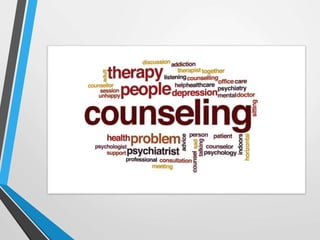
Counselling
Counselling is a form of ‘talk therapy’.
It is a process where an individual, couple or family meet
with a trained professional counsellor to talk about issues
and problems that they are facing in their lives.
Counselling can provide people with the opportunity to
be heard and gain new perspectives on their situation and
Process of Counselling
When a person seeks counselling, he or she suffers from something serious be it
mental issues, emotional problems, or family problems. The counselling
process involves a step-by-step approach.
1: Building a Warm Relationship
When you are hitting up a counselor to discuss your problems, you ought to
suffer from any serious issue concerning academics, relationships, career, or
anything else. The first thing your expert does is to make yourself comfortable
around him/her. He focuses on developing a warm relation and mutual trust first
to make sure you do not hesitate while speaking about the problems you are
facing.
2: Analysis
Now comes the second part, which is assessment. In this stage, the professional
encourages you to speak in detail about your problems to grab the roots of the
problem. He observes every minute detail from how you are speaking to your
reactions to certain questions that might come from his end. Once he assesses
the problem, the goal is fixed.
3: Setting the Goal:-
After a thorough evaluation of your problems, now comes the
significant section of goal setting. Considering the issues you are
facing the counselor sets a goal. That can be either you overcoming
the problem or reconciling with it.
4: Plan of Action:-
The counselor plans an action for you to practice to see the results.
Suppose someone has public speaking fear, The expert might ask him
to practice speaking in front of the mirror. This is just an instance.
Once you go through the plan for the desired tenure, he assesses your
improvement. If things seem normal, you are at the final stage! If not,
he might design something different.
5: Overcoming the Problem:-
As I mentioned in the previous point after you follow the plan of
action the consequent results are taken into consideration. If things
seem to go in the right direction and you start feeling relaxed, yes!
You have achieved your goal.
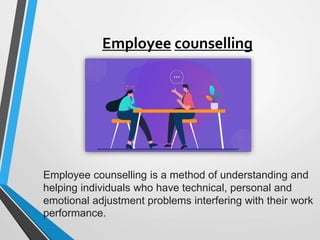
Employee counselling
Employee counselling is a method of understanding and
helping individuals who have technical, personal and
emotional adjustment problems interfering with their work
performance.
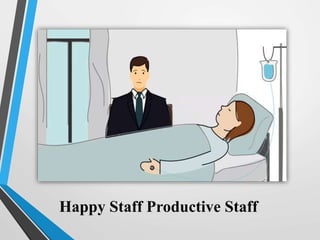
Happy Staff Productive Staff
EmployeeTransition
EmployeeTransition is an employee’s movement from
current position to a new one with the right to have the same
or alike pay range, the same level of tasks, and comparable
job responsibilities and duties. It involves an alteration in
employment with unchanged level of job hierarchy requiring
similar skills, knowledge and expertise from the transitioning
worker.
WorkTransition
A work transition is a change or event that an employee
moves through during their working lives. Job transitions
include the key stages of a career, including starting work,
changing job, retirement and the transitions in working that
surround life events like having children. Employers may
instigate job transitions when they change their working
practices, promote or redeploy staff or grow or shrink their
workforce.
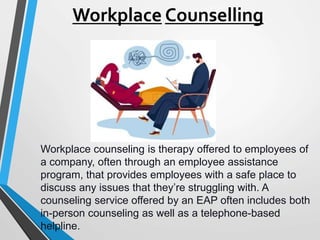
Workplace Counselling
Workplace counseling is therapy offered to employees of
a company, often through an employee assistance
program, that provides employees with a safe place to
discuss any issues that they’re struggling with. A
counseling service offered by an EAP often includes both
in-person counseling as well as a telephone-based
helpline.
Benefits
• Easy access to trained counselors
• A safe space to talk about their problems
• Helping employees to better understand
themselves
• Establishing or improving coping skills
• Developing effective solutions to problems
• Learning to look at issues with a more positive
outlook and different perspective
Counselling At Work Place:-
Proactive HR Initiative
With the recent restructuring and the faster cycle of business, My staff
is finding work pressure difficult to cope with. I am finding it hard to
coach them to cope with the transition.” Concerned Line Manager.
“I have become very anxious lately due to my heavy workload and
family responsibilities. I start taking medicine to calm myself, but it
doesn't seem to help.” Worried Employee.
Article – Smita Navare
Copyright- Indian Journal Of OccupationalAnd
Environmental Medicine
“Findings from our employee survey show a worrying trend of
loss of work-life balance.We need to do something before this
starts hampering Productivity and staff well-being.” Human
Resources Director.
Counseling is definitely one service that can help people learn
to manage themselves.
Example:-
Tata Consultancy Services (TCS) has set up a network
“Maitree” in 2005 to counsel its 30,000 employees. Under the
initiative, 90% ofTCS offices organize family get-togethers
and activities such as ball dancing and yoga classes and theatre
workshop, helping employees working long hours keep
healthy.
“AtWipro, to reduce employee stress after long working hours,
HR initiated “Mitr”, an in house counseling service, in 2003, the
set up trains employees in counseling to help out colleagues in
distress,” said a senior HR manager with WiproTechnologies”.
Conclusion
Employee counseling is good for the development of employees,
better communication, and performance improvement. It also
benefits the company because it helps with providing a safe
working environment. With all of these components together,
you then have higher productivity among employees which
benefits the company financially.
Counselling.pptx

Counselling.pptx

  • 1.
  • 2.
    CONTENT:-  Counselling  ProcessOf Counselling  Employee Counselling  Post WorkTransition  Workplace Counselling  Benefits  Article- Smita Navare  Conclusion
  • 4.
    Counselling Counselling is aform of ‘talk therapy’. It is a process where an individual, couple or family meet with a trained professional counsellor to talk about issues and problems that they are facing in their lives. Counselling can provide people with the opportunity to be heard and gain new perspectives on their situation and
  • 5.
    Process of Counselling Whena person seeks counselling, he or she suffers from something serious be it mental issues, emotional problems, or family problems. The counselling process involves a step-by-step approach. 1: Building a Warm Relationship When you are hitting up a counselor to discuss your problems, you ought to suffer from any serious issue concerning academics, relationships, career, or anything else. The first thing your expert does is to make yourself comfortable around him/her. He focuses on developing a warm relation and mutual trust first to make sure you do not hesitate while speaking about the problems you are facing. 2: Analysis Now comes the second part, which is assessment. In this stage, the professional encourages you to speak in detail about your problems to grab the roots of the problem. He observes every minute detail from how you are speaking to your reactions to certain questions that might come from his end. Once he assesses the problem, the goal is fixed.
  • 6.
    3: Setting theGoal:- After a thorough evaluation of your problems, now comes the significant section of goal setting. Considering the issues you are facing the counselor sets a goal. That can be either you overcoming the problem or reconciling with it. 4: Plan of Action:- The counselor plans an action for you to practice to see the results. Suppose someone has public speaking fear, The expert might ask him to practice speaking in front of the mirror. This is just an instance. Once you go through the plan for the desired tenure, he assesses your improvement. If things seem normal, you are at the final stage! If not, he might design something different. 5: Overcoming the Problem:- As I mentioned in the previous point after you follow the plan of action the consequent results are taken into consideration. If things seem to go in the right direction and you start feeling relaxed, yes! You have achieved your goal.
  • 7.
    Employee counselling Employee counsellingis a method of understanding and helping individuals who have technical, personal and emotional adjustment problems interfering with their work performance.
  • 8.
  • 9.
    EmployeeTransition EmployeeTransition is anemployee’s movement from current position to a new one with the right to have the same or alike pay range, the same level of tasks, and comparable job responsibilities and duties. It involves an alteration in employment with unchanged level of job hierarchy requiring similar skills, knowledge and expertise from the transitioning worker.
  • 10.
    WorkTransition A work transitionis a change or event that an employee moves through during their working lives. Job transitions include the key stages of a career, including starting work, changing job, retirement and the transitions in working that surround life events like having children. Employers may instigate job transitions when they change their working practices, promote or redeploy staff or grow or shrink their workforce.
  • 11.
    Workplace Counselling Workplace counselingis therapy offered to employees of a company, often through an employee assistance program, that provides employees with a safe place to discuss any issues that they’re struggling with. A counseling service offered by an EAP often includes both in-person counseling as well as a telephone-based helpline.
  • 12.
    Benefits • Easy accessto trained counselors • A safe space to talk about their problems • Helping employees to better understand themselves • Establishing or improving coping skills • Developing effective solutions to problems • Learning to look at issues with a more positive outlook and different perspective
  • 13.
    Counselling At WorkPlace:- Proactive HR Initiative With the recent restructuring and the faster cycle of business, My staff is finding work pressure difficult to cope with. I am finding it hard to coach them to cope with the transition.” Concerned Line Manager. “I have become very anxious lately due to my heavy workload and family responsibilities. I start taking medicine to calm myself, but it doesn't seem to help.” Worried Employee. Article – Smita Navare Copyright- Indian Journal Of OccupationalAnd Environmental Medicine
  • 14.
    “Findings from ouremployee survey show a worrying trend of loss of work-life balance.We need to do something before this starts hampering Productivity and staff well-being.” Human Resources Director. Counseling is definitely one service that can help people learn to manage themselves.
  • 15.
    Example:- Tata Consultancy Services(TCS) has set up a network “Maitree” in 2005 to counsel its 30,000 employees. Under the initiative, 90% ofTCS offices organize family get-togethers and activities such as ball dancing and yoga classes and theatre workshop, helping employees working long hours keep healthy. “AtWipro, to reduce employee stress after long working hours, HR initiated “Mitr”, an in house counseling service, in 2003, the set up trains employees in counseling to help out colleagues in distress,” said a senior HR manager with WiproTechnologies”.
  • 16.
    Conclusion Employee counseling isgood for the development of employees, better communication, and performance improvement. It also benefits the company because it helps with providing a safe working environment. With all of these components together, you then have higher productivity among employees which benefits the company financially.