CORTICOSTERIODS
THERAPY
Prof.Adel Abd Eslam
Rheumatology&immunology
• AGENDA
1. Brief History
2. Types of steroid therapy
3. Mechanism of action of steroid therapy
4. Doses of steroid therapy
5. Time of administration
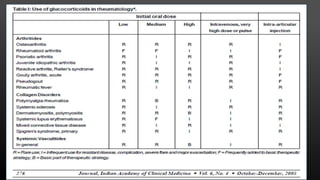
6. Indications and uses
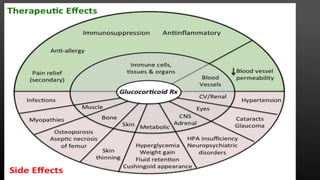
7. Sideffects
8. How to protect against steroid sideffects
9. Withdrawal
10. Steriod therapy in stressfull conditions
INTRODUCTION
 Corticosteroids and their biologically active synthetic derivatives differ in their
metabolic and electrolyte-regulating activities.
 These agents are employed at physiological doses for replacement therapy when
endogenous production is impaired.
 Glucocorticoids potently suppress inflammation, and their use in a variety of
inflammatory and autoimmune diseases makes them among the most frequently
prescribed classes of drugs.
 The effects of corticosteroids are numerous and widespread and include :
 alterations in carbohydrate, protein lipid metabolism
 maintenance of fluid and electrolyte balance
 preservation of normal function of the cardiovascular system, the immune system,
the kidney, skeletal muscle, the endocrine system, and the nervous system.
 In addition, corticosteroids endow the organism with the capacity to resist such
stressful circumstances as noxious stimuli and environmental changes
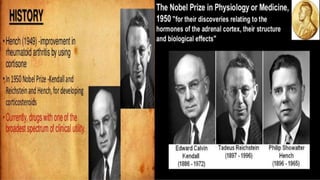
BRIEF HISTORY
 1884, CCS were first used in patients with inflammatory arthritis
with dramatic result.
 For 30 years, they have been used without any known mechanism
of both effect or adverse effect
 . Tadeusz Reichstein, Edward Calvin Kendall. and Philip Showalter
Hench were awarded the Nobel Prize for Physiology and Medicine
in 1950 for their work on hormones of the adrenal cortex, which
culminated in the isolation of cortisone.
 1955, high dose with short term GC was used and stabilized in RA.
 Lewis Sarett of Merck & Co. was the first to synthesize cortisone,
using a 36-step process that started with deoxycholic acid, which
was extracted from ox bile.[45] The low efficiency of converting
deoxycholic acid into cortisone led to a cost of US $200 per gram..
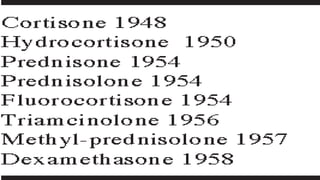
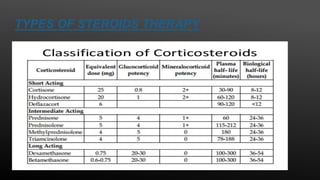
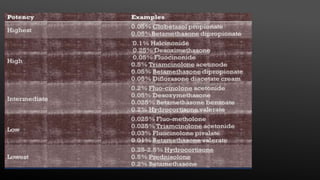
TYPES OF STEROIDS THERAPY
MECHANISM OF ACTION
 Gc, are lipid soluble molecule . Majority of steroid is inactive, bind to
cortisone binding globulin.
 Gc has both genomic and non genomic mechanism.
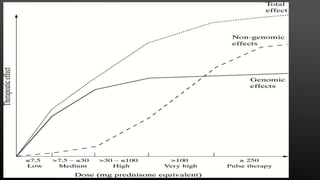
 At physiological or low Gc has genomic role, at higher concentration has
non genomic role.
 Glucocorticoids signal through genomic and non-genomic pathways.
GENOMIC MECHANISM
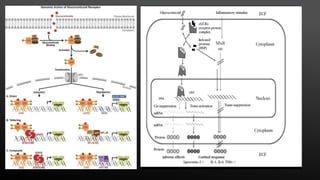
 The classic, genomic actions of glucocorticoids are mediated through GR. In the
absence of hormone, GR predominantly resides in the cytoplasm of cells as part of a
large multi-protein complex that includes chaperone proteins and immunophilins.
 Glucocorticoid-induced gene expression is frequently cell type-specific and only a small
proportion of genes are commonly activated between different tissues.
 The lipophilic glucocorticoid passes across the cell membrane and attaches to the
cytosolic glucocorticoid receptor
 These glucocorticoid complexes then bind to glucocorticoid-responsive elements of
genomic DNA, or interact with nuclear transcription factors.
 This process takes time at least 30 minutes before the clinical effect of a glucocorticoid
begins to show.
NONE GENOMIC MECHANISM
 Nongenomic effects at high doses of glucocorticoids occur more rapidly within minutes.
 Non-genomic glucocorticoid actions are mediated through physiochemical interactions
with cytosolic GR or membrane-bound GR. Unlike genomic effects, non-genomic
effects of glucocorticoids do not require protein synthesis, and occur within seconds to
minutes of GR activation.
 One mechanism involves membrane-bound glucocorticoid receptors.
 The other mechanism without involvement of glucocorticoid receptors occur via
physicochemical interactions with biologic membranes, altering cell function.
 The resulting inhibition of calcium and sodium cycling across the plasma membrane of
immune cells contributes to rapid immunosuppression and reduced inflammation
DOSES OF CCS
Low dose
 We consider a low dose glucocorticoid treatment as a treatment
with ≤7.5 mg prednisone equivalent a day.
 This dose occupies less than 50% of the receptors.
 This dose range is often used for maintenance therapy for many
rheumatic diseases.
 Relatively few adverse effects are expected.
 The recognition that a relative hypocortisolism is present in
chronic inflammatory conditions leads some observers to regard
low dose glucocorticoid treatment as a means of replacement
therapy for the reduced adrenal production.
Moderate dose
 We consider an administered dose of >7.5 mg, but ≤30 mg
prednisone equivalent a day to be a medium dose.
 These doses lead to a significantly higher receptor engagement
ranging above 50% but below 100%
 Doses between 7.5 mg and 30 mg are effective if given initially
in various conditions of rheumatic diseases.
 It is a “natural barrier” in the sense that most rheumatologists do
not initially treat most patients (for example, those with non-
complicated rheumatoid arthritis or polymyalgia rheumatica)
with doses above 30 mg.
 Side effects are considerable and dose dependent in this range if
treatment is given for longer periods.
High dose
 We consider doses between >30 mg and ≤100 mg prednisone
equivalent a day to be high doses.
 These doses significantly increase receptor saturation resulting in an
almost complete receptor saturation at approximately 100 mg/day
where up to 100% of genomic glucocorticoid effects are assumed to
be exerted.
 High doses are usually given as initial treatments for subacute
rheumatic diseases such as non-life threatening exacerbations or
visceral complications of rheumatoid arthritis or other connective
tissue diseases.
 These doses cannot be administered for long term therapy because
of the occurrence of severe side effects
Very high dose
 We consider doses >100 mg prednisone equivalent a day to be very high doses.
 Above 100 mg prednisone equivalent a day there is virtually a 100% receptor saturation .
Therefore, a further increase in dose may affect the pharmacodynamics , but may also
bring additional therapeutic benefit via other mechanisms.
 This assumed additional therapeutic benefit of very high doses could be obtained via
qualitatively different, non-genomic effects.
 These effects are either mediated by membrane bound receptors or are initiated by
physicochemical interactions with cellular membranes.
 It is not yet clear if these effects are directly of therapeutic relevance, but experimental
data suggest that these differential effects come increasingly into play above around 100
mg/day.
 These doses are often successfully given as initial doses for acute or life threatening
exacerbations of rheumatic diseases such as connective tissue diseases, vasculitis, and
rheumatoid arthritis.
 These doses cannot be given for long term treatment because of the occurrence of
dramatic side effects.
Pulse therapy
 We consider “pulse therapy” as a specific therapeutic entity that refers to the
administration of ≥250 mg prednisone equivalent a day (usually intravenously) for one or
a few (usually ≤5) days.
 In common clinical practice doses of 250 mg/day or above are usually only used in terms
of pulse therapy. Thus these doses are exclusively given for a few days, but then reduced
or stopped directly.
 Pulse therapy are successful in acute exacerbations of immunologically mediated
diseases.
 The immediate effects produced by very high dosages could be additive to the genomic
effects mediated by cytosolic glucocorticoid receptors.
 Non-genomic mechanisms of glucocorticoid action may also provide an explanation for
the beneficial therapeutic effect of pulse glucocorticoid therapy for many other
indications.
 These include the treatment of acute spinal injuries and use in immune thrombocytopenia,
juvenile dermatomyositis, juvenile chronic arthritis, optic neuritis, rapid progressive
glomerulonephritis, and pemphigus vulgaris.
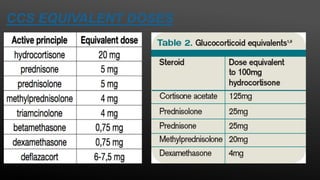
CCS EQUIVALENT DOSES
Timing of administration
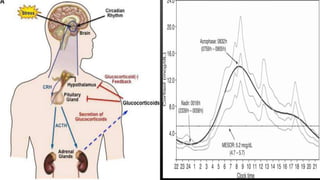
 The regulation of glucocorticoid, or cortisol release, is critically
determined by the activity of the HPA axis.
 The HPA axis receives input from the central pacemaker which
controls the circadian release of corticotrophin-releasing hormone
(CRH) in the paraventricular nucleus, this also stimulated by physical
and emotional stressors.
 CRH in turn stimulates release of adrenocorticotrophic hormones
(ACTH) from the corticotroph cells in the anterior pituitary, and
thence the glucocorticoid cortisol from the adrenal cortex.
 In turn, cortisol exerts inhibitory effects at pituitary and hypothalamic
levels, in a classical negative feedback loop
 A number of cortisol secretory episodes occur during the 24 h of the day making it
possible to describe four different unequal temporal phases :
1. period of minimal secretory activity, during which cortisol secretion is negligible,
and occurs 4 h prior to and 2 h after sleep onset
2. preliminary nocturnal secretory episode at the third through fifth hours of sleep
3. main secretory phase of a series of three to five episodes occurring during the
sixth to eighth hours of sleep and continuing through the first hour of wakefulness
4. intermittent waking secretory activity of four to nine secretory episodes found in
the 2–12-h waking period
Abnormal circadian rhythm in rheumatological
diseases
 CCS release pattern and serum concentrations, possibly triggered by proinflammatory
hormones such as melatonin (and prolactin), follow a 24-hour daily cycle
 Since cortisol is the strongest endogenous anti-inflammatory substance, its
downregulation during the evening and night is linked to an increase of inflammation
during the early morning, and its upregulation in the early morning is most probably
related to inhibition of inflammation during the day.
 The general problem of RA and other inflammatory diseases is that serum cortisol
concentrations are inadequately low relative to inflammation.
 Experimental administration of IL6 and TNF cause early increase in cortisol and ACTH
secretion.
 Prolonged IL6 and TNF cause adaptation of HPA response
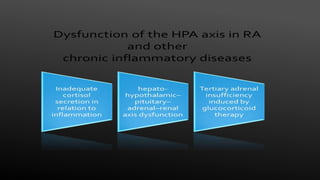
INADEQUATE CORTISOL SECRETION IN
RELATION TO INFLAMMATION
 In chronic inflammation, cortisol secretion appears to be inadequate in
relation to inflammation.
 In a retrospective study with 34 patients with RA, 46 patients with
reactive arthritis and 112 healthy subjects, the authors measured serum
levels of IL-6, TNF and cortisol.
 The absolute levels of IL-6 were lower in healthy controls than in
reactive arthritis and RA patients.
 However, the ratio of serum cortisol to serum cytokines was much higher
in healthy controls than in reactive arthritis and RA patients, due to
similar cortisol levels in all groups
Tertiary adrenal insufficiency induced by
glucocorticoid therapy
 Synthetic GCs can cause negative feedback regulation, leading to
adrenal suppression in terms of tertiary adrenal insufficiency
 Tertiary adrenal insufficiency typically becomes manifest in patients
treated long term with synthetic GCs during situations of stress; for
example, infections or operations.
 Tertiary adrenal insufficiency generally has a less dramatic
presentation than primary adrenal insufficiency; acute circulatory
collapse seems rare, because aldosterone levels, which are controlled
pre-dominantly by the renin–angiotensin system, are preserved
Circadian application
 several studies confirmed that splitting the daily dose into several
divided doses strongly increases the risk of adrenal suppression.
 cortisol levels are high during the first peak in the morning,
causing downregulation of ACTH levels via negative feedback
regulation. In consequence, cortisol secretion is also
downregulated.
 At a certain point, reduced cortisol levels cause upregulation of
ACTH again, leading in turn also to upregulation of cortisol
secretion during the second peak in the afternoon.
 If exogenous GCs were applied in the evening, the so-called quiet
period for the adrenal gland, this would cause a negative signal on
ACTH and therefore also cortisol secretion in the morning.
Dose splitting
 Dose splitting with morning and evening doses appears to
cause more HPA suppression.
 If dose splitting is necessary, exogenous GCs should be
applied in the morning and early afternoon (3:00 p.m.) (2/3
+ 1/3 dose)
 Chronotherapy with MR prednisone, can to some extent
avoid aggravation of adrenal suppression.
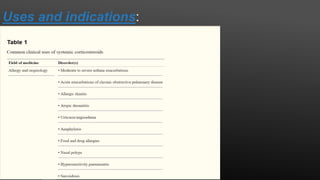
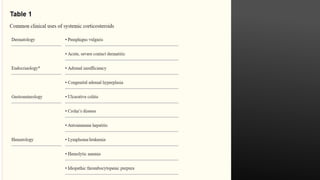
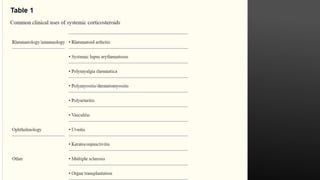
Uses and indications:
Steriod use in rheumatological diseases
 GCs represent the most important and frequently used class of anti-
inflammatory and immunosuppressant agent in many aspect of
rheumatologic disease.
 Their unequal efficacy and difficult in replacing them with other
agent suggest them to be a friends rather than foes.
 A single dose or even larger dose without harmful effect and short
course therapy up to one week in absence of specific contraindication
is unlikely to be harmful.
 Life threating condition, initial large dose aimed to achieve rapid
control of crisis
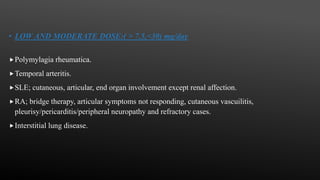
• LOW AND MODERATE DOSE:( > 7.5,<30) mg/day
Polymylagia rheumatica.
Temporal arteritis.
SLE; cutaneous, articular, end organ involvement except renal affection.
RA; bridge therapy, articular symptoms not responding, cutaneous vascuilitis,
pleurisy/pericarditis/peripheral neuropathy and refractory cases.
Interstitial lung disease.
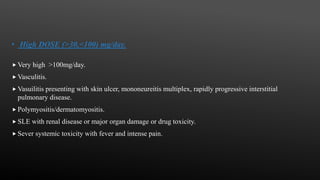
• High DOSE (>30,<100) mg/day.
 Very high >100mg/day.
 Vasculitis.
 Vasuilitis presenting with skin ulcer, mononeureitis multiplex, rapidly progressive interstitial
pulmonary disease.
 Polymyositis/dermatomyositis.
 SLE with renal disease or major organ damage or drug toxicity.
 Sever systemic toxicity with fever and intense pain.
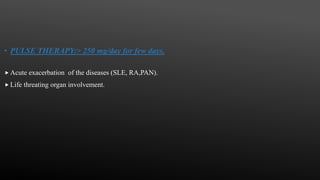
• PULSE THERAPY:> 250 mg/day for few days.
 Acute exacerbation of the diseases (SLE, RA,PAN).
 Life threating organ involvement.
INTRA-ARTICULAR INJECTIONS
 Used in mono, oligo-arthritis or isolated soft tissue affection, to avoid systemic side effect.
 Major role in :
 Crystal deposition disease.
 Osteoarthritis.
 Tietze syndrome.
 Tendenitis, epicondylitis, brusitis.
 Entrapment syndrome.
 spondyloarthopathies,.
SIDE EFFECTS
 Dermatological :
• Skin thinning, purpura, acne, mild hirsutism, facial erythema, and striae.
• Red striae generally appear on the thighs, buttocks, shoulders, and abdomen.
• Impairment of wound healing is another common and a potentially serious side effect of
systemic glucocorticoid use.
• interfere with the natural wound-healing process by inhibiting leukocyte and
macrophage infiltration, decreasing collagen synthesis and wound maturation, and
reducing keratinocyte growth factor expression after skin injury
Cushing syndrome, cushingoid features and weight gain:
• The development of cushingoid features :
• redistribution of body fat with truncal obesity, buffalo hump, and moon face
• weight gain
• Cushingoid features showed a linear increase in frequency with dose.
Ophthalmologic:
• cataracts and glaucoma
• This form of glaucoma occurs most commonly in patients using eye drops.
• Glaucoma is often painless and leads to visual field loss, optic disc cupping, and optic
nerve atrophy.
• Once systemic therapy is discontinued, the elevation in intraocular pressure usually
resolves within a few weeks, but the damage to the optic nerve is often permanent.
• A rare adverse effect is central serous chorioretinopathy.
• This leads to the formation of subretinal fluid in the macular region which leads to
separation of the retina from its underlying photoreceptors. This manifests as central
visual blur and reduced visual acuity
Cardiovascular:
• fluid retention
• premature atherosclerotic disease (increased risk of heart attack and stroke)
• arrhythmias.
• Cardiovascular disease risk is dose-dependent.
Gastrointestinal :
• gastritis
• gastric ulcer formation
• GI bleeding.
• The use of NSAIDs and glucocorticoids is associated with a 4-fold increased risk of a GI
adverse effect compared with non-use of either drug.
• Other complications include visceral perforation and hepatic steatosis (fatty liver) that can
rarely lead to systemic fat embolism or cirrhosis
Bone and Muscle:
• Osteoporosis,
• Osteonecrosis,
• Increased risk of fractures,
• Muscle weakness and myopathy.
• Corticosteroids stimulate osteoclastic activity initially (first 6 to 12 months of therapy), followed by
a decrease in bone formation by suppressing osteoblastic activity in the bone marrow.
• Myopathy is a direct result of muscle breakdown and occurs in both upper and lower limbs. It is
reversible and painless.
• “Critical illness myopathy” may also develop in patients admitted in the intensive care unit (ICU)
requiring large doses of IV glucocorticoids and neuromuscular blocking agents.
• It is characterized by severe, diffuse proximal and distal weakness that develops over several
days. Although it is usually reversible, critical illness myopathy can lead to prolonged ICU
admissions, increased length of hospital stays, severe necrotizing myopathy, and increased
mortality.
Neuropsychiatric:
• Improved sense of well-being within several days of starting the medications;
• Mild euphoria or anxiety may also be seen.
• Hypomanic reactions and activated states are more common early in the therapy
• Depression is greater in patients on more longstanding therapy.
• Psychosis can occur but does so almost exclusively at doses of prednisone above
20 mg per day given for a prolonged period.
• Disturbances in sleep are reported, especially with split doses that may interfere
with the normal pattern of diurnal cortisol production.
• Akathisia (motor restlessness) is a common glucocorticoid side effect.
• Rare cases of pseudotumor cerebri have also been associated with glucocorticoid
use.
• The risk of developing a given neuropsychiatric disorder following Glucocorticoids
therapy may be increased among patients with a history of that condition.
Metabolic and endocrine:
• Mild, increase in fasting glucose levels and a greater increase in postprandial values
• New-onset hyperglycemia
• However, patients with diabetes mellitus or glucose intolerance exhibit higher blood glucose
levels while taking glucocorticoids, leading to increased difficulty with glycemic control.
Growth impairment:
• Impairment of growth in young children.
• Delay in puberty is commonly seen in children receiving glucocorticoids for chronic illnesses like
nephrotic syndrome and asthma.
• The effect is most pronounced with daily therapy, and less marked with an alternate-day
regimen.
• It is important to note that although growth impairment can be an independent adverse effect of
corticosteroid therapy, it can also be a sign of adrenal suppression.
Immune system:
• Systemic glucocorticoids have many effects upon innate and acquired immunity that predispose to
infection.
• Increase in the risk of infection, especially with common bacterial, viral, and fungal pathogens.
• In addition, patients taking glucocorticoids may not manifest signs and symptoms of infection as
clearly, due to the inhibition of cytokine release and the associated reduction in inflammatory and
febrile responses.
• This can impair the early recognition of infection.
Hematologic effects:
• Increased white blood cell count (leukocytosis)
• increase in neutrophils (neutrophilia).
• Esinopenia
• Lymphopenia
• Polycythemia
Hypothalamic-pituitary-adrenal axis suppression:
• Administration of Glucocorticoids can suppress (HPA) axis decreasing (CRH) from the
hypothalamus, (ACTH) from the anterior pituitary gland and endogenous cortisol.
• Prolonged ACTH suppression cause atrophy of adrenal glands and abrupt cessation or rapid
withdrawal of Glucocorticoids in such patients may cause symptoms of adrenal insufficiency.
• Many of the signs and symptoms are non-specific and can be mistaken for symptoms of
intercurrent illness or the underlying condition that is being treated
• Symptoms include:
• weakness/fatigue,
• malaise,
• nausea, vomiting,
• diarrhea, abdominal pain,
• headache usually in the morning,
• fever, anorexia/weight loss,
• myalgia, arthralgia,
• psychiatric symptoms,
• poor growth
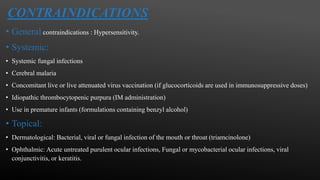
CONTRAINDICATIONS
• General contraindications : Hypersensitivity.
• Systemic:
• Systemic fungal infections
• Cerebral malaria
• Concomitant live or live attenuated virus vaccination (if glucocorticoids are used in immunosuppressive doses)
• Idiopathic thrombocytopenic purpura (IM administration)
• Use in premature infants (formulations containing benzyl alcohol)
• Topical:
• Dermatological: Bacterial, viral or fungal infection of the mouth or throat (triamcinolone)
• Ophthalmic: Acute untreated purulent ocular infections, Fungal or mycobacterial ocular infections, viral
conjunctivitis, or keratitis.
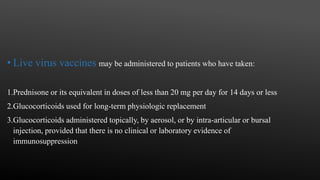
• Live virus vaccines may be administered to patients who have taken:
1.Prednisone or its equivalent in doses of less than 20 mg per day for 14 days or less
2.Glucocorticoids used for long-term physiologic replacement
3.Glucocorticoids administered topically, by aerosol, or by intra-articular or bursal
injection, provided that there is no clinical or laboratory evidence of
immunosuppression
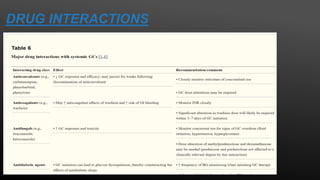
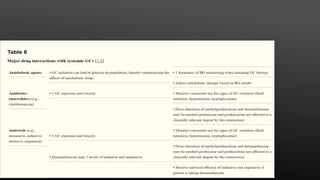
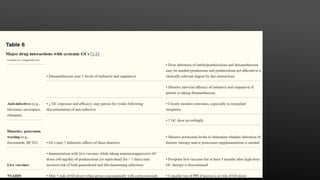
DRUG INTERACTIONS
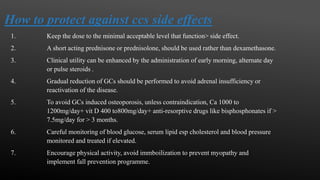
How to protect against ccs side effects
1. Keep the dose to the minimal acceptable level that function> side effect.
2. A short acting prednisone or prednisolone, should be used rather than dexamethasone.
3. Clinical utility can be enhanced by the administration of early morning, alternate day
or pulse steroids .
4. Gradual reduction of GCs should be performed to avoid adrenal insufficiency or
reactivation of the disease.
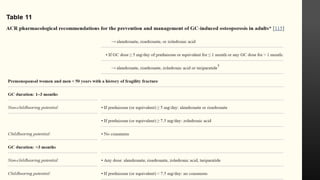
5. To avoid GCs induced osteoporosis, unless contraindication, Ca 1000 to
1200mg/day+ vit D 400 to800mg/day+ anti-resorptive drugs like bisphosphonates if >
7.5mg/day for > 3 months.
6. Careful monitoring of blood glucose, serum lipid esp cholesterol and blood pressure
monitored and treated if elevated.
7. Encourage physical activity, avoid immboilization to prevent myopathy and
implement fall prevention programme.
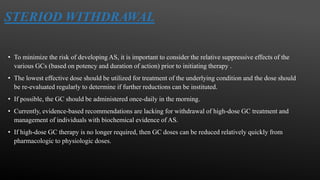
STERIOD WITHDRAWAL
• To minimize the risk of developing AS, it is important to consider the relative suppressive effects of the
various GCs (based on potency and duration of action) prior to initiating therapy .
• The lowest effective dose should be utilized for treatment of the underlying condition and the dose should
be re-evaluated regularly to determine if further reductions can be instituted.
• If possible, the GC should be administered once-daily in the morning.
• Currently, evidence-based recommendations are lacking for withdrawal of high-dose GC treatment and
management of individuals with biochemical evidence of AS.
• If high-dose GC therapy is no longer required, then GC doses can be reduced relatively quickly from
pharmacologic to physiologic doses.
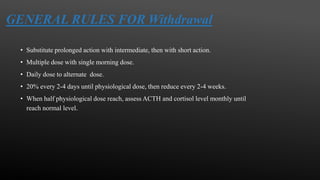
GENERAL RULES FOR Withdrawal
• Substitute prolonged action with intermediate, then with short action.
• Multiple dose with single morning dose.
• Daily dose to alternate dose.
• 20% every 2-4 days until physiological dose, then reduce every 2-4 weeks.
• When half physiological dose reach, assess ACTH and cortisol level monthly until
reach normal level.
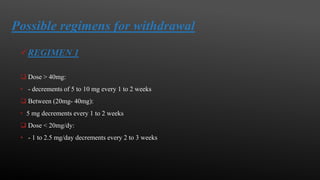
Possible regimens for withdrawal
REGIMEN 1
 Dose > 40mg:
• - decrements of 5 to 10 mg every 1 to 2 weeks
 Between (20mg- 40mg):
• 5 mg decrements every 1 to 2 weeks
 Dose < 20mg/dy:
• - 1 to 2.5 mg/day decrements every 2 to 3 weeks
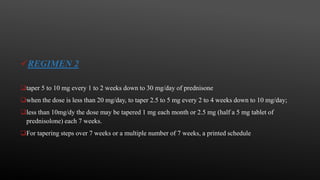
REGIMEN 2
taper 5 to 10 mg every 1 to 2 weeks down to 30 mg/day of prednisone
when the dose is less than 20 mg/day, to taper 2.5 to 5 mg every 2 to 4 weeks down to 10 mg/day;
less than 10mg/dy the dose may be tapered 1 mg each month or 2.5 mg (half a 5 mg tablet of
prednisolone) each 7 weeks.
For tapering steps over 7 weeks or a multiple number of 7 weeks, a printed schedule
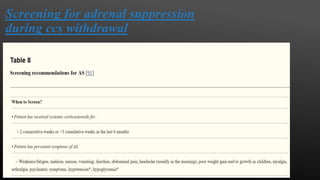
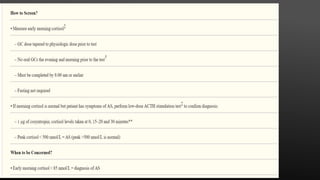
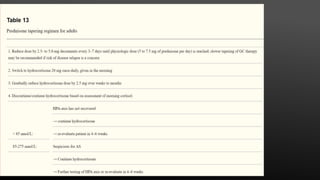
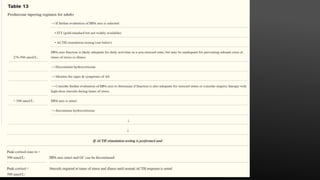
Screening for adrenal suppression
during ccs withdrawal
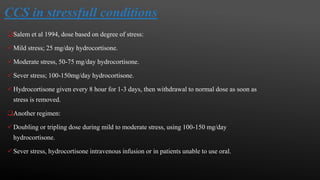
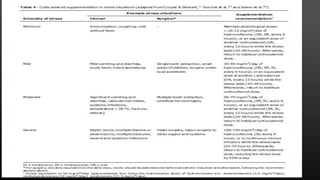
CCS in stressfull conditions
Salem et al 1994, dose based on degree of stress:
Mild stress; 25 mg/day hydrocortisone.
Moderate stress, 50-75 mg/day hydrocortisone.
Sever stress; 100-150mg/day hydrocortisone.
Hydrocortisone given every 8 hour for 1-3 days, then withdrawal to normal dose as soon as
stress is removed.
Another regimen:
Doubling or tripling dose during mild to moderate stress, using 100-150 mg/day
hydrocortisone.
Sever stress, hydrocortisone intravenous infusion or in patients unable to use oral.
Ccs and Operations
• Pre-operative considerations
Establish how much steroid has been taken and for how long.
The degree of adrenal suppression depends on the dose and duration of steroid treatment.
However, the integrity of the adrenal response is not routinely tested and steroid cover or
supplements are given according to the surgical stimulus (minor, moderate and major surgery).
Dosages of less than 5 mg prednisolone per day are not significant and no steroid cover is required.
10 mg/day or more of prednisolone (or equivalent) is generally taken as the threshold dose for
'steroid cover'.
Steroid cover is required if taken within three months of the surgery. This is because adrenal
suppression can occur after only a week and may take as long as three months to recover
• Peri-operative considerations
Normal cortisol secretion is about 30 mg/day.
 The normal rise in plasma adrenocorticotropic hormone (ACTH) and hence cortisol is in response to
the severity of surgery.
The adrenals are capable of secreting about 300 mg/day (equivalent to about 75 mg of prednisolone)
But output rarely exceeds 150 mg of cortisol/day even in response to major surgery.
• Postoperative considerations
The normal rise in cortisol secretion after surgery lasts for about three days
In recent years, doses used for steroid cover have been reduced.
This is because excessive doses cause adverse effects such as postoperative infection, gastrointestinal
haemorrhage and delayed wound healing.
PREOPERATIVE ASSESSMENT
This should focus on the history of steroid usage, routine examination and basic
investigations including FBC, U&Es, blood glucose and LFTs.
Investigation for adrenal suppression is rarely done.
It is possible to assess this with:
• Serum and urinary cortisol.
• Short synacthen test (SST) - more popular but interpret with care.
• Insulin tolerance test.
• Corticotropin-releasing hormone (CRH) measurement.
PERI-OPERATIVE MANAGEMENT
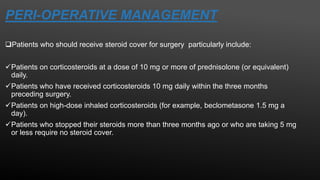
Patients who should receive steroid cover for surgery particularly include:
Patients on corticosteroids at a dose of 10 mg or more of prednisolone (or equivalent)
daily.
Patients who have received corticosteroids 10 mg daily within the three months
preceding surgery.
Patients on high-dose inhaled corticosteroids (for example, beclometasone 1.5 mg a
day).
Patients who stopped their steroids more than three months ago or who are taking 5 mg
or less require no steroid cover.
PERI-OPERATIVE STEROID
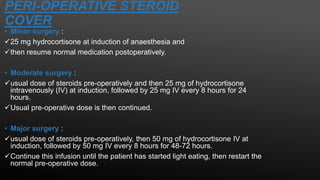
COVER
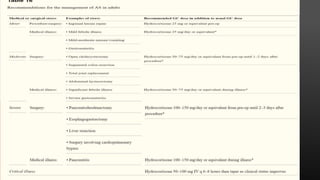
• Minor surgery :
25 mg hydrocortisone at induction of anaesthesia and
then resume normal medication postoperatively.
• Moderate surgery :
usual dose of steroids pre-operatively and then 25 mg of hydrocortisone
intravenously (IV) at induction, followed by 25 mg IV every 8 hours for 24
hours.
Usual pre-operative dose is then continued.
• Major surgery :
usual dose of steroids pre-operatively, then 50 mg of hydrocortisone IV at
induction, followed by 50 mg IV every 8 hours for 48-72 hours.
Continue this infusion until the patient has started light eating, then restart the
normal pre-operative dose.
Corticosteroid therapy

Corticosteroid therapy

  • 1.
  • 2.
    • AGENDA 1. BriefHistory 2. Types of steroid therapy 3. Mechanism of action of steroid therapy 4. Doses of steroid therapy 5. Time of administration 6. Indications and uses 7. Sideffects 8. How to protect against steroid sideffects 9. Withdrawal 10. Steriod therapy in stressfull conditions
  • 3.
    INTRODUCTION  Corticosteroids andtheir biologically active synthetic derivatives differ in their metabolic and electrolyte-regulating activities.  These agents are employed at physiological doses for replacement therapy when endogenous production is impaired.  Glucocorticoids potently suppress inflammation, and their use in a variety of inflammatory and autoimmune diseases makes them among the most frequently prescribed classes of drugs.  The effects of corticosteroids are numerous and widespread and include :  alterations in carbohydrate, protein lipid metabolism  maintenance of fluid and electrolyte balance  preservation of normal function of the cardiovascular system, the immune system, the kidney, skeletal muscle, the endocrine system, and the nervous system.  In addition, corticosteroids endow the organism with the capacity to resist such stressful circumstances as noxious stimuli and environmental changes
  • 4.
    BRIEF HISTORY  1884,CCS were first used in patients with inflammatory arthritis with dramatic result.  For 30 years, they have been used without any known mechanism of both effect or adverse effect  . Tadeusz Reichstein, Edward Calvin Kendall. and Philip Showalter Hench were awarded the Nobel Prize for Physiology and Medicine in 1950 for their work on hormones of the adrenal cortex, which culminated in the isolation of cortisone.  1955, high dose with short term GC was used and stabilized in RA.  Lewis Sarett of Merck & Co. was the first to synthesize cortisone, using a 36-step process that started with deoxycholic acid, which was extracted from ox bile.[45] The low efficiency of converting deoxycholic acid into cortisone led to a cost of US $200 per gram..
  • 7.
  • 9.
    MECHANISM OF ACTION Gc, are lipid soluble molecule . Majority of steroid is inactive, bind to cortisone binding globulin.  Gc has both genomic and non genomic mechanism.  At physiological or low Gc has genomic role, at higher concentration has non genomic role.  Glucocorticoids signal through genomic and non-genomic pathways.
  • 10.
    GENOMIC MECHANISM  Theclassic, genomic actions of glucocorticoids are mediated through GR. In the absence of hormone, GR predominantly resides in the cytoplasm of cells as part of a large multi-protein complex that includes chaperone proteins and immunophilins.  Glucocorticoid-induced gene expression is frequently cell type-specific and only a small proportion of genes are commonly activated between different tissues.  The lipophilic glucocorticoid passes across the cell membrane and attaches to the cytosolic glucocorticoid receptor  These glucocorticoid complexes then bind to glucocorticoid-responsive elements of genomic DNA, or interact with nuclear transcription factors.  This process takes time at least 30 minutes before the clinical effect of a glucocorticoid begins to show.
  • 11.
    NONE GENOMIC MECHANISM Nongenomic effects at high doses of glucocorticoids occur more rapidly within minutes.  Non-genomic glucocorticoid actions are mediated through physiochemical interactions with cytosolic GR or membrane-bound GR. Unlike genomic effects, non-genomic effects of glucocorticoids do not require protein synthesis, and occur within seconds to minutes of GR activation.  One mechanism involves membrane-bound glucocorticoid receptors.  The other mechanism without involvement of glucocorticoid receptors occur via physicochemical interactions with biologic membranes, altering cell function.  The resulting inhibition of calcium and sodium cycling across the plasma membrane of immune cells contributes to rapid immunosuppression and reduced inflammation
  • 13.
    DOSES OF CCS Lowdose  We consider a low dose glucocorticoid treatment as a treatment with ≤7.5 mg prednisone equivalent a day.  This dose occupies less than 50% of the receptors.  This dose range is often used for maintenance therapy for many rheumatic diseases.  Relatively few adverse effects are expected.  The recognition that a relative hypocortisolism is present in chronic inflammatory conditions leads some observers to regard low dose glucocorticoid treatment as a means of replacement therapy for the reduced adrenal production.
  • 14.
    Moderate dose  Weconsider an administered dose of >7.5 mg, but ≤30 mg prednisone equivalent a day to be a medium dose.  These doses lead to a significantly higher receptor engagement ranging above 50% but below 100%  Doses between 7.5 mg and 30 mg are effective if given initially in various conditions of rheumatic diseases.  It is a “natural barrier” in the sense that most rheumatologists do not initially treat most patients (for example, those with non- complicated rheumatoid arthritis or polymyalgia rheumatica) with doses above 30 mg.  Side effects are considerable and dose dependent in this range if treatment is given for longer periods.
  • 15.
    High dose  Weconsider doses between >30 mg and ≤100 mg prednisone equivalent a day to be high doses.  These doses significantly increase receptor saturation resulting in an almost complete receptor saturation at approximately 100 mg/day where up to 100% of genomic glucocorticoid effects are assumed to be exerted.  High doses are usually given as initial treatments for subacute rheumatic diseases such as non-life threatening exacerbations or visceral complications of rheumatoid arthritis or other connective tissue diseases.  These doses cannot be administered for long term therapy because of the occurrence of severe side effects
  • 16.
    Very high dose We consider doses >100 mg prednisone equivalent a day to be very high doses.  Above 100 mg prednisone equivalent a day there is virtually a 100% receptor saturation . Therefore, a further increase in dose may affect the pharmacodynamics , but may also bring additional therapeutic benefit via other mechanisms.  This assumed additional therapeutic benefit of very high doses could be obtained via qualitatively different, non-genomic effects.  These effects are either mediated by membrane bound receptors or are initiated by physicochemical interactions with cellular membranes.  It is not yet clear if these effects are directly of therapeutic relevance, but experimental data suggest that these differential effects come increasingly into play above around 100 mg/day.  These doses are often successfully given as initial doses for acute or life threatening exacerbations of rheumatic diseases such as connective tissue diseases, vasculitis, and rheumatoid arthritis.  These doses cannot be given for long term treatment because of the occurrence of dramatic side effects.
  • 17.
    Pulse therapy  Weconsider “pulse therapy” as a specific therapeutic entity that refers to the administration of ≥250 mg prednisone equivalent a day (usually intravenously) for one or a few (usually ≤5) days.  In common clinical practice doses of 250 mg/day or above are usually only used in terms of pulse therapy. Thus these doses are exclusively given for a few days, but then reduced or stopped directly.  Pulse therapy are successful in acute exacerbations of immunologically mediated diseases.  The immediate effects produced by very high dosages could be additive to the genomic effects mediated by cytosolic glucocorticoid receptors.  Non-genomic mechanisms of glucocorticoid action may also provide an explanation for the beneficial therapeutic effect of pulse glucocorticoid therapy for many other indications.  These include the treatment of acute spinal injuries and use in immune thrombocytopenia, juvenile dermatomyositis, juvenile chronic arthritis, optic neuritis, rapid progressive glomerulonephritis, and pemphigus vulgaris.
  • 18.
  • 20.
    Timing of administration The regulation of glucocorticoid, or cortisol release, is critically determined by the activity of the HPA axis.  The HPA axis receives input from the central pacemaker which controls the circadian release of corticotrophin-releasing hormone (CRH) in the paraventricular nucleus, this also stimulated by physical and emotional stressors.  CRH in turn stimulates release of adrenocorticotrophic hormones (ACTH) from the corticotroph cells in the anterior pituitary, and thence the glucocorticoid cortisol from the adrenal cortex.  In turn, cortisol exerts inhibitory effects at pituitary and hypothalamic levels, in a classical negative feedback loop
  • 21.
     A numberof cortisol secretory episodes occur during the 24 h of the day making it possible to describe four different unequal temporal phases : 1. period of minimal secretory activity, during which cortisol secretion is negligible, and occurs 4 h prior to and 2 h after sleep onset 2. preliminary nocturnal secretory episode at the third through fifth hours of sleep 3. main secretory phase of a series of three to five episodes occurring during the sixth to eighth hours of sleep and continuing through the first hour of wakefulness 4. intermittent waking secretory activity of four to nine secretory episodes found in the 2–12-h waking period
  • 23.
    Abnormal circadian rhythmin rheumatological diseases  CCS release pattern and serum concentrations, possibly triggered by proinflammatory hormones such as melatonin (and prolactin), follow a 24-hour daily cycle  Since cortisol is the strongest endogenous anti-inflammatory substance, its downregulation during the evening and night is linked to an increase of inflammation during the early morning, and its upregulation in the early morning is most probably related to inhibition of inflammation during the day.  The general problem of RA and other inflammatory diseases is that serum cortisol concentrations are inadequately low relative to inflammation.  Experimental administration of IL6 and TNF cause early increase in cortisol and ACTH secretion.  Prolonged IL6 and TNF cause adaptation of HPA response
  • 25.
    INADEQUATE CORTISOL SECRETIONIN RELATION TO INFLAMMATION  In chronic inflammation, cortisol secretion appears to be inadequate in relation to inflammation.  In a retrospective study with 34 patients with RA, 46 patients with reactive arthritis and 112 healthy subjects, the authors measured serum levels of IL-6, TNF and cortisol.  The absolute levels of IL-6 were lower in healthy controls than in reactive arthritis and RA patients.  However, the ratio of serum cortisol to serum cytokines was much higher in healthy controls than in reactive arthritis and RA patients, due to similar cortisol levels in all groups
  • 26.
    Tertiary adrenal insufficiencyinduced by glucocorticoid therapy  Synthetic GCs can cause negative feedback regulation, leading to adrenal suppression in terms of tertiary adrenal insufficiency  Tertiary adrenal insufficiency typically becomes manifest in patients treated long term with synthetic GCs during situations of stress; for example, infections or operations.  Tertiary adrenal insufficiency generally has a less dramatic presentation than primary adrenal insufficiency; acute circulatory collapse seems rare, because aldosterone levels, which are controlled pre-dominantly by the renin–angiotensin system, are preserved
  • 27.
    Circadian application  severalstudies confirmed that splitting the daily dose into several divided doses strongly increases the risk of adrenal suppression.  cortisol levels are high during the first peak in the morning, causing downregulation of ACTH levels via negative feedback regulation. In consequence, cortisol secretion is also downregulated.  At a certain point, reduced cortisol levels cause upregulation of ACTH again, leading in turn also to upregulation of cortisol secretion during the second peak in the afternoon.  If exogenous GCs were applied in the evening, the so-called quiet period for the adrenal gland, this would cause a negative signal on ACTH and therefore also cortisol secretion in the morning.
  • 28.
    Dose splitting  Dosesplitting with morning and evening doses appears to cause more HPA suppression.  If dose splitting is necessary, exogenous GCs should be applied in the morning and early afternoon (3:00 p.m.) (2/3 + 1/3 dose)  Chronotherapy with MR prednisone, can to some extent avoid aggravation of adrenal suppression.
  • 29.
  • 32.
    Steriod use inrheumatological diseases  GCs represent the most important and frequently used class of anti- inflammatory and immunosuppressant agent in many aspect of rheumatologic disease.  Their unequal efficacy and difficult in replacing them with other agent suggest them to be a friends rather than foes.  A single dose or even larger dose without harmful effect and short course therapy up to one week in absence of specific contraindication is unlikely to be harmful.  Life threating condition, initial large dose aimed to achieve rapid control of crisis
  • 34.
    • LOW ANDMODERATE DOSE:( > 7.5,<30) mg/day Polymylagia rheumatica. Temporal arteritis. SLE; cutaneous, articular, end organ involvement except renal affection. RA; bridge therapy, articular symptoms not responding, cutaneous vascuilitis, pleurisy/pericarditis/peripheral neuropathy and refractory cases. Interstitial lung disease.
  • 35.
    • High DOSE(>30,<100) mg/day.  Very high >100mg/day.  Vasculitis.  Vasuilitis presenting with skin ulcer, mononeureitis multiplex, rapidly progressive interstitial pulmonary disease.  Polymyositis/dermatomyositis.  SLE with renal disease or major organ damage or drug toxicity.  Sever systemic toxicity with fever and intense pain.
  • 36.
    • PULSE THERAPY:>250 mg/day for few days.  Acute exacerbation of the diseases (SLE, RA,PAN).  Life threating organ involvement.
  • 37.
    INTRA-ARTICULAR INJECTIONS  Usedin mono, oligo-arthritis or isolated soft tissue affection, to avoid systemic side effect.  Major role in :  Crystal deposition disease.  Osteoarthritis.  Tietze syndrome.  Tendenitis, epicondylitis, brusitis.  Entrapment syndrome.  spondyloarthopathies,.
  • 38.
    SIDE EFFECTS  Dermatological: • Skin thinning, purpura, acne, mild hirsutism, facial erythema, and striae. • Red striae generally appear on the thighs, buttocks, shoulders, and abdomen. • Impairment of wound healing is another common and a potentially serious side effect of systemic glucocorticoid use. • interfere with the natural wound-healing process by inhibiting leukocyte and macrophage infiltration, decreasing collagen synthesis and wound maturation, and reducing keratinocyte growth factor expression after skin injury
  • 39.
    Cushing syndrome, cushingoidfeatures and weight gain: • The development of cushingoid features : • redistribution of body fat with truncal obesity, buffalo hump, and moon face • weight gain • Cushingoid features showed a linear increase in frequency with dose. Ophthalmologic: • cataracts and glaucoma • This form of glaucoma occurs most commonly in patients using eye drops. • Glaucoma is often painless and leads to visual field loss, optic disc cupping, and optic nerve atrophy. • Once systemic therapy is discontinued, the elevation in intraocular pressure usually resolves within a few weeks, but the damage to the optic nerve is often permanent. • A rare adverse effect is central serous chorioretinopathy. • This leads to the formation of subretinal fluid in the macular region which leads to separation of the retina from its underlying photoreceptors. This manifests as central visual blur and reduced visual acuity
  • 40.
    Cardiovascular: • fluid retention •premature atherosclerotic disease (increased risk of heart attack and stroke) • arrhythmias. • Cardiovascular disease risk is dose-dependent. Gastrointestinal : • gastritis • gastric ulcer formation • GI bleeding. • The use of NSAIDs and glucocorticoids is associated with a 4-fold increased risk of a GI adverse effect compared with non-use of either drug. • Other complications include visceral perforation and hepatic steatosis (fatty liver) that can rarely lead to systemic fat embolism or cirrhosis
  • 41.
    Bone and Muscle: •Osteoporosis, • Osteonecrosis, • Increased risk of fractures, • Muscle weakness and myopathy. • Corticosteroids stimulate osteoclastic activity initially (first 6 to 12 months of therapy), followed by a decrease in bone formation by suppressing osteoblastic activity in the bone marrow. • Myopathy is a direct result of muscle breakdown and occurs in both upper and lower limbs. It is reversible and painless. • “Critical illness myopathy” may also develop in patients admitted in the intensive care unit (ICU) requiring large doses of IV glucocorticoids and neuromuscular blocking agents. • It is characterized by severe, diffuse proximal and distal weakness that develops over several days. Although it is usually reversible, critical illness myopathy can lead to prolonged ICU admissions, increased length of hospital stays, severe necrotizing myopathy, and increased mortality.
  • 42.
    Neuropsychiatric: • Improved senseof well-being within several days of starting the medications; • Mild euphoria or anxiety may also be seen. • Hypomanic reactions and activated states are more common early in the therapy • Depression is greater in patients on more longstanding therapy. • Psychosis can occur but does so almost exclusively at doses of prednisone above 20 mg per day given for a prolonged period. • Disturbances in sleep are reported, especially with split doses that may interfere with the normal pattern of diurnal cortisol production. • Akathisia (motor restlessness) is a common glucocorticoid side effect. • Rare cases of pseudotumor cerebri have also been associated with glucocorticoid use. • The risk of developing a given neuropsychiatric disorder following Glucocorticoids therapy may be increased among patients with a history of that condition.
  • 43.
    Metabolic and endocrine: •Mild, increase in fasting glucose levels and a greater increase in postprandial values • New-onset hyperglycemia • However, patients with diabetes mellitus or glucose intolerance exhibit higher blood glucose levels while taking glucocorticoids, leading to increased difficulty with glycemic control. Growth impairment: • Impairment of growth in young children. • Delay in puberty is commonly seen in children receiving glucocorticoids for chronic illnesses like nephrotic syndrome and asthma. • The effect is most pronounced with daily therapy, and less marked with an alternate-day regimen. • It is important to note that although growth impairment can be an independent adverse effect of corticosteroid therapy, it can also be a sign of adrenal suppression.
  • 44.
    Immune system: • Systemicglucocorticoids have many effects upon innate and acquired immunity that predispose to infection. • Increase in the risk of infection, especially with common bacterial, viral, and fungal pathogens. • In addition, patients taking glucocorticoids may not manifest signs and symptoms of infection as clearly, due to the inhibition of cytokine release and the associated reduction in inflammatory and febrile responses. • This can impair the early recognition of infection. Hematologic effects: • Increased white blood cell count (leukocytosis) • increase in neutrophils (neutrophilia). • Esinopenia • Lymphopenia • Polycythemia
  • 45.
    Hypothalamic-pituitary-adrenal axis suppression: •Administration of Glucocorticoids can suppress (HPA) axis decreasing (CRH) from the hypothalamus, (ACTH) from the anterior pituitary gland and endogenous cortisol. • Prolonged ACTH suppression cause atrophy of adrenal glands and abrupt cessation or rapid withdrawal of Glucocorticoids in such patients may cause symptoms of adrenal insufficiency. • Many of the signs and symptoms are non-specific and can be mistaken for symptoms of intercurrent illness or the underlying condition that is being treated • Symptoms include: • weakness/fatigue, • malaise, • nausea, vomiting, • diarrhea, abdominal pain, • headache usually in the morning, • fever, anorexia/weight loss, • myalgia, arthralgia, • psychiatric symptoms, • poor growth
  • 47.
    CONTRAINDICATIONS • General contraindications: Hypersensitivity. • Systemic: • Systemic fungal infections • Cerebral malaria • Concomitant live or live attenuated virus vaccination (if glucocorticoids are used in immunosuppressive doses) • Idiopathic thrombocytopenic purpura (IM administration) • Use in premature infants (formulations containing benzyl alcohol) • Topical: • Dermatological: Bacterial, viral or fungal infection of the mouth or throat (triamcinolone) • Ophthalmic: Acute untreated purulent ocular infections, Fungal or mycobacterial ocular infections, viral conjunctivitis, or keratitis.
  • 48.
    • Live virusvaccines may be administered to patients who have taken: 1.Prednisone or its equivalent in doses of less than 20 mg per day for 14 days or less 2.Glucocorticoids used for long-term physiologic replacement 3.Glucocorticoids administered topically, by aerosol, or by intra-articular or bursal injection, provided that there is no clinical or laboratory evidence of immunosuppression
  • 49.
  • 52.
    How to protectagainst ccs side effects 1. Keep the dose to the minimal acceptable level that function> side effect. 2. A short acting prednisone or prednisolone, should be used rather than dexamethasone. 3. Clinical utility can be enhanced by the administration of early morning, alternate day or pulse steroids . 4. Gradual reduction of GCs should be performed to avoid adrenal insufficiency or reactivation of the disease. 5. To avoid GCs induced osteoporosis, unless contraindication, Ca 1000 to 1200mg/day+ vit D 400 to800mg/day+ anti-resorptive drugs like bisphosphonates if > 7.5mg/day for > 3 months. 6. Careful monitoring of blood glucose, serum lipid esp cholesterol and blood pressure monitored and treated if elevated. 7. Encourage physical activity, avoid immboilization to prevent myopathy and implement fall prevention programme.
  • 56.
    STERIOD WITHDRAWAL • Tominimize the risk of developing AS, it is important to consider the relative suppressive effects of the various GCs (based on potency and duration of action) prior to initiating therapy . • The lowest effective dose should be utilized for treatment of the underlying condition and the dose should be re-evaluated regularly to determine if further reductions can be instituted. • If possible, the GC should be administered once-daily in the morning. • Currently, evidence-based recommendations are lacking for withdrawal of high-dose GC treatment and management of individuals with biochemical evidence of AS. • If high-dose GC therapy is no longer required, then GC doses can be reduced relatively quickly from pharmacologic to physiologic doses.
  • 57.
    GENERAL RULES FORWithdrawal • Substitute prolonged action with intermediate, then with short action. • Multiple dose with single morning dose. • Daily dose to alternate dose. • 20% every 2-4 days until physiological dose, then reduce every 2-4 weeks. • When half physiological dose reach, assess ACTH and cortisol level monthly until reach normal level.
  • 58.
    Possible regimens forwithdrawal REGIMEN 1  Dose > 40mg: • - decrements of 5 to 10 mg every 1 to 2 weeks  Between (20mg- 40mg): • 5 mg decrements every 1 to 2 weeks  Dose < 20mg/dy: • - 1 to 2.5 mg/day decrements every 2 to 3 weeks
  • 59.
    REGIMEN 2 taper 5to 10 mg every 1 to 2 weeks down to 30 mg/day of prednisone when the dose is less than 20 mg/day, to taper 2.5 to 5 mg every 2 to 4 weeks down to 10 mg/day; less than 10mg/dy the dose may be tapered 1 mg each month or 2.5 mg (half a 5 mg tablet of prednisolone) each 7 weeks. For tapering steps over 7 weeks or a multiple number of 7 weeks, a printed schedule
  • 60.
    Screening for adrenalsuppression during ccs withdrawal
  • 64.
    CCS in stressfullconditions Salem et al 1994, dose based on degree of stress: Mild stress; 25 mg/day hydrocortisone. Moderate stress, 50-75 mg/day hydrocortisone. Sever stress; 100-150mg/day hydrocortisone. Hydrocortisone given every 8 hour for 1-3 days, then withdrawal to normal dose as soon as stress is removed. Another regimen: Doubling or tripling dose during mild to moderate stress, using 100-150 mg/day hydrocortisone. Sever stress, hydrocortisone intravenous infusion or in patients unable to use oral.
  • 66.
    Ccs and Operations •Pre-operative considerations Establish how much steroid has been taken and for how long. The degree of adrenal suppression depends on the dose and duration of steroid treatment. However, the integrity of the adrenal response is not routinely tested and steroid cover or supplements are given according to the surgical stimulus (minor, moderate and major surgery). Dosages of less than 5 mg prednisolone per day are not significant and no steroid cover is required. 10 mg/day or more of prednisolone (or equivalent) is generally taken as the threshold dose for 'steroid cover'. Steroid cover is required if taken within three months of the surgery. This is because adrenal suppression can occur after only a week and may take as long as three months to recover
  • 67.
    • Peri-operative considerations Normalcortisol secretion is about 30 mg/day.  The normal rise in plasma adrenocorticotropic hormone (ACTH) and hence cortisol is in response to the severity of surgery. The adrenals are capable of secreting about 300 mg/day (equivalent to about 75 mg of prednisolone) But output rarely exceeds 150 mg of cortisol/day even in response to major surgery.
  • 68.
    • Postoperative considerations Thenormal rise in cortisol secretion after surgery lasts for about three days In recent years, doses used for steroid cover have been reduced. This is because excessive doses cause adverse effects such as postoperative infection, gastrointestinal haemorrhage and delayed wound healing.
  • 69.
    PREOPERATIVE ASSESSMENT This shouldfocus on the history of steroid usage, routine examination and basic investigations including FBC, U&Es, blood glucose and LFTs. Investigation for adrenal suppression is rarely done. It is possible to assess this with: • Serum and urinary cortisol. • Short synacthen test (SST) - more popular but interpret with care. • Insulin tolerance test. • Corticotropin-releasing hormone (CRH) measurement.
  • 70.
    PERI-OPERATIVE MANAGEMENT Patients whoshould receive steroid cover for surgery particularly include: Patients on corticosteroids at a dose of 10 mg or more of prednisolone (or equivalent) daily. Patients who have received corticosteroids 10 mg daily within the three months preceding surgery. Patients on high-dose inhaled corticosteroids (for example, beclometasone 1.5 mg a day). Patients who stopped their steroids more than three months ago or who are taking 5 mg or less require no steroid cover.
  • 71.
    PERI-OPERATIVE STEROID COVER • Minorsurgery : 25 mg hydrocortisone at induction of anaesthesia and then resume normal medication postoperatively. • Moderate surgery : usual dose of steroids pre-operatively and then 25 mg of hydrocortisone intravenously (IV) at induction, followed by 25 mg IV every 8 hours for 24 hours. Usual pre-operative dose is then continued. • Major surgery : usual dose of steroids pre-operatively, then 50 mg of hydrocortisone IV at induction, followed by 50 mg IV every 8 hours for 48-72 hours. Continue this infusion until the patient has started light eating, then restart the normal pre-operative dose.