Nestle Philippines Incorporated is a large-
scale, well-known international food
manufacturing corporation engaged in the
manufacture of instant coffee, milk, and
ready-to-cook noodles.
It was established in 1983 and is registered
with the Securities and Exchange
Commission (SEC) and Bureau of Food and
Drugs (BFAD). Currently, it has 497
employees and member of various
organizations such as Mindanao
Association for Quality, Cagayan de Oro
Chamber of Industries and Personnel
Management Association of the
Philippines.
Nestle Philippines is committed to helping in community
and nation building through programs that help the
underprivileged members of society.
Agronomy Assistance
Since the 1960's, Nestle Philippines has
been helping coffee farmers in different
parts of the country through imparting
knowledge on how they can improve their
crops. Members of the company visit these
farmers regularly to reinforce among them
the importance of good plantation
management. By improving methods in
growing coffee, farmers get better yields
and eventually help increase the coffee
supply in the Philippines as well as help
the farmers increase their income.
Health and Nutrition
Nestle is an advocate for good health and
proper nutrition. It conducts feeding
programs and medical missions in the
areas where it operates.
Education and Manpower
Development
• Donate-a-Classroom Program
• Technical Skills Scholarship
Program
• Academic Linkage Program
Community Development
• Cut and Sew Livelihood Project
• Yard and Garden Livelihood
Project
• Suklay and Gunting Project
• Misis Kong Trainors Program
• Julius Maggi Kitchen
• Street Illuminations Project
Environmental Protection and
Preservation
• Nestle Environmental Management
• Solid Waste Management Program
• The Greening the Supply Chain
• Air Emission Testing
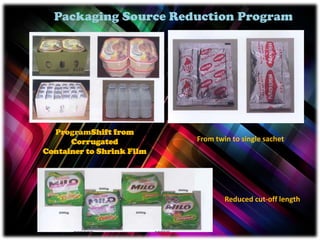
ProgramShift from
Corrugated
Container to Shrink Film
From twin to single sachet
Reduced cut-off length
Packaging Source Reduction Program
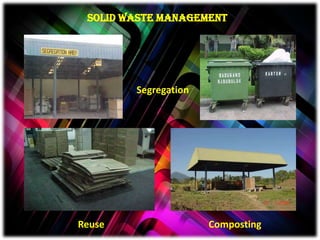
SOLID WASTE MANAGEMENT
Segregation
Reuse Composting
Increasing
population, with
simultaneous
depletion of quality
water are driving a
focus to preserve
this essential
resource of life
Water: a precariously diminishing
resource
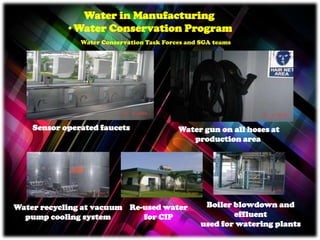
Sensor operated faucets
Water in Manufacturing
•Water Conservation Program
Water Conservation Task Forces and SGA teams
Water gun on all hoses at
production area
Water recycling at vacuum
pump cooling system
Re-used water
for CIP
Boiler blowdown and
effluent
used for watering plants
Rural Development in Philippines
Since the 1960s, Nestlé Philippines, Inc.
has adopted an agronomy programme
aimed at increasing the income of coffee
farmers. By improving the methods in
coffee growing, farmers can get better and
higher quality yields, and help increase
coffee supply in the country.
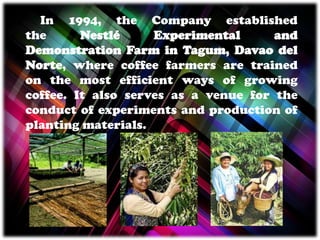
In 1994, the Company established
the Nestlé Experimental and
Demonstration Farm in Tagum, Davao del
Norte, where coffee farmers are trained
on the most efficient ways of growing
coffee. It also serves as a venue for the
conduct of experiments and production of
planting materials.
OTHER CORPORATE SOCIAL
RESPONSIBILITY
The company has been very active in
corporate social responsibility practice
and puts premium on programs on
agriculture, education and manpower
development, community development,
health and nutrition, and environmental
protection and preservation.
Nestle sponsored PBSP projects such as the
Tree Planting Program in Lipa, the
Agutayan Artificial Reef Project, the
Bayanan Creek Clean-Up Drive, and the
Tapat Ko, Linis Ko Program in Bulacan.
Also supported the Cebu Hillyland
Reforestation Project, Buensuceso
Resettlement Program, Marine Santuary
Regeneration project, and Relief assistance
and rehabilitation of disaster victims.

Corporate Social Responsibility (CSR)of Nestle

  • 3.
    Nestle Philippines Incorporatedis a large- scale, well-known international food manufacturing corporation engaged in the manufacture of instant coffee, milk, and ready-to-cook noodles. It was established in 1983 and is registered with the Securities and Exchange Commission (SEC) and Bureau of Food and Drugs (BFAD). Currently, it has 497 employees and member of various organizations such as Mindanao Association for Quality, Cagayan de Oro Chamber of Industries and Personnel Management Association of the Philippines.
  • 4.
    Nestle Philippines iscommitted to helping in community and nation building through programs that help the underprivileged members of society. Agronomy Assistance Since the 1960's, Nestle Philippines has been helping coffee farmers in different parts of the country through imparting knowledge on how they can improve their crops. Members of the company visit these farmers regularly to reinforce among them the importance of good plantation management. By improving methods in growing coffee, farmers get better yields and eventually help increase the coffee supply in the Philippines as well as help the farmers increase their income.
  • 5.
    Health and Nutrition Nestleis an advocate for good health and proper nutrition. It conducts feeding programs and medical missions in the areas where it operates.
  • 6.
    Education and Manpower Development •Donate-a-Classroom Program • Technical Skills Scholarship Program • Academic Linkage Program
  • 7.
    Community Development • Cutand Sew Livelihood Project • Yard and Garden Livelihood Project • Suklay and Gunting Project • Misis Kong Trainors Program • Julius Maggi Kitchen • Street Illuminations Project
  • 8.
    Environmental Protection and Preservation •Nestle Environmental Management • Solid Waste Management Program • The Greening the Supply Chain • Air Emission Testing
  • 9.
    ProgramShift from Corrugated Container toShrink Film From twin to single sachet Reduced cut-off length Packaging Source Reduction Program
  • 10.
  • 11.
    Increasing population, with simultaneous depletion ofquality water are driving a focus to preserve this essential resource of life Water: a precariously diminishing resource
  • 12.
    Sensor operated faucets Waterin Manufacturing •Water Conservation Program Water Conservation Task Forces and SGA teams Water gun on all hoses at production area Water recycling at vacuum pump cooling system Re-used water for CIP Boiler blowdown and effluent used for watering plants
  • 13.
    Rural Development inPhilippines Since the 1960s, Nestlé Philippines, Inc. has adopted an agronomy programme aimed at increasing the income of coffee farmers. By improving the methods in coffee growing, farmers can get better and higher quality yields, and help increase coffee supply in the country.
  • 14.
    In 1994, theCompany established the Nestlé Experimental and Demonstration Farm in Tagum, Davao del Norte, where coffee farmers are trained on the most efficient ways of growing coffee. It also serves as a venue for the conduct of experiments and production of planting materials.
  • 15.
    OTHER CORPORATE SOCIAL RESPONSIBILITY Thecompany has been very active in corporate social responsibility practice and puts premium on programs on agriculture, education and manpower development, community development, health and nutrition, and environmental protection and preservation.
  • 16.
    Nestle sponsored PBSPprojects such as the Tree Planting Program in Lipa, the Agutayan Artificial Reef Project, the Bayanan Creek Clean-Up Drive, and the Tapat Ko, Linis Ko Program in Bulacan. Also supported the Cebu Hillyland Reforestation Project, Buensuceso Resettlement Program, Marine Santuary Regeneration project, and Relief assistance and rehabilitation of disaster victims.