“Good Food Good Life”
The Nestlé approach to Sustainability
Creating Shared Value
• Founded 1866 in Switzerland
• “think globally and act locally”
• Nutrition, Health and Wellness Company
• Strong portfolio of brands and innovations driving growth
• 480 factories; about half in developing countries ,276 050 employees
• Fortune global 500 listing , World's most profitable corporation
• Dow Jones sustainability rankings, Top performer food organisation
Facts about Nestlé: World’s Largest
Food & Beverage Company
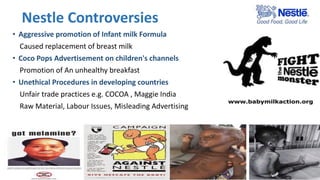
Nestle Controversies
• Aggressive promotion of Infant milk Formula
Caused replacement of breast milk
• Coco Pops Advertisement on children's channels
Promotion of An unhealthy breakfast
• Unethical Procedures in developing countries
Unfair trade practices e.g. COCOA , Maggie India
Raw Material, Labour Issues, Misleading Advertising
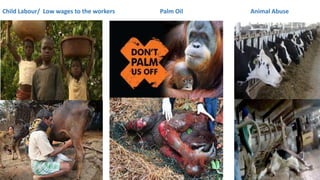
Child Labour/ Low wages to the workers Palm Oil Animal Abuse
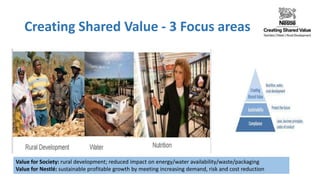
Creating Shared Value - 3 Focus areas
Value for Society: rural development; reduced impact on energy/water availability/waste/packaging
Value for Nestlé: sustainable profitable growth by meeting increasing demand, risk and cost reduction
Environmental Sustainability
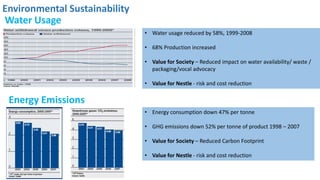
Water Usage
• Water usage reduced by 58%, 1999-2008
• 68% Production increased
• Value for Society – Reduced impact on water availability/ waste /
packaging/vocal advocacy
• Value for Nestle - risk and cost reduction
Energy Emissions
• Energy consumption down 47% per tonne
• GHG emissions down 52% per tonne of product 1998 – 2007
• Value for Society – Reduced Carbon Footprint
• Value for Nestle - risk and cost reduction
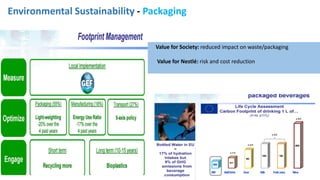
Environmental Sustainability - Packaging
Value for Society: reduced impact on waste/packaging
Value for Nestlé: risk and cost reduction
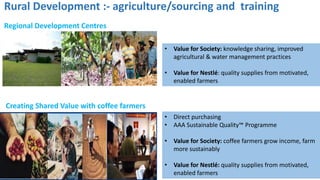
Rural Development :- agriculture/sourcing and training
Regional Development Centres
• Value for Society: knowledge sharing, improved
agricultural & water management practices
• Value for Nestlé: quality supplies from motivated,
enabled farmers
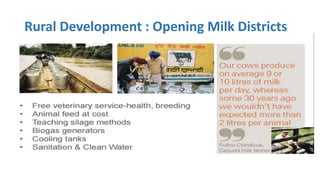
Creating Shared Value with coffee farmers
• Direct purchasing
• AAA Sustainable Quality™ Programme
• Value for Society: coffee farmers grow income, farm
more sustainably
• Value for Nestlé: quality supplies from motivated,
enabled farmers
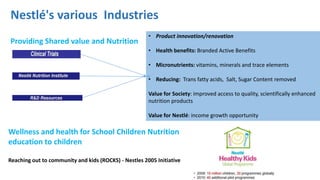
Rural Development : Opening Milk Districts
Nestlé's various Industries
Providing Shared value and Nutrition
• Product innovation/renovation
• Health benefits: Branded Active Benefits
• Micronutrients: vitamins, minerals and trace elements
• Reducing: Trans fatty acids, Salt, Sugar Content removed
Value for Society: improved access to quality, scientifically enhanced
nutrition products
Value for Nestlé: income growth opportunity
Wellness and health for School Children Nutrition
education to children
Reaching out to community and kids (ROCKS) - Nestles 2005 Initiative
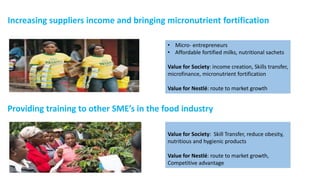
Increasing suppliers income and bringing micronutrient fortification
• Micro- entrepreneurs
• Affordable fortified milks, nutritional sachets
Value for Society: income creation, Skills transfer,
microfinance, micronutrient fortification
Value for Nestlé: route to market growth
Providing training to other SME’s in the food industry
Value for Society: Skill Transfer, reduce obesity,
nutritious and hygienic products
Value for Nestlé: route to market growth,
Competitive advantage
Nestle Carbon Footprint
• Climate Disclosure Leadership Index Award
• Disclosure and performance In Carbon Disclosure Project (CDP) Investor
programme
• Producers’ list by Dow Jones Sustainability Index, for their initiative in decreasing
and carbon outflows
• Reduction of GHG emissions by 24% during the period of 2002 till 2012
• Nestle switched to Natural resources and cleaner fuels to improve energy
proficiency
• In 2015 will further reduce the GHG discharges per tonne of product by 35%
• Nespresso agro-forestry programme- The planting of trees offers a way for the
company to compensate the carbon footprint within its own value chain

final Nestle CSR

  • 1.
    “Good Food GoodLife” The Nestlé approach to Sustainability Creating Shared Value
  • 2.
    • Founded 1866in Switzerland • “think globally and act locally” • Nutrition, Health and Wellness Company • Strong portfolio of brands and innovations driving growth • 480 factories; about half in developing countries ,276 050 employees • Fortune global 500 listing , World's most profitable corporation • Dow Jones sustainability rankings, Top performer food organisation Facts about Nestlé: World’s Largest Food & Beverage Company
  • 3.
    Nestle Controversies • Aggressivepromotion of Infant milk Formula Caused replacement of breast milk • Coco Pops Advertisement on children's channels Promotion of An unhealthy breakfast • Unethical Procedures in developing countries Unfair trade practices e.g. COCOA , Maggie India Raw Material, Labour Issues, Misleading Advertising
  • 4.
    Child Labour/ Lowwages to the workers Palm Oil Animal Abuse
  • 5.
    Creating Shared Value- 3 Focus areas Value for Society: rural development; reduced impact on energy/water availability/waste/packaging Value for Nestlé: sustainable profitable growth by meeting increasing demand, risk and cost reduction
  • 6.
    Environmental Sustainability Water Usage •Water usage reduced by 58%, 1999-2008 • 68% Production increased • Value for Society – Reduced impact on water availability/ waste / packaging/vocal advocacy • Value for Nestle - risk and cost reduction Energy Emissions • Energy consumption down 47% per tonne • GHG emissions down 52% per tonne of product 1998 – 2007 • Value for Society – Reduced Carbon Footprint • Value for Nestle - risk and cost reduction
  • 7.
    Environmental Sustainability -Packaging Value for Society: reduced impact on waste/packaging Value for Nestlé: risk and cost reduction
  • 8.
    Rural Development :-agriculture/sourcing and training Regional Development Centres • Value for Society: knowledge sharing, improved agricultural & water management practices • Value for Nestlé: quality supplies from motivated, enabled farmers Creating Shared Value with coffee farmers • Direct purchasing • AAA Sustainable Quality™ Programme • Value for Society: coffee farmers grow income, farm more sustainably • Value for Nestlé: quality supplies from motivated, enabled farmers
  • 9.
    Rural Development :Opening Milk Districts
  • 10.
    Nestlé's various Industries ProvidingShared value and Nutrition • Product innovation/renovation • Health benefits: Branded Active Benefits • Micronutrients: vitamins, minerals and trace elements • Reducing: Trans fatty acids, Salt, Sugar Content removed Value for Society: improved access to quality, scientifically enhanced nutrition products Value for Nestlé: income growth opportunity Wellness and health for School Children Nutrition education to children Reaching out to community and kids (ROCKS) - Nestles 2005 Initiative
  • 11.
    Increasing suppliers incomeand bringing micronutrient fortification • Micro- entrepreneurs • Affordable fortified milks, nutritional sachets Value for Society: income creation, Skills transfer, microfinance, micronutrient fortification Value for Nestlé: route to market growth Providing training to other SME’s in the food industry Value for Society: Skill Transfer, reduce obesity, nutritious and hygienic products Value for Nestlé: route to market growth, Competitive advantage
  • 13.
    Nestle Carbon Footprint •Climate Disclosure Leadership Index Award • Disclosure and performance In Carbon Disclosure Project (CDP) Investor programme • Producers’ list by Dow Jones Sustainability Index, for their initiative in decreasing and carbon outflows • Reduction of GHG emissions by 24% during the period of 2002 till 2012 • Nestle switched to Natural resources and cleaner fuels to improve energy proficiency • In 2015 will further reduce the GHG discharges per tonne of product by 35% • Nespresso agro-forestry programme- The planting of trees offers a way for the company to compensate the carbon footprint within its own value chain