Corporate engagement in 2010

         Simon Burne
         August 2010
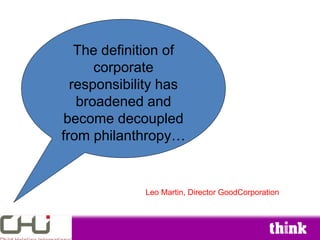
The definition of
      corporate
  responsibility has
   broadened and
become decoupled
from philanthropy…


             Leo Martin, Director GoodCorporation
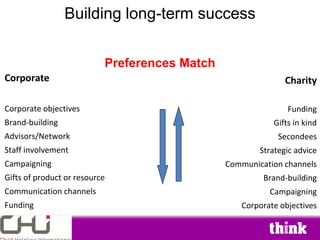
Building long-term success


                           Preferences Match
Corporate                                                     Charity

Corporate objectives                                          Funding
Brand-building                                            Gifts in kind
Advisors/Network                                            Secondees
Staff involvement                                      Strategic advice
Campaigning                                    Communication channels
Gifts of product or resource                            Brand-building
Communication channels                                   Campaigning
Funding                                           Corporate objectives
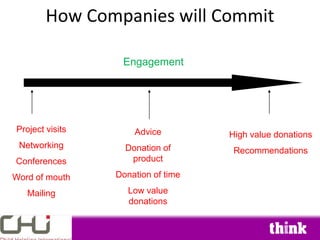
How Companies will Commit

  Interest        Engagement         Commitment


Project visits
Project visits       Advice
                     Advice         High value donations
                                    High value donations
 Networking
 Networking        Donation of
                   Donation of       Recommendations
                                     Recommendations
Conferences         product
                    product
Conferences
Word of mouth    Donation of time
                 Donation of time
Word of mouth
   Mailing          Low value
                    Low value
   Mailing
                    donations
                    donations
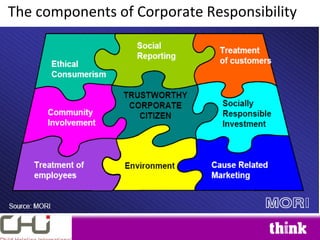
The components of Corporate Responsibility
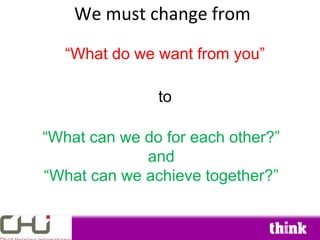
We must change from

   “What do we want from you”

               to

“What can we do for each other?”
             and
“What can we achieve together?”
The impact of the recession
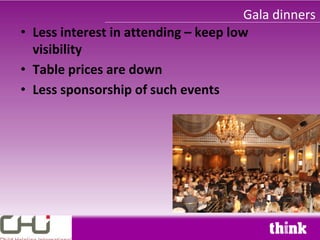
Gala dinners
• Less interest in attending – keep low
  visibility
• Table prices are down
• Less sponsorship of such events
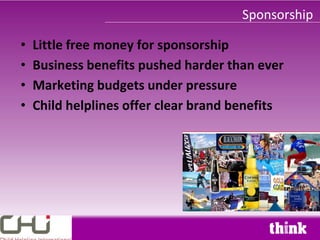
Sponsorship

•   Little free money for sponsorship
•   Business benefits pushed harder than ever
•   Marketing budgets under pressure
•   Child helplines offer clear brand benefits
Grants


• Corporate trusts/charity
  committees have percentage of
  profits
  – Percentage falling
  – Profits falling
• Small regular gifts to
  niche charities relatively
  safe
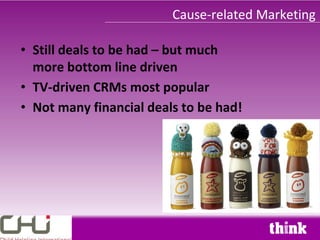
Cause-related Marketing

• Still deals to be had – but much
  more bottom line driven
• TV-driven CRMs most popular
• Not many financial deals to be had!
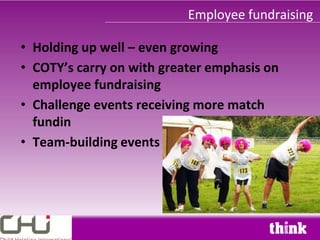
Employee fundraising

• Holding up well – even growing
• COTY’s carry on with greater emphasis on
  employee fundraising
• Challenge events receiving more match
  fundin
• Team-building events
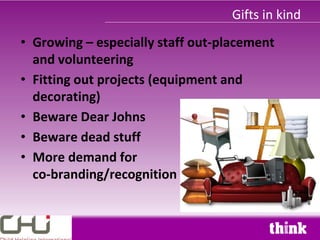
Gifts in kind
• Growing – especially staff out-placement
  and volunteering
• Fitting out projects (equipment and
  decorating)
• Beware Dear Johns
• Beware dead stuff
• More demand for
  co-branding/recognition
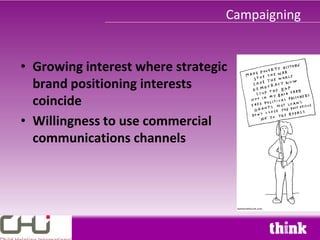
Campaigning


• Growing interest where strategic
  brand positioning interests
  coincide
• Willingness to use commercial
  communications channels
What companies say…

• Inundated with requests
• Spoilt for choice
• CSR aligned to corporate strategy
• CSR must keep
  stakeholders happy
• CSR must bring
  about change
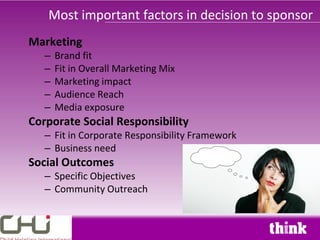
Most important factors in decision to sponsor
Marketing
   –   Brand fit
   –   Fit in Overall Marketing Mix
   –   Marketing impact
   –   Audience Reach
   –   Media exposure
Corporate Social Responsibility
   – Fit in Corporate Responsibility Framework
   – Business need
Social Outcomes
   – Specific Objectives
   – Community Outreach
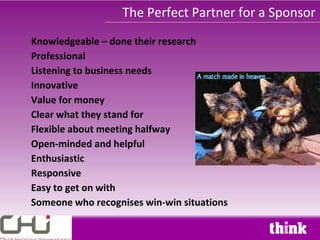
The Perfect Partner for a Sponsor
Knowledgeable – done their research
Professional
Listening to business needs
Innovative
Value for money
Clear what they stand for
Flexible about meeting halfway
Open-minded and helpful
Enthusiastic
Responsive
Easy to get on with
Someone who recognises win-win situations
What companies want from us…

Help deliver corporate objectives
Infrastructure in place
   –   Dedicated account manager/team
   –   Model contracts
   –   Information packs
   –   Fundraising materials
   –   Co-branding agreements
Local projects or clear projects that will benefit
Excellent reporting on progress
What charities do corporates like?


• Well known and understood
• Readily recognised brand
• Motivating for their stakeholders –
  especially staff
• Good spread of projects across the UK or
  internationally
• People (children/cancer) or environment
  focused
• Good track record of corporate partnerships
What companies don’t like


•   Amateurishness
•   Over-promise, under-deliver
•   Slow in response
•   Narrow offering of ways to engage
•   Lack of flexibility
•   Consortiums
•   Can’t or won’t acknowledge the work the
    company is doing
Best practice

• Research companies carefully
• Screen ethically up-front and decide on
  appropriate levels of engagement
• Nurture over time
• Focus on partnership: mutual strategic
  benefits
• Bespoke packages addressing common areas
  of interest and benefit
• Offer range of options for engagement
• Financial and non-financial benefits
Know what you can offer


Clear ex ante ethical policy and engagement
  strategy
Thresholds for engagement
  – Product endorsement
  – Licensing
  – Roles and responsibilities
Ethical policies


• Often a bureaucratic way of saying “no”
• Often no more than a listing of sectors “we
  feel uncomfortable with”
• Often reflects the biases of the most vocal
• Inflexible and restrictive
Why don’t we talk about the
ethics of refusing a donation?
 Rather than the ethics of accepting a
              donation
A beneficiary-focused ethical policy


Four questions:
  – What impact would refusing a
    donation have on the charity’s
    ability to deliver to beneficiaries?
  – What would our beneficiaries say?
  – Have we asked them?
  – Would they accept a poorer service
    on ethical grounds?
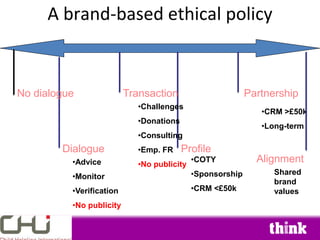
A brand-based ethical policy


No dialogue               Transaction                       Partnership
                             •Challenges
                                                               •CRM >£50k
                             •Donations
                                                               •Long-term
                             •Consulting
        Dialogue             •Emp. FR     Profile
          •Advice            •No publicity
                                             •COTY            Alignment
                                             •Sponsorship         Shared
          •Monitor
                                                                  brand
          •Verification                      •CRM <£50k           values
          •No publicity
In conclusion…
What to do?


•   Nurture who you’ve got
•   Think about strategic co-achievement
•   Non-financials – especially volunteering
•   Think strategic alliance or don’t think at all!
•   Be proactive and selective – research and approach
•   Think long-term
•   Be ever more professional and flexible
•   Focus on those areas showing strength – especially
    employee fundraising
Corporate Engagement In 2010

Corporate Engagement In 2010

  • 1.
    Corporate engagement in2010 Simon Burne August 2010
  • 2.
    The definition of corporate responsibility has broadened and become decoupled from philanthropy… Leo Martin, Director GoodCorporation
  • 3.
    Building long-term success Preferences Match Corporate Charity Corporate objectives Funding Brand-building Gifts in kind Advisors/Network Secondees Staff involvement Strategic advice Campaigning Communication channels Gifts of product or resource Brand-building Communication channels Campaigning Funding Corporate objectives
  • 4.
    How Companies willCommit Interest Engagement Commitment Project visits Project visits Advice Advice High value donations High value donations Networking Networking Donation of Donation of Recommendations Recommendations Conferences product product Conferences Word of mouth Donation of time Donation of time Word of mouth Mailing Low value Low value Mailing donations donations
  • 5.
    The components ofCorporate Responsibility
  • 6.
    We must changefrom “What do we want from you” to “What can we do for each other?” and “What can we achieve together?”
  • 7.
    The impact ofthe recession
  • 8.
    Gala dinners • Lessinterest in attending – keep low visibility • Table prices are down • Less sponsorship of such events
  • 9.
    Sponsorship • Little free money for sponsorship • Business benefits pushed harder than ever • Marketing budgets under pressure • Child helplines offer clear brand benefits
  • 10.
    Grants • Corporate trusts/charity committees have percentage of profits – Percentage falling – Profits falling • Small regular gifts to niche charities relatively safe
  • 11.
    Cause-related Marketing • Stilldeals to be had – but much more bottom line driven • TV-driven CRMs most popular • Not many financial deals to be had!
  • 12.
    Employee fundraising • Holdingup well – even growing • COTY’s carry on with greater emphasis on employee fundraising • Challenge events receiving more match fundin • Team-building events
  • 13.
    Gifts in kind •Growing – especially staff out-placement and volunteering • Fitting out projects (equipment and decorating) • Beware Dear Johns • Beware dead stuff • More demand for co-branding/recognition
  • 14.
    Campaigning • Growing interestwhere strategic brand positioning interests coincide • Willingness to use commercial communications channels
  • 15.
    What companies say… •Inundated with requests • Spoilt for choice • CSR aligned to corporate strategy • CSR must keep stakeholders happy • CSR must bring about change
  • 16.
    Most important factorsin decision to sponsor Marketing – Brand fit – Fit in Overall Marketing Mix – Marketing impact – Audience Reach – Media exposure Corporate Social Responsibility – Fit in Corporate Responsibility Framework – Business need Social Outcomes – Specific Objectives – Community Outreach
  • 17.
    The Perfect Partnerfor a Sponsor Knowledgeable – done their research Professional Listening to business needs Innovative Value for money Clear what they stand for Flexible about meeting halfway Open-minded and helpful Enthusiastic Responsive Easy to get on with Someone who recognises win-win situations
  • 18.
    What companies wantfrom us… Help deliver corporate objectives Infrastructure in place – Dedicated account manager/team – Model contracts – Information packs – Fundraising materials – Co-branding agreements Local projects or clear projects that will benefit Excellent reporting on progress
  • 19.
    What charities docorporates like? • Well known and understood • Readily recognised brand • Motivating for their stakeholders – especially staff • Good spread of projects across the UK or internationally • People (children/cancer) or environment focused • Good track record of corporate partnerships
  • 20.
    What companies don’tlike • Amateurishness • Over-promise, under-deliver • Slow in response • Narrow offering of ways to engage • Lack of flexibility • Consortiums • Can’t or won’t acknowledge the work the company is doing
  • 21.
    Best practice • Researchcompanies carefully • Screen ethically up-front and decide on appropriate levels of engagement • Nurture over time • Focus on partnership: mutual strategic benefits • Bespoke packages addressing common areas of interest and benefit • Offer range of options for engagement • Financial and non-financial benefits
  • 22.
    Know what youcan offer Clear ex ante ethical policy and engagement strategy Thresholds for engagement – Product endorsement – Licensing – Roles and responsibilities
  • 23.
    Ethical policies • Oftena bureaucratic way of saying “no” • Often no more than a listing of sectors “we feel uncomfortable with” • Often reflects the biases of the most vocal • Inflexible and restrictive
  • 25.
    Why don’t wetalk about the ethics of refusing a donation? Rather than the ethics of accepting a donation
  • 27.
    A beneficiary-focused ethicalpolicy Four questions: – What impact would refusing a donation have on the charity’s ability to deliver to beneficiaries? – What would our beneficiaries say? – Have we asked them? – Would they accept a poorer service on ethical grounds?
  • 28.
    A brand-based ethicalpolicy No dialogue Transaction Partnership •Challenges •CRM >£50k •Donations •Long-term •Consulting Dialogue •Emp. FR Profile •Advice •No publicity •COTY Alignment •Sponsorship Shared •Monitor brand •Verification •CRM <£50k values •No publicity
  • 29.
  • 30.
    What to do? • Nurture who you’ve got • Think about strategic co-achievement • Non-financials – especially volunteering • Think strategic alliance or don’t think at all! • Be proactive and selective – research and approach • Think long-term • Be ever more professional and flexible • Focus on those areas showing strength – especially employee fundraising