Finding the money
Stuart Hartley
Finding the money
• Four ways of getting money:
− Equity – Dragons Den
− Debt – bank overdrafts / loans / credit cards
− Public sector grants
− Crowdfunding
Before we start though
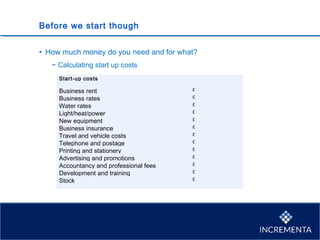
• How much money do you need and for what?
− Calculating start up costs
Start-up costs  
   
Business rent £
Business rates £
Water rates £
Light/heat/power £
New equipment £
Business insurance £
Travel and vehicle costs £
Telephone and postage £
Printing and stationery £ 
Advertising and promotions £ 
Accountancy and professional fees £ 
Development and training £ 
Stock £ 
   
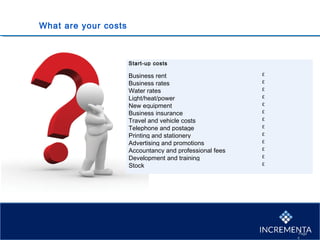
What are your costs
Page
4
Start-up costs  
   
Business rent £
Business rates £
Water rates £
Light/heat/power £
New equipment £
Business insurance £
Travel and vehicle costs £
Telephone and postage £
Printing and stationery £ 
Advertising and promotions £ 
Accountancy and professional fees £ 
Development and training £ 
Stock £ 
   
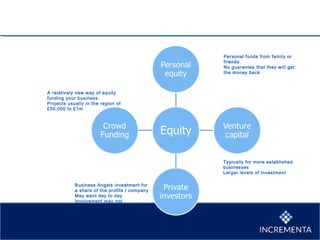
Personal funds from family or
friends.
No guarantee that they will get
the money back
Business Angels investment for
a share of the profits / company
May want day to day
involvement may not
Typically for more established
businesses
Larger levels of investment
A relatively new way of equity
funding your business.
Projects usually in the region of
£50,000 to £1m
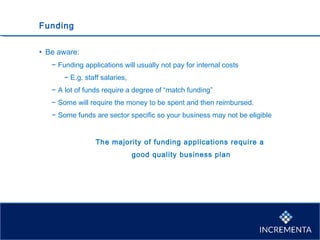
Funding
• Be aware:
− Funding applications will usually not pay for internal costs
− E.g. staff salaries,
− A lot of funds require a degree of “match funding”
− Some will require the money to be spent and then reimbursed.
− Some funds are sector specific so your business may not be eligible
The majority of funding applications require a
good quality business plan
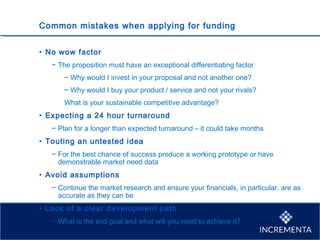
Common mistakes when applying for funding
• No wow factor
− The proposition must have an exceptional differentiating factor
− Why would I invest in your proposal and not another one?
− Why would I buy your product / service and not your rivals?
What is your sustainable competitive advantage?
• Expecting a 24 hour turnaround
− Plan for a longer than expected turnaround – it could take months
• Touting an untested idea
− For the best chance of success produce a working prototype or have
demonstrable market need data
• Avoid assumptions
− Continue the market research and ensure your financials, in particular, are as
accurate as they can be
• Lack of a clear development path
− What is the end goal and what will you need to achieve it?
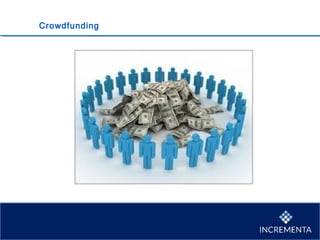
Crowdfunding
What’s your definition?
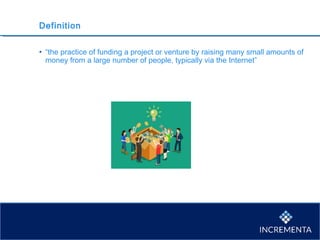
Definition
• “the practice of funding a project or venture by raising many small amounts of
money from a large number of people, typically via the Internet”
Crowdfunding: How Does It Work?
• Online platforms that allow people to invest from as little as £10
• Pitchers post a video, summary, business plan, financials and legal documents
• No success fees until the pitch is funded
• Pitches tend to be 30, 60 or 90 days
• Round can be closed through the platform and only takes typically 2 weeks
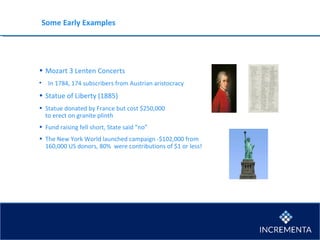
Some Early Examples
• Mozart 3 Lenten Concerts
• In 1784, 174 subscribers from Austrian aristocracy
• Statue of Liberty (1885)
• Statue donated by France but cost $250,000
to erect on granite plinth
• Fund raising fell short, State said “no”
• The New York World launched campaign -$102,000 from
160,000 US donors, 80% were contributions of $1 or less!
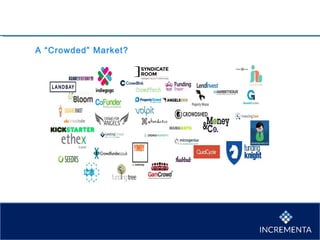
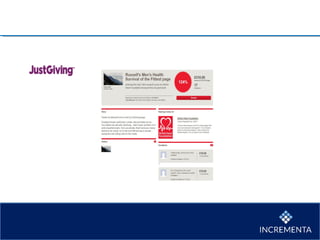
Let’s name the platforms
A “Crowded” Market?
Can you identify the types?
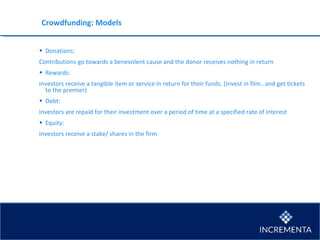
Crowdfunding: Models
• Donations:
Contributions go towards a benevolent cause and the donor receives nothing in return
• Rewards:
Investors receive a tangible item or service in return for their funds. (Invest in film…and get tickets
to the premier)
• Debt:
Investors are repaid for their investment over a period of time at a specified rate of interest
• Equity:
Investors receive a stake/ shares in the firm
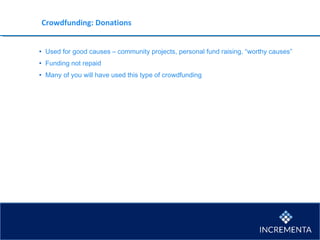
Crowdfunding: Donations
• Used for good causes – community projects, personal fund raising, “worthy causes”
• Funding not repaid
• Many of you will have used this type of crowdfunding
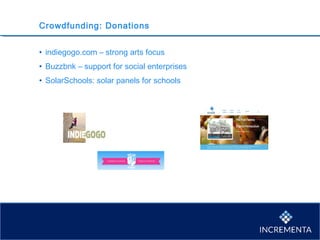
Crowdfunding: Donations
• indiegogo.com – strong arts focus
• Buzzbnk – support for social enterprises
• SolarSchools: solar panels for schools
Crowdfunding: Rewards
• Funding not repaid but a “gift” is given as a reward
• Kickstarter - Creatives focus: $2.8Bn of pledges, 12m funders in 120,000 projects!
• Gambitious - Games focus: Reward & Equity
• Peoplefundit & Bloom VC -arts focus: Rewards
• Wefund - Creativity: Rewards
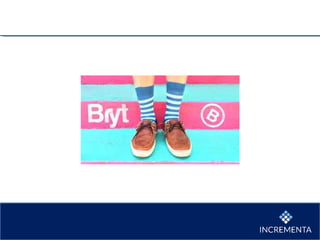
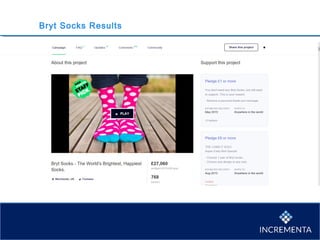
Bryt Socks Results
• 768 backers
• Range from £1 (gift) to £1,000 (50 pairs of socks plus 2 designs into
production)
• £27,060 of an £18,000 target in 33 days
Crowdfunding: Debt
• “peer to peer” lending
• Lenders receive return on their investment
• Used to raise debt funding that “traditional” means would find hard to support
• Also micro-finance to support poor in developing economies (interest free)
Crowdfunding: Debt
• Typically 9-12% per annum
• Usually pre-screened through brokers, introducers, agents
• Often targeted at existing businesses, with track record, who can
finance debt repayments
• Average funds £10-50k
• 60-70% success rate, 2 weeks
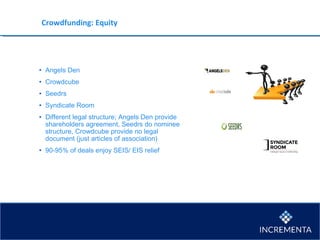
Crowdfunding: Equity
• Angels Den
• Crowdcube
• Seedrs
• Syndicate Room
• Different legal structure; Angels Den provide
shareholders agreement, Seedrs do nominee
structure, Crowdcube provide no legal
document (just articles of association)
• 90-95% of deals enjoy SEIS/ EIS relief
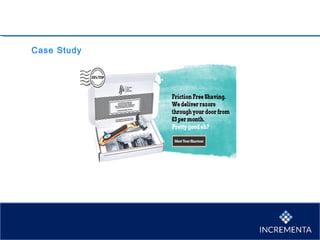
Case Study
Success?
• Funding target of £110k in 2 days
• Stretch target of £150k in 2 weeks
• 119 investors
• Ranked #1 or #2 on Seedrs for whole pitch period
• Well planned campaign
• Now looking to raise £1m for massive expansion
FFS - Key Learning Points
• Understand how rating on the platform works
• Seedrs algorithm
- number of big investors on board
- number of smaller investors on board
- speed of investor recruitment
What is Crowdfunding Good For?
• Funding specific projects
• Raising start up funding
• Engaging your audience and growing it
• Reducing transaction costs
• Businesses with large “reach”
What Is Crowdfunding Not?
• A panacea
• The only answer
• Easy!
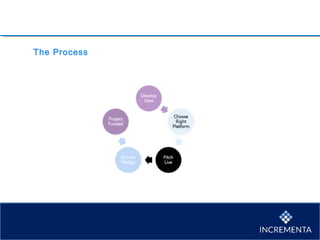
The Process
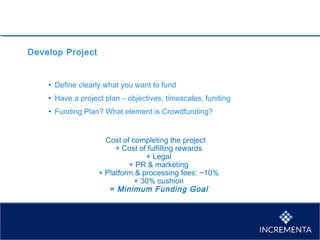
Develop Project
• Define clearly what you want to fund
• Have a project plan – objectives, timescales, funding
• Funding Plan? What element is Crowdfunding?
Cost of completing the project
+ Cost of fulfilling rewards
+ Legal
+ PR & marketing
+ Platform & processing fees: ~10%
+ 30% cushion
= Minimum Funding Goal
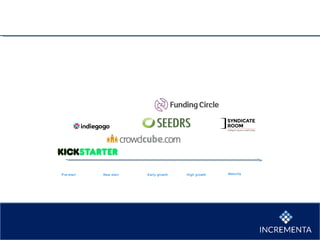
Choose Platform
• Rewards or donations?
• Look and feel
• Ease of use
• Fees
• Timescales
• Audience and motivation
Pre-start New start Early growth High growth Maturity
Which platform would be best for you?
Pitch
• Create a compelling page – pictures and video
• Copy the best of others!
• Use your existing networks
• Publicise like mad!
• Use own social media networks – Facebook, Twitter etc.
• Timeframe
Donors Pledge
• All or nothing?
• Automated or personal thank you’s?
• Engagement – make pitch viral (1-42…….)
Project Proceeds
• Keep crowd informed
• Maintain regular dialogue
• Offer benefits (tangible or intangible)
Typical Costs
• Pitch fee: cost of video/story?
• Success fee: 3% to 5% +
• Mostly all or nothing!
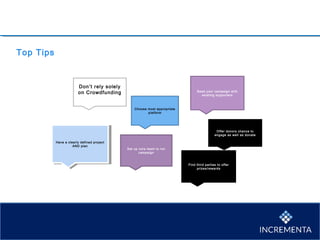
Top Tips
Don’t rely solely
on Crowdfunding
Choose most appropriate
platform
Have a clearly defined project
AND plan
Have a clearly defined project
AND plan
Set up core team to run
campaign
Seed your campaign with
existing supporters
Find third parties to offer
prizes/rewards
Offer donors chance to
engage as well as donate
Top Tips
• Set a realistic minimum target, better to over achieve! “Stretch” at top
• Good to have 30-40% lined up long before launch (pitches that reach 30%
of their target in a few weeks have 80% chance to get funded) Be clear on
what you are trying to achieve and what the money is for
• Ideal to have own big crowd
Advantages
• Much less due diligence (investor and investee)
• Typically higher valuations (the crowd aren’t as sophisticated as angels)
• Grow your own brand ambassadors, salesforce, advocates
• Can be very quick
But…..
• Can’t normally get a Non-Executive Director/Mentor/Advisor
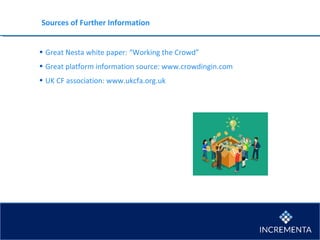
Sources of Further Information
• Great Nesta white paper: “Working the Crowd”
• Great platform information source: www.crowdingin.com
• UK CF association: www.ukcfa.org.uk
Key tips when applying for funding
1. Clarity and consistency.
2. Be concise.
3. Be realistic about what you will achieve.
4. Understand what the funders objectives are:
1. Public sector often new jobs or business growth
2. Private sector – assurance – ability to pay back the money or making money
from an equity investment
5. Follow the guidance notes, if supplied, and be aware of the rules specifically
with eligible spend

Funding v2

  • 1.
  • 2.
    Finding the money •Four ways of getting money: − Equity – Dragons Den − Debt – bank overdrafts / loans / credit cards − Public sector grants − Crowdfunding
  • 3.
    Before we startthough • How much money do you need and for what? − Calculating start up costs Start-up costs       Business rent £ Business rates £ Water rates £ Light/heat/power £ New equipment £ Business insurance £ Travel and vehicle costs £ Telephone and postage £ Printing and stationery £  Advertising and promotions £  Accountancy and professional fees £  Development and training £  Stock £     
  • 4.
    What are yourcosts Page 4 Start-up costs       Business rent £ Business rates £ Water rates £ Light/heat/power £ New equipment £ Business insurance £ Travel and vehicle costs £ Telephone and postage £ Printing and stationery £  Advertising and promotions £  Accountancy and professional fees £  Development and training £  Stock £     
  • 5.
    Personal funds fromfamily or friends. No guarantee that they will get the money back Business Angels investment for a share of the profits / company May want day to day involvement may not Typically for more established businesses Larger levels of investment A relatively new way of equity funding your business. Projects usually in the region of £50,000 to £1m
  • 6.
    Funding • Be aware: −Funding applications will usually not pay for internal costs − E.g. staff salaries, − A lot of funds require a degree of “match funding” − Some will require the money to be spent and then reimbursed. − Some funds are sector specific so your business may not be eligible The majority of funding applications require a good quality business plan
  • 7.
    Common mistakes whenapplying for funding • No wow factor − The proposition must have an exceptional differentiating factor − Why would I invest in your proposal and not another one? − Why would I buy your product / service and not your rivals? What is your sustainable competitive advantage? • Expecting a 24 hour turnaround − Plan for a longer than expected turnaround – it could take months • Touting an untested idea − For the best chance of success produce a working prototype or have demonstrable market need data • Avoid assumptions − Continue the market research and ensure your financials, in particular, are as accurate as they can be • Lack of a clear development path − What is the end goal and what will you need to achieve it?
  • 8.
  • 9.
  • 10.
    Definition • “the practiceof funding a project or venture by raising many small amounts of money from a large number of people, typically via the Internet”
  • 11.
    Crowdfunding: How DoesIt Work? • Online platforms that allow people to invest from as little as £10 • Pitchers post a video, summary, business plan, financials and legal documents • No success fees until the pitch is funded • Pitches tend to be 30, 60 or 90 days • Round can be closed through the platform and only takes typically 2 weeks
  • 12.
    Some Early Examples •Mozart 3 Lenten Concerts • In 1784, 174 subscribers from Austrian aristocracy • Statue of Liberty (1885) • Statue donated by France but cost $250,000 to erect on granite plinth • Fund raising fell short, State said “no” • The New York World launched campaign -$102,000 from 160,000 US donors, 80% were contributions of $1 or less!
  • 13.
  • 14.
  • 15.
    Can you identifythe types?
  • 16.
    Crowdfunding: Models • Donations: Contributionsgo towards a benevolent cause and the donor receives nothing in return • Rewards: Investors receive a tangible item or service in return for their funds. (Invest in film…and get tickets to the premier) • Debt: Investors are repaid for their investment over a period of time at a specified rate of interest • Equity: Investors receive a stake/ shares in the firm
  • 17.
    Crowdfunding: Donations • Usedfor good causes – community projects, personal fund raising, “worthy causes” • Funding not repaid • Many of you will have used this type of crowdfunding
  • 19.
    Crowdfunding: Donations • indiegogo.com– strong arts focus • Buzzbnk – support for social enterprises • SolarSchools: solar panels for schools
  • 20.
    Crowdfunding: Rewards • Fundingnot repaid but a “gift” is given as a reward • Kickstarter - Creatives focus: $2.8Bn of pledges, 12m funders in 120,000 projects! • Gambitious - Games focus: Reward & Equity • Peoplefundit & Bloom VC -arts focus: Rewards • Wefund - Creativity: Rewards
  • 22.
    Bryt Socks Results •768 backers • Range from £1 (gift) to £1,000 (50 pairs of socks plus 2 designs into production) • £27,060 of an £18,000 target in 33 days
  • 23.
    Crowdfunding: Debt • “peerto peer” lending • Lenders receive return on their investment • Used to raise debt funding that “traditional” means would find hard to support • Also micro-finance to support poor in developing economies (interest free)
  • 24.
    Crowdfunding: Debt • Typically9-12% per annum • Usually pre-screened through brokers, introducers, agents • Often targeted at existing businesses, with track record, who can finance debt repayments • Average funds £10-50k • 60-70% success rate, 2 weeks
  • 25.
    Crowdfunding: Equity • AngelsDen • Crowdcube • Seedrs • Syndicate Room • Different legal structure; Angels Den provide shareholders agreement, Seedrs do nominee structure, Crowdcube provide no legal document (just articles of association) • 90-95% of deals enjoy SEIS/ EIS relief
  • 26.
  • 27.
    Success? • Funding targetof £110k in 2 days • Stretch target of £150k in 2 weeks • 119 investors • Ranked #1 or #2 on Seedrs for whole pitch period • Well planned campaign • Now looking to raise £1m for massive expansion
  • 28.
    FFS - KeyLearning Points • Understand how rating on the platform works • Seedrs algorithm - number of big investors on board - number of smaller investors on board - speed of investor recruitment
  • 29.
    What is CrowdfundingGood For? • Funding specific projects • Raising start up funding • Engaging your audience and growing it • Reducing transaction costs • Businesses with large “reach”
  • 30.
    What Is CrowdfundingNot? • A panacea • The only answer • Easy!
  • 31.
  • 32.
    Develop Project • Defineclearly what you want to fund • Have a project plan – objectives, timescales, funding • Funding Plan? What element is Crowdfunding? Cost of completing the project + Cost of fulfilling rewards + Legal + PR & marketing + Platform & processing fees: ~10% + 30% cushion = Minimum Funding Goal
  • 33.
    Choose Platform • Rewardsor donations? • Look and feel • Ease of use • Fees • Timescales • Audience and motivation
  • 34.
    Pre-start New startEarly growth High growth Maturity
  • 35.
    Which platform wouldbe best for you?
  • 36.
    Pitch • Create acompelling page – pictures and video • Copy the best of others! • Use your existing networks • Publicise like mad! • Use own social media networks – Facebook, Twitter etc. • Timeframe
  • 37.
    Donors Pledge • Allor nothing? • Automated or personal thank you’s? • Engagement – make pitch viral (1-42…….)
  • 38.
    Project Proceeds • Keepcrowd informed • Maintain regular dialogue • Offer benefits (tangible or intangible)
  • 39.
    Typical Costs • Pitchfee: cost of video/story? • Success fee: 3% to 5% + • Mostly all or nothing!
  • 40.
    Top Tips Don’t relysolely on Crowdfunding Choose most appropriate platform Have a clearly defined project AND plan Have a clearly defined project AND plan Set up core team to run campaign Seed your campaign with existing supporters Find third parties to offer prizes/rewards Offer donors chance to engage as well as donate
  • 41.
    Top Tips • Seta realistic minimum target, better to over achieve! “Stretch” at top • Good to have 30-40% lined up long before launch (pitches that reach 30% of their target in a few weeks have 80% chance to get funded) Be clear on what you are trying to achieve and what the money is for • Ideal to have own big crowd
  • 42.
    Advantages • Much lessdue diligence (investor and investee) • Typically higher valuations (the crowd aren’t as sophisticated as angels) • Grow your own brand ambassadors, salesforce, advocates • Can be very quick But….. • Can’t normally get a Non-Executive Director/Mentor/Advisor
  • 43.
    Sources of FurtherInformation • Great Nesta white paper: “Working the Crowd” • Great platform information source: www.crowdingin.com • UK CF association: www.ukcfa.org.uk
  • 44.
    Key tips whenapplying for funding 1. Clarity and consistency. 2. Be concise. 3. Be realistic about what you will achieve. 4. Understand what the funders objectives are: 1. Public sector often new jobs or business growth 2. Private sector – assurance – ability to pay back the money or making money from an equity investment 5. Follow the guidance notes, if supplied, and be aware of the rules specifically with eligible spend