

Cornell Notes
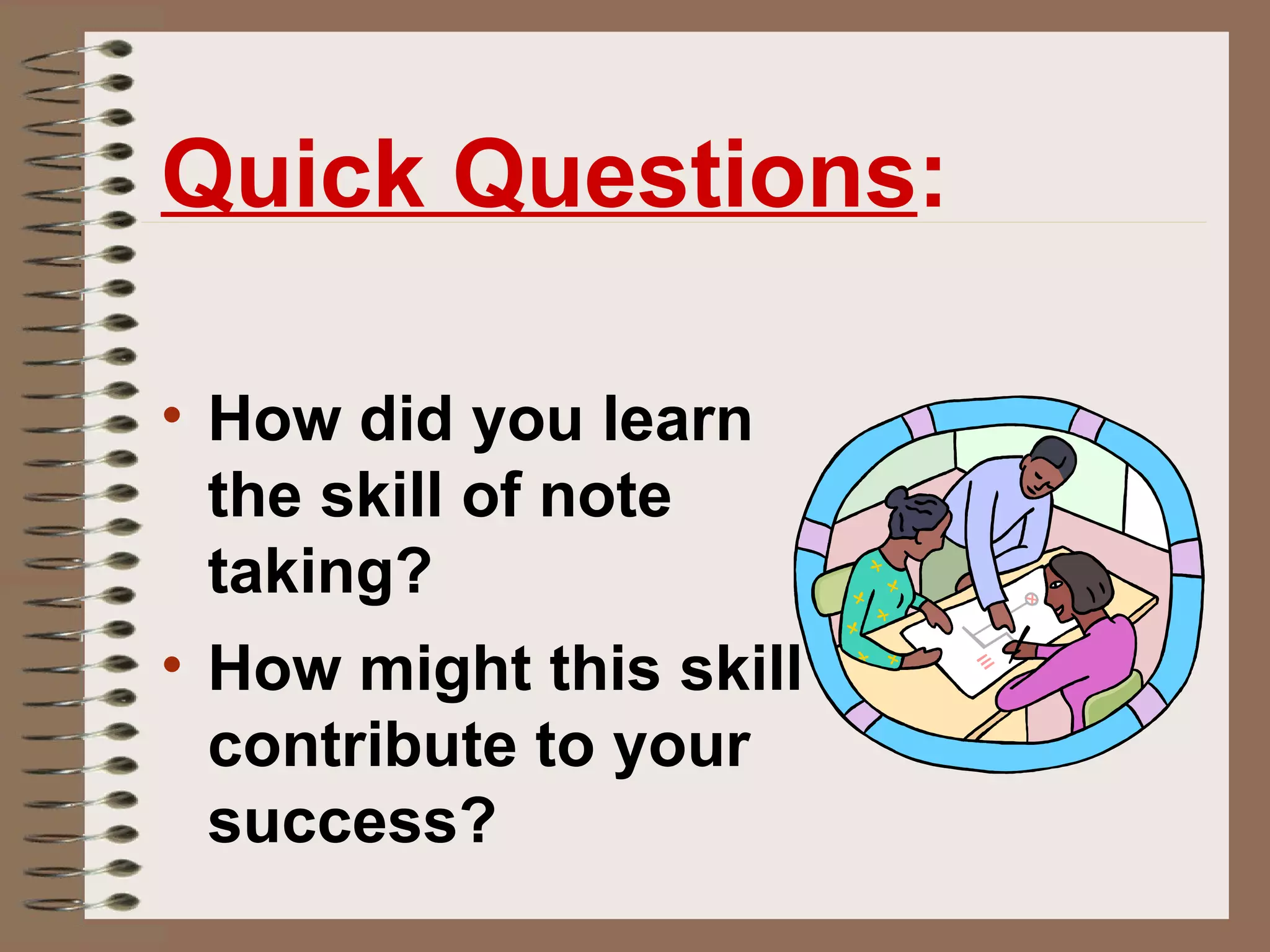
How did you learn  the skill of note  taking? How might this skill contribute to your success? Quick Questions :
Why take notes? Cornell note taking stimulates  critical thinking skills. Note taking helps students  remember what is said  in  class. A good set of notes can help students work on assignments and  prepare for tests  outside of the classroom.
Good notes allow students to help each other  problem solve . Good Notes help students  organize and process data  and information. Helps student  recall  by  getting them to process  their notes 3 times. Why take notes? Writing is a great tool for learning!
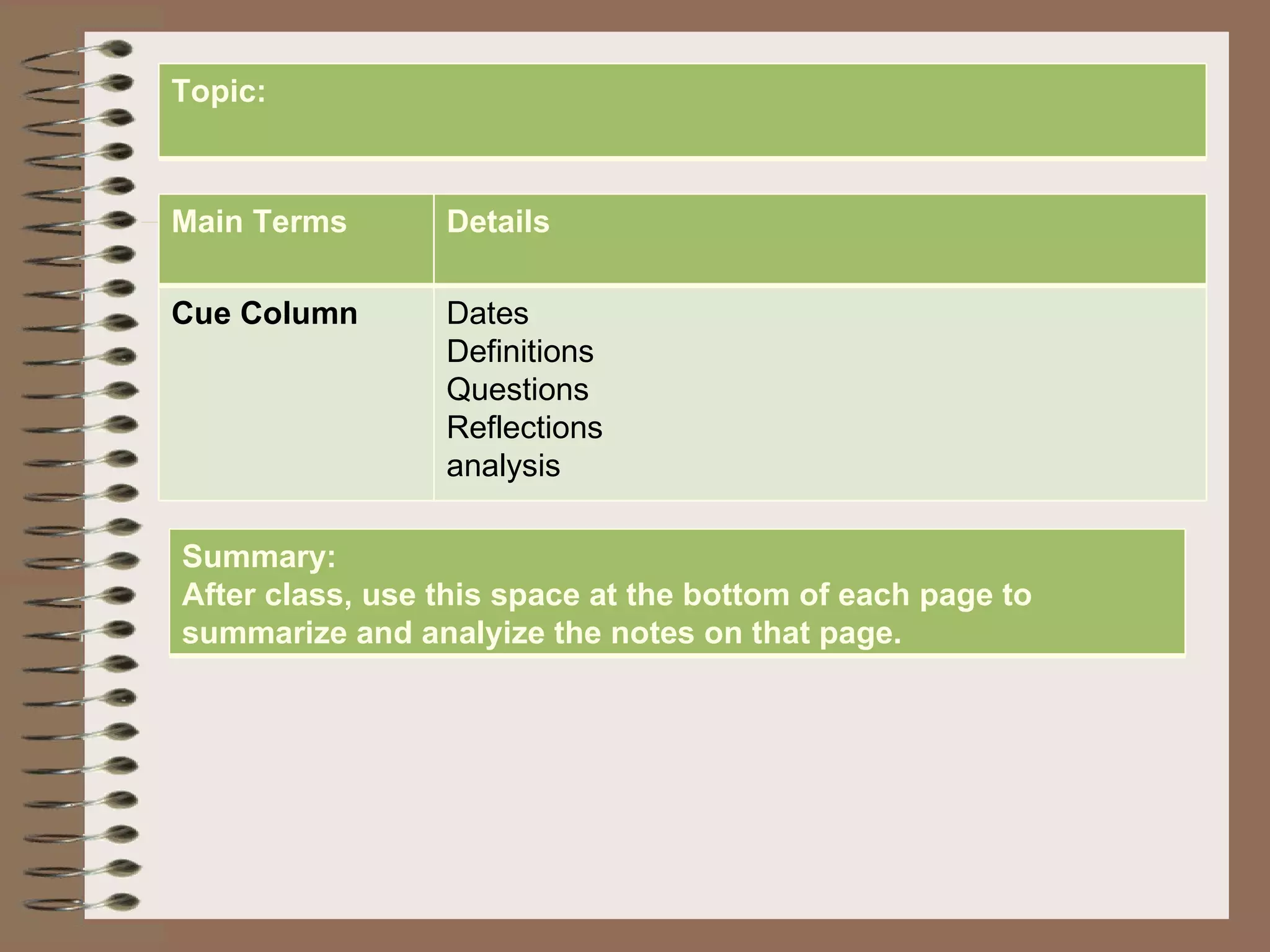
Topic:  Main Terms Details Cue Column Dates Definitions Questions Reflections analysis Summary:  After class, use this space at the bottom of each page to summarize and analyize the notes on that page.
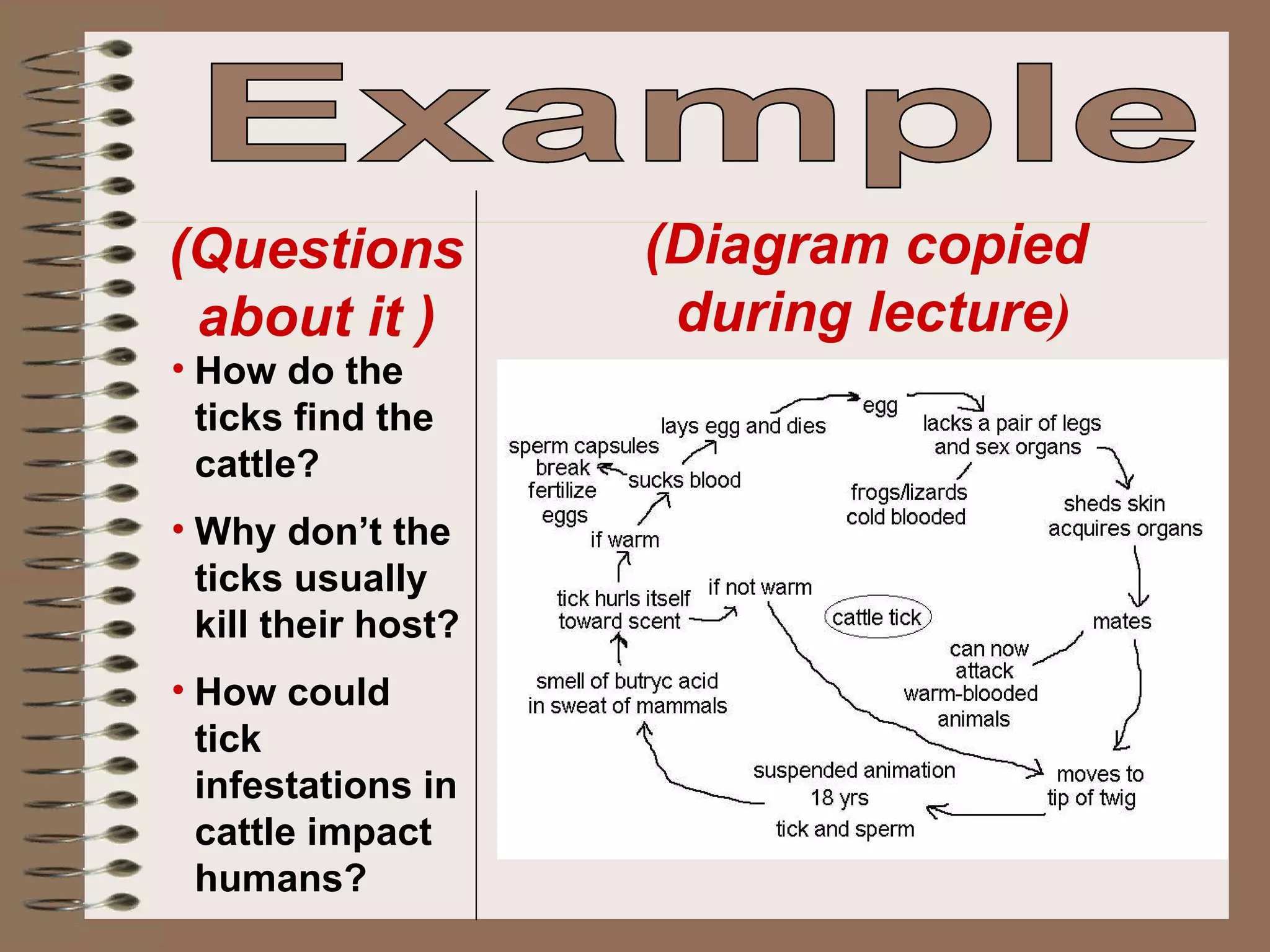
Example  (Diagram copied  during lecture ) (Questions about it ) How do the ticks find the cattle? Why don’t the ticks usually kill their host? How could tick infestations in cattle impact humans?
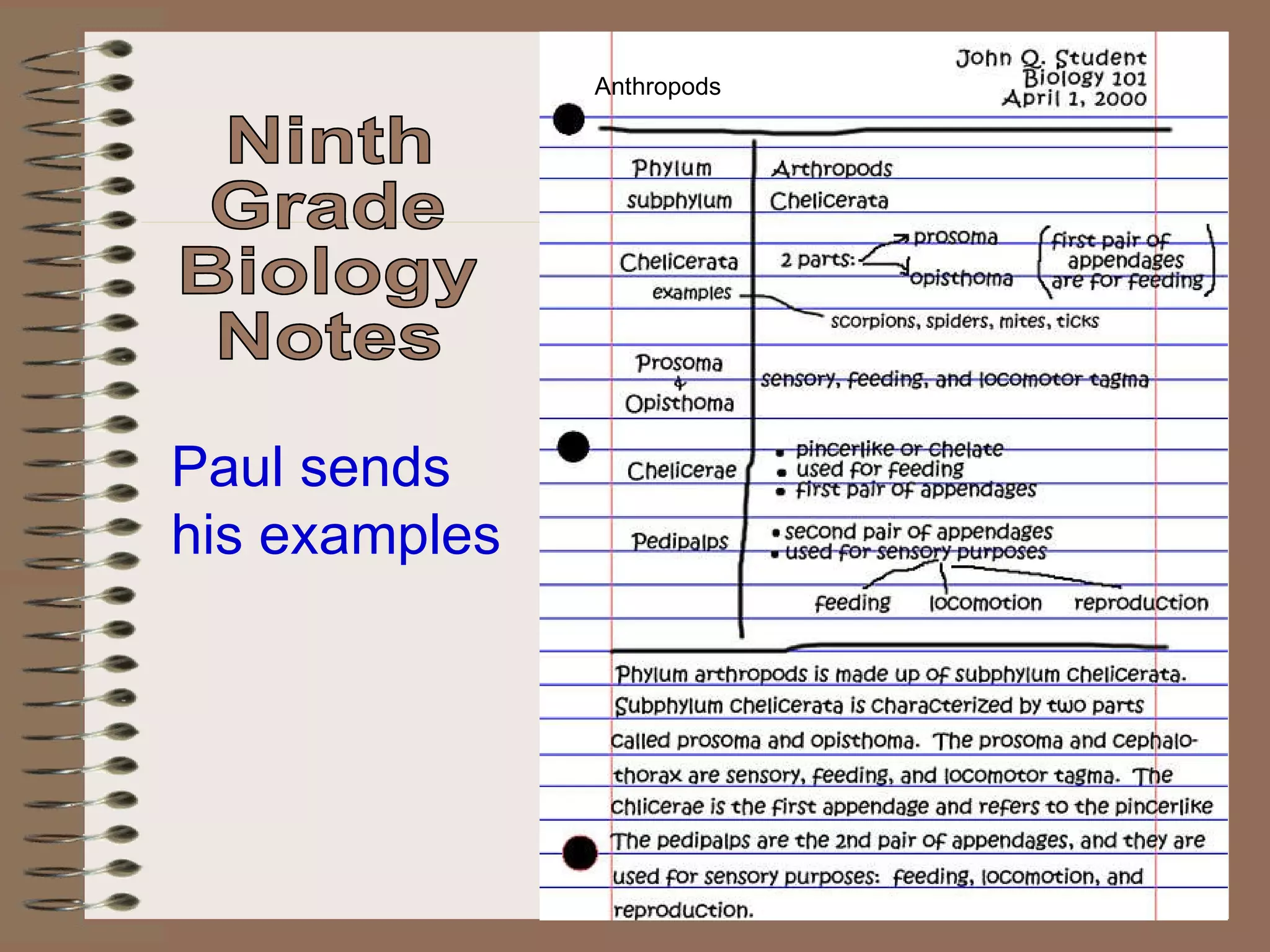
Anthropods Ninth Grade Biology Notes Paul sends  his examples
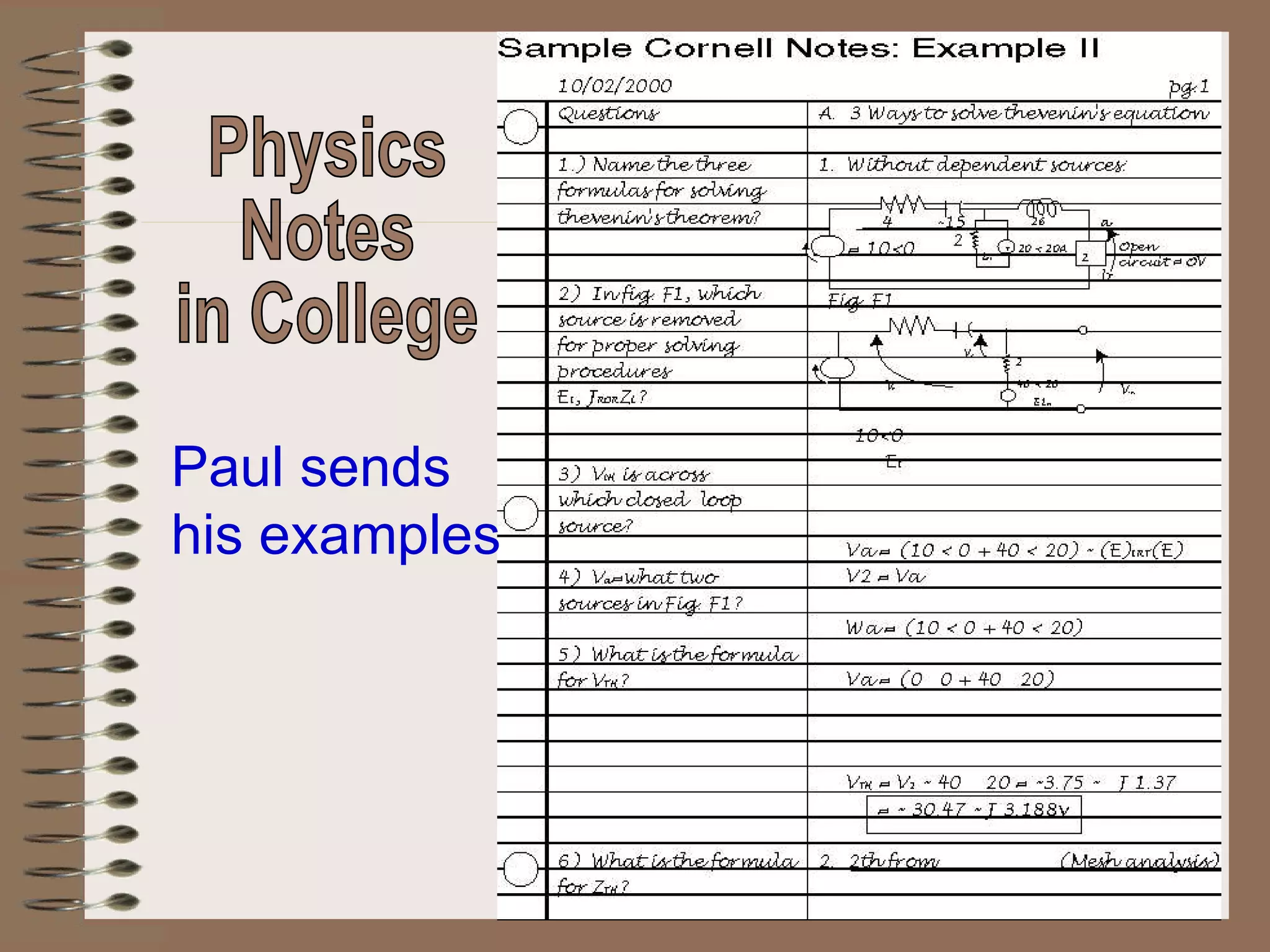
Physics  Notes  in College Paul sends  his examples
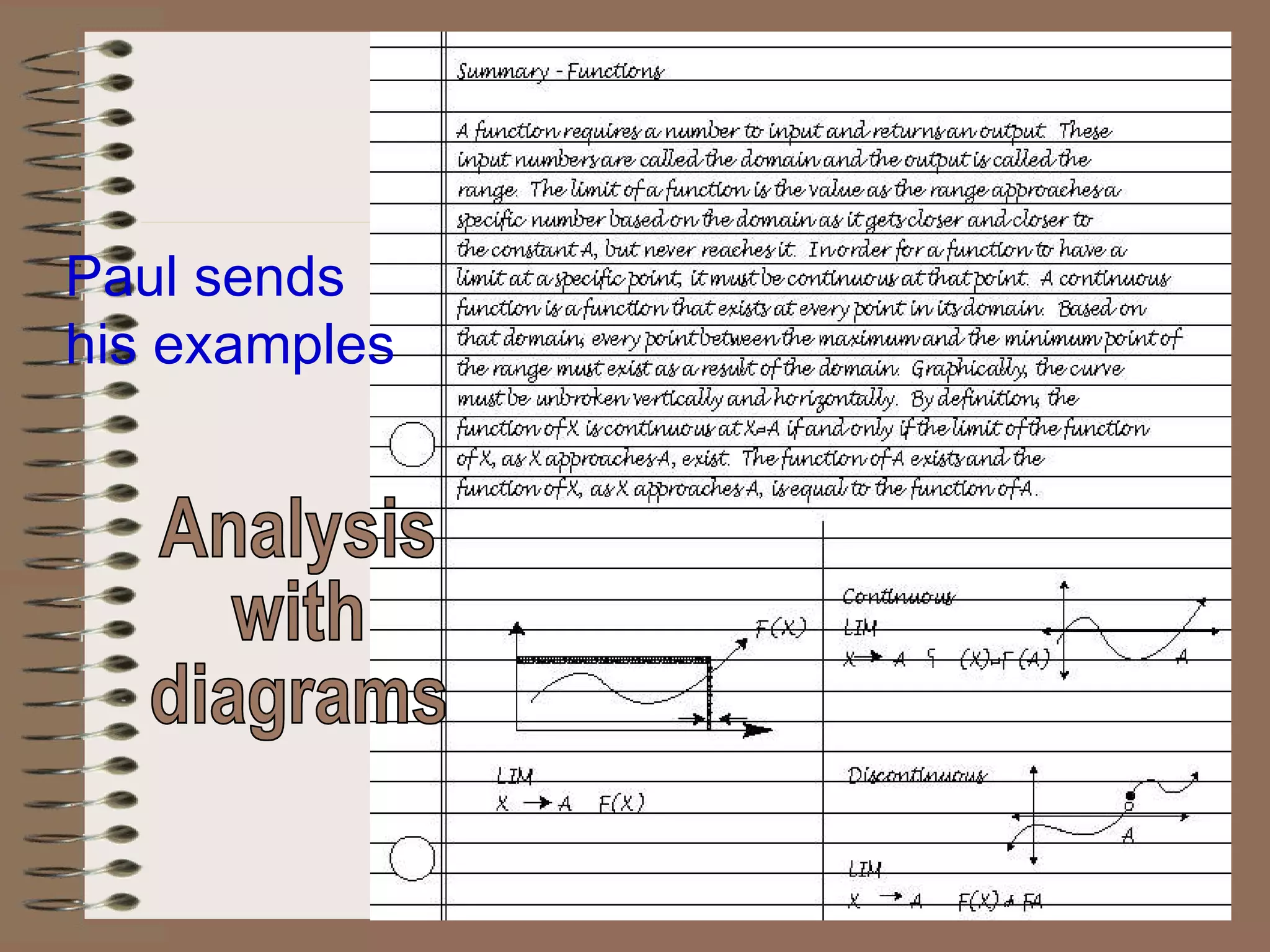
Analysis  with diagrams Paul sends  his examples
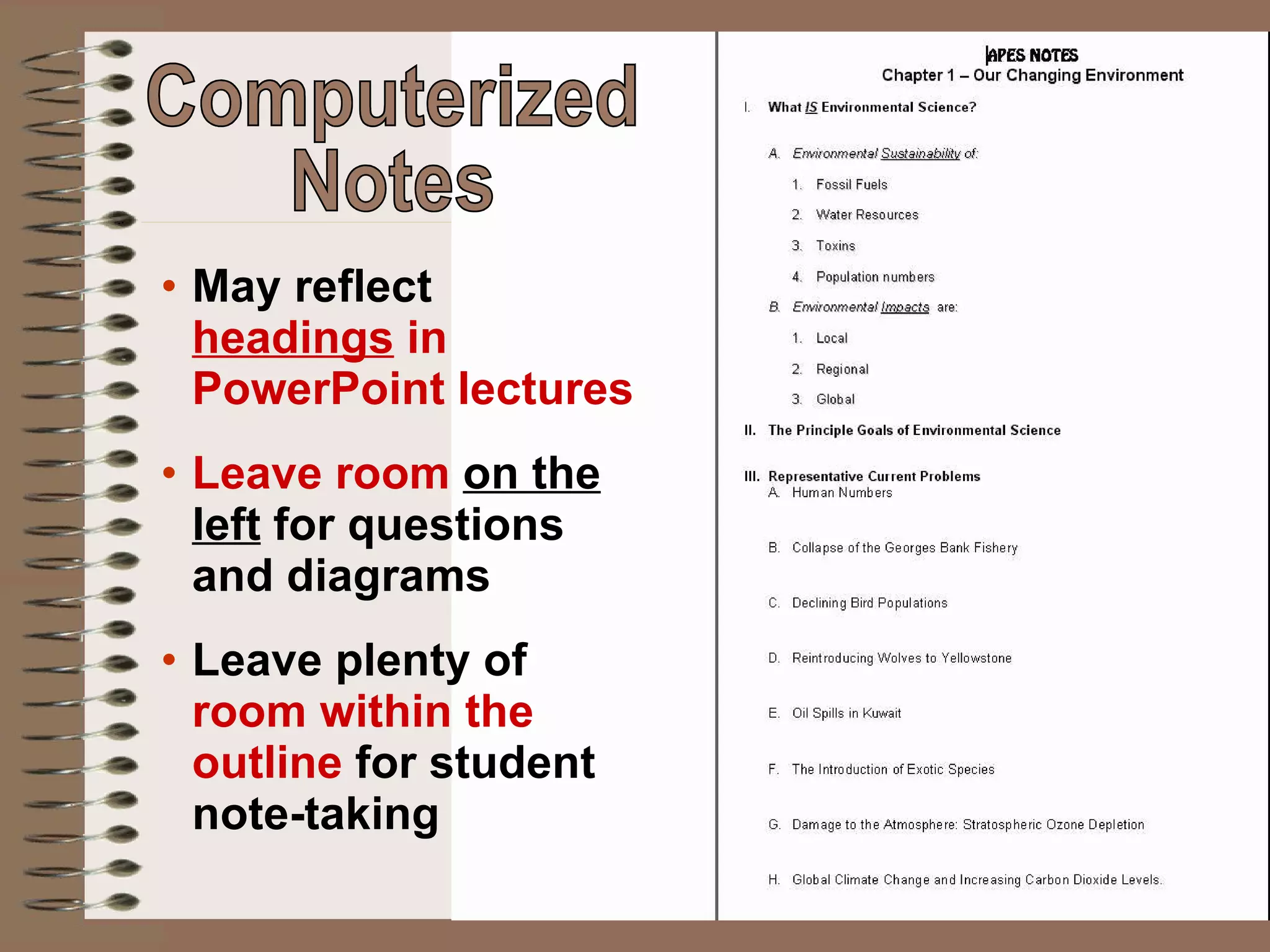
May reflect  headings  in PowerPoint lectures Leave room  on the left  for questions and diagrams Leave plenty of  room within the outline  for student note-taking Computerized  Notes
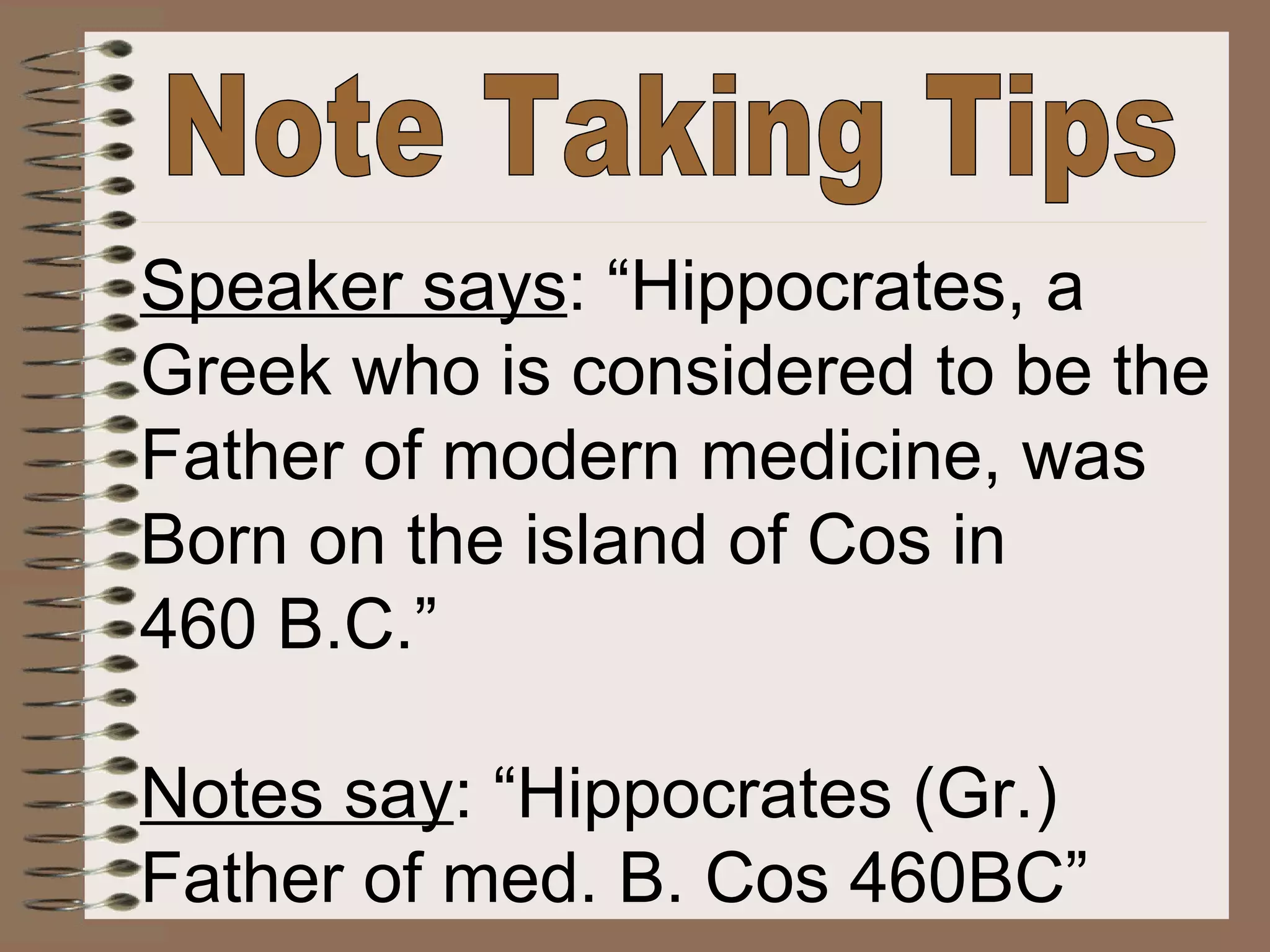
Note Taking Tips Speaker says : “Hippocrates, a Greek who is considered to be the Father of modern medicine, was Born on the island of Cos in 460 B.C.” Notes say : “Hippocrates (Gr.) Father of med. B. Cos 460BC”
Be an Active Reader Think  about the reading Consider how the  parts relate to the whole ; how the text relates to previous ideas Create questions about  new words / terms, why emphasized points are important Examine what you have  learned from  visuals Tips on Taking Text Notes
Look for the  pattern  in elements like chapter /subsection  headings, summary points, graphics  Know where to find the  index  and  glossary Be Aware of Textbook Organization Tips on Taking Text Notes
Review textbook notes Identify  main ideas   Fill in details  for better understanding Identify unclear information  and/or questions - collaborate for answers Delete unnecessary information Review note organization;  add symbols  or rewrite Write a  summary Tips on Taking Text Notes
Use discussion topics/questions  organize  your notes Use  symbols  for important ideas Include your  own responses  in notes Develop questions to review later Add references  to other  material as they come  to mind Tips on Taking Discussion Notes
Cover the right side  of your notes; review and answer study questions from the left using the right side as an answer key Quiz yourself out loud Cover the right side with blank  paper;  write out answers  to  the left column  study  questions Make use of the format Tips for Studying with Notes
Write summaries of the  most important material  in the summary/reflection section Write a quiz  for others using notes; exchange and correct Write  anticipated test questions  beyond those already in the  left-hand column and write  answers Write! Tips for Studying with Notes
Look over notes  frequently  to  keep information and questions  still unanswered fresh in mind  Recite  information from notes   Review Tips for Studying with Notes
Exchange notes  with others to flesh out information and understanding  Use notes in study groups to provide a  common ground  of material for reference and review Rewrite  notes if necessary   Study in a Group Tips for Studying with Notes

Cornellnotes

  • 1.
  • 2.
    How did youlearn the skill of note taking? How might this skill contribute to your success? Quick Questions :
  • 3.
    Why take notes?Cornell note taking stimulates critical thinking skills. Note taking helps students remember what is said in class. A good set of notes can help students work on assignments and prepare for tests outside of the classroom.
  • 4.
    Good notes allowstudents to help each other problem solve . Good Notes help students organize and process data and information. Helps student recall by getting them to process their notes 3 times. Why take notes? Writing is a great tool for learning!
  • 5.
    Topic: MainTerms Details Cue Column Dates Definitions Questions Reflections analysis Summary: After class, use this space at the bottom of each page to summarize and analyize the notes on that page.
  • 6.
    Example (Diagramcopied during lecture ) (Questions about it ) How do the ticks find the cattle? Why don’t the ticks usually kill their host? How could tick infestations in cattle impact humans?
  • 7.
    Anthropods Ninth GradeBiology Notes Paul sends his examples
  • 8.
    Physics Notes in College Paul sends his examples
  • 9.
    Analysis withdiagrams Paul sends his examples
  • 10.
    May reflect headings in PowerPoint lectures Leave room on the left for questions and diagrams Leave plenty of room within the outline for student note-taking Computerized Notes
  • 11.
    Note Taking TipsSpeaker says : “Hippocrates, a Greek who is considered to be the Father of modern medicine, was Born on the island of Cos in 460 B.C.” Notes say : “Hippocrates (Gr.) Father of med. B. Cos 460BC”
  • 12.
    Be an ActiveReader Think about the reading Consider how the parts relate to the whole ; how the text relates to previous ideas Create questions about new words / terms, why emphasized points are important Examine what you have learned from visuals Tips on Taking Text Notes
  • 13.
    Look for the pattern in elements like chapter /subsection headings, summary points, graphics Know where to find the index and glossary Be Aware of Textbook Organization Tips on Taking Text Notes
  • 14.
    Review textbook notesIdentify main ideas Fill in details for better understanding Identify unclear information and/or questions - collaborate for answers Delete unnecessary information Review note organization; add symbols or rewrite Write a summary Tips on Taking Text Notes
  • 15.
    Use discussion topics/questions organize your notes Use symbols for important ideas Include your own responses in notes Develop questions to review later Add references to other material as they come to mind Tips on Taking Discussion Notes
  • 16.
    Cover the rightside of your notes; review and answer study questions from the left using the right side as an answer key Quiz yourself out loud Cover the right side with blank paper; write out answers to the left column study questions Make use of the format Tips for Studying with Notes
  • 17.
    Write summaries ofthe most important material in the summary/reflection section Write a quiz for others using notes; exchange and correct Write anticipated test questions beyond those already in the left-hand column and write answers Write! Tips for Studying with Notes
  • 18.
    Look over notes frequently to keep information and questions still unanswered fresh in mind Recite information from notes Review Tips for Studying with Notes
  • 19.
    Exchange notes with others to flesh out information and understanding Use notes in study groups to provide a common ground of material for reference and review Rewrite notes if necessary Study in a Group Tips for Studying with Notes