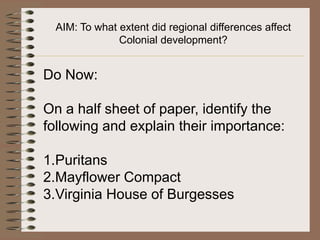
AIM: To what extent did regional differences affect Colonial development?Do Now:On a half sheet of paper, identify the following and explain their importance:PuritansMayflower CompactVirginia House of Burgesses
CornellNotes
Why take notes?Cornell note taking stimulates critical thinking skills.
Note taking helps students remember what is said in  class.
A good set of notes can help students work on assignments and prepare for tests outside of the classroom.Why take notes?Good notes allow students to help each other problem solve.
Good Notes help students organize and process data and information.
Helps student recall by                      getting them to process                         their notes 3 times.
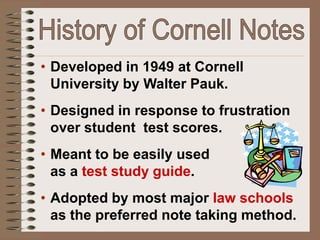
Writing is a great tool for learning!History of Cornell NotesDeveloped in 1949 at Cornell University by Walter Pauk.
Designed in response to frustration over student  test scores.
Meant to be easily used                               as a test study guide.
Adopted by most major law schools as the preferred note taking method.First & Last NameClass TitlePeriodDateTopicQuestions,Subtitles,Headings,Etc.Class Notes2 1/2”3 to 4 sentence summary across the bottom of the last page of the day’s notes
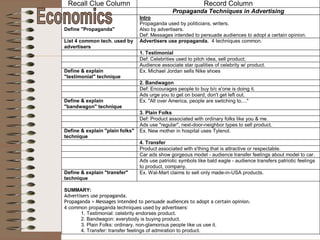
Subject:   Why take Cornell notes?                                  Date: 11/20/01PROCESSMainIdeas(input)PROCESSMainIdeas(input)(output)(output)Can be used to provide an outline of chapter or lecture. Organized by main ideas and details. How can Can be as detailed as necessary. Cornell notes Sequential-- take notes as they are given by instructor or help me text in an orderly fashion. organize my After class, write a summary of what you learned to ideas?clarify and reinforce learning and to assist retention. Can be used as study tool: Which side for      1. Define terms or explain concepts listed on left side. diagrams?     2. Identify the concept or term on the right side.Can be used to provide a "big picture" of the chapter orWhy use lecture. concept maps?Organized by main ideas and sub-topicsLimited in how much detail you can represent. Simultaneous - you can use this method for instructors who jump around from topic to topic. After class, you can add questions to the left sideWhat are the Can be used as a study tool -- to get a quick overview benefits to me?and to determine whether you need more information or need to concentrate your study on specific topics.
Summary is added at the end of ALL 	note pages on the subject (not page)
Summary added AFTER questionsare finishedSummary should answer the 			problem stated in the subject.Economics
Example (Diagram copied during lecture)(Questions about it )How do the ticks find the cattle?
Why don’t the ticks usually kill their host?
How could tick infestations in cattle impact humans?Practice TimeLet’s get out a sheet of Cornell note paper and get ready to practice the skill.Assignment & InstructionsIn the large, right hand                  column, take notes like                       you normally would.
You may use any style of note-taking you wish:
outline format,
narrative format,
symbols,
short hand, etc.Assignment & InstructionsComparenotes with a partner.
Talk about what you               wrote and why. Look                  for gaps & missed info.
Both partners should feel free to add to their notes.Assignment & InstructionsWith your partner(s), create questions in the left hand column.
These questions should elicit critical thinking skills.
Levels 3through6 in Bloom’s Taxonomy.Brief Review of Bloom's Taxonomy1.KNOWLEDGE: recalling information2.COMPREHENSION: understanding meaning3.APPLICATION: using learning in new situations4.ANALYSIS: ability to see parts & relationships 5.SYNTHESIS: Use parts to create a new whole6.EVALUATION: judgment based on criteria
Assignment & InstructionsYour questions should reflect:Info you don’t understand or want to discuss with your teacher/tutor.
Info you think would go good on an essay test.
Gaps in your notes.Assignment & InstructionsOn your own, in the space provided at the bottom of the page, complete a 3 or 4   sentence summary of                        what you wrote in                              your notes.
(the summary…)What goes where?Don’t forget the heading:Name, Class, Period, Date, TopicQuestions, subtitles,etc. go here,in the left hand column.Remember,we wanthigher levelcritical thinkingquestions.Notes go here, in the large right hand column.A 3 to 4 sentence summary down there on the bottom of the last page of notes
AnthropodsNinthGradeBiologyNotesPaul sends his examples

Cornell notes

  • 1.
    AIM: To whatextent did regional differences affect Colonial development?Do Now:On a half sheet of paper, identify the following and explain their importance:PuritansMayflower CompactVirginia House of Burgesses
  • 2.
  • 3.
    Why take notes?Cornellnote taking stimulates critical thinking skills.
  • 4.
    Note taking helpsstudents remember what is said in class.
  • 5.
    A good setof notes can help students work on assignments and prepare for tests outside of the classroom.Why take notes?Good notes allow students to help each other problem solve.
  • 6.
    Good Notes helpstudents organize and process data and information.
  • 7.
    Helps student recallby getting them to process their notes 3 times.
  • 8.
    Writing is agreat tool for learning!History of Cornell NotesDeveloped in 1949 at Cornell University by Walter Pauk.
  • 9.
    Designed in responseto frustration over student test scores.
  • 10.
    Meant to beeasily used as a test study guide.
  • 11.
    Adopted by mostmajor law schools as the preferred note taking method.First & Last NameClass TitlePeriodDateTopicQuestions,Subtitles,Headings,Etc.Class Notes2 1/2”3 to 4 sentence summary across the bottom of the last page of the day’s notes
  • 12.
    Subject: Why take Cornell notes? Date: 11/20/01PROCESSMainIdeas(input)PROCESSMainIdeas(input)(output)(output)Can be used to provide an outline of chapter or lecture. Organized by main ideas and details. How can Can be as detailed as necessary. Cornell notes Sequential-- take notes as they are given by instructor or help me text in an orderly fashion. organize my After class, write a summary of what you learned to ideas?clarify and reinforce learning and to assist retention. Can be used as study tool: Which side for 1. Define terms or explain concepts listed on left side. diagrams? 2. Identify the concept or term on the right side.Can be used to provide a "big picture" of the chapter orWhy use lecture. concept maps?Organized by main ideas and sub-topicsLimited in how much detail you can represent. Simultaneous - you can use this method for instructors who jump around from topic to topic. After class, you can add questions to the left sideWhat are the Can be used as a study tool -- to get a quick overview benefits to me?and to determine whether you need more information or need to concentrate your study on specific topics.
  • 13.
    Summary is addedat the end of ALL note pages on the subject (not page)
  • 14.
    Summary added AFTERquestionsare finishedSummary should answer the problem stated in the subject.Economics
  • 15.
    Example (Diagram copiedduring lecture)(Questions about it )How do the ticks find the cattle?
  • 16.
    Why don’t theticks usually kill their host?
  • 17.
    How could tickinfestations in cattle impact humans?Practice TimeLet’s get out a sheet of Cornell note paper and get ready to practice the skill.Assignment & InstructionsIn the large, right hand column, take notes like you normally would.
  • 18.
    You may useany style of note-taking you wish:
  • 19.
  • 20.
  • 21.
  • 22.
    short hand, etc.Assignment& InstructionsComparenotes with a partner.
  • 23.
    Talk about whatyou wrote and why. Look for gaps & missed info.
  • 24.
    Both partners shouldfeel free to add to their notes.Assignment & InstructionsWith your partner(s), create questions in the left hand column.
  • 25.
    These questions shouldelicit critical thinking skills.
  • 26.
    Levels 3through6 inBloom’s Taxonomy.Brief Review of Bloom's Taxonomy1.KNOWLEDGE: recalling information2.COMPREHENSION: understanding meaning3.APPLICATION: using learning in new situations4.ANALYSIS: ability to see parts & relationships 5.SYNTHESIS: Use parts to create a new whole6.EVALUATION: judgment based on criteria
  • 27.
    Assignment & InstructionsYourquestions should reflect:Info you don’t understand or want to discuss with your teacher/tutor.
  • 28.
    Info you thinkwould go good on an essay test.
  • 29.
    Gaps in yournotes.Assignment & InstructionsOn your own, in the space provided at the bottom of the page, complete a 3 or 4 sentence summary of what you wrote in your notes.
  • 30.
    (the summary…)What goeswhere?Don’t forget the heading:Name, Class, Period, Date, TopicQuestions, subtitles,etc. go here,in the left hand column.Remember,we wanthigher levelcritical thinkingquestions.Notes go here, in the large right hand column.A 3 to 4 sentence summary down there on the bottom of the last page of notes
  • 31.