
Kristie Hankins ACNP-BC
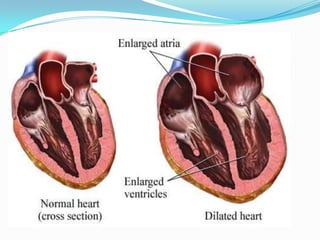
Heart failure is a complex clinical syndrome that can result from
any structural or functional cardiac disorder that impairs the
ability of the ventricle to fill with or eject blood.
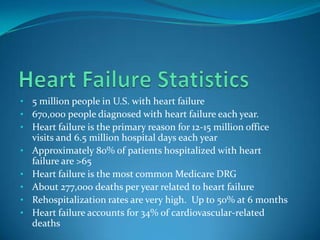
• 5 million people in U.S. with heart failure
• 670,000 people diagnosed with heart failure each year.
• Heart failure is the primary reason for 12-15 million office
    visits and 6.5 million hospital days each year
•   Approximately 80% of patients hospitalized with heart
    failure are >65
•   Heart failure is the most common Medicare DRG
•   About 277,000 deaths per year related to heart failure
•   Rehospitalization rates are very high. Up to 50% at 6 months
•   Heart failure accounts for 34% of cardiovascular-related
    deaths
In general, the mortality following hospitalization for patients
with heart failure is 10.4% at 30 days, 22% at 1 year, and 42.3% at
5 years, despite marked improvement in medical and device
therapy . Each rehospitalization increases mortality by about
20-22%

Mortality is greater than 50% for patients with NYHA class IV,
ACC/AHA stage D heart failure. Heart failure associated with
acute MI has an inpatient mortality of 20-40%; mortality
approaches 80% in patients who are also hypotensive
(cardiogenic shock)
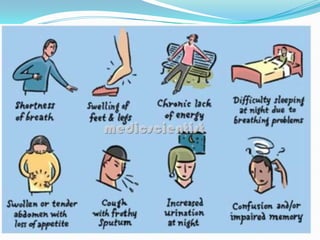
•   Dyspnea
•   Fatigue
•   Activity Intolerance
•   Fluid Retention
•   Peripheral Edema
•   Orthopnea
•   PND
•   Common noncardiac signs and symptoms of heart failure include
    anorexia, nausea, weight loss, bloating, fatigue, weakness, oliguria,
    nocturia, and cerebral symptoms of varying severity, ranging from
    anxiety to memory impairment and confusion.
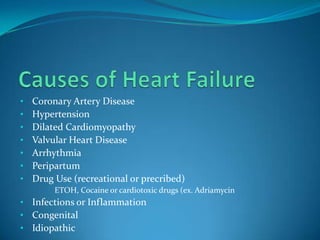
•   Coronary Artery Disease
•   Hypertension
•   Dilated Cardiomyopathy
•   Valvular Heart Disease
•   Arrhythmia
•   Peripartum
•   Drug Use (recreational or precribed)
      •   ETOH, Cocaine or cardiotoxic drugs (ex. Adriamycin
• Infections or Inflammation
• Congenital
• Idiopathic
• There is not one single diagnostic test to identify Heart
  Failure!
• Labs
     •   Full baseline labs including BNP
• CXR
• EKG
• Echocardiogram
• Ischemic evaluation
Simple to complex
• Dietary restrictions
• Fluid restrictions
• Pharmacologic therapies include the use of diuretics,
   vasodilators, inotropic agents, anticoagulants, beta-blockers,
   and digoxin.
• Invasive therapies for heart failure include electrophysiologic
   intervention such as cardiac resynchronization therapy
   (CRT), pacemakers, and implantable cardioverter-
   defibrillators (ICDs)
• Revascularization procedures such as coronary artery bypass
  grafting (CABG) and percutaneous coronary intervention
  (PCI); valve replacement or repair.
• Ventricular Assist Device/Transplant
References

American College of Cardiology
American Heart Association

Heart failure presentation

  • 1.
  • 2.
    Heart failure isa complex clinical syndrome that can result from any structural or functional cardiac disorder that impairs the ability of the ventricle to fill with or eject blood.
  • 4.
    • 5 millionpeople in U.S. with heart failure • 670,000 people diagnosed with heart failure each year. • Heart failure is the primary reason for 12-15 million office visits and 6.5 million hospital days each year • Approximately 80% of patients hospitalized with heart failure are >65 • Heart failure is the most common Medicare DRG • About 277,000 deaths per year related to heart failure • Rehospitalization rates are very high. Up to 50% at 6 months • Heart failure accounts for 34% of cardiovascular-related deaths
  • 5.
    In general, themortality following hospitalization for patients with heart failure is 10.4% at 30 days, 22% at 1 year, and 42.3% at 5 years, despite marked improvement in medical and device therapy . Each rehospitalization increases mortality by about 20-22% Mortality is greater than 50% for patients with NYHA class IV, ACC/AHA stage D heart failure. Heart failure associated with acute MI has an inpatient mortality of 20-40%; mortality approaches 80% in patients who are also hypotensive (cardiogenic shock)
  • 6.
    Dyspnea • Fatigue • Activity Intolerance • Fluid Retention • Peripheral Edema • Orthopnea • PND • Common noncardiac signs and symptoms of heart failure include anorexia, nausea, weight loss, bloating, fatigue, weakness, oliguria, nocturia, and cerebral symptoms of varying severity, ranging from anxiety to memory impairment and confusion.
  • 9.
    Coronary Artery Disease • Hypertension • Dilated Cardiomyopathy • Valvular Heart Disease • Arrhythmia • Peripartum • Drug Use (recreational or precribed) • ETOH, Cocaine or cardiotoxic drugs (ex. Adriamycin • Infections or Inflammation • Congenital • Idiopathic
  • 10.
    • There isnot one single diagnostic test to identify Heart Failure! • Labs • Full baseline labs including BNP • CXR • EKG • Echocardiogram • Ischemic evaluation
  • 11.
    Simple to complex •Dietary restrictions • Fluid restrictions • Pharmacologic therapies include the use of diuretics, vasodilators, inotropic agents, anticoagulants, beta-blockers, and digoxin. • Invasive therapies for heart failure include electrophysiologic intervention such as cardiac resynchronization therapy (CRT), pacemakers, and implantable cardioverter- defibrillators (ICDs)
  • 12.
    • Revascularization proceduressuch as coronary artery bypass grafting (CABG) and percutaneous coronary intervention (PCI); valve replacement or repair. • Ventricular Assist Device/Transplant
  • 16.
    References American College ofCardiology American Heart Association