Seminar
on
Heart
Transplantation
By
Monika Devi
Msc(N)
Human Heart
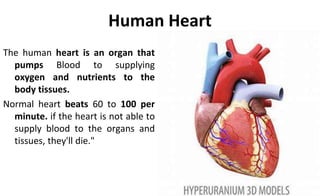
The human heart is an organ that
pumps Blood to supplying
oxygen and nutrients to the
body tissues.
Normal heart beats 60 to 100 per
minute. if the heart is not able to
supply blood to the organs and
tissues, they'll die."
Heart Transplant
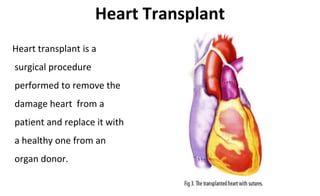
Heart transplant is a
surgical procedure
performed to remove the
damage heart from a
patient and replace it with
a healthy one from an
organ donor.
Cardiac Transplant In India
• Organ transplantation act in India came
in 1994
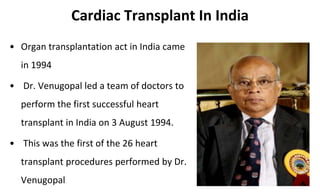
• Dr. Venugopal led a team of doctors to
perform the first successful heart
transplant in India on 3 August 1994.
• This was the first of the 26 heart
transplant procedures performed by Dr.
Venugopal
Transplant Services fall into two major
categories:
• cardiomyopathy (68 percent)
• coronary heart disease (32 percent).
Cont…
• 1. Cardiomyopathy is a disease of the heart muscle that involves a
weakening or stiffening of the muscle. When medications and
treatments fail, a heart transplant may be the only option.
• 2. Coronary heart disease in which a waxy substance called plaque
builds up inside the coronary arteries.Over time, plaque can harden
or rupture (break open). Hardened plaque narrows the coronary
arteries and reduces the flow of oxygen-rich blood to the heart.
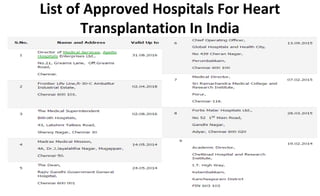
List of Approved Hospitals For Heart
Transplantation In India
Donor Selection And Management
• Acceptance of the concept of irreversible brain death, both
legally and medically.
• Patients with irreversible brain injury accompanied by the
intent to withdraw life support are considered to be
potential organ donors.
Criteria For Determining Brain Death
Clinical Evaluation
• Mechanism of brain injury is sufficient to account for irreversible loss
of brain function
• Absence of reversible causes of CNS depression
• CNS depressant drugs
• Hypothermia (<32°C [85°F])
• Hypotension (MAP <55 mmHg)
• Absence of neuromuscular blocking drugs that may confound the
results of the neurologic exam
• No spontaneous movements, motor responses, or posturing
Cont…
• No gag or cough reflexes
• No corneal or pupillary light reflexes
• No oculovestibular reflex (cold calorics)
Confirmatory Tests
• Apnea test for minimum of five minutes showing:
• No respiratory movements
• PCO2 >55 mmHg
• pH <7.40
Indications for Cardiac Transplant
Absolute indications
• Hemodynamic compromise due to heart failure
• cardiogenic shock
• Dependence on intravenous inotropic support for adequate organ
perfusion Peak V O2 <10 mL/kg/min
• Severely limiting non revascularizable ischemic heart disease
affecting activities of daily living Recurrent symptomatic ventricular
arrhythmias refractory to therapy.
Relative indications
• Peak V.O2 11–14 mL/kg/min with major limitations affecting
activities of daily living.
Cont….
• Recurrent unstable angina refractory to current therapy
• Recurrently labile fluid balance or renal function in chronic
heart failure despite full patient adherence to therapy.
Insufficient indications
Presence of the following without other indications
for transplant:
a. Impaired left ventricular systolic function
b. Previous history of NYHA class III or IV heart failure
c. Peak V O2 >15 mL/kg/min
cont. Indications and Selection
 Heart transplantation is deemed necessary for an individual who
suffers from cardiac disease if the symptoms of heart failure can no
longer be managed with conventional medical therapy,
 if there are no surgical options offering more favorable long-term
outcomes.
 if the individual’s short-term prognosis is poor without
transplantation.
 The most common conditions necessitating heart transplantation
are non ischemic cardiomyopathies of various origins (idiopathic,
viral, valvular) and ischemic cardiomyopathy, or coronary artery
disease.
 less common etiologic factors include severe heart failure resulting
from chemotherapy, radiation treatment, myocardial tumor, and
complex congenital defects.
Cont…
Parameter list for assessment of donor hearts
 Age<55 years old
 Negative serology(Hep B, C and HIV)
 blood pressure (normal)
 Diabetes
 Gestational diabetes (diabetes during pregnancy).
 Significant coronary arteries
 Polycystic kidney disease (B.P is high)
 Substance abuse (drug addiction)
Contraindications for Cardiac Transplant
Severe pulmonary hypertension
• PVR >3 Wood Units or PA systolic pressure >70 mm
• Hg and unresponsive to vasodilators or mechanical
• circulatory support PVR >6 Wood Units
• Transpulmonary gradient >20
Pulmonary disease
• Significant primary lung disease with FEV1 <1 L or <40% of the
predicted result Recent (<4 wk) pulmonary infarct
Cont…
Renal disease
• Primary renal disease that would shorten life expectancy
• Irreversible renal dysfunction not explained by heart failure
• Creatinine clearance <35 mL/min with optimized hemodynamics
Hepatic disease
• Primary hepatic disease that would shorten life expectancy
• Irreversible hepatic dysfunction not explained by heart failure
Gastrointestinal disease
• Conditions potentially affecting absorption of medications
• Uncontrolled gastrointestinal tract bleeding
Cont…
• Severe uncorrected peripheral or cerebrovascular disease
• Diabetes mellitus with evidence of significant end-organ dysfunction
• Malignancy thought not to be in a curative state or with a high
likelihood of recurrence
• Uncontrolled infection or sepsis
• HIV infection
• Poor psychosocial status
Cont…
• History of a behavior pattern or psychiatric illness likely to interfere
with adherence to a disciplined medical regimen
• Inadequate social support symptom
• Current or recent tobacco use
• Unresolved drug or alcohol dependency
Obesity
• BMI >35
• Weight >140% predicted for height and sex
Malnutrition
• BMI <18
• Age >65 yrs
Donor and Recipient Matching
A potential donor must meet several criteria:
1. The donor must meet national or regional criteria for brain death.
2. Electrocardiographic and echocardiographic findings should be
normal.
3. A donor older than 45 years (often considered for an older recipient)
should undergo coronary angiography to exclude significant coronary
artery disease.
Cont…
Otherwise, the risk factor profile for coronary artery disease should
be low and there should be no evidence of untreated acute infection
or systemic malignancy.
4. Results from human immunodeficiency virus infection and hepatitis
screens should be negative.
5. Potential donors with cardiac trauma are usually excluded.
Donor-recipient matching depends on a few
key issues:
• Blood type: ABO matching is mandatory. Matching of rhesus factor
status is not required since cardiac myocytes do not express the
rhesus antigen.
• Body size: Generally, the donor’s body weight should be at least 80%
of the recipient’s.
• Pulmonary hypertension: If the recipient has an elevated pulmonary
vascular resistance or pulmonary artery systolic pressure a larger
donor heart is usually selected to ensure adequate right ventricular
functional reserve.
• Geographic location of donor: Ensure the shortest possible cold
Classification of Heart Transplant Candidates
Status Definition
1A Admitted to the listing transplant centre hospital and has at least one
of the following devices or therapies in place:
1. Mechanical circulatory support such as left and/or right
ventricular assist device (may be listed for 30 days at any point
after being implanted)
2. Total artificial heart
3. Intra-aortic balloon pump
4. Extracorporeal membrane oxygenator (ECMO)
5. Mechanical circulatory support with objective medical evidence of
significant device-related complications such as thrombo
embolism, device infection, mechanical failure or life-threatening
ventricular arrhythmias
Cont.
7. Continuous mechanical ventilation.
8. Continuous infusion of a single high-dose intravenous inotrope
or multiple intravenous inotropes, in addition to continuous
hemodynamic monitoring of left ventricular filling pressures.
1B At least one of the following devices or therapies in place:
• Left and/or right ventricular assist device implanted
• Continuous infusion of intravenous inotropes.
2 A candidate who does not meet the criteria for Status 1A or 1B
Contraindications
Medical Contraindication
 Elevated pulmonary artery pressures
 Irreversible severe renal, hepatic, or pulmonary disease
 Kidney dysfunction
 Chronic liver dysfunction
 Recent or unresolved pulmonary infarction
 Active uncontrolled infection
 Active malignancy or recent malignancy with high risk of
recurrence
Cont…
 Advanced age (>70 years of age)
 Diabetes mellitus with end-organ damage and/or poor glycemic control
 Obesity
 malnutrition
 Systemic disease with a high probability of recurrence in the transplanted
heart
 Severe peripheral vascular disease or cerebro vascular disease
 History of multiple prior sternotomies
 High level of allosensitization
Psychosocial Contraindications
 Inadequate social support system
 Illicit substance use
 Alcohol dependence
 Nicotine abuse
 Active psychotic symptoms
 Dementia
 History of multiple suicide attempts
Cont…
• Psychiatric illness. mental health problems
• ABO blood group
• Body size compatibility (+-20% body weight)
• Recent cancer or a history of cancer that was not completely treated.
• Protein in the urine > 300 mg per 24 hours (a test of kidney function)
• History of blood clots
• Same sex (survival rate increased)
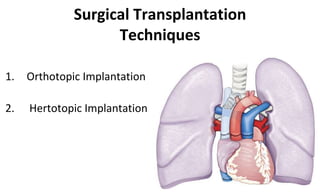
Surgical Transplantation
Techniques
1. Orthotopic Implantation
2. Hertotopic Implantation
Heart Transplantation Surgical Procedure
Biatrial Technique
The standard surgical procedure for orthotopic heart
transplantation. OHT is the most common, it involves complete
explantation of the native heart.
(OHT) was originally developed by Lower and Shumway in
1960.83 A standard median sternotomy is used, the great vessels
are cannulated, and cardiopulmonary bypass is instituted after
anticoagulation and standard hypothermia are achieved.
Orthotropic Implantation
1. If the donated organ is good, then the patient to be taken to the
operating room, put to sleep with an anesthesia.
2. Exposing the chest cavity through a cut in the ribcage.
3. The main arteries are connected to a heart lung bypass machine to
pump the blood and a ventilator will helps to breathe.
4. Surgeon open the pericardium (a membrane that covers the entire
heart) in order to remove the diseased heart.
Cont…
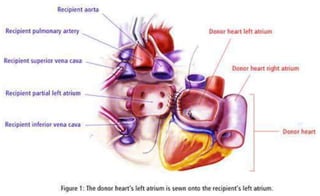
5) The back part of the patient’s left atrium will be left in place, but the
rest of the heart will be removed.
6) The new heart will be carefully trimmed and sewn to fit the
remaining parts of the old heart.
7) This transplant method is called an "Orthotopic procedure".
8) This is the most common method used to transplant hearts.
Clinical indicators that should prompt consideration for
referral
 ≥2 admissions with decompensated HF within the last 2 months.
 Persistent heart failure after optimized medical and device
treatment.
 Increasing BNP/NT-pro BNP levels despite adequate HF treatment.
 Calculated SHFM score indicating a >20% -year mortality.
 Echocardiographic evidence of right ventricular dysfunction or
increasing pulmonary artery pressure on optimal treatment.
 Deteriorating renal function attributable to heart failure or inability
to
 tolerate diuretic dosages sufficient to clear congestion without
change in renal function.
Cont…
• Anaemia, involuntary weight loss, liver dysfunction, or
hyponatraemia attributable to heart failure.
• Significant episodes of ventricular arrhythmia despite treatment.
Indications for urgent inpatient referral
• Requirement of continuous inotrope infusion or/and intra-aortic
balloon pump (IABP) to prevent multiorgan failure.
• No scope for revascularization in the setting of ongoing coronary
ischaemia.
• Persisting circulatory shock due to a primary cardiac disorder.
• An absence of contraindications to transplantation.
2. Bicaval Technique
The bicaval technique, an alternative to the standard surgical approach,
was originally reported by Sievers and associates in 1991 and is now
the most commonly used method for OHT.84
Contraindications:-
• Advanced heart failure can lead to secondary organ dysfunction, which
increases the risk associated with transplantation and may eventually
become irreversible
Cont...
Absolute contraindications:-
 Irreversible pulmonary hypertension
 Irreversible pulmonary parenchymal disease.
 Recent pulmonary embolus.
 Active malignancy.
 Life expectancy markedly compromised by other systemic disease.
 Advanced irreversible hepatic disease.
Cont...
 Cerebrovascular disease not amenable to revascularization.
 Active infection.
 Inability to comply with medical therapy/immunosuppressive regime.
 Continuing alcohol-misuse or substance-misuse.
Relative contraindications/risk factors for an adverse
outcome
 Age >65 years.
 Advanced renal disease (eGFR
<40mL/min).
 Diabetes mellitus with end-
organ damage.
 Peripheral vascular disease not
amenable to revascularization.
 Recent malignancy: collaborate
with oncologists to establish risk
stratification.
 Hepatitis B, C, or HIV positive.
 Severe obesity (BMI >30).
 Auto-immune conditions.
 Active peptic ulcer disease.
 Severe osteoporosis.
 Smoking.
 Learning disability/dementia.
Post-transplant management
The immediate post-operative management of heart transplant recipients.
• Patients should therefore be managed with a multi-disciplinary approach. Common
complications include:
• Bleeding—of particular concern in patients undergoing surgery or following
bridging with an LVAD. Early reversal of anticoagulation and the monitoring of
haemostatic function with a thromboelastogram can be of assistance in the
management of such patients.
• Platelet transfusion may be required, especially in those who have been receiving
dual antiplatelet drug therapy, but the use of blood products appears to be
Cont…
associated with a higher risk of right heart failure.
• Acute RV failure - frequently seen in the immediate post-bypass period and
is of critical importance. Pulmonary vascular resistance should be managed
with inhaled and systemic and/or intravenous vasodilator therapy.
• Inhaled nitric oxide may be used prophylactically in patients with a known
elevation of pulmonary vascular resistance and should be initiated early
where there is any sign of right ventricular distension or dysfunction. A
PAFC should be inserted to allow continuous monitoring of cardiac output
Cont…
and pulmonary artery pressures.
Some surgeons also use a left atrial line to allow direct monitoring of left-
sided filling pressures. Anastomotic complications, such as kinking or
torsion at the pulmonary anastomosis, can contribute to
postoperative right ventricular dysfunction.
• Arrhythmia - sinus bradycardia and sinus arrest are common.
Epicardial pacing wires must be placed on the atrium and ventricle at
the time of surgery.
• Transient atrioventricular block is common but usually resolves within
the first few hours. Ultimately, the implantation of a permanent
pacemakeris required in ~5 % of recipients.
Cont…
• Early graft failure - Failure to achieve satisfactory haemodynamics with
adequate cardiac output and acceptable filling pressures, without the use
of excessive inotropic support, should prompt a complete diagnostic
reassessment to exclude technical problems or rejection. Occasionally,
short-term support with a VAD (e.g. Levotronix) or venoarterial
extracorporeal membrane oxygenation (VA-ECMO) is necessary to avoid a
slide into multisystem organ failure.
• Re-transplantation for acute graft failure early after then original CTx has a
40–60% risk of death at one year.
Complications After Cardiac Transplant
Early Complications
Early complications after cardiac transplant include primary graft
failure, acute and hyperacute rejection, arrhythmia, bleeding, and
infection.
 Primary Graft Failure
 Hyperacute Rejection
 Acute Rejection
 Arrhythmia
1. Primary Graft Failure
• Primary graft failure includes ischemic or reperfusion injury and
• right heart failure due to pulmonary hypertension. It accounts for up
to 40% of deaths within the first 30 days after cardiac
transplant.
• Extended cold ischemia time of the donor heart and elevated
pulmonary vascular resistance in the recipient before transplant are
significant risk factors.
Treatment usually requires
– Inotropic support, use of vasodilators to reduce pulmonary and
systemic after load, and, occasionally, mechanical support.
– Rarely, emergent re-transplant is required.
2. Hyper acute Rejection
• Hyperacute rejection is a rare form of early rejection that occurs when
the donor heart is initially perfused with blood from the recipient. It is
caused by preformed donor-specific antibodies of the recipient
circulating within the coronary circulation of the donor heart, severe
microvascular injury, and thrombosis, frequently resulting in loss of
the graft.
3. Acute Rejection
• Acute rejection is common and usually T-cell mediated (cellular
immune response), but sometimes it is caused by recipient antibodies
to donor antigens.
• Acute rejection does not usually cause symptoms unless it is fulminate
and severe.
• Detection of acute rejection is important because frequent episodes,
especially in the first year, are associated with reduced graft survival
and possibly with an increased incidence of cardiac allograft
vasculopathy. Therefore, screening is required with frequent
endomyocardial biopsy.
• Biopsies are usually performed weekly for the first month, then every
2 weeks until 3 months after transplant, and then less frequently.
Cont…
• only a few programs have adopted gene expression profiling into their
standard practice.
The ISHLT grading system for acute cellular rejection was changed in
2004. Currently, the following system is used
• Grade 0R: no rejection. Normal.
• Grade 1R: mild: interstitial or perivascular infiltrate (or both) with ≤1
focus of myocyte damage.
• Grade 2R: moderate: ≥2 foci of infiltrate with associated myocyte
damage.
• Grade 3R: severe: diffuse infiltrate with multifocal myocyte damage,
with or without edema, hemorrhage, or vasculitis.
4. Arrhythmia
• Arrhythmia occurs frequently after cardiac transplant.
• Sinus tachycardia results from vagal denervation of the donor heart.
• Sinus node injury is also common early after transplant, particularly
when the biatrial anastomosis technique is used.
• Sinus node function generally improves with time, but occasionally
(4%–12% of patients) permanent pacemaker implantation is required
before the patient is dismissed from the hospital, and 1
Late Complications
Cardiac Allograft Vasculopathy (CAV) is the leading cause of late
morbidity and death among heart transplant recipients.
• Angiographic studies indicate that CAV occurs in 42% of all heart
transplant patients; IVUS (intravascular ultrasonography) a more
sensitive technique, detects CAV in 75% of patients by 3 years after
transplant.
• The ISHLT(International Society for Heart and Lung Transplantation)
registry indicates that 5 years after cardiac transplant, CAV and late
graft failure (likely from CAV) together account for 30% of deaths, and
over 50% of adult recipients will have angiographic evidence of CAV at
10 years CAV is the leading cause of late morbidity and death among
heart transplant recipients.
Cont…
• Endothelial dysfunction and plaque formation may lead to rupture and
acute coronary syndromes, as in classic atherosclerotic coronary artery
disease. Although there is evidence of some reinnervation of cardiac
allografts, most transplant recipients do not experience anginal pain
with myocardial ischemia or infarction.
• Chronic Kidney Disease Chronic kidney disease after cardiac transplant
is an important cause of morbidity and death, contributing to up to
10% of deaths by 10 years. Risk factors for the development of renal
dysfunction after heart transplant include long-term use of calcineurin
inhibitors, renal dysfunction before transplant, older recipient and
donor ages, and the presence of diabetes mellitus and hypertension
before transplant. BK polyomavirus infection has also been linked with
renal dysfunction after heart transplant.
Cont…
Infection with community-acquired or opportunistic pathogens is
increased in patients receiving chronic immunosuppression therapy.
The risk of infection for specific cardiac transplant recipient depends
on the epidemiologic exposures of that patient and on the degree of
immunosuppression.
Malignancy is a common complication of long-term immunosuppression
and an increasing contributor to death after transplant.
• The incidence of all cancers is increased in solid organ transplant
recipients compared with the general population.
Cont…
• The most common form of malignancy is skin cancer, and its incidence is
dramatically increased among solid organ transplant recipients compared
with that of the general population.
• By 10 years after cardiac transplant, the incidence of skin cancer is
approximately 20% according to current ISHLT data.
• Skin cancer occurs up to 100 times more often in the heart transplant
recipient than in the general population. It is often recurrent and more
aggressive.
• Cardiac transplant recipients are probably at higher risk of skin malignancy
compared with renal transplant recipients owing to the higher threshold of
immunosuppression required.
• The risk of skin malignancy may vary with different immunosuppressive
regimens.
Patient Education
• Thorough, effective, and ongoing education of patients and their caregivers is
vital to successful long-term outcomes after heart transplantation.
• The education process begins before the transplant and continues throughout
the patient’s life.
• Many members of the health care team provide education about
posttransplant care, including nurses, transplant coordinators, pharmacists,
dieticians, physical therapists, occupational therapists, and other health
professionals. Patients and caregivers are taught about transplant medications,
self-monitoring for signs of infection and rejection, safety precautions, and are
provided with guidelines for maintaining a heart-healthy diet and
Cont…
• Increasing physical activity. Patients may be required to check their
blood glucose, blood pressure, temperature, and daily weight at
home.
• At first, frequent clinic visits are needed to monitor progress and
adjust medications.
• A schedule is established for routine laboratory tests and clinic visits
to ensure long-term success of the transplant.
Palliative care for heart failure
• Patients with clinical features of advanced HF, who experience
refractory symptoms despite optimal treatment, should be referred
for a structured palliative care assessment.
• Symptoms and compromised quality of life, however, prevail
throughout the course of HF and should therefore be specifi cally
addressed with palliative care measures.
• Palliative care for HF should be integrated into comprehensive HF
care to improve decision making and supportive care:
• communication
Cont…
• Education
• Psychological and spiritual needs
• Symptom management.
Worsening heart failure
• When a patient is seen with worsening heart failure, it is important to
try and ascertain the cause. The most frequent reasons for symptom
deterioration are shown next.
Cont…
Causes of worsening heart failure
Non-cardiac
 Non-compliance (lifestyle changes, medication)
 Newly prescribed drugs
 Renal dysfunction
 Infection
 Pulmonary embolus
 Anaemia
Cont…
Cardiac
 Atrial fibrillation
 Other tachyarryhthmias
 Bradycardia/heart block
 Worsening valve disease
 Myocardial ischaemia (including infarction).
Conclusions
• Cardiac replacement therapy in end-stage heart failure is at a
crossroads. Although post transplant outcomes have continued to
improve since the first transplant in 1967, cardiac transplant is a
therapeutic option available to only the minority of end-stage heart
failure patients. Advances in destination mechanical circulatory
support are beginning to provide a long-term solution for many
patients, but a fully implantable device is not yet available. Research
continues in the fields of xeno transplant and cell therapy. In the
meantime, cardiac transplant remains the gold standard for cardiac
replacement therapy to which all future cardiac replacement
therapies will be compared.
Thank you

Heart tyransplantation

  • 1.
  • 2.
    Human Heart The humanheart is an organ that pumps Blood to supplying oxygen and nutrients to the body tissues. Normal heart beats 60 to 100 per minute. if the heart is not able to supply blood to the organs and tissues, they'll die."
  • 3.
    Heart Transplant Heart transplantis a surgical procedure performed to remove the damage heart from a patient and replace it with a healthy one from an organ donor.
  • 4.
    Cardiac Transplant InIndia • Organ transplantation act in India came in 1994 • Dr. Venugopal led a team of doctors to perform the first successful heart transplant in India on 3 August 1994. • This was the first of the 26 heart transplant procedures performed by Dr. Venugopal
  • 5.
    Transplant Services fallinto two major categories: • cardiomyopathy (68 percent) • coronary heart disease (32 percent).
  • 6.
    Cont… • 1. Cardiomyopathyis a disease of the heart muscle that involves a weakening or stiffening of the muscle. When medications and treatments fail, a heart transplant may be the only option. • 2. Coronary heart disease in which a waxy substance called plaque builds up inside the coronary arteries.Over time, plaque can harden or rupture (break open). Hardened plaque narrows the coronary arteries and reduces the flow of oxygen-rich blood to the heart.
  • 7.
    List of ApprovedHospitals For Heart Transplantation In India
  • 8.
    Donor Selection AndManagement • Acceptance of the concept of irreversible brain death, both legally and medically. • Patients with irreversible brain injury accompanied by the intent to withdraw life support are considered to be potential organ donors.
  • 9.
    Criteria For DeterminingBrain Death Clinical Evaluation • Mechanism of brain injury is sufficient to account for irreversible loss of brain function • Absence of reversible causes of CNS depression • CNS depressant drugs • Hypothermia (<32°C [85°F]) • Hypotension (MAP <55 mmHg) • Absence of neuromuscular blocking drugs that may confound the results of the neurologic exam • No spontaneous movements, motor responses, or posturing
  • 10.
    Cont… • No gagor cough reflexes • No corneal or pupillary light reflexes • No oculovestibular reflex (cold calorics) Confirmatory Tests • Apnea test for minimum of five minutes showing: • No respiratory movements • PCO2 >55 mmHg • pH <7.40
  • 11.
    Indications for CardiacTransplant Absolute indications • Hemodynamic compromise due to heart failure • cardiogenic shock • Dependence on intravenous inotropic support for adequate organ perfusion Peak V O2 <10 mL/kg/min • Severely limiting non revascularizable ischemic heart disease affecting activities of daily living Recurrent symptomatic ventricular arrhythmias refractory to therapy. Relative indications • Peak V.O2 11–14 mL/kg/min with major limitations affecting activities of daily living.
  • 12.
    Cont…. • Recurrent unstableangina refractory to current therapy • Recurrently labile fluid balance or renal function in chronic heart failure despite full patient adherence to therapy. Insufficient indications Presence of the following without other indications for transplant: a. Impaired left ventricular systolic function b. Previous history of NYHA class III or IV heart failure c. Peak V O2 >15 mL/kg/min
  • 13.
    cont. Indications andSelection  Heart transplantation is deemed necessary for an individual who suffers from cardiac disease if the symptoms of heart failure can no longer be managed with conventional medical therapy,  if there are no surgical options offering more favorable long-term outcomes.  if the individual’s short-term prognosis is poor without transplantation.  The most common conditions necessitating heart transplantation are non ischemic cardiomyopathies of various origins (idiopathic, viral, valvular) and ischemic cardiomyopathy, or coronary artery disease.
  • 14.
     less commonetiologic factors include severe heart failure resulting from chemotherapy, radiation treatment, myocardial tumor, and complex congenital defects. Cont…
  • 15.
    Parameter list forassessment of donor hearts  Age<55 years old  Negative serology(Hep B, C and HIV)  blood pressure (normal)  Diabetes  Gestational diabetes (diabetes during pregnancy).  Significant coronary arteries  Polycystic kidney disease (B.P is high)  Substance abuse (drug addiction)
  • 16.
    Contraindications for CardiacTransplant Severe pulmonary hypertension • PVR >3 Wood Units or PA systolic pressure >70 mm • Hg and unresponsive to vasodilators or mechanical • circulatory support PVR >6 Wood Units • Transpulmonary gradient >20 Pulmonary disease • Significant primary lung disease with FEV1 <1 L or <40% of the predicted result Recent (<4 wk) pulmonary infarct
  • 17.
    Cont… Renal disease • Primaryrenal disease that would shorten life expectancy • Irreversible renal dysfunction not explained by heart failure • Creatinine clearance <35 mL/min with optimized hemodynamics Hepatic disease • Primary hepatic disease that would shorten life expectancy • Irreversible hepatic dysfunction not explained by heart failure Gastrointestinal disease • Conditions potentially affecting absorption of medications • Uncontrolled gastrointestinal tract bleeding
  • 18.
    Cont… • Severe uncorrectedperipheral or cerebrovascular disease • Diabetes mellitus with evidence of significant end-organ dysfunction • Malignancy thought not to be in a curative state or with a high likelihood of recurrence • Uncontrolled infection or sepsis • HIV infection • Poor psychosocial status
  • 19.
    Cont… • History ofa behavior pattern or psychiatric illness likely to interfere with adherence to a disciplined medical regimen • Inadequate social support symptom • Current or recent tobacco use • Unresolved drug or alcohol dependency Obesity • BMI >35 • Weight >140% predicted for height and sex Malnutrition • BMI <18 • Age >65 yrs
  • 20.
    Donor and RecipientMatching A potential donor must meet several criteria: 1. The donor must meet national or regional criteria for brain death. 2. Electrocardiographic and echocardiographic findings should be normal. 3. A donor older than 45 years (often considered for an older recipient) should undergo coronary angiography to exclude significant coronary artery disease.
  • 21.
    Cont… Otherwise, the riskfactor profile for coronary artery disease should be low and there should be no evidence of untreated acute infection or systemic malignancy. 4. Results from human immunodeficiency virus infection and hepatitis screens should be negative. 5. Potential donors with cardiac trauma are usually excluded.
  • 22.
    Donor-recipient matching dependson a few key issues: • Blood type: ABO matching is mandatory. Matching of rhesus factor status is not required since cardiac myocytes do not express the rhesus antigen. • Body size: Generally, the donor’s body weight should be at least 80% of the recipient’s. • Pulmonary hypertension: If the recipient has an elevated pulmonary vascular resistance or pulmonary artery systolic pressure a larger donor heart is usually selected to ensure adequate right ventricular functional reserve. • Geographic location of donor: Ensure the shortest possible cold
  • 23.
    Classification of HeartTransplant Candidates Status Definition 1A Admitted to the listing transplant centre hospital and has at least one of the following devices or therapies in place: 1. Mechanical circulatory support such as left and/or right ventricular assist device (may be listed for 30 days at any point after being implanted) 2. Total artificial heart 3. Intra-aortic balloon pump 4. Extracorporeal membrane oxygenator (ECMO) 5. Mechanical circulatory support with objective medical evidence of significant device-related complications such as thrombo embolism, device infection, mechanical failure or life-threatening ventricular arrhythmias
  • 24.
    Cont. 7. Continuous mechanicalventilation. 8. Continuous infusion of a single high-dose intravenous inotrope or multiple intravenous inotropes, in addition to continuous hemodynamic monitoring of left ventricular filling pressures. 1B At least one of the following devices or therapies in place: • Left and/or right ventricular assist device implanted • Continuous infusion of intravenous inotropes. 2 A candidate who does not meet the criteria for Status 1A or 1B
  • 25.
    Contraindications Medical Contraindication  Elevatedpulmonary artery pressures  Irreversible severe renal, hepatic, or pulmonary disease  Kidney dysfunction  Chronic liver dysfunction  Recent or unresolved pulmonary infarction  Active uncontrolled infection  Active malignancy or recent malignancy with high risk of recurrence
  • 26.
    Cont…  Advanced age(>70 years of age)  Diabetes mellitus with end-organ damage and/or poor glycemic control  Obesity  malnutrition  Systemic disease with a high probability of recurrence in the transplanted heart  Severe peripheral vascular disease or cerebro vascular disease  History of multiple prior sternotomies  High level of allosensitization
  • 27.
    Psychosocial Contraindications  Inadequatesocial support system  Illicit substance use  Alcohol dependence  Nicotine abuse  Active psychotic symptoms  Dementia  History of multiple suicide attempts
  • 28.
    Cont… • Psychiatric illness.mental health problems • ABO blood group • Body size compatibility (+-20% body weight) • Recent cancer or a history of cancer that was not completely treated. • Protein in the urine > 300 mg per 24 hours (a test of kidney function) • History of blood clots • Same sex (survival rate increased)
  • 29.
    Surgical Transplantation Techniques 1. OrthotopicImplantation 2. Hertotopic Implantation
  • 32.
    Heart Transplantation SurgicalProcedure Biatrial Technique The standard surgical procedure for orthotopic heart transplantation. OHT is the most common, it involves complete explantation of the native heart. (OHT) was originally developed by Lower and Shumway in 1960.83 A standard median sternotomy is used, the great vessels are cannulated, and cardiopulmonary bypass is instituted after anticoagulation and standard hypothermia are achieved.
  • 33.
    Orthotropic Implantation 1. Ifthe donated organ is good, then the patient to be taken to the operating room, put to sleep with an anesthesia. 2. Exposing the chest cavity through a cut in the ribcage. 3. The main arteries are connected to a heart lung bypass machine to pump the blood and a ventilator will helps to breathe. 4. Surgeon open the pericardium (a membrane that covers the entire heart) in order to remove the diseased heart.
  • 34.
    Cont… 5) The backpart of the patient’s left atrium will be left in place, but the rest of the heart will be removed. 6) The new heart will be carefully trimmed and sewn to fit the remaining parts of the old heart. 7) This transplant method is called an "Orthotopic procedure". 8) This is the most common method used to transplant hearts.
  • 35.
    Clinical indicators thatshould prompt consideration for referral  ≥2 admissions with decompensated HF within the last 2 months.  Persistent heart failure after optimized medical and device treatment.  Increasing BNP/NT-pro BNP levels despite adequate HF treatment.  Calculated SHFM score indicating a >20% -year mortality.  Echocardiographic evidence of right ventricular dysfunction or increasing pulmonary artery pressure on optimal treatment.  Deteriorating renal function attributable to heart failure or inability to  tolerate diuretic dosages sufficient to clear congestion without change in renal function.
  • 36.
    Cont… • Anaemia, involuntaryweight loss, liver dysfunction, or hyponatraemia attributable to heart failure. • Significant episodes of ventricular arrhythmia despite treatment. Indications for urgent inpatient referral • Requirement of continuous inotrope infusion or/and intra-aortic balloon pump (IABP) to prevent multiorgan failure. • No scope for revascularization in the setting of ongoing coronary ischaemia. • Persisting circulatory shock due to a primary cardiac disorder. • An absence of contraindications to transplantation.
  • 37.
    2. Bicaval Technique Thebicaval technique, an alternative to the standard surgical approach, was originally reported by Sievers and associates in 1991 and is now the most commonly used method for OHT.84 Contraindications:- • Advanced heart failure can lead to secondary organ dysfunction, which increases the risk associated with transplantation and may eventually become irreversible
  • 38.
    Cont... Absolute contraindications:-  Irreversiblepulmonary hypertension  Irreversible pulmonary parenchymal disease.  Recent pulmonary embolus.  Active malignancy.  Life expectancy markedly compromised by other systemic disease.  Advanced irreversible hepatic disease.
  • 39.
    Cont...  Cerebrovascular diseasenot amenable to revascularization.  Active infection.  Inability to comply with medical therapy/immunosuppressive regime.  Continuing alcohol-misuse or substance-misuse.
  • 40.
    Relative contraindications/risk factorsfor an adverse outcome  Age >65 years.  Advanced renal disease (eGFR <40mL/min).  Diabetes mellitus with end- organ damage.  Peripheral vascular disease not amenable to revascularization.  Recent malignancy: collaborate with oncologists to establish risk stratification.  Hepatitis B, C, or HIV positive.  Severe obesity (BMI >30).  Auto-immune conditions.  Active peptic ulcer disease.  Severe osteoporosis.  Smoking.  Learning disability/dementia.
  • 45.
    Post-transplant management The immediatepost-operative management of heart transplant recipients. • Patients should therefore be managed with a multi-disciplinary approach. Common complications include: • Bleeding—of particular concern in patients undergoing surgery or following bridging with an LVAD. Early reversal of anticoagulation and the monitoring of haemostatic function with a thromboelastogram can be of assistance in the management of such patients. • Platelet transfusion may be required, especially in those who have been receiving dual antiplatelet drug therapy, but the use of blood products appears to be
  • 46.
    Cont… associated with ahigher risk of right heart failure. • Acute RV failure - frequently seen in the immediate post-bypass period and is of critical importance. Pulmonary vascular resistance should be managed with inhaled and systemic and/or intravenous vasodilator therapy. • Inhaled nitric oxide may be used prophylactically in patients with a known elevation of pulmonary vascular resistance and should be initiated early where there is any sign of right ventricular distension or dysfunction. A PAFC should be inserted to allow continuous monitoring of cardiac output
  • 47.
    Cont… and pulmonary arterypressures. Some surgeons also use a left atrial line to allow direct monitoring of left- sided filling pressures. Anastomotic complications, such as kinking or torsion at the pulmonary anastomosis, can contribute to postoperative right ventricular dysfunction. • Arrhythmia - sinus bradycardia and sinus arrest are common. Epicardial pacing wires must be placed on the atrium and ventricle at the time of surgery. • Transient atrioventricular block is common but usually resolves within the first few hours. Ultimately, the implantation of a permanent pacemakeris required in ~5 % of recipients.
  • 48.
    Cont… • Early graftfailure - Failure to achieve satisfactory haemodynamics with adequate cardiac output and acceptable filling pressures, without the use of excessive inotropic support, should prompt a complete diagnostic reassessment to exclude technical problems or rejection. Occasionally, short-term support with a VAD (e.g. Levotronix) or venoarterial extracorporeal membrane oxygenation (VA-ECMO) is necessary to avoid a slide into multisystem organ failure. • Re-transplantation for acute graft failure early after then original CTx has a 40–60% risk of death at one year.
  • 49.
    Complications After CardiacTransplant Early Complications Early complications after cardiac transplant include primary graft failure, acute and hyperacute rejection, arrhythmia, bleeding, and infection.  Primary Graft Failure  Hyperacute Rejection  Acute Rejection  Arrhythmia
  • 50.
    1. Primary GraftFailure • Primary graft failure includes ischemic or reperfusion injury and • right heart failure due to pulmonary hypertension. It accounts for up to 40% of deaths within the first 30 days after cardiac transplant. • Extended cold ischemia time of the donor heart and elevated pulmonary vascular resistance in the recipient before transplant are significant risk factors. Treatment usually requires – Inotropic support, use of vasodilators to reduce pulmonary and systemic after load, and, occasionally, mechanical support. – Rarely, emergent re-transplant is required.
  • 51.
    2. Hyper acuteRejection • Hyperacute rejection is a rare form of early rejection that occurs when the donor heart is initially perfused with blood from the recipient. It is caused by preformed donor-specific antibodies of the recipient circulating within the coronary circulation of the donor heart, severe microvascular injury, and thrombosis, frequently resulting in loss of the graft.
  • 52.
    3. Acute Rejection •Acute rejection is common and usually T-cell mediated (cellular immune response), but sometimes it is caused by recipient antibodies to donor antigens. • Acute rejection does not usually cause symptoms unless it is fulminate and severe. • Detection of acute rejection is important because frequent episodes, especially in the first year, are associated with reduced graft survival and possibly with an increased incidence of cardiac allograft vasculopathy. Therefore, screening is required with frequent endomyocardial biopsy. • Biopsies are usually performed weekly for the first month, then every 2 weeks until 3 months after transplant, and then less frequently.
  • 53.
    Cont… • only afew programs have adopted gene expression profiling into their standard practice. The ISHLT grading system for acute cellular rejection was changed in 2004. Currently, the following system is used • Grade 0R: no rejection. Normal. • Grade 1R: mild: interstitial or perivascular infiltrate (or both) with ≤1 focus of myocyte damage. • Grade 2R: moderate: ≥2 foci of infiltrate with associated myocyte damage. • Grade 3R: severe: diffuse infiltrate with multifocal myocyte damage, with or without edema, hemorrhage, or vasculitis.
  • 54.
    4. Arrhythmia • Arrhythmiaoccurs frequently after cardiac transplant. • Sinus tachycardia results from vagal denervation of the donor heart. • Sinus node injury is also common early after transplant, particularly when the biatrial anastomosis technique is used. • Sinus node function generally improves with time, but occasionally (4%–12% of patients) permanent pacemaker implantation is required before the patient is dismissed from the hospital, and 1
  • 55.
    Late Complications Cardiac AllograftVasculopathy (CAV) is the leading cause of late morbidity and death among heart transplant recipients. • Angiographic studies indicate that CAV occurs in 42% of all heart transplant patients; IVUS (intravascular ultrasonography) a more sensitive technique, detects CAV in 75% of patients by 3 years after transplant. • The ISHLT(International Society for Heart and Lung Transplantation) registry indicates that 5 years after cardiac transplant, CAV and late graft failure (likely from CAV) together account for 30% of deaths, and over 50% of adult recipients will have angiographic evidence of CAV at 10 years CAV is the leading cause of late morbidity and death among heart transplant recipients.
  • 56.
    Cont… • Endothelial dysfunctionand plaque formation may lead to rupture and acute coronary syndromes, as in classic atherosclerotic coronary artery disease. Although there is evidence of some reinnervation of cardiac allografts, most transplant recipients do not experience anginal pain with myocardial ischemia or infarction. • Chronic Kidney Disease Chronic kidney disease after cardiac transplant is an important cause of morbidity and death, contributing to up to 10% of deaths by 10 years. Risk factors for the development of renal dysfunction after heart transplant include long-term use of calcineurin inhibitors, renal dysfunction before transplant, older recipient and donor ages, and the presence of diabetes mellitus and hypertension before transplant. BK polyomavirus infection has also been linked with renal dysfunction after heart transplant.
  • 57.
    Cont… Infection with community-acquiredor opportunistic pathogens is increased in patients receiving chronic immunosuppression therapy. The risk of infection for specific cardiac transplant recipient depends on the epidemiologic exposures of that patient and on the degree of immunosuppression. Malignancy is a common complication of long-term immunosuppression and an increasing contributor to death after transplant. • The incidence of all cancers is increased in solid organ transplant recipients compared with the general population.
  • 58.
    Cont… • The mostcommon form of malignancy is skin cancer, and its incidence is dramatically increased among solid organ transplant recipients compared with that of the general population. • By 10 years after cardiac transplant, the incidence of skin cancer is approximately 20% according to current ISHLT data. • Skin cancer occurs up to 100 times more often in the heart transplant recipient than in the general population. It is often recurrent and more aggressive. • Cardiac transplant recipients are probably at higher risk of skin malignancy compared with renal transplant recipients owing to the higher threshold of immunosuppression required. • The risk of skin malignancy may vary with different immunosuppressive regimens.
  • 59.
    Patient Education • Thorough,effective, and ongoing education of patients and their caregivers is vital to successful long-term outcomes after heart transplantation. • The education process begins before the transplant and continues throughout the patient’s life. • Many members of the health care team provide education about posttransplant care, including nurses, transplant coordinators, pharmacists, dieticians, physical therapists, occupational therapists, and other health professionals. Patients and caregivers are taught about transplant medications, self-monitoring for signs of infection and rejection, safety precautions, and are provided with guidelines for maintaining a heart-healthy diet and
  • 60.
    Cont… • Increasing physicalactivity. Patients may be required to check their blood glucose, blood pressure, temperature, and daily weight at home. • At first, frequent clinic visits are needed to monitor progress and adjust medications. • A schedule is established for routine laboratory tests and clinic visits to ensure long-term success of the transplant.
  • 61.
    Palliative care forheart failure • Patients with clinical features of advanced HF, who experience refractory symptoms despite optimal treatment, should be referred for a structured palliative care assessment. • Symptoms and compromised quality of life, however, prevail throughout the course of HF and should therefore be specifi cally addressed with palliative care measures. • Palliative care for HF should be integrated into comprehensive HF care to improve decision making and supportive care: • communication
  • 62.
    Cont… • Education • Psychologicaland spiritual needs • Symptom management. Worsening heart failure • When a patient is seen with worsening heart failure, it is important to try and ascertain the cause. The most frequent reasons for symptom deterioration are shown next.
  • 63.
    Cont… Causes of worseningheart failure Non-cardiac  Non-compliance (lifestyle changes, medication)  Newly prescribed drugs  Renal dysfunction  Infection  Pulmonary embolus  Anaemia
  • 64.
    Cont… Cardiac  Atrial fibrillation Other tachyarryhthmias  Bradycardia/heart block  Worsening valve disease  Myocardial ischaemia (including infarction).
  • 65.
    Conclusions • Cardiac replacementtherapy in end-stage heart failure is at a crossroads. Although post transplant outcomes have continued to improve since the first transplant in 1967, cardiac transplant is a therapeutic option available to only the minority of end-stage heart failure patients. Advances in destination mechanical circulatory support are beginning to provide a long-term solution for many patients, but a fully implantable device is not yet available. Research continues in the fields of xeno transplant and cell therapy. In the meantime, cardiac transplant remains the gold standard for cardiac replacement therapy to which all future cardiac replacement therapies will be compared.
  • 66.