1
Chapter 21
Organ Transplantation
Modified by: Megan Simpson
2
Organ Transplantation
 Organ transplantation can effectively restore
vital organ function in patients suffering from
a variety of medical conditions
 In some situations organ transplantation is the only
available option and essential for survival, and in
other situations it offers the potential for improved
disease control and better quality of life
 Kidney, heart, liver, pancreas, lung, small bowel,
bone marrow, and composite tissues (skin, muscle,
tendon, nerves, bone, blood vessels) may be
considered for transplantation
3
Organ Transplantation (cont’d)
 In some situations organ transplantation is
the only available option and essential for
survival
 In other situations it offers the potential for
improved disease control and quality of life
 Essential principles of organ transplantation
involve
 Immunology underlying for proper donor and
recipient matching
 Need for immunosuppressive therapy for prevention
and management of graft rejection
4
Organ Transplantation (cont’d)
 Bone marrow, or hematopoietic cell
transplantation (HCT) is unique in that there
is no sophisticated surgical procedure, but
rather a cellular infusion of hematopoietic
stem cells
 Rather than risk long-term chronic graft rejection, the
major immune-mediated complication is graft-
versus-host disease (GVHD), in which the engrafted
donor immune system attacks the recipient host
tissues in an autoimmune-like manner
5
Organ Transplantation (cont’d)
 Solid organ transplantation is limited primarily
by the availability of organ donors and
limitations in organ procurement from
cadavers
 In some cases organs are obtained from
living donors, primarily with renal and
hematopoietic cell transplantation, but also
with newer approaches to partial pancreas
and liver transplantation
6
Organ Transplantation (cont’d)
 Organ transplant recipients require
comprehensive dental screening and clearance
prior to transplantation to reduce infection risk
 These patients have unique oral health considerations
that are largely related to the administration of
immunosuppressive medications and corresponding
long-term immunosuppression
 The dentist must understand basic principles of risk
assessment and dental treatment planning prior to organ
transplantation be able to provide safe and appropriate
long-term comprehensive oral health care management
in the post-transplantation setting
7
Epidemiology
 Major advances in organ transplantation have
been facilitated by improved understanding of,
and mechanisms for
 Donor-recipient matching
 Development of effective immunosuppressive agents
 Improved surgical techniques
 Acceptance of the concept of “brain death”
 Transplantation of the kidney, liver, heart, lungs,
intestines, pancreas, and bone marrow may be
considered a life-saving treatment option for
selected patients with end-organ disease
8
Epidemiology (cont’d)
 Dr. Joseph E. Murray, a Nobel laureate,
performed the first successful human organ
transplant procedure in Boston in 1954, using
a kidney donated by the patient’s identical
twin brother
 Today over 10,000 renal transplantations are
performed annually in the United States, and over
75,000 worldwide
 The 1-year survival rate among renal transplant
recipients is over 97%, and the 5-year survival rate
is more than 90%
9
Epidemiology (cont’d)
 The first human heart transplantation was
performed in 1967, and at the time, the 1-
year survival rate was only about 20%
 The primary indications for heart transplantation
include severe cardiomyopathy, severe coronary
artery disease, and congenital heart disease
 Nearly 2,500 heart transplant procedures are
performed annually in the U.S., with a 1-year
survival rate of over 90%, and a 5-year survival rate
of 75%
10
Epidemiology (cont’d)
 The first liver transplantation was performed
in 1967
 More than 6,000 liver transplant procedures are
performed annually worldwide
 Clinical indications include extrahepatic biliary
atresia, primary biliary cirrhosis, chronic hepatitis
(HCV infection), advanced cirrhosis, sclerosing
cholangitis, non-alcoholic steatohepatitis, alcoholic
liver disease, fulminant hepatic failure, and
hepatobiliary cancers
 Survival at 1- and 5-years is over 85% and 70%,
respectively
11
Epidemiology (cont’d)
 The first pancreas transplant procedure,
which also included a duodenum and a
kidney, was performed in 1966, by Kelly and
Lillehei at the University of Minnesota, in a
patient with diabetic nephropathy
 Approximately 1,000 pancreas transplantations are
performed each year in the U.S.
 Taking into account all types of pancreas
transplantation, survival is over 96% at 1 year and
over 80% at 5 years
 Pancreatic islet cell transplant procedures as an
alternative have shown considerable success
12
Epidemiology (cont’d)
 Lung transplantation was first performed in
1963 and today is the standard of care
therapy for select patients
 It remains a fairly high-risk procedure with a median
recipient survival of just over 5 years
 Indications include chronic obstructive pulmonary
disease, α1-antitrypsin deficiency, idiopathic
pulmonary fibrosis, cystic fibrosis, and idiopathic
pulmonary arterial hypertension (IPAH)
 Patients may be considered for single lung or
bilateral lung transplantation, as well as combined
heart-lung transplantation
13
Epidemiology (cont’d)
 In 2000, the United States Center for Medicare
and Medicaid Services approved isolated small
bowel intestinal, combined liver-intestinal, and
multivisceral transplantation as standard of care
for patients with irreversible intestinal and
parenteral nutrition failure
 Survival outcomes are lowest in adult intestine-liver
recipients, with 1- and 5-year survival of 69.1% and
46.1%, respectively, and highest in pediatric
intestine recipients, with 1- and 5-year survival of
89.2% and 81.4%, respectively
14
Epidemiology (cont’d)
 Since 1956, bone marrow transplantation it
has become a standard therapy for certain
hematologic deficiencies and malignancies
 This procedure is more commonly referred to as
hematopoietic cell transplantation (HCT)
 The Center for International Blood and Marrow
Transplantation (CIBMTR) reports nearly 8,000
allogeneic HCT procedures performed annually in
the U.S.
 Survival outcomes vary depending upon underlying
diagnosis, status at time of transplantation, donor
type, graft characteristics
15
Epidemiology (cont’d)
 Composite tissues that may be transplanted
include skin, mucosa, muscle, bone, and
other structures; may be used to replace lost
or dysfunctional anatomic structures
 Composite tissue allotransplantation has the potential
to greatly improve recipients’ quality of life
 The first successful hand transplantation was
reported in 1998 and the first partial face
transplantation in 2005
 This is a rapidly developing yet still largely
experimental procedure within the field with highly
variable graft survival outcomes
16
Etiology
 Successes in transplant medicine have been
largely related to advances in
 Understanding of key clinical immunological
principles of donor-recipient matching
 Establishment and coordination of organ donor
networks
 Incorporation of standardized immunosuppression
regimens
 Improvements in supportive care
17
Donor-Recipient Matching
 Donors and recipients are matched using two
different laboratory tests
 First, HLA antigen expression is determined on
donor and recipient leukocytes through serologic or
more frequently DNA-typing assays
 The second test is serologic cross-matching, which
functionally measures recipient immune cell
response to exposure to donor cell antigens, and in
the case of HCT, donor immune cell response to
recipient cell antigens
18
Immunosuppressive
Medications
 Even in matched related donor kidney and
hematopoietic cell transplants, non-specific
immunosuppressive agents are necessary to
prevent acute and chronic graft rejection
 While effective at preventing and managing
rejection, long-term administration of
immunosuppressive therapies increases the
recipient’s susceptibility to infection and malignancy
19
Pathophysiology and
Complications
 Complications associated with organ
transplantation generally consist of graft
rejection, problems related to chronic
immunosuppressive therapy, and special
problems specific to the transplanted organ
20
Graft Rejection
 A potentially very serious complication of organ
transplantation that can occur despite donor-
recipient matching and the administration of
immunosuppressive medications
 Hyperacute rejection of solid organs occurs within
48 hours of surgical anastomosis
 Acute rejection occurs within the first 90 days after
transplantation
 Chronic rejection of solid organs, despite treatment
with immunosuppressive medications, is generally
irreversible
21
Immunosuppression and
Infection Risk
 Immunosuppressive medications non-
specifically block T- and B-cell activity and
innate immunity effector cells and pathways,
significantly increasing the risk for infection
 Donor and recipient screening for major infections
prior to transplant is essential to reduce the risk of
infectious complications
 Transplant recipients also receive extensive
education and guidance on other preventive
strategies including hygiene, environmental
exposures, and food safety handling
22
Immunosuppression and
Infection Risk (cont’d)
 Most HCT recipients eventually have all
immunosuppressive therapy discontinued
 Those who develop GVHD may require years of
immunosuppressive therapy
 Solid organ transplant recipients require lifelong
immunosuppression
 Patients with chronic rejection or chronic GVHD
require more intense immunosuppression
23
Immunosuppression and
Infection Risk (cont’d)
 Patients in the early post-transplant period are at
risk for nosocomial infections, opportunistic
infections, and donor-derived infections
 Invasive fungal infections tend to occur within the
first three months of transplantation
 Patients 1 to 6 months post-transplant face a
high risk of opportunistic infections and
reactivation of latent infections
 Infections more than 6 months post-transplant
tend to be typical community-acquired, but with
more severe manifestations
24
Other Side Effects of
Immunosuppression Medications
 Immunosuppressive medications are
associated with various side effects that can
have significant medical implications
 CNI therapy (cyclosporine and tacrolimus) is
associated with development of chronic kidney
disease and renal insufficiency that can progress to
end stage renal disease
 Other effects include tremors, magnesium wasting,
hypertension, hyperkalemia, hyperuricemia, and
hyperglycemia
25
Other Side Effects of Immuno-
suppression Medications (cont’d)
 Mycophenolate is associated with
myelosuppression and gastrointestinal side
effects
 Azathioprine has a similar mechanism of action as
mycophenolate but is used less frequently due its
less favorable side effect profile
 Prednisone therapy side effects increase with dose
and duration and include hyperglycemia,
hypertension, hyperlipidemia, and osteoporosis
 mTOR inhibitors (sirolimus and everolimus) are
associated with cytopenia and hyperlipidemia
26
Cancer Risk
 There is an increased risk for post-transplant
lymphoproliferative disease (PTLD) and non-
melanoma skin cancers
 PTLD incidence ranges from approximately 1% in renal
transplant recipients and matched related and unrelated
HCT, to 4.5% in liver transplantation
 Management of PTLD includes reduction of
immunosuppression and chemotherapy with an overall 5-
year survival rate of 40-60%
 Risk is related to intensity and duration of
immunosuppressive therapy and sun exposure
 HCT patients are at increased risk for melanoma, liver,
oral cavity, brain, thyroid and bone cancers
27
Organ-Specific Complications
 Kidney Transplantation
 There’s a particular risk for BK virus nephropathy
 The risk can be distinguished from rejection by
biopsy and is managed primarily with reduction of
immunosuppression
 Renal graft rejection is monitored primarily by serum
creatinine measurement rather than biopsy
 If graft failure occurs, hemodialysis can be initiated
28
Organ-Specific
Complications (cont’d)
 Heart Transplantation
 Cardiovascular disease can arise from the donor heart
due to preexisting pathology, de novo related to
traditional/existing risk factors, or from allograft
vasculopathy
 Symptoms of angina are typically not experienced,
therefore requiring intensive monitoring for allograft
vasculopathy by annual angiography
 Recipients receive lifelong statin therapy regardless of
lipid levels
 In addition to surveillance by endomyocardial biopsy,
rejection may present with typical symptoms of heart
failure
29
Organ-Specific
Complications (cont’d)
 Liver Transplantation
 In addition to graft rejection, recurrent underlying
disease for which transplant was indicated is a
potentially serious complication in liver
transplantation and can lead to transplant failure
 Both HCV infection and alcohol abuse have high
likelihood of recurrence and require routine
screening and active treatment if detected
30
Organ-Specific
Complications (cont’d)
 Lung Transplantation
 Recipients may present with dyspnea, cough, and
hypoxia
 Lung function is monitored by spirometry with
transbronchial lung biopsy performed as needed to
rule out or confirm acute rejection
 Bronchiolitis obliterans (characteristic of chronic
rejection) is less readily determined by
transbronchial biopsy and is therefore diagnosed
and monitored based primarily on spirometric
measures and changes over time
31
Organ-Specific
Complications (cont’d)
 Hematopoietic Cell Transplantation
 Graft rejection is relatively rare in HCT due to effective
immunosuppression
 GVHD is potentially life-threatening where engrafted
donor lymphocytes mount a multifaceted alloimmune-
mediated attack against the recipient/host tissue
 Acute GVHD typically occurs within the first 100 days
after HCT while chronic GVHD typically occurs after 100
days
 Solid organ transplantation very rarely involves GVHD,
though in facial transplantation, graft rejection of skin and
oral mucosa presents clinically and histopathologically
identical to GVHD
32
Organ-Specific
Complications (cont’d)
 The transplanted small bowel has
anastomotic sites at the superior end of the
native gastrointestinal tract as the jejunum,
and at its distal end, a stoma is created
exteriorly
 The superior mesenteric artery is attached to the
native aorta below the renal arteries
33
Clinical Presentation
 Transplant recipients generally have normal
physiologic function and performance status,
similar to the general population, if the graft
“takes” with no chronic rejection or GVHD
 Depending on the degree and extent of organ
function compromise, the clinical presentation of
solid organs may resemble that of the pre-transplant
disease status
 Signs and symptoms of GVHD vary, but include skin
rash, diarrhea, fibrosis, oral lichenoid inflammation
and sensitivity, and eye discomfort
34
Laboratory and
Diagnostic Findings
 Lab testing is critical for monitoring organ
function, metabolism of medications, and
infectious diseases
 Blood pressure is monitored at every visit. A lipid
panel and diabetes screening test should be ordered
every 6-12 months
 Monitoring of serum creatinine is important in renal
transplant recipients to screen for rejection, as well
as in all patients on CNIs and other
immunosuppressive agents
35
Laboratory and
Diagnostic Findings (cont’d)
 Liver function testing is routinely performed in liver
transplant recipients as rejection causes elevated
transaminases, bilirubin and alkaline phosphatase
 Pulmonary function is monitored by spirometry and
indicated in lung transplant patients as well as HCT
patients with GVHD or shortness of breath
 Pancreas transplant rejection may manifest with
compromised endocrine function or an increase in
amylase levels
36
Laboratory and
Diagnostic Findings (cont’d)
 Surveillance needle biopsy is routinely performed
for most solid organs to screen for rejection
 Biopsies may be obtained weekly or monthly early after
transplantation, and then less frequently
 GVHD can generally be determined from clinical
features, but involved tissue histopathology may be
helpful in supporting or ruling out the diagnosis
 Cyclosporine, tacrolimus and sirolimus are monitored by
routine measurement of serum trough levels
 CMV reactivation is monitored at predefined intervals by
quantitative PCR
 Patients with invasive fungal infection are monitored via
serum glucan and galactomannan antigen testing
37
Medical and Surgical
Management
 Medical management is based on principles
of immunosuppression for prevention and
management of graft rejection (or GVHD with
HCT), infections, and screening for and
management of late complications
38
Medical and Surgical
Management (cont’d)
 While immunosuppressive therapy regimens are
similar, they vary based on the organ, patient
specific factors, and institutional preferences
 In solid organ transplantation, this typically consists of
triple-drug therapy with a corticosteroid, a calcineurin
inhibitor, and a purine synthesis inhibitor
 Anti-lymphocyte therapy may be included as part of the
initial therapy or managing rejection episodes
 Sirolimus is variably used in some protocols, in particular
to reduce the need for CNI therapy
 In HCT, GVHD prophylaxis regimens typically consist of a
short course of methotrexate, combined with a CNI that is
tapered over a 3-6 month period.
39
Medical and Surgical
Management (cont’d)
 In most grafts, the pancreatic duct is drained
into the bladder
 Urine amylase levels (25% reduction) are used in
patients with bladder-drained pancreas transplants
to monitor for rejection
 In patients who have simultaneous kidney and
pancreas transplants, an increase in serum
creatinine indicates the possible onset of rejection
before changes in urinary amylase are detected
40
Medical and Surgical
Management (cont’d)
 First-line therapy for rejection and GVHD is
corticosteroids, with a second-line including
rituximab, alemtuzumab, extracorporeal
photopheresis, and low-dose IL-2 (in addition
to the medications already discussed)
 Management of relapse of underlying hematologic
malignancy after HCT includes rapid tapering of
immunosuppressive therapy and donor lymphocyte
infusion; both are intended to stimulate a potent
graft-versus-tumor effect but also typically trigger
development of GVHD
41
Medical and Surgical
Management (cont’d)
 Patients on immunosuppressive therapy are
at high risk for a wide spectrum of infections
 Infectious disease prophylaxis strategies are based on
known or likely exposures to infectious agents based
on serologic testing and epidemiologic history, as well
as intensity and duration of immunosuppression
 Preventive strategies include vaccination, universal
antimicrobial prophylaxis, and preemptive therapy
 Regarding recipient-derived infections, active infections
should be eradicated prior to transplantation, and
patients carefully monitored for evidence of reactivation
42
Medical and Surgical
Management (cont’d)
 Of particular relevance from an oral health
standpoint are guidelines related to herpes
simplex virus (HSV) infection and
oropharyngeal candidiasis
 Acyclovir prophylaxis is started at the initiation of
immunosuppressive therapy for HSV-seropositive
patients
 It is continued for at least 30 days, with variable
duration based on type of transplant, intensity and
duration of immunosuppressive therapy, and
institutional protocols
43
Medical and Surgical
Management (cont’d)
 Recommendations call for daily antifungal
prophylaxis with fluconazole or liposomal
amphotericin B for solid organ transplant
recipients at high risk of candidiasis, and
fluconazole, posaconazole, or micafungin in
HCT patients during periods of neutropenia
44
Medical and Surgical
Management (cont’d)
 Recommended guidelines are available for long-
term preventive and screening practices for
organ transplant recipients
 Some recommendations are organ and disease specific
(and age specific in pediatric transplantation), most are
related to the administration of immunosuppressive
medications and are universal
 These include guidelines related to immunity and
infections, ocular health, oral health, pulmonary health,
cardiovascular health, hepatic, renal and genitourinary
health, musculoskeletal health, nervous system and
mental health, endocrine health, psychosocial health, and
secondary cancer screening
45
Dental Management
 Due to a period of profound immunosuppression
following transplantation, it is standard of care for
all organ transplant candidates to undergo pre-
transplant dental screening and clearance in
order to reduce risk of infectious complications
 Patients should perform basic oral care to reduce the risk
of inflammation, and local or systemic infection
 Patients with a history of gingivitis or periodontitis may
benefit from daily chlorhexidine gluconate rinses, often
included in the oral care regimen at HCT centers
 Removable prostheses should be cleaned manually and
soaked overnight in a disinfecting solution
46
Dental Management (cont’d)
 There are no universally agreed upon indications
for antibiotic prophylaxis prior to dental treatment
in transplant patients
 American Heart Association (AHA) guidelines
recommend antibiotic prophylaxis in cardiac
transplant recipients who develop valvulopathy
 AHA prophylaxis regimens have also been
recommended for patients on immunosuppressive
therapy for dental treatment infection risk
 American Academy of Pediatric Dentistry (AAPD)
infection risk prophylaxis guidelines recommend
prophylactic antibiotics per AHA guidelines
47
Risk Assessment
 The important aspect of assessing patient risk is
knowing medical history and status: indication for
transplantation, organ function status, current
medications, pertinent laboratory results, and
transplantation schedule and timeline
 Patients may be at risk for bleeding due to antithrombotic
therapy, anticoagulant therapy, advanced liver disease, or
thrombocytopenia, and therefore, require careful
evaluation of medication history and partial
thromboplastin time (PTT) and prothrombin
(PT)/International Normalized Ratio (INR)
48
Pre-transplant Dental Screening
and Clearance
 The objective of pre-transplant dental
screening and clearance is to reduce the risk
of infection in the immediate post-transplant
period of immunosuppression
 Dental screening is considered standard of care at
all transplant centers to reduce overall infection risk
 It is recommended that all patients receive a
comprehensive dental and oral evaluation prior to
HCT in order to identify and eliminate any potential
odontogenic sources of infection
49
Pre-transplant Dental Screening
and Clearance
 The pre-transplant dental screening should
include
 Dental history
 Full-mouth series of dental radiographs
 Vitality testing
 Periodontal evaluation
 Assessment of third molars
 Treatment of all dental caries
 Management of pulpal infections (endodontic therapy or
extraction)
 Deep scaling and root planing in cases of disease
 Extraction of teeth with overall poor prognosis
 Dental prophylaxis
50
Pre-transplant Dental
Screening
and Clearance
 All necessary dental treatment, and in particular
extractions or other invasive procedures requiring
significant time for healing, should be completed
at least two weeks before transplantation
 The AAPD has published guidelines for pediatric
patients undergoing HCT which can be
generalized to all pediatric organ transplant
patients
 Orthodontic appliances and space maintainers can
be left in place if non-irritating and if the patient is
maintaining adequate oral hygiene
51
Post-transplant Dental Care
 Elective dental care is generally deferred
during the immediate post-transplantation
period due to profound immunosuppression
and risk for infection
 Dental management of the patient post-
transplantation can be divided into 3 phases
 Immediate post-transplant period
 Stable graft period
 Chronic rejection period (onset of GVHD in HCT)
52
Post-transplant
Dental Care (cont’d)
 Once the graft is stable and functioning and
any acute rejection reaction has been
controlled, the patient is considered to be in
the stable phase
 During this period, patients should receive routine
dental care including regular periodontal
maintenance visits and active management of any
evident dental pathology
 During chronic rejection or actively treated GVHD,
transplant recipients are again at significantly higher
risk for infection
53
Oral Complications
and Manifestations
 Infectious and non-infectious oral complications
may be encountered in organ transplant patients
 Patient evaluation begins with a comprehensive medical
history, review of current medications, and assessment of
pertinent laboratory results
 Physical evaluations include careful extraoral and
intraoral examinations
 Additional tests may be indicated, like microbiological
cultures, imaging, and tissue biopsy
 Management of oral complications depends on accurate
and timely diagnosis, and perhaps careful coordination
with the primary transplantation team
54
Oral Mucositis
 Oral mucositis is a complication unique to HCT
and related to both the intensive conditioning
regimen as well as the course of methotrexate
given for GVHD prophylaxis
 Typically develops 7-10 days following initiation of
conditioning and does not resolve until engraftment and
resolution of a normal white blood cell count
 Clinical features are characterized by diffuse, non-
specific erythema and ulcerations of the non-keratinized
oral mucosa, compromising oral function and quality of
life
55
Medication-Related Oral
Complications
 Aside from infectious complications, there are
several potential oral complications
associated with immunosuppressive
medications used in transplantation
 Complications are relatively uncommon and may not
be dose related
 An understanding of these conditions is essential for
correct diagnosis and appropriate management
56
Gingival Overgrowth
 Cyclosporine-associated gingival overgrowth is a
well-described condition characterized by fibro-
inflammatory enlargement of the gingiva
 Gingiva appears edematous, swollen and “overgrown,”
often involving the interdental regions and extending into
the crowns of teeth
 Management includes intensive periodontal care,
improved oral hygiene, and surgery (gingivectomy)
 Tacrolimus is not associated with gingival overgrowth,
and with the shift in use of tacrolimus over cyclosporine,
gingival overgrowth is now infrequently encountered in
this population
57
Pyogenic Granuloma
 Tacrolimus has been associated with non-
gingival soft tissue fibroinflammatory polyps,
which closely resemble pyogenic granulomas
 Lesions present as exophytic ulcerated fibrous lobulated
masses, measuring up to 3-4 cm
 Symptoms are variable and typically associated with
secondary trauma, while the pathophysiological
mechanisms and relationship with tacrolimus therapy
remains unclear
 Management is simple surgical excision although some
lesions may respond to intralesional steroid therapy
58
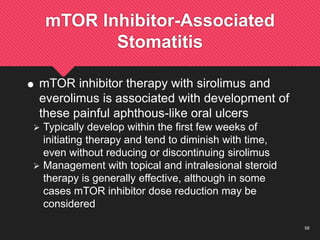
mTOR Inhibitor-Associated
Stomatitis
 mTOR inhibitor therapy with sirolimus and
everolimus is associated with development of
these painful aphthous-like oral ulcers
 Typically develop within the first few weeks of
initiating therapy and tend to diminish with time,
even without reducing or discontinuing sirolimus
 Management with topical and intralesional steroid
therapy is generally effective, although in some
cases mTOR inhibitor dose reduction may be
considered
59
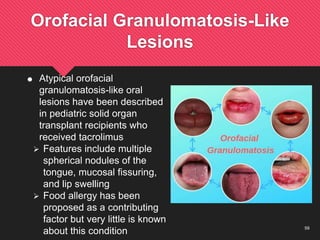
Orofacial Granulomatosis-Like
Lesions
 Atypical orofacial
granulomatosis-like oral
lesions have been described
in pediatric solid organ
transplant recipients who
received tacrolimus
 Features include multiple
spherical nodules of the
tongue, mucosal fissuring,
and lip swelling
 Food allergy has been
proposed as a contributing
factor but very little is known
about this condition
60
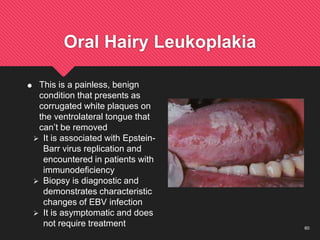
Oral Hairy Leukoplakia
 This is a painless, benign
condition that presents as
corrugated white plaques on
the ventrolateral tongue that
can’t be removed
 It is associated with Epstein-
Barr virus replication and
encountered in patients with
immunodeficiency
 Biopsy is diagnostic and
demonstrates characteristic
changes of EBV infection
 It is asymptomatic and does
not require treatment
61
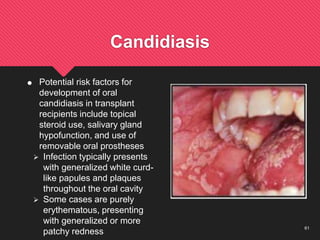
Candidiasis
 Potential risk factors for
development of oral
candidiasis in transplant
recipients include topical
steroid use, salivary gland
hypofunction, and use of
removable oral prostheses
 Infection typically presents
with generalized white curd-
like papules and plaques
throughout the oral cavity
 Some cases are purely
erythematous, presenting
with generalized or more
patchy redness
62
Candidiasis (cont’d)
 Diagnosis of candidiasis can typically be
made clinically, but cytology or fungal culture
may be helpful when there is uncertainty
 Systemic azole therapy with fluconazole is generally
most effective
 Fluconazole therapy may lead to increased levels of
these drugs and therefore require attentive
monitoring or dosage adjustment
 Antifungal prophylaxis (e.g. fluconazole 100-200mg
once weekly) is effective in cases of chronic
recurrent infection
63
Herpes Simplex Virus (HSV)
 The risk of HSV recrudescence is so high that
all seropositive organ transplant recipients
receive acyclovir prophylaxis during periods
of profound immunosuppression
 Lesions present as very painful irregularly shaped
shallow ulcerations that can affect both keratinized
and non-keratinized surfaces, with the lips and
tongue most frequently affected
 Management requires systemic antiviral therapy with
acyclovir or valacyclovir, or rarely foscarnet in cases
of acyclovir resistance
64
Other Infrequent Infections
 Invasive fungal infection (most frequently
aspergillus) may present intraorally, typically
in the maxilla as an extension of
sinopulmonary involvement
 This infection presents as an ulcerated mass and
requires biopsy for diagnosis
 Management includes a combination of surgery and
intensive antifungal therapy
 Cytomegalovirus reactivation rarely causes painful
non-specific ulcerations that require biopsy and
immunostaining for diagnosis
65
Graft-versus-Host Disease
 GVHD is a major complication of allogeneic HCT
and the leading cause of non-relapse mortality
 With chronic GVHD, the oral cavity is one of the most
frequently affected sites and can be a significant source
of morbidity due to oral discomfort
 Clinical features include oral mucosal lichenoid
inflammation with typical lichen planus-like changes, and
associated mouth discomfort and sensitivity
 Other features include salivary gland dysfunction with
xerostomia and high risk for dental decay and less
frequently fibrosis of oral and perioral tissues leading to
limited mobility and function
66
Graft-versus-Host
Disease (cont’d)
 Superficial mucoceles are a common feature
characterized by superficial saliva filled blisters
that develop primarily on the palate due to
inflammation of minor salivary glands and do not
generally require any specific therapy
 The lips are frequently affected, and while the hard palate
is also frequently involved, lesions rarely extend to the
soft palate or further posteriorly
67
Graft-versus-Host
Disease (cont’d)
 Management of oral chronic GVHD is
directed at controlling symptoms and
reducing risk of complications
 Oral mucosal disease can be effectively treated with
topical steroids
 The lips can be safely and effectively treated with
topical tacrolimus ointment
 Prescription topical fluoride should be prescribed for
patients with significant salivary gland dysfunction
 All patients should see a dentist for cleaning and
routine dental radiographs 1-2 times per year
68
Secondary Malignancy
 Organ transplant patients are at increased
risk for developing cancer
 Patients with hematologic malignancies who
undergo HCT remain at risk for relapse of primary
disease, typically within the first 1-2 years after
transplantation
 Extramedullary disease can present in the oral
cavity as a non-specific mass or ulceration
 PTLD can similarly present in the oral cavity as a
mass or ulceration
69
Secondary Malignancy (cont’d)
 Risk of oral cavity and lip squamous cell
carcinoma (SCC) is increased significantly in
post-transplant patients, with patients with GVHD
after HCT being at particularly high risk
 Oral SCC presents with the same clinical features in this
population as in the general population, but may be
difficult to diagnose in the context of active GVHD
changes
 Management outcomes appear to be worse compared
with non-transplant patients with oral SCC
 All transplant patients require annual oral cavity cancer
screening
70
Questions to Ask Patient with
Organ Transplant
 Have you received an organ transplant, yet? If so, what
organ(s)?
 How long ago was the transplant?
 What medications are you taking?
 Have you experienced any oral changes or discomfort? If so,
wat symptoms?
 Do you know your most recent (PTT) and prothrombin
(PT)/International Normalized Ratio (INR) ?
 Do you know if you are required to take a antibiotic pre-
medication prior to dental treatment? If not, may I call your
primary care physician to ask some questions?
71
Products to Recommend to
Patient with Organ Transplant
 CHX rinses. Educate patient about the risk of staining.
 Fluoride treatments and recommendation of fluoridated
products.
 Power brush to aid in sufficient removal of bacterial plaque.
 Water flosser or floss picks depending on patient preference
and ability to effectively floss.
 Dry mouth products such as Biotene to reduce discomfort of
xerostomia.
 Fluoridex dentifrice if patient experiences chronic xerostomia.
 Provide patient with supplemental information on the
importance of keeping the oral cavity free of bacteria, due to
their increased risk for infection.
72
Supplemental Information:
Mononucleosis
 Mono, or infectious mononucleosis, refers to a group of
symptoms usually caused by the Epstein-Barr virus (EBV). It
typically occurs in teenagers, but you can get it at any age.
The virus is spread through saliva, which is why some people
refer to it as “the kissing disease.”
 Many people develop EBV infections as children after age 1.
In very young children, symptoms are usually nonexistent or
so mild that they aren’t recognized as mono.
 Once you have an EBV infection, you aren’t likely to get
another one. Any child who gets EBV will probably be immune
to mono for the rest of their life.
73
For more information about
Mononucleosis, go to this
website!
https://www.healthline.com/health/mononucleosis#contagious

Chapter 21 Organ Transplantation

  • 1.
  • 2.
    2 Organ Transplantation  Organtransplantation can effectively restore vital organ function in patients suffering from a variety of medical conditions  In some situations organ transplantation is the only available option and essential for survival, and in other situations it offers the potential for improved disease control and better quality of life  Kidney, heart, liver, pancreas, lung, small bowel, bone marrow, and composite tissues (skin, muscle, tendon, nerves, bone, blood vessels) may be considered for transplantation
  • 3.
    3 Organ Transplantation (cont’d) In some situations organ transplantation is the only available option and essential for survival  In other situations it offers the potential for improved disease control and quality of life  Essential principles of organ transplantation involve  Immunology underlying for proper donor and recipient matching  Need for immunosuppressive therapy for prevention and management of graft rejection
  • 4.
    4 Organ Transplantation (cont’d) Bone marrow, or hematopoietic cell transplantation (HCT) is unique in that there is no sophisticated surgical procedure, but rather a cellular infusion of hematopoietic stem cells  Rather than risk long-term chronic graft rejection, the major immune-mediated complication is graft- versus-host disease (GVHD), in which the engrafted donor immune system attacks the recipient host tissues in an autoimmune-like manner
  • 5.
    5 Organ Transplantation (cont’d) Solid organ transplantation is limited primarily by the availability of organ donors and limitations in organ procurement from cadavers  In some cases organs are obtained from living donors, primarily with renal and hematopoietic cell transplantation, but also with newer approaches to partial pancreas and liver transplantation
  • 6.
    6 Organ Transplantation (cont’d) Organ transplant recipients require comprehensive dental screening and clearance prior to transplantation to reduce infection risk  These patients have unique oral health considerations that are largely related to the administration of immunosuppressive medications and corresponding long-term immunosuppression  The dentist must understand basic principles of risk assessment and dental treatment planning prior to organ transplantation be able to provide safe and appropriate long-term comprehensive oral health care management in the post-transplantation setting
  • 7.
    7 Epidemiology  Major advancesin organ transplantation have been facilitated by improved understanding of, and mechanisms for  Donor-recipient matching  Development of effective immunosuppressive agents  Improved surgical techniques  Acceptance of the concept of “brain death”  Transplantation of the kidney, liver, heart, lungs, intestines, pancreas, and bone marrow may be considered a life-saving treatment option for selected patients with end-organ disease
  • 8.
    8 Epidemiology (cont’d)  Dr.Joseph E. Murray, a Nobel laureate, performed the first successful human organ transplant procedure in Boston in 1954, using a kidney donated by the patient’s identical twin brother  Today over 10,000 renal transplantations are performed annually in the United States, and over 75,000 worldwide  The 1-year survival rate among renal transplant recipients is over 97%, and the 5-year survival rate is more than 90%
  • 9.
    9 Epidemiology (cont’d)  Thefirst human heart transplantation was performed in 1967, and at the time, the 1- year survival rate was only about 20%  The primary indications for heart transplantation include severe cardiomyopathy, severe coronary artery disease, and congenital heart disease  Nearly 2,500 heart transplant procedures are performed annually in the U.S., with a 1-year survival rate of over 90%, and a 5-year survival rate of 75%
  • 10.
    10 Epidemiology (cont’d)  Thefirst liver transplantation was performed in 1967  More than 6,000 liver transplant procedures are performed annually worldwide  Clinical indications include extrahepatic biliary atresia, primary biliary cirrhosis, chronic hepatitis (HCV infection), advanced cirrhosis, sclerosing cholangitis, non-alcoholic steatohepatitis, alcoholic liver disease, fulminant hepatic failure, and hepatobiliary cancers  Survival at 1- and 5-years is over 85% and 70%, respectively
  • 11.
    11 Epidemiology (cont’d)  Thefirst pancreas transplant procedure, which also included a duodenum and a kidney, was performed in 1966, by Kelly and Lillehei at the University of Minnesota, in a patient with diabetic nephropathy  Approximately 1,000 pancreas transplantations are performed each year in the U.S.  Taking into account all types of pancreas transplantation, survival is over 96% at 1 year and over 80% at 5 years  Pancreatic islet cell transplant procedures as an alternative have shown considerable success
  • 12.
    12 Epidemiology (cont’d)  Lungtransplantation was first performed in 1963 and today is the standard of care therapy for select patients  It remains a fairly high-risk procedure with a median recipient survival of just over 5 years  Indications include chronic obstructive pulmonary disease, α1-antitrypsin deficiency, idiopathic pulmonary fibrosis, cystic fibrosis, and idiopathic pulmonary arterial hypertension (IPAH)  Patients may be considered for single lung or bilateral lung transplantation, as well as combined heart-lung transplantation
  • 13.
    13 Epidemiology (cont’d)  In2000, the United States Center for Medicare and Medicaid Services approved isolated small bowel intestinal, combined liver-intestinal, and multivisceral transplantation as standard of care for patients with irreversible intestinal and parenteral nutrition failure  Survival outcomes are lowest in adult intestine-liver recipients, with 1- and 5-year survival of 69.1% and 46.1%, respectively, and highest in pediatric intestine recipients, with 1- and 5-year survival of 89.2% and 81.4%, respectively
  • 14.
    14 Epidemiology (cont’d)  Since1956, bone marrow transplantation it has become a standard therapy for certain hematologic deficiencies and malignancies  This procedure is more commonly referred to as hematopoietic cell transplantation (HCT)  The Center for International Blood and Marrow Transplantation (CIBMTR) reports nearly 8,000 allogeneic HCT procedures performed annually in the U.S.  Survival outcomes vary depending upon underlying diagnosis, status at time of transplantation, donor type, graft characteristics
  • 15.
    15 Epidemiology (cont’d)  Compositetissues that may be transplanted include skin, mucosa, muscle, bone, and other structures; may be used to replace lost or dysfunctional anatomic structures  Composite tissue allotransplantation has the potential to greatly improve recipients’ quality of life  The first successful hand transplantation was reported in 1998 and the first partial face transplantation in 2005  This is a rapidly developing yet still largely experimental procedure within the field with highly variable graft survival outcomes
  • 16.
    16 Etiology  Successes intransplant medicine have been largely related to advances in  Understanding of key clinical immunological principles of donor-recipient matching  Establishment and coordination of organ donor networks  Incorporation of standardized immunosuppression regimens  Improvements in supportive care
  • 17.
    17 Donor-Recipient Matching  Donorsand recipients are matched using two different laboratory tests  First, HLA antigen expression is determined on donor and recipient leukocytes through serologic or more frequently DNA-typing assays  The second test is serologic cross-matching, which functionally measures recipient immune cell response to exposure to donor cell antigens, and in the case of HCT, donor immune cell response to recipient cell antigens
  • 18.
    18 Immunosuppressive Medications  Even inmatched related donor kidney and hematopoietic cell transplants, non-specific immunosuppressive agents are necessary to prevent acute and chronic graft rejection  While effective at preventing and managing rejection, long-term administration of immunosuppressive therapies increases the recipient’s susceptibility to infection and malignancy
  • 19.
    19 Pathophysiology and Complications  Complicationsassociated with organ transplantation generally consist of graft rejection, problems related to chronic immunosuppressive therapy, and special problems specific to the transplanted organ
  • 20.
    20 Graft Rejection  Apotentially very serious complication of organ transplantation that can occur despite donor- recipient matching and the administration of immunosuppressive medications  Hyperacute rejection of solid organs occurs within 48 hours of surgical anastomosis  Acute rejection occurs within the first 90 days after transplantation  Chronic rejection of solid organs, despite treatment with immunosuppressive medications, is generally irreversible
  • 21.
    21 Immunosuppression and Infection Risk Immunosuppressive medications non- specifically block T- and B-cell activity and innate immunity effector cells and pathways, significantly increasing the risk for infection  Donor and recipient screening for major infections prior to transplant is essential to reduce the risk of infectious complications  Transplant recipients also receive extensive education and guidance on other preventive strategies including hygiene, environmental exposures, and food safety handling
  • 22.
    22 Immunosuppression and Infection Risk(cont’d)  Most HCT recipients eventually have all immunosuppressive therapy discontinued  Those who develop GVHD may require years of immunosuppressive therapy  Solid organ transplant recipients require lifelong immunosuppression  Patients with chronic rejection or chronic GVHD require more intense immunosuppression
  • 23.
    23 Immunosuppression and Infection Risk(cont’d)  Patients in the early post-transplant period are at risk for nosocomial infections, opportunistic infections, and donor-derived infections  Invasive fungal infections tend to occur within the first three months of transplantation  Patients 1 to 6 months post-transplant face a high risk of opportunistic infections and reactivation of latent infections  Infections more than 6 months post-transplant tend to be typical community-acquired, but with more severe manifestations
  • 24.
    24 Other Side Effectsof Immunosuppression Medications  Immunosuppressive medications are associated with various side effects that can have significant medical implications  CNI therapy (cyclosporine and tacrolimus) is associated with development of chronic kidney disease and renal insufficiency that can progress to end stage renal disease  Other effects include tremors, magnesium wasting, hypertension, hyperkalemia, hyperuricemia, and hyperglycemia
  • 25.
    25 Other Side Effectsof Immuno- suppression Medications (cont’d)  Mycophenolate is associated with myelosuppression and gastrointestinal side effects  Azathioprine has a similar mechanism of action as mycophenolate but is used less frequently due its less favorable side effect profile  Prednisone therapy side effects increase with dose and duration and include hyperglycemia, hypertension, hyperlipidemia, and osteoporosis  mTOR inhibitors (sirolimus and everolimus) are associated with cytopenia and hyperlipidemia
  • 26.
    26 Cancer Risk  Thereis an increased risk for post-transplant lymphoproliferative disease (PTLD) and non- melanoma skin cancers  PTLD incidence ranges from approximately 1% in renal transplant recipients and matched related and unrelated HCT, to 4.5% in liver transplantation  Management of PTLD includes reduction of immunosuppression and chemotherapy with an overall 5- year survival rate of 40-60%  Risk is related to intensity and duration of immunosuppressive therapy and sun exposure  HCT patients are at increased risk for melanoma, liver, oral cavity, brain, thyroid and bone cancers
  • 27.
    27 Organ-Specific Complications  KidneyTransplantation  There’s a particular risk for BK virus nephropathy  The risk can be distinguished from rejection by biopsy and is managed primarily with reduction of immunosuppression  Renal graft rejection is monitored primarily by serum creatinine measurement rather than biopsy  If graft failure occurs, hemodialysis can be initiated
  • 28.
    28 Organ-Specific Complications (cont’d)  HeartTransplantation  Cardiovascular disease can arise from the donor heart due to preexisting pathology, de novo related to traditional/existing risk factors, or from allograft vasculopathy  Symptoms of angina are typically not experienced, therefore requiring intensive monitoring for allograft vasculopathy by annual angiography  Recipients receive lifelong statin therapy regardless of lipid levels  In addition to surveillance by endomyocardial biopsy, rejection may present with typical symptoms of heart failure
  • 29.
    29 Organ-Specific Complications (cont’d)  LiverTransplantation  In addition to graft rejection, recurrent underlying disease for which transplant was indicated is a potentially serious complication in liver transplantation and can lead to transplant failure  Both HCV infection and alcohol abuse have high likelihood of recurrence and require routine screening and active treatment if detected
  • 30.
    30 Organ-Specific Complications (cont’d)  LungTransplantation  Recipients may present with dyspnea, cough, and hypoxia  Lung function is monitored by spirometry with transbronchial lung biopsy performed as needed to rule out or confirm acute rejection  Bronchiolitis obliterans (characteristic of chronic rejection) is less readily determined by transbronchial biopsy and is therefore diagnosed and monitored based primarily on spirometric measures and changes over time
  • 31.
    31 Organ-Specific Complications (cont’d)  HematopoieticCell Transplantation  Graft rejection is relatively rare in HCT due to effective immunosuppression  GVHD is potentially life-threatening where engrafted donor lymphocytes mount a multifaceted alloimmune- mediated attack against the recipient/host tissue  Acute GVHD typically occurs within the first 100 days after HCT while chronic GVHD typically occurs after 100 days  Solid organ transplantation very rarely involves GVHD, though in facial transplantation, graft rejection of skin and oral mucosa presents clinically and histopathologically identical to GVHD
  • 32.
    32 Organ-Specific Complications (cont’d)  Thetransplanted small bowel has anastomotic sites at the superior end of the native gastrointestinal tract as the jejunum, and at its distal end, a stoma is created exteriorly  The superior mesenteric artery is attached to the native aorta below the renal arteries
  • 33.
    33 Clinical Presentation  Transplantrecipients generally have normal physiologic function and performance status, similar to the general population, if the graft “takes” with no chronic rejection or GVHD  Depending on the degree and extent of organ function compromise, the clinical presentation of solid organs may resemble that of the pre-transplant disease status  Signs and symptoms of GVHD vary, but include skin rash, diarrhea, fibrosis, oral lichenoid inflammation and sensitivity, and eye discomfort
  • 34.
    34 Laboratory and Diagnostic Findings Lab testing is critical for monitoring organ function, metabolism of medications, and infectious diseases  Blood pressure is monitored at every visit. A lipid panel and diabetes screening test should be ordered every 6-12 months  Monitoring of serum creatinine is important in renal transplant recipients to screen for rejection, as well as in all patients on CNIs and other immunosuppressive agents
  • 35.
    35 Laboratory and Diagnostic Findings(cont’d)  Liver function testing is routinely performed in liver transplant recipients as rejection causes elevated transaminases, bilirubin and alkaline phosphatase  Pulmonary function is monitored by spirometry and indicated in lung transplant patients as well as HCT patients with GVHD or shortness of breath  Pancreas transplant rejection may manifest with compromised endocrine function or an increase in amylase levels
  • 36.
    36 Laboratory and Diagnostic Findings(cont’d)  Surveillance needle biopsy is routinely performed for most solid organs to screen for rejection  Biopsies may be obtained weekly or monthly early after transplantation, and then less frequently  GVHD can generally be determined from clinical features, but involved tissue histopathology may be helpful in supporting or ruling out the diagnosis  Cyclosporine, tacrolimus and sirolimus are monitored by routine measurement of serum trough levels  CMV reactivation is monitored at predefined intervals by quantitative PCR  Patients with invasive fungal infection are monitored via serum glucan and galactomannan antigen testing
  • 37.
    37 Medical and Surgical Management Medical management is based on principles of immunosuppression for prevention and management of graft rejection (or GVHD with HCT), infections, and screening for and management of late complications
  • 38.
    38 Medical and Surgical Management(cont’d)  While immunosuppressive therapy regimens are similar, they vary based on the organ, patient specific factors, and institutional preferences  In solid organ transplantation, this typically consists of triple-drug therapy with a corticosteroid, a calcineurin inhibitor, and a purine synthesis inhibitor  Anti-lymphocyte therapy may be included as part of the initial therapy or managing rejection episodes  Sirolimus is variably used in some protocols, in particular to reduce the need for CNI therapy  In HCT, GVHD prophylaxis regimens typically consist of a short course of methotrexate, combined with a CNI that is tapered over a 3-6 month period.
  • 39.
    39 Medical and Surgical Management(cont’d)  In most grafts, the pancreatic duct is drained into the bladder  Urine amylase levels (25% reduction) are used in patients with bladder-drained pancreas transplants to monitor for rejection  In patients who have simultaneous kidney and pancreas transplants, an increase in serum creatinine indicates the possible onset of rejection before changes in urinary amylase are detected
  • 40.
    40 Medical and Surgical Management(cont’d)  First-line therapy for rejection and GVHD is corticosteroids, with a second-line including rituximab, alemtuzumab, extracorporeal photopheresis, and low-dose IL-2 (in addition to the medications already discussed)  Management of relapse of underlying hematologic malignancy after HCT includes rapid tapering of immunosuppressive therapy and donor lymphocyte infusion; both are intended to stimulate a potent graft-versus-tumor effect but also typically trigger development of GVHD
  • 41.
    41 Medical and Surgical Management(cont’d)  Patients on immunosuppressive therapy are at high risk for a wide spectrum of infections  Infectious disease prophylaxis strategies are based on known or likely exposures to infectious agents based on serologic testing and epidemiologic history, as well as intensity and duration of immunosuppression  Preventive strategies include vaccination, universal antimicrobial prophylaxis, and preemptive therapy  Regarding recipient-derived infections, active infections should be eradicated prior to transplantation, and patients carefully monitored for evidence of reactivation
  • 42.
    42 Medical and Surgical Management(cont’d)  Of particular relevance from an oral health standpoint are guidelines related to herpes simplex virus (HSV) infection and oropharyngeal candidiasis  Acyclovir prophylaxis is started at the initiation of immunosuppressive therapy for HSV-seropositive patients  It is continued for at least 30 days, with variable duration based on type of transplant, intensity and duration of immunosuppressive therapy, and institutional protocols
  • 43.
    43 Medical and Surgical Management(cont’d)  Recommendations call for daily antifungal prophylaxis with fluconazole or liposomal amphotericin B for solid organ transplant recipients at high risk of candidiasis, and fluconazole, posaconazole, or micafungin in HCT patients during periods of neutropenia
  • 44.
    44 Medical and Surgical Management(cont’d)  Recommended guidelines are available for long- term preventive and screening practices for organ transplant recipients  Some recommendations are organ and disease specific (and age specific in pediatric transplantation), most are related to the administration of immunosuppressive medications and are universal  These include guidelines related to immunity and infections, ocular health, oral health, pulmonary health, cardiovascular health, hepatic, renal and genitourinary health, musculoskeletal health, nervous system and mental health, endocrine health, psychosocial health, and secondary cancer screening
  • 45.
    45 Dental Management  Dueto a period of profound immunosuppression following transplantation, it is standard of care for all organ transplant candidates to undergo pre- transplant dental screening and clearance in order to reduce risk of infectious complications  Patients should perform basic oral care to reduce the risk of inflammation, and local or systemic infection  Patients with a history of gingivitis or periodontitis may benefit from daily chlorhexidine gluconate rinses, often included in the oral care regimen at HCT centers  Removable prostheses should be cleaned manually and soaked overnight in a disinfecting solution
  • 46.
    46 Dental Management (cont’d) There are no universally agreed upon indications for antibiotic prophylaxis prior to dental treatment in transplant patients  American Heart Association (AHA) guidelines recommend antibiotic prophylaxis in cardiac transplant recipients who develop valvulopathy  AHA prophylaxis regimens have also been recommended for patients on immunosuppressive therapy for dental treatment infection risk  American Academy of Pediatric Dentistry (AAPD) infection risk prophylaxis guidelines recommend prophylactic antibiotics per AHA guidelines
  • 47.
    47 Risk Assessment  Theimportant aspect of assessing patient risk is knowing medical history and status: indication for transplantation, organ function status, current medications, pertinent laboratory results, and transplantation schedule and timeline  Patients may be at risk for bleeding due to antithrombotic therapy, anticoagulant therapy, advanced liver disease, or thrombocytopenia, and therefore, require careful evaluation of medication history and partial thromboplastin time (PTT) and prothrombin (PT)/International Normalized Ratio (INR)
  • 48.
    48 Pre-transplant Dental Screening andClearance  The objective of pre-transplant dental screening and clearance is to reduce the risk of infection in the immediate post-transplant period of immunosuppression  Dental screening is considered standard of care at all transplant centers to reduce overall infection risk  It is recommended that all patients receive a comprehensive dental and oral evaluation prior to HCT in order to identify and eliminate any potential odontogenic sources of infection
  • 49.
    49 Pre-transplant Dental Screening andClearance  The pre-transplant dental screening should include  Dental history  Full-mouth series of dental radiographs  Vitality testing  Periodontal evaluation  Assessment of third molars  Treatment of all dental caries  Management of pulpal infections (endodontic therapy or extraction)  Deep scaling and root planing in cases of disease  Extraction of teeth with overall poor prognosis  Dental prophylaxis
  • 50.
    50 Pre-transplant Dental Screening and Clearance All necessary dental treatment, and in particular extractions or other invasive procedures requiring significant time for healing, should be completed at least two weeks before transplantation  The AAPD has published guidelines for pediatric patients undergoing HCT which can be generalized to all pediatric organ transplant patients  Orthodontic appliances and space maintainers can be left in place if non-irritating and if the patient is maintaining adequate oral hygiene
  • 51.
    51 Post-transplant Dental Care Elective dental care is generally deferred during the immediate post-transplantation period due to profound immunosuppression and risk for infection  Dental management of the patient post- transplantation can be divided into 3 phases  Immediate post-transplant period  Stable graft period  Chronic rejection period (onset of GVHD in HCT)
  • 52.
    52 Post-transplant Dental Care (cont’d) Once the graft is stable and functioning and any acute rejection reaction has been controlled, the patient is considered to be in the stable phase  During this period, patients should receive routine dental care including regular periodontal maintenance visits and active management of any evident dental pathology  During chronic rejection or actively treated GVHD, transplant recipients are again at significantly higher risk for infection
  • 53.
    53 Oral Complications and Manifestations Infectious and non-infectious oral complications may be encountered in organ transplant patients  Patient evaluation begins with a comprehensive medical history, review of current medications, and assessment of pertinent laboratory results  Physical evaluations include careful extraoral and intraoral examinations  Additional tests may be indicated, like microbiological cultures, imaging, and tissue biopsy  Management of oral complications depends on accurate and timely diagnosis, and perhaps careful coordination with the primary transplantation team
  • 54.
    54 Oral Mucositis  Oralmucositis is a complication unique to HCT and related to both the intensive conditioning regimen as well as the course of methotrexate given for GVHD prophylaxis  Typically develops 7-10 days following initiation of conditioning and does not resolve until engraftment and resolution of a normal white blood cell count  Clinical features are characterized by diffuse, non- specific erythema and ulcerations of the non-keratinized oral mucosa, compromising oral function and quality of life
  • 55.
    55 Medication-Related Oral Complications  Asidefrom infectious complications, there are several potential oral complications associated with immunosuppressive medications used in transplantation  Complications are relatively uncommon and may not be dose related  An understanding of these conditions is essential for correct diagnosis and appropriate management
  • 56.
    56 Gingival Overgrowth  Cyclosporine-associatedgingival overgrowth is a well-described condition characterized by fibro- inflammatory enlargement of the gingiva  Gingiva appears edematous, swollen and “overgrown,” often involving the interdental regions and extending into the crowns of teeth  Management includes intensive periodontal care, improved oral hygiene, and surgery (gingivectomy)  Tacrolimus is not associated with gingival overgrowth, and with the shift in use of tacrolimus over cyclosporine, gingival overgrowth is now infrequently encountered in this population
  • 57.
    57 Pyogenic Granuloma  Tacrolimushas been associated with non- gingival soft tissue fibroinflammatory polyps, which closely resemble pyogenic granulomas  Lesions present as exophytic ulcerated fibrous lobulated masses, measuring up to 3-4 cm  Symptoms are variable and typically associated with secondary trauma, while the pathophysiological mechanisms and relationship with tacrolimus therapy remains unclear  Management is simple surgical excision although some lesions may respond to intralesional steroid therapy
  • 58.
    58 mTOR Inhibitor-Associated Stomatitis  mTORinhibitor therapy with sirolimus and everolimus is associated with development of these painful aphthous-like oral ulcers  Typically develop within the first few weeks of initiating therapy and tend to diminish with time, even without reducing or discontinuing sirolimus  Management with topical and intralesional steroid therapy is generally effective, although in some cases mTOR inhibitor dose reduction may be considered
  • 59.
    59 Orofacial Granulomatosis-Like Lesions  Atypicalorofacial granulomatosis-like oral lesions have been described in pediatric solid organ transplant recipients who received tacrolimus  Features include multiple spherical nodules of the tongue, mucosal fissuring, and lip swelling  Food allergy has been proposed as a contributing factor but very little is known about this condition
  • 60.
    60 Oral Hairy Leukoplakia This is a painless, benign condition that presents as corrugated white plaques on the ventrolateral tongue that can’t be removed  It is associated with Epstein- Barr virus replication and encountered in patients with immunodeficiency  Biopsy is diagnostic and demonstrates characteristic changes of EBV infection  It is asymptomatic and does not require treatment
  • 61.
    61 Candidiasis  Potential riskfactors for development of oral candidiasis in transplant recipients include topical steroid use, salivary gland hypofunction, and use of removable oral prostheses  Infection typically presents with generalized white curd- like papules and plaques throughout the oral cavity  Some cases are purely erythematous, presenting with generalized or more patchy redness
  • 62.
    62 Candidiasis (cont’d)  Diagnosisof candidiasis can typically be made clinically, but cytology or fungal culture may be helpful when there is uncertainty  Systemic azole therapy with fluconazole is generally most effective  Fluconazole therapy may lead to increased levels of these drugs and therefore require attentive monitoring or dosage adjustment  Antifungal prophylaxis (e.g. fluconazole 100-200mg once weekly) is effective in cases of chronic recurrent infection
  • 63.
    63 Herpes Simplex Virus(HSV)  The risk of HSV recrudescence is so high that all seropositive organ transplant recipients receive acyclovir prophylaxis during periods of profound immunosuppression  Lesions present as very painful irregularly shaped shallow ulcerations that can affect both keratinized and non-keratinized surfaces, with the lips and tongue most frequently affected  Management requires systemic antiviral therapy with acyclovir or valacyclovir, or rarely foscarnet in cases of acyclovir resistance
  • 64.
    64 Other Infrequent Infections Invasive fungal infection (most frequently aspergillus) may present intraorally, typically in the maxilla as an extension of sinopulmonary involvement  This infection presents as an ulcerated mass and requires biopsy for diagnosis  Management includes a combination of surgery and intensive antifungal therapy  Cytomegalovirus reactivation rarely causes painful non-specific ulcerations that require biopsy and immunostaining for diagnosis
  • 65.
    65 Graft-versus-Host Disease  GVHDis a major complication of allogeneic HCT and the leading cause of non-relapse mortality  With chronic GVHD, the oral cavity is one of the most frequently affected sites and can be a significant source of morbidity due to oral discomfort  Clinical features include oral mucosal lichenoid inflammation with typical lichen planus-like changes, and associated mouth discomfort and sensitivity  Other features include salivary gland dysfunction with xerostomia and high risk for dental decay and less frequently fibrosis of oral and perioral tissues leading to limited mobility and function
  • 66.
    66 Graft-versus-Host Disease (cont’d)  Superficialmucoceles are a common feature characterized by superficial saliva filled blisters that develop primarily on the palate due to inflammation of minor salivary glands and do not generally require any specific therapy  The lips are frequently affected, and while the hard palate is also frequently involved, lesions rarely extend to the soft palate or further posteriorly
  • 67.
    67 Graft-versus-Host Disease (cont’d)  Managementof oral chronic GVHD is directed at controlling symptoms and reducing risk of complications  Oral mucosal disease can be effectively treated with topical steroids  The lips can be safely and effectively treated with topical tacrolimus ointment  Prescription topical fluoride should be prescribed for patients with significant salivary gland dysfunction  All patients should see a dentist for cleaning and routine dental radiographs 1-2 times per year
  • 68.
    68 Secondary Malignancy  Organtransplant patients are at increased risk for developing cancer  Patients with hematologic malignancies who undergo HCT remain at risk for relapse of primary disease, typically within the first 1-2 years after transplantation  Extramedullary disease can present in the oral cavity as a non-specific mass or ulceration  PTLD can similarly present in the oral cavity as a mass or ulceration
  • 69.
    69 Secondary Malignancy (cont’d) Risk of oral cavity and lip squamous cell carcinoma (SCC) is increased significantly in post-transplant patients, with patients with GVHD after HCT being at particularly high risk  Oral SCC presents with the same clinical features in this population as in the general population, but may be difficult to diagnose in the context of active GVHD changes  Management outcomes appear to be worse compared with non-transplant patients with oral SCC  All transplant patients require annual oral cavity cancer screening
  • 70.
    70 Questions to AskPatient with Organ Transplant  Have you received an organ transplant, yet? If so, what organ(s)?  How long ago was the transplant?  What medications are you taking?  Have you experienced any oral changes or discomfort? If so, wat symptoms?  Do you know your most recent (PTT) and prothrombin (PT)/International Normalized Ratio (INR) ?  Do you know if you are required to take a antibiotic pre- medication prior to dental treatment? If not, may I call your primary care physician to ask some questions?
  • 71.
    71 Products to Recommendto Patient with Organ Transplant  CHX rinses. Educate patient about the risk of staining.  Fluoride treatments and recommendation of fluoridated products.  Power brush to aid in sufficient removal of bacterial plaque.  Water flosser or floss picks depending on patient preference and ability to effectively floss.  Dry mouth products such as Biotene to reduce discomfort of xerostomia.  Fluoridex dentifrice if patient experiences chronic xerostomia.  Provide patient with supplemental information on the importance of keeping the oral cavity free of bacteria, due to their increased risk for infection.
  • 72.
    72 Supplemental Information: Mononucleosis  Mono,or infectious mononucleosis, refers to a group of symptoms usually caused by the Epstein-Barr virus (EBV). It typically occurs in teenagers, but you can get it at any age. The virus is spread through saliva, which is why some people refer to it as “the kissing disease.”  Many people develop EBV infections as children after age 1. In very young children, symptoms are usually nonexistent or so mild that they aren’t recognized as mono.  Once you have an EBV infection, you aren’t likely to get another one. Any child who gets EBV will probably be immune to mono for the rest of their life.
  • 73.
    73 For more informationabout Mononucleosis, go to this website! https://www.healthline.com/health/mononucleosis#contagious