Introduction to Copyrights A snapshot of how to use copyright materials as an educator.
Introduction There are a tremendous amount of materials in various forms of media that are copyrighted.  As educators, we use many of these materials in lesson plans, research, and activities.  How do we use these materials legally?
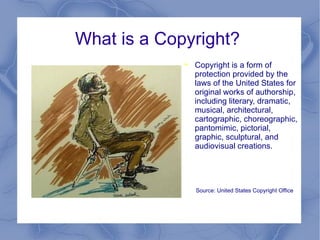
What is a Copyright?  Copyright is a form of protection provided by the laws of the United States for original works of authorship, including literary, dramatic, musical, architectural, cartographic, choreographic, pantomimic, pictorial, graphic, sculptural, and audiovisual creations. Source: United States Copyright Office
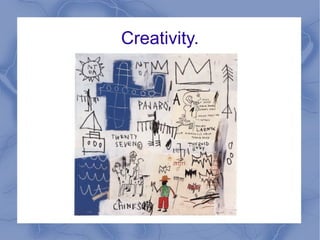
Creativity.
Works Protected Books Maps Charts Dramatic Compositions Prints Photographs and photographic negatives Music Motion Pictures Computer Programs
Works Not Copyright-Protected Works that have not been fixed in a tangible form of expression; written, recorded or captured electronically. Titles, names, short phrases and slogans; familiar symbols or designs; mere variations of typographic ornamentation, lettering or coloring; mere listings of ingredients or contents. Ideas, procedures, methods, systems, processes, concepts, principles, discoveries or devices, as distinguished from a description, explanation or illustration. Works consisting entirely of information that are natural or self-evident facts, containing no original authorship, such as the white pages of telephone books, standard calendars, height and weight charts and tape measures and rulers. Works created by the U.S. Government. Works for which copyright has expired; works in the public domain.
The 70+ Rule When the producer of a work is deceased, the copyright protection of the work lasts for seventy years after the death.  The copyright on many of the Web 2.0 applications we use today will outlive us.
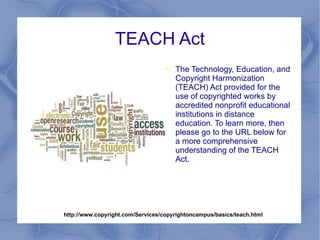
TEACH Act The Technology, Education, and Copyright Harmonization (TEACH) Act provided for the use of copyrighted works by accredited nonprofit educational institutions in distance education. To learn more, then please go to the URL below for a more comprehensive understanding of the TEACH Act. http://www.copyright.com/Services/copyrightoncampus/basics/teach.html
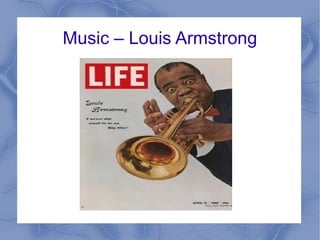
Music – Louis Armstrong
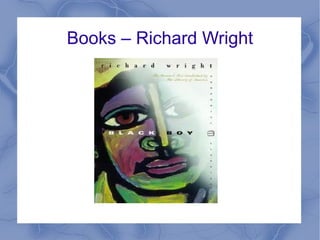
Books – Richard Wright
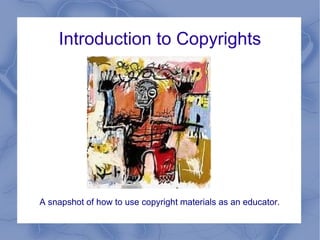
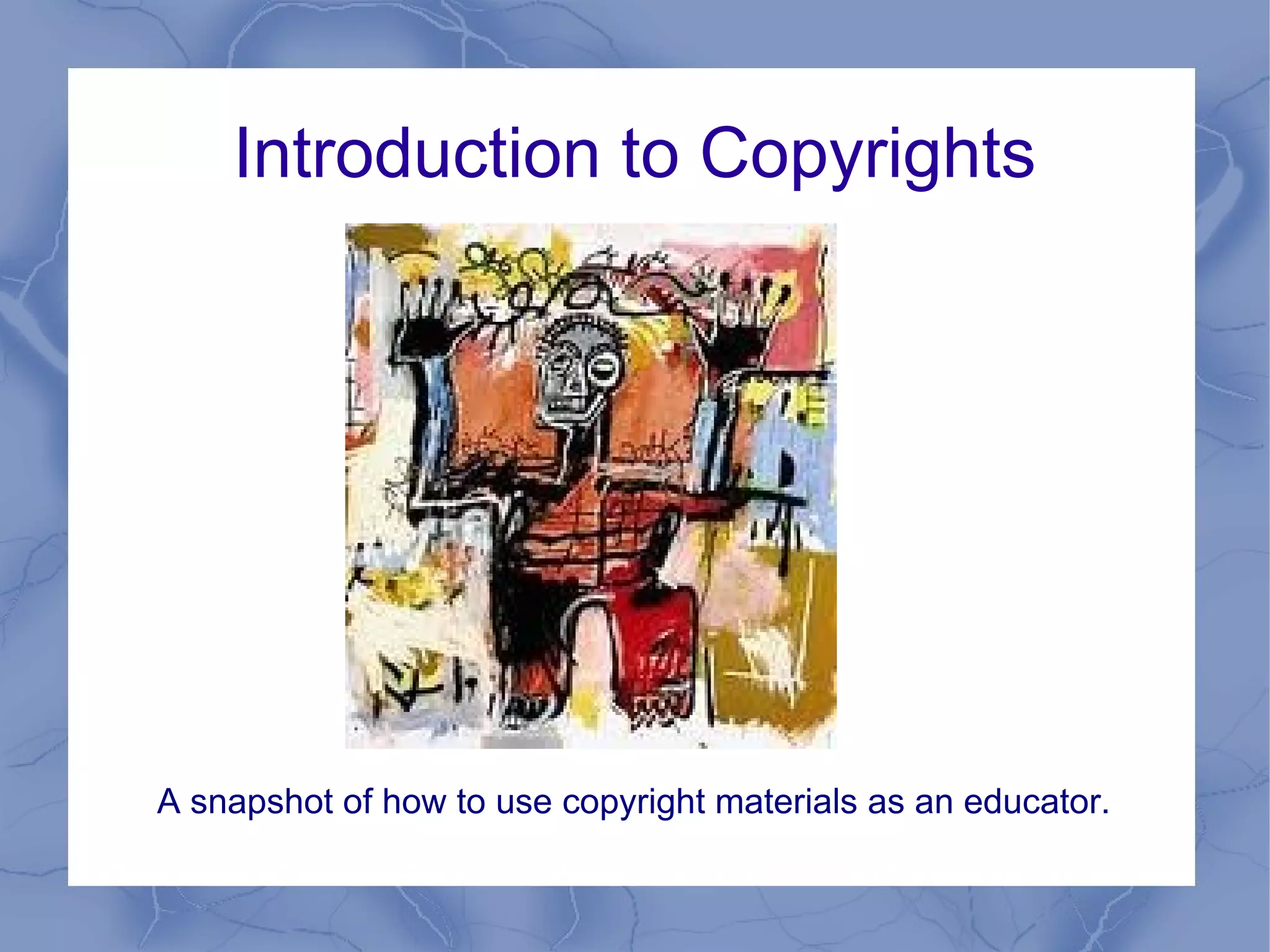
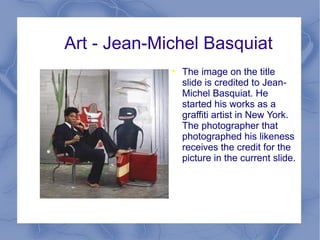
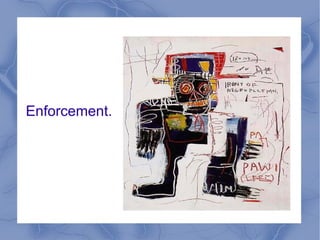
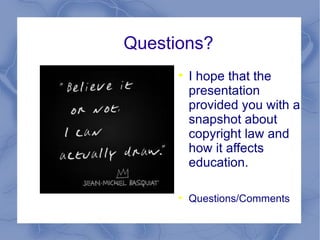
Art - Jean-Michel Basquiat The image on the title slide is credited to Jean-Michel Basquiat. He started his works as a graffiti artist in New York. The photographer that photographed his likeness receives the credit for the picture in the current slide. December 22, 1960 – August 12, 1988
Enforcement.
What is Fair Use? Fair use is a concept embedded in U.S. law that recognizes that certain uses of copyright-protected works do not require permission from the copyright holder or its agent. These include instances of minimal use that do not interfere with the copyright holder's exclusive rights to reproduce and reuse the work.  To learn more please got the URL http://www.copyright.com/Services/copyrightoncampus/basics/fairuse.html  Source: Copyright.com
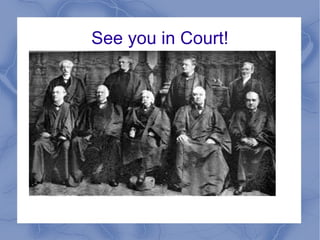
See you in Court!
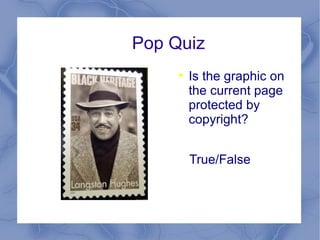
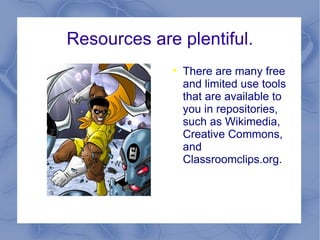
Pop Quiz Is the graphic on the current page protected by copyright?  True/False
Resources are plentiful. There are many free and limited use tools that are available to you in repositories, such as Wikimedia, Creative Commons, and Classroomclips.org.
Questions? I hope that the presentation provided you with a snapshot about copyright law and how it affects education. Questions/Comments

Copyright snapshot5

  • 1.
    Introduction to CopyrightsA snapshot of how to use copyright materials as an educator.
  • 2.
    Introduction There area tremendous amount of materials in various forms of media that are copyrighted. As educators, we use many of these materials in lesson plans, research, and activities. How do we use these materials legally?
  • 3.
    What is aCopyright? Copyright is a form of protection provided by the laws of the United States for original works of authorship, including literary, dramatic, musical, architectural, cartographic, choreographic, pantomimic, pictorial, graphic, sculptural, and audiovisual creations. Source: United States Copyright Office
  • 4.
  • 5.
    Works Protected BooksMaps Charts Dramatic Compositions Prints Photographs and photographic negatives Music Motion Pictures Computer Programs
  • 6.
    Works Not Copyright-ProtectedWorks that have not been fixed in a tangible form of expression; written, recorded or captured electronically. Titles, names, short phrases and slogans; familiar symbols or designs; mere variations of typographic ornamentation, lettering or coloring; mere listings of ingredients or contents. Ideas, procedures, methods, systems, processes, concepts, principles, discoveries or devices, as distinguished from a description, explanation or illustration. Works consisting entirely of information that are natural or self-evident facts, containing no original authorship, such as the white pages of telephone books, standard calendars, height and weight charts and tape measures and rulers. Works created by the U.S. Government. Works for which copyright has expired; works in the public domain.
  • 7.
    The 70+ RuleWhen the producer of a work is deceased, the copyright protection of the work lasts for seventy years after the death. The copyright on many of the Web 2.0 applications we use today will outlive us.
  • 8.
    TEACH Act TheTechnology, Education, and Copyright Harmonization (TEACH) Act provided for the use of copyrighted works by accredited nonprofit educational institutions in distance education. To learn more, then please go to the URL below for a more comprehensive understanding of the TEACH Act. http://www.copyright.com/Services/copyrightoncampus/basics/teach.html
  • 9.
    Music – LouisArmstrong
  • 10.
  • 11.
    Art - Jean-MichelBasquiat The image on the title slide is credited to Jean-Michel Basquiat. He started his works as a graffiti artist in New York. The photographer that photographed his likeness receives the credit for the picture in the current slide. December 22, 1960 – August 12, 1988
  • 12.
  • 13.
    What is FairUse? Fair use is a concept embedded in U.S. law that recognizes that certain uses of copyright-protected works do not require permission from the copyright holder or its agent. These include instances of minimal use that do not interfere with the copyright holder's exclusive rights to reproduce and reuse the work. To learn more please got the URL http://www.copyright.com/Services/copyrightoncampus/basics/fairuse.html Source: Copyright.com
  • 14.
    See you inCourt!
  • 15.
    Pop Quiz Isthe graphic on the current page protected by copyright? True/False
  • 16.
    Resources are plentiful.There are many free and limited use tools that are available to you in repositories, such as Wikimedia, Creative Commons, and Classroomclips.org.
  • 17.
    Questions? I hopethat the presentation provided you with a snapshot about copyright law and how it affects education. Questions/Comments