Copyright
by Aliona Sacali
What is Copyright?
    Definition and How it works

Copyright is a form of protection provided by the
     laws of the United States to the authors of
     “original works of authorship,” including literary,
     dramatic, musical, artistic, and certain other
     intellectual works.
How Does It Work?
1976 Copyright Act generally gives the owner of
 copyright the exclusive right to do and to authorize
 others to do the following:
•    To reproduce the work in copies
•    To prepare derivative works based upon the work
•    To distribute copies of the work to the public by sale
     other transfer of ownership, or by rental, lease, or
     lending
•    To perform the work publicly
•    To display the work publicly
Issues of Copyright
Become aware of these issues and act in accordance with professional ethics.


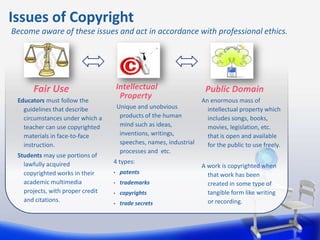
      Fair Use                        Intellectual                    Public Domain
 Educators must follow the
                                       Property                      An enormous mass of
   guidelines that describe           Unique and unobvious             intellectual property which
   circumstances under which a         products of the human           includes songs, books,
   teacher can use copyrighted         mind such as ideas,             movies, legislation, etc.
   materials in face-to-face           inventions, writings,           that is open and available
   instruction.                        speeches, names, industrial     for the public to use freely.
                                       processes and etc.
 Students may use portions of
   lawfully acquired              4 types:
                                                                     A work is copyrighted when
   copyrighted works in their     •    patents                         that work has been
   academic multimedia            •    trademarks                      created in some type of
   projects, with proper credit   •    copyrights                      tangible form like writing
   and citations.                 •    trade secrets                   or recording.
Additional Info
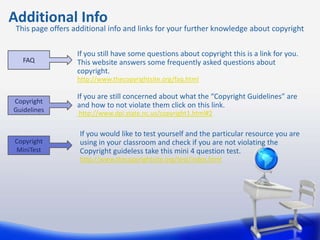
 This page offers additional info and links for your further knowledge about copyright

                   If you still have some questions about copyright this is a link for you.
   FAQ             This website answers some frequently asked questions about
                   copyright.
                   http://www.thecopyrightsite.org/faq.html

                   If you are still concerned about what the “Copyright Guidelines” are
Copyright
                   and how to not violate them click on this link.
Guidelines         http://www.dpi.state.nc.us/copyright1.html#2

                   If you would like to test yourself and the particular resource you are
Copyright          using in your classroom and check if you are not violating the
MiniTest           Copyright guideless take this mini 4 question test.
                   http://www.thecopyrightsite.org/test/index.html
Works Cited
www.thecopyrightsite.org


www.copyright.gov


Teaching and Learning with Teachnology (Fourth
Edition) by Judy Lever-Duffy, Jean B. McDonald –
Chapter 13.

Copyright power point

  • 1.
  • 2.
    What is Copyright? Definition and How it works Copyright is a form of protection provided by the laws of the United States to the authors of “original works of authorship,” including literary, dramatic, musical, artistic, and certain other intellectual works. How Does It Work? 1976 Copyright Act generally gives the owner of copyright the exclusive right to do and to authorize others to do the following: • To reproduce the work in copies • To prepare derivative works based upon the work • To distribute copies of the work to the public by sale other transfer of ownership, or by rental, lease, or lending • To perform the work publicly • To display the work publicly
  • 3.
    Issues of Copyright Becomeaware of these issues and act in accordance with professional ethics. Fair Use Intellectual Public Domain Educators must follow the Property An enormous mass of guidelines that describe Unique and unobvious intellectual property which circumstances under which a products of the human includes songs, books, teacher can use copyrighted mind such as ideas, movies, legislation, etc. materials in face-to-face inventions, writings, that is open and available instruction. speeches, names, industrial for the public to use freely. processes and etc. Students may use portions of lawfully acquired 4 types: A work is copyrighted when copyrighted works in their • patents that work has been academic multimedia • trademarks created in some type of projects, with proper credit • copyrights tangible form like writing and citations. • trade secrets or recording.
  • 4.
    Additional Info Thispage offers additional info and links for your further knowledge about copyright If you still have some questions about copyright this is a link for you. FAQ This website answers some frequently asked questions about copyright. http://www.thecopyrightsite.org/faq.html If you are still concerned about what the “Copyright Guidelines” are Copyright and how to not violate them click on this link. Guidelines http://www.dpi.state.nc.us/copyright1.html#2 If you would like to test yourself and the particular resource you are Copyright using in your classroom and check if you are not violating the MiniTest Copyright guideless take this mini 4 question test. http://www.thecopyrightsite.org/test/index.html
  • 5.
    Works Cited www.thecopyrightsite.org www.copyright.gov Teaching andLearning with Teachnology (Fourth Edition) by Judy Lever-Duffy, Jean B. McDonald – Chapter 13.