Copyright Crash CourseBy Mario A. OrtizEDTC 6340.64
Who owns what?
Copyrights don’t manage themselves well
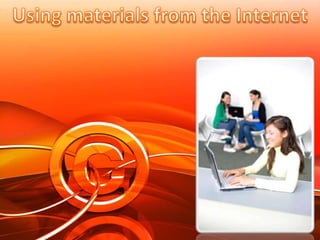
Using materials from the Internet
Some common assumptions are wrongAssume Noting
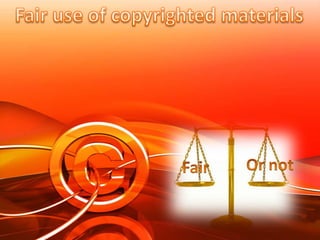
Fair use of copyrighted materialsOr notFair
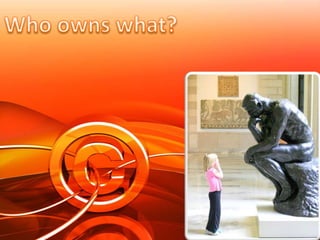
Who owns what?People need to know who owns whatWhen you create your work you want to know who will have the rights in the finished work?Whom to ask for permission ?identify the author or authors and contact one or more of them.
ask whether they own the copyright or whether the work was work for hire.
ask whether they have conveyed away any of their rights, and if so, to whom.The  author is usually the owner
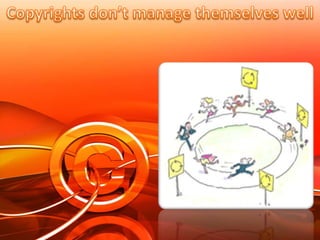
Copyrights don't manage themselves well There are many aspects to effective management of your copyrightsWhen you commercialize your worksyou can reserve the right to publicly archive your workare any costs involved?When you don't commercialize your worksThink about how you like to use others works; give others the rights you yourself think are reasonable.Copyright's bloated bundle gives you the exclusive rights to make copies (any and all copies), to distribute your work (to the public or to even offer it to the public), to display and perform your work publicly - for your lifetime plus 70 additional years.
Using materials from the InternetMany people assume that everything posted on the Internet is public domainThe law, however, has changed: neither publication nor a notice of any kind is required to protect works today.
postings of all kinds are protected the same as published printed works.The TEACH Act educators still have recourse to fair use to make copies, create derivative works, display and perform works publicly and distribute them to students.If you are an instructor these are some of the things you want to keep in mindMy institution is a nonprofit accredited educational institution or a governmental agency

Copyrightcrashcourseedtc634064marioaortizchp7 9updated

  • 1.
    Copyright Crash CourseByMario A. OrtizEDTC 6340.64
  • 2.
  • 3.
  • 4.
  • 5.
    Some common assumptionsare wrongAssume Noting
  • 6.
    Fair use ofcopyrighted materialsOr notFair
  • 7.
    Who owns what?Peopleneed to know who owns whatWhen you create your work you want to know who will have the rights in the finished work?Whom to ask for permission ?identify the author or authors and contact one or more of them.
  • 8.
    ask whether theyown the copyright or whether the work was work for hire.
  • 9.
    ask whether theyhave conveyed away any of their rights, and if so, to whom.The author is usually the owner
  • 10.
    Copyrights don't managethemselves well There are many aspects to effective management of your copyrightsWhen you commercialize your worksyou can reserve the right to publicly archive your workare any costs involved?When you don't commercialize your worksThink about how you like to use others works; give others the rights you yourself think are reasonable.Copyright's bloated bundle gives you the exclusive rights to make copies (any and all copies), to distribute your work (to the public or to even offer it to the public), to display and perform your work publicly - for your lifetime plus 70 additional years.
  • 11.
    Using materials fromthe InternetMany people assume that everything posted on the Internet is public domainThe law, however, has changed: neither publication nor a notice of any kind is required to protect works today.
  • 12.
    postings of allkinds are protected the same as published printed works.The TEACH Act educators still have recourse to fair use to make copies, create derivative works, display and perform works publicly and distribute them to students.If you are an instructor these are some of the things you want to keep in mindMy institution is a nonprofit accredited educational institution or a governmental agency

Editor's Notes

  • #3 Who owns what?
  • #4 Copyrights don't manage themselves well
  • #5 Using materials from the Internet
  • #6 Some common assumptions are wrong
  • #7 Fair use of copyrighted materials