R ATIONALE FOR
T ECHNOLOGY P LAN


A technology plan will make the connection
between our educational mission and the
technology being installed in the classrooms.



It will define the systems needed to support the
technology.



It is a description of what our school will look like
when the plan is implemented.
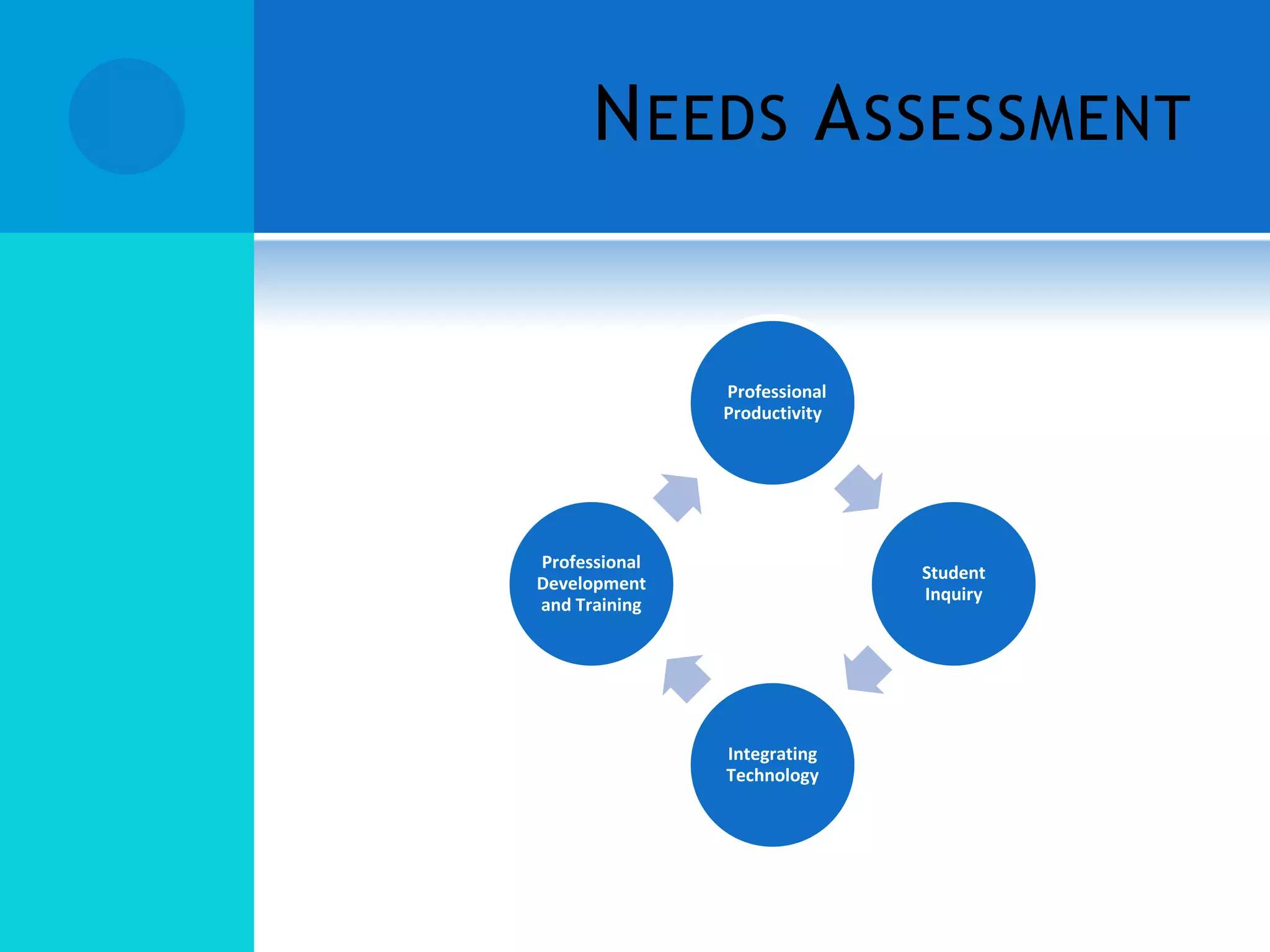
P LANNING T EAM

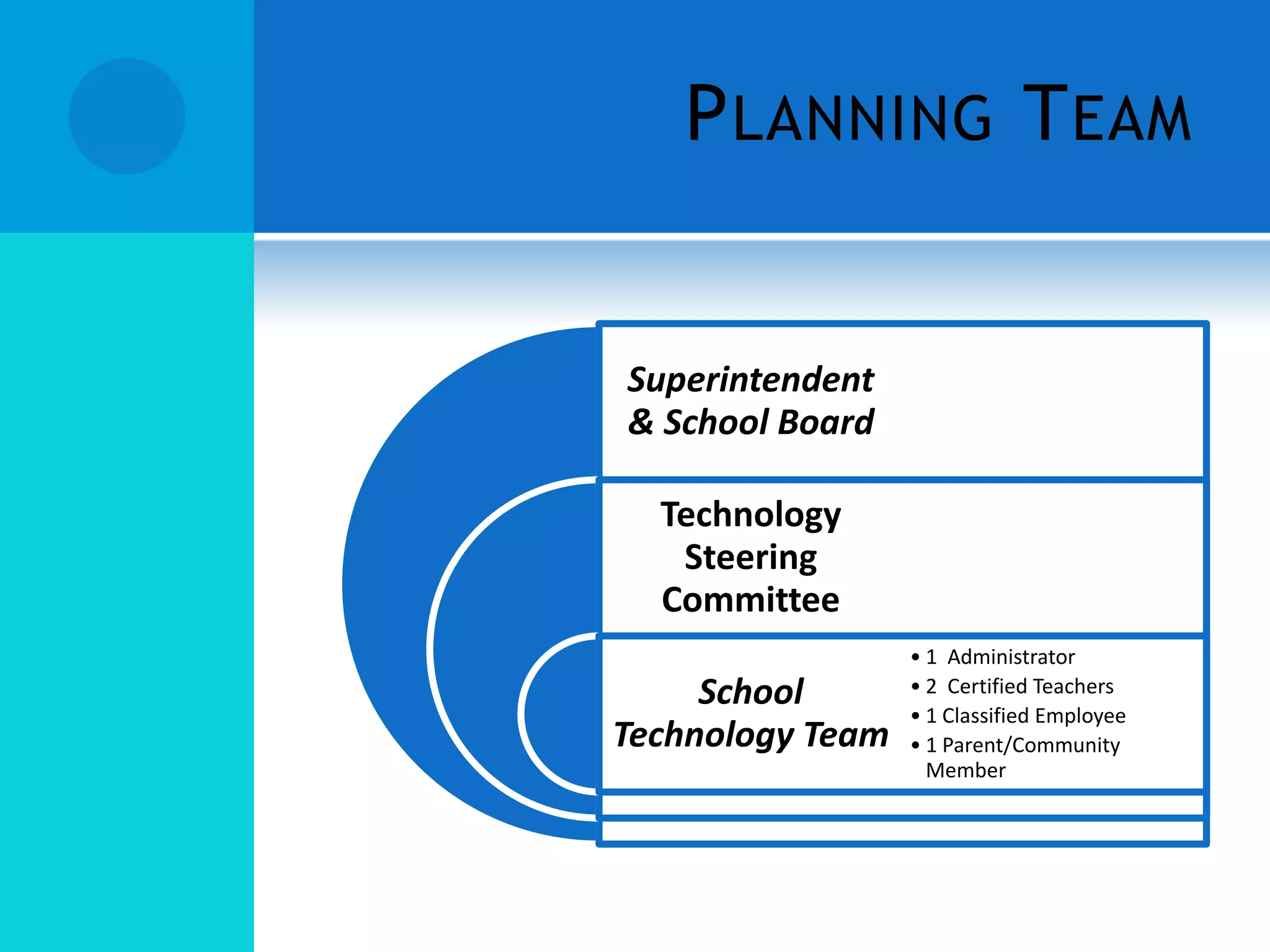
Superintendent
& School Board
Technology
Steering
Committee
School
Technology Team

• 1 Administrator
• 2 Certified Teachers
• 1 Classified Employee
• 1 Parent/Community
Member
P ROCESS D ESCRIPTION


The assessment phase



Provides an assessment of current technology
resources and behaviors for using those
resources effectively.



Includes developing support systems, creating an
acceptable use policy, and conducting grade-level
planning for curriculum integration (not just
classroom planning).
Formulation Phase


The formulation phase
The primary product of the formulation phase is a
detailed specification of training
requirements, budgets and timelines for
approved projects.
Implementation Phase



The implementation phase
This phase uses the project specifications
developed in the formulation phase to guide the
projects to completion. Acceptance criteria
developed in the formulation phase will be used
to make sure specifications are maintained and
work is complete.
Vision Statement


As described in the overall mission of the Boise
Public Schools, the purpose of education is to
prepare students to be productive and caring
adults. Within this context, we believe that
technology is a tool for learning that expands our
instructional repertoire and is the vehicle that
maximizes the capacity of all teachers and
learners. It is the vision of Boise Public Schools
that students be engaged in a stimulating
academic environment and a challenging
curriculum that is student-centered and focused
on inquiry-based learning.
P LAN G OALS /O BJECTIVES


GOAL 1: All students and educators will have equitable
and effective access to technology during and beyond
the school day.



GOAL 2: In order to enhance the impact of technology
on student performance, all educators will improve
mastery and integration of educational technology.



GOAL 3: Provide appropriate and timely technical
support to achieve effective integration of educational
technology.



GOAL 4: All students will become proficient users of
technology.
Goal 1 Objectives


1.1 Connect all classrooms to the network and provide
classroom technology to meet the current district
standard.



1.2 Enable easy, seamless, secure connection to the
network from all access points.



1.3 Establish and annually review technology standards.



1.4 Establish a business continuance plan to ensure
continued access to educational and administrative
resources.



1.5 Create and maintain public/private (community)
partnerships to enhance the effective access to technology
during and beyond the school day.
Goal 2 Objectives


2.1 Develop and deliver standards-based staff
development.



2.2 Utilize successful schools and programs as “best
practice models.”



2.3 Develop partnerships for staff development
opportunities.



2.4. Ensure the district provides every opportunity for
staff to improve their technical proficiency and ability
to integrate the technology into the curriculum



2. 5 Enable every teacher to participate in e-learning
training.
Goal 3 Objectives


3.1 Utilize and continue to enhance centralized
support system.



3.2. Establish a plan to integrate data systems so
that administrators and educators so that
administrators and educators have the
information they need to increase efficiency
and improve student learning.



3.3. Use data from both administrative and
instructional systems to understand
relationships between decisions, allocation of
resources and student achievement.
Goal 4 – Objectives


4.1 Establish student technology competency
standards and use to measure student fluency.



4.2 Provide students with technology literacy
skills.



4.3. Reduce the ratio of end users to computers
and ensure currency of technologies.
N EEDS A SSESSMENT


Successful programs continually assess the
needs, interests, and skills of their learners by
conducting ongoing needs assessments. Schools
should examine these assessments to identify the
highest priority needs of their learners. The areas
identified to assess are:
N EEDS A SSESSMENT

Professional
Productivity

Professional
Development
and Training

Student
Inquiry

Integrating
Technology
S TAFF D EVELOPMENT


Provides training and support strategies to
ensure that staff has the appropriate
competencies and continuous support needed to
integrate technology into the curriculum.



Provides staff with access to professional
development in the use of technology in order to
prepare them to help students meet high
academic standards.



Three levels of development are as follows:
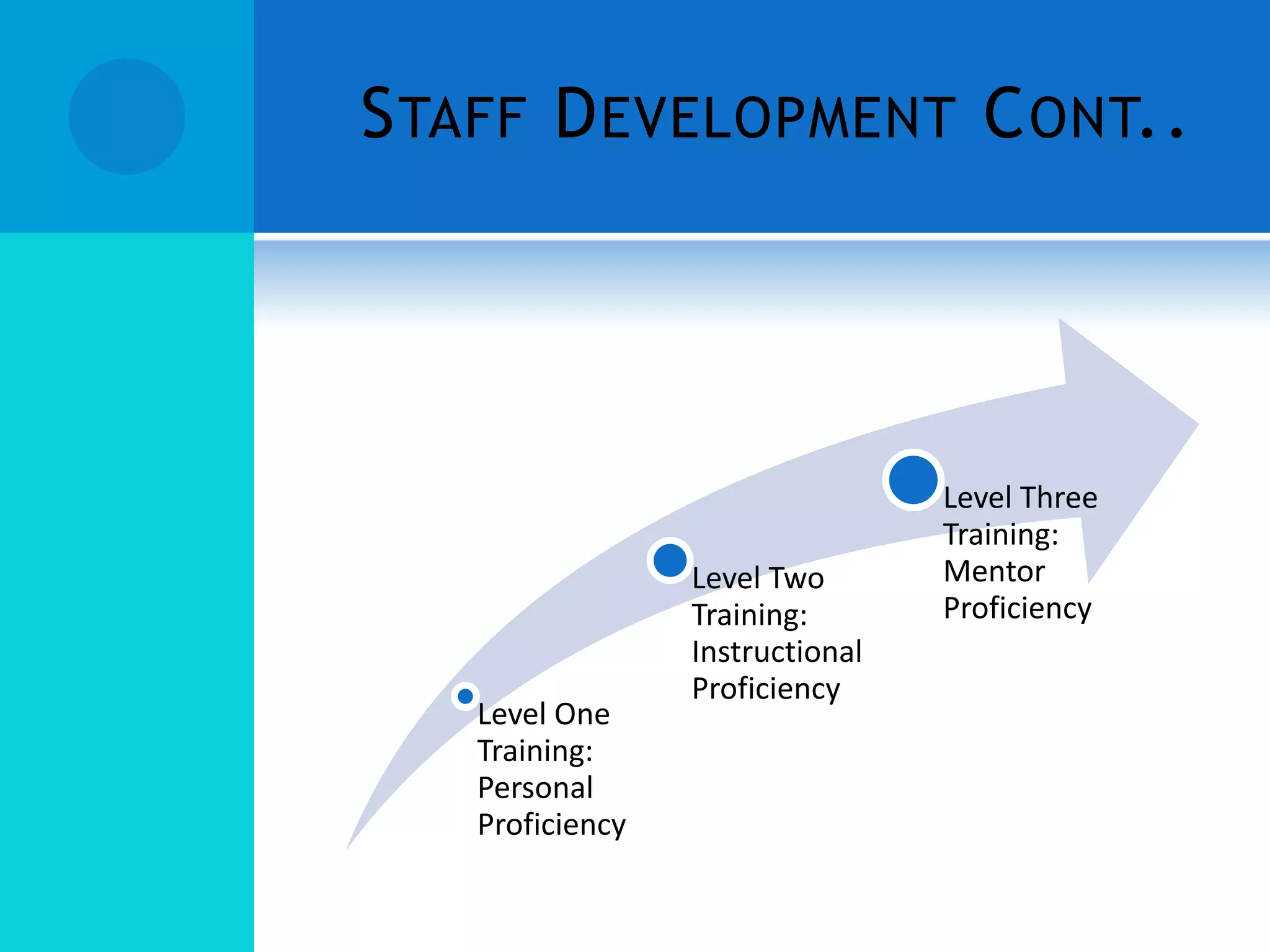
S TAFF D EVELOPMENT C ONT..

Level One
Training:
Personal
Proficiency

Level Two
Training:
Instructional
Proficiency

Level Three
Training:
Mentor
Proficiency
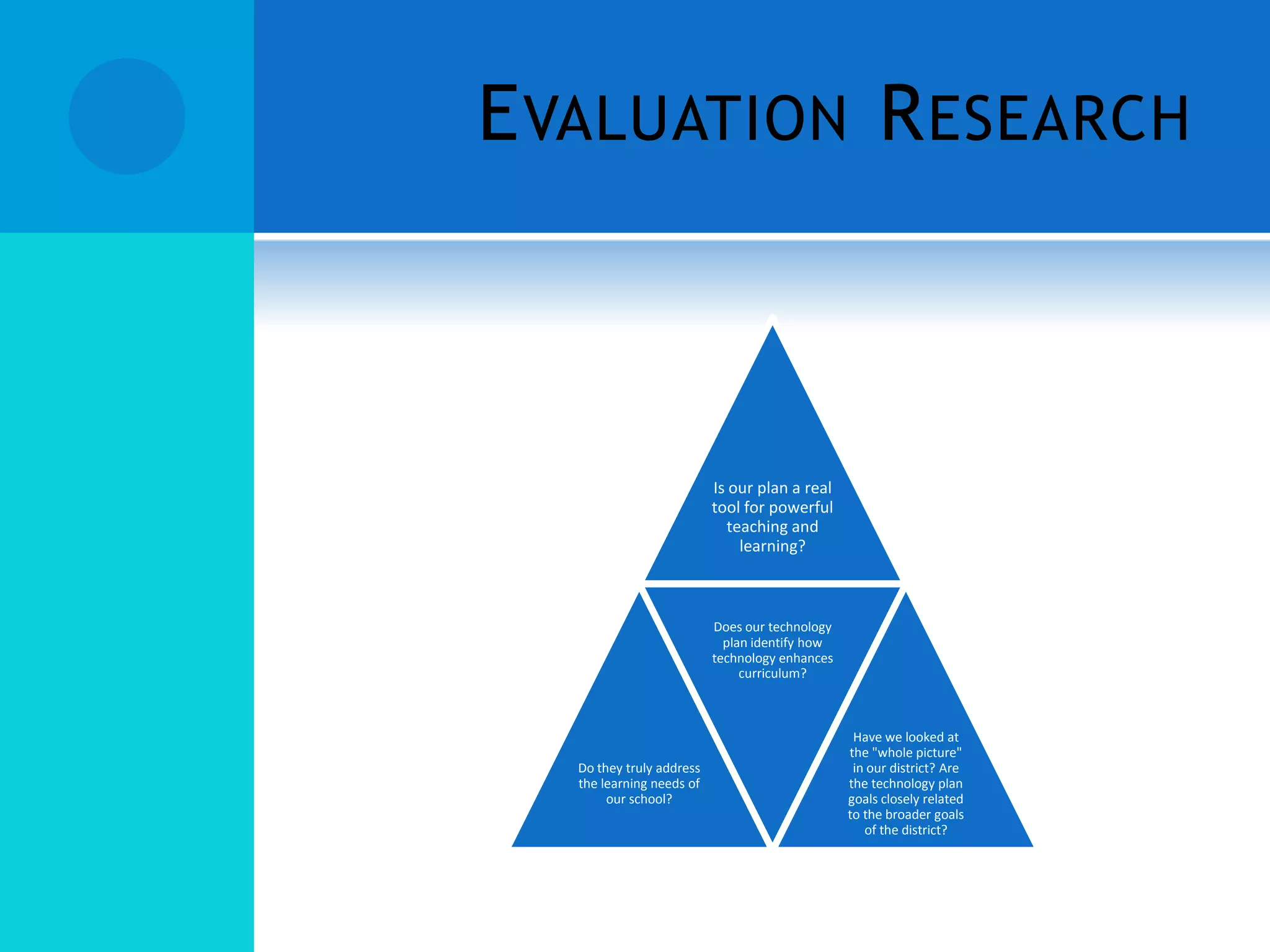
E VALUATION R ESEARCH

Is our plan a real
tool for powerful
teaching and
learning?

Does our technology
plan identify how
technology enhances
curriculum?

Do they truly address
the learning needs of
our school?

Have we looked at
the "whole picture"
in our district? Are
the technology plan
goals closely related
to the broader goals
of the district?
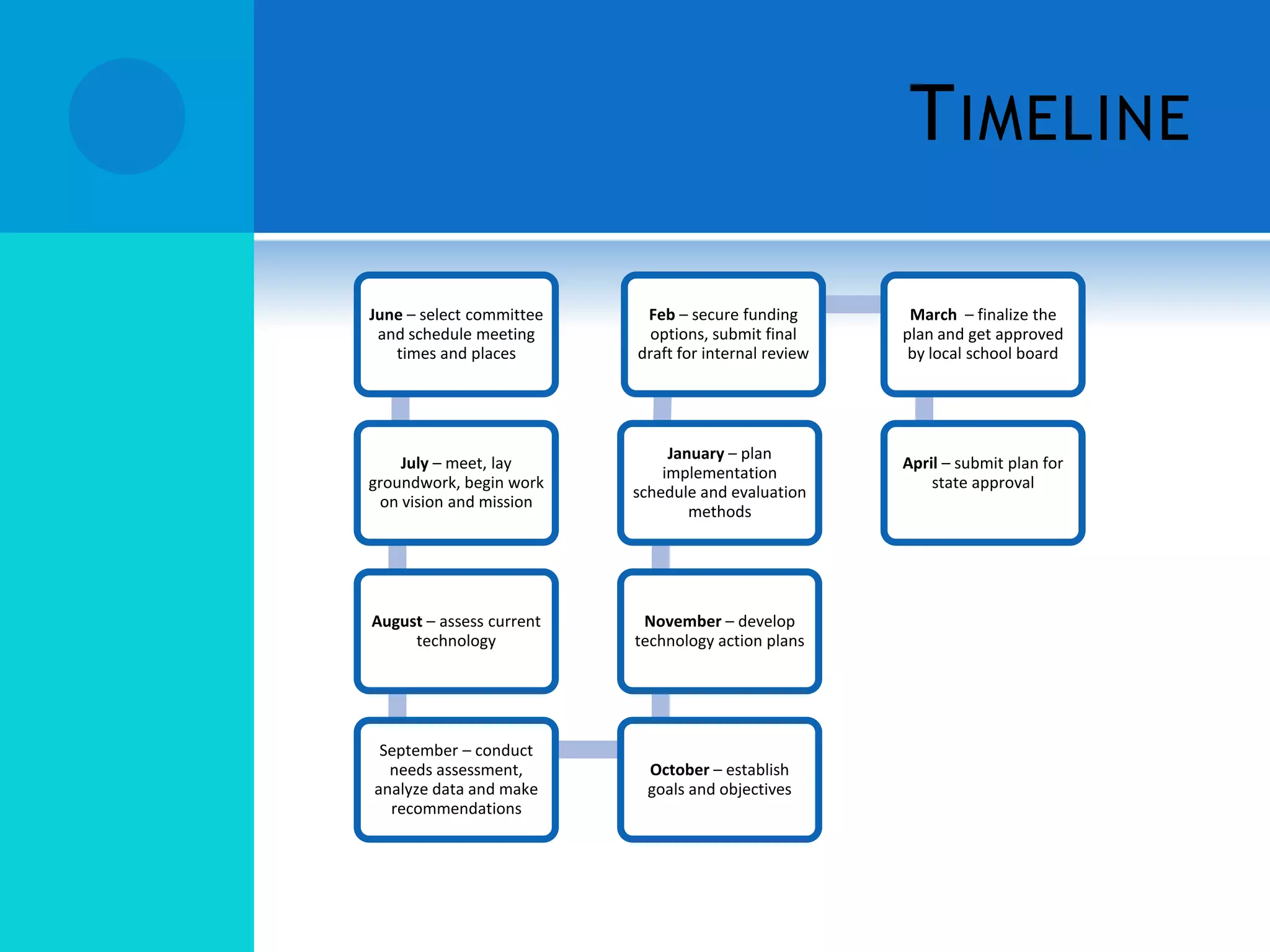
T IMELINE
June – select committee
and schedule meeting
times and places

Feb – secure funding
options, submit final
draft for internal review

July – meet, lay
groundwork, begin work
on vision and mission

January – plan
implementation
schedule and evaluation
methods

August – assess current
technology

November – develop
technology action plans

September – conduct
needs assessment,
analyze data and make
recommendations

October – establish
goals and objectives

March – finalize the
plan and get approved
by local school board

April – submit plan for
state approval

EDTECH 571 - Technology Plan

  • 1.
    R ATIONALE FOR TECHNOLOGY P LAN  A technology plan will make the connection between our educational mission and the technology being installed in the classrooms.  It will define the systems needed to support the technology.  It is a description of what our school will look like when the plan is implemented.
  • 2.
    P LANNING TEAM Superintendent & School Board Technology Steering Committee School Technology Team • 1 Administrator • 2 Certified Teachers • 1 Classified Employee • 1 Parent/Community Member
  • 3.
    P ROCESS DESCRIPTION  The assessment phase  Provides an assessment of current technology resources and behaviors for using those resources effectively.  Includes developing support systems, creating an acceptable use policy, and conducting grade-level planning for curriculum integration (not just classroom planning).
  • 4.
    Formulation Phase  The formulationphase The primary product of the formulation phase is a detailed specification of training requirements, budgets and timelines for approved projects.
  • 5.
    Implementation Phase  The implementationphase This phase uses the project specifications developed in the formulation phase to guide the projects to completion. Acceptance criteria developed in the formulation phase will be used to make sure specifications are maintained and work is complete.
  • 6.
    Vision Statement  As describedin the overall mission of the Boise Public Schools, the purpose of education is to prepare students to be productive and caring adults. Within this context, we believe that technology is a tool for learning that expands our instructional repertoire and is the vehicle that maximizes the capacity of all teachers and learners. It is the vision of Boise Public Schools that students be engaged in a stimulating academic environment and a challenging curriculum that is student-centered and focused on inquiry-based learning.
  • 7.
    P LAN GOALS /O BJECTIVES  GOAL 1: All students and educators will have equitable and effective access to technology during and beyond the school day.  GOAL 2: In order to enhance the impact of technology on student performance, all educators will improve mastery and integration of educational technology.  GOAL 3: Provide appropriate and timely technical support to achieve effective integration of educational technology.  GOAL 4: All students will become proficient users of technology.
  • 8.
    Goal 1 Objectives  1.1Connect all classrooms to the network and provide classroom technology to meet the current district standard.  1.2 Enable easy, seamless, secure connection to the network from all access points.  1.3 Establish and annually review technology standards.  1.4 Establish a business continuance plan to ensure continued access to educational and administrative resources.  1.5 Create and maintain public/private (community) partnerships to enhance the effective access to technology during and beyond the school day.
  • 9.
    Goal 2 Objectives  2.1Develop and deliver standards-based staff development.  2.2 Utilize successful schools and programs as “best practice models.”  2.3 Develop partnerships for staff development opportunities.  2.4. Ensure the district provides every opportunity for staff to improve their technical proficiency and ability to integrate the technology into the curriculum  2. 5 Enable every teacher to participate in e-learning training.
  • 10.
    Goal 3 Objectives  3.1Utilize and continue to enhance centralized support system.  3.2. Establish a plan to integrate data systems so that administrators and educators so that administrators and educators have the information they need to increase efficiency and improve student learning.  3.3. Use data from both administrative and instructional systems to understand relationships between decisions, allocation of resources and student achievement.
  • 11.
    Goal 4 –Objectives  4.1 Establish student technology competency standards and use to measure student fluency.  4.2 Provide students with technology literacy skills.  4.3. Reduce the ratio of end users to computers and ensure currency of technologies.
  • 12.
    N EEDS ASSESSMENT  Successful programs continually assess the needs, interests, and skills of their learners by conducting ongoing needs assessments. Schools should examine these assessments to identify the highest priority needs of their learners. The areas identified to assess are:
  • 13.
    N EEDS ASSESSMENT Professional Productivity Professional Development and Training Student Inquiry Integrating Technology
  • 14.
    S TAFF DEVELOPMENT  Provides training and support strategies to ensure that staff has the appropriate competencies and continuous support needed to integrate technology into the curriculum.  Provides staff with access to professional development in the use of technology in order to prepare them to help students meet high academic standards.  Three levels of development are as follows:
  • 15.
    S TAFF DEVELOPMENT C ONT.. Level One Training: Personal Proficiency Level Two Training: Instructional Proficiency Level Three Training: Mentor Proficiency
  • 16.
    E VALUATION RESEARCH Is our plan a real tool for powerful teaching and learning? Does our technology plan identify how technology enhances curriculum? Do they truly address the learning needs of our school? Have we looked at the "whole picture" in our district? Are the technology plan goals closely related to the broader goals of the district?
  • 17.
    T IMELINE June –select committee and schedule meeting times and places Feb – secure funding options, submit final draft for internal review July – meet, lay groundwork, begin work on vision and mission January – plan implementation schedule and evaluation methods August – assess current technology November – develop technology action plans September – conduct needs assessment, analyze data and make recommendations October – establish goals and objectives March – finalize the plan and get approved by local school board April – submit plan for state approval