The Need for Transformation

As emerging technology continues to dictate the way we function
in this global society, the need to restructure our education
system was inevitable. This transformation required an
infrastructure that would make learning opportunities available to
learners, educators and administrators regardless of location or
time.
The Need for Transformation

Technology would actually change the whole way we would view
education including its basic assumption that teachers are the
communicators of learning. Through technology, the new techno
savvy learners now have opportunities to share in this
communication process.
The Need for Transformation
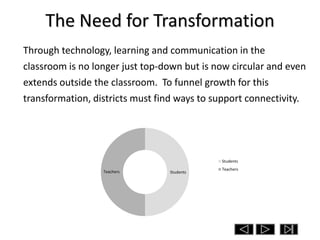
Through technology, learning and communication in the
classroom is no longer just top-down but is now circular and even
extends outside the classroom. To funnel growth for this
transformation, districts must find ways to support connectivity.


                                              Students
                                              Teachers
                  Teachers        Students
The FCC

Because this transformation is a huge undertaking for local
districts, the Federal Communications Commission (FCC)
implemented the E-Rate discount program administered by the
(USAC) Universal Service Administration Company to provide
monetary support with providing connectivity in elementary and
secondary schools and libraries.
Purpose of E-Rate
The PURPOSE of E-Rate is to ensure that all eligible schools and
libraries have affordable access to modern telecommunications
and information services and to provide discounts for services.
Discounts
Discounts are to promote improved:

Internet Access

Telecommunications Services

Internal Network Connections

Basic Maintenance and Support
Range of Discounts

Discounts range from 20% to 90% of costs for eligible services
depending on the level of poverty and the urban/rural status of
the population served.
Contingent Upon
E-Rate money for school districts is contingent on the ability of
the districts to

Implement filters that block student access to content that
 may be harmful to minors

Provide online safety to students

Monitor online activities
How the Plan Works

Schools can apply each year for discounts.
If funded, bills can be discounted directly from the service
providers or through reimbursement of services.
Programs are capped at receiving no more than $2.25 billion per
program year.
Provision for Other Resources
Schools are responsible for providing additional resources to
meet connectivity objectives such as

Computers

Telephones

Software

Professional Development
Steps
Steps needed to apply for and receive these discounts include

Step 1 - Development of a Technology Plan

Step 2 - Opening of the Competitive Bidding Process

Step 3 - Seeking Discounts on Eligible Services

Step 4 - Confirming the receipt of these services

Step 5 - Invoicing USAC for these Services
E-Rate Discount Program

The USAC Website supplies more details on E-Rate.
Technology Plan

Step 1 of the E-Rate application process, development of a
Technology Plan


Shows how schools will use technology to achieve specific
curriculum reforms and guide planning and investment for both
E-Rate funds and for other resources needed to take advantage of
technology.
Required Content
 Clear goals and strategies for using technologies

 Professional development strategies to ensure staff knows
  how to use these new technologies

 Assessment of the components to technology such as the
  actual services, hardware and software

 An evaluation process
Technology Plan – Irving ISD
Irving ISD has developed its 2010 - 2013 technology plan to move
the district forward in its continued effort to integrate technology
into schools.
Technology Plan – Irving ISD
The district’s Long Range Plan for Technology expands over 3
years and covers four major areas

1) Integration of Technology into Teaching and Learning

2) Professional Development

3) Administration and Support Services and

4) Infrastructure for Technology
7 Goals for Technology
There are seven goals that the district lists and various strategies
that accompany these goals.
Goal # 1
Goal # 1 - Infuse higher level thinking with technology and quality
instruction.

Strategies include integrating technology TEKS and higher order
thinking into 100% of curriculum areas, increasing integration of
technology and maintaining the 1:1 ratio of computing devices for
students grades 9–12, teachers, and administrators.
Goal # 2
Goal # 2 - Support assessment and planning through the use of
technology.

Strategies include providing technology support for assessing.
Goal # 3
Goal # 3 - Educate all students and teachers in responsible
technology use.

Strategies include trainings on appropriate use and internet
safety.
Goal # 3
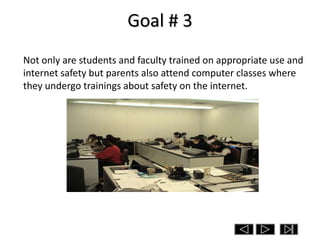
Not only are students and faculty trained on appropriate use and
internet safety but parents also attend computer classes where
they undergo trainings about safety on the internet.
Goal # 4
Goal # 4 – Ensure that professional development is on-going and
high quality.

Strategies include providing differentiated job-embedded
technology training, increasing the use of technology in staff
developments, and demonstrating the effective use of digital
tools and resources.
Goal # 4
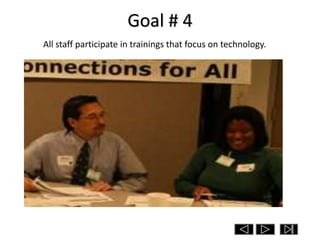
All staff participate in trainings that focus on technology.
Trainings
Staff developments focus on the needs of the campus.


Trainings are conducted by Instructional Technology Specialists
(ITS).
Goal # 5
Goal # 5 - Ensure 100% administrative participation in appropriate
software programs.

Strategies include using software programs and increasing
communications through the use of technology.
Goal # 6
Goal #6 - Provide leadership to leverage technology for the
improvement of teaching and learning in classrooms.

Strategies include integrating technology into curriculum and
maintaining technology resources for continued improvement.
Goal # 7
Goal #7 - Ensure a stable infrastructure for technology use.

Strategies include insuring dependable operations 24/7 and
developing a sustainable system with available funds.
Evaluation

Local evaluations will be conducted for each aspect of the plan.

This includes walk through evaluations and a district-developed
technology standards assessment.

The Texas STaR Chart (School Technology and Readiness) will also
be used to measure progress.
Conclusion

The district has developed a Long Range Technology Planning
Committee who will meet at least once a year to review progress
made toward the Long Range Plan for Technology.

This committee along with the board’s goal of staff to use a
variety of technological resources to engage students should help
successfully transition the district into the 21st Century.

Assignmentpowerpoint

  • 1.
    The Need forTransformation As emerging technology continues to dictate the way we function in this global society, the need to restructure our education system was inevitable. This transformation required an infrastructure that would make learning opportunities available to learners, educators and administrators regardless of location or time.
  • 2.
    The Need forTransformation Technology would actually change the whole way we would view education including its basic assumption that teachers are the communicators of learning. Through technology, the new techno savvy learners now have opportunities to share in this communication process.
  • 3.
    The Need forTransformation Through technology, learning and communication in the classroom is no longer just top-down but is now circular and even extends outside the classroom. To funnel growth for this transformation, districts must find ways to support connectivity. Students Teachers Teachers Students
  • 4.
    The FCC Because thistransformation is a huge undertaking for local districts, the Federal Communications Commission (FCC) implemented the E-Rate discount program administered by the (USAC) Universal Service Administration Company to provide monetary support with providing connectivity in elementary and secondary schools and libraries.
  • 5.
    Purpose of E-Rate ThePURPOSE of E-Rate is to ensure that all eligible schools and libraries have affordable access to modern telecommunications and information services and to provide discounts for services.
  • 6.
    Discounts Discounts are topromote improved: Internet Access Telecommunications Services Internal Network Connections Basic Maintenance and Support
  • 7.
    Range of Discounts Discountsrange from 20% to 90% of costs for eligible services depending on the level of poverty and the urban/rural status of the population served.
  • 8.
    Contingent Upon E-Rate moneyfor school districts is contingent on the ability of the districts to Implement filters that block student access to content that may be harmful to minors Provide online safety to students Monitor online activities
  • 9.
    How the PlanWorks Schools can apply each year for discounts. If funded, bills can be discounted directly from the service providers or through reimbursement of services. Programs are capped at receiving no more than $2.25 billion per program year.
  • 10.
    Provision for OtherResources Schools are responsible for providing additional resources to meet connectivity objectives such as Computers Telephones Software Professional Development
  • 11.
    Steps Steps needed toapply for and receive these discounts include Step 1 - Development of a Technology Plan Step 2 - Opening of the Competitive Bidding Process Step 3 - Seeking Discounts on Eligible Services Step 4 - Confirming the receipt of these services Step 5 - Invoicing USAC for these Services
  • 12.
    E-Rate Discount Program TheUSAC Website supplies more details on E-Rate.
  • 13.
    Technology Plan Step 1of the E-Rate application process, development of a Technology Plan Shows how schools will use technology to achieve specific curriculum reforms and guide planning and investment for both E-Rate funds and for other resources needed to take advantage of technology.
  • 14.
    Required Content  Cleargoals and strategies for using technologies  Professional development strategies to ensure staff knows how to use these new technologies  Assessment of the components to technology such as the actual services, hardware and software  An evaluation process
  • 15.
    Technology Plan –Irving ISD Irving ISD has developed its 2010 - 2013 technology plan to move the district forward in its continued effort to integrate technology into schools.
  • 16.
    Technology Plan –Irving ISD The district’s Long Range Plan for Technology expands over 3 years and covers four major areas 1) Integration of Technology into Teaching and Learning 2) Professional Development 3) Administration and Support Services and 4) Infrastructure for Technology
  • 17.
    7 Goals forTechnology There are seven goals that the district lists and various strategies that accompany these goals.
  • 18.
    Goal # 1 Goal# 1 - Infuse higher level thinking with technology and quality instruction. Strategies include integrating technology TEKS and higher order thinking into 100% of curriculum areas, increasing integration of technology and maintaining the 1:1 ratio of computing devices for students grades 9–12, teachers, and administrators.
  • 19.
    Goal # 2 Goal# 2 - Support assessment and planning through the use of technology. Strategies include providing technology support for assessing.
  • 20.
    Goal # 3 Goal# 3 - Educate all students and teachers in responsible technology use. Strategies include trainings on appropriate use and internet safety.
  • 21.
    Goal # 3 Notonly are students and faculty trained on appropriate use and internet safety but parents also attend computer classes where they undergo trainings about safety on the internet.
  • 22.
    Goal # 4 Goal# 4 – Ensure that professional development is on-going and high quality. Strategies include providing differentiated job-embedded technology training, increasing the use of technology in staff developments, and demonstrating the effective use of digital tools and resources.
  • 23.
    Goal # 4 Allstaff participate in trainings that focus on technology.
  • 24.
    Trainings Staff developments focuson the needs of the campus. Trainings are conducted by Instructional Technology Specialists (ITS).
  • 25.
    Goal # 5 Goal# 5 - Ensure 100% administrative participation in appropriate software programs. Strategies include using software programs and increasing communications through the use of technology.
  • 26.
    Goal # 6 Goal#6 - Provide leadership to leverage technology for the improvement of teaching and learning in classrooms. Strategies include integrating technology into curriculum and maintaining technology resources for continued improvement.
  • 27.
    Goal # 7 Goal#7 - Ensure a stable infrastructure for technology use. Strategies include insuring dependable operations 24/7 and developing a sustainable system with available funds.
  • 28.
    Evaluation Local evaluations willbe conducted for each aspect of the plan. This includes walk through evaluations and a district-developed technology standards assessment. The Texas STaR Chart (School Technology and Readiness) will also be used to measure progress.
  • 29.
    Conclusion The district hasdeveloped a Long Range Technology Planning Committee who will meet at least once a year to review progress made toward the Long Range Plan for Technology. This committee along with the board’s goal of staff to use a variety of technological resources to engage students should help successfully transition the district into the 21st Century.