Presented By:
Manisha mahajan
B.Ed -2nd sem
University Roll No: 11081851043

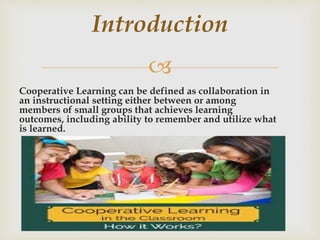
Cooperative Learning can be defined as collaboration in
an instructional setting either between or among
members of small groups that achieves learning
outcomes, including ability to remember and utilize what
is learned.
Introduction

 Groups have common goals toward which to work.
 Students work in small, teacher-assigned groups.
 Teachers provide activity structures that encourage
productive learning behaviors.
 Each student is individually accountable for his or
her achievements.
 Students are rewarded for group success.
In Cooperative Learning
Settings

 Classroom
 Movable chairs
 Tables that individually seat up to five persons, if
possible
 Computers for computer-based exercises
 Well-planned activities, designed to meet the needs of
the audience in the amount of time allocated
 Knowledge of techniques and how to utilize them
 Previous practice using the techniques
 Students equipped with writing instruments and paper
who are motivated to follow directions and work in
groups
Instructor Needs

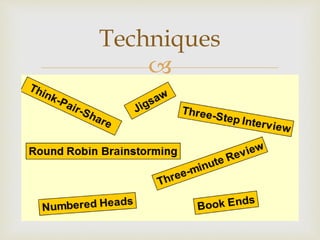
Techniques
 Group students into sets of five.
Assign unique information to learn
to each group member. After reading
the material, instruct group members
to take turns teaching their material
to their teammates.
 Example: Give the members of each
group a piece of paper containing
information detailing one way to
evaluative web sites. Provide two
minutes of silence to read the
material and decide how to explain
it. Ask them to take turns explaining
the information to the other group
members.
Jigsaw

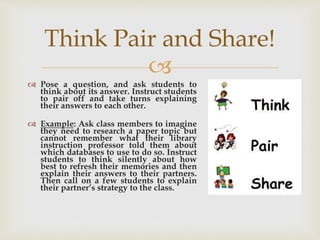
 Pose a question, and ask students to
think about its answer. Instruct students
to pair off and take turns explaining
their answers to each other.
 Example: Ask class members to imagine
they need to research a paper topic but
cannot remember what their library
instruction professor told them about
which databases to use to do so. Instruct
students to think silently about how
best to refresh their memories and then
explain their answers to their partners.
Then call on a few students to explain
their partner’s strategy to the class.
Think Pair and Share!

 Group students into pairs. In step one, ask
individuals to interview their partners. In
step two, ask partners to reverse roles. In
step three, select a few students to explain
their partners’ answer to the entire class.
 Example: Instruct students to imagine that
their psychology professor has asked each
one to compose a five-page research paper
focused on one of the many topics covered in
the course textbook. Request that they think
silently about how they would go about
selecting a topic and why they would choose
that method. Ask the students to pair off and
interview each other. Each partner should
ask the other these questions. “How would
you identify a topic?” “Why would you
choose this method?”
Three-step Interview
 Group students into sets of four or five each, and instruct each
group to appoint a recorder. Pose a question having several
answers. Have group members think silently about responses
and then take turns sharing their ideas with the others in the
group. Ask group members not to criticize one another's
responses. Instruct the recorder to write down the ideas. After a
few minutes, stop the discussions, and select a member of each
group to read the recorder’s list aloud.
 Example: Instruct class members to imagine that their biology
professor has asked each one to compose a paper focused on
gene therapy but has provided no guidance in terms of
appropriate number or type of resources needed to complete
the paper. Tell students to imagine themselves confronted with
253 titles after a global library database/catalog search and to
“brainstorm” ideas as to what to do next. Ask them to name a
recorder to take notes and a reporter to read the notes. After a
few minutes, ask students to end their discussions. Then have
each reporter tell the entire class about his or her group’s ideas.
Round Robin Brainstorming

 Pause during or at the end of a
lecture or discussion. Ask students
to work with partners to
summarize the lecture or
discussion. After three minutes,
call on a few students to share their
group’s summary with the class.
 Example: Pause at the end of each
lecture topic. Ask students to pair
up and summarize the lecture. Ask
one member of two or three of the
pairs to share summaries verbally
with the entire class.
Three-minute review

 Group students into sets of
four, and number the members
of each group one through four.
Give the groups questions to
answer. Ask each group to
decide upon an answer, and
call on all persons with a
certain number to take turns
reporting to the class.
Numbered Heads

 Ask students to pair up. Give them a topic, and tell
them to spend a couple of minutes deciding how to
teach that topic to their partners. After giving
participants time to think, invite them to take turns
teaching the topic to their partners.
 Example: Ask students to select an information
resource such as a resource of their choosing.
Instruct them to describe the resource by creating a
list of its characteristics. After a few minutes, ask
students to use their lists to teach their partners
about the resource.
Book Ends

The cooperating learning technique enhances student cooperation and
friendly competition which allows different students with different
capabilities to work together and acquire mastery in the topics assigned
to them. The students have the independence to have interactions with
different students. Its benefits are as follows :
 Ensuring attention through active student participation
 Adding meaning and relevance to the material
 Enabling students to learn from “modeling” or through observation
of others
Conclusion


Cooperative learning techniques

  • 1.
    Presented By: Manisha mahajan B.Ed-2nd sem University Roll No: 11081851043
  • 2.
     Cooperative Learning canbe defined as collaboration in an instructional setting either between or among members of small groups that achieves learning outcomes, including ability to remember and utilize what is learned. Introduction
  • 3.
      Groups havecommon goals toward which to work.  Students work in small, teacher-assigned groups.  Teachers provide activity structures that encourage productive learning behaviors.  Each student is individually accountable for his or her achievements.  Students are rewarded for group success. In Cooperative Learning Settings
  • 4.
      Classroom  Movablechairs  Tables that individually seat up to five persons, if possible  Computers for computer-based exercises  Well-planned activities, designed to meet the needs of the audience in the amount of time allocated  Knowledge of techniques and how to utilize them  Previous practice using the techniques  Students equipped with writing instruments and paper who are motivated to follow directions and work in groups Instructor Needs
  • 5.
  • 6.
     Group studentsinto sets of five. Assign unique information to learn to each group member. After reading the material, instruct group members to take turns teaching their material to their teammates.  Example: Give the members of each group a piece of paper containing information detailing one way to evaluative web sites. Provide two minutes of silence to read the material and decide how to explain it. Ask them to take turns explaining the information to the other group members. Jigsaw
  • 7.
      Pose aquestion, and ask students to think about its answer. Instruct students to pair off and take turns explaining their answers to each other.  Example: Ask class members to imagine they need to research a paper topic but cannot remember what their library instruction professor told them about which databases to use to do so. Instruct students to think silently about how best to refresh their memories and then explain their answers to their partners. Then call on a few students to explain their partner’s strategy to the class. Think Pair and Share!
  • 8.
      Group studentsinto pairs. In step one, ask individuals to interview their partners. In step two, ask partners to reverse roles. In step three, select a few students to explain their partners’ answer to the entire class.  Example: Instruct students to imagine that their psychology professor has asked each one to compose a five-page research paper focused on one of the many topics covered in the course textbook. Request that they think silently about how they would go about selecting a topic and why they would choose that method. Ask the students to pair off and interview each other. Each partner should ask the other these questions. “How would you identify a topic?” “Why would you choose this method?” Three-step Interview
  • 9.
     Group studentsinto sets of four or five each, and instruct each group to appoint a recorder. Pose a question having several answers. Have group members think silently about responses and then take turns sharing their ideas with the others in the group. Ask group members not to criticize one another's responses. Instruct the recorder to write down the ideas. After a few minutes, stop the discussions, and select a member of each group to read the recorder’s list aloud.  Example: Instruct class members to imagine that their biology professor has asked each one to compose a paper focused on gene therapy but has provided no guidance in terms of appropriate number or type of resources needed to complete the paper. Tell students to imagine themselves confronted with 253 titles after a global library database/catalog search and to “brainstorm” ideas as to what to do next. Ask them to name a recorder to take notes and a reporter to read the notes. After a few minutes, ask students to end their discussions. Then have each reporter tell the entire class about his or her group’s ideas. Round Robin Brainstorming
  • 10.
      Pause duringor at the end of a lecture or discussion. Ask students to work with partners to summarize the lecture or discussion. After three minutes, call on a few students to share their group’s summary with the class.  Example: Pause at the end of each lecture topic. Ask students to pair up and summarize the lecture. Ask one member of two or three of the pairs to share summaries verbally with the entire class. Three-minute review
  • 11.
      Group studentsinto sets of four, and number the members of each group one through four. Give the groups questions to answer. Ask each group to decide upon an answer, and call on all persons with a certain number to take turns reporting to the class. Numbered Heads
  • 12.
      Ask studentsto pair up. Give them a topic, and tell them to spend a couple of minutes deciding how to teach that topic to their partners. After giving participants time to think, invite them to take turns teaching the topic to their partners.  Example: Ask students to select an information resource such as a resource of their choosing. Instruct them to describe the resource by creating a list of its characteristics. After a few minutes, ask students to use their lists to teach their partners about the resource. Book Ends
  • 13.
     The cooperating learningtechnique enhances student cooperation and friendly competition which allows different students with different capabilities to work together and acquire mastery in the topics assigned to them. The students have the independence to have interactions with different students. Its benefits are as follows :  Ensuring attention through active student participation  Adding meaning and relevance to the material  Enabling students to learn from “modeling” or through observation of others Conclusion
  • 14.