 Introduction:- This policy is
popularly known as the NEW
EDUCATION POLICY. It is a
magna carta of the education for
the days to come. This document
contains nearly ten thousand
word spread over 29 pages and is
divided into 12 parts with 157
articles.
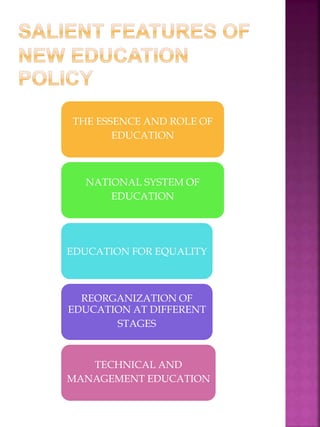
THE ESSENCE AND ROLE OF
EDUCATION
NATIONAL SYSTEM OF
EDUCATION
EDUCATION FOR EQUALITY
REORGANIZATION OF
EDUCATION AT DIFFERENT
STAGES
TECHNICAL AND
MANAGEMENT EDUCATION
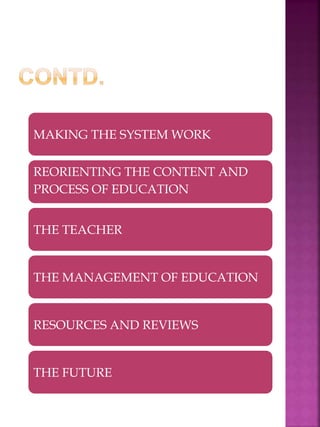
MAKING THE SYSTEM WORK
REORIENTING THE CONTENT AND
PROCESS OF EDUCATION
THE TEACHER
THE MANAGEMENT OF EDUCATION
RESOURCES AND REVIEWS
THE FUTURE
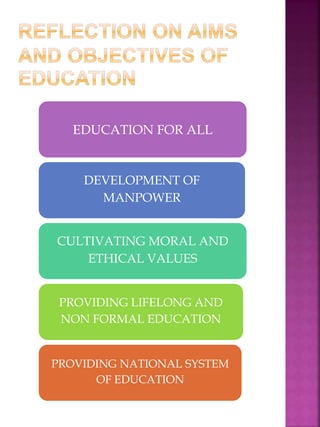
EDUCATION FOR ALL
DEVELOPMENT OF
MANPOWER
CULTIVATING MORAL AND
ETHICAL VALUES
PROVIDING LIFELONG AND
NON FORMAL EDUCATION
PROVIDING NATIONAL SYSTEM
OF EDUCATION
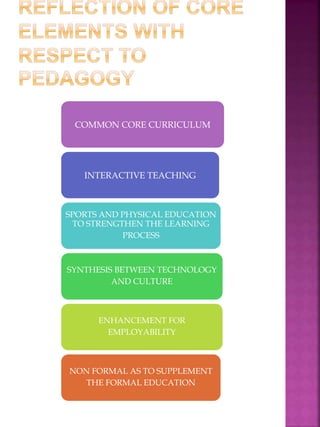
COMMON CORE CURRICULUM
INTERACTIVE TEACHING
SPORTS AND PHYSICAL EDUCATION
TO STRENGTHEN THE LEARNING
PROCESS
SYNTHESIS BETWEEN TECHNOLOGY
AND CULTURE
ENHANCEMENT FOR
EMPLOYABILITY
NON FORMAL AS TO SUPPLEMENT
THE FORMAL EDUCATION
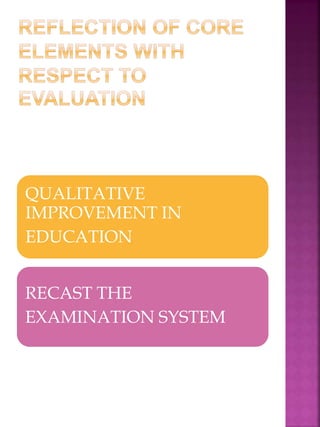
QUALITATIVE
IMPROVEMENT IN
EDUCATION
RECAST THE
EXAMINATION SYSTEM
At the end , it can be concluded
that national policy of education
1986 is formulated on the
principle that “education is
unique investment in present and
future”. This implies that
education is for all and promotes
the goals of socialism secularism
and democracy.
The NPE 1986 entrusted NCERT
with the responsibility of
reviewing and developing
National Curriculum of
Framework at frequent intervals.
The review and revision of NCF
is also necessary to respond to the
new development and concerns
like curriculum load,tyranny of
examination,commitment to
universal education and address
to future requirements of school
education by turn of century
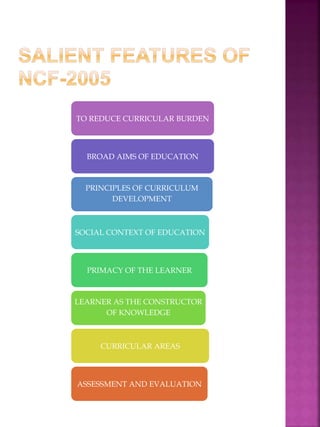
TO REDUCE CURRICULAR BURDEN
BROAD AIMS OF EDUCATION
PRINCIPLES OF CURRICULUM
DEVELOPMENT
SOCIAL CONTEXT OF EDUCATION
PRIMACY OF THE LEARNER
LEARNER AS THE CONSTRUCTOR
OF KNOWLEDGE
CURRICULAR AREAS
ASSESSMENT AND EVALUATION
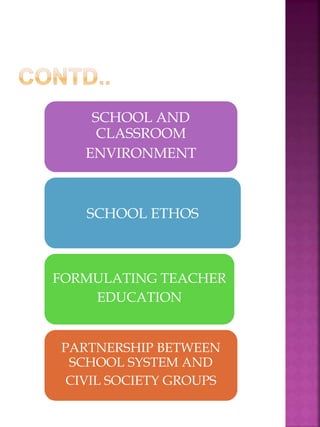
SCHOOL AND
CLASSROOM
ENVIRONMENT
SCHOOL ETHOS
FORMULATING TEACHER
EDUCATION
PARTNERSHIP BETWEEN
SCHOOL SYSTEM AND
CIVIL SOCIETY GROUPS
This is carefully designed
document which foregrounds the
fact that curriculum reform must
be about pedagogy as much as it
is about content. It seeks to
produce self-reliant,confident and
creative students and reposes
trust in their abilities. It also led
to a shift in teacher education
programmes from teache centeric
to learner centeric with flexible
designs and processes providing
wider social context.
Reading and reflecting section a

Reading and reflecting section a

  • 2.
     Introduction:- Thispolicy is popularly known as the NEW EDUCATION POLICY. It is a magna carta of the education for the days to come. This document contains nearly ten thousand word spread over 29 pages and is divided into 12 parts with 157 articles.
  • 4.
    THE ESSENCE ANDROLE OF EDUCATION NATIONAL SYSTEM OF EDUCATION EDUCATION FOR EQUALITY REORGANIZATION OF EDUCATION AT DIFFERENT STAGES TECHNICAL AND MANAGEMENT EDUCATION
  • 5.
    MAKING THE SYSTEMWORK REORIENTING THE CONTENT AND PROCESS OF EDUCATION THE TEACHER THE MANAGEMENT OF EDUCATION RESOURCES AND REVIEWS THE FUTURE
  • 6.
    EDUCATION FOR ALL DEVELOPMENTOF MANPOWER CULTIVATING MORAL AND ETHICAL VALUES PROVIDING LIFELONG AND NON FORMAL EDUCATION PROVIDING NATIONAL SYSTEM OF EDUCATION
  • 7.
    COMMON CORE CURRICULUM INTERACTIVETEACHING SPORTS AND PHYSICAL EDUCATION TO STRENGTHEN THE LEARNING PROCESS SYNTHESIS BETWEEN TECHNOLOGY AND CULTURE ENHANCEMENT FOR EMPLOYABILITY NON FORMAL AS TO SUPPLEMENT THE FORMAL EDUCATION
  • 8.
  • 9.
    At the end, it can be concluded that national policy of education 1986 is formulated on the principle that “education is unique investment in present and future”. This implies that education is for all and promotes the goals of socialism secularism and democracy.
  • 10.
    The NPE 1986entrusted NCERT with the responsibility of reviewing and developing National Curriculum of Framework at frequent intervals. The review and revision of NCF is also necessary to respond to the new development and concerns like curriculum load,tyranny of examination,commitment to universal education and address to future requirements of school education by turn of century
  • 11.
    TO REDUCE CURRICULARBURDEN BROAD AIMS OF EDUCATION PRINCIPLES OF CURRICULUM DEVELOPMENT SOCIAL CONTEXT OF EDUCATION PRIMACY OF THE LEARNER LEARNER AS THE CONSTRUCTOR OF KNOWLEDGE CURRICULAR AREAS ASSESSMENT AND EVALUATION
  • 12.
    SCHOOL AND CLASSROOM ENVIRONMENT SCHOOL ETHOS FORMULATINGTEACHER EDUCATION PARTNERSHIP BETWEEN SCHOOL SYSTEM AND CIVIL SOCIETY GROUPS
  • 13.
    This is carefullydesigned document which foregrounds the fact that curriculum reform must be about pedagogy as much as it is about content. It seeks to produce self-reliant,confident and creative students and reposes trust in their abilities. It also led to a shift in teacher education programmes from teache centeric to learner centeric with flexible designs and processes providing wider social context.