Cooperative Learning

     CLIL: Chemistry
    Water Molecule
    Mattayomsuksa 4
Video
Vocabulary
dipolar
bond
cavalent bond
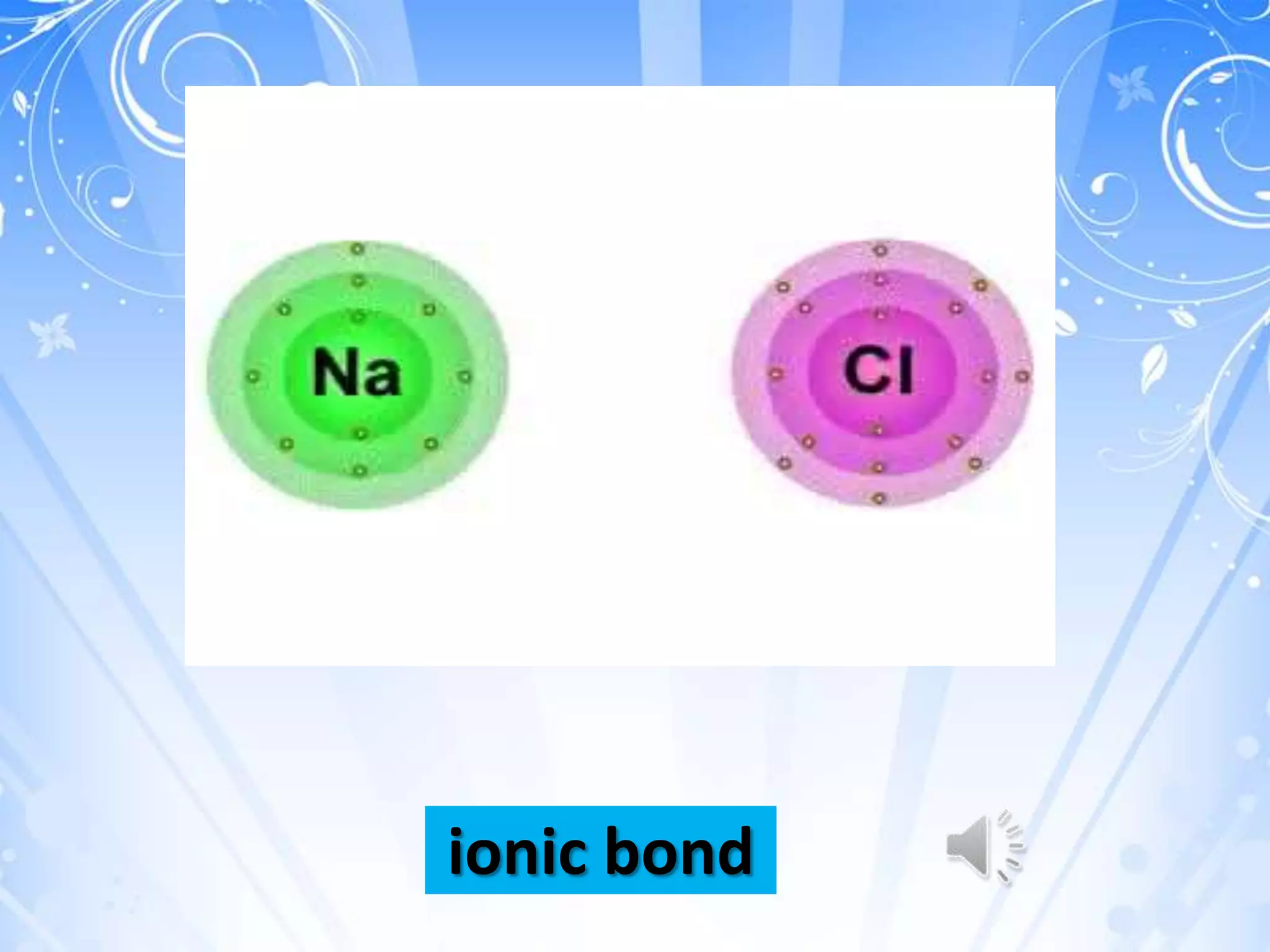
ionic bond
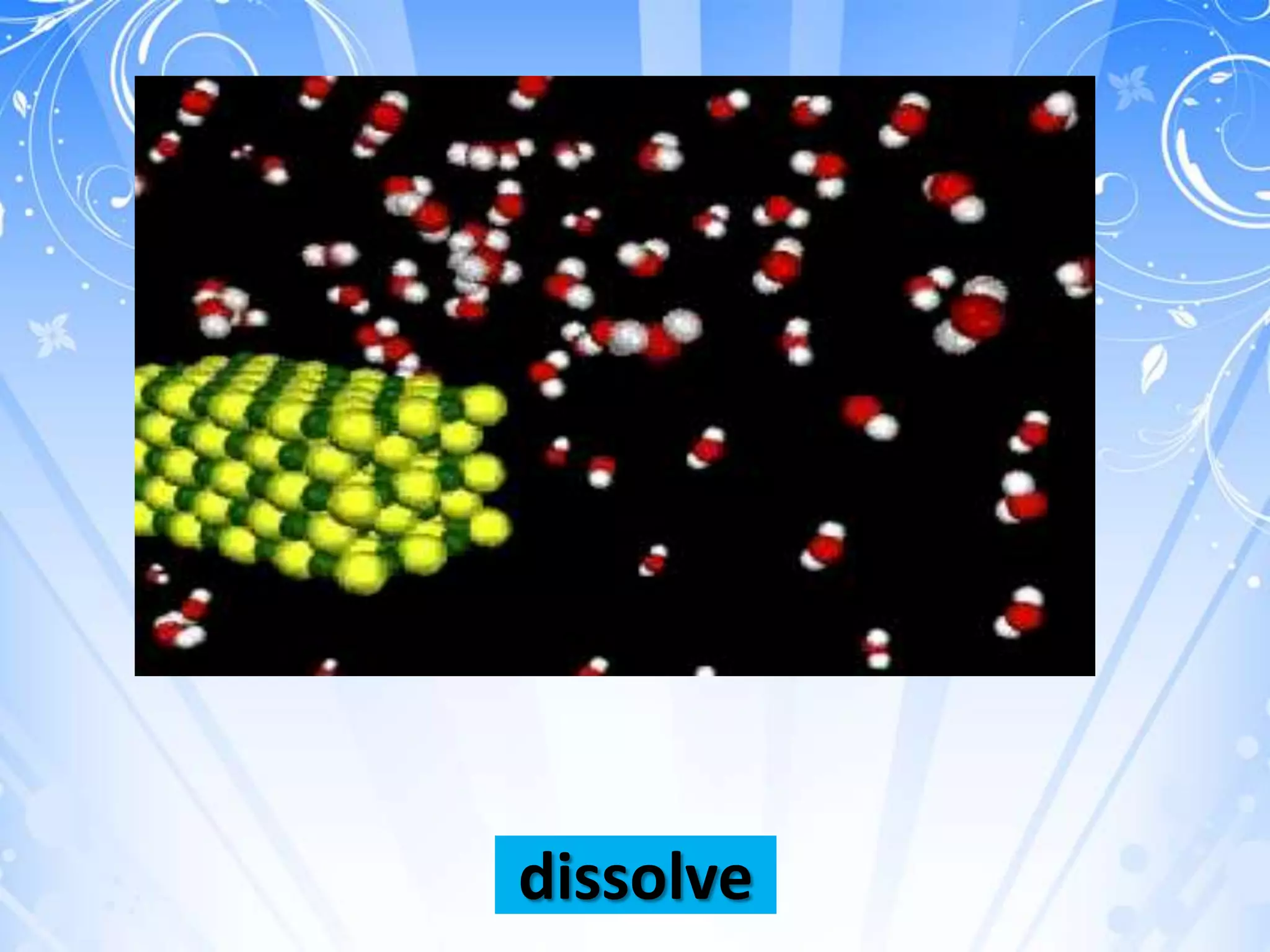
dissolve
Structure
Noun clause
Definition
        A dependent clause that functions as a noun (that
is, as a subject, object, or complement) within
a sentence. Also known as a nominal clause.

Examples
• The bonding angle of the two hydrogen is almost 105
  degrees rather than 180 degrees which would make
  the molecule symmetrical.
• This means that it can absorb or can lose a lot of heat
  energy without changing its temperature very much.
Water molecule
The water molecule is formed from two
hydrogen atoms and one oxygen atom. The
bonding angle of the two hydrogens is almost 105
degrees rather than 180 degrees which would
make the molecule symmetrical. This causes it to
be dipolar, giving it a positive and negative side
which accounts for its unique properties. This
allows the formation of hydrogen bonds between
adjacent molecules. There is a weak
intermolecular force of electrostatic attraction
between the molecules which is known as van der
Waals force. This causes the molecules to act as
larger units than the individual molecules.
Water is a very unusual compound; it is
very common and is found in all three
conditional states, solid (as ice), liquid (as
water) and gas (as water vapor). Other types
of bonding can occur, such as covalent
bonding (as seen in the formation of
molecular oxygen) or ionic bonding (as seen in
the formation of salt or sodium
chloride[NaCl]). Hydrogen bonding can break
up the electrical attraction of atoms of solids
and dissolves them.
In ice crystals the water molecules are
widely separated, while in the liquid form
they are closer together although less tightly
bound. Therefore ice is bulkier and less dense
and floats on water. If we compare the
freezing and boiling points of water with what
one would predict from extrapolating the
molecular weights of other molecules, we see
that it would be predicted to freeze at -90
degrees C and boil at -68 degrees C. What a
different world we would have. So much for
the validity of extrapolation.
The heat capacity of water is high compared
to other common materials. This means that it can
absorb or can lose a lot of heat energy without
changing its temperature very much. This buffers
the environment against large, rapid temperature
changes. An example is the more moderate
climate of a coastal location compared to one far
inland. The diel temperature change of the surface
waters of the oceans (or lakes, or even a
swimming pool) is small compared to the diel
temperature change of the surrounding air. This is
due to the high heat capacity of water.
Water Molecules on the Move
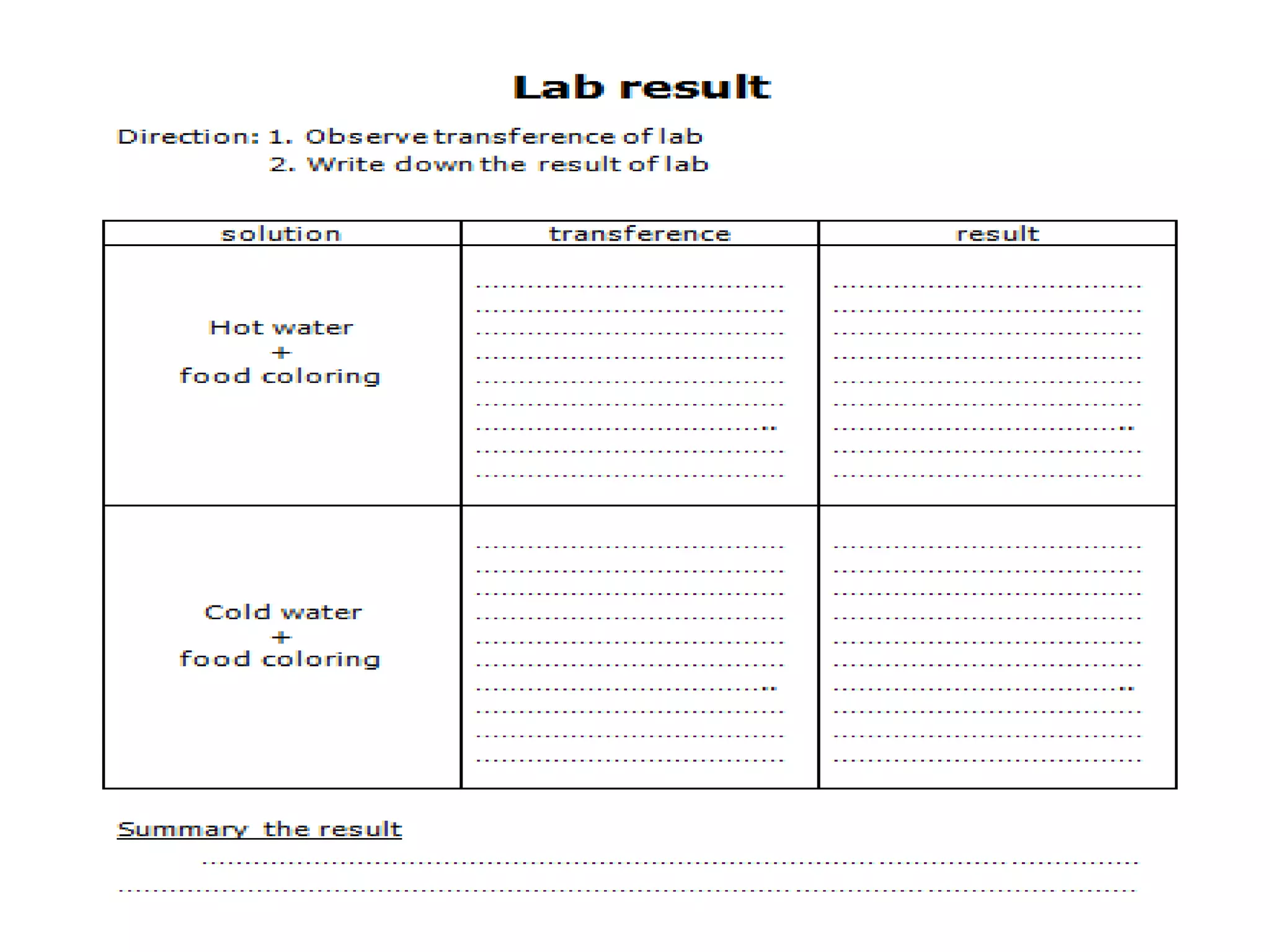
(Test the speed of water molecule with food coloring)
This experiment is great for testing if hot
water molecules really move faster than cold
ones. Pour some water, drop in some food
coloring and compare results.
What you'll need
•   A clear glass filled with hot water
•   A clear glass filled with cold water
•   Food coloring
•   An eye dropper
Instructions
1.   Fill the glasses with the same amount of
     water, one cold and one hot.
2.   Put one drop of food coloring into both
     glasses as quickly as possible.
3.   Watch what happens to the food
     coloring.
What's happening?
      If you watch closely you will notice that
the food coloring spreads faster throughout
the hot water than in the cold. The molecules
in the hot water move at a faster
rate, spreading the food coloring faster than
the cold water molecules which mover slower.

Cooperative learning

  • 1.
    Cooperative Learning CLIL: Chemistry Water Molecule Mattayomsuksa 4
  • 2.
  • 3.
  • 4.
  • 5.
  • 6.
  • 7.
  • 8.
  • 9.
  • 10.
    Noun clause Definition A dependent clause that functions as a noun (that is, as a subject, object, or complement) within a sentence. Also known as a nominal clause. Examples • The bonding angle of the two hydrogen is almost 105 degrees rather than 180 degrees which would make the molecule symmetrical. • This means that it can absorb or can lose a lot of heat energy without changing its temperature very much.
  • 11.
  • 12.
    The water moleculeis formed from two hydrogen atoms and one oxygen atom. The bonding angle of the two hydrogens is almost 105 degrees rather than 180 degrees which would make the molecule symmetrical. This causes it to be dipolar, giving it a positive and negative side which accounts for its unique properties. This allows the formation of hydrogen bonds between adjacent molecules. There is a weak intermolecular force of electrostatic attraction between the molecules which is known as van der Waals force. This causes the molecules to act as larger units than the individual molecules.
  • 13.
    Water is avery unusual compound; it is very common and is found in all three conditional states, solid (as ice), liquid (as water) and gas (as water vapor). Other types of bonding can occur, such as covalent bonding (as seen in the formation of molecular oxygen) or ionic bonding (as seen in the formation of salt or sodium chloride[NaCl]). Hydrogen bonding can break up the electrical attraction of atoms of solids and dissolves them.
  • 14.
    In ice crystalsthe water molecules are widely separated, while in the liquid form they are closer together although less tightly bound. Therefore ice is bulkier and less dense and floats on water. If we compare the freezing and boiling points of water with what one would predict from extrapolating the molecular weights of other molecules, we see that it would be predicted to freeze at -90 degrees C and boil at -68 degrees C. What a different world we would have. So much for the validity of extrapolation.
  • 15.
    The heat capacityof water is high compared to other common materials. This means that it can absorb or can lose a lot of heat energy without changing its temperature very much. This buffers the environment against large, rapid temperature changes. An example is the more moderate climate of a coastal location compared to one far inland. The diel temperature change of the surface waters of the oceans (or lakes, or even a swimming pool) is small compared to the diel temperature change of the surrounding air. This is due to the high heat capacity of water.
  • 16.
    Water Molecules onthe Move (Test the speed of water molecule with food coloring)
  • 17.
    This experiment isgreat for testing if hot water molecules really move faster than cold ones. Pour some water, drop in some food coloring and compare results.
  • 18.
    What you'll need • A clear glass filled with hot water • A clear glass filled with cold water • Food coloring • An eye dropper
  • 19.
    Instructions 1. Fill the glasses with the same amount of water, one cold and one hot. 2. Put one drop of food coloring into both glasses as quickly as possible. 3. Watch what happens to the food coloring.
  • 21.
    What's happening? If you watch closely you will notice that the food coloring spreads faster throughout the hot water than in the cold. The molecules in the hot water move at a faster rate, spreading the food coloring faster than the cold water molecules which mover slower.