PRESENTED BY:
User-Focused
Design Research
Lunch n Learn
PRESENTED BY:
What I learned
at Cooper in SF
Lunch n Learn
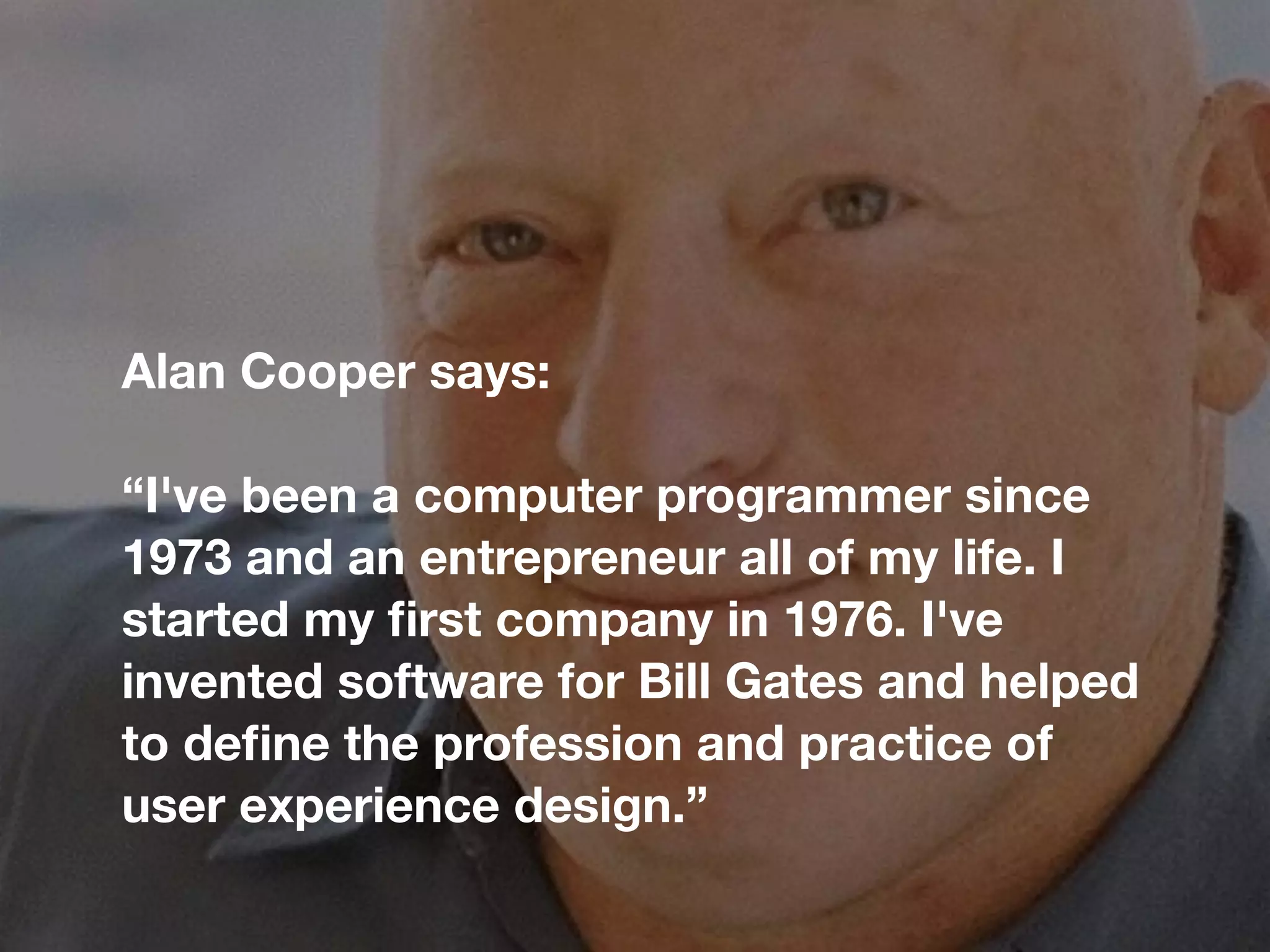
Alan Cooper says:
!
“I've been a computer programmer since
1973 and an entrepreneur all of my life. I
started my first company in 1976. I've
invented software for Bill Gates and helped
to define the profession and practice of
user experience design.”
“When software makes users feel stupid,
their self-esteem droops and their
effectiveness plummets, regardless of their
other goals. A system that violates [that]
will ultimately fail, regardless of how well it
achieves other goals.”
!
ALAN COOPER
“The Inmates Are Running the Asylum”
https://vimeo.com/32478185
“PRACTICE FUSION”
https://vimeo.com/34875856
!
!
!
“UI BRANDING”
https://vimeo.com/28740656
Lunch n Learn
What does Cooper do?
!
Research + Synthesis
UX and Visual Design
User-Directed Design
Have empathy for users
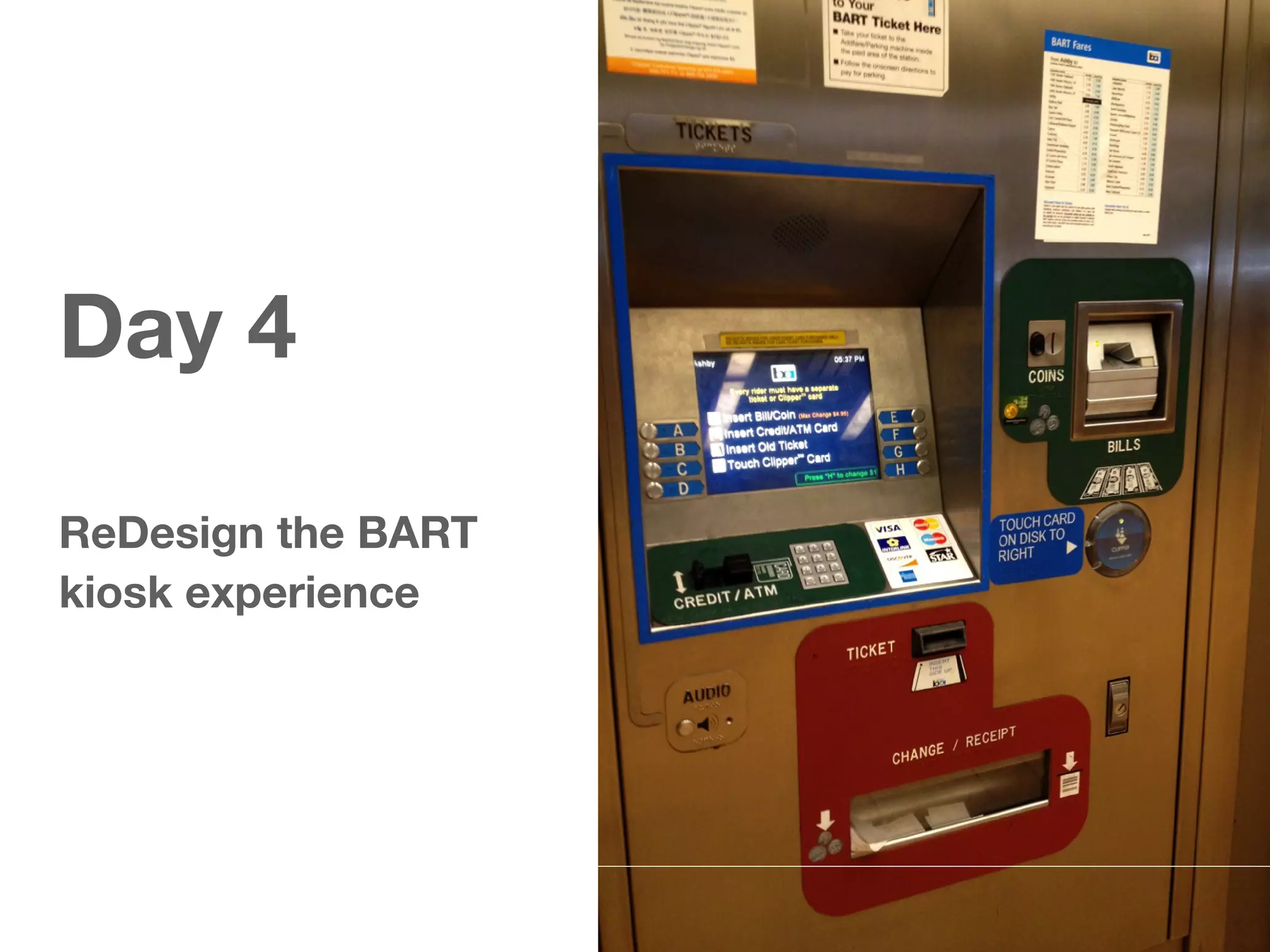
Day 4
!
ReDesign the BART
kiosk experience
Lunch n Learn
Let’s talk about:
1. Research
2. Personas
3. Scenarios
4. Frameworks
Lunch n Learn
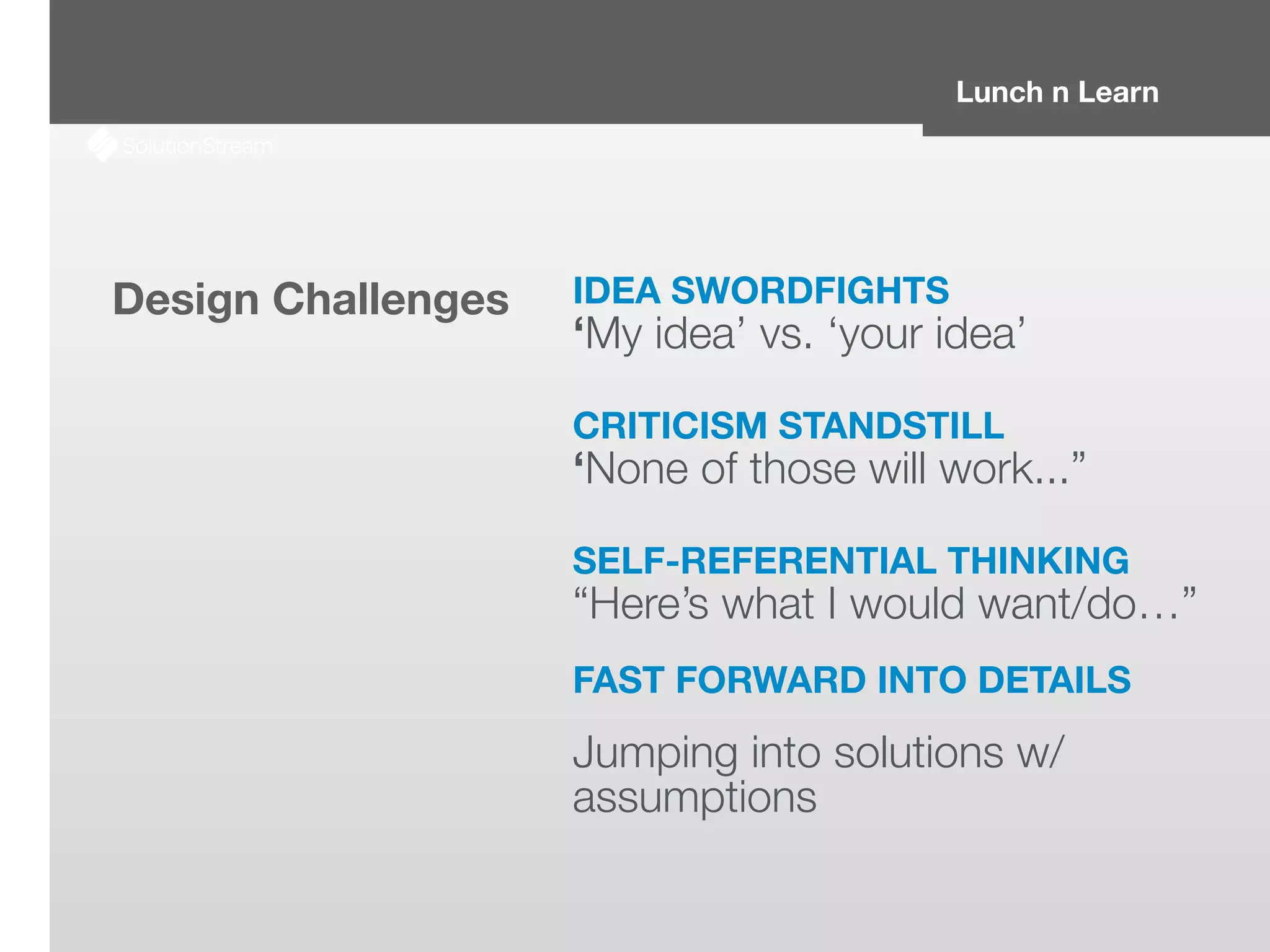
Design Challenges IDEA SWORDFIGHTS
‘My idea’ vs. ‘your idea’
CRITICISM STANDSTILL
‘None of those will work...”
SELF-REFERENTIAL THINKING
“Here’s what I would want/do…”
FAST FORWARD INTO DETAILS
Jumping into solutions w/
assumptions
a
Research
Lunch n Learn
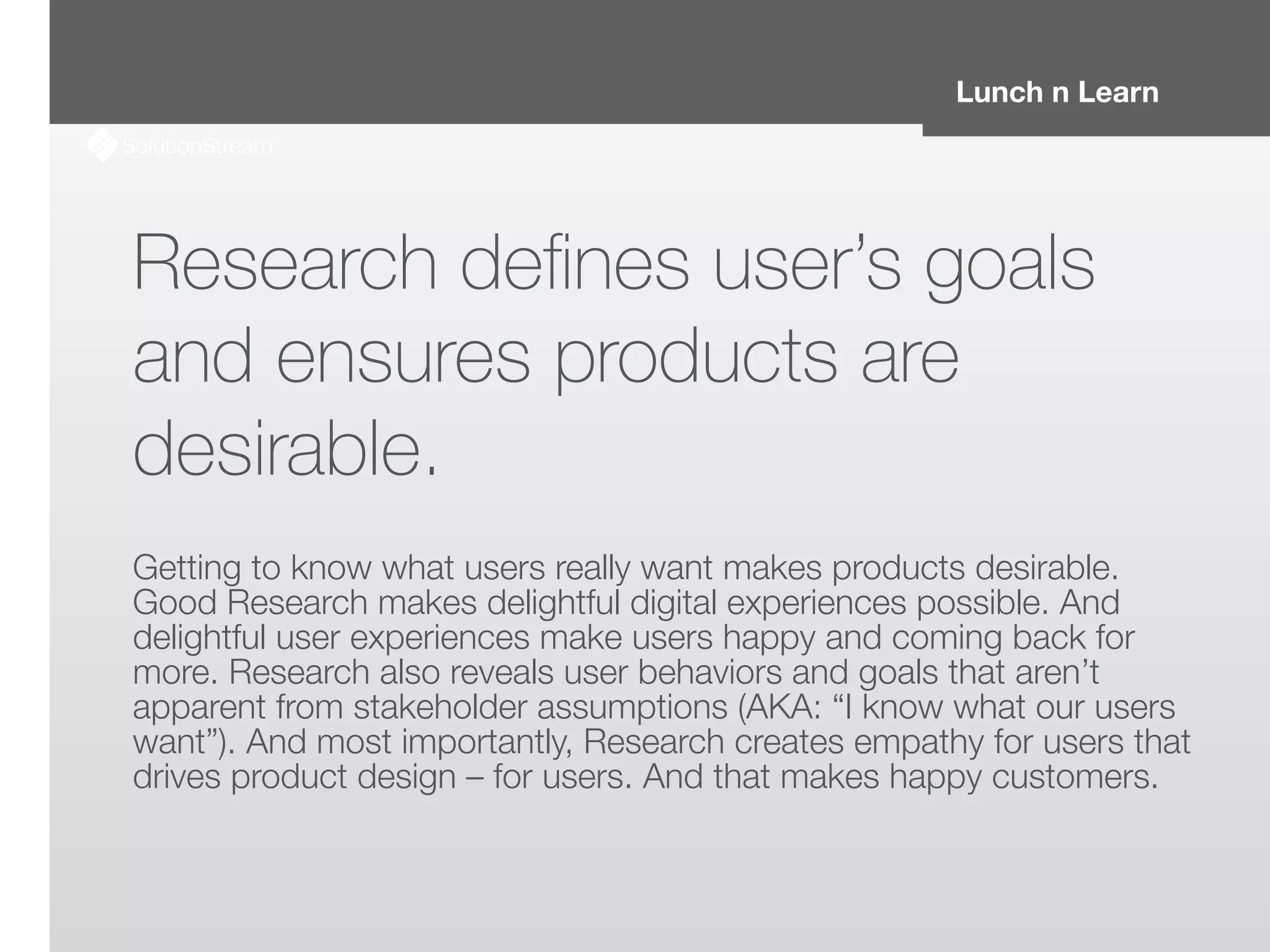
Research defines user’s goals
and ensures products are
desirable.
!
Getting to know what users really want makes products desirable.
Good Research makes delightful digital experiences possible. And
delightful user experiences make users happy and coming back for
more. Research also reveals user behaviors and goals that aren’t
apparent from stakeholder assumptions (AKA: “I know what our users
want”). And most importantly, Research creates empathy for users that
drives product design – for users. And that makes happy customers.
Lunch n Learn
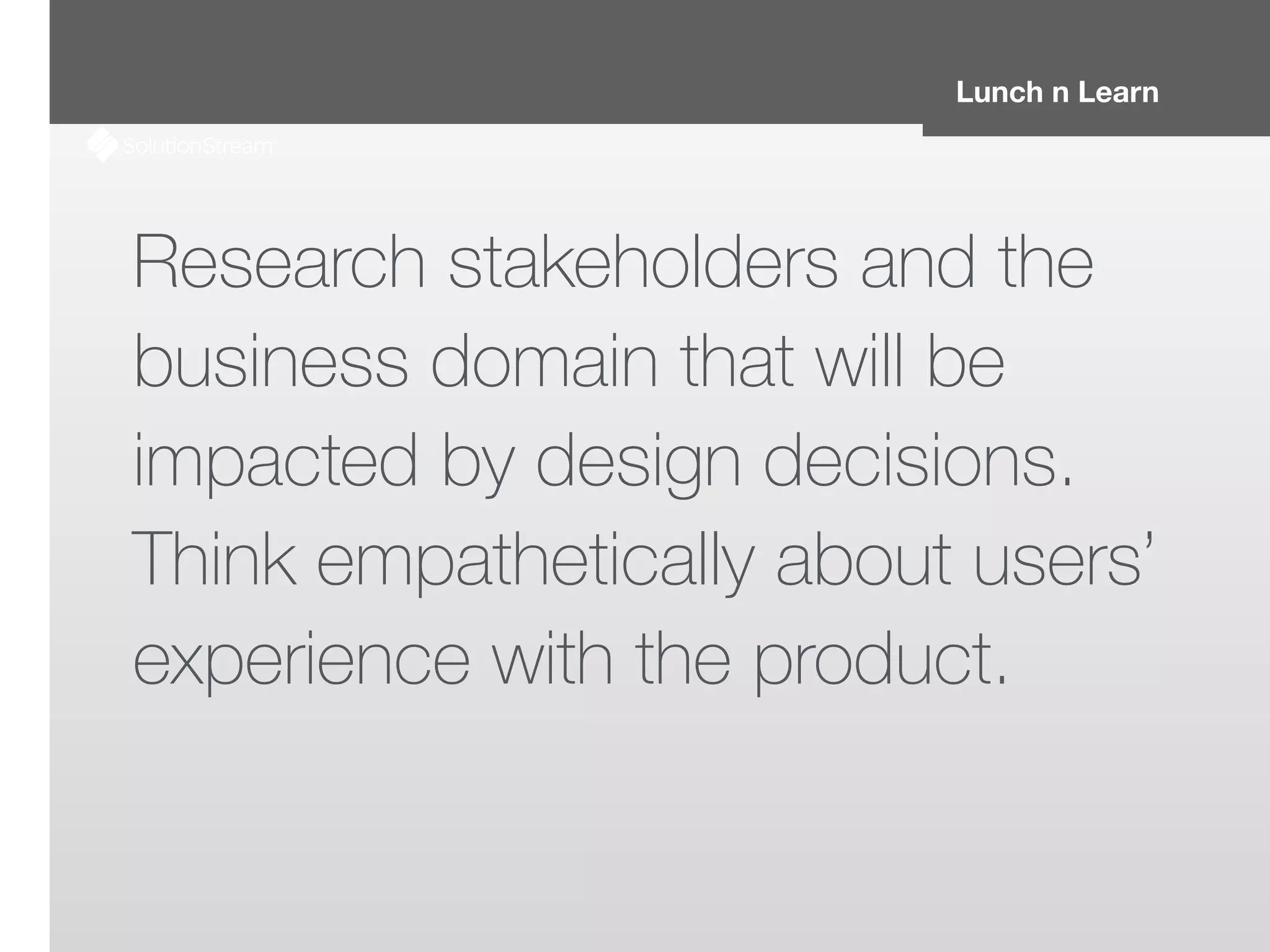
Research stakeholders and the
business domain that will be
impacted by design decisions.
Think empathetically about users’
experience with the product.
Lunch n Learn
“It is better to understand and
perfectly meet the needs of the
critical few than to poorly meet the
needs of many. It is this specific
problem that personas are meant
to address.”
“Universal Principles of Design”
Lunch n Learn
- Stakeholder Research (interview+planning,
ethnographic research, paired-design)
- Experience Goal (how you want to feel)
- End-goal (what you want to achieve)
- Mental Model vs. Functional Model
Lunch n Learn
Interview Planning • What do I need to learn?
• What could I ask to Learn?
• What else do I need to Learn and
How?
Lunch n Learn
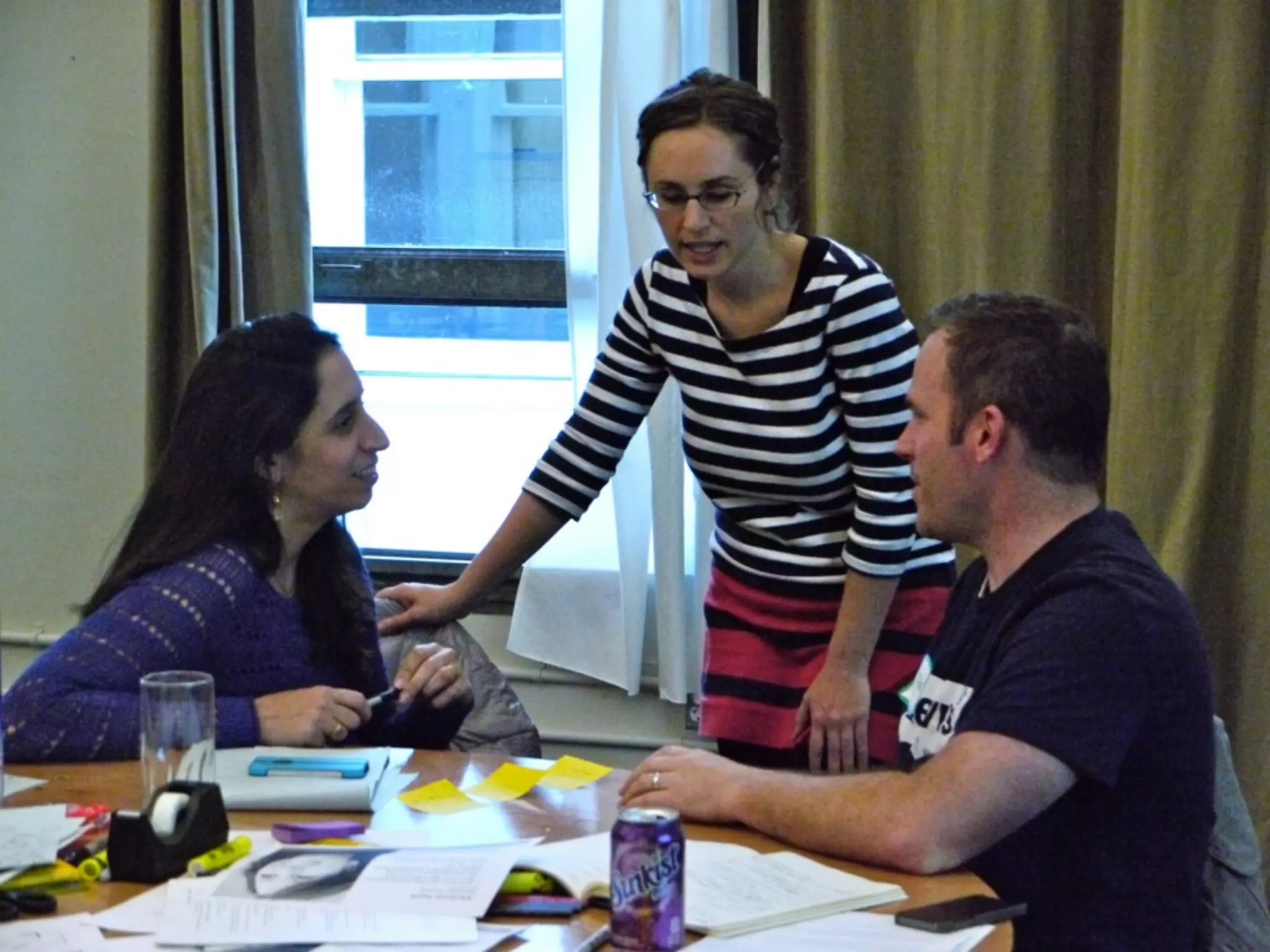
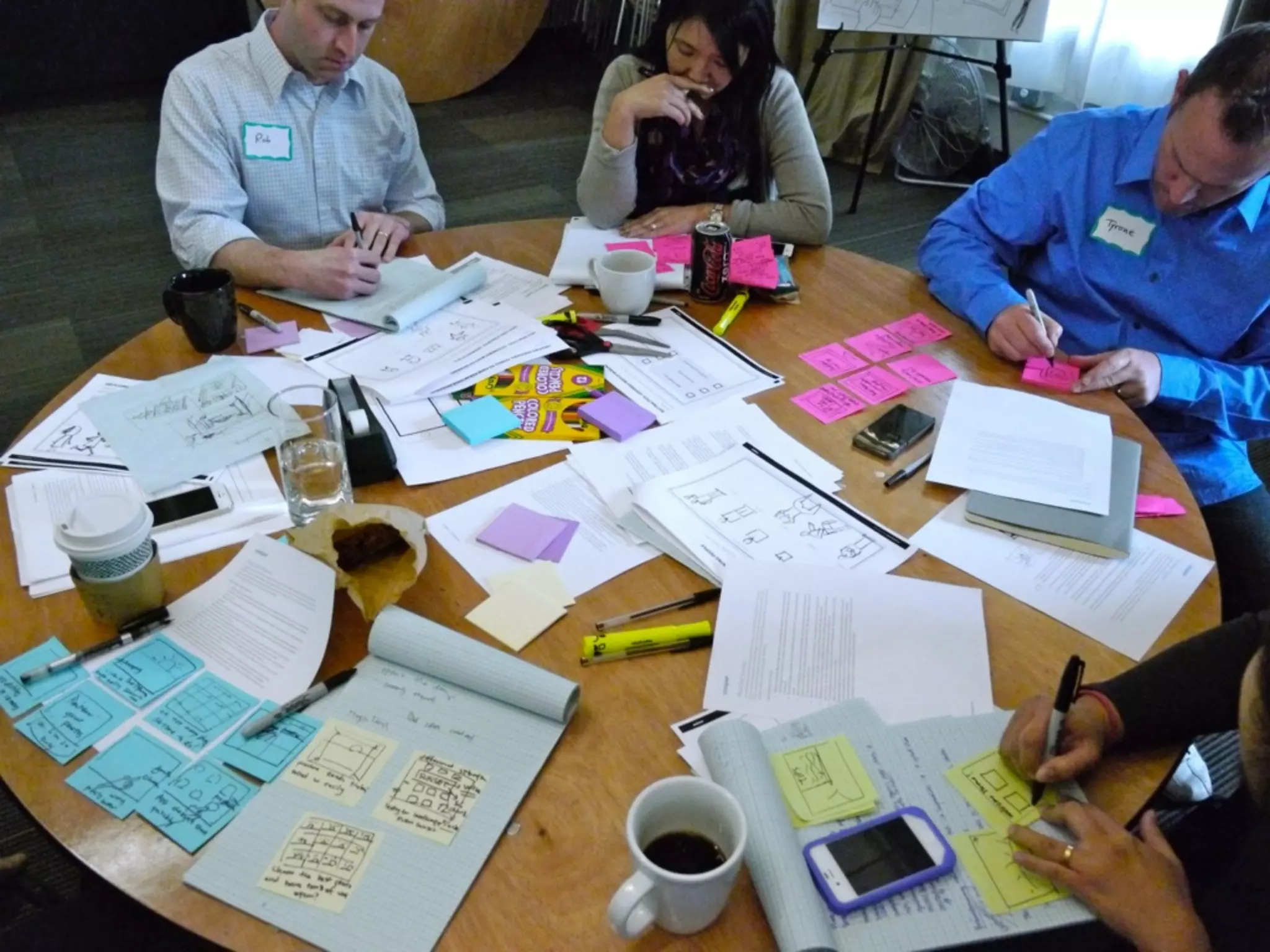
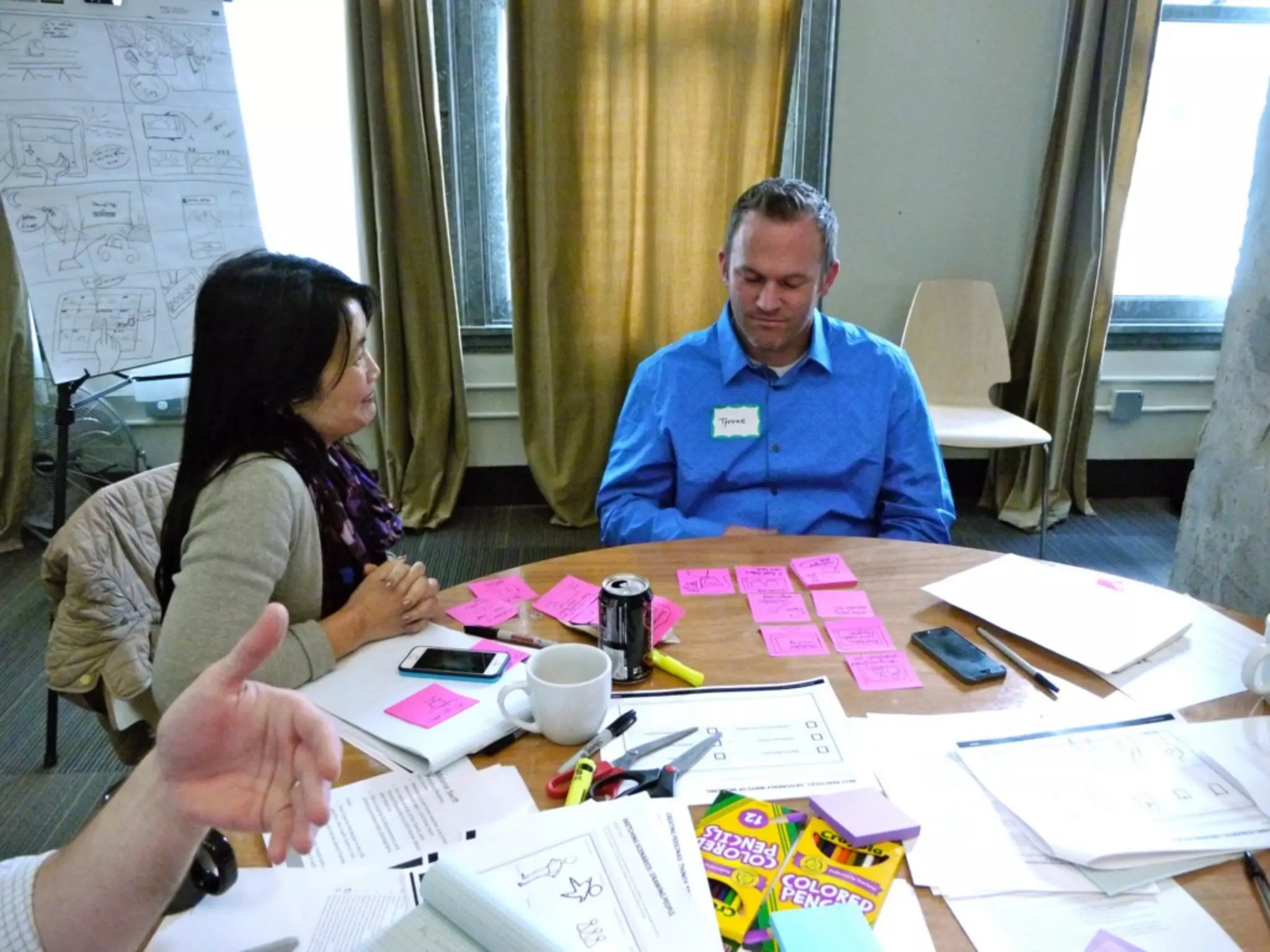
Paired Design:
!
Generating ideas with another
person gives better results and
prepares you for communicating
the rationale of your ideas to a
larger group.
Lunch n Learn
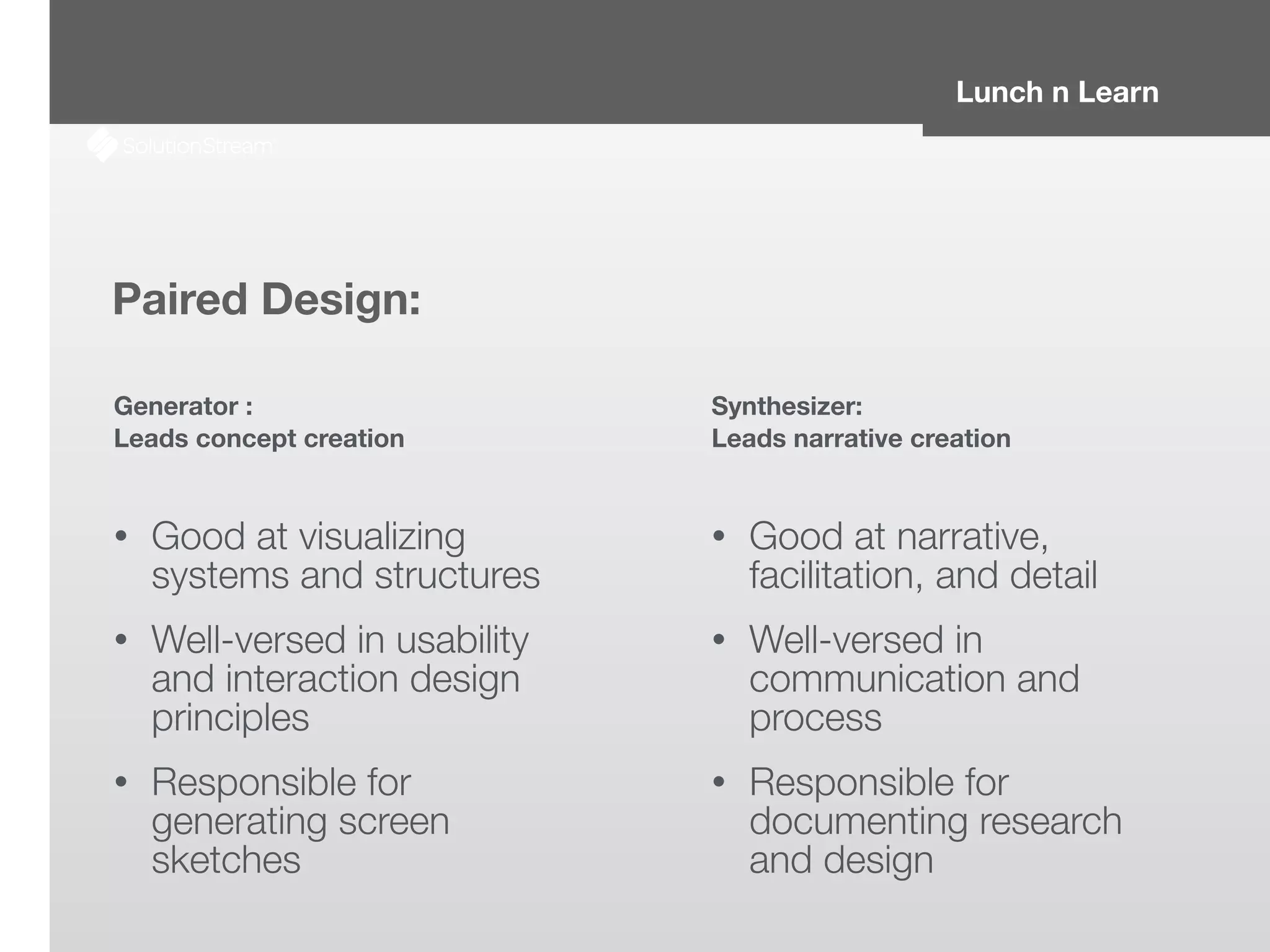
Paired Design:
Generator :
Leads concept creation
!
• Good at visualizing
systems and structures
• Well-versed in usability
and interaction design
principles
• Responsible for
generating screen
sketches
Synthesizer:
Leads narrative creation
!
• Good at narrative,
facilitation, and detail
• Well-versed in
communication and
process
• Responsible for
documenting research
and design
a
Personas
Lunch n Learn
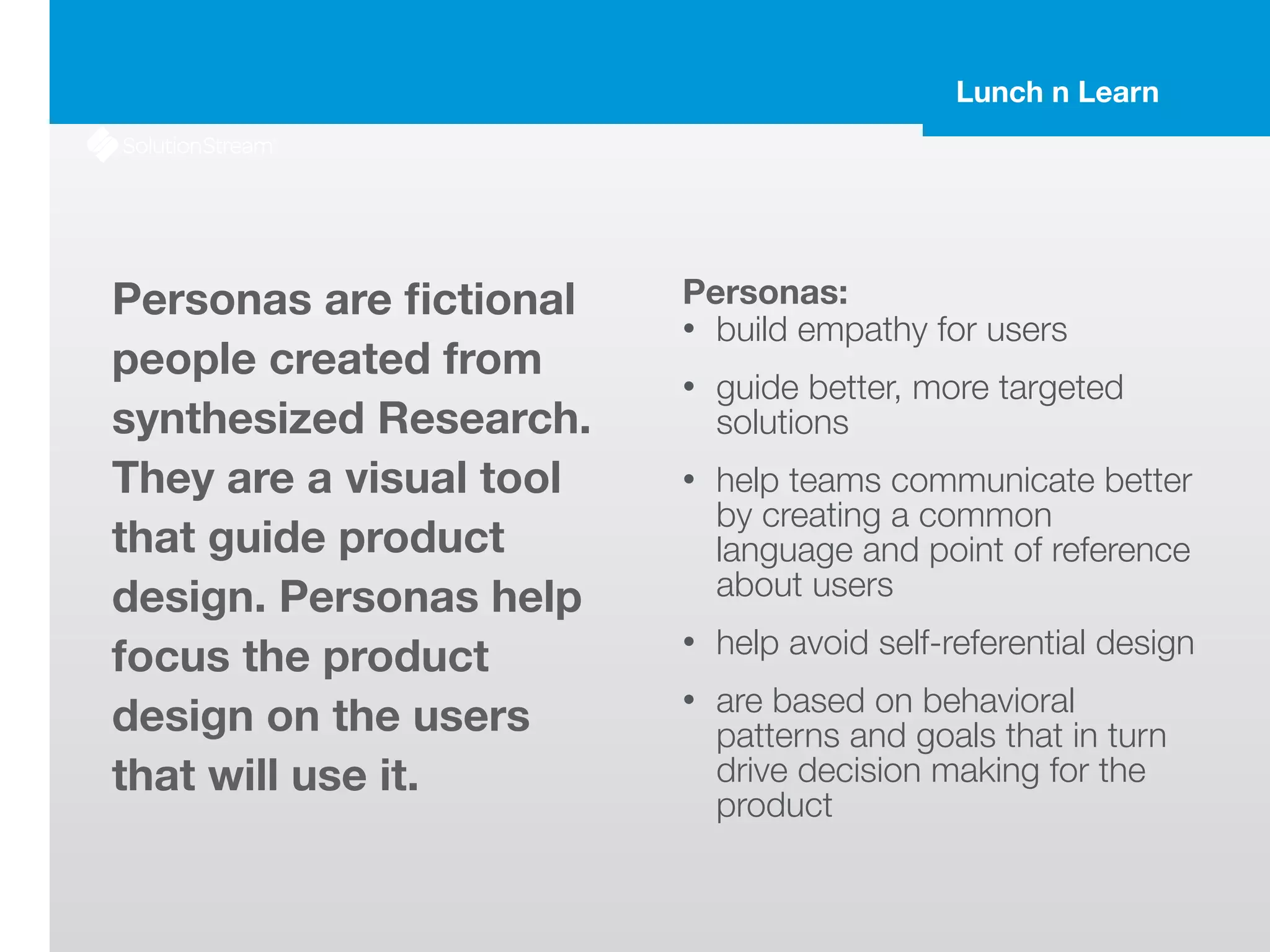
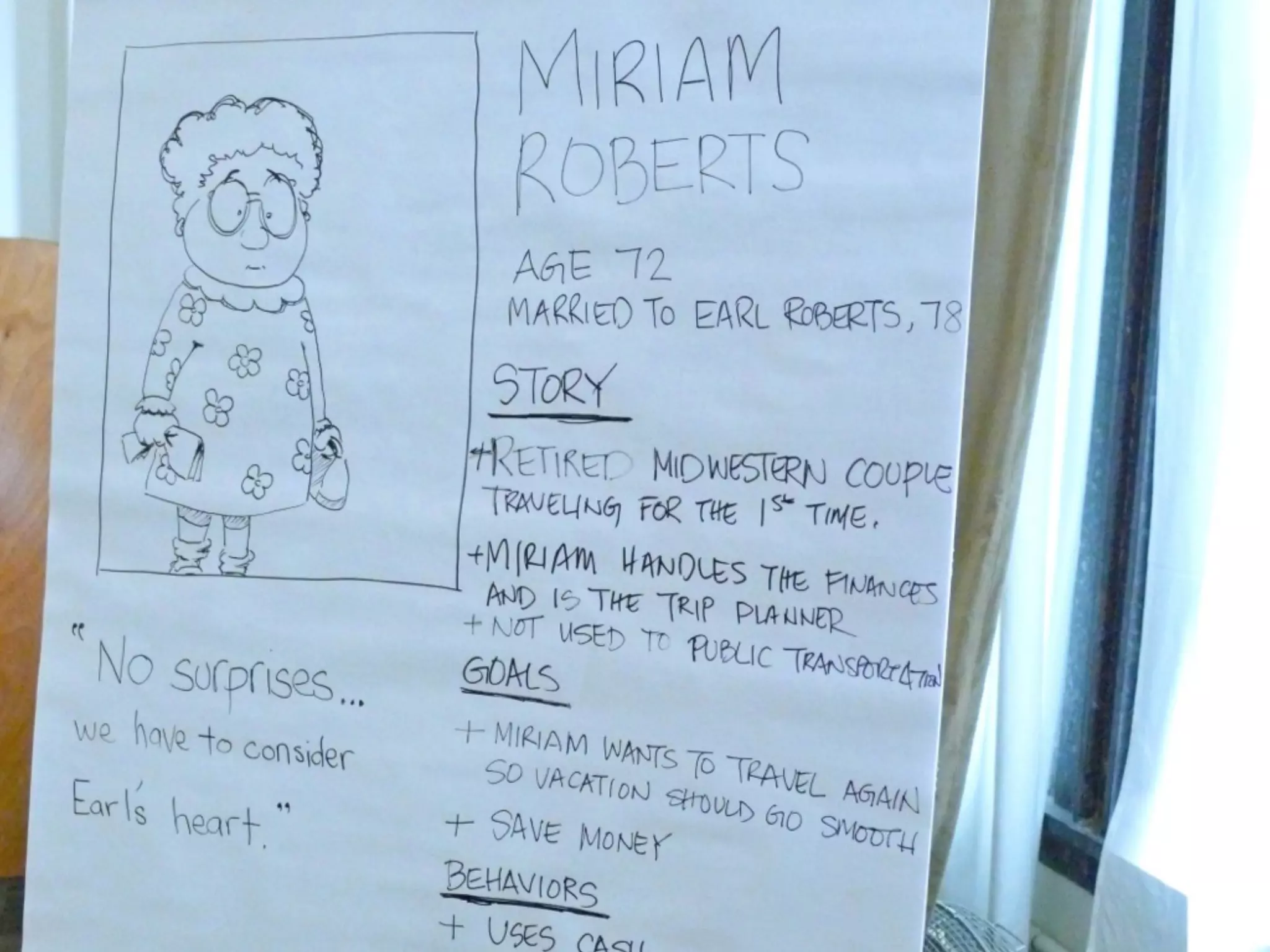
Personas are fictional
people created from
synthesized Research.
They are a visual tool
that guide product
design. Personas help
focus the product
design on the users
that will use it.
Personas:
• build empathy for users
• guide better, more targeted
solutions
• help teams communicate better
by creating a common
language and point of reference
about users
• help avoid self-referential design
• are based on behavioral
patterns and goals that in turn
drive decision making for the
product
Lunch n Learn
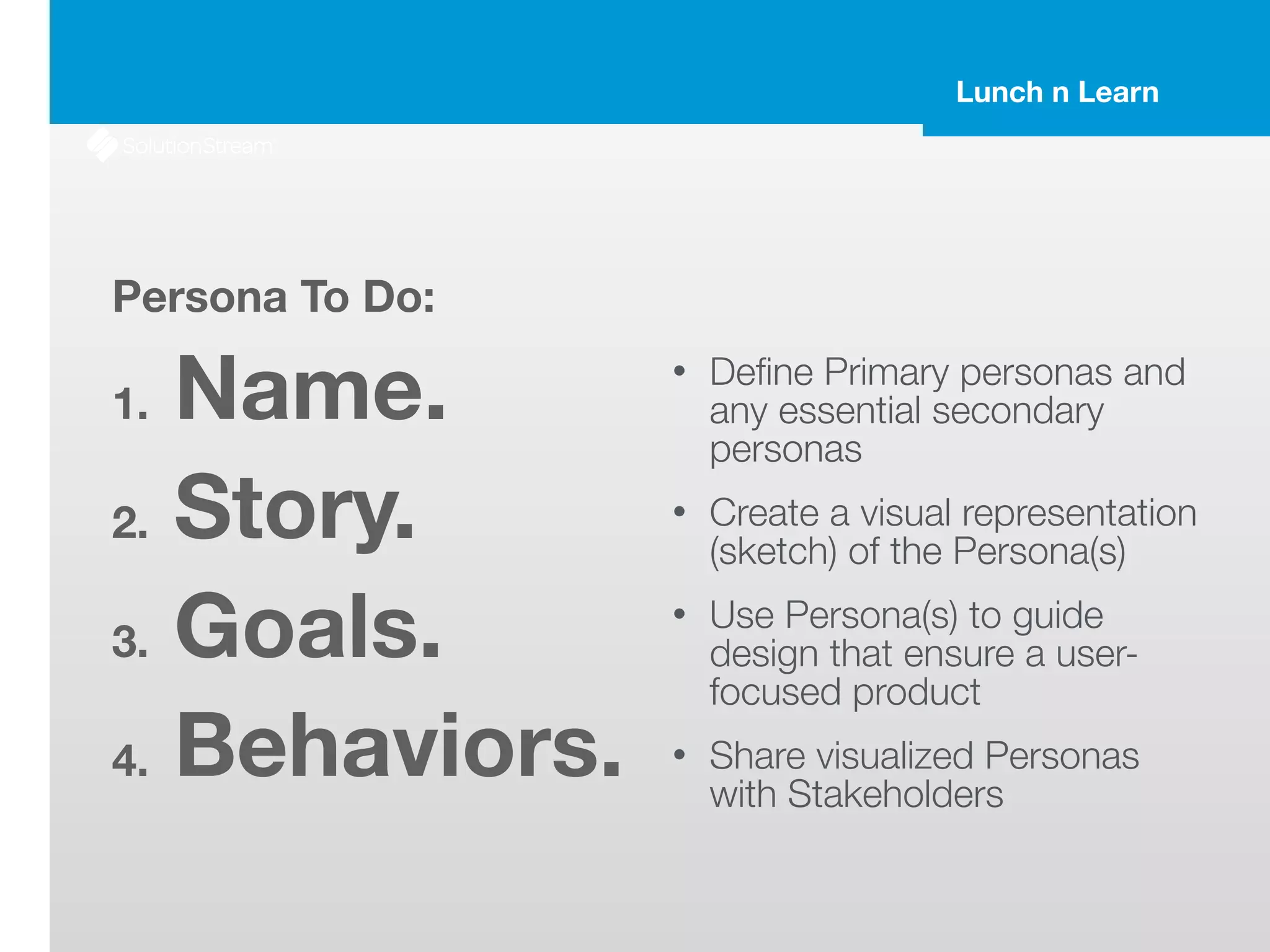
Persona To Do:
1. Name.
2. Story.
3. Goals.
4. Behaviors.
• Define Primary personas and
any essential secondary
personas
• Create a visual representation
(sketch) of the Persona(s)
• Use Persona(s) to guide
design that ensure a user-
focused product
• Share visualized Personas
with Stakeholders
a
Scenarios
Lunch n Learn
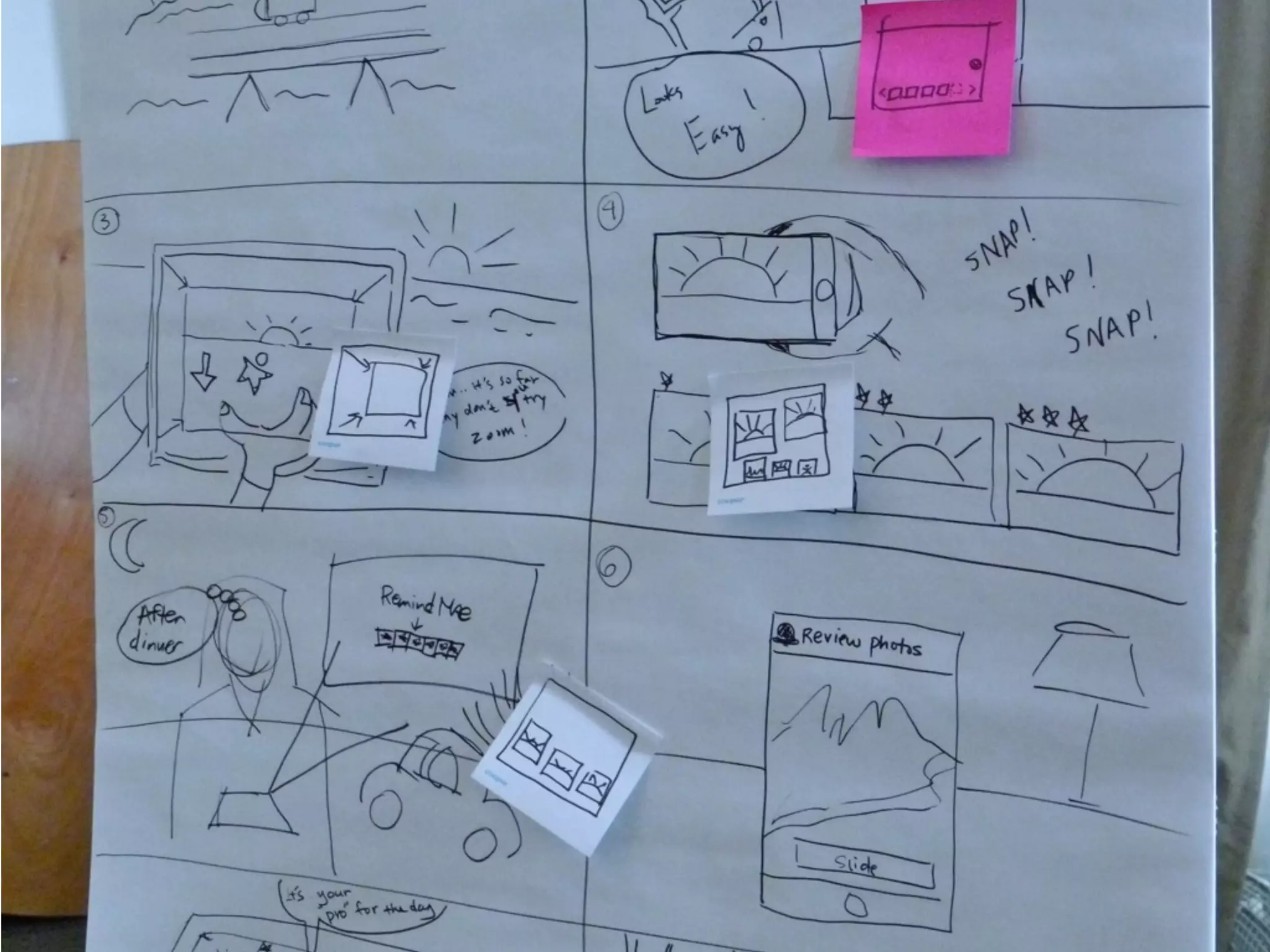
Scenarios are
storyboards that
visualize real-life
situations that personas
are likely to be in while
interacting with a
Product. Scenarios
demonstrate the impact
it will have on their lives.
Scenarios:
• reinforce persona needs
and goals rather than
system features and
capabilities
• prioritize needs from the
user‘s perspective
• guide design solutions
so design always
happens in context of
user’s experience
Lunch n Learn
Scenarios : To Do
!
• Create key scenarios that match day-to-day experiences of the defined
Persona(s) using the product
!
• Define each scenario with 6-7 storyboard panels (sketched) that describe a
“before & after” scenario
!
• Consider how the user will behave in their experience: See. Think. Do.
!
• Bad idea exercise, Pretend it’s magic.
!
• Use Scenarios to guide design that ensures a user-directed product
!
• Share visualized Scenarios with Stakeholders
a
Frameworks
Lunch n Learn
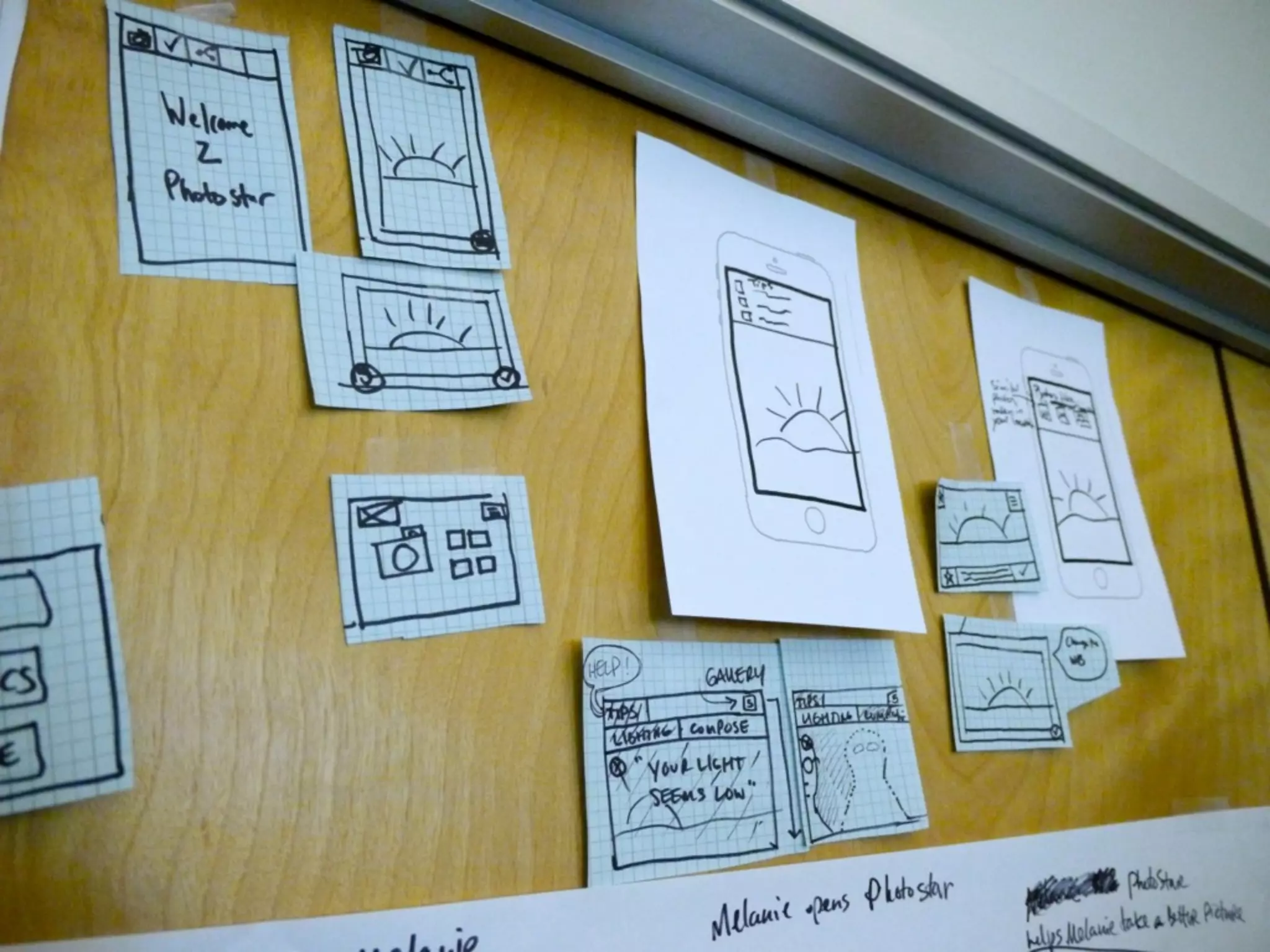
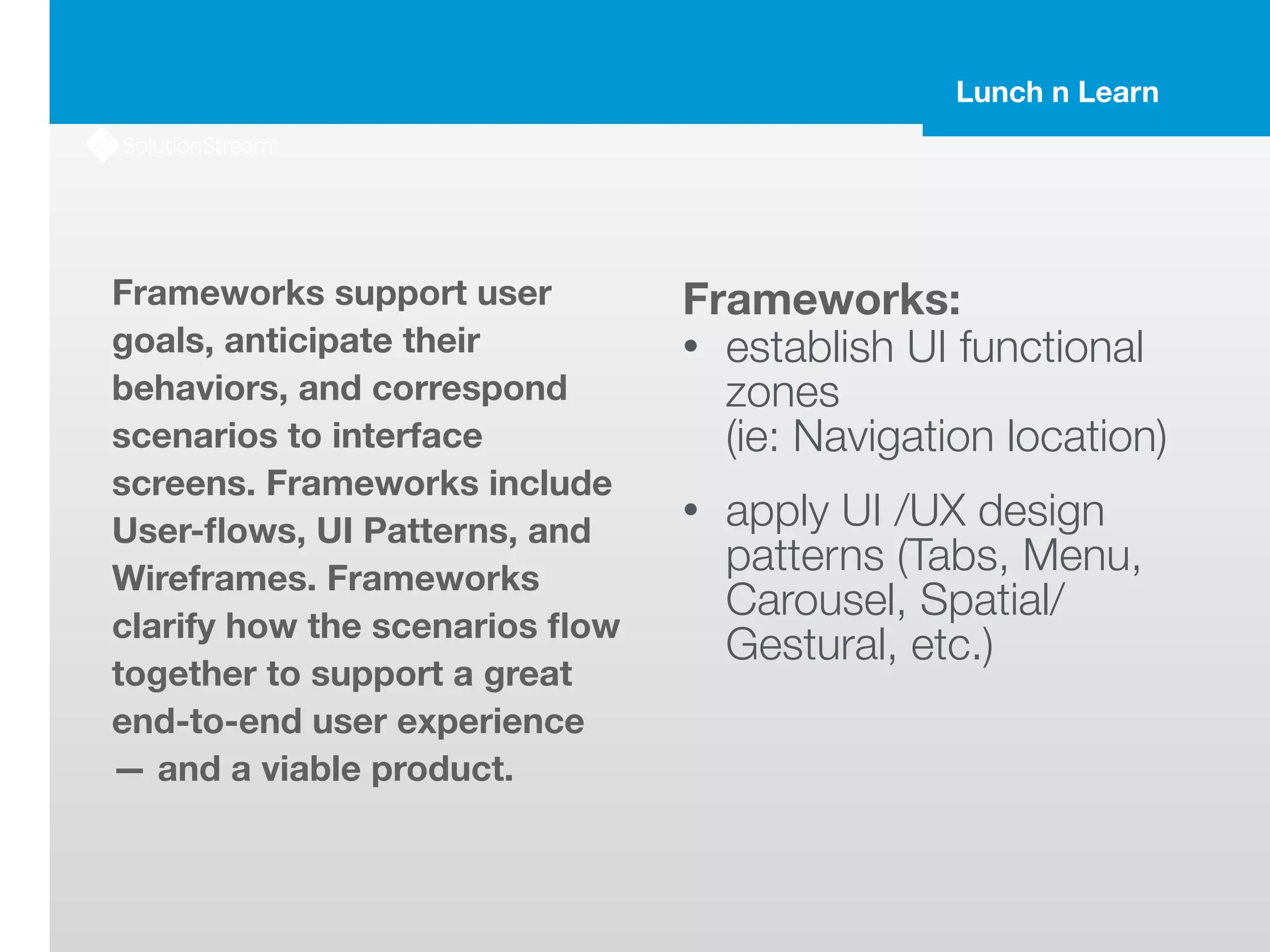
Frameworks support user
goals, anticipate their
behaviors, and correspond
scenarios to interface
screens. Frameworks include
User-flows, UI Patterns, and
Wireframes. Frameworks
clarify how the scenarios flow
together to support a great
end-to-end user experience
— and a viable product.
Frameworks:
• establish UI functional
zones
(ie: Navigation location)
• apply UI /UX design
patterns (Tabs, Menu,
Carousel, Spatial/
Gestural, etc.)
Lunch n Learn
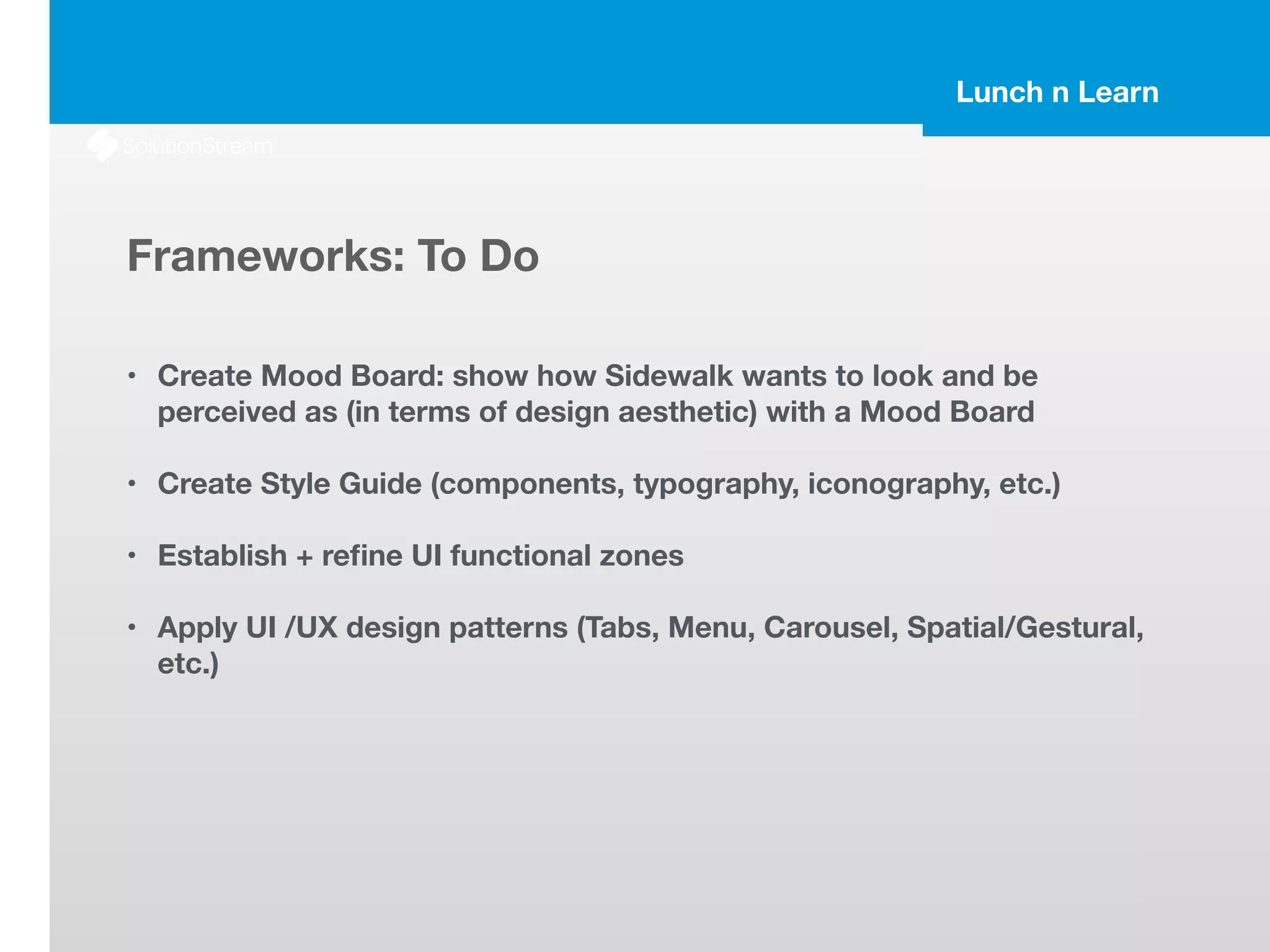
Frameworks: To Do
!
• Create Mood Board: show how Sidewalk wants to look and be
perceived as (in terms of design aesthetic) with a Mood Board
!
• Create Style Guide (components, typography, iconography, etc.)
!
• Establish + refine UI functional zones
!
• Apply UI /UX design patterns (Tabs, Menu, Carousel, Spatial/Gestural,
etc.)
Lunch n Learn
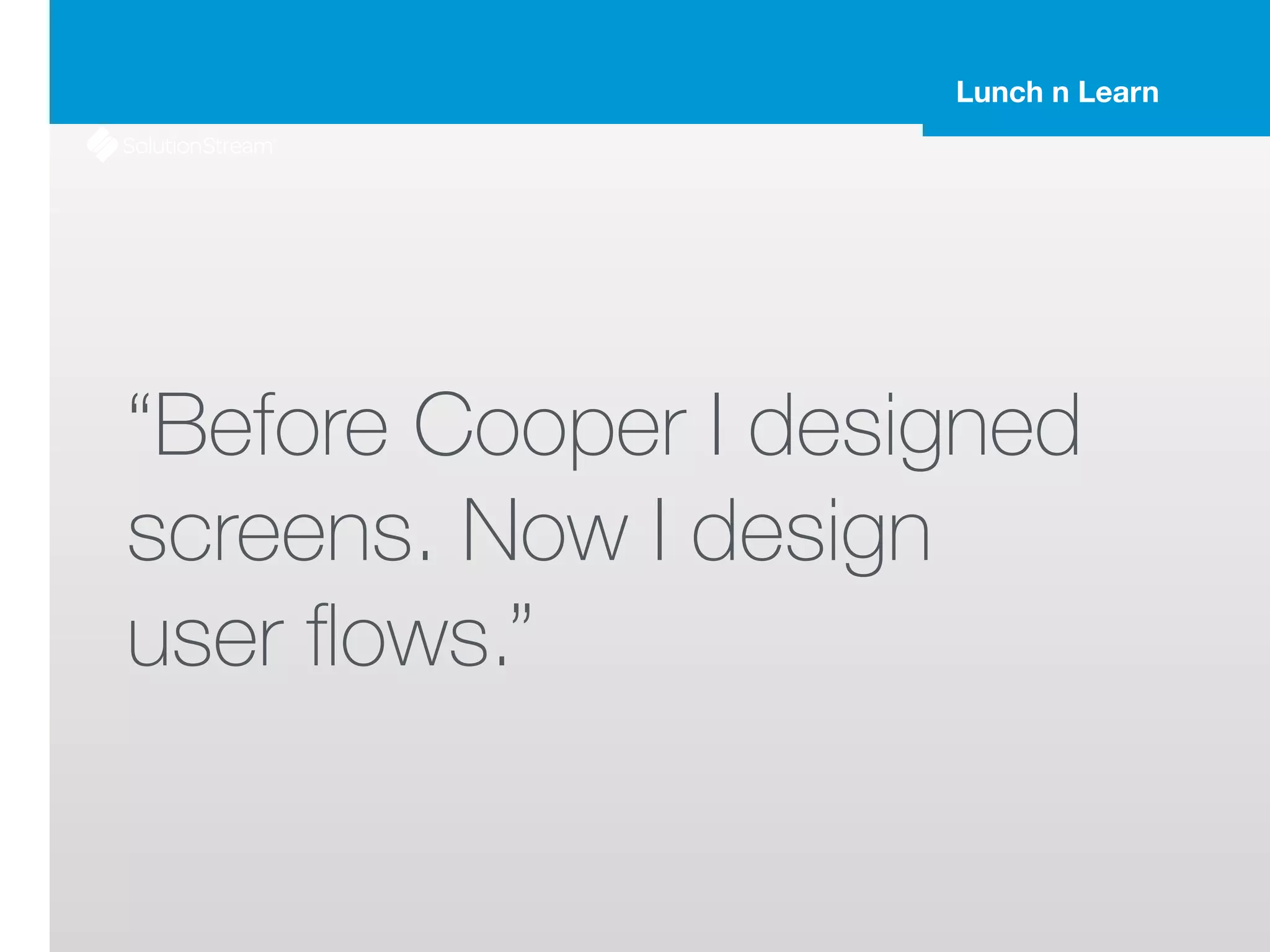
“Before Cooper I designed
screens. Now I design
user flows.”
PRESENTED BY:
Thanks.

What I learned at Cooper U about Design Research

  • 1.
  • 2.
    PRESENTED BY: What Ilearned at Cooper in SF Lunch n Learn
  • 4.
    Alan Cooper says: ! “I'vebeen a computer programmer since 1973 and an entrepreneur all of my life. I started my first company in 1976. I've invented software for Bill Gates and helped to define the profession and practice of user experience design.”
  • 5.
    “When software makesusers feel stupid, their self-esteem droops and their effectiveness plummets, regardless of their other goals. A system that violates [that] will ultimately fail, regardless of how well it achieves other goals.” ! ALAN COOPER “The Inmates Are Running the Asylum” https://vimeo.com/32478185
  • 6.
  • 7.
    Lunch n Learn Whatdoes Cooper do? ! Research + Synthesis UX and Visual Design User-Directed Design Have empathy for users
  • 11.
    Day 4 ! ReDesign theBART kiosk experience
  • 13.
    Lunch n Learn Let’stalk about: 1. Research 2. Personas 3. Scenarios 4. Frameworks
  • 14.
    Lunch n Learn DesignChallenges IDEA SWORDFIGHTS ‘My idea’ vs. ‘your idea’ CRITICISM STANDSTILL ‘None of those will work...” SELF-REFERENTIAL THINKING “Here’s what I would want/do…” FAST FORWARD INTO DETAILS Jumping into solutions w/ assumptions
  • 15.
  • 16.
    Lunch n Learn Researchdefines user’s goals and ensures products are desirable. ! Getting to know what users really want makes products desirable. Good Research makes delightful digital experiences possible. And delightful user experiences make users happy and coming back for more. Research also reveals user behaviors and goals that aren’t apparent from stakeholder assumptions (AKA: “I know what our users want”). And most importantly, Research creates empathy for users that drives product design – for users. And that makes happy customers.
  • 17.
    Lunch n Learn Researchstakeholders and the business domain that will be impacted by design decisions. Think empathetically about users’ experience with the product.
  • 18.
    Lunch n Learn “Itis better to understand and perfectly meet the needs of the critical few than to poorly meet the needs of many. It is this specific problem that personas are meant to address.” “Universal Principles of Design”
  • 19.
    Lunch n Learn -Stakeholder Research (interview+planning, ethnographic research, paired-design) - Experience Goal (how you want to feel) - End-goal (what you want to achieve) - Mental Model vs. Functional Model
  • 20.
    Lunch n Learn InterviewPlanning • What do I need to learn? • What could I ask to Learn? • What else do I need to Learn and How?
  • 21.
    Lunch n Learn PairedDesign: ! Generating ideas with another person gives better results and prepares you for communicating the rationale of your ideas to a larger group.
  • 22.
    Lunch n Learn PairedDesign: Generator : Leads concept creation ! • Good at visualizing systems and structures • Well-versed in usability and interaction design principles • Responsible for generating screen sketches Synthesizer: Leads narrative creation ! • Good at narrative, facilitation, and detail • Well-versed in communication and process • Responsible for documenting research and design
  • 23.
  • 24.
    Lunch n Learn Personasare fictional people created from synthesized Research. They are a visual tool that guide product design. Personas help focus the product design on the users that will use it. Personas: • build empathy for users • guide better, more targeted solutions • help teams communicate better by creating a common language and point of reference about users • help avoid self-referential design • are based on behavioral patterns and goals that in turn drive decision making for the product
  • 25.
    Lunch n Learn PersonaTo Do: 1. Name. 2. Story. 3. Goals. 4. Behaviors. • Define Primary personas and any essential secondary personas • Create a visual representation (sketch) of the Persona(s) • Use Persona(s) to guide design that ensure a user- focused product • Share visualized Personas with Stakeholders
  • 27.
  • 28.
    Lunch n Learn Scenariosare storyboards that visualize real-life situations that personas are likely to be in while interacting with a Product. Scenarios demonstrate the impact it will have on their lives. Scenarios: • reinforce persona needs and goals rather than system features and capabilities • prioritize needs from the user‘s perspective • guide design solutions so design always happens in context of user’s experience
  • 29.
    Lunch n Learn Scenarios: To Do ! • Create key scenarios that match day-to-day experiences of the defined Persona(s) using the product ! • Define each scenario with 6-7 storyboard panels (sketched) that describe a “before & after” scenario ! • Consider how the user will behave in their experience: See. Think. Do. ! • Bad idea exercise, Pretend it’s magic. ! • Use Scenarios to guide design that ensures a user-directed product ! • Share visualized Scenarios with Stakeholders
  • 32.
  • 33.
    Lunch n Learn Frameworkssupport user goals, anticipate their behaviors, and correspond scenarios to interface screens. Frameworks include User-flows, UI Patterns, and Wireframes. Frameworks clarify how the scenarios flow together to support a great end-to-end user experience — and a viable product. Frameworks: • establish UI functional zones (ie: Navigation location) • apply UI /UX design patterns (Tabs, Menu, Carousel, Spatial/ Gestural, etc.)
  • 34.
    Lunch n Learn Frameworks:To Do ! • Create Mood Board: show how Sidewalk wants to look and be perceived as (in terms of design aesthetic) with a Mood Board ! • Create Style Guide (components, typography, iconography, etc.) ! • Establish + refine UI functional zones ! • Apply UI /UX design patterns (Tabs, Menu, Carousel, Spatial/Gestural, etc.)
  • 35.
    Lunch n Learn “BeforeCooper I designed screens. Now I design user flows.”
  • 36.