Cooling Water Corrosion
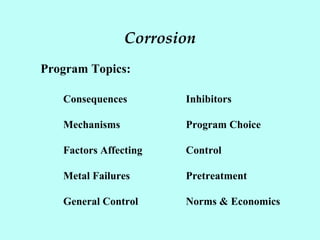
Corrosion
Consequences
Mechanisms
Factors Affecting
Metal Failures
General Control
Inhibitors
Program Choice
Control
Pretreatment
Norms & Economics
Program Topics:
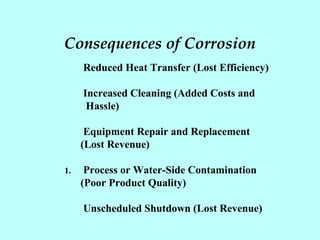
Consequences of Corrosion
Reduced Heat Transfer (Lost Efficiency)
Increased Cleaning (Added Costs and
Hassle)
Equipment Repair and Replacement
(Lost Revenue)
1. Process or Water-Side Contamination
(Poor Product Quality)
Unscheduled Shutdown (Lost Revenue)
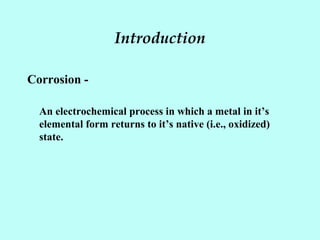
Introduction
Corrosion -
An electrochemical process in which a metal in it’s
elemental form returns to it’s native (i.e., oxidized)
state.
The Corrosion Cell
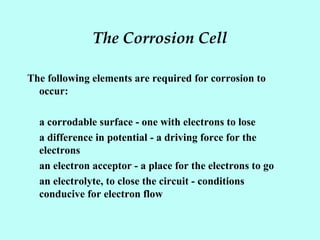
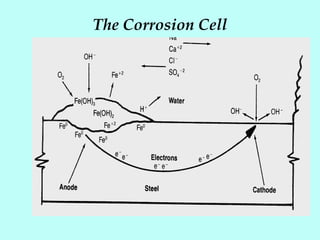
The following elements are required for corrosion to
occur:
a corrodable surface - one with electrons to lose
a difference in potential - a driving force for the
electrons
an electron acceptor - a place for the electrons to go
an electrolyte, to close the circuit - conditions
conducive for electron flow
The Corrosion Cell
The Corrosion Cell
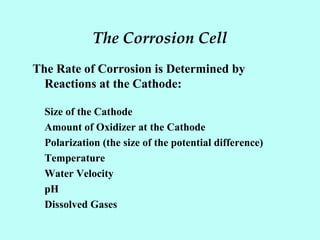
The Rate of Corrosion is Determined by
Reactions at the Cathode:
Size of the Cathode
Amount of Oxidizer at the Cathode
Polarization (the size of the potential difference)
Temperature
Water Velocity
pH
Dissolved Gases
The Corrosion Cell
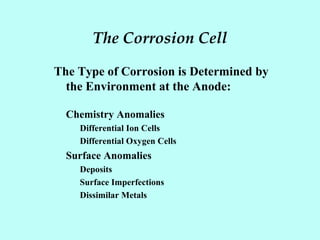
The Type of Corrosion is Determined by
the Environment at the Anode:
Chemistry Anomalies
Differential Ion Cells
Differential Oxygen Cells
Surface Anomalies
Deposits
Surface Imperfections
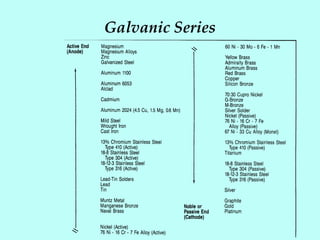
Dissimilar Metals
Galvanic Series
Types of Cooling Water
Corrosion
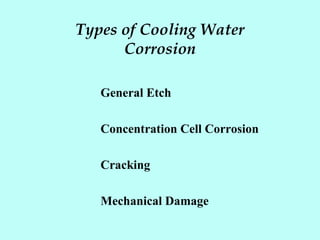
General Etch
Concentration Cell Corrosion
Cracking
Mechanical Damage
Types of Cooling Water
Corrosion
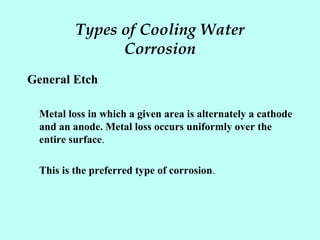
General Etch
Metal loss in which a given area is alternately a cathode
and an anode. Metal loss occurs uniformly over the
entire surface.
This is the preferred type of corrosion.
Types of Cooling Water
Corrosion
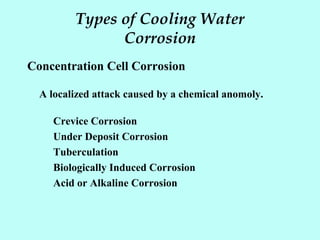
Concentration Cell Corrosion
A localized attack caused by a chemical anomoly.
Crevice Corrosion
Under Deposit Corrosion
Tuberculation
Biologically Induced Corrosion
Acid or Alkaline Corrosion
Types of Cooling Water
Corrosion
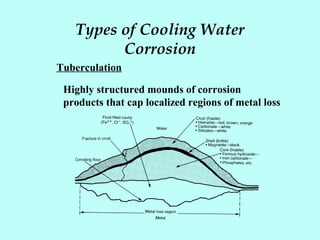
Tuberculation
Highly structured mounds of corrosion
products that cap localized regions of metal loss
Types of Cooling Water
Corrosion
Cracking
Failures caused by the combined effects of corrosion and
metal stress. Initiate on the surface exposed to the
corrodant, and propagate into the metal in response to
the stress state. The critical factors are:
Sufficient Tensile Stress
A Specific Corrodant
Types of Cooling Water
Corrosion
Mechanical Damage
Corrosion Fatigue
Erosion - Corrosion
Cavitation
Dealloying
General Methods for
Corrosion Inhibition
Use Corrosion Resistant Materials
Apply Inert Barrier or Coating
Use Cathodic Protection
Adjustments to Water Chemistry
Application of Corrosion Inhibitors

Cooling tower corrosion

  • 1.
  • 2.
    Corrosion Consequences Mechanisms Factors Affecting Metal Failures GeneralControl Inhibitors Program Choice Control Pretreatment Norms & Economics Program Topics:
  • 3.
    Consequences of Corrosion ReducedHeat Transfer (Lost Efficiency) Increased Cleaning (Added Costs and Hassle) Equipment Repair and Replacement (Lost Revenue) 1. Process or Water-Side Contamination (Poor Product Quality) Unscheduled Shutdown (Lost Revenue)
  • 4.
    Introduction Corrosion - An electrochemicalprocess in which a metal in it’s elemental form returns to it’s native (i.e., oxidized) state.
  • 5.
    The Corrosion Cell Thefollowing elements are required for corrosion to occur: a corrodable surface - one with electrons to lose a difference in potential - a driving force for the electrons an electron acceptor - a place for the electrons to go an electrolyte, to close the circuit - conditions conducive for electron flow
  • 6.
  • 7.
    The Corrosion Cell TheRate of Corrosion is Determined by Reactions at the Cathode: Size of the Cathode Amount of Oxidizer at the Cathode Polarization (the size of the potential difference) Temperature Water Velocity pH Dissolved Gases
  • 8.
    The Corrosion Cell TheType of Corrosion is Determined by the Environment at the Anode: Chemistry Anomalies Differential Ion Cells Differential Oxygen Cells Surface Anomalies Deposits Surface Imperfections Dissimilar Metals
  • 9.
  • 10.
    Types of CoolingWater Corrosion General Etch Concentration Cell Corrosion Cracking Mechanical Damage
  • 11.
    Types of CoolingWater Corrosion General Etch Metal loss in which a given area is alternately a cathode and an anode. Metal loss occurs uniformly over the entire surface. This is the preferred type of corrosion.
  • 12.
    Types of CoolingWater Corrosion Concentration Cell Corrosion A localized attack caused by a chemical anomoly. Crevice Corrosion Under Deposit Corrosion Tuberculation Biologically Induced Corrosion Acid or Alkaline Corrosion
  • 13.
    Types of CoolingWater Corrosion Tuberculation Highly structured mounds of corrosion products that cap localized regions of metal loss
  • 14.
    Types of CoolingWater Corrosion Cracking Failures caused by the combined effects of corrosion and metal stress. Initiate on the surface exposed to the corrodant, and propagate into the metal in response to the stress state. The critical factors are: Sufficient Tensile Stress A Specific Corrodant
  • 15.
    Types of CoolingWater Corrosion Mechanical Damage Corrosion Fatigue Erosion - Corrosion Cavitation Dealloying
  • 16.
    General Methods for CorrosionInhibition Use Corrosion Resistant Materials Apply Inert Barrier or Coating Use Cathodic Protection Adjustments to Water Chemistry Application of Corrosion Inhibitors