Cooking up a storm - mobile devices in schools  Paul Haigh Senior Assistant Headteacher Notre Dame High School, Sheffield [email_address] www.twitter.com/paulhaigh http://haighyblog.blogspot.com
An interactive workshop During my presentation please use the lap tops or your own devices to contribute to a  list of tips on using students’ own mobile devices in learning Either draw out points I make or add your own Type into the ether pads /storm1-6 http://piratepad.net/storm1 If you want to tweet me (or about me) its @paulhaigh
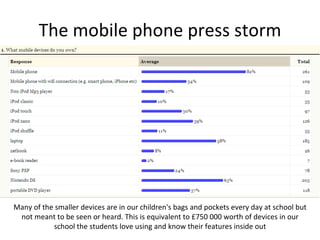
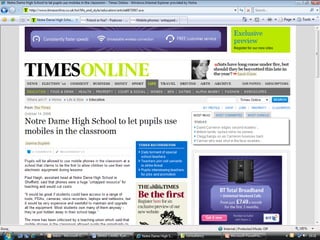
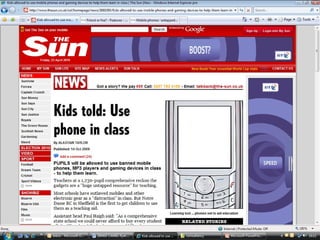
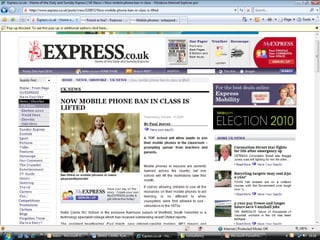
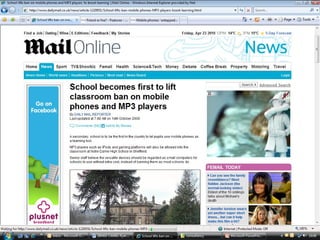
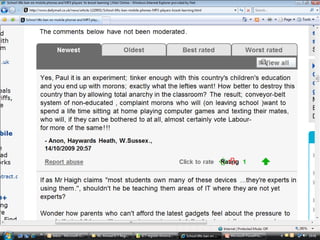
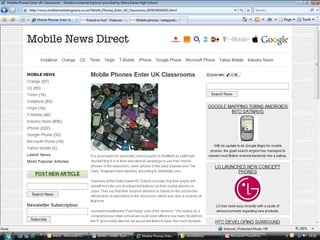
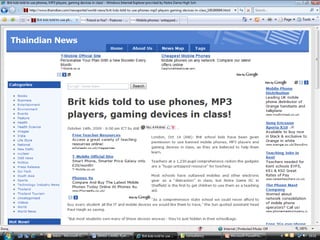
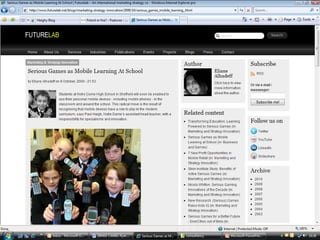
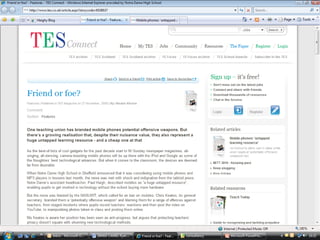
The mobile phone press storm Many of the smaller devices are in our children's bags and pockets every day at school but not meant to be seen or heard. This is equivalent to £750 000 worth of devices in our school the students love using and know their features inside out


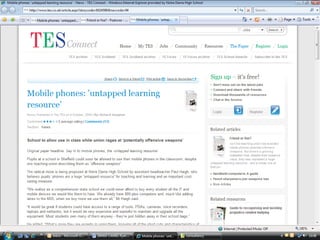
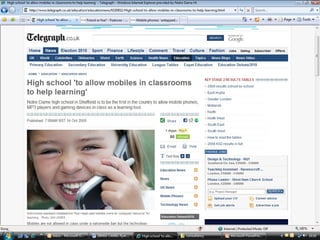
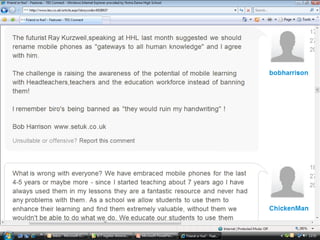
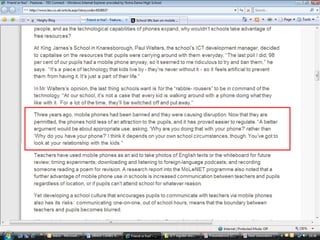
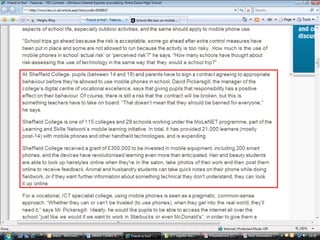
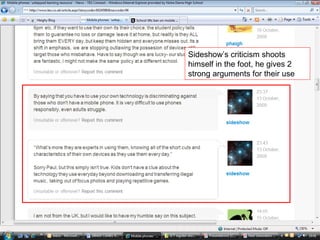
Sideshow’s criticism shoots himself in the foot, he gives 2 strong arguments for their use
The main critisisms They will be a distraction from learning They will access unsuitable material Digital divide (access to devices)/ cost of data
Distraction Do you remember when the internet first came to schools and in IT based lessons you spent all your time checking students weren’t off task doing ‘searches of personal interest’ It hardly happens now, kids accept the internet as tool not this amazing novelty the teacher madly let them use We need to move through the pain barrier like this with mobile devices
Distraction The AUP is key here, if students are not meeting expectation there should be sanctions If it is difficult for students to use the every day technology they all have responsibly isn’t it part of our job as 21 st  century educators to instil some E-ettiquette? At Notre Dame the use of devices in at the teacher’s discretion, any idea that our students are puling devices out of bags as they feel like it to do what they wish is confined to the imagination of Daily Mail readers
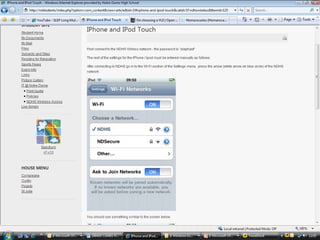
Accessing unsuitable material The media is obsessed with mobile phones, I am more excited about iPod touch, netbooks, e-book readers which don’t have mobile phone network access Students use our filtered and authenticated wifi connection, they are as safe as on a school computer We include mobile phones in the policy because they do have applications and a policy can’t define what devices are allowed and what aren’t, we’d never keep up with the evolving market- its a mobile device policy If students want to used their 3G or GPRS connection there isn’t much we can do, other than if we find out they are in breach of the AUP
Students accessing data through mobile phone network So is the issue of student using their own data connection a deal breaker? No They’d be daft to use a slow and expensive connection rather than our free and fast connection If they want to access unsuitable material this way they will, and already are, in their own time- better to have them supervised by professionals Alternative approach to E-Safety?
Have we got E-Safety right? We lock down, filter and monitor internet use in school- like most schools We send the student home and encourage to go online alone and they access unfiltered internet Road Safety analogy How well are we preparing students for the big wwworld if we block it?
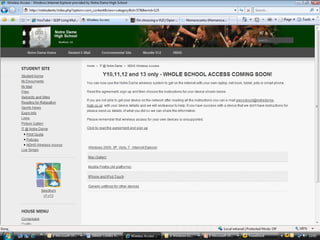
Digital divide; is it fair? Not all students have devices, and the quantity and quality of devices varies-  encourage one-up-manship? We don’t set bringing a device as an expectation just an option There are enough devices in student ownership to make it daft to ignore them (e.g. 3/5 own a lap top, if just a few have their own those in the school lap top trolley go further, perhaps meaning 1:1 access for all) There is no cost for calls/ SMS/ data as we only want them on our wifi and don’t use the telephony features of a mobile phone
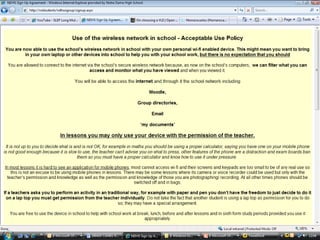
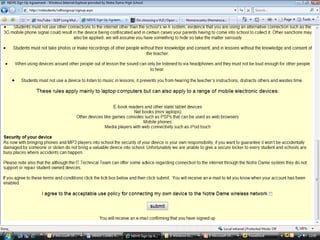
Summary of our AUP Only use a device with teachers permission Your choice to bring a device in, your responsibility, it’s an add on to excellent ICT facilities in school You only use it in lesson time for learning activities you don’t make social calls, texts, or browse irrelevant web sites (sixth form more freedom) If you abuse the AUP sanctions include confiscate device (and look at its data if there has been an incident) remove access to wifi, detentions, letters home, parents in etc.


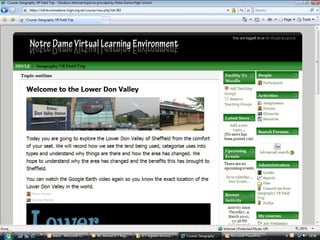
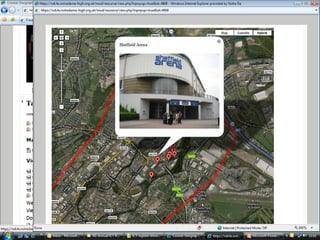
Examples of what our students do Photograph results in science experiments Put photos into projects Record interviews in media/ presentation in MFL Access video pod casts in English (poetry anthology) and maths (how to videos) Do mapping and ecology fieldwork Do internet research or access resource on learning platform Sixth formers using lap tops in free periods- type up essays etc.
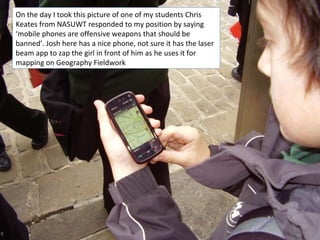
On the day I took this picture of one of my students Chris Keates from NASUWT responded to my position by saying ‘mobile phones are offensive weapons that should be banned’. Josh here has a nice phone, not sure it has the laser beam app to zap the girl in front of him as he uses it for mapping on Geography Fieldwork
How students are using devices Sixth formers studying on their own lap top in free periods Students taking photographs to be included in work Students recording sound, e.g. MFL presentation, interviews in media Geography/ fieldwork applications like species identification, mapping, google maps Students doing internet research in lessons Accessing curriculum resources on the learning platform (joomla/ Moodle)
 
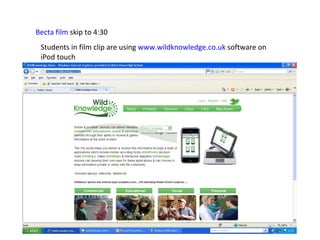
Becta film  skip to 4:30 Students in film clip are using  www.wildknowledge.co.uk  software on iPod touch
Maths on you tube http://www.youtube.com/watch?v=t_bnlB2KRL4
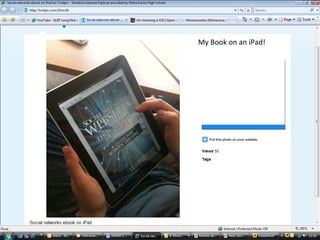
My Book on an iPad!
Social networks/ web2.0 in learning The interactive communication tools offered to us by the web today lend themselves naturally to teaching- which is all about communicating content across different media Teachers and students sharing online space in mainstream social networks is an e-safety mine field Quasi-web 2.0 is the best for under 16s most flexible learning platforms allows chat, forums, blogs, wikis and IM in a safe and monitored way.
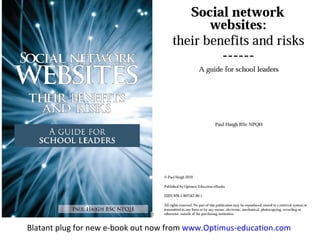
Blatant plug for new e-book out now from  www.Optimus-education.com
So is Notre Dame radical? No, we aren’t the first as you know- despite what the papers said, we do very little- less than many of you, but we are committed to all new technology Fundamentally all we have done is shifted the emphasis from outlawing the devices all students own to outlawing the way a minority of students use them This policy is about opening the door to allow T+L to naturally evolve in a 21 st  century environment Schools are falling behind what is normal use of technology out of school for everyone, but we deal with the future of people, we should be leading the way
Contact Paul Haigh  Senior Assistant Headteacher Notre Dame High School, Sheffield www.notredame-high.co.uk  [email_address] www.twitter.com/paulhaigh   haighysblog.blogspot.com/   Available for consultancy, speaking, INSET

Cooking up a storm paul haigh

  • 1.
    Cooking up astorm - mobile devices in schools Paul Haigh Senior Assistant Headteacher Notre Dame High School, Sheffield [email_address] www.twitter.com/paulhaigh http://haighyblog.blogspot.com
  • 2.
    An interactive workshopDuring my presentation please use the lap tops or your own devices to contribute to a list of tips on using students’ own mobile devices in learning Either draw out points I make or add your own Type into the ether pads /storm1-6 http://piratepad.net/storm1 If you want to tweet me (or about me) its @paulhaigh
  • 3.
    The mobile phonepress storm Many of the smaller devices are in our children's bags and pockets every day at school but not meant to be seen or heard. This is equivalent to £750 000 worth of devices in our school the students love using and know their features inside out
  • 4.
  • 5.
  • 6.
  • 7.
  • 8.
  • 9.
  • 10.
  • 11.
  • 12.
  • 13.
  • 14.
  • 15.
  • 16.
  • 17.
  • 18.
    Sideshow’s criticism shootshimself in the foot, he gives 2 strong arguments for their use
  • 19.
    The main critisismsThey will be a distraction from learning They will access unsuitable material Digital divide (access to devices)/ cost of data
  • 20.
    Distraction Do youremember when the internet first came to schools and in IT based lessons you spent all your time checking students weren’t off task doing ‘searches of personal interest’ It hardly happens now, kids accept the internet as tool not this amazing novelty the teacher madly let them use We need to move through the pain barrier like this with mobile devices
  • 21.
    Distraction The AUPis key here, if students are not meeting expectation there should be sanctions If it is difficult for students to use the every day technology they all have responsibly isn’t it part of our job as 21 st century educators to instil some E-ettiquette? At Notre Dame the use of devices in at the teacher’s discretion, any idea that our students are puling devices out of bags as they feel like it to do what they wish is confined to the imagination of Daily Mail readers
  • 22.
    Accessing unsuitable materialThe media is obsessed with mobile phones, I am more excited about iPod touch, netbooks, e-book readers which don’t have mobile phone network access Students use our filtered and authenticated wifi connection, they are as safe as on a school computer We include mobile phones in the policy because they do have applications and a policy can’t define what devices are allowed and what aren’t, we’d never keep up with the evolving market- its a mobile device policy If students want to used their 3G or GPRS connection there isn’t much we can do, other than if we find out they are in breach of the AUP
  • 23.
    Students accessing datathrough mobile phone network So is the issue of student using their own data connection a deal breaker? No They’d be daft to use a slow and expensive connection rather than our free and fast connection If they want to access unsuitable material this way they will, and already are, in their own time- better to have them supervised by professionals Alternative approach to E-Safety?
  • 24.
    Have we gotE-Safety right? We lock down, filter and monitor internet use in school- like most schools We send the student home and encourage to go online alone and they access unfiltered internet Road Safety analogy How well are we preparing students for the big wwworld if we block it?
  • 25.
    Digital divide; isit fair? Not all students have devices, and the quantity and quality of devices varies- encourage one-up-manship? We don’t set bringing a device as an expectation just an option There are enough devices in student ownership to make it daft to ignore them (e.g. 3/5 own a lap top, if just a few have their own those in the school lap top trolley go further, perhaps meaning 1:1 access for all) There is no cost for calls/ SMS/ data as we only want them on our wifi and don’t use the telephony features of a mobile phone
  • 26.
    Summary of ourAUP Only use a device with teachers permission Your choice to bring a device in, your responsibility, it’s an add on to excellent ICT facilities in school You only use it in lesson time for learning activities you don’t make social calls, texts, or browse irrelevant web sites (sixth form more freedom) If you abuse the AUP sanctions include confiscate device (and look at its data if there has been an incident) remove access to wifi, detentions, letters home, parents in etc.
  • 27.
  • 28.
  • 29.
  • 30.
  • 31.
  • 32.
  • 33.
    Examples of whatour students do Photograph results in science experiments Put photos into projects Record interviews in media/ presentation in MFL Access video pod casts in English (poetry anthology) and maths (how to videos) Do mapping and ecology fieldwork Do internet research or access resource on learning platform Sixth formers using lap tops in free periods- type up essays etc.
  • 34.
    On the dayI took this picture of one of my students Chris Keates from NASUWT responded to my position by saying ‘mobile phones are offensive weapons that should be banned’. Josh here has a nice phone, not sure it has the laser beam app to zap the girl in front of him as he uses it for mapping on Geography Fieldwork
  • 35.
    How students areusing devices Sixth formers studying on their own lap top in free periods Students taking photographs to be included in work Students recording sound, e.g. MFL presentation, interviews in media Geography/ fieldwork applications like species identification, mapping, google maps Students doing internet research in lessons Accessing curriculum resources on the learning platform (joomla/ Moodle)
  • 36.
  • 37.
    Becta film skip to 4:30 Students in film clip are using www.wildknowledge.co.uk software on iPod touch
  • 38.
    Maths on youtube http://www.youtube.com/watch?v=t_bnlB2KRL4
  • 39.
    My Book onan iPad!
  • 40.
    Social networks/ web2.0in learning The interactive communication tools offered to us by the web today lend themselves naturally to teaching- which is all about communicating content across different media Teachers and students sharing online space in mainstream social networks is an e-safety mine field Quasi-web 2.0 is the best for under 16s most flexible learning platforms allows chat, forums, blogs, wikis and IM in a safe and monitored way.
  • 41.
    Blatant plug fornew e-book out now from www.Optimus-education.com
  • 42.
    So is NotreDame radical? No, we aren’t the first as you know- despite what the papers said, we do very little- less than many of you, but we are committed to all new technology Fundamentally all we have done is shifted the emphasis from outlawing the devices all students own to outlawing the way a minority of students use them This policy is about opening the door to allow T+L to naturally evolve in a 21 st century environment Schools are falling behind what is normal use of technology out of school for everyone, but we deal with the future of people, we should be leading the way
  • 43.
    Contact Paul Haigh Senior Assistant Headteacher Notre Dame High School, Sheffield www.notredame-high.co.uk [email_address] www.twitter.com/paulhaigh haighysblog.blogspot.com/ Available for consultancy, speaking, INSET