Controlled-
Release Drug
Delivery
Systems
By
Zeyad Ahmed
Samaan Ayed
Samaan Mounir
Modified release dosage forms
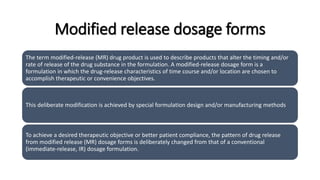
The term modified-release (MR) drug product is used to describe products that alter the timing and/or
rate of release of the drug substance in the formulation. A modified-release dosage form is a
formulation in which the drug-release characteristics of time course and/or location are chosen to
accomplish therapeutic or convenience objectives.
This deliberate modification is achieved by special formulation design and/or manufacturing methods
To achieve a desired therapeutic objective or better patient compliance, the pattern of drug release
from modified release (MR) dosage forms is deliberately changed from that of a conventional
(immediate-release, IR) dosage formulation.
Types of modified-release oral drug products
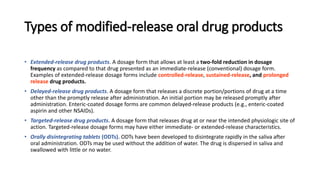
• Extended-release drug products. A dosage form that allows at least a two-fold reduction in dosage
frequency as compared to that drug presented as an immediate-release (conventional) dosage form.
Examples of extended-release dosage forms include controlled-release, sustained-release, and prolonged
release drug products.
• Delayed-release drug products. A dosage form that releases a discrete portion/portions of drug at a time
other than the promptly release after administration. An initial portion may be released promptly after
administration. Enteric-coated dosage forms are common delayed-release products (e.g., enteric-coated
aspirin and other NSAIDs).
• Targeted-release drug products. A dosage form that releases drug at or near the intended physiologic site of
action. Targeted-release dosage forms may have either immediate- or extended-release characteristics.
• Orally disintegrating tablets (ODTs). ODTs have been developed to disintegrate rapidly in the saliva after
oral administration. ODTs may be used without the addition of water. The drug is dispersed in saliva and
swallowed with little or no water.
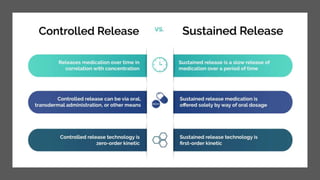
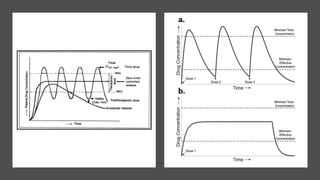
Controlled drug delivery systems
Drug delivery system in which a
constant level of a drug is
maintained in blood and tissue
for an extended period.
The controlled delivery system
shows zero-order PK with just a
single dose of controlled drug
delivery from a specific
formulation or device. The drug
levels are maintained constantly
within the therapeutic window.
Controlled vs Conventional DDS
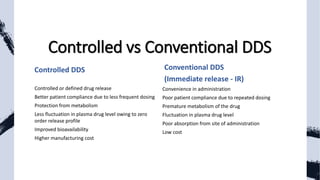
Controlled DDS
Controlled or defined drug release
Better patient compliance due to less frequent dosing
Protection from metabolism
Less fluctuation in plasma drug level owing to zero
order release profile
Improved bioavailability
Higher manufacturing cost
Conventional DDS
(Immediate release - IR)
Convenience in administration
Poor patient compliance due to repeated dosing
Premature metabolism of the drug
Fluctuation in plasma drug level
Poor absorption from site of administration
Low cost
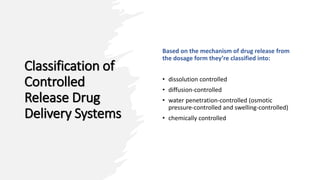
Classification of
Controlled
Release Drug
Delivery Systems
Based on the mechanism of drug release from
the dosage form they’re classified into:
• dissolution controlled
• diffusion-controlled
• water penetration-controlled (osmotic
pressure-controlled and swelling-controlled)
• chemically controlled
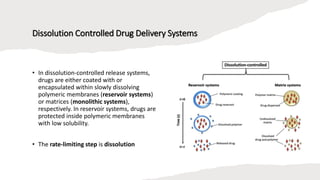
Dissolution Controlled Drug Delivery Systems
• In dissolution-controlled release systems,
drugs are either coated with or
encapsulated within slowly dissolving
polymeric membranes (reservoir systems)
or matrices (monolithic systems),
respectively. In reservoir systems, drugs are
protected inside polymeric membranes
with low solubility.
• The rate-limiting step is dissolution
Diffusion-Controlled Drug Delivery
Systems
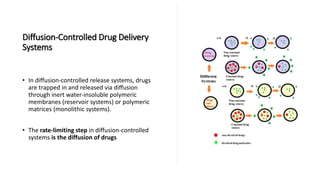
• In diffusion-controlled release systems, drugs
are trapped in and released via diffusion
through inert water-insoluble polymeric
membranes (reservoir systems) or polymeric
matrices (monolithic systems).
• The rate-limiting step in diffusion-controlled
systems is the diffusion of drugs
Water Penetration-Controlled Drug Delivery
Systems
These are classified as:
• osmotic pressure-controlled drug delivery systems
• and swelling controlled drug delivery systems.
The rate control is dependent on water
penetration into the system.
Osmotic Controlled Drug Delivery Systems
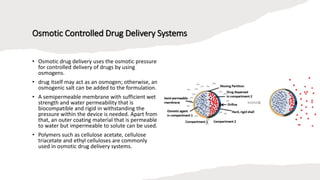
• Osmotic drug delivery uses the osmotic pressure
for controlled delivery of drugs by using
osmogens.
• drug itself may act as an osmogen; otherwise, an
osmogenic salt can be added to the formulation.
• A semipermeable membrane with sufficient wet
strength and water permeability that is
biocompatible and rigid in withstanding the
pressure within the device is needed. Apart from
that, an outer coating material that is permeable
to water but impermeable to solute can be used.
• Polymers such as cellulose acetate, cellulose
triacetate and ethyl celluloses are commonly
used in osmotic drug delivery systems.
Swelling-Controlled Drug Delivery Systems
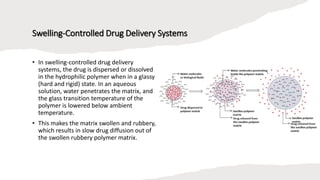
• In swelling-controlled drug delivery
systems, the drug is dispersed or dissolved
in the hydrophilic polymer when in a glassy
(hard and rigid) state. In an aqueous
solution, water penetrates the matrix, and
the glass transition temperature of the
polymer is lowered below ambient
temperature.
• This makes the matrix swollen and rubbery,
which results in slow drug diffusion out of
the swollen rubbery polymer matrix.
Chemically Controlled Drug Delivery Systems
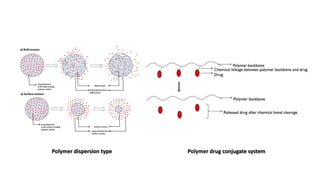
• These are made of biodegradable polymers which degrade in the
body because of natural biological processes.
• eliminate the need to remove the delivery system after exhausting an
active agent from the system.
• These systems change their chemical structure when exposed to the
biological milieu.
• Classified into two types:
• Polymer-drug dispersion system and polymer-drug conjugate systems.
Polymer dispersion type Polymer drug conjugate system
Marketed drug
examples
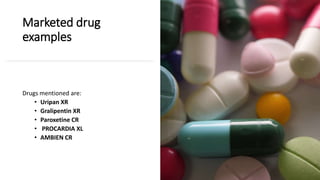
Drugs mentioned are:
• Uripan XR
• Gralipentin XR
• Paroxetine CR
• PROCARDIA XL
• AMBIEN CR
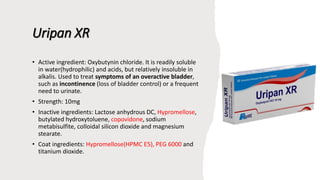
Uripan XR
• Active ingredient: Oxybutynin chloride. It is readily soluble
in water(hydrophilic) and acids, but relatively insoluble in
alkalis. Used to treat symptoms of an overactive bladder,
such as incontinence (loss of bladder control) or a frequent
need to urinate.
• Strength: 10mg
• Inactive ingredients: Lactose anhydrous DC, Hypromellose,
butylated hydroxytoluene, copovidone, sodium
metabisulfite, colloidal silicon dioxide and magnesium
stearate.
• Coat ingredients: Hypromellose(HPMC E5), PEG 6000 and
titanium dioxide.
Osmotic Controlled Drug Delivery System
• Uripan XR uses osmotic pressure to deliver oxybutynin chloride at a controlled rate over
approximately 24 hours.
• The tablet comprises an osmotically active bilayer core surrounded by a semipermeable
membrane. The bilayer core is composed of a drug layer containing the drug and excipients, and a
push layer containing osmotically active components. There is a precision-laser drilled orifice in
the semipermeable membrane on the drug-layer side of the tablet.
• In an aqueous environment, such as the gastrointestinal tract, water permeates through the
membrane into the tablet core, causing the drug to go into suspension and the push layer to
expand. This expansion pushes the suspended drug out through the orifice. The semipermeable
membrane controls the rate at which water permeates into the tablet core, which in turn controls
the rate of drug delivery.
• It depends on the existence of an osmotic gradient between the contents of the bilayer core and
the fluid in the gastrointestinal tract. Since the osmotic gradient remains constant, drug delivery
remains essentially constant.
Key Polymers
• Hypromellose (HPMC E5) is a controlled release polymer of the semi-synthetic cellulose derivative
class. Used in the fabrication of hydrophilic matrices. plays a crucial role in the coating of extended-
release formulations. Several advantages that make it ideal for this application:
• Controlled drug release: Hypromellose forms a gel layer around the core of the tablet when it comes
into contact with fluids in the gastrointestinal tract. This gel layer controls the rate at which the drug is
released, allowing for a controlled and extended-release profile.
• Tailored release profiles: Lower viscosity grades release the drug faster, while higher viscosity grades
provide a slower and more prolonged release.
• PEG 6000 is a water-soluble polymer that acts as a pore former in the coating of extended-release
formulations. It functions primarily as a plasticizer, which means it helps to improve the flexibility and
elasticity of the coating film. The key roles of PEG 6000 in extended-release formulations:
• Improves film flexibility and elasticity: This prevents the coating from cracking or breaking, which could
lead to premature drug release.
• Controls drug release: By affecting the permeability of the coating(Pore former), PEG 6000 can play a
role in modulating the release rate of the drug.
• Copovidone is a highly suitable matrix former in controlled release tablets and a tablet binder.
Gralipentin XR
• Active ingredient: Gabapentin
• An extended-release film coated tablet containing 300
mg or 600 mg of gabapentin. The tablets swell in gastric
fluid and gradually release gabapentin.
• Inactive ingredients:
• In 300 mg tablet: HPMC K15, HPC extra fine, colloidal silicon
dioxide and magnesium stearate. Coat: Hypromellose E5, PEG
6000, Titanium dioxide and Talc purified.
• In 600 mg tablet: HPMC K15, HPC extra fine, colloidal silicon
dioxide and magnesium stearate. Coat: Hypromellose E5, PEG
6000, Titanium dioxide and Talc and Iron oxide yellow.
A gastroretentive formulation
• Gabapentin has a short elimination half life and limited absorption due to a saturable L-amino
acid transport system, which is expressed predominantly in the proximal small intestine. Hence,
the original immediate-release gabapentin formulation (gabapentin TID) must usually be taken
three times a day for optimal efficacy.
• the once-daily gabapentin tablet swells upon contact with gastric juices to a size that promotes
gastric retention for several hours when taken with a meal. This gastric retention results in the
gradual release of gabapentin to the proximal small intestine at a relatively constant rate over 8–
10 h.
• This extends the time of exposure to the site of absorption in the proximal small intestine and
reduces the chance of saturating intestinal uptake.
• After the drug has been released, the tablet matrix dissolves in about 15 h post dosing.
Key Polymers
• Hypromellose(HPMC)
• HPC a hydrogel polymer has a faster rate of drug release which can be
attributed to its lower viscosity and slow hydration Compared to
similar hydrogel polymers like HPMC. Used to increase the dissolution
time of a tablet.
• PEG 6000
Paroxetine CR
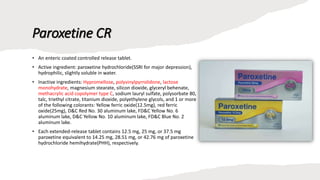
• An enteric coated controlled release tablet.
• Active ingredient: paroxetine hydrochloride(SSRI for major depression),
hydrophilic, slightly soluble in water.
• Inactive ingredients: Hypromellose, polyvinylpyrrolidone, lactose
monohydrate, magnesium stearate, silicon dioxide, glyceryl behenate,
methacrylic acid copolymer type C, sodium lauryl sulfate, polysorbate 80,
talc, triethyl citrate, titanium dioxide, polyethylene glycols, and 1 or more
of the following colorants: Yellow ferric oxide(12.5mg), red ferric
oxide(25mg), D&C Red No. 30 aluminum lake, FD&C Yellow No. 6
aluminum lake, D&C Yellow No. 10 aluminum lake, FD&C Blue No. 2
aluminum lake.
• Each extended-release tablet contains 12.5 mg, 25 mg, or 37.5 mg
paroxetine equivalent to 14.25 mg, 28.51 mg, or 42.76 mg of paroxetine
hydrochloride hemihydrate(PHH), respectively.
Role of methacrylic
acid copolymer type C
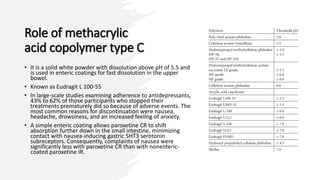
• It is a solid white powder with dissolution above pH of 5.5 and
is used in enteric coatings for fast dissolution in the upper
bowel.
• Known as Eudragit L 100-55
• In large-scale studies examining adherence to antidepressants,
43% to 62% of those participants who stopped their
treatments prematurely did so because of adverse events. The
most common reasons for discontinuation were nausea,
headache, drowsiness, and an increased feeling of anxiety.
• A simple enteric coating allows paroxetine CR to shift
absorption further down in the small intestine, minimizing
contact with nausea-inducing gastric 5HT3 serotonin
subreceptors. Consequently, complaints of nausea were
significantly less with paroxetine CR than with nonenteric-
coated paroxetine IR.
Geomatrix® Technology
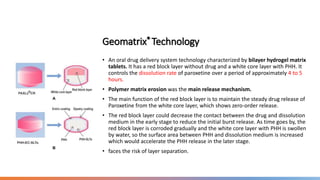
• An oral drug delivery system technology characterized by bilayer hydrogel matrix
tablets. It has a red block layer without drug and a white core layer with PHH. It
controls the dissolution rate of paroxetine over a period of approximately 4 to 5
hours.
• Polymer matrix erosion was the main release mechanism.
• The main function of the red block layer is to maintain the steady drug release of
Paroxetine from the white core layer, which shows zero-order release.
• The red block layer could decrease the contact between the drug and dissolution
medium in the early stage to reduce the initial burst release. As time goes by, the
red block layer is corroded gradually and the white core layer with PHH is swollen
by water, so the surface area between PHH and dissolution medium is increased
which would accelerate the PHH release in the later stage.
• faces the risk of layer separation.
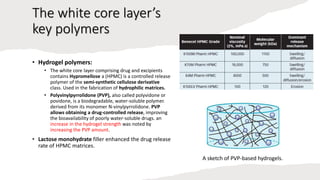
The white core layer’s
key polymers
• Hydrogel polymers:
• The white core layer comprising drug and excipients
contains Hypromellose a (HPMC) is a controlled release
polymer of the semi-synthetic cellulose derivative
class. Used in the fabrication of hydrophilic matrices.
• Polyvinylpyrrolidone (PVP), also called polyvidone or
povidone, is a biodegradable, water-soluble polymer.
derived from its monomer N-vinylpyrrolidone. PVP
allows obtaining a drug-controlled release, improving
the bioavailability of poorly water-soluble drugs. an
increase in the hydrogel strength was noted by
increasing the PVP amount.
• Lactose monohydrate filler enhanced the drug release
rate of HPMC matrices.
A sketch of PVP-based hydrogels.
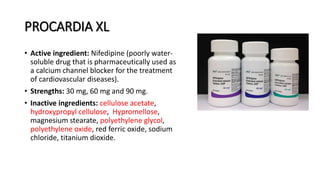
PROCARDIA XL
• Active ingredient: Nifedipine (poorly water-
soluble drug that is pharmaceutically used as
a calcium channel blocker for the treatment
of cardiovascular diseases).
• Strengths: 30 mg, 60 mg and 90 mg.
• Inactive ingredients: cellulose acetate,
hydroxypropyl cellulose, Hypromellose,
magnesium stearate, polyethylene glycol,
polyethylene oxide, red ferric oxide, sodium
chloride, titanium dioxide.
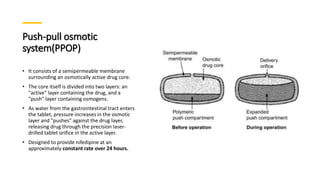
Push-pull osmotic
system(PPOP)
• It consists of a semipermeable membrane
surrounding an osmotically active drug core.
• The core itself is divided into two layers: an
"active" layer containing the drug, and a
"push" layer containing osmogens.
• As water from the gastrointestinal tract enters
the tablet, pressure increases in the osmotic
layer and "pushes" against the drug layer,
releasing drug through the precision laser-
drilled tablet orifice in the active layer.
• Designed to provide nifedipine at an
approximately constant rate over 24 hours.
Key Polymers
• Cellulose acetate is used for constructing semipermeable coating on tablets, especially in
osmotic pump-type tablets and microparticles for controlled release of drugs.
• Polyethylene oxide (PEO) is the most commonly used polymer in the formulation of PPOP tablets
due to its favorable hydration kinetics and swelling properties. suitable choice in formulation of
both pull and push layers. The lower molecular weight grades (200,000–400,000 Da) generally
serve as the primary component in the pull layer, while the higher molecular weight grades are
used as a swelling agent in the push layer (3,000,000–7,000,000 Da)
• The hydration and swelling of HPC and HPMC play an important role in controlling drug release
rate. HPMC hydration results in a gel-like state, the tablets swell and form a gel barrier layer
around the outside, and thus the drug diffusion path increases.
• polyethylene glycol a plasticizer and pore former.
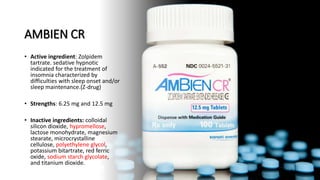
AMBIEN CR
• Active ingredient: Zolpidem
tartrate. sedative hypnotic
indicated for the treatment of
insomnia characterized by
difficulties with sleep onset and/or
sleep maintenance.(Z-drug)
• Strengths: 6.25 mg and 12.5 mg
• Inactive ingredients: colloidal
silicon dioxide, hypromellose,
lactose monohydrate, magnesium
stearate, microcrystalline
cellulose, polyethylene glycol,
potassium bitartrate, red ferric
oxide, sodium starch glycolate,
and titanium dioxide.
Biphasic delivery system technology
• Zolpidem tartrate has short half-life. The duration of
action is considered too short in certain circumstances.
Immediate-release dosage forms of zolpidem tartrate
have a rapid onset of action and short half-life, which
shows limited efficacy for maintaining sleep throughout
the night.
• Sodium starch glycolate acts as a superdisintegrant in
immediate-release part and hydroxypropyl methyl
cellulose, the dominant hydrophilic polymer carrier
used as a release retarding agent in extended-release
core.
• Tartaric acid is used to get drug release independent of
external pH by maintaining the pH of the core in
natural pH conditions.
• The mechanism of drug release was studied, and the
optimized formulation has shown Fickian diffusion.
Thank
you

Controlled-Release Drug Delivery Systems.pptx

  • 1.
  • 2.
    Modified release dosageforms The term modified-release (MR) drug product is used to describe products that alter the timing and/or rate of release of the drug substance in the formulation. A modified-release dosage form is a formulation in which the drug-release characteristics of time course and/or location are chosen to accomplish therapeutic or convenience objectives. This deliberate modification is achieved by special formulation design and/or manufacturing methods To achieve a desired therapeutic objective or better patient compliance, the pattern of drug release from modified release (MR) dosage forms is deliberately changed from that of a conventional (immediate-release, IR) dosage formulation.
  • 3.
    Types of modified-releaseoral drug products • Extended-release drug products. A dosage form that allows at least a two-fold reduction in dosage frequency as compared to that drug presented as an immediate-release (conventional) dosage form. Examples of extended-release dosage forms include controlled-release, sustained-release, and prolonged release drug products. • Delayed-release drug products. A dosage form that releases a discrete portion/portions of drug at a time other than the promptly release after administration. An initial portion may be released promptly after administration. Enteric-coated dosage forms are common delayed-release products (e.g., enteric-coated aspirin and other NSAIDs). • Targeted-release drug products. A dosage form that releases drug at or near the intended physiologic site of action. Targeted-release dosage forms may have either immediate- or extended-release characteristics. • Orally disintegrating tablets (ODTs). ODTs have been developed to disintegrate rapidly in the saliva after oral administration. ODTs may be used without the addition of water. The drug is dispersed in saliva and swallowed with little or no water.
  • 4.
    Controlled drug deliverysystems Drug delivery system in which a constant level of a drug is maintained in blood and tissue for an extended period. The controlled delivery system shows zero-order PK with just a single dose of controlled drug delivery from a specific formulation or device. The drug levels are maintained constantly within the therapeutic window.
  • 5.
    Controlled vs ConventionalDDS Controlled DDS Controlled or defined drug release Better patient compliance due to less frequent dosing Protection from metabolism Less fluctuation in plasma drug level owing to zero order release profile Improved bioavailability Higher manufacturing cost Conventional DDS (Immediate release - IR) Convenience in administration Poor patient compliance due to repeated dosing Premature metabolism of the drug Fluctuation in plasma drug level Poor absorption from site of administration Low cost
  • 8.
    Classification of Controlled Release Drug DeliverySystems Based on the mechanism of drug release from the dosage form they’re classified into: • dissolution controlled • diffusion-controlled • water penetration-controlled (osmotic pressure-controlled and swelling-controlled) • chemically controlled
  • 9.
    Dissolution Controlled DrugDelivery Systems • In dissolution-controlled release systems, drugs are either coated with or encapsulated within slowly dissolving polymeric membranes (reservoir systems) or matrices (monolithic systems), respectively. In reservoir systems, drugs are protected inside polymeric membranes with low solubility. • The rate-limiting step is dissolution
  • 10.
    Diffusion-Controlled Drug Delivery Systems •In diffusion-controlled release systems, drugs are trapped in and released via diffusion through inert water-insoluble polymeric membranes (reservoir systems) or polymeric matrices (monolithic systems). • The rate-limiting step in diffusion-controlled systems is the diffusion of drugs
  • 11.
    Water Penetration-Controlled DrugDelivery Systems These are classified as: • osmotic pressure-controlled drug delivery systems • and swelling controlled drug delivery systems. The rate control is dependent on water penetration into the system.
  • 12.
    Osmotic Controlled DrugDelivery Systems • Osmotic drug delivery uses the osmotic pressure for controlled delivery of drugs by using osmogens. • drug itself may act as an osmogen; otherwise, an osmogenic salt can be added to the formulation. • A semipermeable membrane with sufficient wet strength and water permeability that is biocompatible and rigid in withstanding the pressure within the device is needed. Apart from that, an outer coating material that is permeable to water but impermeable to solute can be used. • Polymers such as cellulose acetate, cellulose triacetate and ethyl celluloses are commonly used in osmotic drug delivery systems.
  • 13.
    Swelling-Controlled Drug DeliverySystems • In swelling-controlled drug delivery systems, the drug is dispersed or dissolved in the hydrophilic polymer when in a glassy (hard and rigid) state. In an aqueous solution, water penetrates the matrix, and the glass transition temperature of the polymer is lowered below ambient temperature. • This makes the matrix swollen and rubbery, which results in slow drug diffusion out of the swollen rubbery polymer matrix.
  • 14.
    Chemically Controlled DrugDelivery Systems • These are made of biodegradable polymers which degrade in the body because of natural biological processes. • eliminate the need to remove the delivery system after exhausting an active agent from the system. • These systems change their chemical structure when exposed to the biological milieu. • Classified into two types: • Polymer-drug dispersion system and polymer-drug conjugate systems.
  • 15.
    Polymer dispersion typePolymer drug conjugate system
  • 16.
    Marketed drug examples Drugs mentionedare: • Uripan XR • Gralipentin XR • Paroxetine CR • PROCARDIA XL • AMBIEN CR
  • 17.
    Uripan XR • Activeingredient: Oxybutynin chloride. It is readily soluble in water(hydrophilic) and acids, but relatively insoluble in alkalis. Used to treat symptoms of an overactive bladder, such as incontinence (loss of bladder control) or a frequent need to urinate. • Strength: 10mg • Inactive ingredients: Lactose anhydrous DC, Hypromellose, butylated hydroxytoluene, copovidone, sodium metabisulfite, colloidal silicon dioxide and magnesium stearate. • Coat ingredients: Hypromellose(HPMC E5), PEG 6000 and titanium dioxide.
  • 18.
    Osmotic Controlled DrugDelivery System • Uripan XR uses osmotic pressure to deliver oxybutynin chloride at a controlled rate over approximately 24 hours. • The tablet comprises an osmotically active bilayer core surrounded by a semipermeable membrane. The bilayer core is composed of a drug layer containing the drug and excipients, and a push layer containing osmotically active components. There is a precision-laser drilled orifice in the semipermeable membrane on the drug-layer side of the tablet. • In an aqueous environment, such as the gastrointestinal tract, water permeates through the membrane into the tablet core, causing the drug to go into suspension and the push layer to expand. This expansion pushes the suspended drug out through the orifice. The semipermeable membrane controls the rate at which water permeates into the tablet core, which in turn controls the rate of drug delivery. • It depends on the existence of an osmotic gradient between the contents of the bilayer core and the fluid in the gastrointestinal tract. Since the osmotic gradient remains constant, drug delivery remains essentially constant.
  • 19.
    Key Polymers • Hypromellose(HPMC E5) is a controlled release polymer of the semi-synthetic cellulose derivative class. Used in the fabrication of hydrophilic matrices. plays a crucial role in the coating of extended- release formulations. Several advantages that make it ideal for this application: • Controlled drug release: Hypromellose forms a gel layer around the core of the tablet when it comes into contact with fluids in the gastrointestinal tract. This gel layer controls the rate at which the drug is released, allowing for a controlled and extended-release profile. • Tailored release profiles: Lower viscosity grades release the drug faster, while higher viscosity grades provide a slower and more prolonged release. • PEG 6000 is a water-soluble polymer that acts as a pore former in the coating of extended-release formulations. It functions primarily as a plasticizer, which means it helps to improve the flexibility and elasticity of the coating film. The key roles of PEG 6000 in extended-release formulations: • Improves film flexibility and elasticity: This prevents the coating from cracking or breaking, which could lead to premature drug release. • Controls drug release: By affecting the permeability of the coating(Pore former), PEG 6000 can play a role in modulating the release rate of the drug. • Copovidone is a highly suitable matrix former in controlled release tablets and a tablet binder.
  • 20.
    Gralipentin XR • Activeingredient: Gabapentin • An extended-release film coated tablet containing 300 mg or 600 mg of gabapentin. The tablets swell in gastric fluid and gradually release gabapentin. • Inactive ingredients: • In 300 mg tablet: HPMC K15, HPC extra fine, colloidal silicon dioxide and magnesium stearate. Coat: Hypromellose E5, PEG 6000, Titanium dioxide and Talc purified. • In 600 mg tablet: HPMC K15, HPC extra fine, colloidal silicon dioxide and magnesium stearate. Coat: Hypromellose E5, PEG 6000, Titanium dioxide and Talc and Iron oxide yellow.
  • 21.
    A gastroretentive formulation •Gabapentin has a short elimination half life and limited absorption due to a saturable L-amino acid transport system, which is expressed predominantly in the proximal small intestine. Hence, the original immediate-release gabapentin formulation (gabapentin TID) must usually be taken three times a day for optimal efficacy. • the once-daily gabapentin tablet swells upon contact with gastric juices to a size that promotes gastric retention for several hours when taken with a meal. This gastric retention results in the gradual release of gabapentin to the proximal small intestine at a relatively constant rate over 8– 10 h. • This extends the time of exposure to the site of absorption in the proximal small intestine and reduces the chance of saturating intestinal uptake. • After the drug has been released, the tablet matrix dissolves in about 15 h post dosing.
  • 22.
    Key Polymers • Hypromellose(HPMC) •HPC a hydrogel polymer has a faster rate of drug release which can be attributed to its lower viscosity and slow hydration Compared to similar hydrogel polymers like HPMC. Used to increase the dissolution time of a tablet. • PEG 6000
  • 23.
    Paroxetine CR • Anenteric coated controlled release tablet. • Active ingredient: paroxetine hydrochloride(SSRI for major depression), hydrophilic, slightly soluble in water. • Inactive ingredients: Hypromellose, polyvinylpyrrolidone, lactose monohydrate, magnesium stearate, silicon dioxide, glyceryl behenate, methacrylic acid copolymer type C, sodium lauryl sulfate, polysorbate 80, talc, triethyl citrate, titanium dioxide, polyethylene glycols, and 1 or more of the following colorants: Yellow ferric oxide(12.5mg), red ferric oxide(25mg), D&C Red No. 30 aluminum lake, FD&C Yellow No. 6 aluminum lake, D&C Yellow No. 10 aluminum lake, FD&C Blue No. 2 aluminum lake. • Each extended-release tablet contains 12.5 mg, 25 mg, or 37.5 mg paroxetine equivalent to 14.25 mg, 28.51 mg, or 42.76 mg of paroxetine hydrochloride hemihydrate(PHH), respectively.
  • 24.
    Role of methacrylic acidcopolymer type C • It is a solid white powder with dissolution above pH of 5.5 and is used in enteric coatings for fast dissolution in the upper bowel. • Known as Eudragit L 100-55 • In large-scale studies examining adherence to antidepressants, 43% to 62% of those participants who stopped their treatments prematurely did so because of adverse events. The most common reasons for discontinuation were nausea, headache, drowsiness, and an increased feeling of anxiety. • A simple enteric coating allows paroxetine CR to shift absorption further down in the small intestine, minimizing contact with nausea-inducing gastric 5HT3 serotonin subreceptors. Consequently, complaints of nausea were significantly less with paroxetine CR than with nonenteric- coated paroxetine IR.
  • 25.
    Geomatrix® Technology • Anoral drug delivery system technology characterized by bilayer hydrogel matrix tablets. It has a red block layer without drug and a white core layer with PHH. It controls the dissolution rate of paroxetine over a period of approximately 4 to 5 hours. • Polymer matrix erosion was the main release mechanism. • The main function of the red block layer is to maintain the steady drug release of Paroxetine from the white core layer, which shows zero-order release. • The red block layer could decrease the contact between the drug and dissolution medium in the early stage to reduce the initial burst release. As time goes by, the red block layer is corroded gradually and the white core layer with PHH is swollen by water, so the surface area between PHH and dissolution medium is increased which would accelerate the PHH release in the later stage. • faces the risk of layer separation.
  • 26.
    The white corelayer’s key polymers • Hydrogel polymers: • The white core layer comprising drug and excipients contains Hypromellose a (HPMC) is a controlled release polymer of the semi-synthetic cellulose derivative class. Used in the fabrication of hydrophilic matrices. • Polyvinylpyrrolidone (PVP), also called polyvidone or povidone, is a biodegradable, water-soluble polymer. derived from its monomer N-vinylpyrrolidone. PVP allows obtaining a drug-controlled release, improving the bioavailability of poorly water-soluble drugs. an increase in the hydrogel strength was noted by increasing the PVP amount. • Lactose monohydrate filler enhanced the drug release rate of HPMC matrices. A sketch of PVP-based hydrogels.
  • 27.
    PROCARDIA XL • Activeingredient: Nifedipine (poorly water- soluble drug that is pharmaceutically used as a calcium channel blocker for the treatment of cardiovascular diseases). • Strengths: 30 mg, 60 mg and 90 mg. • Inactive ingredients: cellulose acetate, hydroxypropyl cellulose, Hypromellose, magnesium stearate, polyethylene glycol, polyethylene oxide, red ferric oxide, sodium chloride, titanium dioxide.
  • 28.
    Push-pull osmotic system(PPOP) • Itconsists of a semipermeable membrane surrounding an osmotically active drug core. • The core itself is divided into two layers: an "active" layer containing the drug, and a "push" layer containing osmogens. • As water from the gastrointestinal tract enters the tablet, pressure increases in the osmotic layer and "pushes" against the drug layer, releasing drug through the precision laser- drilled tablet orifice in the active layer. • Designed to provide nifedipine at an approximately constant rate over 24 hours.
  • 29.
    Key Polymers • Celluloseacetate is used for constructing semipermeable coating on tablets, especially in osmotic pump-type tablets and microparticles for controlled release of drugs. • Polyethylene oxide (PEO) is the most commonly used polymer in the formulation of PPOP tablets due to its favorable hydration kinetics and swelling properties. suitable choice in formulation of both pull and push layers. The lower molecular weight grades (200,000–400,000 Da) generally serve as the primary component in the pull layer, while the higher molecular weight grades are used as a swelling agent in the push layer (3,000,000–7,000,000 Da) • The hydration and swelling of HPC and HPMC play an important role in controlling drug release rate. HPMC hydration results in a gel-like state, the tablets swell and form a gel barrier layer around the outside, and thus the drug diffusion path increases. • polyethylene glycol a plasticizer and pore former.
  • 30.
    AMBIEN CR • Activeingredient: Zolpidem tartrate. sedative hypnotic indicated for the treatment of insomnia characterized by difficulties with sleep onset and/or sleep maintenance.(Z-drug) • Strengths: 6.25 mg and 12.5 mg • Inactive ingredients: colloidal silicon dioxide, hypromellose, lactose monohydrate, magnesium stearate, microcrystalline cellulose, polyethylene glycol, potassium bitartrate, red ferric oxide, sodium starch glycolate, and titanium dioxide.
  • 31.
    Biphasic delivery systemtechnology • Zolpidem tartrate has short half-life. The duration of action is considered too short in certain circumstances. Immediate-release dosage forms of zolpidem tartrate have a rapid onset of action and short half-life, which shows limited efficacy for maintaining sleep throughout the night. • Sodium starch glycolate acts as a superdisintegrant in immediate-release part and hydroxypropyl methyl cellulose, the dominant hydrophilic polymer carrier used as a release retarding agent in extended-release core. • Tartaric acid is used to get drug release independent of external pH by maintaining the pH of the core in natural pH conditions. • The mechanism of drug release was studied, and the optimized formulation has shown Fickian diffusion.
  • 32.